Category Archives: Creation

Why is There Evil?

July 20, 2012, the senseless shooting occurred in the Century 16 Movie Theaters at the Aurora Town Center.

God shall bring every work into judgment, with every secret thing, whether it be good, or whether it be evil (Ecclesiastes 12:14).

 In the early hours of Friday morning, July 20, 2012, in Aurora, Colorado, a lone assailant opened fire on unsuspecting movie goers whose only fault, if you want to call it that, was the desire to watch the very first viewing of Batman: The Dark Knight Rises.  After the mayhem subsided and the smoke cleared, 70 people were shot and 12 killed according to the Denver Post.  What started out for many as a night out of fun and entertainment ended in tragedy and sorrow.

Almost immediately, the news commentators and pundits filled the airwaves with their speculations as to the motives of the shooter.  Even before the arrest of the alleged shooter, James Holmes, a PhD candidate in the University of Colorado’s neuroscience program, the talking heads started prognosticating about whether the insanity plea would be used in Holmes’ defense.

Naturally, the social media was all abuzz with the events of day.  Many heartfelt sentiments were offered as were prayers for all those who were hurting.  But as always seems to be the case in times of tragedy, someone will always raise the question, “Where was God in all of this?” One Facebook ™ post mocked the futility of praying to a god that allows evil to happen at all or that is impotent to prevent evil.  “How can a loving god allow such horrific evil to happen?” he ranted.  To sit in judgment of God qualifies the arrogant purveyor of such vitriol as a “fool” as defined in Psalm 53:1.

But even when one claims a belief in God, tragedies like this have a way of shaking one’s foundations.  Where is God in all of this?  Why does He not intervene to prevent or stop these horrors?  God has promised not to leave us or forsake us (1 Kings 8:58; Hebrews 13:5).  We are also taught “that all things work together for good to them that love God” (Romans 8:28).

The simple answer is that evil exists in the world because of the fall of man back in Genesis 3.  “Wherefore, as by one man sin entered into the world, and death by sin; and so death passed upon all men, for that all have sinned” (Romans 5:12).  So great was the offense that even creation was effected: “For the earnest expectation of the [creation] waiteth for the manifestation of the sons of God.   For the [creation] was made subject to vanity, not willingly, but by reason of him who hath subjected the same in hope, Because the [creation] itself also shall be delivered from the bondage of corruption into the glorious liberty of the children of God.  For we know that the whole creation groaneth and travaileth in pain together until now” (Romans 8:19-22).  That explains why there is evil in the world, but that is about as much comfort as understanding the geodynamics of plate tectonics when you’re right in the middle of an earthquake.

The atheist foolishly dismisses God as impotent to stop or prevent evil.  If that were true, the atheist would be correct.  A god (lowercase is on purpose) that claims to be omnipotent yet is powerless to stop evil is no god at all.  But the Bible is full of examples of God intervening to stop evil.  Take for example, the mark that He placed on Cain to protect him from being murdered (Genesis 4:15).  Other examples are the Ark of Noah (Genesis 6), the plagues against Egypt to set Israel free from bondage, saving Shadrach, Meshach and Abednego from the fiery furnace (Daniel 3) or saving Daniel from the lions in the lions’ den (Daniel 6).  There are many, many others, but perhaps the greatest evil that was turned to good was the death of Christ on the cross and the victory over death through His resurrection – the greatest example of God intervening to vanquish evil.  Beyond that, there is also the testimony of real Christians that are witnesses to God’s intervening to save them from harm in one way or another.

“Yes” one might say, “but evil persists.”  Yes it does, but perhaps that is God’s greatest act of mercy.  “The Lord is not slack concerning his promise, as some men count slackness; but is longsuffering to us-ward, not willing that any should perish, but that all should come to repentance” (2 Peter 3:9).  However, people do not go out of their way to seek God.  “As it is written, There is none righteous, no, not one: There is none that understandeth, there is none that seeketh after God” (Romans 3:10-11).  And when things are going well, the likelihood that they will seek God exponentially diminishes.  God uses evil to draw people to him.  Not all will respond as in the sad case of the atheist, but many will.  In tragic times, when people have no answers, they cry out to God, and He responds.  Christians respond by lifting up the hurting in prayer and by ministering to physical and emotional needs.  Either way, people, both unbelievers and Christians, are drawn to God.

There will be an ultimate end to evil, but until then, “My brethren, count it all joy when you fall into divers [trials]; knowing this, that the trying of your faith worketh [endurance]” (James 1:2-3).  One day (and it’s closer today than ever) Christ, the Prince of Peace, will return and reclaim this broken and fallen world for Himself, and evil will no more find a place in this world.  Until then we endure the trials and minister to those that are hurting and hopefully win some to Christ.


1 Comment

Filed under Atheism, Christianity, Creation, Current Events, Religion, Theology

Everlasting Lord

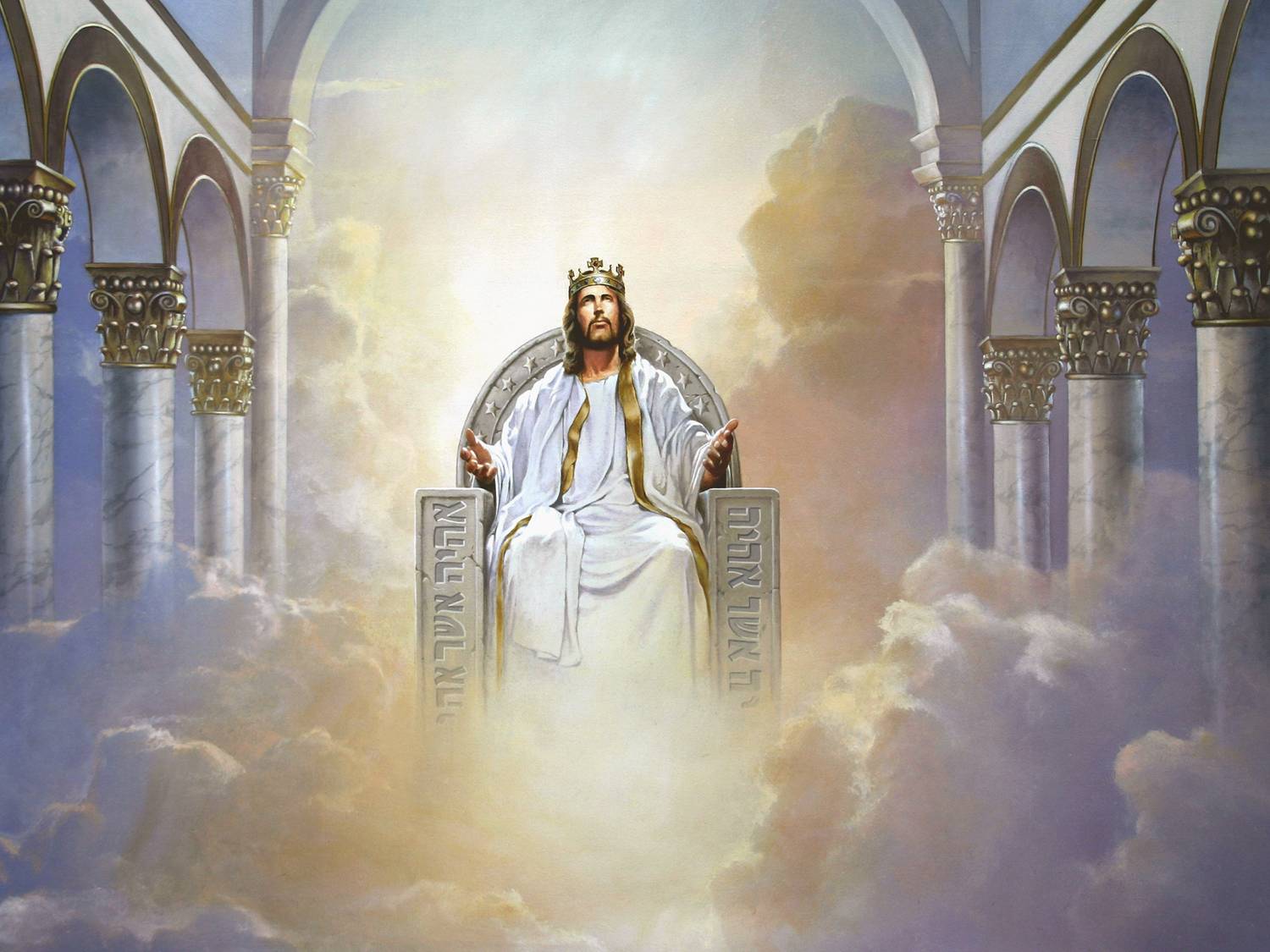
And the seventh angel sounded; and there were great voices in heaven, saying, The kingdoms of this world are become the kingdoms of our Lord, and of his Christ; and he shall reign for ever and ever — Revelation 11:15.

But unto the Son he saith, Thy throne, O God, is for ever and ever.  (Hebrews 1:8)

One of Satan’s most common tactics is a direct assault on the deity of Christ.  Not only has he deceived  the Jews and Muslims into believing that He was just another man, a prophet and a great teacher, but he has also blinded a variety of cults that masquerade as Christian, such as the Mormons and Jehovah’s Witnesses.  But the opening chapter of the book of Hebrews immediately confronts that attack with the declaration that the “Son whom [God] hath appointed heir of all things, by whom he made the worlds; Who (i.e., Jesus) being the brightness of his glory and the express image of his person and upholding all things by the word of his power, when he had by himself purged our sins, sat down on the right hand of the majesty on high” (vv. 2-3).

The first verse of the Bible tells us that “In the beginning God created” (Genesis 1:1), yet these opening verses in Hebrews attribute creation to the Son.  This assertion is repeated elsewhere: “All things were made by him” (the Word, John 1:1-3); “For by him (Jesus) were all things created that are in heaven, and that are in earth, visible and invisible, whether they be thrones, or dominions, or principalities, or powers: all things were created by him and for him” (Colossians 1:16).  Jesus is the Creator God.

The writer of the book of Hebrews begins his apologetic by demonstrating Christ’s superiority to the created angels.  At His birth “when [God the Father] bringeth in the firstbegotten into the world, he saith, And let all the angels of God worship him” (v. 6).  Only God is worthy of worship, and so the angels are instructed to worship Him.  Then God the Father addresses the Son: “Thy throne, O God, is for ever and ever: a sceptre of righteousness is the sceptre of thy kingdom” (v. 8).  The Father calls the Son “God.”

Our Savior is the everlasting God.  He has created all things. “They shall perish; but thou remainest; and they all shall wax old as doth a garment; And as a vesture shalt thou fold them up, and they shall be changed: but thou art the same, and thy years shall not fail” (vv. 11-12).  No wonder Jesus admonishes, “Lay up for yourselves treasures in heaven” (Matthew 6:20) for “the world passeth away, and the lust thereof: but he that doeth the will of God abideth for ever” (1 John 2:17) in the presence of our everlasting Lord.

Comments Off on Everlasting Lord

Filed under Christianity, Creation, Religion, Theology

Known of God

Before I formed thee in the belly I knew thee; and before thou camest forth out of the womb I sanctified thee … (Jeremiah 1:5)

O LORD, thou hast searched me, and known me. (Psalm 139:1)

Psalm 139 is a beautiful theological treatise on the attributes of God.  The first six verses expressing His omniscience begin with an emphatic declaration: “thou hast searched me, and known me” (v. 1).  This truth statement emphasizes the intimacy with which God is acquainted with us, even in the minutest details of our being.  The same intimacy applies to our every act, our “downsitting” and our “uprising” (v. 2), and furthermore, He knows the motives behind our actions before the thought even crosses our mind: “thou understandeth my thought afar off” (v. 2) “and art acquainted with all my ways” (v. 3).  Not only is God aware of our present, but He is equally knowledgeable of our past and of our future: “Thou hast beset me behind and before and laid thine hand upon me” (v. 5).

God is ever present with us. “Whither shall I go from thy spirit or wither shall I flee from thy presence?” (v. 7).  There is nowhere we can go to escape God’s presence – nowhere in the vastness of heaven (space) nor in the abode of the dead (Sheol) (v. 8).  There is no darkness deep enough to hide us from His presence (v. 11-12).

God’s omnipotence, His unlimited power, is demonstrated in His creation, especially in the creation of the human body.  “I am fearfully [awesomely] and wonderfully [lit. uniquely] made” (v. 14).  The human body is composed of over 30 trillion (30,000,000,000,000) cells, each of which is a marvel of design and complexity.  What is more amazing is the fact that evolutionists examine a single human cell and attribute it to time and chance.  It is no wonder that God’s Word proclaims: “The fool hath said in his heart, There is no God” (Psalm 14:1).

These days the word “awesome” is used to describe anything from a really juicy hamburger to a thrilling ride on the Texas Giant rollercoaster.  What a sorry devaluation of the word!  “Awesome” can truly only be said of God.  If we would but take the time to wonder at the awesomeness of God, surely we would not have the words that God gave to David in this Psalm.  Surely, we would be left speechless – without words.  Surely, the revelation should move us from the realization that we are intimately known to the desire to be better known and to be re-formed more into His image. Surely, we should fall on our faces before Him and plead, “Search me, O God, and know my heart: try me, and know my thoughts: And see if there be any wicked way in me, and lead me in the way everlasting” (vv. 23-24).  What else would there be for us to do!

1 Comment

Filed under Apologetics, Atheism, Christianity, Creation, Pro-life, Religion, Theology

What Is Man?

Image

What is man, that thou art mindful of him?  (Psalm 8:4)

Whether voiced or not, this question dominates the culture not only of our nation, but of the world in general.  What is man?  The humanist would say that we are no more than highly evolved apes.  The pantheist regards man as a parasite that sucks the life out of nature and therefore must be eliminated or constrained for the good of the planet.

But in God’s eyes, man is His most precious creation.  “God created man in his own image, in the image of God created he him; male and female created he them” (Genesis 1:27).  Such high regard did God have for mankind that He gave them stewardship responsibility over all of his creation (Genesis 1:28).  Human life is of such value that God demands capital punishment for any man or any animal that takes the life of a man (Genesis 9:5-6).  God ultimately demonstrated His value of human life when He “made himself of no reputation, and took upon him the form of a servant, and was made in the likeness of men: and being found in fashion as a man, he humbled himself, and became obedient unto death, even the death of the cross” (Philippians 2:7-8).  “Forasmuch as ye know that ye were not redeemed with corruptible things, as silver and gold … But with the precious blood of Christ, as of a lamb without blemish and without spot” (1 Peter 1:18-19).

As we contemplate the awesomeness of the Creator and His love, care, and concern for “the work of [His] fingers” (v. 3), is it any wonder that David marveled in amazement: “What is man that thou art mindful of him?”  The Hebrew word translated “mindful” is zakar, which means “to mark” and by implication it indicates that God remembers us, “for he hath said, I will never leave thee, nor forsake thee” (Hebrews 13:5).

In comparison to the vastness of God’s creation, man is but a speck, and yet “the very hairs of your head are all numbered” (Matthew 10:30).  “What is man that thou art mindful of him?”  The thought should drive us to our knees!

4 Comments

Filed under Atheism, Christianity, Creation, Evolution, Religion

The Fallacy of Time and Chance

The Fallacy of Time and Chance.

Comments Off on The Fallacy of Time and Chance

Filed under Atheism, Christianity, Creation, Evolution, Religion