But as it is written, Eye hath not seen, nor ear heard, neither have entered into the heart of man, the things which God hath prepared for them that love him. (1 Corinthians 2:9)
Lately, I find myself musing about the thousand-year reign of Christ on Earth. I have written about end-times prophecy over the years in anticipation of the Rapture of the Church[1] and the following seven-year Tribulation.[2] However, other than affirming that there will be a coming thousand-year reign of Christ—the Millennium—I have not ventured much speculation on what that time will be like.
Scattered throughout pages of prophetic Scripture lie hidden hints of life on Earth with Jesus as Supreme Potentate over all the nations of the earth. That the reign of Christ on Earth for 1,000 years is a well-established fact in Scripture is beyond question. Revelation 20:1-7 confirms the timeframe as “a thousand years” no less than six times. Skeptics scoff, saying that the 1,000 years is figurative language signifying an undetermined long period of time. Others claim it refers to the current church age since Christ’s ascension. Yet that period has already stretched nearly 2,000 years, and earthly conditions hardly match the glorious descriptions in Scripture. No, the 1,000 years recorded in Revelation must be taken literally.
Christ’s Absolute Rule
During those 1,000 years, Jesus will reign on Earth. Revelation 19:15 says, “And out of his mouth goeth a sharp sword, that with it he should smite the nations: and he shall rule them with a rod of iron: and he treadeth the winepress of the fierceness and wrath of Almighty God” (emphasis mine). Ruling with “a rod of iron” establishes His absolute authority, yet Isaiah adds this balance: “But with righteousness shall he judge the poor, and reprove with equity for the meek of the earth: and he shall smite the earth with the rod of his mouth, and with the breath of his lips shall he slay the wicked” (Isaiah 11:4, emphasis mine).
The prophet Daniel interpreted Nebuchadnezzar’s dream of the multi-metal statue representing successive kingdoms.[3] The final kingdom, symbolized by feet of iron mixed with clay and ten toes (ten kings), corresponds to the rulers during the coming Tribulation. “And in the days of these kings shall the God of heaven set up a kingdom, which shall never be destroyed: and the kingdom shall not be left to other people, but it shall break in pieces and consume all these kingdoms, and it shall stand for ever” (Daniel 2:44, emphasis mine). That kingdom, is the kingdom of Christ. Daniel later saw “one like the Son of man” receiving everlasting dominion (Daniel 7:13-14, 27). The Apostle Paul affirms that in that day, “at the name of Jesus every knee should bow… and that every tongue should confess that Jesus Christ is Lord, to the glory of God the Father” (Philippians 2:10-11, emphasis mine).
Peace Among the Nations
In the Millennium, the nations (Hebrew: goyim; Greek: ethnos), i.e., all ethnicities, not of Jewish descent, will be subject to Jesus. Isaiah foretells: “And it shall come to pass in the last days, that the mountain of the LORD’S house shall be established in the top of the mountains, and shall be exalted above the hills; and all nations shall flow unto it … and they shall beat their swords into plowshares, and their spears into pruninghooks: nation shall not lift up sword against nation, neither shall they learn war any more” (Isaiah 2:2-4, emphasis mine). The Prophet Micah[4] echoes this nearly verbatim, and adds, “But they shall sit every man under his vine and under his fig tree; and none shall make them afraid: for the mouth of the LORD of hosts hath spoken it” (Micah 4:4, emphasis mine). Absolute peace will prevail.
A familiar Christmas passage points to the coming Messiah: “For unto us a child is born, … and the government shall be upon his shoulder: and his name shall be called Wonderful, Counsellor, The mighty God, The everlasting Father, The Prince of Peace. Of the increase of his government and peace there shall be no end, upon the throne of David, and upon his kingdom, to order it, and to establish it with judgment and with justice from henceforth even for ever. The zeal of the LORD of hosts will perform this” (Isaiah 9:6-7, emphasis mine). When Jesus presented Himself as the expected king,[5] He was rejected and nailed to a Roman cross. His earthly kingdom is yet to come. “And the LORD shall be king over all the earth: in that day shall there be one LORD, and his name one” (Zechariah 14:9, emphasis mine).
Jesus will reign over all the earth, but King David appears to hold a special role over restored Israel. Hosea prophesies that Israel will “return, and seek the LORD their God, and David their king; and shall fear the LORD and his goodness in the latter days” (Hosea 3:5, emphasis mine). Ezekiel reinforces this: the Lord will set up “my servant David” as shepherd and prince over Israel (Ezekiel 34:23-24; 37:24-25). Ezekiel 37 presents the restoration of Israel through the dry bones vision [6] and the uniting of the two sticks (Judah and Israel).[7] Chapters 40–48 describe the Millennial Temple, where the Glory of the Lord returns—unlike its departure from Solomon’s Temple.[8] The prophet describes it like this:
And the glory of the LORD came into the house by the way of the gate whose prospect is toward the east. So the spirit took me up, and brought me into the inner court; and, behold, the glory of the LORD filled the house. And I heard him speaking unto me out of the house; and the man stood by me. And he said unto me, Son of man, the place of my throne, and the place of the soles of my feet, where I will dwell in the midst of the children of Israel for ever, and my holy name, shall the house of Israel no more defile, neither they, nor their kings, by their whoredom, nor by the carcases of their kings in their high places. (Ezekiel 43:4-7, emphasis mine)
Life in the Millennial Kingdom
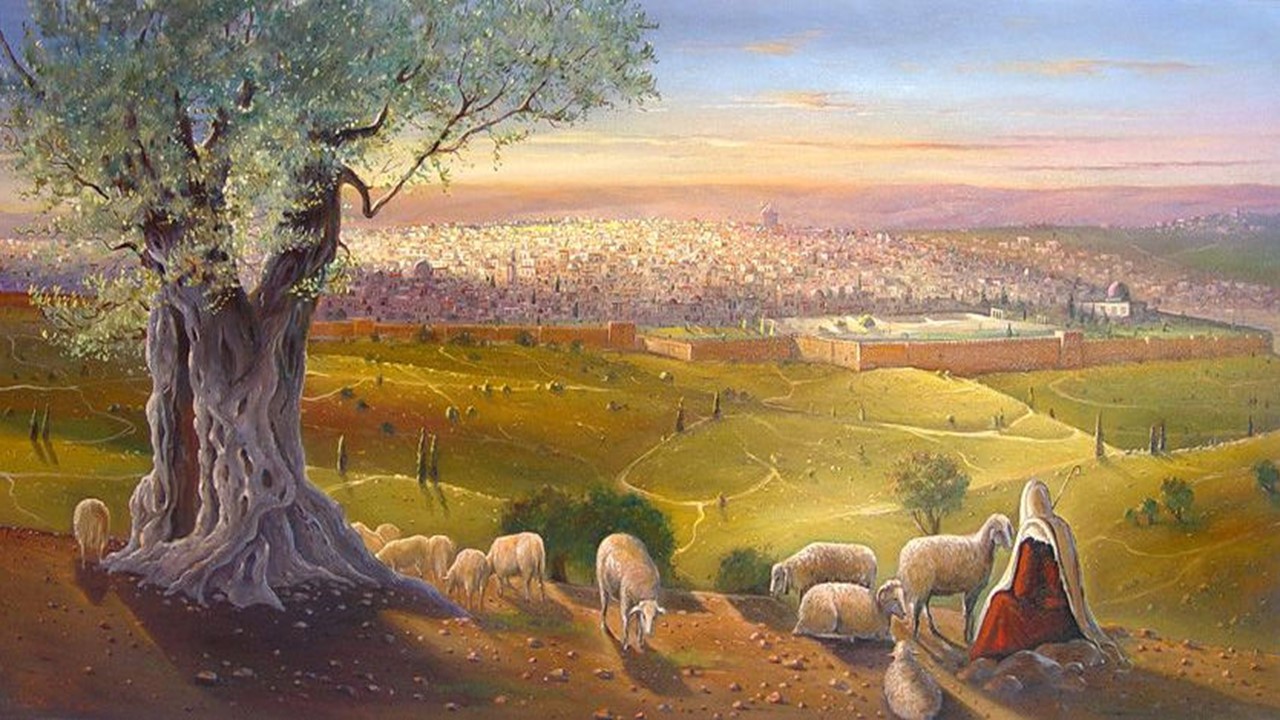
Jesus will be King of Kings and Lord of Lords over all the Earth, but what will daily life be like in that Millennial kingdom? It will be a time of perpetual peace where men “shall beat their swords into plowshares, and their spears into pruninghooks: nation shall not lift up a sword against nation, neither shall they learn war any more” (Micah 4:3). What else? Isaiah describes a restored Earth approaching Edenic conditions: “For, behold, I create new heavens and a new earth: and the former shall not be remembered, nor come into mind” (Isaiah 65:17). Lifespans will lengthen dramatically: “There shall be no more thence an infant of days, nor an old man that hath not filled his days: for the child shall die an hundred years old; but the sinner being an hundred years old shall be accursed” (Isaiah 65:20). Private property will be secure and fruitful: “And they shall build houses, and inhabit them; and they shall plant vineyards, and eat the fruit of them. They shall not build, and another inhabit; they shall not plant, and another eat: for as the days of a tree are the days of my people, and mine elect shall long enjoy the work of their hands” (Isaiah 65:21-22, emphasis mine). Natural-born survivors of the Tribulation will procreate, and “their offspring [shall be] with them” (Isaiah 65:23).
Even the animal kingdom will return to their pre-fall state. “The wolf and the lamb shall feed together, and the lion shall eat straw like the bullock: and dust shall be the serpent’s meat. They shall not hurt nor destroy in all my holy mountain, saith the LORD” (Isaiah 65:25, emphasis mine).[9] Innocent children will play safely: “And the sucking child shall play on the hole of the asp, and the weaned child shall put his hand on the [viper’s] den” (Isaiah 11:8).
Our Glorified Role
For those of us who have placed their trust in Christ, the Millennium holds even greater promises. First of all, at the Rapture, the Apostle Paul says that the those who died believing in Christ will rise from the grave and those of us who are living at that time will metamorphose into their glorified bodies and join the risen dead to meet Jesus in the air.[10] “Who shall change our vile body, that it may be fashioned like unto his glorious body, according to the working whereby he is able even to subdue all things unto himself” (Philippians 3:21, emphasis mine). Imagine that! To have a body like that of our Savior. After His resurrection, He was able to transport Himself at will from one place to another, even into rooms with locked doors.[11] He could also eat as before.[12] I suspect that our glorified bodies will be equivalent to that of a young adult of late 20’s to early 30’s. My reasoning comes from knowing that when Jesus rose from the dead, He was around 33 years old (humanly speaking). Also, when God created Adam and Eve, they were fully mature adults. Not only will we be eternally youthful, but we will be endowed with many of the same superhuman abilities demonstrated by the resurrected Christ in that “He is able even to subdue all things unto Himself ” – not to the same extent as the omnipotent Lord Jesus Christ, but certainly greater than what we know now.
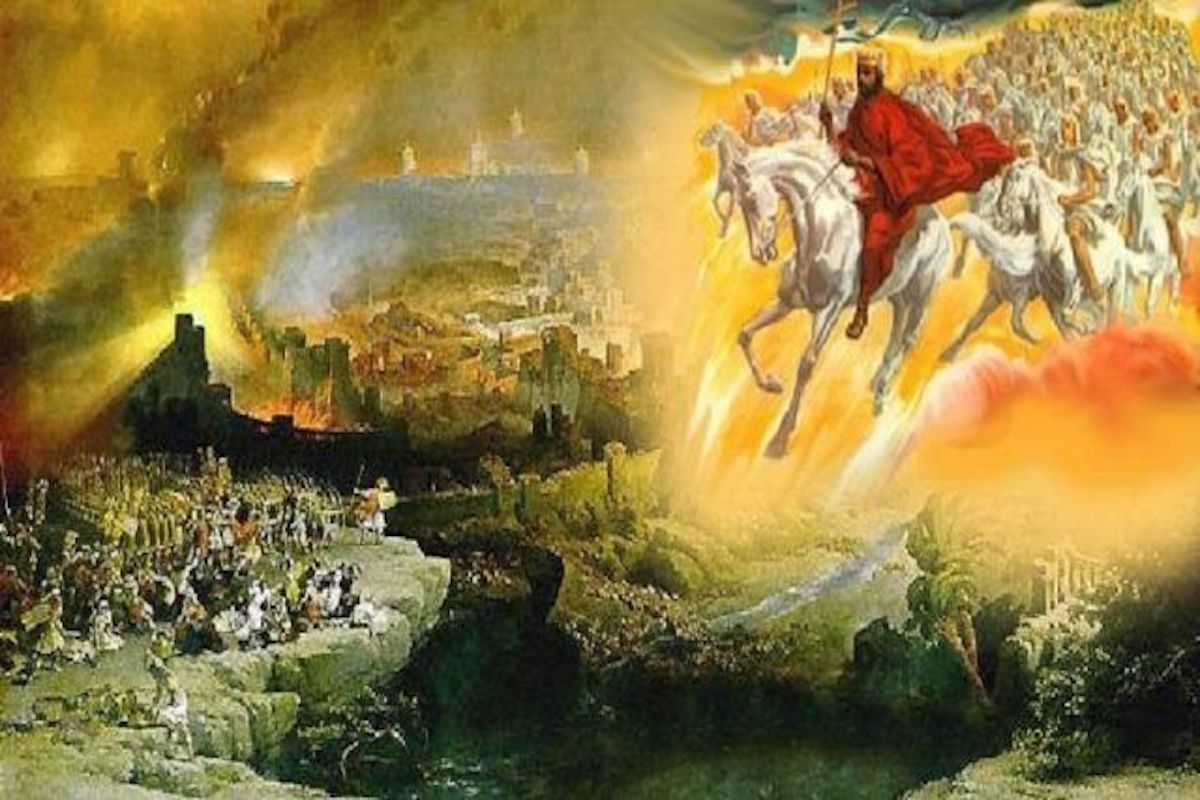
Secondly, we will serve in His administration on Earth. The Gospel writer Matthew records Jesus’ promise to His disciples, “And Jesus said unto them, Verily I say unto you, That ye which have followed me, in the regeneration when the Son of man shall sit in the throne of his glory, ye also shall sit upon twelve thrones, judging the twelve tribes of Israel” (Matthew 19:28, emphasis mine). These would be the “tribes” that survive the Tribulation and enter the Millennium in their natural bodies. The promise is not just for the 12 apostles, but for all the saints,[13] those who were taken up in the Rapture and will return with Christ at His second coming. Revelation 19:11-21 describes Christ’s return at the end of the Tribulation, riding on a white horse – symbolic of a conquering king – prepared to execute justice on a sinful and rebellious world. “And the armies which were in heaven followed him upon white horses, clothed in fine linen, white and clean” (Revelation 19:14, emphasis mine). The fine white linen, as opposed to “white robes,” shows that these are the Bride of Christ who were formally joined to Him at the “wedding supper of the Lamb.”[14]
Revelation 5 presents the scene immediately following the Rapture, where the saints are around the throne of God, and Jesus – the Lamb that was slain – receives the seven-seal scroll – the title deed to the earth. “And [the saints] sung a new song, saying, Thou art worthy to take the book, and to open the seals thereof: for thou wast slain, and hast redeemed us to God by thy blood out of every kindred, and tongue, and people, and nation; And hast made us unto our God kings and priests: and we shall reign on the earth” (Revelation 5:9-10, emphasis mine). The Apostle Paul, in writing to the Corinthian Church, says, “Do ye not know that the saints shall judge the world? and if the world shall be judged by you, are ye unworthy to judge the smallest matters?” (1 Corinthians 6:2, emphasis mine). To Timothy, he writes, “It is a faithful saying: For if we be dead with him, we shall also live with him: If we suffer, we shall also reign with him: if we deny him, he also will deny us: If we believe not, yet he abideth faithful: he cannot deny himself. (2 Timothy 2:11-13, emphasis mine). The promise is sure!
As for the rest of life in the Millennium, the earth and animals return to Edenic conditions with perfect peace. Technology may advance far beyond today to serve the natural population boom, but glorified saints will have no need of such things. When I consider the beauty of our fallen and cursed Earth, I can only imagine the wonder of a fully restored creation. I am anxiously awaiting that time—I don’t believe it is distant.
Reader, if you do not know Jesus as your Lord and Savior, this future is not for you, but it can be. Please read my page on “Securing Eternal Life.”
Notes:
[1] “The Rapture” https://erniecarrasco.com/2021/09/05/the-rapture/
[2] “End-Times Overview: The Big Picture” https://erniecarrasco.com/2026/02/22/end-times-overview-the-big-picture/
[5] Matthew 21:1-11; Mark 11:1-11; Luke 19:28-44; John 12:12-19
[8] Ezekiel 10:4, 18-19: 11:22-23
[9] See also Isaiah 11:6-9
[13] “Saints” are not icons that are to be venerated. Rather, a “saint” (Gk. “hagios”) is a “most holy thing” who has been set apart for God – sanctified, consecrated, elect, etc. All true believers in Christ are “saints.”