Category Archives: Religion

Articles that deal with religions other than orthodox Christianity.

Rightful King


The scepter shall not depart from Judah, nor a lawgiver from between his feet, until Shi’loh come; and unto him shall the gathering of the people be. (Genesis 49:10)

This is readily recognized as Messianic prophesy identifying the coming Messiah as a descendant of Judah.  The scepter, the rod indicating the king’s authority, was assigned to the tribe of Judah, never to depart until the coming of the “One Who Brings Peace” (the meaning of Shiloh).

It is interesting that Israel’s first king, Saul, was not from the tribe of Judah, but rather from the tribe of Benjamin.  First Samuel 12 records the ascension of Saul, Israel’s first king.  Saul was the people’s choice, not God’s.  “Then all the elders of Israel gathered themselves together, and came to Samuel unto Ra’-mah, And said unto him … make us a king to judge us like all the nations” (1 Samuel 8:4-5).  Failure is assured when God’s people try to pattern themselves after the world, and once that route is chosen God will often stand back and let it happen.  “And the LORD said unto Samuel, Hearken unto the voice of the people in all that they say unto thee: for they have not rejected thee, but they have rejected me, that I should reign over them” (1 Samuel 8:7).  We are all guilty of that at one time or another.  We do not want God ruling over us, so instead we opt for the fallacious idea of “self-rule.”  The idea of self-rule is fallacious because no one is truly a free agent, but I digress.

The wisdom of the world is never optimal.  By the world’s standards, Saul was “a choice young man, and [handsome]: and there was not among the children of Israel a [handsomer] person than he: from his shoulders and upward he was higher than any of the people” (1 Samuel 9:2); but whereas “man looketh on the outward appearance … the Lord looketh on the heart” (1 Samuel 16:7).

Israel’s choice was nothing like what God had planned for Israel.  “Behold the king whom ye have chosen, and whom ye have desired! And, behold, the LORD hath set a king over you” (1 Samuel 12:13).  Note that even though Saul was the people’s choice, God assumes the responsibility for setting him up.  This is something to keep in mind in the upcoming election.  No matter who wins, ultimately it is God who will set him over us.  Even after God allowed Israel’s poor choice, He still shows mercy toward them.  “For the LORD will not forsake his people for his great name’s sake: because it has pleased the LORD to make you his people” (1 Samuel 12:22).  It is comforting to know that even when we make poor choices, God will not abandon us.  We have the promise that “The One Who Brings Peace” will come and reclaim His creation, and from Him “the scepter shall not depart.”

Comments Off on Rightful King

Filed under Christianity, Current Events, End Times, Religion

Eternal Sacrifice

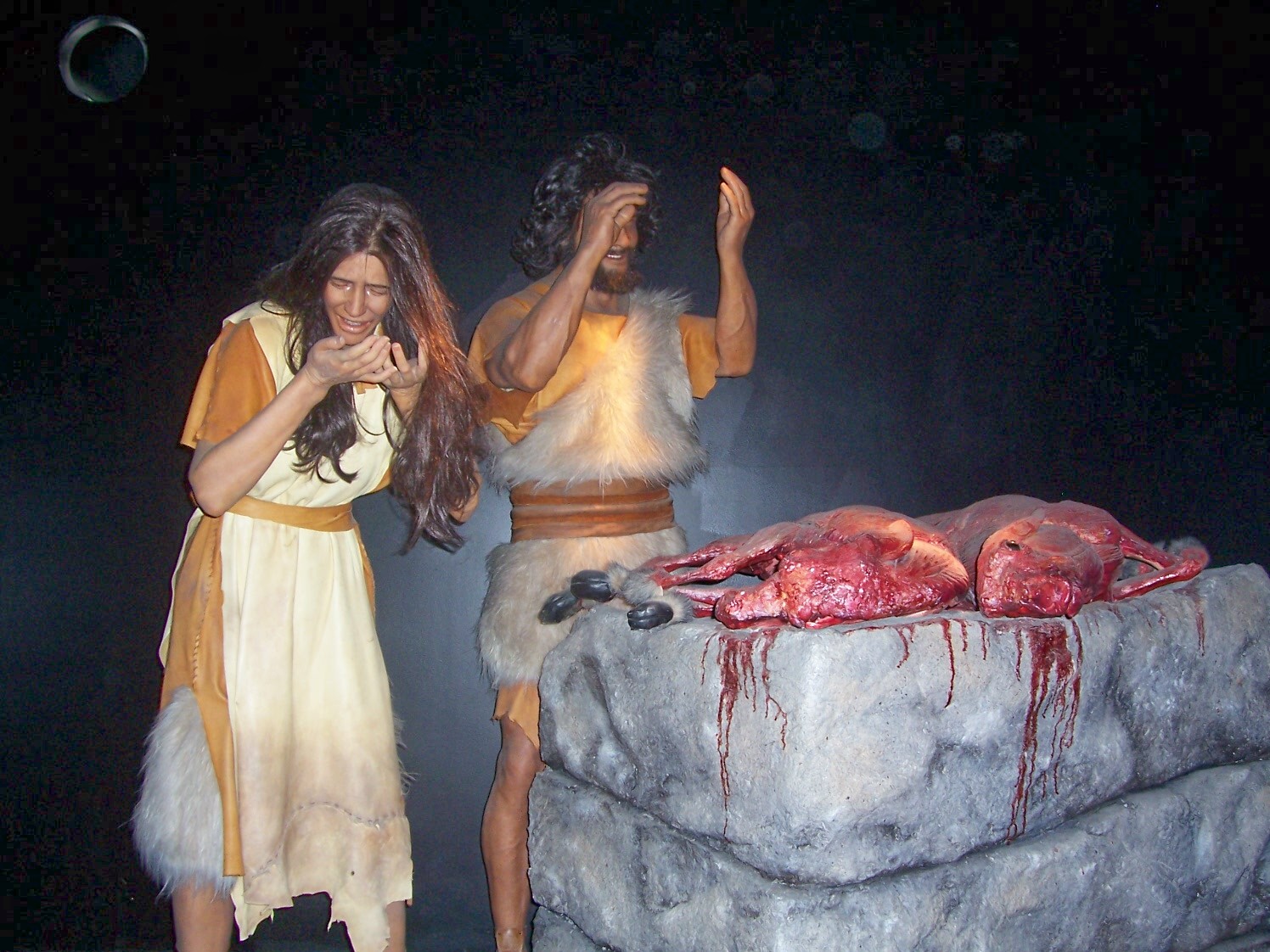
For Adam and Eve, this was the first time the first couple witnessed death. Innocent blood spilled to cover the consequence of their sin. (Romans 6:23)

And almost all things are by the law purged with blood; and without shedding of blood is no remission.  (Hebrews 9:22)

 Christianity has often been characterized as a “bloody religion” due to the many references to blood.  Blood is in many of the songs we sing with lyrics like: “What can wash away my sins? Nothing but the blood of Jesus;” or “Alas and did my Savior bleed and did my Sovereign die;” or “Have you been to Jesus for the cleansing power?  Are you washed in the blood of the Lamb?” and many others.  Unlike pagan religions that required multiple human sacrifices to keep at bay the multitude of insatiable demonic gods, Christianity offers only one human sacrifice that suffices for all and for all eternity.

From the fall of man, blood has been shed for the covering or the atonement of sin.  “Unto Adam also and to his wife did the LORD make coats of skins, and clothed them” (Genesis 3:21).  Those coats of skins required the shedding of blood on the part of some innocent animal.  Abel understood the concept of blood sacrifice when he made his offering to God, “And the LORD had respect unto Abel and to his offering” (Genesis 4:4).  In gratitude for God’s salvation, Noah shed the blood of several animals as a burnt offering to God, “And the LORD smelled a sweet savor; and the LORD said in his heart, I will not again curse the ground any more for man’s sake” (Genesis 9:21).

Blood represents life, and life has great value to the Creator who created it.  God prohibited the consuming of blood:  “But flesh with the life thereof, which is the blood thereof, shall ye not eat” (Genesis 9:4).  He placed an even higher value on human life: “and surely your blood of your lives will I require; at the hand of every beast will I require it, and at the hand of man … Whoso sheddeth man’s blood, by man shall his blood be shed: for in the image of God made he man” (Genesis 9:5-6).

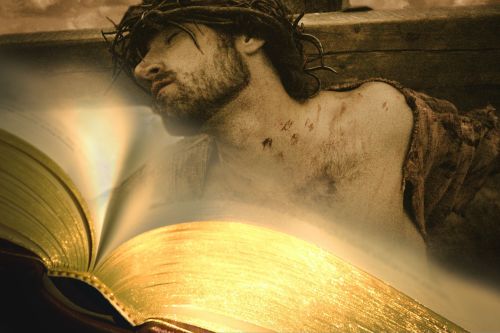
The Israelites were instructed on the proper methods of animal sacrifice for the forgiveness of sins.  All of these were perpetual offerings that foreshadowed the sacrifice Christ would make on the cross once and for all.  This was necessary because “Neither by the blood of goats and calves, but by his own blood he entered into the holy place, having obtained eternal redemption for us” (Hebrews 9:12).  Christ “offered himself without spot to God” (Hebrews 9:14) “For it is not possible that the blood of bulls and of goats should take away sins” (Hebrews 10:4).  “We are sanctified through the offering of the body of Jesus Christ once for all” (Hebrews 10:10) and forevermore.

1 Comment

Filed under Christianity, Gospel, Religion, Salvation

What Is So Great About My Religion?

Pure religion and undefiled before God and the Father is this, To visit the fatherless and widows in their affliction, and to keep himself unspotted from the world. (James 1:27)

I would have to say that I do not have a “religion.”  Religion (as defined by Dictionary.com) has to do with “a specific fundamental set of beliefs and practices generally agreed upon by a number of persons or sects: the Christian religion; the Buddhist religion.”  Religion is “the practice of religious beliefs; ritual observance of faith.”  “Religion” seems to have a lot to do with what one does according to what one believes.  I can go to church religiously because I believe going to church is a good thing, or because that is what a “good” Christian does.  I can be a big believer in physical fitness and may visit the gym religiously, or I may be a strong believer in oral hygiene and brush and floss religiously.  I could be an environmentalist and champion the care and maintenance of the earth religiously.  I might even feel so strongly that I would risk my life in defense of the planet like the adherents of Greenpeace.  Taking all of this into consideration, I must reiterate that I do not have a religion.  Instead, what I have is a personal “relationship” with my Creator.

There are several reasons why my relationship with my Creator is greater than any religion.  First of all, He is Creator of the universe and everything that is in it.  Because of my relationship with Him, I am his child (John 1:12).  As His child, I share in the inheritance of all that He owns (Romans 8:17).

Secondly, there was nothing done on my part to earn this position.  From the fall of man, described in Genesis 3, we have been separated from God because of sin (Romans 3:10, 23) with no hope for reconciliation for eternity (Romans 6:23).  That separation is what the Bible calls “death.”  In that condition, there was nothing I could do close the gap of separation from my Creator.  Understanding this, God stepped from eternity into time in the form of Jesus Christ to pay the “wages of sin” that I owed (John 3:16).  What I could not do for myself, He did for me.  My part was simply to accept His free gift through faith (Ephesians 2:8-9).  What is even more remarkable is that I did not even have to generate my own faith.  The faith I needed to make this transaction, He gave to me, so that all I had to do was act on the faith that He provided.

Thirdly, there is nothing that I have to do to maintain my status.  When I accepted His offer of eternal life, He took up residence in me by way of His Spirit (Luke 11:14; John 14:17).  It is His Spirit in me that empowers me to live a life that pleases Him (Romans 8:5, 14; 1 Corinthians 3:16); there is no need for me to artificially generate a righteous life.  He even intercedes for me when I am unable to verbalize my own needs (Romans 8:26-27).  His Spirit in me strengthens me to overcome sin (1 John 4:4).

Finally, I have the promise of eternal life with my Creator.  There is no “religion” on earth that can guarantee eternal life to its adherents.  “Religions” offer the “possibility” of eternal life, if, when weighed in the cosmic balance, one has accrued more good deeds than bad, but the final determination is unknown until one passes from time into eternity.  How can one ever know one’s standing!  I do not have that dilemma.  The Bible tells me that my place is secure.  I am assured that whoever (that includes everyone and excludes no one) believes in Jesus has (present tense) eternal life (John 3:15-16, 36; 4:14; 5:24; 6:40, 47; 10:28; Romans 6:23; 1 John 2:25; 5:11, 13).

Because of all of this, I have a strong desire to gather “religiously” with the family of God with whom I will spend eternity.  This is not an obligation, but a privilege.  As a child of God, I have a strong desire to please my Savior, not requisitely out of necessity, but out of love.  As a child of the Creator, the King of the universe, I have the honor to work for the advancement of His Kingdom.  What makes this “burden light” is that I do not have to do it in my own strength (Matthew 11:29-30).  For all of these reasons and more, my “relationship” is far superior to any “religion.”

Comments Off on What Is So Great About My Religion?

Filed under Christianity, Gospel, Religion

Is Jesus Who the Bible Says He Is?

For I delivered unto you first of all that which I also received, how that Christ died for our sins … And that he was buried, and that he rose again the third day according to the scriptures (1 Corinthians 15:3-4)

Suppose someone suggests to you, in a conversation:

1. How do I know for sure that Jesus is Who the Bible says He is?  After all, most of what we know about the historical Jesus is what is written in the Bible about Him.

2.  Is there any kind of proof that I am obligated to recognize about Jesus, other than the Bible itself?  (In other words, is the Bible the only ‘witness’ that Jesus is Who the Christians claim He is?)

3. How do I know that the Bible itself is really true, i.e., that it is both authentic (as opposed to corrupted by many errors that occurred as part of the handwritten copying process) and accurate (as opposed to infected by mistaken impressions or memories or unreliable hearsay by those authors who composed it years after the events), as a record of Who Jesus is/was?”

How would you reply?

To address the first question, our very calendar is a testimony to the historicity of Jesus.  Flavius Josephus, a Jewish historian of the first century, documented the historicity of Jesus.  Aside from this, the fact that Christianity exists at all testifies to the fact that Jesus was a historical figure.  No one doubts the historicity of Buddha, Confucius, Mohamed, Plato, Socrates or Aristotle yet there is less documentation for these men than there is for Jesus and no one questions their historicity.  The fact that the Christian church spread across the globe in spite of severe persecution for the name of Jesus gives testimony to the authenticity of Jesus.  Furthermore, there are few, if any in modern scholarship, that question the historical Jesus.

Secondly, there is proof that one is obligated to recognize about Jesus outside the Bible itself.  The empty tomb is proof.  All other leaders of religious movements have died and have been buried and people can visit their graves, but Jesus’ tomb is empty.  I have been told that there are at least seven possible sites around Jerusalem where Jesus may have been buried, but they all have one thing in common – they are all empty.  Jesus rose from the dead just as He said He would, and the empty tomb is proof that He did.  This fact could have been easily debunked early on.  All it would have taken was for the religious leaders of that time to drag Jesus’ body out of the tomb and parade it around for all to see; but they could not because the tomb was empty.  Skeptics have gone to great lengths to attempt to prove His resurrection as a hoax, but they are the ones that have come away looking foolish.  Just recently an ossuary was supposedly discovered in Jerusalem that was supposed to have contained the bones of Jesus.  Inscribed on the ossuary in Hebrew script were the words “Jesus Bar Joseph” – Jesus son of Joseph.  The ossuary was quickly exposed as a forgery making the claimants look foolish indeed.  The proof for Jesus is His empty tomb.

Finally, we can know that the Bible is true by the truth it reveals in matters of history and science.  Although the Bible is not intended to be a textbook on history or science, it is nonetheless historically and scientifically accurate.  For years, archaeologists have used the Bible to locate ancient sites mentioned in its text.  Ancient civilizations mentioned in the Bible, like the Hittites, thought at one time not to have ever existed have been discovered just as the Bible says.  Historical figures, like Belshazzar mentioned in Daniel 5, were once touted as biblical fallacies until recent archaeological discoveries, like the Nabonidus Cylinder, were found with those names inscribed on them. Likewise, science has been unable to refute the Bible on scientific grounds.  The Bible proclaimed that the earth was a sphere before anyone had circumnavigated the globe or witnesses an “earthrise” from the surface of the moon. (Isaiah 40:22).  The Bible claimed that the earth was “hung on nothing” before man ever escaped the bounds of the atmosphere and navigated the emptiness of space (Job 26:7).  The Bible said that there were “paths in the seas” long before the ocean currents were ever mapped (Psalm 8:8).

More incredible than the Bible’s historical and scientific accuracy, is the accuracy of its prophecies.  The Bible contains numerous prophecies in the Old Testament that were fulfilled in Old Testament times.  Some of these include God’s promise to Abraham to make of him many nations  (Genesis 17:4-5); the children of Israel would be slaves for 400 years (Genesis 15:13); much later they would be carried away captive to Babylon (Jeremiah 13:19) for 70 years (Jeremiah 25:11-12).  Arguably, these could be taken as fabrications after the fact – they are not—but even more impressive are the prophecies concerning Jesus.

There are over 300 prophecies in the Old Testament concerning Jesus.  Many of these prophecies deal with His first coming, and the remaining deal with His second coming.  The Bible says that Jesus would be born of a woman (Genesis 3:15; Isaiah 7:14); He would be a descendant of Abraham (Genesis 18:18; 22:18), Isaac (Genesis 26:4) and Jacob (Genesis 28:14); He would be of the tribe of Judah (Genesis 49:8-10); He would be a descendant of David (2 Samuel 7:16; Psalm 2); He would be born in Bethlehem (Micah 5:2); He would be brought out of Egypt (Hosea 11:1); minute details of His crucifixion were predicted long before crucifixion was known (Psalm 22; Isaiah 53); His resurrection (Psalm 16:10), and many others.  It has been estimated that the probability of one man fulfilling only 8 of the prophecies ascribed to Jesus would be 1 in 1017 (1 followed by 17 zeros), and yet, Jesus fulfilled all of the prophecies concerning His first coming.

There is left the question regarding the integrity of the transmission of the biblical texts.  The Dead Sea Scrolls have removed any doubt about the integrity of the Old Testament.  As for the New Testament, we have over 5000 manuscripts (whole and in fragments), some dating as early as the beginning of the second century.  These manuscripts have been examined and found to be consistent with our current Bible.  In the few instances where variances do occur, they are usually minor and never have there been any variances found that raise a question of doctrine.  Aside from that, there are many extra-biblical writings that quote directly from the New Testament so that if all copies of the New Testament were lost, most of it could be reconstructed from these alone.  There is nothing in existence today of ancient writings that is so well documented and so well preserved as the text of the Bible.  The Bible is trustworthy, and what it says about Jesus is true; the question is whether you are willing to trust what it says and submit to the Lord it proclaims.

9 Comments

Filed under Atheism, Christianity, Gospel, Religion, Theology

The Greatest Commandment

Master, which is the great commandment in the law?  (Matthew 22:36)

Many people are often repulsed by Christianity because they view it as a system of regulations and restrictions designed to remove all the joy of living.  They equate church affiliation with an endless list of “thou-shall-not’s.”  Sometimes Christians themselves fall prey to this perception.  I remember my oldest son once protesting my exhortation to live a holy life by saying, “Do you expect me to become a monk!” Leave it to teenagers to exaggerate and be overly dramatic!  But in reality, that is how Christianity is often viewed.  “If I become a Christian, I’ll have to give up drinking beer, going to honky tonks, sleeping around, shacking up with my girlfriend.  I’ll have to quit going to the football games on Sundays.  I’ll have to cancel my subscription to my girly magazines” – and on and on the list would go.

 This encounter with the Pharisee (in our verse) came during Passion Week, before Jesus was crucified.  The religious leaders had swarmed around Jesus like a school of piranhas firing questions at Him in hopes of tripping Him up in order to find an excuse to have Him executed.  Jesus masterfully fielded all of their questions so that they were confounded as to how to respond.  Finally, this Pharisee approaches him with this profound question.

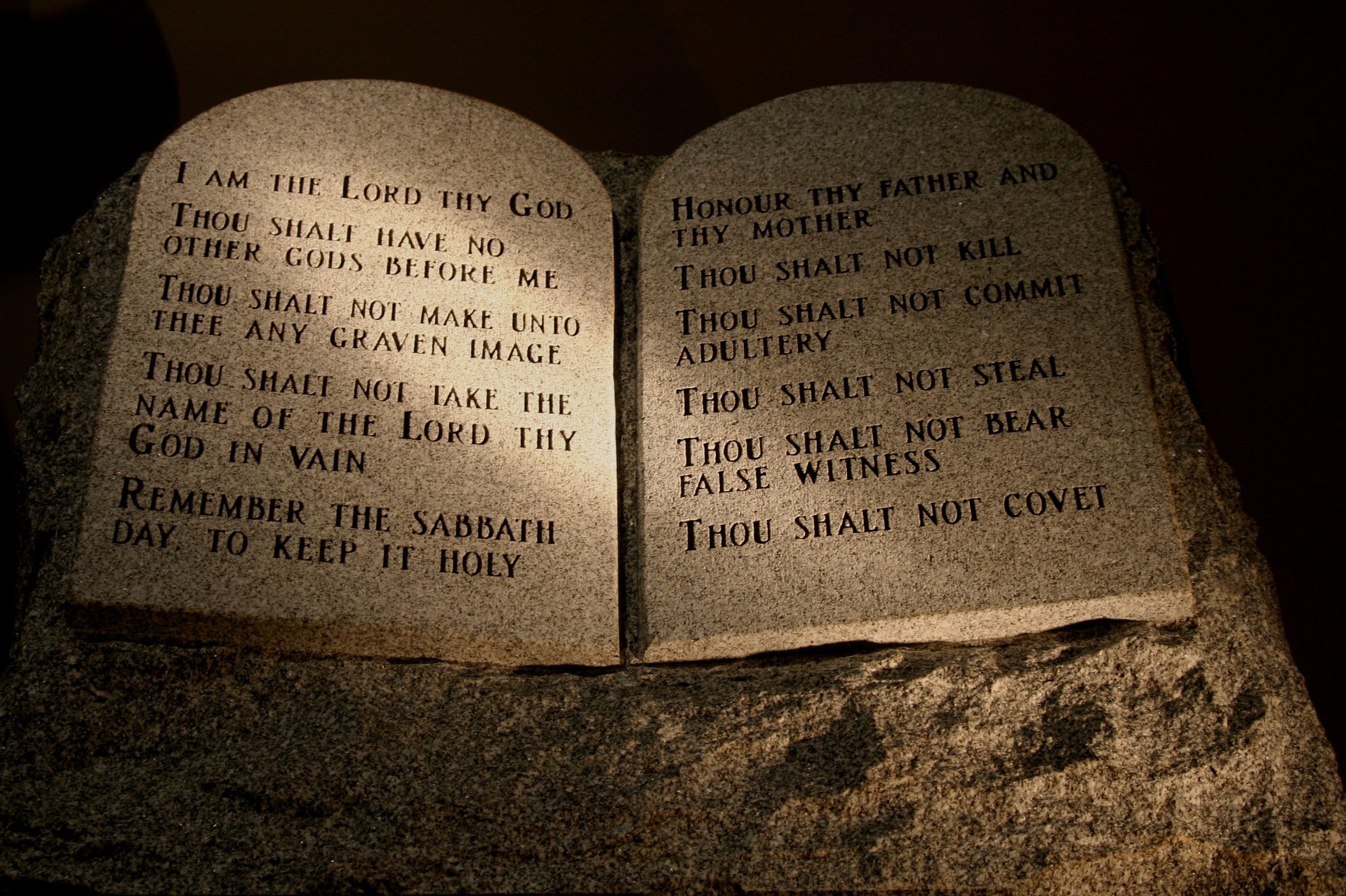
 The Pharisees took pride in their adherence to the law of Moses.  They knew the law so well, that they had devised clever ways to circumvent the law when it became too inconvenient for them.  For example, the fifth commandment said, “Honour thy father and thy mother” (Exodus 20:12).  Among other things, this commandment implied that children were to care for their parents in their old age.  This, as you might imagine, would involve some expense.  The Pharisees had devised a work-around where they would dedicate to God what they had set aside for the care of their parents.  Of course, they were free to use it for themselves, but it got them out of the expense of caring for elderly parents.  Jesus called them hypocrites (Matthew 15:3-9).

 So now, this Pharisee approaches Jesus in all of his self-righteous arrogance, sure that he will stump this simple Galilean carpenter, and asks this most profound question that only someone of his high intellect and learning can answer.  “Master,” he begins with tongue in cheek, careful not to burst out in laughter, “which is the great commandment?”  Perhaps he expected to hear one of the Ten Commandments like the fourth: “Remember the sabbath day to keep it holy” (Exodus 20:8).  Jesus had often been accused by the Pharisees of breaking the sabbath.  Perhaps he expected to hear something from the Talmud, a collection of rabbinical traditions.  Jesus responded by quoting from the Shama: “Hear, O Israel: The LORD our God is one LORD.  And thou shalt love the LORD thy God with all thine heart and with all thy soul, and with all thy might” (Deuteronomy 6:4-6).

 Why would Jesus quote this passage rather than the first of the Ten Commandments – “Thou shalt have no other gods before me” (Exodus 20:3)?  Likewise the second commandment says, “Thou shalt not make unto thee any graven image …” (v. 4).  And the third says, “Thou shalt not take the name of the LORD thy God in vain … (v. 7).  Why not one of these?

 The answer lies in recognizing Who God is.  The commandments are just so many rules, and as the saying goes, “rules are made to be broken.”  The Pharisees were expert in bending the rules. They had no love for God.  To them, God was, for all practical purposes, an academic exercise.  They did not deny God, but to them God was an impersonal being that must be appeased by strict adherence to His laws, which could be circumvented given the right conditions.  So, they had the first commandment covered, they did not recognize any other gods and they disassociated themselves from anybody who did.  They had the second commandment down; they disallowed any graven images.  In fact, they would not allow Roman coins into the temple because they bore the image of Caesar, hence they had money changers at the door of the temple that would exchange Roman coins for kosher temple coins (for a price).  They had become so proficient at not pronouncing the name of God (Yahweh) by simply replacing the Name with “LORD” (Adoni) that they literally forgot how to pronounce it!  This was all bound up in legalism, and it expressed no love toward God.

 “Jesus said unto him, Thou shalt love the Lord thy God with all thy heart, and with all thy soul, and with all thy mind.  This is the first and great commandment” (Matthew 22:37-38).  What makes this the greatest commandment is that it recognizes God as supreme in all things.  He is Creator (Genesis 1).  All creation belongs to Him.  The heavens, i.e., the universe, belong to Him (Job 41:11; Deuteronomy 10:14).  The earth belongs to Him (Exodus 9:29; Deuteronomy 10:14; Psalm 24:1; 50:12).  All the wealth of the earth belongs to Him: the animal kingdom (Psalm 50:10), and all the mineral wealth (Haggai 2:8).  All of the land belongs to Him (Leviticus 25:23).  The kingdoms of the world belong to Him (Psalm 22:28), and we each, individually, belong to Him (Leviticus 20:26; Ezekiel 18:4).  It is this last one, if the others aren’t enough, that should give us pause for concern, for Ezekiel 18:4 ends with this phrase:  “the soul that sinneth, it shall die.”  To break the greatest commandment is eternally fatal.

 We often show contempt for God when we presume ourselves to be self-sufficient, and that all we have comes by our own efforts.  When we come to that conclusion, God reminds us that when “thou say in thine heart, My power and the might of mine hand hath gotten me this wealth … thou shalt remember the LORD thy God: for it is he that giveth thee power to get wealth …” (Deuteronomy 8:17-18).  When you understand that ALL belongs to God and nothing belongs to you, then you can begin to recognize and be sincerely thankful for all He has given you.  That begins with your very existence – every breath, every beat of your heart, is a gift of God.  Then you can thank Him for your parents and all your ancestors before you without whom you would not exist.  You can thank Him for your spouse and for the children He has given to your charge – they are His and He has granted you oversight of their lives.  You can thank Him for your health and your intellect that allows you to be gainfully employed or conduct your own business.  You can thank Him for the nation in which you live.  If you are a Christian, you can thank Him for your brothers and sisters in Christ that gather around you in spiritual and material support when you are in need.  There are so many things that come from His hand for which you have to be grateful.

How can you love Him with all your heart, soul and mind?  Your heart is the seat of your emotions.  Your desire should be to have fellowship with Him, just as you desire to be with any person you love.  I love my wife, and I want to be with her always.  She is my best friend, and when she is away from me, there is an emptiness that only she can fill.  Our desire for God should be no less heartfelt than that.  To love God with your soul means that you yield every fiber of your being to His will.  Does that mean to become a monk?  Yes, if that is His will for you.  Does it mean that you surrender your life to be a missionary in a third-world country where there is a danger of losing your life?  Yes, if that is His will for you.  But mostly what it means is that you are willing to serve Him exactly where He has placed you:  to be the husband and spiritual leader of your family; to be a godly father or mother to your children; to stand up for your Christian beliefs even when it is inconvenient for you.  To love Him with all of your mind means that you spend time reading His word rather than filling your mind with the useless and unfruitful noise of the this world.  Paul said, “whatsoever things are true, whatsoever things are honest, whatsoever things are just, whatsoever things are pure, whatsoever things are lovely, whatsoever things are of good report; if there be any virtue, and if there be any praise, think on these things” (Philippians 4:8).

How can you know that you are keeping the greatest commandment?  Jesus said, “If ye love me, keep my commandments” (John 14:15).  What Jesus is saying here is that, if you keep the greatest commandment (love Me with all your heart, soul and mind), you will keep My commandments.  He also said, “If ye keep my commandments, ye shall abide in my love; even as I have kept my Father’s commandments, and abide in his love” (John 15:10).  When you love God/Jesus with all your heart, soul, and mind, His love inhabits you, which enables you to love Him more.  When you love Him with all your heart, soul, and mind, you will find that those things you treasured before are not so valuable after all, and the things you thought you would lose by surrendering your life to Him, you will find that He replaces with greater blessings.  The greatest commandment ensures that you have nothing to lose (because it’s not yours to begin with), but you have everything to gain (because as your heavenly Father, everything that is His He gives to His children).

Comments Off on The Greatest Commandment

Filed under Christianity, Religion, Theology