Category Archives: Creation

Articles that emphasize biblical six-day, young earth creation.

Noah

Make thee an ark of gopher wood; rooms shalt thou make in the ark, and shalt pitch it within and without with pitch. (Genesis 6:14)

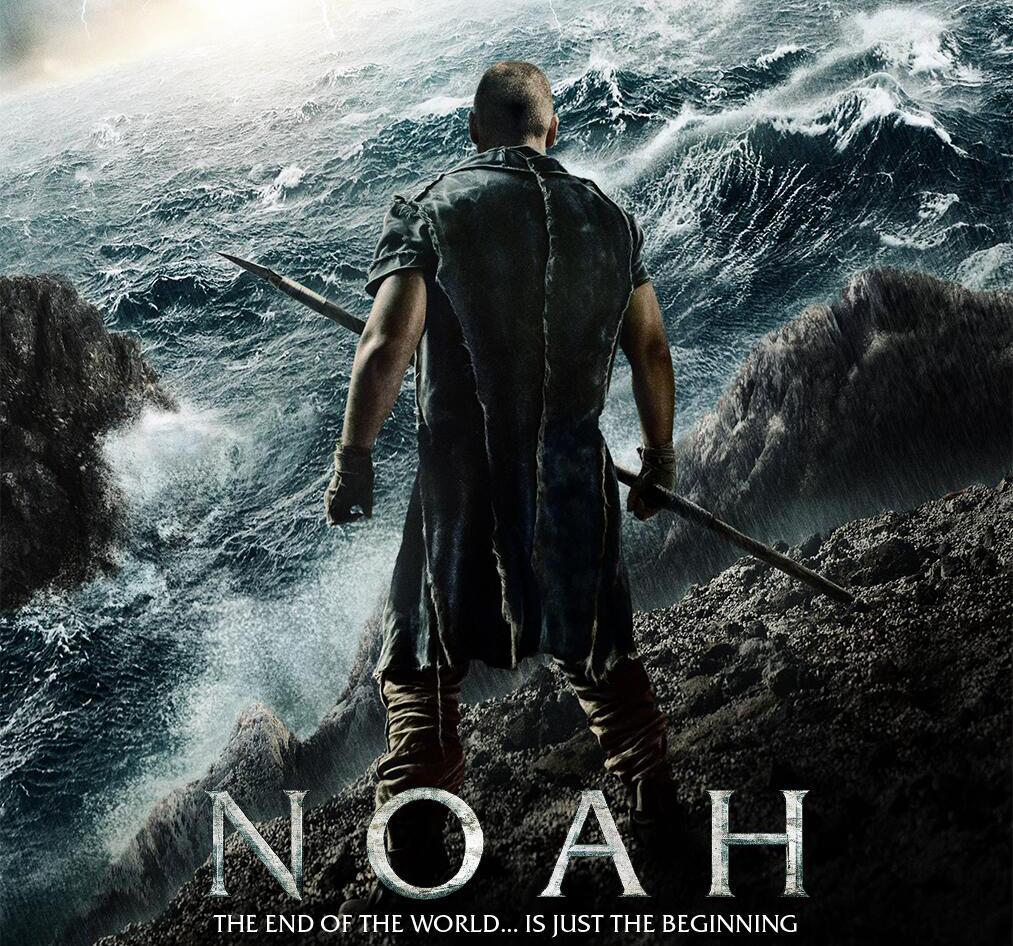
Thanks to a host of well-meaning Christian movie critics, I find my enthusiasm for seeing the movie “Noah” severely waning. Thanks for all the spoilers! It goes without saying that any Bible movie coming out of Hollywood will fall woefully short on accuracy. Face it; these people are script writers that deal in fantasy, not theologians or Bible scholars who are intimate with the Word of God. Not to mention that God chose not to provide us with every detail that took place within this 121-year period of history. The Flood account takes up only four short chapters in the Bible. There is not enough material there to make a 2-hour and 18-minute movie, so Hollywood has to fill in the blanks according to their own imaginations – that being Director and Co-writer, Darren Aronofsky, an atheist, and staring actor, Russell Crowe who is no friend of Christians.

I would hope that thoughtful Christians would take that into consideration. It’s a movie. It is designed to entertain and to make money for the producers and for the theaters on the sale of popcorn and soda. Certainly Christians (or anyone else for that matter) should not take it as a serious portrayal of a biblical narrative. That said, it does get some things right. The Ark is of the correct biblical dimensions. The Flood is global. The Flood is God’s judgment for man’s sin. The Flood is not just the result of rain, but also resulted from the bursting of the “fountains of the deep.” Of course, the movie gets more things wrong than it gets things right. One glaring problem that I found from viewing movie trailers is that the Ark is of a crude construction. It looks like a huge log cabin that could hardly withstand the tsunami-like waves associated with the Great Flood. This image of the Ark stems from evolutionary thinking that assumes ancient man was technologically inept, but that is hardly the picture the Bible presents of pre-flood man: “Jubal: he was the father of all such as handle the harp and organ … Tubalcain, an instructer of every artificer in brass and iron” (Genesis 4:21-22). Not long after Noah and his family came out of the Ark, the Tower of Babel was built (Genesis 11), and after the division of languages, the Egyptians started building their pyramids. It seems implausible to me that Noah would have built anything less than a sturdy, seaworthy vessel, and besides, he had 120 years to work on it. The spoilers also point out that the movie Ark has several doors, while the biblical Ark has only one (Genesis 6:16).

The spoilers point out many other problems with the film. For instance, creation is a result of the big bang. Life emerges out of the waters. The movie implies that Adam and Eve come from apes. Noah seems to care more about animals and the planet than he does about humans including his own family. The sin of mankind is their abuse of the environment and mankind is portrayed as blight upon the earth. The Creator (Who is never referred to as “God”) is impersonal and vindictive. It is implied that God instructs Noah to kill his own granddaughters (born on the Ark, which has no biblical basis), and when he is unable to do so, Noah regards himself as a failure. More could be said concerning the failure of this movie to present a true rendition of the biblical text, however the critics, above all else, decry the film’s purposeful distortion of Scripture. For the low information viewer, the question remains, who was Noah? What was Noah really like?

To answer those questions, one must go to the source, the Bible. Noah is of the godly line of Seth, Adam’s third son named in the Bible (Genesis 4:25). There very well could have been others, but one must remember that one of the purposes of the biblical genealogies is to point to Christ. Noah’s father was Lamech, and his grandfather was Methuselah, whose name means something like “when he dies, judgment.” Methuselah holds the record for longevity; he lived to be 969 years old, and he died the year that the Flood came.

Noah was around 480 years old when God selected him to build the Ark. At that time, “the LORD said, My spirit shall not always strive with man, for that he also is flesh: yet his days shall be an hundred and twenty years” (Genesis 6:3, emphasis added). So Noah was given 120 years to build the Ark. During that time, he preached to the people trying to get them to repent of their sin. Peter speaking of the people of that time “Which sometime were disobedient, when once the longsuffering of God waited in the days of Noah, while the ark was a preparing, wherein few, that is, eight souls were saved by water” (1 Peter 3:20, emphasis added). “For if God spared not the angels that sinned, but cast them down to hell, and delivered them into chains of darkness, to be reserved unto judgment; And spared not the old world, but saved Noah the eighth person, a preacher of righteousness, bringing in the flood upon the world of the ungodly” (2 Peter 2:4-5, emphasis added). When Noah and his family (Mrs. Noah, Noah’s three sons and his three daughters-in-law) entered the Ark, Noah was 600 years old (Genesis 7:11).

The reason God brought the Flood was not for ecological reasons as the Gaia-worshiping makers of the “Noah” movie suggest. Second Peter 2:5 (above) talks about God not sparing “the angels that sinned,” and then closely follows with a description of Noah as “a preacher of righteousness.” It must be understood that the angels who rebelled against God along with Lucifer (Satan), are excluded from God’s plan of salvation. So Noah’s preaching was not to fallen angels (demons), but rather to humans who had been enticed to sin by these angels. These people would have been eligible for salvation had they repented. But the mention of the angels is interesting. Some scholars believe that these angels in some form or another mated with humans and created a race of super-humans. This is concluded from the first four verses of Genesis 6. “And it came to pass, when men began to multiply on the face of the earth, and daughters were born unto them, That the sons of God saw the daughters of men that they were fair; and they took them wives of all which they chose … There were giants in the earth in those days; and also after that, when the sons of God came in unto the daughters of men, and they bare children to them, the same became mighty men which were of old, men of renown. (Genesis 6:1-2, emphasis added). The Hebrew word for “sons of God” in verses 2 and 4 is bene ĕlôhı̂ym and it is always used when referring to angels in the Old Testament. The Hebrew word translated “giants” here is nephı̂ylim and it means “fallen ones.” Of course, there are those who will say that angels do not have sex and others who will suggest that angels (except for God’s angels) cannot take human form. I will not go to war over that, but whatever took place was sufficient to corrupt mankind to the point that God was willing to destroy His entire creation with the exception of those who made it on the Ark. “And GOD saw that the wickedness of man was great in the earth, and that every imagination of the thoughts of his heart was only evil continually. And it repented the LORD that he had made man on the earth, and it grieved him at his heart … The earth also was corrupt before God, and the earth was filled with violence. And God looked upon the earth, and, behold, it was corrupt; for all flesh had corrupted his way upon the earth.” (Genesis 6:5-6, 11-12, emphasis added). Imagine the degradation and depravity to which mankind had sunk that the great loving heart of God could be so grieved as to destroy His beautiful creation! This had nothing to do with littering the planet.

“But Noah found grace in the eyes of the LORD” (Genesis 6:8). In Noah and his family was the human race preserved. Noah was given instruction for building the Ark. It was to be 300 cubits long, 50 cubits wide and 30 cubits high (Genesis 6:15). Using an 18-inch cubit, that made the Ark 450 feet long, 75 feet wide, and 45 feet high. The Ark was the length of one and one-half football fields and of sufficient capacity to hold 522 railroad cattle cars. The Ark was to have three floors (stories or decks, Genesis 6:16) and “rooms” (Hebrew qênim meaning “nests”) for the animals (Genesis 6:14). The Ark also required a ventilation and lighting system which the Bible describes as a “window” (Genesis 6:16). God instructed Noah to bring enough food for his family and for all of the animals (Genesis 6:20) enough to last them for a year (Genesis 7:14). In order to carry out God’s instructions, Noah had to be an engineer, architect/designer, ship builder, zoologist and other duties as assigned. Noah was no dummy!

The rains came, the crust of the earth broke open allowing superheated, subterranean water to spew into the atmosphere (Genesis 7:11), and the whole earth was covered in water more than 22 feet above the tallest hills/mountains (Genesis 7:20). “And all flesh died that moved upon the earth, both of fowl, and of cattle, and of beast, and of every creeping thing that creepeth upon the earth, and every man: All in whose nostrils was the breath of life, of all that was in the dry land, died. And every living substance was destroyed which was upon the face of the ground, both man, and cattle, and the creeping things, and the fowl of the heaven; and they were destroyed from the earth: and Noah only remained alive, and they that were with him in the ark” (Genesis 7:21-23, emphasis added). The all-inclusive description of the death wrought by the Flood precludes a small local event as some have suggested.

After 371 days the waters subsided, and Noah was instructed to come out of the Ark (Genesis 8:15-16). Noah released all of the animals, and the first thing he did was to offer a sacrifice of thanksgiving to God (Genesis 8:20-21). God promised never again to destroy the earth with water, and He promised to maintain nature in a stable state (Genesis 8:21); but God was under no delusion that man would remain faithful, “for the imagination of man’s heart is evil from his youth” (v. 21). To Noah and his family and thereby to us, God reestablished man’s Dominion Mandate: “Be fruitful, and multiply, and replenish the earth … And you, be ye fruitful, and multiply; bring forth abundantly in the earth, and multiply therein.” (Genesis 9:1, 7). He also gave to man the authority to render justice. “And surely your blood of your lives will I require; at the hand of every beast will I require it, and at the hand of man; at the hand of every man’s brother will I require the life of man. Whoso sheddeth man’s blood, by man shall his blood be shed: for in the image of God made he man” (Genesis 9:5-6, emphasis added).

This is the true story of Noah. Now, feel free to go enjoy the false story of Noah, just remember that it is just a movie and not the true account. The real historical account is in the Bible. Read it, and know it before you go see “Noah” the movie.

4 Comments

Filed under Apologetics, Atheism, Book Reviews, Christianity, Creation, Current Events, Death, End Times, Evolution, Geology, Origins, Religion, Salvation, Theology

I Am A Christian

Cross in Tunnel

For I am not ashamed of the gospel of Christ: for it is the power of God unto salvation to every one that believeth; to the Jew first, and also to the Greek. (Romans 1:16)

I am a Christian. I do not adhere to a religion. I submit to, dedicate and devote my life to a person – the Person of Jesus Christ. He is my Creator (John 1:1-3), my Lord (Philippians 2:11), my Master (John 13:13) and my God (John 20:28). I owe my entire life (John 1:4), in this present physical state, and in a future and glorified state, to Him. I have this assurance because I have placed my complete trust in Him for my present welfare and my future security (Romans 10:11). There is nothing that I have done or can do to procure that right. “For by grace are ye saved through faith; and that not of yourselves: it is the gift of God: Not of works, lest any man should boast” (Ephesians 2:8-9, emphasis added). I know this to be true because, “as many as received him, to them gave he power to become the sons of God, even to them that believe on his name” (John 1:12), and that applies to me. I know the truth of this because He placed His Spirit within me and His Spirit confirms with my spirit that this is indeed true. “Now he which [establishes] us with you in Christ, and hath anointed us, is God; Who hath also sealed us, and given the earnest of the Spirit in our hearts” (2 Corinthians 1:21-22, emphasis added), and “The Spirit [Himself] beareth witness with our spirit, that we are the children of God” (Romans 8:16).

I am a Christian. I believe that the Bible is THE Word of God. That being the case, it is without error (inerrant), and it is faithful and true (infallible). The Bible may include some things that I cannot understand or explain, but I accept it nonetheless because, coming from God, it is true. “All scripture is given by inspiration of God, and is profitable for doctrine, for reproof, for correction, for instruction in righteousness” (2 Timothy 3:26, emphasis added). The Bible did not come to us by the device of man, but rather by men as inspired and directed by God. “We have also a more sure word of prophecy; whereunto ye do well that ye take heed … Knowing this first, that no prophecy of the scripture is of any private interpretation. For the prophecy came not in old time by the will of man: but holy men of God spake as they were moved by the Holy Ghost” (2 Peter 2:19-21, emphasis added). The same Spirit of God that inspired the scribes of God’s Word also gives understanding to those who have “ears to hear.” Jesus promised, “But the Comforter, which is the Holy Ghost, whom the Father will send in my name, he shall teach you all things, and bring all things to your remembrance, whatsoever I have said unto you” (John 14:26, emphasis added). As a Christian, I reject that a Pope or any other so called “spiritual leader” has greater insight into the Word of God than what the Holy Spirit has given me, so long as I submit to His leading and not to my personal preferences. Those who reject the Bible do so not because they do not understand it, but because they do understand and are unwilling to comply with its teachings. But regardless of what men say, the Word of God will stand when all others fall. God says, “So shall my word be that goeth forth out of my mouth: it shall not return unto me void, but it shall accomplish that which I please, and it shall prosper in the thing whereto I sent it” (Isaiah 55:11, emphasis added). Jesus echoed the same assertion this way: “For verily I say unto you, Till heaven and earth pass, one jot or one tittle shall in no wise pass from the law, till all be fulfilled” (Matthew 5:18, emphasis added). So, when Genesis 1 records that God created the universe and all that is in it – earth, sun, moon, stars, plants, animals, and man – in just six 24-hour days, I accept that as truth, regardless of whether or not science can confirm it, which, by the way, it does. When Jesus says “I will come again, and receive you unto myself; that where I am, there ye may be also” (John 14:3), I know that is true.

I am a Christian. I know that Jesus will return as He promised (John 14:1-3) to snatch away those who have placed their trust in Him. “For the Lord himself shall descend from heaven with a shout, with the voice of the archangel, and with the trump of God: and the dead in Christ shall rise first: Then we which are alive and remain shall be caught up together with them in the clouds, to meet the Lord in the air: and so shall we ever be with the Lord” (1Thessalonians 4:16-17, emphasis added). Those who have placed their trust in their own devices or gods of their own making are destined to an eternity separated from God in Hell. The Apostle Peter puts it this way:

The Lord knoweth how to deliver the godly out of temptations, and to reserve the unjust unto the day of judgment to be punished: But chiefly them that walk after the flesh in the lust of uncleanness, and despise government. Presumptuous are they, selfwilled, they are not afraid to speak evil of dignities. Whereas angels, which are greater in power and might, bring not railing accusation against them before the Lord. But these, as natural brute beasts, made to be taken and destroyed, speak evil of the things that they understand not; and shall utterly perish in their own corruption; (2 Peter 2:9-12, emphasis added).

However, this is not the will of God. “The Lord is not slack concerning his promise, as some men count slackness; but is longsuffering to us-ward, not willing that any should perish, but that all should come to repentance” (2 Peter 3:9, emphasis added). But there is only one way to obtain eternal life, not many ways as many would prefer. Jesus said, “I am the way, the truth, and the life: no man cometh unto the Father, but by me” (John 14:6, emphasis added). “Neither is there salvation in any other: for there is none other name under heaven given among men, whereby we must be saved” (Acts 4:12, emphasis added). While many see this as narrow and intolerant, I would be quick to point out that the holiness of God demands that all sin be punished “For all have sinned, and come short of the glory of God” (Romans 3:23, emphasis added). It is only through His grace and mercy that we even have this “way” of salvation.

I am a Christian. I am not sinless. I am not perfect. In my own strength I am no greater that the worst offender. Any right standing that I have before God is only through the covering (atoning) blood of Jesus Christ my Lord who shed His precious blood in my stead to completely pay my debt of sin, and not mine alone but “whosoever” will believe in Him (John 3:16).  However, even though I am not sinless or perfect, my heart’s desire is to please my God and emulate my Lord and Savior Jesus Christ, and that distinguishes me from someone who is not a Christian. Even this is the result of God’s Spirit in me rather than something I manufacture through my own effort.

I am a Christian. I continue to learn and grow as I strive to follow the example of my Lord. The Bible tells us that the disciples were first called Christians in Antioch (Acts 11:26). A “disciple” is a student or pupil. In the first century, a disciple did not sit at a desk taking notes from an instructor. Rather, they attached themselves to a teacher and tried not only to learn the “teachings” of their teacher, but they tried to emulate his life style. These students at Antioch learned indirectly from Barnabas and Saul (Paul) the teachings of Jesus, and they tried to emulate the life of Christ to the point that outsiders took notice and assigned to them the moniker of “Christian.” My desire, as a Christian, is to so live my life in such a way that others will see Christ in me.

Will you join me and take on the name of Christ? You will not be in the majority. Jesus said, “Enter ye in at the strait gate: for wide is the gate, and broad is the way, that leadeth to destruction, and many there be which go in thereat: Because strait is the gate, and narrow is the way, which leadeth unto life, and few there be that find it” (Matthew 7:13-14). The Greek word translated “strait” is stenos which means “narrow” and it carries the idea of a very tight passage through which one must squeeze with great effort. Thus, it is easily overlooked. The Greek word translated “narrow” is thlibō which means crowed, not because many are on the way, but because it is narrow (like a deer trail) and the few that are on the path overcrowd it easily. It is a road fraught with affliction, tribulation and trouble. It is a perilous road that will alienate the traveler from friends and family and the world. It does come with a cost, but Jesus said:

Think not that I am come to send peace on earth: I came not to send peace, but a sword. For I am come to set a man at variance against his father, and the daughter against her mother, and the daughter in law against her mother in law. And a man’s foes shall be they of his own household. He that loveth father or mother more than me is not worthy of me: and he that loveth son or daughter more than me is not worthy of me. And he that taketh not his cross, and followeth after me, is not worthy of me. (Matthew 10:34-38, emphasis added)

I am a Christian. My first allegiance is to Christ. Yet, as severe as these words of the Lord are, there is a paradox. Jesus also said, “Come unto me, all ye that labour and are heavy laden, and I will give you rest. Take my yoke upon you, and learn of me; for I am meek and lowly in heart: and ye shall find rest unto your souls. For my yoke is easy, and my burden is light” (Matthew 11:28-30, emphasis added). There is nothing that the Lord takes away, that He does not replace with something much better. Those others along the crowed narrow way are your brothers and sisters in Christ, and often, they understand the struggles you face because they have faced them too, and they are there to help you along the narrow way. God’s family is greater than any earthly family or any worldly friends. That is just one more reason I am glad I am a Christian.

3 Comments

Filed under Apologetics, Christianity, Creation, End Times, Evangelism, Gospel, Heaven, Hell, Religion, Salvation, Second Coming of Christ, Theology

Cosmos Review: Standing Up in the Milky Way – Answers in Genesis

Cosmos Review: Standing Up in the Milky Way – Answers in Genesis.

This article from Answers in Genesis pretty well covers my sentiments on this program. It was clearly obvious to me the blatant attack on religion as “religion bad; science good.” It fails to recognize that the majority of scientists started with a strong belief in a Creator God as they sought to “think God’s thoughts after Him.” It was also painfully obvious to me that most of the “facts” that were presented were based on speculation and “consensus science” and nothing that could be supported by the scientific method. It pains me to think how many people fall for this stuff just because “science” (so called) says.

Comments Off on Cosmos Review: Standing Up in the Milky Way – Answers in Genesis

Filed under Apologetics, Creation, Current Events, Evolution, Origins, Religion, Science

Age of the Earth

Genesis 1

“For in six days the LORD made heaven and earth, the sea, and all that in them is …” (Exodus 20:11)

There is no argument that the age of the earth debate between evolutionists and creationists has no resolution because there can be no middle ground for compromise on either side. At issue is the question of origins: did all that exists come about by random chance over billions of years through natural causes, or did an omnipotent, omniscient Creator bring it all into being? It is one or the other, and the one who holds either view holds that view religiously and tenaciously. There is no “give.”

Lamentably, the real battle exists in the Christian camp (among “brothers”) where a variety of opinions persist. Is the earth 4.5 billion years old as the evolutionists claim, or is it only 6,000 years old as the Bible seems to indicate? Most Christians accept that God created all that exists, but beyond that opinions vary as to how God created. That God spoke everything into being as the Bible records is too simplistic an answer for some. There are basically two major divisions in this debate. The first group contends that God created everything in six 24-hour days around 6000 years ago. The second group comes in several flavors, but basically they agree with the evolutionists that God created everything over 13.7 billion years ago and used evolution in one form or another to create life. However, they will contend that man was a “special” creation of God and did not evolve from lower life forms. My intent here is to give a brief defense of the first group. The second group is indefensible in my opinion.

I wish to respond to three questions recently posed to me. (1) Where, exactly, does the Bible say that the earth is only six thousand years old? (2) How do we know that the creation spoken of in the Bible took place in six literal 24-hour days, as opposed to uncounted eons of time? (3) In 2 Peter 3:8, it says “that one day is with the Lord as a thousand years, and a thousand years as one day.”  Is this passage pointing to God as being outside of time, or is it the basis for the 6-day/6-thousand years belief?

In answer to the first question, the Bible does not give an age for the earth per se. God did not exactly “date stamp” His creation. Archbishop James Ussher determined that the earth was created in the year 4004 BC by using the genealogies found in Genesis along with other sources.[1] When one begins with the Genesis account of creation (Genesis 1) and counts the generations from Adam to the Flood, one gets about 1656 years. From the Flood to the birth of Abraham was 297 years for a total of about 1953 years.[2] We can round that off to about 2000 years. Then we have about 2000 years to Jesus and from Jesus until now we have another 2000 years for a total of 6000 years – give or take a couple of hundred years.

Second, God created everything in six literal days. The Hebrew word used for “day” is yom, and it almost always means a normal 24-hour day. On those few occasions when it does not mean a literal 24-hour day, context lets us know that, as in the case of “the day of the Lord.” Furthermore, just in case it is not clear enough for us, God further specifies that “the evening and the morning was the first day, second day, third day,” etc., making it clear that God means a literal 24-hour day (Genesis 1:5, 8, 13, 19, 23, 31). Later, in Exodus 20:11, as God gave the commandment concerning the keeping of the Sabbath, God says, “For in six days the LORD made heaven and earth, the sea, and all that in them is, and rested the seventh day: wherefore the LORD blessed the sabbath day, and hallowed it.” In other words, God is saying, “I gave you the example by creating in six days and resting on the seventh, and I want you to follow My example.”

The third question deals with what a “day” means to God. When we look at 2 Peter 3:8 we need to keep the context in mind. Peter is talking about the Second Coming of Christ, and he is encouraging his readers, in the midst of persecution, not to lose heart in waiting for Christ’s return. In essence he says that God does not mark time the way we do; He is not bound by time as we are. Furthermore, Peter employs simile when he says “one day is with the Lord as [or “like”] a thousand years, and a thousand years as [or “like”] one day.” Notice what he DID NOT say: “one day is with the Lord a thousand years, and a thousand years is one day.” We need to take care when reading the Bible not to read into Scripture what is not there.

There is no scriptural reason not to believe in a young earth, nor is there any scientific reason to not to believe in a young earth; but I will let the scientists at the Institute for Creation Research argue those finer points of science. Trust what God says in His Word – ALL of it! Seriously, who would you rather believe? The words of fallible man or the Word of Infallible God?

3 Comments

Filed under Apologetics, Christianity, Creation, Current Events, Evolution, Gospel, Origins, Religion, Theology

The First Sacrifice

For Adam and Eve, this was the first time the first couple witnessed death. Innocent blood spilled to cover the consequence of their sin.  (Romans 6:23)

For Adam and Eve, this was the first time the first couple witnessed death. Innocent blood spilled to cover the consequence of their sin. (Romans 6:23)

“Unto Adam also and to his wife did the LORD God make coats of skins, and clothed them.” (Genesis 3:21)

Recently someone asked me a very interesting question: “Did God use human form to sacrifice the first animals, or was that done spiritually, without a body?” Of course, this is one of those questions for which we cannot give a definitive/authoritative answer. The problem is that the Bible does not provide enough detail for us make an assertive statement one way or the other. Consider our text above: “Unto Adam also and to his wife did the LORD God make coats of skins, and clothed them” (Genesis 3:21). That is it. That is all we have to go by. Anything beyond that is pure speculation on anyone’s part.

However, having said that, I believe that God took the form of the pre-incarnate Christ and performed the sacrifice before them – in their sight – so that they could witness for themselves the price or cost of their sin. Some innocent animal’s blood had to be shed in order to cover (atone for) their sin. Since they had never killed anything or experienced death in any way, they had to see how this was done in order for them to continue the practice. That they continued the practice is evidenced in the following chapter where Abel sacrificed a lamb from his flock (Genesis 4:4), while Cain offered “the fruit of the ground” (Genesis 4:3). Cain’s offering was rejected by God because it did not follow what God had prescribed in the beginning (Genesis 4:5).

This same practice of sacrifice was followed by Noah after the Flood (Genesis 8:20), by the patriarchs Abraham, Isaac and Jacob (Israel), and finally by the children of Israel after they came out of Egypt. I believe this practice of sacrifice was handed down, generation after generation beginning with Adam, and it was learned by the example given by the pre-incarnate Christ who would ultimately be the perfect Lamb of God.

2 Comments

Filed under Apologetics, Christianity, Creation, Death, Evangelism, Gospel, Religion, Salvation, Theology