Tag Archives: Second Coming of Christ

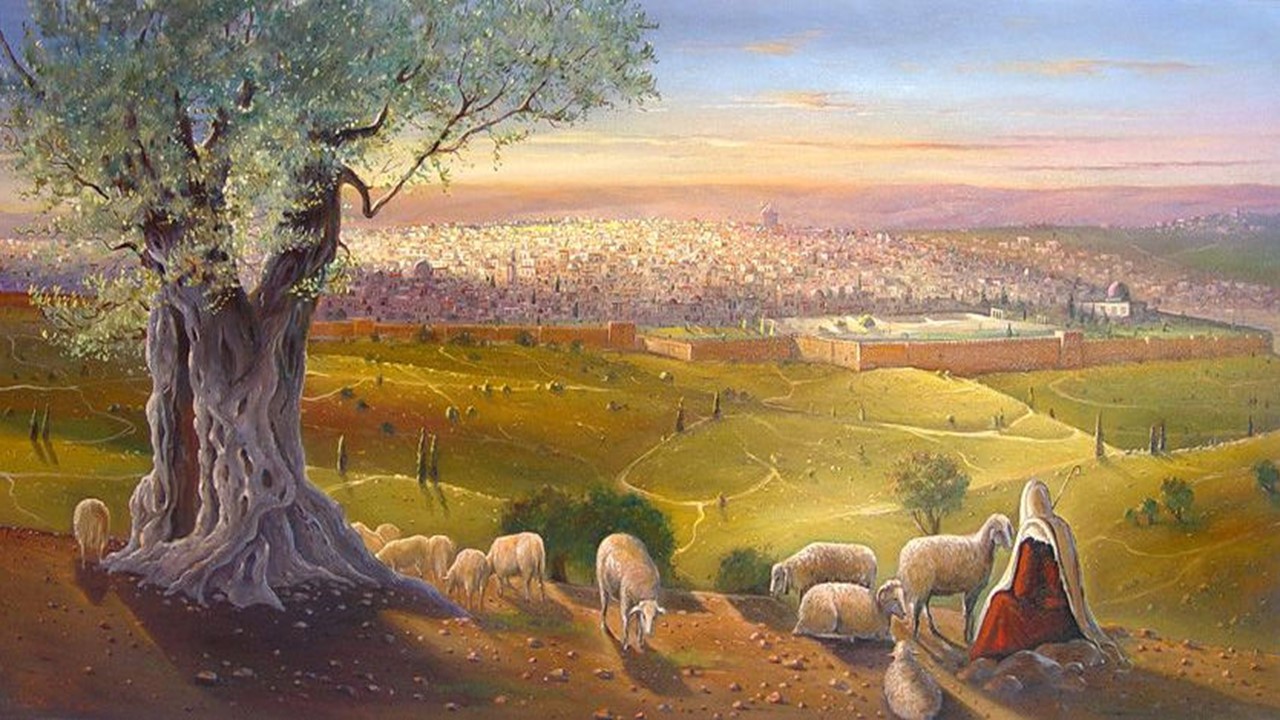
Anticipating the Millennium

But as it is written, Eye hath not seen, nor ear heard, neither have entered into the heart of man, the things which God hath prepared for them that love him. (1 Corinthians 2:9)

Lately, I find myself musing about the thousand-year reign of Christ on Earth. I have written about end-times prophecy over the years in anticipation of the Rapture of the Church[1] and the following seven-year Tribulation.[2] However, other than affirming that there will be a coming thousand-year reign of Christ—the Millennium—I have not ventured much speculation on what that time will be like.

Scattered throughout pages of prophetic Scripture lie hidden hints of life on Earth with Jesus as Supreme Potentate over all the nations of the earth. That the reign of Christ on Earth for 1,000 years is a well-established fact in Scripture is beyond question. Revelation 20:1-7 confirms the timeframe as “a thousand years” no less than six times. Skeptics scoff, saying that the 1,000 years is figurative language signifying an undetermined long period of time. Others claim it refers to the current church age since Christ’s ascension. Yet that period has already stretched nearly 2,000 years, and earthly conditions hardly match the glorious descriptions in Scripture. No, the 1,000 years recorded in Revelation must be taken literally.

Christ’s Absolute Rule

During those 1,000 years, Jesus will reign on Earth. Revelation 19:15 says, “And out of his mouth goeth a sharp sword, that with it he should smite the nations: and he shall rule them with a rod of iron: and he treadeth the winepress of the fierceness and wrath of Almighty God” (emphasis mine). Ruling with “a rod of iron” establishes His absolute authority, yet Isaiah adds this balance: “But with righteousness shall he judge the poor, and reprove with equity for the meek of the earth: and he shall smite the earth with the rod of his mouth, and with the breath of his lips shall he slay the wicked” (Isaiah 11:4, emphasis mine).

The prophet Daniel interpreted Nebuchadnezzar’s dream of the multi-metal statue representing successive kingdoms.[3] The final kingdom, symbolized by feet of iron mixed with clay and ten toes (ten kings), corresponds to the rulers during the coming Tribulation. “And in the days of these kings shall the God of heaven set up a kingdom, which shall never be destroyed: and the kingdom shall not be left to other people, but it shall break in pieces and consume all these kingdoms, and it shall stand for ever” (Daniel 2:44, emphasis mine). That kingdom, is the kingdom of Christ. Daniel later saw “one like the Son of man” receiving everlasting dominion (Daniel 7:13-14, 27). The Apostle Paul affirms that in that day, “at the name of Jesus every knee should bow… and that every tongue should confess that Jesus Christ is Lord, to the glory of God the Father” (Philippians 2:10-11, emphasis mine).

Peace Among the Nations

In the Millennium, the nations (Hebrew: goyim; Greek: ethnos), i.e., all ethnicities, not of Jewish descent, will be subject to Jesus. Isaiah foretells: “And it shall come to pass in the last days, that the mountain of the LORD’S house shall be established in the top of the mountains, and shall be exalted above the hills; and all nations shall flow unto it … and they shall beat their swords into plowshares, and their spears into pruninghooks: nation shall not lift up sword against nation, neither shall they learn war any more” (Isaiah 2:2-4, emphasis mine). The Prophet Micah[4] echoes this nearly verbatim, and adds, “But they shall sit every man under his vine and under his fig tree; and none shall make them afraid: for the mouth of the LORD of hosts hath spoken it” (Micah 4:4, emphasis mine). Absolute peace will prevail.

A familiar Christmas passage points to the coming Messiah: “For unto us a child is born, … and the government shall be upon his shoulder: and his name shall be called Wonderful, Counsellor, The mighty God, The everlasting Father, The Prince of Peace. Of the increase of his government and peace there shall be no end, upon the throne of David, and upon his kingdom, to order it, and to establish it with judgment and with justice from henceforth even for ever. The zeal of the LORD of hosts will perform this” (Isaiah 9:6-7, emphasis mine). When Jesus presented Himself as the expected king,[5] He was rejected and nailed to a Roman cross. His earthly kingdom is yet to come. “And the LORD shall be king over all the earth: in that day shall there be one LORD, and his name one” (Zechariah 14:9, emphasis mine).

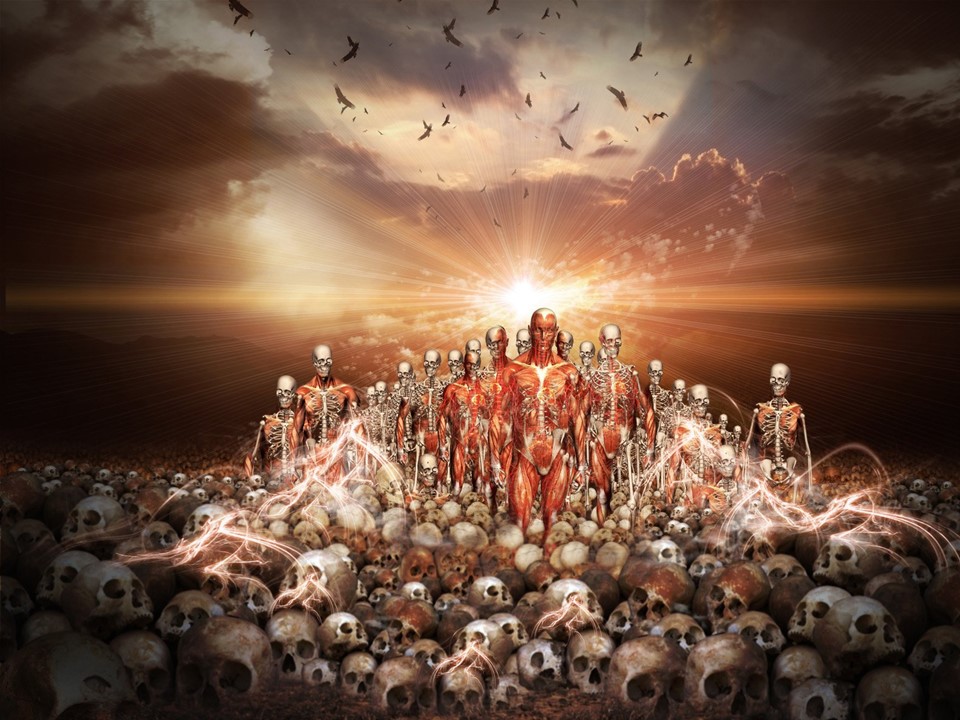
Jesus will reign over all the earth, but King David appears to hold a special role over restored Israel. Hosea prophesies that Israel will “return, and seek the LORD their God, and David their king; and shall fear the LORD and his goodness in the latter days” (Hosea 3:5, emphasis mine). Ezekiel reinforces this: the Lord will set up “my servant David” as shepherd and prince over Israel (Ezekiel 34:23-24; 37:24-25). Ezekiel 37 presents the restoration of Israel through the dry bones vision [6] and the uniting of the two sticks (Judah and Israel).[7] Chapters 40–48 describe the Millennial Temple, where the Glory of the Lord returns—unlike its departure from Solomon’s Temple.[8] The prophet describes it like this:

And the glory of the LORD came into the house by the way of the gate whose prospect is toward the east. So the spirit took me up, and brought me into the inner court; and, behold, the glory of the LORD filled the house. And I heard him speaking unto me out of the house; and the man stood by me. And he said unto me, Son of man, the place of my throne, and the place of the soles of my feet, where I will dwell in the midst of the children of Israel for ever, and my holy name, shall the house of Israel no more defile, neither they, nor their kings, by their whoredom, nor by the carcases of their kings in their high places. (Ezekiel 43:4-7, emphasis mine)

Life in the Millennial Kingdom

Jesus will be King of Kings and Lord of Lords over all the Earth, but what will daily life be like in that Millennial kingdom? It will be a time of perpetual peace where men “shall beat their swords into plowshares, and their spears into pruninghooks: nation shall not lift up a sword against nation, neither shall they learn war any more” (Micah 4:3). What else? Isaiah describes a restored Earth approaching Edenic conditions: “For, behold, I create new heavens and a new earth: and the former shall not be remembered, nor come into mind” (Isaiah 65:17). Lifespans will lengthen dramatically: “There shall be no more thence an infant of days, nor an old man that hath not filled his days: for the child shall die an hundred years old; but the sinner being an hundred years old shall be accursed” (Isaiah 65:20). Private property will be secure and fruitful: “And they shall build houses, and inhabit them; and they shall plant vineyards, and eat the fruit of them. They shall not build, and another inhabit; they shall not plant, and another eat: for as the days of a tree are the days of my people, and mine elect shall long enjoy the work of their hands”  (Isaiah 65:21-22, emphasis mine). Natural-born survivors of the Tribulation will procreate, and “their offspring [shall be] with them” (Isaiah 65:23).

Even the animal kingdom will return to their pre-fall state. “The wolf and the lamb shall feed together, and the lion shall eat straw like the bullock: and dust shall be the serpent’s meat. They shall not hurt nor destroy in all my holy mountain, saith the LORD” (Isaiah 65:25, emphasis mine).[9] Innocent children will play safely: “And the sucking child shall play on the hole of the asp, and the weaned child shall put his hand on the [viper’s] den” (Isaiah 11:8).

Our Glorified Role

For those of us who have placed their trust in Christ, the Millennium holds even greater promises. First of all, at the Rapture, the Apostle Paul says that the those who died believing in Christ will rise from the grave and those of us who are living at that time will metamorphose into their glorified bodies and join the risen dead to meet Jesus in the air.[10] “Who shall change our vile body, that it may be fashioned like unto his glorious body, according to the working whereby he is able even to subdue all things unto himself” (Philippians 3:21, emphasis mine). Imagine that! To have a body like that of our Savior. After His resurrection, He was able to transport Himself at will from one place to another, even into rooms with locked doors.[11] He could also eat as before.[12] I suspect that our glorified bodies will be equivalent to that of a young adult of late 20’s to early 30’s. My reasoning comes from knowing that when Jesus rose from the dead, He was around 33 years old (humanly speaking). Also, when God created Adam and Eve, they were fully mature adults. Not only will we be eternally youthful, but we will be endowed with many of the same superhuman abilities demonstrated by the resurrected Christ in that “He is able even to subdue all things unto Himself ” – not to the same extent as the omnipotent Lord Jesus Christ, but certainly greater than what we know now.

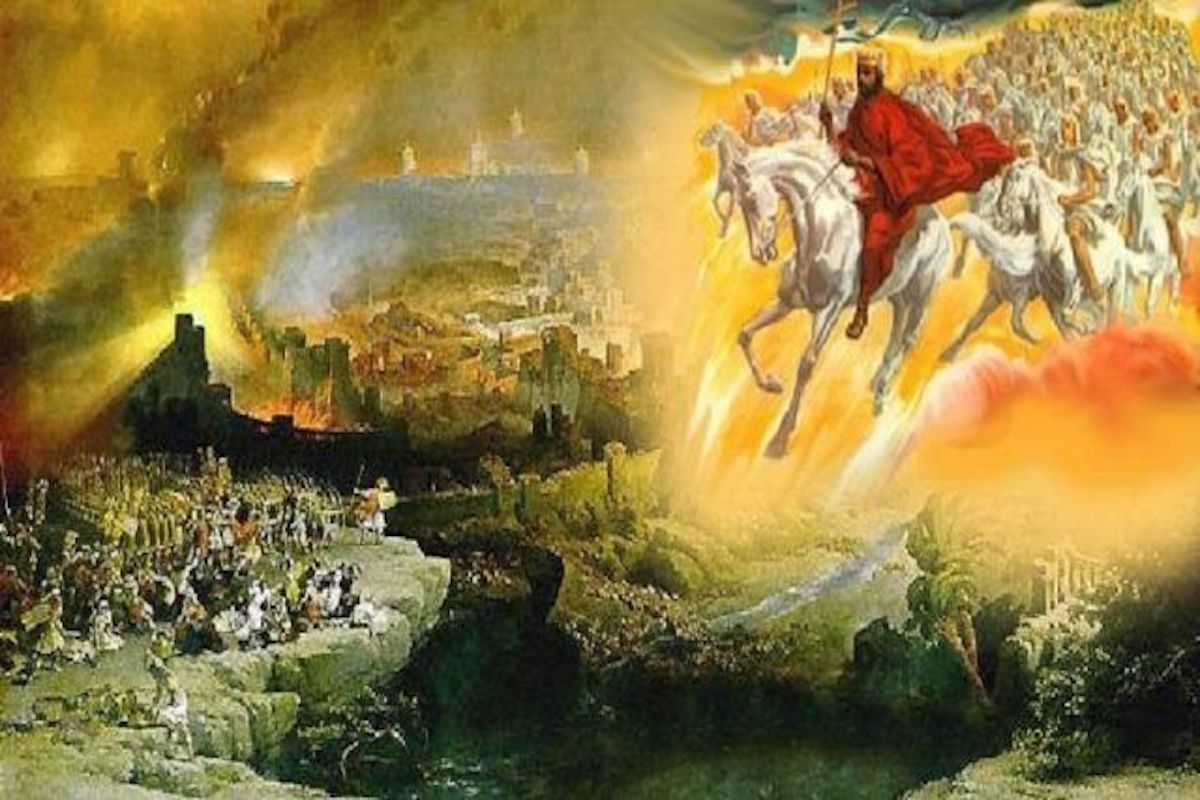
Secondly, we will serve in His administration on Earth. The Gospel writer Matthew records Jesus’ promise to His disciples, “And Jesus said unto them, Verily I say unto you, That ye which have followed me, in the regeneration when the Son of man shall sit in the throne of his glory, ye also shall sit upon twelve thrones, judging the twelve tribes of Israel” (Matthew 19:28, emphasis mine). These would be the “tribes” that survive the Tribulation and enter the Millennium in their natural bodies. The promise is not just for the 12 apostles, but for all the saints,[13] those who were taken up in the Rapture and will return with Christ at His second coming. Revelation 19:11-21 describes Christ’s return at the end of the Tribulation, riding on a white horse – symbolic of a conquering king – prepared to execute justice on a sinful and rebellious world. “And the armies which were in heaven followed him upon white horses, clothed in fine linen, white and clean” (Revelation 19:14, emphasis mine). The fine white linen, as opposed to “white robes,” shows that these are the Bride of Christ who were formally joined to Him at the “wedding supper of the Lamb.”[14]

Revelation 5 presents the scene immediately following the Rapture, where the saints are around the throne of God, and Jesus – the Lamb that was slain – receives the seven-seal scroll – the title deed to the earth. “And [the saints] sung a new song, saying, Thou art worthy to take the book, and to open the seals thereof: for thou wast slain, and hast redeemed us to God by thy blood out of every kindred, and tongue, and people, and nation; And hast made us unto our God kings and priests: and we shall reign on the earth” (Revelation 5:9-10, emphasis mine). The Apostle Paul, in writing to the Corinthian Church, says, “Do ye not know that the saints shall judge the world? and if the world shall be judged by you, are ye unworthy to judge the smallest matters?” (1 Corinthians 6:2, emphasis mine). To Timothy, he writes, “It is a faithful saying: For if we be dead with him, we shall also live with him: If we suffer, we shall also reign with him: if we deny him, he also will deny us: If we believe not, yet he abideth faithful: he cannot deny himself. (2 Timothy 2:11-13, emphasis mine). The promise is sure!

As for the rest of life in the Millennium, the earth and animals return to Edenic conditions with perfect peace. Technology may advance far beyond today to serve the natural population boom, but glorified saints will have no need of such things. When I consider the beauty of our fallen and cursed Earth, I can only imagine the wonder of a fully restored creation. I am anxiously awaiting that time—I don’t believe it is distant.

Reader, if you do not know Jesus as your Lord and Savior, this future is not for you, but it can be. Please read my page on “Securing Eternal Life.”

Notes:


[1]  “The Rapture” https://erniecarrasco.com/2021/09/05/the-rapture/

[2]  “End-Times Overview: The Big Picture” https://erniecarrasco.com/2026/02/22/end-times-overview-the-big-picture/  

[3]  Daniel 2

[4]  Micah 4:1-4

[5]  Matthew 21:1-11; Mark 11:1-11; Luke 19:28-44; John 12:12-19

[6]  Ezekiel 37:1-14

[7]  Ezekiel 37:15-28

[8]  Ezekiel 10:4, 18-19: 11:22-23

[9]  See also Isaiah 11:6-9

[10]  1 Thessalonians 4:16-17

[11]  John 20:19, 26

[12]  John 21:9-13

[13]  “Saints” are not icons that are to be venerated. Rather, a “saint” (Gk. “hagios”) is a “most holy thing” who has been set apart for God – sanctified, consecrated, elect, etc. All true believers in Christ are “saints.”
[14]  Revelation 19:6-9

Comments Off on Anticipating the Millennium

Filed under Bible, Christianity, End Times, Eschatology, Rapture, Resurrection, Salvation, Second Coming of Christ, Theology

End-Times Overview: The Big Picture

Blessed is he that readeth, and they that hear the words of this prophecy, and keep those things which are written therein: for the time is at hand. (Revelation 1:3)

The Bible is filled with promises about the future, and understanding end-times prophecy isn’t just an academic exercise—it’s a source of hope, motivation, and direction for daily life. As David Jeremiah notes in The Book of Signs, “God in His providence has placed a number of critical signs along the highway we call human history. We often think of these signs as prophecies, and we have been made aware of them through the prophetic vehicle of Gods’ Word, the Bibles … [T]he Bible dedicates more space to the subject of prophecy than almost any other. There are over eighteen hundred prophecies in God’s Word concerning the first and second coming of Jesus Christ alone!”[1] with far more space dedicated to prophecy than almost any other topic.

Why dive into this? Let’s explore the reasons and get the big picture.

Why Study End-Time Prophecy?

Bible prophecy, especially unfulfilled portions, remains incredibly relevant today. As 2 Timothy 3:16-17 reminds us, all Scripture—including future-oriented parts—is God-breathed and useful for teaching, reproof, correction, and training in righteousness. Unfulfilled prophecy equips us to stand against false teachings about the end times and prepares believers for what lies ahead.

More than that, it instills hope. Romans 15:4 tells us that everything written in the past was for our learning, so we might have hope through endurance and the encouragement of the Scriptures. “When we understand God’s plan for our future, we can live with hope even during our most difficult days. Prophecy is not intended to frighten those of us who believe but to encourage us.”[2] Paul urges in 1 Thessalonians 4:18 to comfort one another with these words about Christ’s return.

It also promotes holy living. Knowing Christ could return at any moment shapes our priorities. 2 Peter 3:11-12 asks what kind of people we ought to be in light of the coming day of God—living lives of holiness and godliness as we anticipate it. Jesus Himself emphasized readiness in Matthew 24:44-46, blessing those found faithful when the master returns.

Prophecy further compels evangelism. The imminence of the rapture (described in 1 Corinthians 15:52 as happening “in a moment, in the twinkling of an eye”) stirs urgency to share the Gospel. As 1 Peter 3:15 instructs, we’re always ready to give a reason for the hope within us.

Finally, studying prophecy brings blessing. Revelation 1:3 promises blessing to those who read, hear, and keep its words. Yet Revelation 22:18-19 warns against adding to or taking away from these prophecies—a solemn reminder of their importance.

Christians have strong reasons to engage with prophecy: God devoted significant portions to it (about one-fourth of Scripture’s verses), including major sections in Old Testament prophetic books and New Testament works like Revelation, 1-2 Thessalonians, and Jude. Ignoring it means overlooking a huge part of God’s Word.

Prophecy reveals God’s nature and Christ’s exalted status—He will return with power and great glory (Matthew 24:30), as King of kings (1 Timothy 6:15), visible to every eye (Revelation 1:7), with every tongue confessing Him as Lord (Philippians 2:10-11).

It motivates evangelism and holy living—as 1 John 3:3 says, everyone with this hope purifies themselves. In a world full of evil and despair, prophecy offers hope, echoing Jesus’ words in John 14:1-3: “Let not your hearts be troubled… I go to prepare a place for you… I will come again and will take you to myself.”

Dispensational Theology: The Big Picture of World History

To understand end-times events, many turn to dispensationalism, a framework popularized in the 20th century North America, especially through the Scofield Reference Bible. “The dispensationalism delineated by Scofield suggested that God works with humans in distinct ways (dispensations) through history; that God has a distinct plan for Israel over against the church; that the Bible, especially predictive prophecy, needs to be interpreted literally; that the church will be secretly raptured from earth seven years prior to Christ’s second coming; and that Christ will rule with Israel during a literal thousand-year earthy reign. Contemporary, or progressive, dispensationalism remains thoroughly premillennial but rejects the ontological distinction between Israel and the church as two peoples of God, seeing them instead as two salvation-historical embodiments of a single people.”[3]

The dispensations include:

  • Edenic (Genesis 1-3): Innocence in the Garden.
  • Antediluvian (Genesis 4-8): Conscience after the Fall, leading to the Flood.
  • Post-Diluvian (Genesis 9-11): Human Government post-Flood.
  • Patriarchal (Genesis 12-50): Promise through Abraham and the patriarchs.
  • Legal (Exodus onward): Law given to Israel.
  • Ecclesiastical (Matthew to Revelation 18): The Church Age of grace.
  • Messianic (Revelation 19-20): The millennial kingdom.
  • Fullness of Time (Revelation 21-22): Eternal state in the new heavens and earth.

This structure helps see God’s overarching plan unfolding progressively.

Old Testament View of End Times

Old Testament end-times prophecy centers on Israel. Passages like Isaiah 66:22 and Jeremiah 33:16 highlight God’s enduring commitment to the Jewish people.

The diaspora—scattering of Jews—fulfilled prophecies in Deuteronomy 4:27, 28:63-65, Jeremiah 9:16, and others, as judgment for disobedience.

Yet God promised re-gathering and rebirth. Deuteronomy 30:3-5 foretells restoration from dispersion. Isaiah 66:8 speaks of a nation born in a day (many see this fulfilled in Israel’s 1948 establishment). Ezekiel 37:1-14, the valley of dry bones vividly pictures national revival.

The Tribulation for Israel, called the time of “Jacob’s trouble” (Jeremiah 30:7), involves intense suffering but ultimate deliverance (Zechariah 13:8-9; 14:2-4).

In the **Kingdom**, Israel enjoys peace, prominence, and blessing—nations stream to Jerusalem (Isaiah 2:2-4), the desert blooms (Isaiah 35:1-2), and God reigns (Zechariah 14:9).

The Millennium and End Times – Three Main Views

The “thousand years” in Revelation 20:1-7 sparks debate. Here are the primary interpretations:

  • Amillennialism (“no millennium”) sees no literal earthly 1,000-year reign. Millennial prophecies are fulfilled spiritually in eternity or the current church age, with prophecies about Israel applied to the church.
  • Postmillennialism views the millennium symbolically as the church age, where the Gospel gradually triumphs, Christianizing society and bringing peace. Christ returns after this “golden age” (sometimes linked to Kingdom Now theology).
  • Premillennialism holds that Christ returns before a literal 1,000-year earthly kingdom. Most evangelicals favor this, expecting a seven-year tribulation beforehand.
  • Variants of Premillennialism include:
    • Post-Tribulation Rapture: Church endures the full Tribulation, raptured at Christ’s return.
    • Mid-Tribulation Rapture: Rapture at the midpoint (3½ years).
    • Pre-Tribulation Rapture: (common in dispensationalism): Church removed before the Tribulation begins, ending the church age and ushering in judgment on earth.

These views differ on timing and nature, but all affirm Christ’s bodily return, final judgment, and eternal kingdom.

Studying end-times prophecy isn’t about fear—it’s about hope, holiness, and readiness. As we see signs aligning, may it draw us closer to Christ, living expectantly for His return. What aspect of prophecy encourages you most? Share in the comments below!

For more on this topic, see my page on Revelation.

Notes:


[1]  David Jeremiah, The Book of Signs, (W. Publishing, Nashville, 2019), pp.9-10.

[2]  Ed Hindson and Tim LaHaye, Essential Guide to Bible Prophecy, (Harvest House Publishers, Eugene, OR, 2012), p.18.

[3]  Stanley J. Grenz, David Guretzke, Cherith Fee Nordling, Pocket Dictionary of Theological Terms, (InterVarsity Press, Downers Grove, 1999), pp. 39-40.

2 Comments

Filed under Apologetics, Bible, Christianity, End Times, Eschatology, Rapture, Religion, Second Coming of Christ

Three Days

After two days will he revive us: in the third day he will raise us up, and we shall live in his sight. (Hosea 6:2)

In one of my Bible readings this week, I was reading Luke’s account of Jesus’ resurrection. Luke records that two disciples (not apostles) were returning to their home in Emmaus.[1] Because they invited Jesus into their home, I assume that they were husband and wife; Luke does not say. Regardless, after Jesus broke bread with them and disappeared from their sight, they finally recognized that it was Jesus who had traveled with them. They immediately returned to Jerusalem and found “the eleven” together. However, according to John’s account, Thomas was not with them.[2] Apparently, Luke used the term (“the eleven”) in a generic sense referring to the Apostles.

While the two recounted their experience, Jesus appeared in their midst. After assuring them that He was not a ghost by inviting them to inspect His wounds and by eating a piece of broiled fish and bread with them, Luke writes, “Then opened he their understanding, that they might understand the scriptures, And said unto them, Thus it is written, and thus it behoved Christ to suffer, and to rise from the dead the third day” (Luke 24:45-46, emphasis mine). That last phrase stopped my reading. Jesus said, “Thus it is written,” meaning that His suffering and resurrection had been prophesied. I checked the cross-reference in my Bible and found two: Isaiah 53:3-12 dealing with His suffering and Hosea 6:2 predicting His resurrection.

There is no question that Hosea’s prophecy, quoted above, refers to Jesus’ resurrection because Jesus applied the prophecy to Himself. However, what caught my attention was the use of the plural first-person pronouns, “us” and “we” rather than “me” and “I.” It is always best to read a single Bible verse within its context to get a clear understanding. Backing up to the previous verse, we understand that the prophet is addressing Israel. “Come, and let us return unto the LORD: for he hath torn, and he will heal us; he hath smitten, and he will bind us up” (Hosea 6:1, emphasis mine). In the previous chapter (Hosea 5), the prophet foretold the demise of Israel (Judah and Ephraim). The Lord says, “I will go and return to my place, till they acknowledge their offence, and seek my face: in their affliction they will seek me early” (Hosea 5:15). The “I” here refers to the Lord Jesus. He fulfilled this prophecy when He ascended and returned to “His place,” and He waits there until they repent and turn to Him. The Prophet Zechariah says, “they shall look upon me [Jesus] whom they have pierced, and they shall mourn for him, as one mourneth for his only son, and shall be in bitterness for him, as one that is in bitterness for his firstborn” (Zechariah 12:10).

In 70 A.D. the Romans destroyed Jerusalem, razed the Jewish temple, and scattered the Jews all over the world. Hosea encourages Israel, the Jews, to “return unto the LORD.” Then he adds this prophecy that Jesus applied to Himself. “After two days will he revive us: in the third day he will raise us up, and we shall live in his sight” (Hosea 6:2, emphasis mine). In context, the primary application is to Israel. They have been torn. They have been smitten, and the promise is that God will heal and bind their wounds “after two days” and “in the third day he will raise us up.” That raises the question, are the days literal or symbolic? Obviously, when applied to Jesus’ resurrection, the days are literal; He was in the tomb for three days and raised on the third. However, the days cannot be literal when applied to Israel.

Three days have long passed since the destruction of Jerusalem. Indeed, almost 2000 years have gone by. However, we see the prophecy taking place with the rebirth of the nation of Israel, which is yet another event that was foretold by the prophets. However, they have yet to turn to their Messiah, but we see the dry bones taking on flesh.[3]

Perhaps the “days” have something to do with what Peter said in his second epistle. “But, beloved, be not ignorant of this one thing, that one day is with the Lord as a thousand years, and a thousand years as one day” (2 Peter 3:8, emphasis mine). Because of his use of simile, I have always understood, and still do, that this verse refers primarily to God’s timelessness. The psalmist echoes the same refrain. “For a thousand years in thy sight are but as yesterday when it is past, and as a watch in the night” (Psalm 90:4, emphasis mine). God is not bound by time, and so time for Him is irrelevant. However, that is not true for us.

Therefore, if we take the days in Hosea symbolically to mean 1000 years, 2 days equals 2000 years, which is where we are now since the resurrection of Jesus Christ. God has returned the Jews to their homeland as foretold by the prophets, but yet, as Ezekiel described, the breath of God is not in them yet. They have yet to undergo the final seven years assigned to them by Daniel the Prophet.[4] Then, after the seven years (of Tribulation), Israel will be fully restored (“raised”) as prophesied on the third day, the final 1000 years[5] when Christ will rule as absolute monarch from His throne in Jerusalem.

If you would like to study more on end-times prophecy, find my page on “Revelation.” There you will find links to articles I have written that will take you systematically through the Book of Revelation along with other articles that cover end-times in general.

Notes:


[1]  Luke 24:13-35

[2]  John 20:24

[3]  Ezekiel 37:1-14

[4]  Daniel 9:24-27

[5]  Revelation 20:1-7

Comments Off on Three Days

Filed under Apologetics, Bible, Christianity, End Times, Eschatology, Resurrection, Second Coming of Christ, Theology

Maybe This Year

Behold, I shew you a mystery; We shall not all sleep, but we shall all be changed, In a moment, in the twinkling of an eye, at the last trump: for the trumpet shall sound, and the dead shall be raised incorruptible, and we shall be changed. (1 Corinthians 15:51-52)

For many years now, this time of year brings a strong sense of anticipation to me. Next Friday, September 15/16 celebrates the Jewish festival of Yom Teruah, a/k/a Rosh HaShanah, or the Feast of Trumpets. It sounds the beginning of the new civil year 5783.

God gave the Children of Israel seven “feasts of the Lord”[1] that they were required to observe: Passover, Unleavened Bread, First Fruits, Pentecost, Trumpets, Atonement, and Tabernacles. The first four took place in the spring and were fulfilled by Jesus’ crucifixion (Passover), His burial (Unleavened Bread), His resurrection (First Fruits), and His ascension and the coming of the Holy Spirit (Pentecost). The final three, the fall feasts have not yet been fulfilled: Trumpets (His return with the “a great sound of a trumpet”[2]), Atonement (He judges the nations), and Tabernacles (He comes to dwell among His people).

Granted, all of these Feasts of the Lord,[3] apply to Israel and NOT to the Church. However, I cannot restrain my excitement when the day approaches because according to Paul, there is a trumpet associated with the Rapture of the Church (see our starting verse above.) Elsewhere, he says, “For the Lord himself shall descend from heaven with a shout, with the voice of the archangel, and with the trump of God: and the dead in Christ shall rise first: Then we which are alive and remain shall be caught up together with them in the clouds, to meet the Lord in the air: and so shall we ever be with the Lord” (1 Thessalonians 4:16-17, emphasis mine). In the Book of Revelation, John experienced a type of the Rapture when he records, “After this I looked, and, behold, a door was opened in heaven: and the first voice which I heard was as it were of a trumpet talking with me; which said, Come up hither, and I will shew thee things which must be hereafter. And immediately I was in the spirit: and, behold, a throne was set in heaven, and one sat on the throne” (Revelation 4:1-2, emphasis mine). So, why not the Feast of Trumpets for the Rapture event?

Many will argue with Jesus’ words: “But of that day and hour knoweth no man, no, not the angels of heaven, but my Father only” (Matthew 24:36, emphasis mine). The Gospel writer, Mark, includes “the Son” among those who are unknowing. “But of that day and that hour knoweth no man, no, not the angels which are in heaven, neither the Son, but the Father” (Mark 13:32, emphasis mine). Matthew did not miss it, and Mark was not in error. The fact remains that Jesus, in His humanity as “a man,” was not privy to the Father’s plans in that regard. However, He now sits at the right hand of the Father.[4] Surely, He is not presently ignorant of the day or the hour.

We cannot know the day or the hour of the Rapture because it has always been taught as imminent in the New Testament, that is, it could happen at any time. The Apostle Paul certainly thought it could occur during his lifetime. “Now we beseech you, brethren, by the coming of our Lord Jesus Christ, and by our gathering together unto him, That ye be not soon shaken in mind, or be troubled, neither by spirit, nor by word, nor by letter as from us, as that the day of Christ is at hand” (2 Thessalonians 2:1-2, emphasis mine). For some reason, the Thessalonians feared that the Rapture had taken place and they missed it. From Paul’s teaching, they felt that the coming was very near. He did not retract his teaching of imminency, but only reassured them that it had not taken place yet. So, we are left with the same teaching – the Lord could come for us at any time.

We do not know the day or the hour. However, we know that it is nearer now than ever because we see the signs of His Second Coming, as foretold by the prophets and by Jesus Himself, increasing in frequency and intensity. Those prophecies detail the events of the seven-year Tribulation that precedes Christ’s return to earth as King of Kings and Lord of Lords.[5] However, Jesus snatches away (Raptures) His Church sometime prior to the beginning of the Tribulation.

That brings me back to the Feast of Trumpets. Rosh HaShanah is known as the feast where “no man knows the day or the hour.” This is why it is observed over two days. The reason for that is that Yom Teruah (“Day of Trumpets) begins at the first sighting of the new moon on Tishri (the seventh month on the Jewish calendar) 1 or 2. It is the new moon that signals the beginning of the feast and no one knows exactly when that will take place. Could Jesus have been referring to the Feast of Trumpets when He said that “no man knows the day or the hour”?

For this reason and for the fact that the Rapture of the Church seems to be accompanied by the sounding of a trumpet, I get excited when the Feast of Trumpets comes around. For many years now, I have looked forward with anticipation at this time of year, and for many years I have been “disappointed” – not discouraged. I realize that God is not obligated to meet my expectations of events that are fully in His control. Whether Jesus calls us home next Friday/Saturday or not, I know that one day soon, we will hear that trumpet call and go to meet Him in the air. “What a day, glorious day, that will be!”

            Jesus could call His people home anytime soon. Reader, are you prepared for that day? If not, please read my page on “Securing Eternal Life.” You can also find more information on the “last days” on my “Revelation

Notes:


[1]  “Rosh HaShanah” – Rosh HaShanah | Ernie’s Musings (erniecarrasco.com)

[2]  Matthew 24:31

[3]  Leviticus 23

[4]  Matthew 26:64; Mark 14:62; 16:19; Luke 22:69; Acts 7:56; Ephesians 1:19-20; Colossians 3:1; Hebrews 1:3; 12:2; 1 Peter 3:21-22

[5]  Revelation 19:16

Comments Off on Maybe This Year

Filed under Apologetics, Bible, Christianity, Current Events, End Times, Eschatology, Feasts of the Lord, Rapture, Second Coming of Christ, Theology

Lawlessness

And because iniquity shall abound, the love of many shall wax cold. (Matthew 24:12)

Anyone that halfway pays attention to the news – even the “lame-stream-media” – can see the unprecedented rise in crime these days. Mobs of black young people ransacking stores and running off with thousands of dollars’ worth of high-end merchandise. (I am not being racist; I am just stating the obvious for anyone paying attention. Security cameras don’t lie and they are not racists.) They get away with it because police are not allowed to stop them and leftist district attorneys refuse to prosecute them.

Many major American cities are infested with homeless people living in tents along major thoroughfares and some in neighborhoods. They use the streets as their toilets and numb themselves with illegal drugs. Rather than enforce no-loitering laws to clean up the streets, many cities dole out sanitary syringes to keep drug abusers from contracting hepatitis. Very compassionate!

Then there is the Black Lives Matter organization (many of whom are self-deprecating white people), which cares little about black lives and looks for any opportunity to riot and burn down private businesses. Who will be the next black man that violently resists arrest and gets himself killed by police to give these thugs an excuse to riot?

Crime is not limited to the “dregs” of our society. Crime exists in the highest levels of our government. There too, depending on the political party affiliation, crime goes unpunished. Without delving into the details, all one needs to do is mention the names – Clinton, Biden, Comey, Fauci, Palosi, Garland, etc. These treasonous lawbreakers make millions of dollars from the positions entrusted to them by American taxpayers, and the law seems to bypass them. In the meantime, the “Injustice Department” persecutes and prosecutes anyone who dares to challenge their status quo.

Quoting Jan Markell of Olive Tree Ministries, “What did you think the end-times would look like?” In the verse above, Jesus responded to His disciples when they asked, “Tell us, when shall these things be? and what shall be the sign of thy coming, and of the end of the world?” (Matthew 24:3). Jesus gave a detailed description of what the end-times would be like just before His return. One of the characteristics He gave was that “iniquity shall abound” (Matthew 24:12). The Greek word translated as “iniquity” is anomia, meaning “no law.” The Strong’s Dictionary defines it as “illegality, that is, violation of law or (generally) wickedness.” We see that everywhere. One does not need to be that old to notice the rapid rise in lawlessness, and it is happening worldwide.

In the same sentence, Jesus said, “the love of many shall wax cold” (Matthew 24:12). Surprisingly, the word Jesus used for “love” is agapē. That is the “unconditional” love given to another, whether deserved or not, and without expectation of reciprocation. Generally speaking, there is near zero of that kind of love being expressed anywhere. Love is certainly waxing cold.

The lack of love manifests in a variety of ways. In his final words to his protégé, Timothy, Paul predicts the loveless character of people in the “last days.”

This know also, that in the last days perilous times shall come. For men shall be lovers of their own selves, covetous, boasters, proud, blasphemers, disobedient to parents, unthankful, unholy, Without natural affection, trucebreakers, false accusers, incontinent, fierce, despisers of those that are good, Traitors, heady, highminded, lovers of pleasures more than lovers of God; Having a form of godliness, but denying the power thereof: from such turn away. (2 Timothy 3:1-5, emphasis mine)           

Let us examine some of these characteristics more closely. “Lovers of their own selves” characterizes egocentrism, self-centeredness, selfishness, etc. Marketers feed into the egocentrism of their target audience with the idea that “it’s all about YOU!” Self-love gives rise to covetousness, which in its essence is a desire for what others possess. Self-love also feeds the desire to “boast” about oneself whether the boast is justified or not. Self-love makes one “proud,” often without basis. Self-lovers are often “blasphemers” in that they attribute any praise they receive, whether from others or by self-delusion, to themselves rather than giving the glory to God. Such blasphemy takes many forms and finds its roots in humanism. Many scientists and those who worship “science” fall prey to that. They reject God and attempt to explain all of Creation by natural means, and attribute all human advances in medicine and technology to the inexhaustible (by their reckoning) abilities of mankind. That is blasphemy!

That they are “disobedient to parents” needs little explanation. One trip to Walmart ™ and watching some parents trying to control unruly children gives ample support for this truth. However, the result of such unruliness in children is the lawlessness of young adults. This is also characterized by “incontinence” (mentioned later on in the list). “Incontinence” here has nothing to do with the inability to control one’s bodily functions. In the King James vernacular, it simply means “lack of self-control.” It is the idea that “if it feels right, do it,” regardless of whether it is unlawful, immoral, or offensive,” and it plays right along with self-love. “To thyself be true” is the mantra. That, by the way, is satanic.

They are “unthankful” because they believe that anything that comes to them is due to them because they are “worth it.” They are “unholy,” the opposite of “holy,” which means to be “set apart” for God’s purposes. The “unholy” have no place for God.

They are “without natural affection.” I used to think this had to do with homosexuality. What it really means is to not have “natural affection.” The three English words translate the single Greek word “astorgos.” “Storgē” in Greek is “familial love” – the love one has for one’s natural family. The “a” prefix negates the word. Therefore, these people have no natural affection or love for their own families. This also springs from self-love.

All of these characteristics are interrelated and they stem from egocentrism. They are “trucebreakers,” i.e., they cannot be trusted to keep their word. They are “false accusers” – we see a lot of that going on with all of the Trump indictments. They are “fierce,” i.e., savage, violent, combative, etc. That they are “Despisers of those that are good” is demonstrated daily against those who are “pro-life,” those who promote heterosexual marriage, those who rightly believe humans do not cause “climate change,” those who stand for Judeo-Christian principles, those who believe and preach the Bible, etc.

They are “traitors;” they cannot be trusted. They are “heady,” i.e., rash, reckless, precipitate (i.e., “rushing headlong or rapidly onward”). They are “high-minded,” i.e., they think too highly of themselves (Romans 12:3), false pride. “Lovers of pleasure more than lovers of God” once again comes back to self-love, selfishness, and egocentrism.

The saddest part of this list suggests that some of these people pretend to be “Christians.” They have “a form of godliness, but denying the power thereof.” Many pulpits across our nation are filled with this kind that speak using “Christian” vocabulary while preaching that not all of the Bible should be taken verbatim. They teach that we should detach ourselves from the Old Testament and that many New Testament teachings, especially those of Paul, were specific to the culture of his time and do not necessarily apply to our day and time – women in the pulpit, for one example.

Jesus said that in the latter days, “… many false prophets shall rise, and shall deceive many. And because iniquity shall abound, the love of many shall wax cold” (Matthew 24:11-12). Do we not see all of this coming to pass before our eyes? If Jesus’ Word is true (and it is), then His return is very near.

I have published an extensive study on the Book of Revelation and the end-times detailing the events that will transpire during the Tribulation. You can find that on my “Revelation” page. Reader, are you ready to meet the coming Lord Jesus at His return? If not, please read my page on “Securing Eternal Life.”

2 Comments

Filed under Apologetics, Bible, Christianity, Current Events, End Times, Eschatology, Gospel, Religion, Second Coming of Christ, Theology