Category Archives: Christianity

Everlasting Lord

And the seventh angel sounded; and there were great voices in heaven, saying, The kingdoms of this world are become the kingdoms of our Lord, and of his Christ; and he shall reign for ever and ever — Revelation 11:15.

But unto the Son he saith, Thy throne, O God, is for ever and ever.  (Hebrews 1:8)

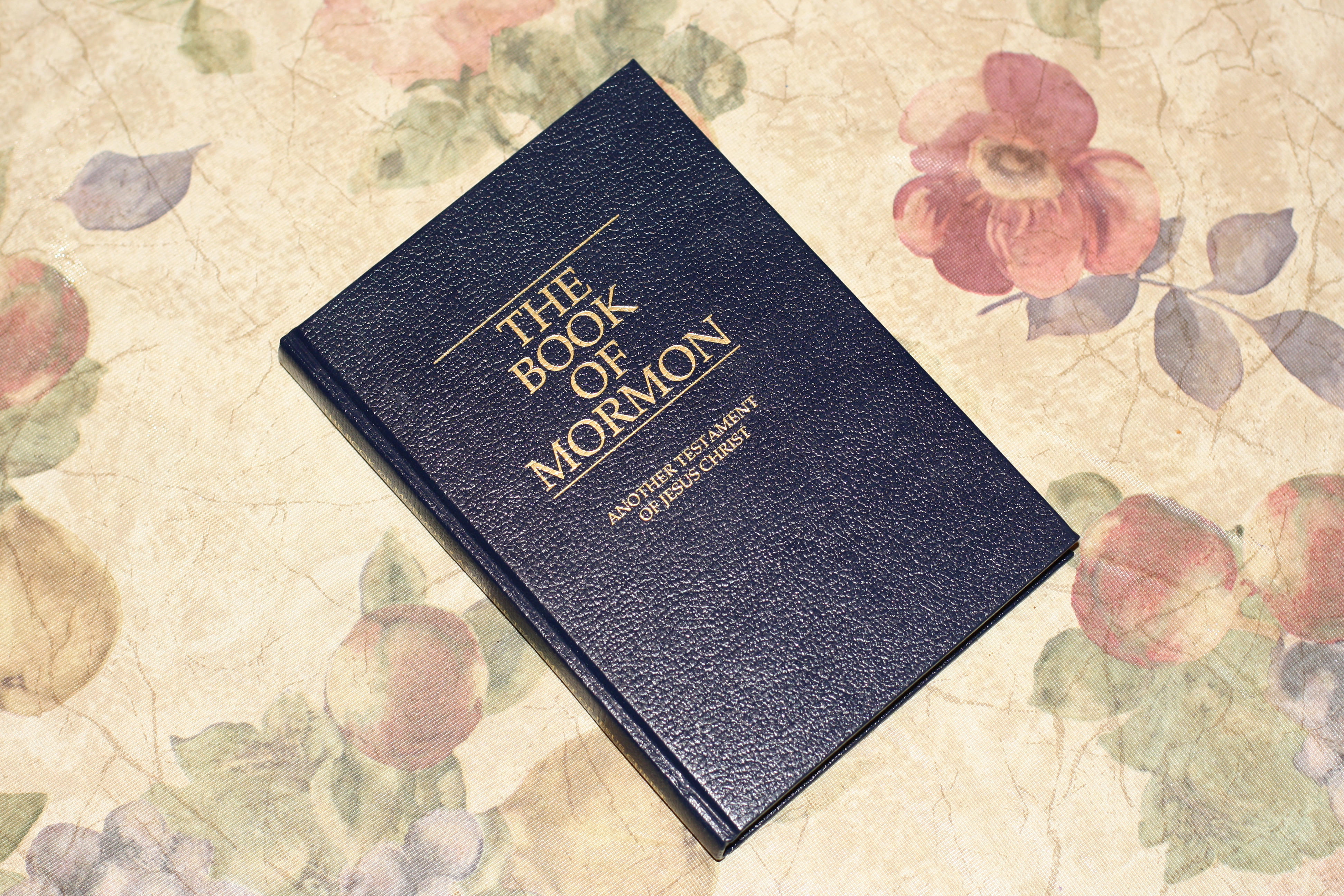
One of Satan’s most common tactics is a direct assault on the deity of Christ.  Not only has he deceived  the Jews and Muslims into believing that He was just another man, a prophet and a great teacher, but he has also blinded a variety of cults that masquerade as Christian, such as the Mormons and Jehovah’s Witnesses.  But the opening chapter of the book of Hebrews immediately confronts that attack with the declaration that the “Son whom [God] hath appointed heir of all things, by whom he made the worlds; Who (i.e., Jesus) being the brightness of his glory and the express image of his person and upholding all things by the word of his power, when he had by himself purged our sins, sat down on the right hand of the majesty on high” (vv. 2-3).

The first verse of the Bible tells us that “In the beginning God created” (Genesis 1:1), yet these opening verses in Hebrews attribute creation to the Son.  This assertion is repeated elsewhere: “All things were made by him” (the Word, John 1:1-3); “For by him (Jesus) were all things created that are in heaven, and that are in earth, visible and invisible, whether they be thrones, or dominions, or principalities, or powers: all things were created by him and for him” (Colossians 1:16).  Jesus is the Creator God.

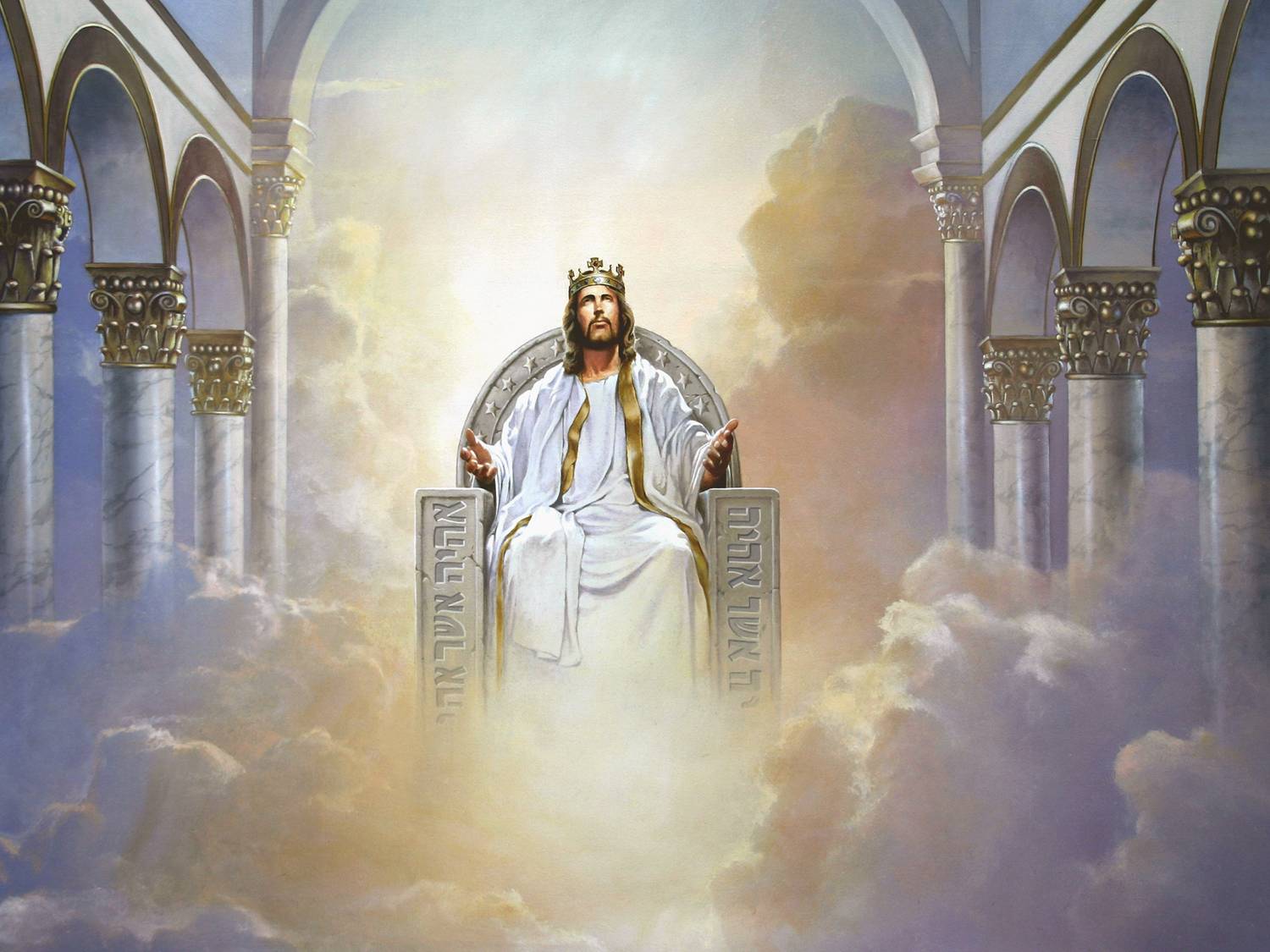
The writer of the book of Hebrews begins his apologetic by demonstrating Christ’s superiority to the created angels.  At His birth “when [God the Father] bringeth in the firstbegotten into the world, he saith, And let all the angels of God worship him” (v. 6).  Only God is worthy of worship, and so the angels are instructed to worship Him.  Then God the Father addresses the Son: “Thy throne, O God, is for ever and ever: a sceptre of righteousness is the sceptre of thy kingdom” (v. 8).  The Father calls the Son “God.”

Our Savior is the everlasting God.  He has created all things. “They shall perish; but thou remainest; and they all shall wax old as doth a garment; And as a vesture shalt thou fold them up, and they shall be changed: but thou art the same, and thy years shall not fail” (vv. 11-12).  No wonder Jesus admonishes, “Lay up for yourselves treasures in heaven” (Matthew 6:20) for “the world passeth away, and the lust thereof: but he that doeth the will of God abideth for ever” (1 John 2:17) in the presence of our everlasting Lord.

Comments Off on Everlasting Lord

Filed under Christianity, Creation, Religion, Theology

Sick and Tired

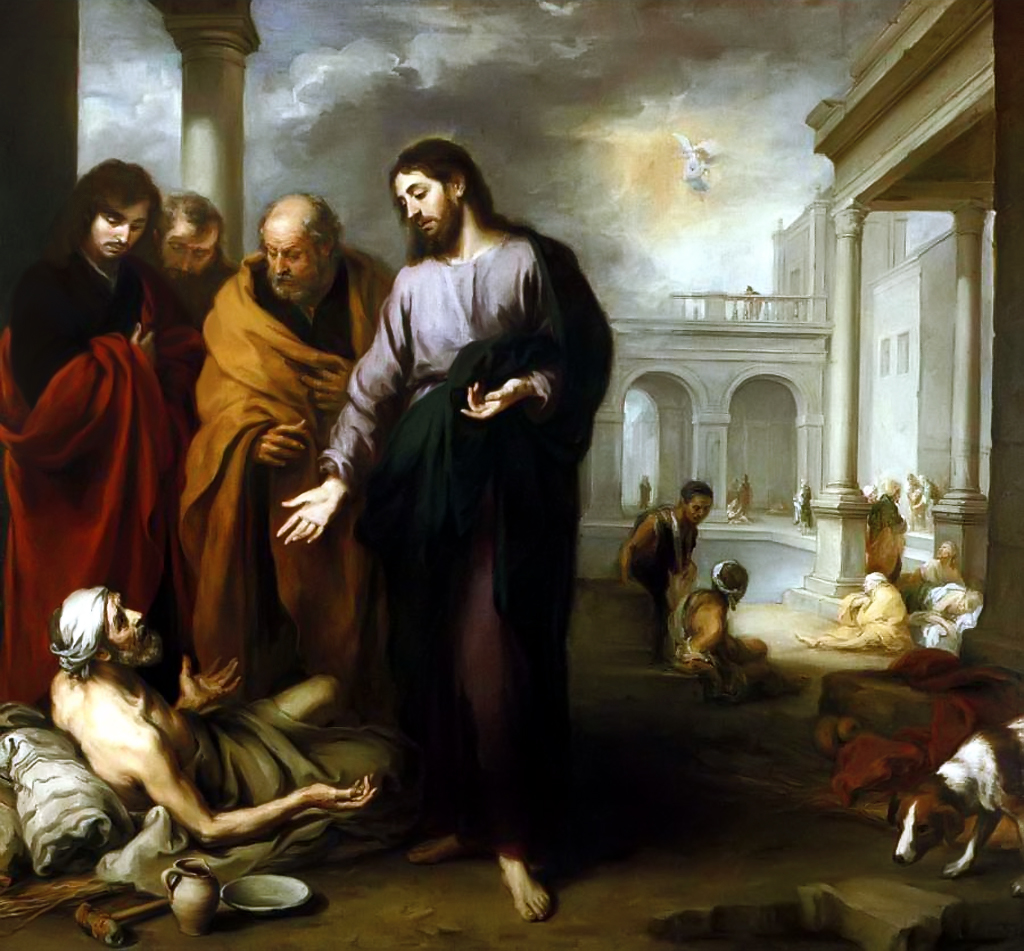
Christ Healing the Paralytic at the Pool of Bethesda — Murillo

And a certain man was there, which had and infirmity thirty and eight years. (John 5:5)

 The unidentified invalid in this narrative is an enigma that makes one wonder how anyone would wait thirty-eight years by the side of a pool in hopes of a cure for his ailment.  According to the text, “an angel went down at a certain season into the pool, and troubled the water: whosoever then first after the troubling of the water stepped in was made whole of whatsoever disease he had” (v. 4).  The text does not specify the nature of his infirmity, but the man was probably not lame.  Jesus healed the lame on several other occasions, and in those instances the infirm were clearly identified as “lame.”  Not so here.  Whatever the nature of his disease, this fellow felt unable to make it into the pool at the stirring of the waters.

Questions of his character also arise.  Did he not have family or friends willing to help him?  When Jesus asked him, “Wilt thou be made whole?” (v. 6), he offered up excuses: “Sir, I have no man, when the water is troubled, to put me into the pool: but while I am coming, another steppeth down before me” (v.7).  Had he alienated all of his friends and family by his self-pity and lack of personal responsibility?  Could the source of his disease be the reason he was abandoned?  We know that his sickness was a result of sin because after he was healed, Jesus admonished him, “Behold, thou art made whole: sin no more, lest a worse thing come to thee” (v. 14).  Some sexually transmitted diseases such as syphilis (which was not uncommon in Jesus’ day) can be very debilitating and even deadly.  Perhaps this was the nature of his infirmity and consequently the reason he was ostracized and alone.

The man also had a self-centered and ungrateful nature.  Note that “immediately the man was made whole, and took up his bed, and walked” (v. 9) and never even bothered to thank the Man that had healed him nor thought to even get acquainted with Him.  Could this be another reason why he was forsaken?

Sin brings all sorts of debilitating problems to a life that can rob a soul of all hope and demoralize one to the point that all effort seems futile.  One may even come to the pool of Bethesda (meaning the house/place of grace/mercy) and lack the strength to plunge in when the water is stirred.  Jesus is that pool of “living water” saying, “If any man thirst, let him come unto me and drink.  He that believeth on me, as the scripture hath said, out of his belly shall flow rivers of living water” (John 7:37-38).  No matter how horrific the sin that makes one sick and tired, Jesus can cure the disease.

Comments Off on Sick and Tired

Filed under Christianity, Religion, Theology

Crucified With Christ

Two malefactors were crucified along with Christ, but only one went on to live with Him.

I am crucified with Christ: nevertheless I live; yet not I, but Christ liveth in me: and the life which I now live in the flesh I live by the faith of the Son of God, who loved me, and gave himself for me.

(Galatians 2:20)

The danger in being saved “by grace … through faith” as a “gift of God” (Ephesians 2:8) is that it can easily become “cheap grace.”  It is true that salvation is “Not of works, lest any man should boast” (Ephesians 2:9).  It is also true “That if thou shalt confess with thy mouth the Lord Jesus, and believe in thine heart that God hath raised him from the dead, thou shalt be saved” (Romans 10:9).  Salvation is all the work of God and none of our own doing.  Far too often this is mistaken to mean that we are absolved of any responsibility.  “What shall we say then?  Shall we continue in sin that grace may abound?  God forbid” (Romans 6:1-2).

So there is now this tension between the grace-gift of salvation and the Christian’s responsibility to “continue in the faith grounded and settled, and [to] be not moved away from the hope of the gospel” (Colossians 1:23).  Paul says, “I am crucified with Christ.”  The Greek verb, sunestauroomai, is a perfect, passive, indicative verb indicating that this action, which was done to Paul, occurred in the past with continuing effects into the present, and the action was certain – a fact.  Paul was not literally crucified along with Christ, but by the fact he has placed his faith in the resurrected Christ, he considers himself dead, having taken upon himself the crucifixion of Christ.  He is now not only “dead to the law” (v. 19), but he is also dead to himself.

Dying to oneself is not easy.  “For that which I do I allow not: for what I would, that do I not; but what I hate, that do I” (Romans 7:15).  Even though he considers himself “crucified with Christ” Paul says, “nevertheless I live, yet not I, but Christ liveth in me.”  Just as salvation is solely the work of God, so the Christian life is solely the work of Christ.  The Christian life is impossible to live in one’s own strength.  The Christian’s responsibility then is to “live by the faith of the Son of God, who loved me, and gave himself for me” – crucified with Christ, dead to self, but alive through the power of Christ within us.

Comments Off on Crucified With Christ

Filed under Christianity, Religion, Theology

Known of God

Before I formed thee in the belly I knew thee; and before thou camest forth out of the womb I sanctified thee … (Jeremiah 1:5)

O LORD, thou hast searched me, and known me. (Psalm 139:1)

Psalm 139 is a beautiful theological treatise on the attributes of God.  The first six verses expressing His omniscience begin with an emphatic declaration: “thou hast searched me, and known me” (v. 1).  This truth statement emphasizes the intimacy with which God is acquainted with us, even in the minutest details of our being.  The same intimacy applies to our every act, our “downsitting” and our “uprising” (v. 2), and furthermore, He knows the motives behind our actions before the thought even crosses our mind: “thou understandeth my thought afar off” (v. 2) “and art acquainted with all my ways” (v. 3).  Not only is God aware of our present, but He is equally knowledgeable of our past and of our future: “Thou hast beset me behind and before and laid thine hand upon me” (v. 5).

God is ever present with us. “Whither shall I go from thy spirit or wither shall I flee from thy presence?” (v. 7).  There is nowhere we can go to escape God’s presence – nowhere in the vastness of heaven (space) nor in the abode of the dead (Sheol) (v. 8).  There is no darkness deep enough to hide us from His presence (v. 11-12).

God’s omnipotence, His unlimited power, is demonstrated in His creation, especially in the creation of the human body.  “I am fearfully [awesomely] and wonderfully [lit. uniquely] made” (v. 14).  The human body is composed of over 30 trillion (30,000,000,000,000) cells, each of which is a marvel of design and complexity.  What is more amazing is the fact that evolutionists examine a single human cell and attribute it to time and chance.  It is no wonder that God’s Word proclaims: “The fool hath said in his heart, There is no God” (Psalm 14:1).

These days the word “awesome” is used to describe anything from a really juicy hamburger to a thrilling ride on the Texas Giant rollercoaster.  What a sorry devaluation of the word!  “Awesome” can truly only be said of God.  If we would but take the time to wonder at the awesomeness of God, surely we would not have the words that God gave to David in this Psalm.  Surely, we would be left speechless – without words.  Surely, the revelation should move us from the realization that we are intimately known to the desire to be better known and to be re-formed more into His image. Surely, we should fall on our faces before Him and plead, “Search me, O God, and know my heart: try me, and know my thoughts: And see if there be any wicked way in me, and lead me in the way everlasting” (vv. 23-24).  What else would there be for us to do!

1 Comment

Filed under Apologetics, Atheism, Christianity, Creation, Pro-life, Religion, Theology

No Other Gospel

False Gospel

If any man preach any other gospel unto you than that ye have received, let him be accursed.

(Galatians 1:9)

From the very beginning of church history there have been those who “would pervert the gospel of Christ” (v. 7).   Probably the first and most prevalent perversion of the gospel was that of adding works to “the free gift [that] came upon all men unto justification of life” (Romans 5:18) contrary to “the light of the glorious gospel of Christ” (2 Corinthians 4:4) namely that “by grace ye are saved through faith; and that not of yourselves: it is the gift of God” (Ephesians 2:8).

The idea that one must perform acts of righteousness for the absolution of sin is as old as the fall of man.  “And the eyes of them both were opened, and they knew that they were naked; and they sewed fig leaves together, and made themselves aprons” (Genesis 3:7).  Their efforts to hide their sin was futile, for only God could adequately cover their sin by the shedding of innocent blood (Genesis 3:21).  All the religions of the world and even some Christian denominations demand certain acts or rites to be performed in order to ensure salvation or eternal life.  Only the “glorious gospel of Christ” places the burden of man’s redemption fully on the shoulders of God Himself, and removes from man any occasion for boasting in works of self-righteousness (Ephesians 2:9).

The message of the Gospel is this:  “that Christ died for our sins according to the scriptures; And that he was buried, and that he rose again the third day according to the scriptures” (1 Corinthians 15:3-4), and “if thou shalt confess with thy mouth the Lord Jesus, and shalt believe in thine heart that God hath raised him from the dead, thou shalt be saved … For whosoever shall call upon the name of the Lord shall be saved” (Romans 10:9-13).  Any teaching that even remotely suggests that salvation requires anything other than faith in the simple Gospel of the Scriptures is anathema.   “Neither is there salvation in any other: for there is none other name under heaven given among men, whereby we must be saved” (Acts 4:12).

1 Comment

Filed under Christianity, Religion