Tag Archives: Jesus

Seeing, They See Not

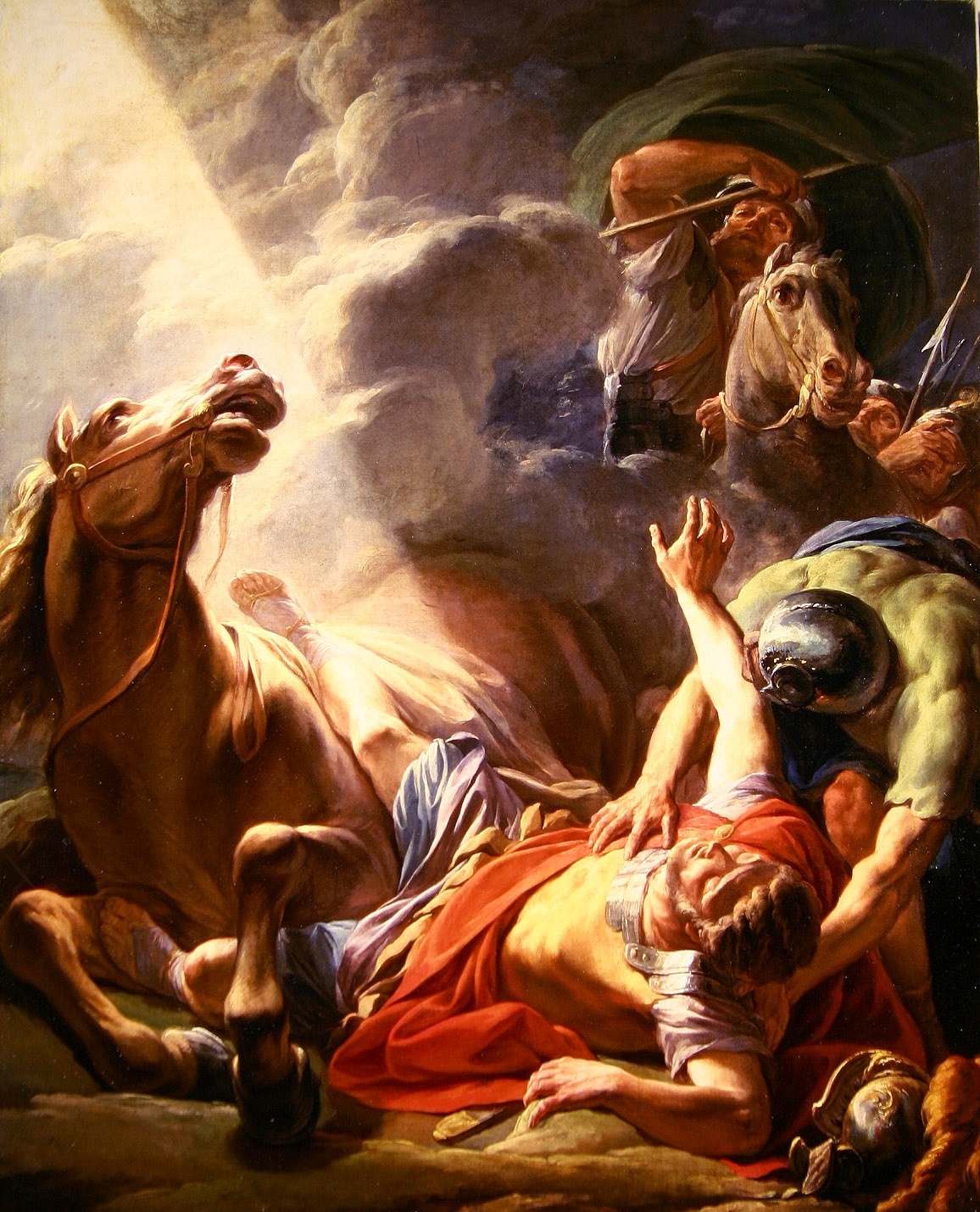
ConversionStPaul

And the men which journeyed with him stood speechless, hearing a voice, but seeing no man. (Acts 9:7)

Saul was a religious fanatic. Following his approving support of the stoning of the first recorded Christian martyr, Stephan (Acts 7:58), he “yet breathing out threatenings and slaughter against the disciples of the Lord, went unto the high priest, And desired of him letters to Damascus to the synagogues, that if he found any of this way, whether they were men or women, he might bring them bound unto Jerusalem” (Acts 9:1-2). Saul was ready to bring in the followers of “The Way” either dead or alive, and he would have given his life for the extermination of these infidels – those who had turned away from the religion of their fathers. Such zeal is nothing strange to us these days, unless you are a Christian; Christians do not normally behave in this manner.

But God had something else in mind for Saul, and He would turn Saul’s zeal for his religion into zeal for the Person of Jesus Christ. Saul was a hard-case, and getting his attention would require more than witnessing the death of a faithful martyr. So Jesus met him in person on his mission to exterminate the believers that were in Damascus. “And as he journeyed, he came near Damascus: and suddenly there shined round about him a light from heaven: And he fell to the earth, and heard a voice saying unto him, Saul, Saul, why persecutest thou me?” (Acts 9:3-4). Saul was soon to learn that his mission against The Way was really a mission against God Himself as Jesus directly identified Himself with His church: “I am Jesus whom thou persecutest” (v. 5). The very God whom he thought he was serving and whom he wanted to please struck Saul blind (v. 8), and put him in “time-out” for three days (v. 9) to give him time to reflect on his experience. Saul’s life was dramatically changed following this, so much so that “after … many days were fulfilled, the Jews took counsel to kill him” (v. 23). He was even given a new name, Paul, by which he is most commonly known (Acts 13:9). Everything about Paul changed following this encounter with the risen Christ.

The conversion and transformation of Paul was miraculous indeed, but what about the others who had accompanied Paul on the same mission? They also heard a voice but saw no man. The encounter apparently had some impact on them because they “stood speechless,” but for them, nothing changed. In fact, they may have been the very ones that turned on him, and “took counsel to kill him.” When we think about it, it really should not come as a surprise. Jesus said, concerning the Jewish religious leaders, “Therefore speak I to them in parables: because they seeing see not; and hearing they hear not, neither do they understand. And in them is fulfilled the prophecy of Esaias, which saith, By hearing ye shall hear, and shall not understand; and seeing ye shall see, and shall not perceive” (Matthew 13:13-14).

Today, the Gospel is preached though every possible medium available – even this simple blog – and though it is heard by countless millions, it has no effect on most. Jesus said that “strait [small] is the gate, and narrow is the way, which leadeth unto life, and few there be that find it” (Matthew 7:14). Seeing, they see not, and hearing, they hear not.
Comments Off on Seeing, They See Not

Filed under Apologetics, Christianity, Gospel, Religion, Salvation

Tares Among the Wheat

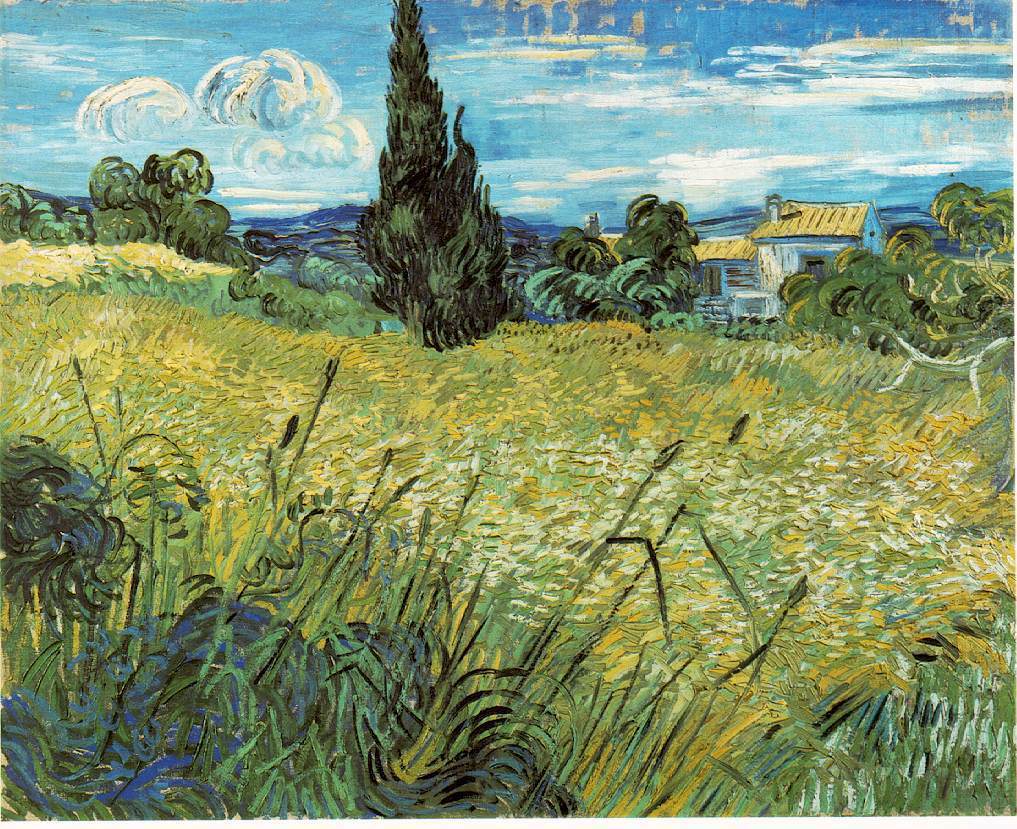
Green Wheat Fields With Cyprus – Vincent Van Gogh (1890)

But while men slept, his enemy came and sowed tares among the wheat, and went his way. (Matthew 13:25)

Before I cranked up the lawnmower Saturday morning, I noticed that some bad grass had come up in my backyard, and it was going to seed. As much as I dreaded that task, I knew I would have to pull it all up by hand otherwise I would risk scattering bad seed all over my yard and making matters worse. Through the pain of my aching back, I recalled Jesus’ “Kingdom Parable” about the tares among wheat found in Matthew 13:24-30; 36-43.

In this parable, Jesus likens Himself to the landowner who sowed good seed into His field – i.e., the world (vv. 24, 37-38). The “good seed” which He sowed are the children of the Kingdom – i.e., true believers in Christ (vv. 24, 38). “But while men slept” … Jesus defined all the players in the parable except for these. Who are these men who fell asleep on the job? Since there is no special definition for these men, it seems that these “men” are the “good seed” that was planted in the field. These did what good seed is supposed to do: receive nourishment, grow and produce fruit. But in doing what good seed is supposed to do, it took no notice of the enemy (Satan) that came in and sowed tare seeds into the field (vv. 25, 39). These too grew up together with the wheat and were indistinguishable from the wheat. As the time of harvest approached, the distinction became obvious, and the harvesters (the angels) wanted to rip up the tares (v. 28), but the landowner, not wanting to upset the good wheat, instructed that both be allowed to grow together until the harvest (vv. 29-30).

There are tares among us. They dress Christian. They speak Christian. They, by almost any means, look Christian, but they “are the children of the wicked one” (v. 38). Perhaps “outsiders” can spot them easier than those on the “inside.” Perhaps that is why many want nothing to do with the church because, they say, “The church is full of hypocrites!” No, the church is full of tares! Jesus says, “Let both grow together until the harvest: and in the time of harvest I will say to the reapers, Gather ye together first the tares, and bind them in bundles to burn them: but gather the wheat into my barn” (v. 30).

So, what are we to do about all of this? A good self-examination would be a good place to begin. “He that saith he abideth in him ought himself also so to walk, even as he walked” (1 John 2:6). Don’t act like tares. Peter reminds us that this present world is going up in smoke, and he exhorts us: “Seeing then thatall these things shall be dissolved, what manner of persons ought ye to be in all holy conversation and godliness, Looking for and hasting unto the coming of the day of God, wherein the heavens being on fire shall be dissolved, and the elements shall melt with fervent heat? Nevertheless we, according to his promise, look for new heavens and a new earth, wherein dwelleth righteousness” (2 Peter 3:11-13, emphasis added). Yes, there are tares among the wheat. Don’t be a tare!

Comments Off on Tares Among the Wheat

Filed under Apologetics, Christianity, Current Events, End Times, Gospel, Religion, Salvation, Theology

Beware of False Prophets

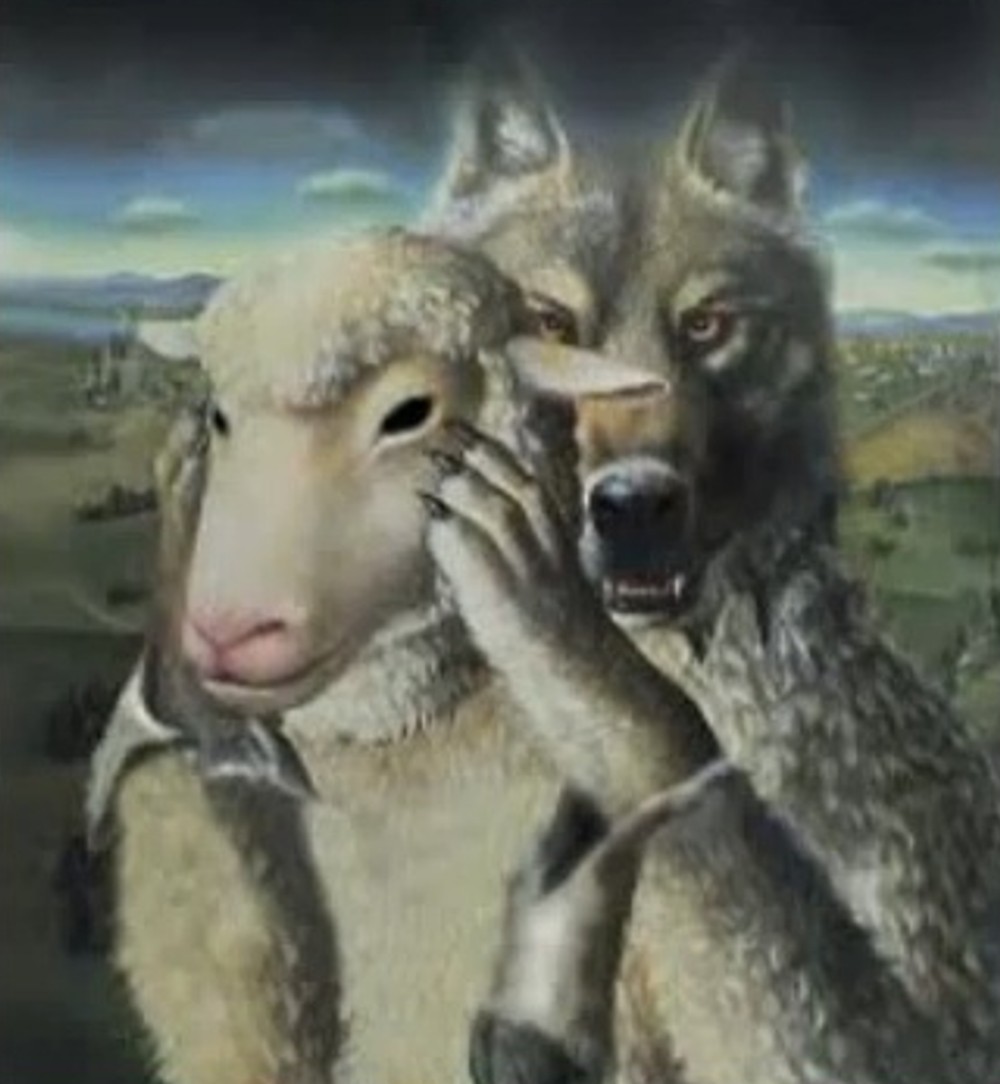
Wolf in Sheeps Clothing

Beware of false prophets, which come to you in sheep’s clothing, but inwardly they are ravening wolves.   (Matthew 7:15)

This verse begins with the imperative verb “beware” – the Greek prosecho meaning to pay attention to or be cautious about.  This is not just good advice; it is a command from our Lord.  There are false prophets in abundance all around us.  They come to us sheep, dressed up in sheep’s clothing; that is, they infiltrate Christian gatherings disguised as Christians.  Often they fill great pulpits and attract large crowds.  Jesus warns that they are “ravening wolves.”  The Greek word translated “ravening” is hárpages meaning “rapacious,” i.e., given to seizing for plunder or the satisfaction of greed, and inordinately greedy; predatory; extortionate.  These are out to exploit the flock for their personal gain.  Their strategy is simple: tell the sheep what they want to hear.  “For the time will come when they will not endure sound doctrine; but after their own lusts shall they heap to themselves teachers, having itching ears;” (2 Timothy 4:3).

So how are we to recognize these wolves in sheep’s clothing?  After all, on the surface, they appear harmless.  Jesus provided the answer.  “Ye shall know them by their fruits” (Matthew 7:16a).  Therefore, we are called to be fruit inspectors.  “Do men gather grapes of thorns, or figs of thistles?” (v. 16b).  The concept is simple: “every good tree bringeth forth good fruit; but a corrupt tree bringeth forth evil fruit” (v. 17).  The challenge is in discerning the good fruit from the bad fruit.  What standard is to be used?  The Berean church had the right idea.  “These were more noble than those in Thessalonica, in that they received the word with all readiness of mind, and searched the scriptures daily, whether those things were so” (Acts 17:11).  John tells us to “believe not every spirit, but try the spirits whether they are of God: because many false prophets are gone out into the world” (1 John 4:1). The Greek word translated “try” is dokimazō, and it means “to test (literally or figuratively); by implication to approve: – allow, discern, examine, (ap-) prove, try.”

Always measure the words of the prophet against the Word of God. “Study to shew thyself approved unto God, a workman that needeth not to be ashamed, rightly dividing the word of truth” (2 Timothy 2:15).  The Greek word translated as “study” is spoudazō  and it means “to use speed, that is, to make effort, be prompt or earnest: – do (give) diligence, be diligent (forward), endeavour, labour, study.”  “Rightly dividing” is the Greek word orthotomeō, which means “to make a straight cut, that is, (figuratively) to dissect (expound) correctly (the divine message): – rightly divide.” So when we make an earnest effort and give diligence to correctly dissecting the Word of God (Truth), we should be able to spot the false prophet because his words will not match up with God’s Word. In this way, we can tell the good fruit from the bad, and never fall prey to the false prophets.

On a somewhat different note, but still very much related: some think that making such judgments is somehow “un-Christian,” and any kind of judging should be avoided. They come to this conclusion because earlier, in this same chapter of Matthew’s Gospel, Jesus said, “Judge not, that ye be not judged. For with what judgment ye judge, ye shall be judged: and with what measure ye mete, it shall be measured to you again” (Matthew 7:1-2). Obviously, from what Jesus said afterward, He did not mean for us to put our discernment on the shelf. We need to exercise discernment and to make judgments in order to identify the false prophets disguised in sheep’s clothing. What we are not to do is pass “holier-than-thou” judgments on our brothers and sisters in Christ except to help them out of some error or sin into which they have fallen. For that a close self-examination is required before proceeding. As for the wolves, beware, be vigilant, and learn to recognize their false message.

5 Comments

Filed under Apologetics, Christianity, Dogs, End Times, Gospel, Religion

Later, Little Friend

???????????????????????

And in that day will I make a covenant for them with the beasts of the field, and with the fowls of heaven, and with the creeping things of the ground: and I will break the bow and the sword and the battle out of the earth, and will make them to lie down safely. (Hosea 2:18)

About two months ago I wrote about our little dog Tina in my article “Doggie Heaven.” At that time her obvious declining health helped prepare us for the inevitable. I wrote the piece with a heavy heart, and with a rather hopeless feeling that this would be the end forever. Like many people, I believed that only humans are immortal (in essence) because, after all, we have been created in the “image of God” (Genesis 1:26). Animals are God’s creatures, and He cares about them, but they do not bear the Imago Dei. That remains a true statement, but I have come to the conclusion that my former belief that only humans have an eternal soul is false.

Shortly after posting that article, a very good and respected friend gave me a book by Gary Kurz to encourage me as I walked though this “valley of the shadow of death.” In the book, Cold Noses at the Pearly Gates, Kurz walks us though Scripture and demonstrates, through Scripture alone, that animals do indeed have eternal souls, and they do go to heaven when they die. This assurance made my heart glad because it was the conclusion to which I was coming on my own. I cannot possibly cover every aspect in this short post that Kurz takes an entire book to cover, but the concept, when you seriously think about it, is very simple.  When God completed His work of creation, He said it was “very good.” There was no sin in the world, neither was there any death. (This fact should make Christians reject evolution in any way, shape or form. Death is NOT “very good.”) Every creature having the “breath of life” (Hebrew: ruach) was meant to live forever. Death is the enemy (1 Corinthians 15:26); therefore death could not be part of a “very good” creation. But through man’s sin, death entered the world (Romans 5:12) and the whole creation was affected (Romans 8:22). Animals suffer the curse of death even though they are innocent of sin. This is why animals were slain from the very beginning (Genesis 3:21) to atone for the sins of man – innocent blood was required. But the blood of animals cannot atone for the sins of man (Hebrews 9:12), only the sinless blood of the Lamb of God could atone for our sins. Jesus died for the sins of man. He did not die for animals, because they did not sin. In time, He will make all things new (Revelation 21:5). When He does, all those sparrows who escaped not His notice when they fell, will fill the New Heavens and New Earth, and so will all His other creatures as the prophet said (Isaiah 11:6-9; 65:25). All those animals in whom is the “breath of life” will live again.

Last weekend, our little Tina fought for every breath. Early Saturday morning, in the middle of the night we took her to the animal ER thinking that we might have to put her down that night. The vet gave her some injections to help her discomfort and sent us home. Later that morning, Tina was not doing any better, it seemed, so we took her in to our regular vet. He diagnosed her with bloat and prescribed barium to help relieve the gas and Benadryl to help with her breathing. But that did not help either, and she continued to struggle for every breath. Poor baby was so tired, but she had to hold herself up in order to breathe, and could not lay down to sleep or rest. It was such a pitiful sight to watch her sit in the middle of the floor, head drooping down trying to sleep but unable to. That night we propped her up with towels and medicated her so she could rest. The next day, Sunday, was another day of fighting for every breath. Monday morning came and we took our baby to the vet one last time. We came home without her. I held her in my arms as the vet administered the fatal injection, and as I watched her ruach leave her little body, I wept uncontrollably – we both did.

Almost a week has gone by, and there is not a day that goes by that we don’t think about her. She was just a little dog, but she left such a big hole in our lives. The book my friend gave me, Cold Noses at the Pearly Gates, has given me the assurance that even though she is gone for now, she is not gone forever. We will see her again. And she’ll have both eyes!

Later, little friend!


6 Comments

Filed under Christianity, Creation, Dogs, End Times, Gospel, Religion, Salvation, Theology