Tag Archives: Christ

Anticipating the Millennium

But as it is written, Eye hath not seen, nor ear heard, neither have entered into the heart of man, the things which God hath prepared for them that love him. (1 Corinthians 2:9)

Lately, I find myself musing about the thousand-year reign of Christ on Earth. I have written about end-times prophecy over the years in anticipation of the Rapture of the Church[1] and the following seven-year Tribulation.[2] However, other than affirming that there will be a coming thousand-year reign of Christ—the Millennium—I have not ventured much speculation on what that time will be like.

Scattered throughout pages of prophetic Scripture lie hidden hints of life on Earth with Jesus as Supreme Potentate over all the nations of the earth. That the reign of Christ on Earth for 1,000 years is a well-established fact in Scripture is beyond question. Revelation 20:1-7 confirms the timeframe as “a thousand years” no less than six times. Skeptics scoff, saying that the 1,000 years is figurative language signifying an undetermined long period of time. Others claim it refers to the current church age since Christ’s ascension. Yet that period has already stretched nearly 2,000 years, and earthly conditions hardly match the glorious descriptions in Scripture. No, the 1,000 years recorded in Revelation must be taken literally.

Christ’s Absolute Rule

During those 1,000 years, Jesus will reign on Earth. Revelation 19:15 says, “And out of his mouth goeth a sharp sword, that with it he should smite the nations: and he shall rule them with a rod of iron: and he treadeth the winepress of the fierceness and wrath of Almighty God” (emphasis mine). Ruling with “a rod of iron” establishes His absolute authority, yet Isaiah adds this balance: “But with righteousness shall he judge the poor, and reprove with equity for the meek of the earth: and he shall smite the earth with the rod of his mouth, and with the breath of his lips shall he slay the wicked” (Isaiah 11:4, emphasis mine).

The prophet Daniel interpreted Nebuchadnezzar’s dream of the multi-metal statue representing successive kingdoms.[3] The final kingdom, symbolized by feet of iron mixed with clay and ten toes (ten kings), corresponds to the rulers during the coming Tribulation. “And in the days of these kings shall the God of heaven set up a kingdom, which shall never be destroyed: and the kingdom shall not be left to other people, but it shall break in pieces and consume all these kingdoms, and it shall stand for ever” (Daniel 2:44, emphasis mine). That kingdom, is the kingdom of Christ. Daniel later saw “one like the Son of man” receiving everlasting dominion (Daniel 7:13-14, 27). The Apostle Paul affirms that in that day, “at the name of Jesus every knee should bow… and that every tongue should confess that Jesus Christ is Lord, to the glory of God the Father” (Philippians 2:10-11, emphasis mine).

Peace Among the Nations

In the Millennium, the nations (Hebrew: goyim; Greek: ethnos), i.e., all ethnicities, not of Jewish descent, will be subject to Jesus. Isaiah foretells: “And it shall come to pass in the last days, that the mountain of the LORD’S house shall be established in the top of the mountains, and shall be exalted above the hills; and all nations shall flow unto it … and they shall beat their swords into plowshares, and their spears into pruninghooks: nation shall not lift up sword against nation, neither shall they learn war any more” (Isaiah 2:2-4, emphasis mine). The Prophet Micah[4] echoes this nearly verbatim, and adds, “But they shall sit every man under his vine and under his fig tree; and none shall make them afraid: for the mouth of the LORD of hosts hath spoken it” (Micah 4:4, emphasis mine). Absolute peace will prevail.

A familiar Christmas passage points to the coming Messiah: “For unto us a child is born, … and the government shall be upon his shoulder: and his name shall be called Wonderful, Counsellor, The mighty God, The everlasting Father, The Prince of Peace. Of the increase of his government and peace there shall be no end, upon the throne of David, and upon his kingdom, to order it, and to establish it with judgment and with justice from henceforth even for ever. The zeal of the LORD of hosts will perform this” (Isaiah 9:6-7, emphasis mine). When Jesus presented Himself as the expected king,[5] He was rejected and nailed to a Roman cross. His earthly kingdom is yet to come. “And the LORD shall be king over all the earth: in that day shall there be one LORD, and his name one” (Zechariah 14:9, emphasis mine).

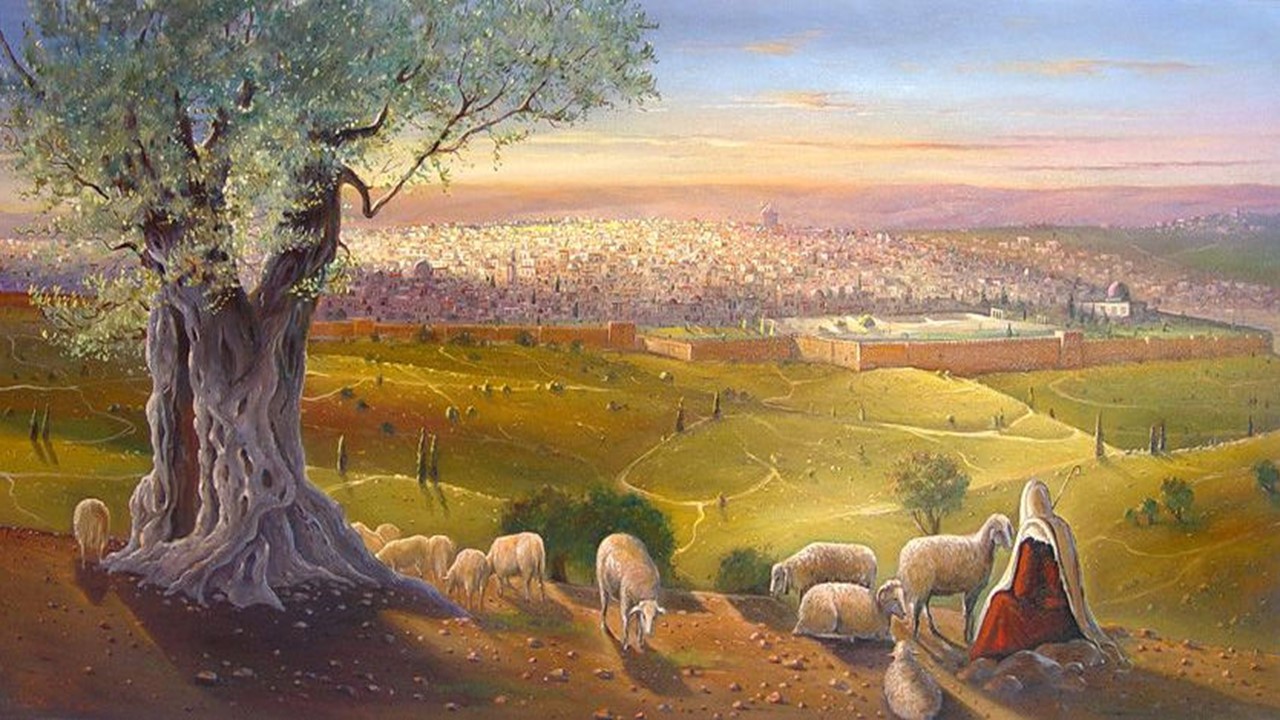
Jesus will reign over all the earth, but King David appears to hold a special role over restored Israel. Hosea prophesies that Israel will “return, and seek the LORD their God, and David their king; and shall fear the LORD and his goodness in the latter days” (Hosea 3:5, emphasis mine). Ezekiel reinforces this: the Lord will set up “my servant David” as shepherd and prince over Israel (Ezekiel 34:23-24; 37:24-25). Ezekiel 37 presents the restoration of Israel through the dry bones vision [6] and the uniting of the two sticks (Judah and Israel).[7] Chapters 40–48 describe the Millennial Temple, where the Glory of the Lord returns—unlike its departure from Solomon’s Temple.[8] The prophet describes it like this:

And the glory of the LORD came into the house by the way of the gate whose prospect is toward the east. So the spirit took me up, and brought me into the inner court; and, behold, the glory of the LORD filled the house. And I heard him speaking unto me out of the house; and the man stood by me. And he said unto me, Son of man, the place of my throne, and the place of the soles of my feet, where I will dwell in the midst of the children of Israel for ever, and my holy name, shall the house of Israel no more defile, neither they, nor their kings, by their whoredom, nor by the carcases of their kings in their high places. (Ezekiel 43:4-7, emphasis mine)

Life in the Millennial Kingdom

Jesus will be King of Kings and Lord of Lords over all the Earth, but what will daily life be like in that Millennial kingdom? It will be a time of perpetual peace where men “shall beat their swords into plowshares, and their spears into pruninghooks: nation shall not lift up a sword against nation, neither shall they learn war any more” (Micah 4:3). What else? Isaiah describes a restored Earth approaching Edenic conditions: “For, behold, I create new heavens and a new earth: and the former shall not be remembered, nor come into mind” (Isaiah 65:17). Lifespans will lengthen dramatically: “There shall be no more thence an infant of days, nor an old man that hath not filled his days: for the child shall die an hundred years old; but the sinner being an hundred years old shall be accursed” (Isaiah 65:20). Private property will be secure and fruitful: “And they shall build houses, and inhabit them; and they shall plant vineyards, and eat the fruit of them. They shall not build, and another inhabit; they shall not plant, and another eat: for as the days of a tree are the days of my people, and mine elect shall long enjoy the work of their hands”  (Isaiah 65:21-22, emphasis mine). Natural-born survivors of the Tribulation will procreate, and “their offspring [shall be] with them” (Isaiah 65:23).

Even the animal kingdom will return to their pre-fall state. “The wolf and the lamb shall feed together, and the lion shall eat straw like the bullock: and dust shall be the serpent’s meat. They shall not hurt nor destroy in all my holy mountain, saith the LORD” (Isaiah 65:25, emphasis mine).[9] Innocent children will play safely: “And the sucking child shall play on the hole of the asp, and the weaned child shall put his hand on the [viper’s] den” (Isaiah 11:8).

Our Glorified Role

For those of us who have placed their trust in Christ, the Millennium holds even greater promises. First of all, at the Rapture, the Apostle Paul says that the those who died believing in Christ will rise from the grave and those of us who are living at that time will metamorphose into their glorified bodies and join the risen dead to meet Jesus in the air.[10] “Who shall change our vile body, that it may be fashioned like unto his glorious body, according to the working whereby he is able even to subdue all things unto himself” (Philippians 3:21, emphasis mine). Imagine that! To have a body like that of our Savior. After His resurrection, He was able to transport Himself at will from one place to another, even into rooms with locked doors.[11] He could also eat as before.[12] I suspect that our glorified bodies will be equivalent to that of a young adult of late 20’s to early 30’s. My reasoning comes from knowing that when Jesus rose from the dead, He was around 33 years old (humanly speaking). Also, when God created Adam and Eve, they were fully mature adults. Not only will we be eternally youthful, but we will be endowed with many of the same superhuman abilities demonstrated by the resurrected Christ in that “He is able even to subdue all things unto Himself ” – not to the same extent as the omnipotent Lord Jesus Christ, but certainly greater than what we know now.

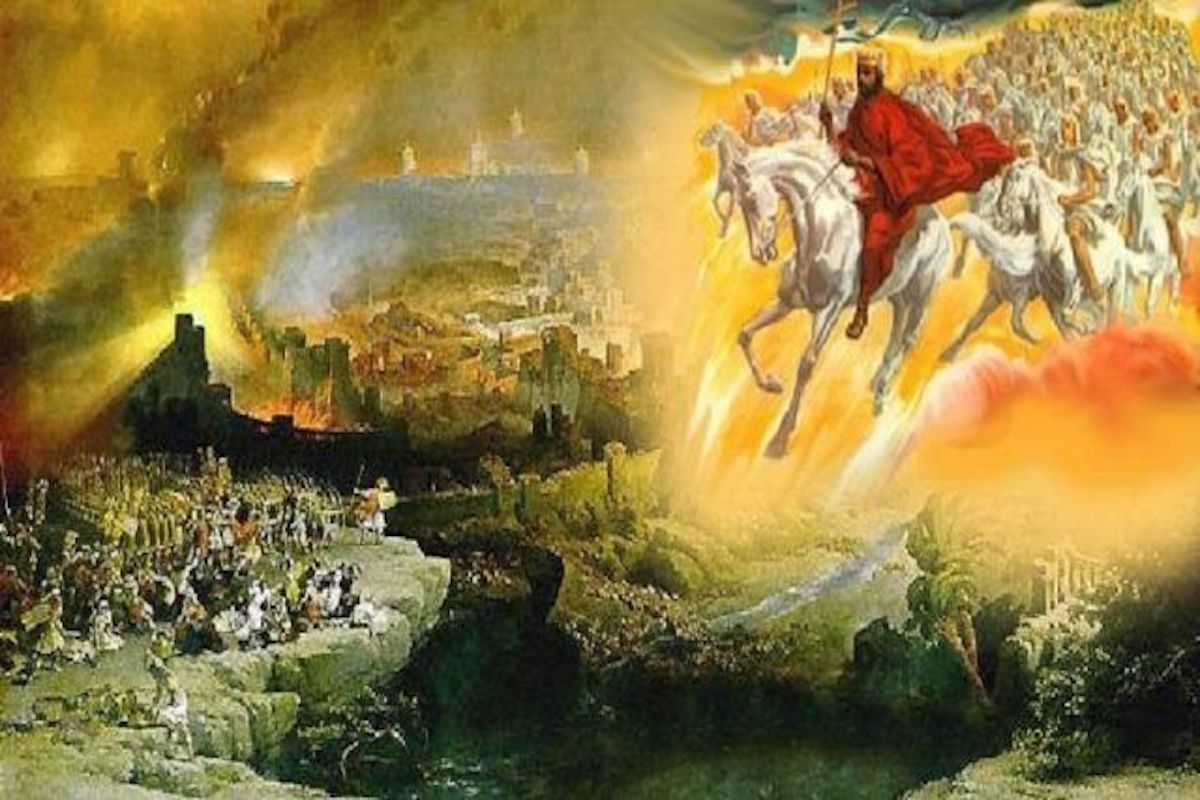
Secondly, we will serve in His administration on Earth. The Gospel writer Matthew records Jesus’ promise to His disciples, “And Jesus said unto them, Verily I say unto you, That ye which have followed me, in the regeneration when the Son of man shall sit in the throne of his glory, ye also shall sit upon twelve thrones, judging the twelve tribes of Israel” (Matthew 19:28, emphasis mine). These would be the “tribes” that survive the Tribulation and enter the Millennium in their natural bodies. The promise is not just for the 12 apostles, but for all the saints,[13] those who were taken up in the Rapture and will return with Christ at His second coming. Revelation 19:11-21 describes Christ’s return at the end of the Tribulation, riding on a white horse – symbolic of a conquering king – prepared to execute justice on a sinful and rebellious world. “And the armies which were in heaven followed him upon white horses, clothed in fine linen, white and clean” (Revelation 19:14, emphasis mine). The fine white linen, as opposed to “white robes,” shows that these are the Bride of Christ who were formally joined to Him at the “wedding supper of the Lamb.”[14]

Revelation 5 presents the scene immediately following the Rapture, where the saints are around the throne of God, and Jesus – the Lamb that was slain – receives the seven-seal scroll – the title deed to the earth. “And [the saints] sung a new song, saying, Thou art worthy to take the book, and to open the seals thereof: for thou wast slain, and hast redeemed us to God by thy blood out of every kindred, and tongue, and people, and nation; And hast made us unto our God kings and priests: and we shall reign on the earth” (Revelation 5:9-10, emphasis mine). The Apostle Paul, in writing to the Corinthian Church, says, “Do ye not know that the saints shall judge the world? and if the world shall be judged by you, are ye unworthy to judge the smallest matters?” (1 Corinthians 6:2, emphasis mine). To Timothy, he writes, “It is a faithful saying: For if we be dead with him, we shall also live with him: If we suffer, we shall also reign with him: if we deny him, he also will deny us: If we believe not, yet he abideth faithful: he cannot deny himself. (2 Timothy 2:11-13, emphasis mine). The promise is sure!

As for the rest of life in the Millennium, the earth and animals return to Edenic conditions with perfect peace. Technology may advance far beyond today to serve the natural population boom, but glorified saints will have no need of such things. When I consider the beauty of our fallen and cursed Earth, I can only imagine the wonder of a fully restored creation. I am anxiously awaiting that time—I don’t believe it is distant.

Reader, if you do not know Jesus as your Lord and Savior, this future is not for you, but it can be. Please read my page on “Securing Eternal Life.”

Notes:


[1]  “The Rapture” https://erniecarrasco.com/2021/09/05/the-rapture/

[2]  “End-Times Overview: The Big Picture” https://erniecarrasco.com/2026/02/22/end-times-overview-the-big-picture/  

[3]  Daniel 2

[4]  Micah 4:1-4

[5]  Matthew 21:1-11; Mark 11:1-11; Luke 19:28-44; John 12:12-19

[6]  Ezekiel 37:1-14

[7]  Ezekiel 37:15-28

[8]  Ezekiel 10:4, 18-19: 11:22-23

[9]  See also Isaiah 11:6-9

[10]  1 Thessalonians 4:16-17

[11]  John 20:19, 26

[12]  John 21:9-13

[13]  “Saints” are not icons that are to be venerated. Rather, a “saint” (Gk. “hagios”) is a “most holy thing” who has been set apart for God – sanctified, consecrated, elect, etc. All true believers in Christ are “saints.”

[14]  Revelation 19:6-9

Leave a comment

Filed under Bible, Christianity, End Times, Eschatology, Rapture, Resurrection, Salvation, Second Coming of Christ, Theology

End-Times Overview: The Big Picture

Blessed is he that readeth, and they that hear the words of this prophecy, and keep those things which are written therein: for the time is at hand. (Revelation 1:3)

The Bible is filled with promises about the future, and understanding end-times prophecy isn’t just an academic exercise—it’s a source of hope, motivation, and direction for daily life. As David Jeremiah notes in The Book of Signs, “God in His providence has placed a number of critical signs along the highway we call human history. We often think of these signs as prophecies, and we have been made aware of them through the prophetic vehicle of Gods’ Word, the Bibles … [T]he Bible dedicates more space to the subject of prophecy than almost any other. There are over eighteen hundred prophecies in God’s Word concerning the first and second coming of Jesus Christ alone!”[1] with far more space dedicated to prophecy than almost any other topic.

Why dive into this? Let’s explore the reasons and get the big picture.

Why Study End-Time Prophecy?

Bible prophecy, especially unfulfilled portions, remains incredibly relevant today. As 2 Timothy 3:16-17 reminds us, all Scripture—including future-oriented parts—is God-breathed and useful for teaching, reproof, correction, and training in righteousness. Unfulfilled prophecy equips us to stand against false teachings about the end times and prepares believers for what lies ahead.

More than that, it instills hope. Romans 15:4 tells us that everything written in the past was for our learning, so we might have hope through endurance and the encouragement of the Scriptures. “When we understand God’s plan for our future, we can live with hope even during our most difficult days. Prophecy is not intended to frighten those of us who believe but to encourage us.”[2] Paul urges in 1 Thessalonians 4:18 to comfort one another with these words about Christ’s return.

It also promotes holy living. Knowing Christ could return at any moment shapes our priorities. 2 Peter 3:11-12 asks what kind of people we ought to be in light of the coming day of God—living lives of holiness and godliness as we anticipate it. Jesus Himself emphasized readiness in Matthew 24:44-46, blessing those found faithful when the master returns.

Prophecy further compels evangelism. The imminence of the rapture (described in 1 Corinthians 15:52 as happening “in a moment, in the twinkling of an eye”) stirs urgency to share the Gospel. As 1 Peter 3:15 instructs, we’re always ready to give a reason for the hope within us.

Finally, studying prophecy brings blessing. Revelation 1:3 promises blessing to those who read, hear, and keep its words. Yet Revelation 22:18-19 warns against adding to or taking away from these prophecies—a solemn reminder of their importance.

Christians have strong reasons to engage with prophecy: God devoted significant portions to it (about one-fourth of Scripture’s verses), including major sections in Old Testament prophetic books and New Testament works like Revelation, 1-2 Thessalonians, and Jude. Ignoring it means overlooking a huge part of God’s Word.

Prophecy reveals God’s nature and Christ’s exalted status—He will return with power and great glory (Matthew 24:30), as King of kings (1 Timothy 6:15), visible to every eye (Revelation 1:7), with every tongue confessing Him as Lord (Philippians 2:10-11).

It motivates evangelism and holy living—as 1 John 3:3 says, everyone with this hope purifies themselves. In a world full of evil and despair, prophecy offers hope, echoing Jesus’ words in John 14:1-3: “Let not your hearts be troubled… I go to prepare a place for you… I will come again and will take you to myself.”

Dispensational Theology: The Big Picture of World History

To understand end-times events, many turn to dispensationalism, a framework popularized in the 20th century North America, especially through the Scofield Reference Bible. “The dispensationalism delineated by Scofield suggested that God works with humans in distinct ways (dispensations) through history; that God has a distinct plan for Israel over against the church; that the Bible, especially predictive prophecy, needs to be interpreted literally; that the church will be secretly raptured from earth seven years prior to Christ’s second coming; and that Christ will rule with Israel during a literal thousand-year earthy reign. Contemporary, or progressive, dispensationalism remains thoroughly premillennial but rejects the ontological distinction between Israel and the church as two peoples of God, seeing them instead as two salvation-historical embodiments of a single people.”[3]

The dispensations include:

  • Edenic (Genesis 1-3): Innocence in the Garden.
  • Antediluvian (Genesis 4-8): Conscience after the Fall, leading to the Flood.
  • Post-Diluvian (Genesis 9-11): Human Government post-Flood.
  • Patriarchal (Genesis 12-50): Promise through Abraham and the patriarchs.
  • Legal (Exodus onward): Law given to Israel.
  • Ecclesiastical (Matthew to Revelation 18): The Church Age of grace.
  • Messianic (Revelation 19-20): The millennial kingdom.
  • Fullness of Time (Revelation 21-22): Eternal state in the new heavens and earth.

This structure helps see God’s overarching plan unfolding progressively.

Old Testament View of End Times

Old Testament end-times prophecy centers on Israel. Passages like Isaiah 66:22 and Jeremiah 33:16 highlight God’s enduring commitment to the Jewish people.

The diaspora—scattering of Jews—fulfilled prophecies in Deuteronomy 4:27, 28:63-65, Jeremiah 9:16, and others, as judgment for disobedience.

Yet God promised re-gathering and rebirth. Deuteronomy 30:3-5 foretells restoration from dispersion. Isaiah 66:8 speaks of a nation born in a day (many see this fulfilled in Israel’s 1948 establishment). Ezekiel 37:1-14, the valley of dry bones vividly pictures national revival.

The Tribulation for Israel, called the time of “Jacob’s trouble” (Jeremiah 30:7), involves intense suffering but ultimate deliverance (Zechariah 13:8-9; 14:2-4).

In the **Kingdom**, Israel enjoys peace, prominence, and blessing—nations stream to Jerusalem (Isaiah 2:2-4), the desert blooms (Isaiah 35:1-2), and God reigns (Zechariah 14:9).

The Millennium and End Times – Three Main Views

The “thousand years” in Revelation 20:1-7 sparks debate. Here are the primary interpretations:

  • Amillennialism (“no millennium”) sees no literal earthly 1,000-year reign. Millennial prophecies are fulfilled spiritually in eternity or the current church age, with prophecies about Israel applied to the church.
  • Postmillennialism views the millennium symbolically as the church age, where the Gospel gradually triumphs, Christianizing society and bringing peace. Christ returns after this “golden age” (sometimes linked to Kingdom Now theology).
  • Premillennialism holds that Christ returns before a literal 1,000-year earthly kingdom. Most evangelicals favor this, expecting a seven-year tribulation beforehand.
  • Variants of Premillennialism include:
    • Post-Tribulation Rapture: Church endures the full Tribulation, raptured at Christ’s return.
    • Mid-Tribulation Rapture: Rapture at the midpoint (3½ years).
    • Pre-Tribulation Rapture: (common in dispensationalism): Church removed before the Tribulation begins, ending the church age and ushering in judgment on earth.

These views differ on timing and nature, but all affirm Christ’s bodily return, final judgment, and eternal kingdom.

Studying end-times prophecy isn’t about fear—it’s about hope, holiness, and readiness. As we see signs aligning, may it draw us closer to Christ, living expectantly for His return. What aspect of prophecy encourages you most? Share in the comments below!

For more on this topic, see my page on Revelation.

Notes:


[1]  David Jeremiah, The Book of Signs, (W. Publishing, Nashville, 2019), pp.9-10.

[2]  Ed Hindson and Tim LaHaye, Essential Guide to Bible Prophecy, (Harvest House Publishers, Eugene, OR, 2012), p.18.

[3]  Stanley J. Grenz, David Guretzke, Cherith Fee Nordling, Pocket Dictionary of Theological Terms, (InterVarsity Press, Downers Grove, 1999), pp. 39-40.

2 Comments

Filed under Apologetics, Bible, Christianity, End Times, Eschatology, Rapture, Religion, Second Coming of Christ

Charlie Promoted

Precious in the sight of the LORD is the death of his saints. (Psalm 116:15)

I did not know Charlie Kirk outside of his public persona. But one thing I knew about him is that his faith in Christ was real; it was genuine, and it was strong. How could I know that? We both have the same Holy Spirit dwelling in us that enables us to recognize those who are genuinely members of God’s family. Charlie Kirk was my brother.

This past Wednesday, September 10, 2025, I received a post on my Telegram app from Amir Tsarfati (Behold Israel) informing us that Charlie had been shot. That post was quickly followed by a graphic video showing Charlie’s neck being struck by the assassin’s bullet. A crimson fountain burst forth. Charlie slumped back in his chair and fell to the floor. I knew instantly that he would not survive in spite of the following reports saying that he was in critical condition. I knew that despite all the heroic efforts to save his life, he would not survive that shot. The bullet severed his carotid artery and probably his spinal cord. There was no way he could survive that shot. Sadly, I was right.

As I said, I did not know Charlie Kirk personally. He was a distant public figure that I admired for all the things for which he stood. So, I cannot explain the pain in my heart at the loss of this stranger’s life. As I continued to watch news reports (on the Fox News Channel), my throat tightened, my tears flowed, and my heart ached for the loss of this wonderful human being. “Why?” I asked myself. He is nothing to me. But that’s not true. He means a lot to me. He is my brother. He is part of my family – the family of God. That’s why I hurt.

Then the question that comes to all of us at one time or another: why did God allow this to happen to a young man who is arguably a mighty tool in God’s hand for the cause of Christ? Why didn’t God deflect the bullet? He could have. Why did God allow this deranged gunman, Tyler Robinson, to take the life of this young, godly man and leave his beautiful young bride, Erika Kirk, a widow and his two young children fatherless? Why? In times like these, I always lean on my anchor verse: “And we know that all things work together for good to them that love God, to them who are the called according to his purpose” (Romans 8:28). Erika cited that verse also.

What good can come of this senseless murder? Perhaps God is giving us a preview of things to come. Will we go forward with boldness or cower back and deny Christ? Perhaps God gave us an example of a courageous Christian for us to follow. Can we say with the Apostle Paul and with Saint Charlie Kirk, “For I am not ashamed of the gospel of Christ: for it is the power of God unto salvation to everyone that believeth …” (Romans 1:16). We may never know this side of Glory. One thing we can know for certain is that God knows exactly what He is doing, and He has a purpose in all that He does and all that He allows. Nothing catches Him by surprise. We just need to trust Him, as Erika does.

It is Friday night as I write this, and I just finished watching a brokenhearted but courageous young widow give a wonderful tribute to the love of her life, who is in the arms of his Savior, Jesus. You can watch her remarks here.

Reader, if you don’t know Charlie’s Savior, please read my page on Securing Eternal Life.

2 Comments

Filed under Christianity, Current Events, Religion, Theology

Shiloh

The sceptre shall not depart from Judah, nor a lawgiver from between his feet, until Shiloh come; and unto him shall the gathering of the people be. (Genesis 49:10)

My daily Bible readings brought me to the Book of Joshua this week. Joshua is the first of the “historical” books of the Bible. It records the entry of the Israelites into the Promised Land and the conquest of the lands promised to them by God.[1] Once the Israelites conquered most of the land – because they never completely conquered all of the land God promised them – they permanently set up the Tabernacle – the portable dwelling place of God – in Shiloh.[2]

The name, Shiloh, rang a bell. I remembered that the first mention of the name appeared back in Genesis where Jacob (Israel) blessed his sons. To Judah, he said, “Judah, thou art he whom thy brethren shall praise: thy hand shall be in the neck of thine enemies; thy father’s children shall bow down before thee. Judah is a lion’s whelp: from the prey, my son, thou art gone up: he stooped down, he couched as a lion, and as an old lion; who shall rouse him up? The sceptre shall not depart from Judah, nor a lawgiver from between his feet, until Shiloh come; and unto him shall the gathering of the people be” (Genesis 49:8-10, emphasis mine). Here we understand that “Shiloh” is a person, specifically the coming Messiah – “and unto him shall the gathering of the people be.” “Shiloh” (שִׁילֹה), Strong’s H7886, is defined as “he whose it is, that which belongs to him, tranquillity [sic].”[3]

However, Shiloh in the Book of Joshua, is a place, not a person. Here, Strong’s assigns a different number and definition. “Shiloh” (שִׁילֹה), Strong’s H7887, is defined as “a place of rest.” Notice that both Hebrew spellings are exactly the same. So, why the difference in definitions?

The third definition in H7886 is “tranquility,” and the first definition in H7887 is “a place of rest.” It seems clear to me that “tranquility” and “rest” ultimately define the word.

In Genesis, Shiloh is He to Whom it belongs, unto Whom the gathering of the people shall be – the Messiah, Jesus the Christ. The Prophet Isaiah predicted, “For unto us a child is born, unto us a son is given: and the government shall be upon his shoulder: and his name shall be called Wonderful, Counsellor, The mighty God, The everlasting Father, The Prince of Peace. Of the increase of his government and peace there shall be no end, upon the throne of David, and upon his kingdom, to order it, and to establish it with judgment and with justice from henceforth even for ever. The zeal of the LORD of hosts will perform this” (Isaiah 9:6-7, emphasis mine).

Prince of Peace fits the idea of “tranquility” and “a place of rest” – Shiloh. Those of us who have placed our faith in the finished work of Christ (a.k.a. Messiah) find our “peace” and “rest” in the assurance that soon, either by death or by Rapture, we will enter that eternal place of rest in His presence forever. I am ready. Are you?

Reader, if you want to know that kind of peace, I encourage you to read my page on “Securing Eternal Life.”

Notes:


[1]  Joshua 1:1-3; 21:43

[2]  Joshua 18:1

[3]  Brown-Driver-Briggs’ Hebrew Definitions, (Published in 1906; public domain).

4 Comments

Filed under Apologetics, Bible, Theology

All In the Details

For thou shalt worship no other god: for the LORD, whose name is Jealous, is a jealous God: (Exodus 34:14)

Once again I have taken up the challenge to read through the entire Bible. I am using a chronological reading plan on a new, unmarked Bible. I like the chronological system because it helps me keep the historical events (especially through the historical books) in logical order.

My reading, so far, has taken me into the books of Exodus and Leviticus. The first twenty chapters of Exodus are interesting because they detail how God delivered the children of Israel out of Egyptian captivity with His awesome power demonstrated through miraculous plagues specifically aimed at all the Egyptian gods. The tenth and final plague was the death of the firstborn of all the Egyptians both children and cattle. However, the children of Israel were saved by the faith-act of painting their door frames with the blood of a sacrificial lamb.[1] After that, the Egyptians were more than happy to let God’s people go, and they even sent them away with treasures. By the time the children arrived at the Red Sea, Pharaoh changed his mind and he assembled his army to go after them. Trapped between the sea and Egypt’s army, God parted the waters of the Red Sea for the Israelites to cross over on dry land, while placing Himself as a pillar of fire between the Egyptian army and the children of Israel. Once the Israelites were across, God removed Himself so that Pharaoh’s troops could follow in pursuit. When the Egyptians were all in the middle of the Red Sea, God closed the waters in on them and drowned the entire army.[2]

God provided food and water for His people until they arrived at Mount Sinai. There God gave the Ten Commandments in the hearing of all the people. God’s voice terrified the people, and they begged Moses not to let God speak to them but that he intercede for them.[3] They promised they would do everything that God commanded. Not long after that, Moses went up into the mountain to receive the rest of God’s instructions and commandments. He was up on the mountain for forty days and forty nights, and when he descended, he found the people partying in “worship” to a golden calf they had made.[4]

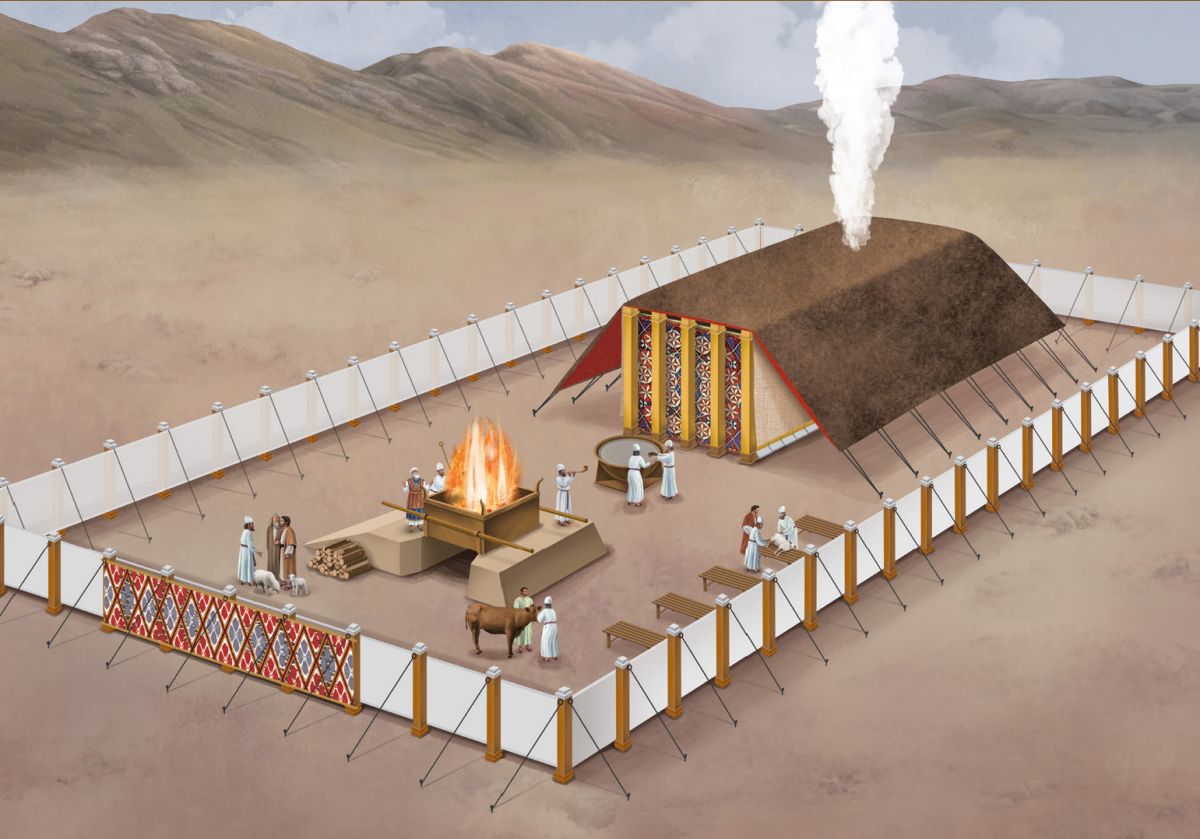
While Moses was up on the mountain, God gave him very specific commandments besides the initial ten. Besides the laws and commandments, God gave very detailed instructions on the construction of the Tabernacle and all implements and furnishings for use in the Tabernacle. These included the golden menorah, the altar of incense, the table of showbread, the Ark of the Covenant, the altar of burnt offering, etc. God specified the materials to be used in making the curtains inside the Tabernacle and the materials to be used in the construction of the outer court, down to how many rings were needed to hang the outer curtain. God gave the dimensions of every single item; no detail is omitted. Then God gave directions for the proper attire for the high priest and the other assistant priests.

The reading becomes very tedious at this point, and it continues on to Leviticus. One might wonder why God includes such minutia in the pages of Scripture. For those of us who are under grace, such detail has little meaning. We have no Tabernacle or Temple as described in which to worship. We do not offer animal sacrifices for every infraction we might commit. Our once-for-all sacrifice was that of Jesus on the cross.[5] We have no need for priests dressed in special apparel to offer sacrifices on our behalf or pray for the forgiveness of our sins. Jesus intercedes for us to the Father in heaven.[6] So, why should God include all those dry details for us to read? I could be wrong, but if you are like me, when you come to these pages, you skip right over them in order to get to the good stuff.

Well, I have not skipped these pages, and I have concluded that the reason God gave us all these minute details is precisely so that we understand that He takes the way we worship very seriously. As a matter of fact, at the end of Leviticus 9 and the beginning of Leviticus 10, He proves just how seriously He takes the way we worship. At this time, the Tabernacle had just been erected, and Aaron and his sons were consecrated as priests to minister before the LORD. They had done everything exactly as God had directed. “And Moses and Aaron went into the tabernacle of the congregation, and came out, and blessed the people: and the glory of the LORD appeared unto all the people. And there came a fire out from before the LORD, and consumed upon the altar the burnt offering and the fat: which when all the people saw, they shouted, and fell on their faces” (Leviticus 9:23-24, emphasis mine). This was God’s way of saying, “Good job!”

That was good, but what came next was shocking. “And Nadab and Abihu, the sons of Aaron, took either of them his censer, and put fire therein, and put incense thereon, and offered strange fire before the LORD, which he commanded them not. And there went out fire from the LORD, and devoured them, and they died before the LORD” (Leviticus 10:1-2, emphasis mine). What! After God gives them an “atta boy,” He kills them for offering “strange fire.” What is all that about?

God had given very specific instructions on the making of the incense which was to be burned on the altar of incense that stood before the holy of holies inside the Tabernacle. That special incense was not to be used for any other purpose. Duplicating the formula for personal use incurred capital punishment. The continuous burning of the incense before the holy of holies (where God’s presence resided) represented the prayers of the people going before the Lord. Furthermore, the incense could only be ignited by coals from the altar of burnt sacrifices that stood outside of the tabernacle. In this case, God had just ignited the burnt offering with His own fire from above.

These two clowns did not think it was such a big deal to get fire from somewhere else. After all, fire is just fire. Right? It was a big deal for God, and He struck them dead on the spot. This is really not much different than Cain’s offering.[7] Cain brought an offering that was not what God required, and God “had not respect” for Cain’s offering.

God takes the way we worship Him seriously. On this side of the cross, we are not obligated to follow any set of rigid “religious” rituals in order to come into the presence of God. However, too often we take our worship of God much too casually. It’s just something we do. It becomes habit; we do it without giving it a second thought. Mostly when we think about “worship,” we think about attending a “worship service” inside a church building. We sing worship songs and listen to a sermon, and then go home to watch a game on TV or go out for lunch.

Actually, worship is so much more than that. The Apostle Paul exhorts us, “I beseech you therefore, brethren, by the mercies of God, that ye present your bodies a living sacrifice, holy, acceptable unto God, which is your reasonable service. And be not conformed to this world: but be ye transformed by the renewing of your mind, that ye may prove what is that good, and acceptable, and perfect, will of God” (Romans 12:1-2, emphasis mine). The way we conduct our lives from day to day, moment by moment is our “reasonable service” (i.e., “logical worship”). How casually do you conduct your life without giving a second thought to how you are presenting your life to God? God may not strike you dead like Nadab and Abihu, but He does take it seriously.

So, how can we be a pleasing sacrifice to God? Well, for the Christian, that is easy because you have a big advantage. “Know ye not that ye are the temple of God, and that the Spirit of God dwelleth in you?” (1 Corinthians 3:16). You have the Spirit of God in you. So, each morning, when you awake, thank the Lord for a new day, and dedicate the day to Him and all that you do, do for His honor and glory. I promise you will falter and stumble, but you will instantly recognize your fault, you will ask forgiveness, and you will continue on. Paul says, “Pray without ceasing” (1 Thessalonians 5:17). Well, if you are down on your knees constantly praying, you would never get anything done! That is not what Paul is intending. What he means is that you need to be in a constant attitude of prayer. Talk to God about everything you are doing or plan on doing. He, because His dwelling place is in you, is your best and constant friend. But don’t take that for granted. He is God and you should never forget that. He takes your worship seriously and so should you.

Reader, if this made little sense to you, it is because, while you may know “about” God, you really do not know God. If you would like to know Him, I would encourage you to read my page on “Securing Eternal Life.”

Notes:

[1]  Exodus 12

[2]  Exodus 13

[3]  Exodus 20

[4]  Exodus 32

[5]  Hebrews 10:6-10

[6]  1 Timothy 2:5; Hebrews 12:24

[7]  Genesis 4:3-6

1 Comment

Filed under Bible, Christianity, Religion, Theology, Worship