Category Archives: Creation

Articles that emphasize biblical six-day, young earth creation.

Genetic Defects Prove Evolution?

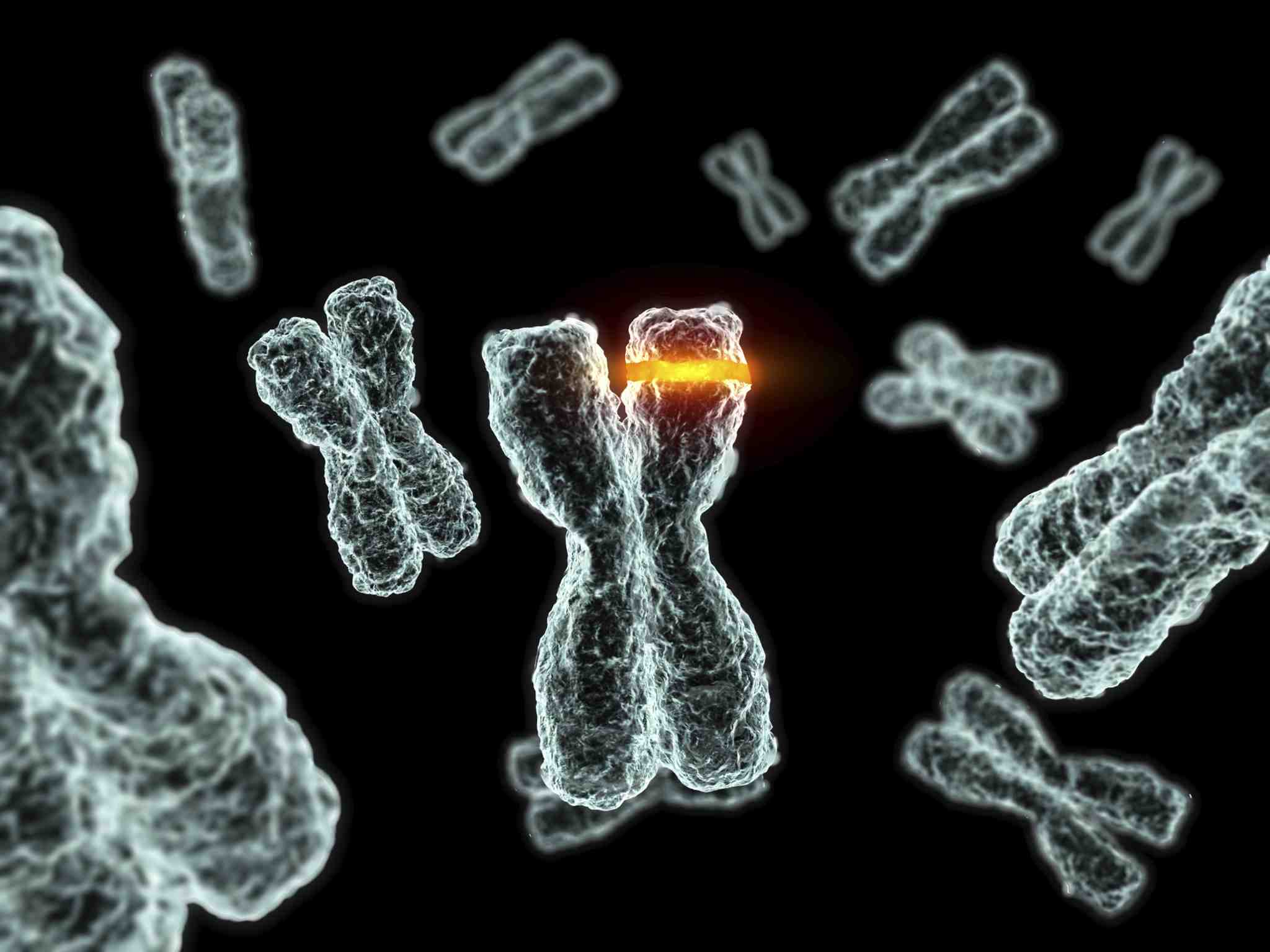
mutation

And God saw every thing that he had made, and, behold, it was very good. (Genesis 1:31)

A high school sophomore was required to read Survival of the Sickest: The Surprising Connections Between Disease and Longevity by Dr. Sharon Moalem as a summer reading assignment. According to this student, the book takes different diseases or illness and traces them back to their origin and provides scientific research to back up why a particular disease was once beneficial to our ancestors. Such strong “evidence” challenged the young man’s creationist worldview and raised several questions in his mind:

  • If God did create diseases did he have any good intentions or did he want them to destroy us?
  • Is God still creating diseases today, or are the ones He created just now being discovered?
  • Is this book right when it says that as humans we adapt overtime based on certain genes that help us survive?

The student offered one example of the disease hemochromatosis, which is a genetic disorder “that causes high amounts of iron to be present in the body, and overtime the human body ‘rusts’ away until the person affected dies” according to the student. The Mayo Clinic says that “hemochromatosis causes your body to absorb too much iron from the food you eat. The excess iron is stored in your organs, especially your liver, heart and pancreas. The excess iron can poison these organs, leading to life-threatening conditions such as cancer, heart arrhythmias and cirrhosis. Many people inherit the faulty genes that cause hemochromatosis — it is the most common genetic disease in Caucasians” (emphasis added).[1]

As reported by the student, Moalem “suggests that this disease helped people to survive during the bubonic plague. The bubonic plague was easily contracted and once it was in your system would rapidly progress feeding off of the iron available in the blood stream and within days kill you. Those who were lucky enough to have hemochromatosis, however, had almost all of their iron inaccessible to the plague since it was all in ‘locked’ form. This prevented the disease from spreading and enabled people to survive.” This was offered by Moalem as one example of the evolutionary theory of natural selection and how adaptations helped many people to survive.

I have not read Moalem’s book, so the information I have is secondhand. However, the error in thinking seems pretty clear to me. The example cited about hemochromatosis is an example of a genetic defect. The people with this genetic defect die because their bodies cannot make use of the iron in their system. The fact that it protected them from the bubonic plague did not save them from the eventual death caused by their genetic disorder. They still eventually died prematurely because of their inherited disease!

The same is true for those with sickle cell anemia. It is a genetic defect that brings about the early death of those having the defect. However, the defect makes them immune to malaria, and although they are safe from malaria, they eventually die an early death because of the disease. Personally, I do not see the benefit in either of these cases!

Genetic studies are showing that we are not improving health-wise. Our knowledge of how to combat some of these diseases continues to improve as new diseases continue to crop up.[2] Studies have shown that we transmit 60 to 200 mutations every generation,[3] and those mutations are either neutral or harmful; none are beneficial.

The question of human adaptation, as far as survival in different environments, I think has more to do with man’s intellect than it does genetics. However, as Brian Thomas, science writer for the Institute for Creation Research, points out, “It’s plausible that the Creator ‘front-loaded’ Adam and Eve’s genomes with full complements of a wide variety of both essential and non-essential genes, as well as genetic and epigenetic factors to facilitate rearrangement of those genes. Thus, as humans have spread out and thrived in various environments across the globe since their dispersal at Babel, their traits have also spread out.”[4]

As for God creating diseases, in a certain sense, He did. God is sovereign and all of creation is subject to His control. However, in another sense, God did not create disease. Genesis 1:31 tells us that God’s assessment of His creation was that it was “very good.” Such an assessment coming from a perfect God can only mean “perfect” – “flawless.” Death, decay and disease came as a result of man’s sin. “Because thou … hast eaten of the tree, of which I commanded thee, saying, Thou shalt not eat of it: cursed is the ground for thy sake” (Genesis 3:17, emphasis added). It is because of man’s sin that disease entered into the world, not because God created it – at least not initially. In the beginning man was created not to die; in fact, nothing that God created was intended to die. The Bible calls death “the enemy” (1 Corinthians 15:26). So, our genetic degradation is due to sin. However, God will not allow us to degenerate to extinction. When Christ returns, He will restore everything back to its original perfection (Revelation 21:1). That should give us great hope!

Here are some other articles on the human genome that you may find interesting:

 http://www.icr.org/article/origins-breakthroughs-2010-human-genetics/

http://www.icr.org/article/new-genomes-project-data-indicate-young/


[2] Brian Thomas, “More Mutations Mean More Diseases, Less Evolution” http://www.icr.org/article/mutations-mean-more-diseases-less-evolution/

[3] Brian Thomas, “The Human Mutation Clock Is Ticking” http://www.icr.org/article/human-mutation-clock-ticking/

[4] Brian Thomas, “Recent Human Variation Is Not Evolution” http://www.icr.org/article/recent-human-variation-not-evolution/

2 Comments

Filed under Apologetics, Creation, End Times, Evolution, Religion, Theology

Episode 33 – Dinosaurs and Humans

Episode 33 – Dinosaurs and Humans.

Are dinosaurs mentioned in the Bible? Watch and see!

7 Comments

Filed under Apologetics, Christianity, Creation, Evolution, Religion

Big Dâg!- A Fish Story

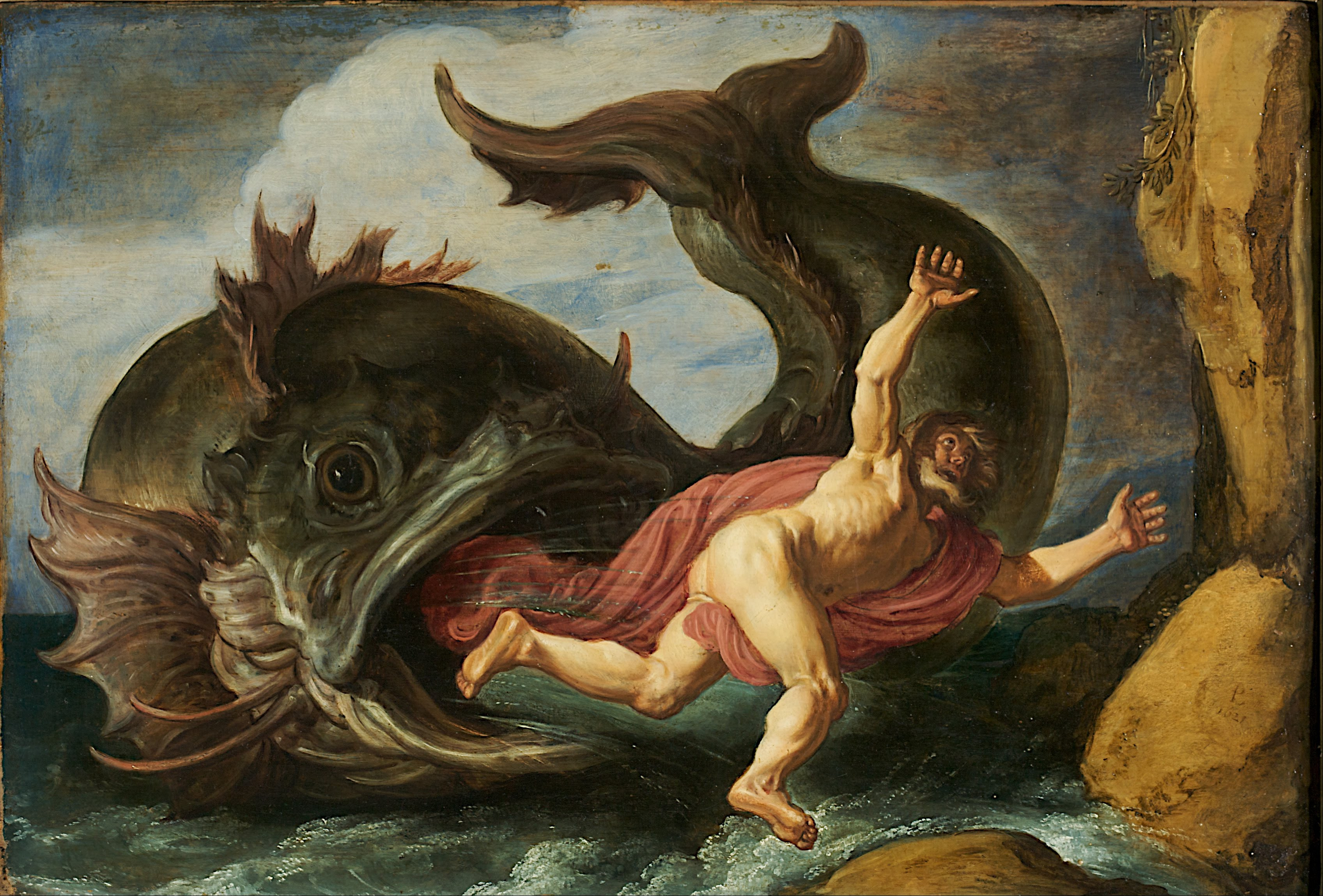
Jonah and the Whale by Pieter Lastman

Jonah and the Whale by Pieter Lastman

Now the LORD had prepared a great fish to swallow up Jonah. (Jonah 1:17)

One of the strangest stories in the Bible is that of “Jonah and the whale.” In fact, the story is so incredible that even some Bible scholars have tried to invent alternative renditions to make the story more believable. Some suppose that the “great fish” that swallowed Jonah may have been something like a whale shark, or a sea monster like leviathan (thought by some to be a mosasaur), or a whale. The suggestion that the creature was a whale probably comes from the King James reference in Matthew 12:40 where it describes Jonah as being in “the whale’s belly.” However, the Greek word translated “whale” is kētos, which could be understood as “sea monster” as it is translated by the Revise Standard Version and the New American Standard Version Bibles. But kētos can also be translated as “a huge fish.” This understanding is more in keeping with the Hebrew of Jonah 1:17 which literally translates the Hebrew dâg gâdôl as “great fish.” What the great fish was, is up for speculation. It certainly could have been a whale shark, which is a “great fish,” but it certainly was not a whale or “sea monster,” otherwise the Hebrew word tannıyn would have been used (Job 7:12; Ezekiel 32:2).

Whether the “great fish” was a whale shark or some other variety of large fish is irrelevant. What should be noted is that “the LORD had prepared” the fish “to swallow up Jonah.” It is not impossible to understand this as a new creation miracle of God so that it was something totally new created just for this purpose. It is also reasonable to believe that God used a dâg gâdôl that was already in existence to be called upon do to the LORD’s bidding. God is not limited in His options.

The other point of contention in this story is that Jonah survives inside the belly of this great fish for three days. That is truly incredible! One would think that the digestive acids in the fish’s belly would have been enough to kill Jonah. Well, perhaps Jonah actually did die! Listen to Jonah’s words: “I cried by reason of mine affliction unto the LORD, and he heard me; out of the belly of hell cried I, and thou heardest my voice” (Jonah 2:2, emphasis added). The Hebrew word translated “hell” is she’ôl – the abode of the dead – translated “Hades” in the Septuagint (the Greek translation of the Hebrew Scriptures). He describes himself as going to the depths of the sea. “I went down to the bottoms of the mountains; the earth with her bars was about me for ever: yet hast thou brought up my life from corruption, O LORD my God” (Jonah 2:6, emphasis added). That sounds dead. But some may challenge, “How can a dead man be aware of his condition?” Others may reasonably suggest: “This is Hebrew poetry; Jonah is speaking metaphorically.” For that, I would remind the reader of Jesus’ account of the death of the rich man and Lazarus (Luke 16:19-31). When the rich man died, he was aware of the flames of his new environment, he was aware of his thirst, he was aware of Lazarus in Abraham’s bosom, he was aware of the lost condition of his five brothers, and he was able to converse with Abraham. If this was true of the rich man – and Jesus relayed this as a factual account, not as one of His parables – then it certainly can be true of Jonah.

This understanding makes Jesus’ analogy in Matthew 12:40 even more poignant. “For as Jonas was three days and three nights in the [belly of the kētos]; so shall the Son of man be three days and three nights in the heart of the earth.” Jesus died an actual death. He was in the “belly of Hades” for three days. “And the LORD spake unto the fish, and it vomited out Jonah upon the dry land” (Jonah 2:10). In the same way, after three days in the tomb, God raised Jesus from the dead. For this reason, I believe Jonah actually died and was revived to accomplish the will of God. That is why Jesus could point to Jonah as the example of His death, burial and resurrection.

2 Comments

Filed under Apologetics, Christianity, Creation, Evangelism, Religion, Salvation, Theology

An Atheist’s Challenge – Round Two

DNA Double Helix

… evil men and seducers shall wax worse and worse, deceiving, and being deceived.

(2 Timothy 3:13)

The atheist about whom I wrote last week actually responded. It surprised me. Something I’ve noticed about atheists is their inability to focus on any one thing and examine it thoroughly. Instead they resort the “fire hose tactic” by trying to overwhelm their opposition with more “evidence” than one can respond to – all of it unsubstantiated, of course. I find that one advantage of writing over speaking is that I can select the topic to which I will respond, and rather than going into great detail to defend my position, I just refer the atheist to articles written by real scientists that present a contrary view. The atheist prides himself in being “open-minded,” so this allows him to practice what he preaches.

I do not want to burden my readers with every detail of the conversation, but the following are some of the points the atheist attempted to make, along with my commentary.

  • Some species that have evolved throughout the recorded history of mankind. Examples – The fish in the Hudson River evolving to survive the toxic waste, the South-East Fence Lizard which has learnt [sic] a defensive ‘dance’ to fight off ant predators, the Lerista Skink that’s evolved to shrink its legs to travel through the Australian sands more efficiently, slithering instead of walking with legs.

Here the atheist is equivocating. I had previously warned the atheist not to do this, but there is only so much one can expect from a reprobate mind (Romans 1:28).  Evolutionists often confuse “adaptation” (microevolution) with macroevolution – one kind of animal changing into another. In his examples, the fish is still the same species of fish. It did not change into a whale or grow legs to walk out of the polluted waters. The lizard is still the same species of lizard. The lerista skink genus, according to the Wikipedia, “is especially notable for the variation in the amount of limb reduction. The variation ranges from short-bodied forms with large legs bearing five toes, to elongate forms completely lacking legs” (emphasis added). “Variation” does not equal “evolution.”

  • Humans share (approx) 96% of their genes with Chimpanzees, 90% with Cats, 80% with Cows, 75% with Mice (90% of Mice’s genome can be lined up with certain regions on the human genome, also with 99% of Mice’s genes turning out to have analogues in humans), 60% of Fruit Flies’ DNA is shared, 60% of genes with Chickens, and so on.

If anything, the similarity in DNA among animals and even plants speaks to a common designer not to evolution. The information coded and stored in DNA are the instructions necessary to make a human being human or a dog either a Great Dane or a Chihuahua.  Dr. Jeffrey Tomkins, biologist with the Institute for Creation Research (ICR) has written much on this subject. His research shows that the similarities between human and chimp DNA are not as close as first proclaimed, and the gap grows greater the more he investigates. (See: Chromosome Comparison Shows More Chimp-Human Differences.)

The atheist then pointed to Darwin’s finches at the Galapagos Islands. That really is no different than what has already been covered above. Typically, what I have noticed about atheists is that they parrot things that they have heard without bothering to think critically about what they have heard. They simply regurgitate what they have been fed. His next point is a good example:

  • Big Bang Theory… 13.7 billion years ago (somewhere around that mark), not 5,000 years (almost hilarious to believe the world is that young with the overwhelming amount of proof), something quite large happened. Not an explosion like most Religious parties believe happened, nothing like if a balloon were to pop and all its contents were to spill out in all different directions. It happened more like a small balloon finitely expanding to the size of the Universe as it is now. What caused this, no-one knows, the mathematics behind it are [sic] crazy and extreme for humans to even grasp.

If “religious parties” portray the Big Bang as an “explosion,” it is because that is how it was initially portrayed by Sir Fred Hoyle (and others), the man who coined the phrase in 1949. Current theoretical physicists promulgate this idea by what is presented on the mass media. While they speak about “inflation,” they present images that imply an explosion. Contrary to the atheist’s portrayal of “religious parties,” creation scientists would lean more toward the side of “inflation” (without the billions of years) as this view lines up better with biblical instruction (Job 26:7; Psalm 104:2; Isaiah 40:22; 44:24; Zechariah 12:1). The atheist ignores that there are competing views among secular scientists on how the Big Bang developed. The jury is still out on which is the correct interpretation. So, like all fools, the atheist builds on a foundation of sand (Matthew 7:26).

  • Our sun alone is 4.57 billion years old, after it collapsed (along with many other stars) from being a part of a giant molecular cloud (Hydrogen + Helium). For god to have created the sun 5,000 years ago, it would still be in the process of its collapse and Earth would still being in its process of creation, much more flat and disc-shaped.

In the first place, gas does not collapse; it expands, which is an argument against current star formation theories. This is a carefully guarded secret. As for God not being able to create in a short amount of time, obviously the atheist is not familiar with the omniscient, omnipotent God of creation.

At this point, the atheist begins his assault on God. He begins his attack with words straight from the devil’s mouth: “You’re god is the only true god?” Then he lists several pagan gods. Interestingly he finds the parallels between the pantheon of Asherah, who is impregnated by a ray from the sun god, gives virgin birth to a son, who is killed and rises again. There are several variations of this theme in ancient pagan religions which predate Christianity. Asherah is called the “Queen of Heaven,” a title which is currently carried by the Virgin Mary of the Roman Catholic Church. Let us face it; Satan is not stupid. He is the foremost counterfeiter. Jesus called him the father of lies (John 8:44). Sadly, the atheist has willfully accepted the lie as evidenced by his charge that “Christianity and its bible [sic] is simply a mish-mash, hand-me-down of all the most memorable elements and factors of thousands of different ‘pagan’ religions that came a long time before it.”

As previously stated, often the atheist’s strategy is to overwhelm his opponent with a barrage of stupid questions. (Yes, there are stupid questions – those that are not thought out before presenting them.) Here are some examples:

  • About Adam and Eve … They ate from the ‘Tree of Knowledge of Good and Evil’ which disobeyed god…right? Just one problem: How could have Adam and Eve been expected to comprehend the implications of their actions if, prior to their indiscretion, they had no concept of right and wrong, punishment, evil, pain, suffering and death? Even if god had been successful in adequately explaining all these beforehand, this means that he would have had to give them knowledge of good and evil anyways, which turns the entire story into one big ridiculous farce. A loving, just and secure god would realise [sic] that simply not believing in him is not a crime worthy of hellfire.

The atheist assumes that Adam and Eve were supposedly created with lower intelligence rendering them incapable of understanding God’s only rule (Genesis 2:16-17). This rule seems straightforward and simple enough that any child can comprehend it. This was answered in last week’s post, so I will not comment on it further other than to say the atheist was either not paying attention or his reprobate mind kept him from seeing it.

  • God doesn’t make mistakes, as you put it, he is perfect in every aspect, therefore his creations were perfect too… so why then did he flood the entire Earth killing thousands, if not millions of innocent people, along with some of the ‘sinners’… they couldn’t have been ‘sinful’ because god made them, and he’s perfect and so were his creations. There would be no way they could have turned against him, because they were perfect (research the word ‘perfect’ think you’re using the wrong one).

The atheist missed the part about the fall of man (Genesis 3:6), also covered in last week’s post. That is what makes these kinds of questions stupid, and they are designed to distract the opponent from the main point – that God is Creator of all and His creation is accountable to Him – like it or not.

The atheist went on to make more absurd arguments, and I do not want to bore my readers; but what follows is the saddest thing of all. This was his response to the Gospel message that I presented to him:

  • Jesus’ “sacrifise” [sic] … For Jesus to have made a blood sacrifice for our sins is impossible. A blood sacrifice cannot ‘pay’ for a person’s sin, it is an archaic, deeply flawed view of morality that says that, as long as there is blood spilled to appease god (and with Jesus’ blood being innocent at that), then the crime is forgiven. How can someone else pay for your sins? In what sense is morality and justice served if someone, let’s say, offers to take the place of a condemned criminal in the electric chair? Does this change the fact that the condemned criminal has not been held responsible for his actions? And how is the innocent death anything more than a sad, pointless waste that doesn’t add anything to the overall moral equation?

It intrigued me that he should see the futility of blood sacrifices. God shares the same attitude: “For it is not possible that the blood of bulls and of goats should take away sins” (Hebrews 10:4). But the innocent, sinless blood of the God-Man is ultimately superior: “By the which will we are sanctified through the offering of the body of Jesus Christ once for all” (Hebrews 10:10).

The atheist had much more to say, but I found it wearisome, tedious and mind-numbing. The Bible tells us to “be ready always to give an answer to every man that asketh you a reason of the hope that is in you with meekness and fear” (1 Peter 3:15). But the Bible does not put the burden of conversion on the shoulders of the witness; that work is for the Holy Spirit. But we should not withdraw when challenged by an unbeliever just because we assume it will be time wasted. Often, your words, no matter how well put together or how brilliantly argued, will fall upon deaf ears. Occasionally though, you may find that one that is ignorant, knows it, and truly wants to learn the truth. That one is worth the effort!

2 Comments

Filed under Apologetics, Atheism, Christianity, Creation, Evangelism, Evolution, Gospel, Religion, Salvation, Theology

An Atheist’s Challenge

Professing themselves to be wise, they became fools (Romans 1:22)

Lately, the Lord has been sending atheists to me challenging me to prove to them the existence of God. It baffles me why, if they really do not believe that God exists, they insist on demanding proof of His existence. If they truly believe that God does not exist, why should it matter to them what Christians believe about the existence of God? One would think that they would adopt the attitude of live-and-let-live. One atheist excused his antagonism against Christians because he felt Christians always tried to shove God down his throat. Personally, I know few Christians that are that aggressive in their evangelistic zeal. Sadly, most Christians are timid about sharing their faith. So, this perceived Christian aggression most likely comes in the form of Christian radio and television programs and occasionally through secular airwaves as Christians opine as part of a news broadcast. Perhaps the occasional street preacher comes along with his message of hell fire and damnation, but all of these are easily avoided. Such methods seem to fall far short of heavy-handed evangelism, but obviously such ostensibly innocuous proclamation of the Gospel is as caustic to an atheist as water on the Wicked Witch of the West, and atheists hate it.

Last week I got into a protracted conversation with such an atheist. Rather than attempting to prove to him that God does exist, I challenged him to prove to me that He doesn’t exist. Of course he could not. So then I challenged him to explain the existence of the universe and all that we see, including our own existence. He immediately took up the Big Bang banner for which he asserted that there was more proof than for creation – a broad, sweeping generalization which he could not substantiate. From there he went right into attack mode on “people [who] created God to answer for everything they never understood … because everything they question has been answered with God’s work.” Of course he, who is open-minded and not bound by such limitations, prefers “to live a lift [sic] seeking an answer, a real one, even if it’s never answered, [he would] rather not just give up.” Interestingly, he is willing to chase any option other than God. Then his audacious arrogance clearly came through:

If one day the clouds open and there appears a figure … and he spoke to me, or if I were to die and somehow my dead brain, full of non-active brain cells became active again and I hallucinated that I arrived at the Pearly Gates and was met by your lord and saviour [sic]. He then asks why I never had faith of his existence….

This is where I will make a few points…

A) – God “planned out my life” =  So he planned for me to be an Atheist and see all the faults and flaws in religion

B) – God–is all forgiving and = Well then no matter what I do (because he mapped out all that before I was born) he’ll b’ forgiving and accepted me.

C) – I w–s [sic] made in his image, his faults are mine.

D) – God–is all loving = Why would he “crea“e [sic] me” kno”ing [sic] I would live my life not under his strict regime; resulting in me spending my afterlife in hell. That’s a ’retty [sic] [expletive] move, even if he’s “t’st“ng” [sic] me ”o [sic] prove me [sic] “love“ to ”im [sic], that’s on’ [sic] sick guy by human standards.

 But I would stare him in the eyes and go “Where was the proof?” (emphasis mine)

Besides pointing out that he had not satisfactorily answered the question of existence and instead resorted to parroted and unsubstantiated generalizations about the Big Bang for which there is absolutely no proof and which is all based on conjecture, I offered the following reply:

Let me briefly respond to the four points you made:

A) God does have a plan for your life, but you are not obligated to follow it. Some of this is answered by “C&D” below. God “is longsuffering [toward us], not willing that any should perish, but that all should come to repentance” (2 Peter 3:9).

B) God is forgiving, but He sets a limit on His forgiveness. “If we confess our sins, he is faithful and just to forgive us our sins, and to cleanse us from all unrighteousness” (1 John 1:9). However, “Be not deceived; God is not mocked: for whatsoever a man [sows], that shall he also reap” (Galatians 6:7). “Or [do you despise] the riches of his goodness and forbearance and longsuffering; not knowing that the goodness of God [leads] thee to repentance? But after thy hardness and impenitent heart [treasure] up unto thyself wrath against the day of wrath and revelation of the righteous judgment of God” (Romans 2:4-5).

C&D) Mankind in general, not YOU in particular, was made in the image of God (Genesis 1:27). There are several aspects to this, but the aspect that is pertinent to this point is that of WILL. God did not create man as a robot programmed to do exactly as He commands. He gives us the ability to choose whether or not to have a relationship with Him. We can accept or reject Him through our own free will. God wants a relationship with you, but He will not impose Himself on you. He loves you, but only you can decide if you will love Him. God doesn’t send anyone to hell. Those that go to hell are there because they chose to reject God; it isn’t God’s choice (see “A” above).

God, by definition, is perfect in every aspect. When God created man, man was as perfect as a created being could be and he was placed in a perfect, sinless environment. But in order to have a perfect relationship, man had to make a choice whether to obey or disobey God. The choice was simple. There was only one rule to break or keep: “And the LORD God commanded the man, saying, Of every tree of the garden thou mayest freely eat: But of the tree of the knowledge of good and evil, thou shalt not eat of it: for in the day that thou eatest thereof thou shalt surely die” (Genesis 2:16-17). Man chose to disobey. “And when the woman saw that the tree [of the knowledge of good and evil] was good for food, and that it was pleasant to the eyes, and a tree to be desired to make one wise, she took of the fruit thereof, and did eat, and gave also unto her husband with her; and he did eat” (Genesis 3:6). At that point man lost the perfection with which he was created, and the relationship between man and his Creator was broken, because perfect God cannot abide imperfection.

At this point the God of the Bible deviates from all other man-made gods, because from this point on, it is God that puts forth the effort to restore that relationship. He loved man so much, even in his fallen state, that He took it upon Himself to pay the penalty for man’s disobedience by taking the form of man, coming to earth to live as man, then die a painful and humiliating death on a cross, only to conquer death and rise again on the third day. “For God so loved the world, that he gave his only begotten Son, that whosoever believeth in him should not perish, but have everlasting life” (John 3:16).

No other man-made god, no other religion has a God like the God of the Bible. And you have the option to reject Him, if you want, but THAT is YOUR choice. And when you wake up in hell, you won’t be able to blame God for YOUR choice. “He that [believes] on him is not condemned: but he that [does not believe] is condemned already, because he [has] not believed in the name of the only begotten Son of God. And this is the condemnation, that light is come into the world, and men loved darkness rather than light, because their deeds were evil” (John 3:18-19).

When you meet Him, (and you will meet him), the words “Where was the proof?” will stick in your throat so that you will choke on them! Here is the proof: “that which may be known of God is manifest in them; for God [has shown] it unto them. For the invisible things of him from the creation of the world are clearly seen, being understood by the things that are made, even his eternal power and Godhead; so that they are without excuse” (Romans 1:19-20). The proof is in your hand! Can’t you see the wonderful design – how well it operates to let you turn a wrench, play a violin or paint a masterpiece? What about the marvel of your eyes? You are no product of randomness! But whether you believe or not, the choice is yours and just like any other independent agent, you are responsible for your own choices as well as for the consequences of your choices.

I left him with one final word from Scripture: “I call heaven and earth to record this day against you, that I have set before you life and death, blessing and cursing: therefore choose life, that both thou and thy seed may live” (Deuteronomy 30:19).

I have not heard back from him. I pray that some of this sank in.

7 Comments

Filed under Apologetics, Atheism, Christianity, Creation, End Times, Evangelism, Evolution, Gospel, Religion, Salvation, Theology