Tag Archives: God

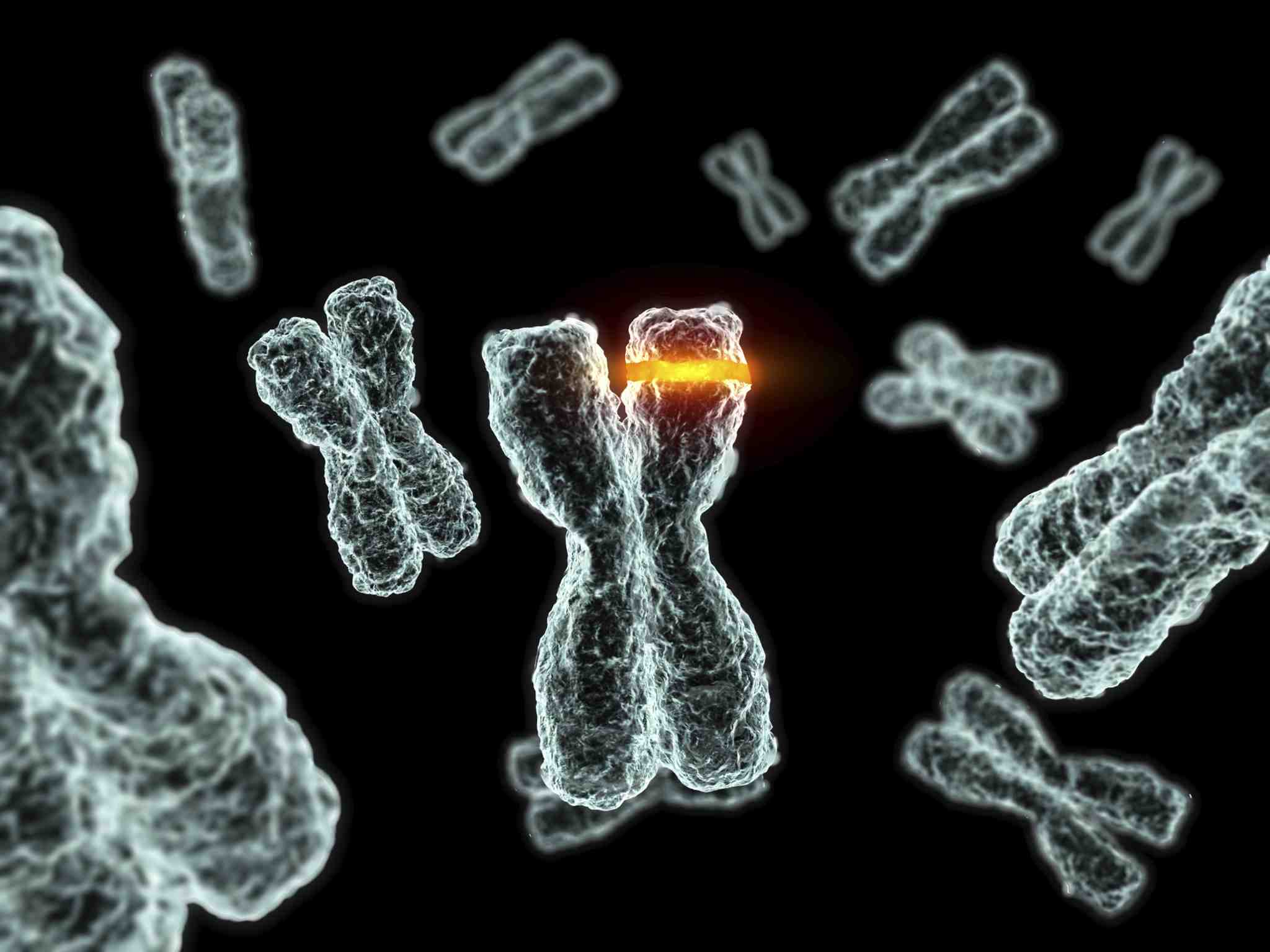
Genetic Defects Prove Evolution?

mutation

And God saw every thing that he had made, and, behold, it was very good. (Genesis 1:31)

A high school sophomore was required to read Survival of the Sickest: The Surprising Connections Between Disease and Longevity by Dr. Sharon Moalem as a summer reading assignment. According to this student, the book takes different diseases or illness and traces them back to their origin and provides scientific research to back up why a particular disease was once beneficial to our ancestors. Such strong “evidence” challenged the young man’s creationist worldview and raised several questions in his mind:

  • If God did create diseases did he have any good intentions or did he want them to destroy us?
  • Is God still creating diseases today, or are the ones He created just now being discovered?
  • Is this book right when it says that as humans we adapt overtime based on certain genes that help us survive?

The student offered one example of the disease hemochromatosis, which is a genetic disorder “that causes high amounts of iron to be present in the body, and overtime the human body ‘rusts’ away until the person affected dies” according to the student. The Mayo Clinic says that “hemochromatosis causes your body to absorb too much iron from the food you eat. The excess iron is stored in your organs, especially your liver, heart and pancreas. The excess iron can poison these organs, leading to life-threatening conditions such as cancer, heart arrhythmias and cirrhosis. Many people inherit the faulty genes that cause hemochromatosis — it is the most common genetic disease in Caucasians” (emphasis added).[1]

As reported by the student, Moalem “suggests that this disease helped people to survive during the bubonic plague. The bubonic plague was easily contracted and once it was in your system would rapidly progress feeding off of the iron available in the blood stream and within days kill you. Those who were lucky enough to have hemochromatosis, however, had almost all of their iron inaccessible to the plague since it was all in ‘locked’ form. This prevented the disease from spreading and enabled people to survive.” This was offered by Moalem as one example of the evolutionary theory of natural selection and how adaptations helped many people to survive.

I have not read Moalem’s book, so the information I have is secondhand. However, the error in thinking seems pretty clear to me. The example cited about hemochromatosis is an example of a genetic defect. The people with this genetic defect die because their bodies cannot make use of the iron in their system. The fact that it protected them from the bubonic plague did not save them from the eventual death caused by their genetic disorder. They still eventually died prematurely because of their inherited disease!

The same is true for those with sickle cell anemia. It is a genetic defect that brings about the early death of those having the defect. However, the defect makes them immune to malaria, and although they are safe from malaria, they eventually die an early death because of the disease. Personally, I do not see the benefit in either of these cases!

Genetic studies are showing that we are not improving health-wise. Our knowledge of how to combat some of these diseases continues to improve as new diseases continue to crop up.[2] Studies have shown that we transmit 60 to 200 mutations every generation,[3] and those mutations are either neutral or harmful; none are beneficial.

The question of human adaptation, as far as survival in different environments, I think has more to do with man’s intellect than it does genetics. However, as Brian Thomas, science writer for the Institute for Creation Research, points out, “It’s plausible that the Creator ‘front-loaded’ Adam and Eve’s genomes with full complements of a wide variety of both essential and non-essential genes, as well as genetic and epigenetic factors to facilitate rearrangement of those genes. Thus, as humans have spread out and thrived in various environments across the globe since their dispersal at Babel, their traits have also spread out.”[4]

As for God creating diseases, in a certain sense, He did. God is sovereign and all of creation is subject to His control. However, in another sense, God did not create disease. Genesis 1:31 tells us that God’s assessment of His creation was that it was “very good.” Such an assessment coming from a perfect God can only mean “perfect” – “flawless.” Death, decay and disease came as a result of man’s sin. “Because thou … hast eaten of the tree, of which I commanded thee, saying, Thou shalt not eat of it: cursed is the ground for thy sake” (Genesis 3:17, emphasis added). It is because of man’s sin that disease entered into the world, not because God created it – at least not initially. In the beginning man was created not to die; in fact, nothing that God created was intended to die. The Bible calls death “the enemy” (1 Corinthians 15:26). So, our genetic degradation is due to sin. However, God will not allow us to degenerate to extinction. When Christ returns, He will restore everything back to its original perfection (Revelation 21:1). That should give us great hope!

Here are some other articles on the human genome that you may find interesting:

 http://www.icr.org/article/origins-breakthroughs-2010-human-genetics/

http://www.icr.org/article/new-genomes-project-data-indicate-young/


[2] Brian Thomas, “More Mutations Mean More Diseases, Less Evolution” http://www.icr.org/article/mutations-mean-more-diseases-less-evolution/

[3] Brian Thomas, “The Human Mutation Clock Is Ticking” http://www.icr.org/article/human-mutation-clock-ticking/

[4] Brian Thomas, “Recent Human Variation Is Not Evolution” http://www.icr.org/article/recent-human-variation-not-evolution/

2 Comments

Filed under Apologetics, Creation, End Times, Evolution, Religion, Theology

Big Dâg!- A Fish Story

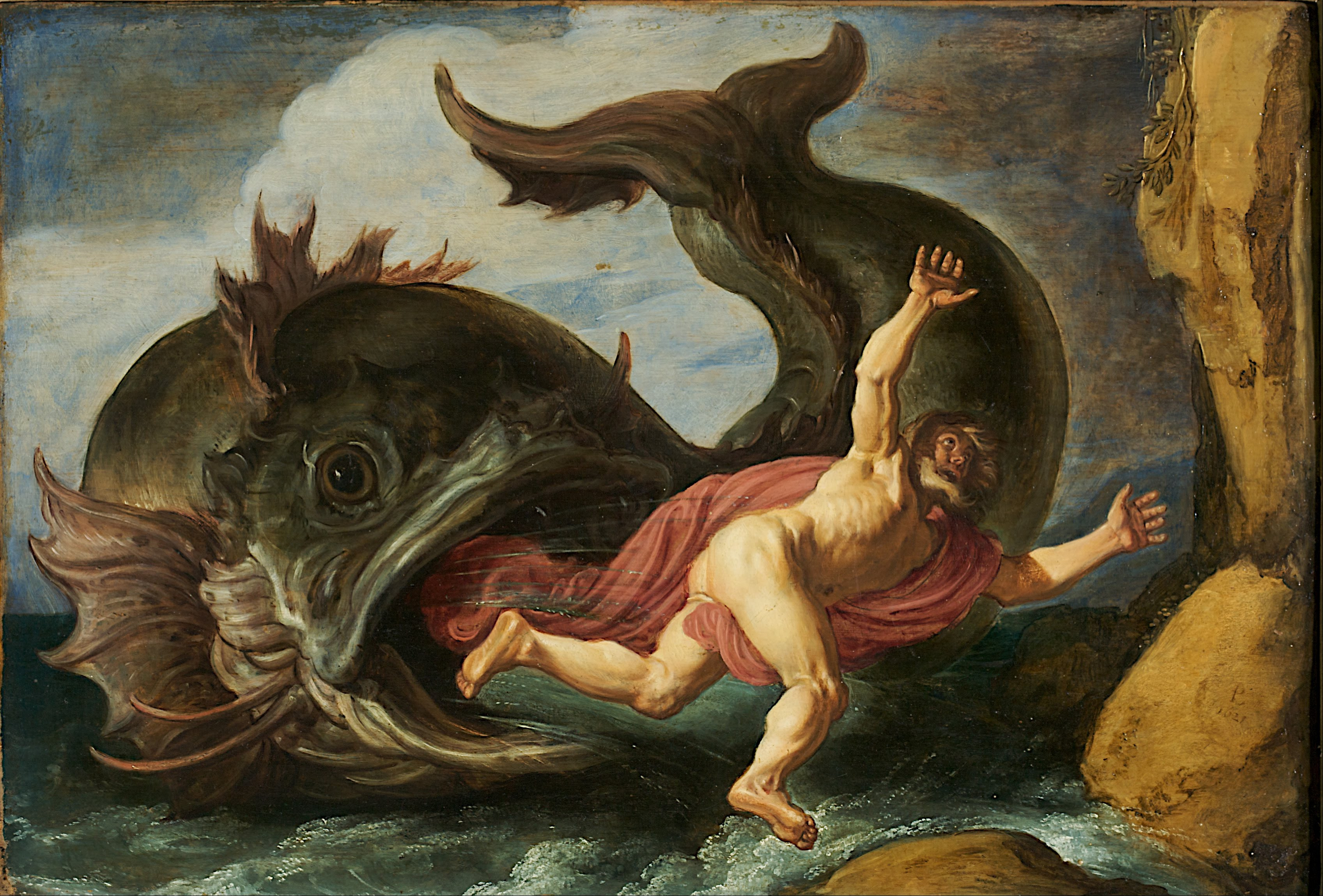
Jonah and the Whale by Pieter Lastman

Jonah and the Whale by Pieter Lastman

Now the LORD had prepared a great fish to swallow up Jonah. (Jonah 1:17)

One of the strangest stories in the Bible is that of “Jonah and the whale.” In fact, the story is so incredible that even some Bible scholars have tried to invent alternative renditions to make the story more believable. Some suppose that the “great fish” that swallowed Jonah may have been something like a whale shark, or a sea monster like leviathan (thought by some to be a mosasaur), or a whale. The suggestion that the creature was a whale probably comes from the King James reference in Matthew 12:40 where it describes Jonah as being in “the whale’s belly.” However, the Greek word translated “whale” is kētos, which could be understood as “sea monster” as it is translated by the Revise Standard Version and the New American Standard Version Bibles. But kētos can also be translated as “a huge fish.” This understanding is more in keeping with the Hebrew of Jonah 1:17 which literally translates the Hebrew dâg gâdôl as “great fish.” What the great fish was, is up for speculation. It certainly could have been a whale shark, which is a “great fish,” but it certainly was not a whale or “sea monster,” otherwise the Hebrew word tannıyn would have been used (Job 7:12; Ezekiel 32:2).

Whether the “great fish” was a whale shark or some other variety of large fish is irrelevant. What should be noted is that “the LORD had prepared” the fish “to swallow up Jonah.” It is not impossible to understand this as a new creation miracle of God so that it was something totally new created just for this purpose. It is also reasonable to believe that God used a dâg gâdôl that was already in existence to be called upon do to the LORD’s bidding. God is not limited in His options.

The other point of contention in this story is that Jonah survives inside the belly of this great fish for three days. That is truly incredible! One would think that the digestive acids in the fish’s belly would have been enough to kill Jonah. Well, perhaps Jonah actually did die! Listen to Jonah’s words: “I cried by reason of mine affliction unto the LORD, and he heard me; out of the belly of hell cried I, and thou heardest my voice” (Jonah 2:2, emphasis added). The Hebrew word translated “hell” is she’ôl – the abode of the dead – translated “Hades” in the Septuagint (the Greek translation of the Hebrew Scriptures). He describes himself as going to the depths of the sea. “I went down to the bottoms of the mountains; the earth with her bars was about me for ever: yet hast thou brought up my life from corruption, O LORD my God” (Jonah 2:6, emphasis added). That sounds dead. But some may challenge, “How can a dead man be aware of his condition?” Others may reasonably suggest: “This is Hebrew poetry; Jonah is speaking metaphorically.” For that, I would remind the reader of Jesus’ account of the death of the rich man and Lazarus (Luke 16:19-31). When the rich man died, he was aware of the flames of his new environment, he was aware of his thirst, he was aware of Lazarus in Abraham’s bosom, he was aware of the lost condition of his five brothers, and he was able to converse with Abraham. If this was true of the rich man – and Jesus relayed this as a factual account, not as one of His parables – then it certainly can be true of Jonah.

This understanding makes Jesus’ analogy in Matthew 12:40 even more poignant. “For as Jonas was three days and three nights in the [belly of the kētos]; so shall the Son of man be three days and three nights in the heart of the earth.” Jesus died an actual death. He was in the “belly of Hades” for three days. “And the LORD spake unto the fish, and it vomited out Jonah upon the dry land” (Jonah 2:10). In the same way, after three days in the tomb, God raised Jesus from the dead. For this reason, I believe Jonah actually died and was revived to accomplish the will of God. That is why Jesus could point to Jonah as the example of His death, burial and resurrection.

2 Comments

Filed under Apologetics, Christianity, Creation, Evangelism, Religion, Salvation, Theology

What’s the Big Deal About Sunday?

Country Church

One man esteemeth one day above another: another esteemeth every day alike. Let every man be fully persuaded in his own mind (Romans 14:5)

Growing up in Texas, I remember, like a foggy dream, the reverence with which Sundays were observed. Back in those ancient days, we had the Texas “Blue Laws” which practically shut down any kind of commerce. Gasoline stations, grocery stores, restaurants, etc. were all closed for business on Sundays. In order to prepare for Sunday, one had to fill up on Saturday, and stock up on groceries for the Sunday meal. On Sunday morning, Mom would get us all dressed up in our Sunday best, complete with coat and tie. We were poor, so these special clothes were reserved only for Sunday. The idea was that when we came to God’s house, we brought our very best and that included our appearance. After church, there were no restaurants open, so Sunday lunch was a special family gathering time – sometimes with company.

Those days are long gone now. “Church” is not treated much differently than any other entertainment venue these days. When the final song is sung, there’s a mad dash for doors and to the restaurant of choice for Sunday lunch. After lunch one can go shopping for whatever bargains may be available that were missed earlier in the week. If there is a game on, we may watch that or go to take in the latest movie – something else that was unavailable in the time of the Texas Blue Laws. It seems that Sunday is just not that special anymore. In fact, some mega-churches have grown so large that they offer Saturday night services to accommodate their growing population, or those who would rather save their Sundays for “fun stuff.”

Of course, there are some churches where Saturday worship is the norm. Naturally, we can understand such a practice from Messianic Jewish congregations, but there are others besides. There is a sect of Baptists who observe the Sabbath as do the Seventh Day Adventists. The Church of God and some Pentecostal denominations also worship on Saturday. So, what makes Sunday so special?

First of all, let me say that setting aside one day of the week for rest and worship is right and proper whether that day be Friday, Saturday, or Sunday or any day of the week for that matter.  Our Scripture verse above reminds that the day itself is not as significant as the object of our worship. So why is Sunday to be preferred rather than Saturday – the Sabbath?

There is much confusion that comes with the interpretation of the word “Sabbath” in the Bible.  The word in the Hebrew does not mean “seventh” (shebəiʽi), but rather “rest” or “to rest” (shebbot).  Genesis 2:2 tells us that “on the shebəiʽi day God ended his work which he had made; and he shebbot on the shebəiʽi day from all his work which he had made.”  Translating that seventh day to mean Saturday “assumes” that God began His creative acts on Sunday, and we really have no textual basis for that conclusion, albeit, Saturday has been recognized as the seventh day from time immemorial. Furthermore, as you study the “Feasts of the Lord” given in Exodus and Leviticus, you will find that each of the feast days is considered a shebbot (Sabbath) regardless of what day of the week on which it falls.  So, we need to be careful not to become too dogmatic over things on which the Bible is unclear, i.e., that Sabbath means exactly the seventh day of the week or Saturday.  However, it is clear that we need to “sanctify” – set aside – one day a week for the Lord.

In the New Testament, the first Jewish Christians went to the temple or synagogue on the Sabbath (Acts 13:14; 17:2; 18:4) for the sake of the Jews and partly because that remained their custom. But they also met on the First Day of the week (Acts 20:7; 1 Corinthians 16:2) because this was “the Lord’s Day” and also for the sake of the Gentiles which were not obligated to follow Jewish custom (Colossians 2:16). The reason for this change is because this is when Christ was raised from the dead (Matthew 28:1, Mark 16:2; Luke 24:1; John 20:1). The First Day of the week was also the day that the Holy Spirit descended upon the disciples gathered in the upper room (Acts 2:1). Scripture does not specify the day of the week, but when you consider that Jesus arose on the first day of the week (Sunday) and then count forward 50 days (the Day of Pentecost) you will find that day to be Sunday also. The day that Jesus arose was the “First Omer of First Fruits” (Nisan 16), and the Day of Pentecost was the “50th Omer” (Sivan 6). Not only were these days important on the Jewish calendar, but they have even greater significance in the Christian calendar. For this reason, it is proper that Christians should meet on the First Day of the week to celebrate the Risen Lord and the coming of the Holy Spirit.

Now, “Let no man therefore judge you in meat, or in drink, or in respect of an holyday, or of the new moon, or of the sabbath days” (Colossians 2:16, emphasis added). We should not be critical of those who wish to worship on the Sabbath, but Sunday should carry greater significance for the Christian.

3 Comments

Filed under Apologetics, Christianity, Religion

Only One Way In

Noah's Ark: Entry Door Looking Out (Image Credit: http://asknoah.org/art_gallery2)

Noah’s Ark: Entry Door Looking Out (Image Credit: http://asknoah.org/art_gallery2)

… and the door of the ark shalt thou set in the side thereof … (Genesis 6:16)

Doors are useful things. Doors work two ways: they allow us entry into a variety of enclosures, and they permit us to exit the same. Doors keep us safe inside while keeping unwanted intruders out. Most homes have more than one door for entry and exit. Most vehicles have at least two doors; some have four or five. Airplanes have only one door for boarding, but there are at least four doors for emergency exit. Multiple doors to any enclosure make for ease of movement. You may come in through the front door, and then go out the back door to enjoy your backyard. You would not normally come in the front door, exit again through the front door, and walk all the way around the house to get to your backyard. The more doors you have, the easier it is to go from one place to another. Doors are very useful things!

About 1500 years after God completed His creation (man in particular), the world and mankind had degenerated to the point that it was no longer the “very good” creation that God had initiated. Man had become wicked and “every imagination of the thoughts of his heart was only evil continually” (Genesis 6:5). Things had gotten so wicked that “it grieved [God] at his heart” (Genesis 6:6). This is not difficult to understand especially for us earthly parents who have invested so much of our lives in teaching a child the ways of God. Then when they leave our homes, they turn their backs on everything we stand for, and everything we tried to instill in them. Any parent who has experienced this knows the heartache. Multiply that by billions and that might begin to give a sense for how God felt to see His “very good” creation turned putrid. “And the LORD said, I will destroy man whom I have created from the face of the earth; both man, and beast, and the creeping thing, and the fowls of the air; for it repenteth me that I have made them” (Genesis 6:7).

“But Noah found grace in the eyes of the LORD” (Genesis 6:8). God instructed Noah to build an Ark (Genesis 6:14). The Hebrew word translated “Ark” is têbâh and it literally means a “box.” God gave Noah the specific dimensions for this box (Genesis 6:15), and instructed him to build it with three decks (stories) (Genesis 6:16). He was to make a door – only one door – in the side of the ark – only one way in, and only one way out.

Noah was given 120 years to complete his project (Genesis 6:3). During that time as Noah was working on the Ark, he felt compelled to warn all who would listen about the coming cataclysmic judgment. Peter referred to Noah as “a preacher of righteousness” (2 Peter 2:5). We are not told in Scripture, but surely Noah must have been ridiculed and mocked. “Have you seen what that old fool is building!” many must have scoffed. But Noah was not to be dissuaded from his God-given task. “Thus did Noah; according to all that God commanded him, so did he” (Genesis 6:22).  When the project was complete God called all the animals into the Ark (Genesis 6:20). Noah, his wife, his three sons and their wives went into the Ark (Genesis 7:13), “and the LORD shut him in” (Genesis 7:16). The only way in was now inaccessible. Those remaining outside could no longer enter. For 120 years they were given the opportunity for safe passage, but now it was too late. The only way in was now shut tight, and those inside were saved and safe from the disaster facing those outside. Then the waters came – not only rain, but the very fountains of the deep were broken open (Genesis 7:11). “And all flesh died that moved upon the earth, both of fowl, and of cattle, and of beast, and of every creeping thing that creepeth upon the earth, and every man: All in whose nostrils was the breath of life, of all that was in the dry land, died” (Genesis 7:21-22, emphasis added).

Jesus said, “I am the door: by me if any man enter in, he shall be saved, and shall go in and out, and find pasture” (John 10:9, emphasis added). Later He said, “I am the way, the truth, and the life: no man cometh unto the Father, but by me” (John 14:6, emphasis added).

It is a very popular notion these days to believe that there are many ways into heaven. Even the Roman Catholic Church, who has for centuries staunchly held to the dogma that the only access to heaven is through the sacraments of the Church, has given way to universalism, i.e. that everyone – Muslims, Hindus, Buddhists, yes and even Baptists – will all get to heaven. That is why they say we should strive to all get along together here on earth. This is the idea of many doors into the same place – very convenient! But that has never been the teaching of the Bible.

The Ark had only one way in, but access was available to anyone who would heed the warning. Those that rejected the message were destroyed. As at the time of the flood, where billions died and only eight were saved, we are facing a similar time of trouble. Jesus warned, “Enter ye in at the strait [narrow] gate: for wide is the gate, and broad is the way, that leadeth to destruction, and many there be which go in thereat: Because strait is the gate, and narrow [crowded or afflicted] is the way, which leadeth unto life, and few there be that find it” (Matthew 7:13-14, emphasis added). Today, Jesus would be labeled as intolerant for His teaching. There is no other way. Everyone will NOT go to heaven, but everyone has an equal chance. There is only one way in, and that way is through Jesus Christ. “But as many as received him [Jesus], to them gave he power to become the sons of God, even to them that believe on his name” (John 1:12). The Door will soon be shut forever. Have you found the only One Way in?

Comments Off on Only One Way In

Filed under Apologetics, Christianity, Creation, Current Events, End Times, Evangelism, Gospel, Religion, Salvation, Theology

Sad Old Flag

Sad Old Flag

Blessed is the nation whose God is the LORD; and the people whom he hath chosen for his own inheritance.  (Psalm 33:12)

As we prepare to celebrate the 237th anniversary of our nation’s birth, I wanted to write a celebratory message to beat the drum and sound the trumpet for America’s greatness, but as I thought about it, I could find little to celebrate. Yes, I could talk about America’s great history. I could write about the wisdom of our founding fathers that framed a government from and of the people – a government that recognized that liberty was derived from God and not from a ruling class. I could write about the Christian heritage that guided the founders, and how the majority of the signers of the Declaration of Independence were pastors or graduates of seminaries. Of the 56 signers, only two were Deists – Thomas Jefferson and Benjamin Franklin – and there were no atheists. (How could an atheist conceive that liberty comes from God!) I could write about the wisdom contained in the few words of our national law – the Constitution of the United States of America. I could write about how God has blessed and protected this nation above any other for more than 200 years making  us the richest nation in the world and the strongest militarily power in the world – all gifts from God to whom all credit is due.

There is so much I could say, most of which has been repeated countless times albeit to a mostly deaf audience. It seems to me – perhaps I am just getting old and curmudgeony – that the majority of our populous has little appreciation for the greatness of our nation, much less any love for her. My youngest son, who claims to be  politically Conservative (a Libertarian, actually), and is very interested and involved in politics, remarks that America is not all that great. America is no better than any other nation in the world. The world hates us because we are big bullies imposing our will on people that don’t want it. Our politics are corrupt; we cannot trust the people running our government. He has no idea how deeply that wounds me as a Vietnam Era Veteran that served four years active duty and eight years in the Naval Reserves. I take great pride in my country and my flag. When I entered military service, I took an oath, under God, to support and defend the Constitution of the United States against all enemies, foreign and domestic. When I left the service, I do not recall that oath having been rescinded. In my view, that oath is still in effect.

I still love my country, and I love my flag. I love what they stand for, or perhaps more accurately, what they used to stand for. I am not sure anymore if this is the country and flag I swore to defend and protect. The Constitution is still valid, in a manner of speaking, but it has been so trampled by power-hungry oligarchs that its only remaining value is to be touted in self-serving rhetoric by unscrupulous politicians. Many rules and regulations have been enacted by unelected bureaucrats which, if each is measured by that founding document, would be found unlawful. Yet there they are, put in place to circumvent and supersede the Law of the Land.

Although the current administration, along with the other two branches of government, are indisputably the worst violators in the history of this nation, they are not the first or the only ones to place political gains above the welfare of the nation. This is nothing new. It has been happening for at least 100 years, but like so many others, I had faith and trust that our elected officials genuinely held the interest of the nation as a sacred trust. How naïve and gullible I was!

But our ignorance is not solely to blame; neither can the entire fault be assigned to our less-than-honorable elected leaders. No, these United States of America is a government “of the people.” It is the collective body of all Americans that must shoulder the blame for the disrepair into which our nation has degenerated. It is the collective body of all Americans that has jettisoned God from the public arena. It is the collective body of all Americans that has sanctioned the murder of millions of unborn babies. It is the collective body of all Americans that has bowed to political correctness in allowing sodomy to have equal standing with what God has designed for the home and family. It is the collective body of all Americans that has allowed the subjugation of half of the citizenry by making them dependent on government subsidies. And while Christians may be saying, “Not us,” allow me to remove that air of self-righteousness by reminding us of the words of Edmund Burke: “All that is necessary for the triumph of evil is that good men do nothing.” We, Christians, have kept silent too long and have allowed this to happen. Yes, I hear the outcry now, but it may already be too late.

America is not the country that I remember. It is not the country that I desire for my children and my grandchildren – not in this current state. But there is hope. While there is life, there is hope. There are two solutions to our current estate. First (and my preference), is the return of our Lord to redeem His creation. Nothing that man can achieve, politically or economically, can compare to the rule of law and peace that only He can bring. The second is a call to God’s people, for God said, “If my people, which are called by my name, shall humble themselves, and pray, and seek my face, and turn from their wicked ways; then will I hear from heaven, and will forgive their sin, and will heal their land” (2 Chronicles 7:14). More than pray, in this nation of “We the people,” we must get actively involved in the doings of our government and take back the control granted to us by our Constitution and the liberty that is granted to us by our Creator.

I vow to support and defend the Constitution of the United States against ALL enemies, foreign and domestic, and I will bear true faith and allegiance to the same, so help me God.

5 Comments

Filed under Christianity, Current Events, End Times, Holidays, Politics, Religion