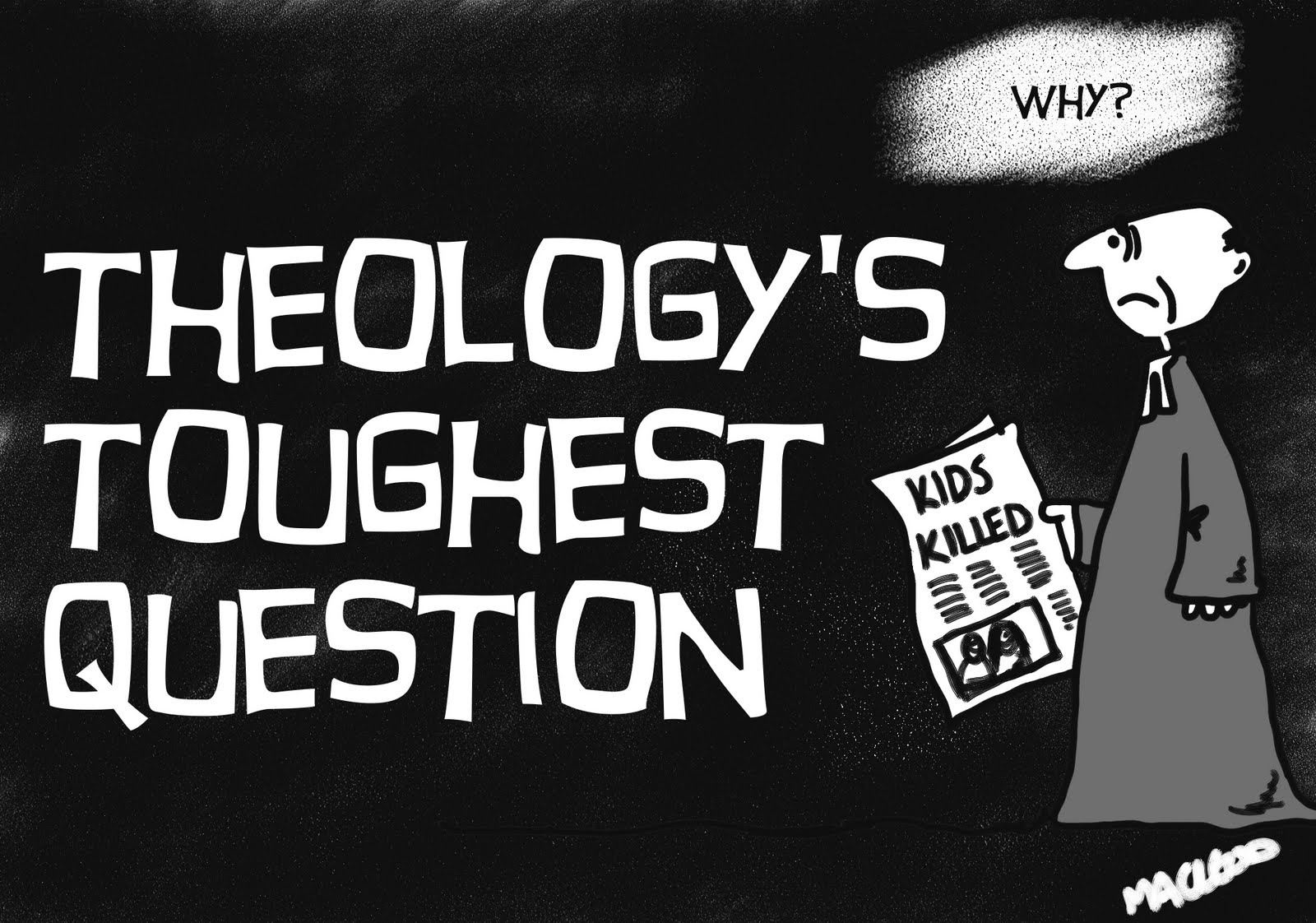
Category Archives: Atheism

Articles that emphasize the existence of God.

A Day to Give Thanks

horn-of-plenty

In every thing give thanks: for this is the will of God in Christ Jesus concerning you. (1 Thessalonians 5:18)

In the “Jaywalking” segment of the “Tonight Show,” Jay Leno posed some Thanksgiving Day trivia questions to passersby, and the results were humorous and sad at the same time. Here is a sample of questions asked and the responses:

  1. What year was the first Thanks giving? 1966, 1492
  2. Pilgrims are often shown wearing what on their shoes and their hats? Moccasins
  3. What is a male turkey called? Fred, Richard
  4. 280 Million Americans will cook turkey on Thanksgiving. How many Americans are there in our country? 8 Million
  5. Where did the first Pilgrims land? Hawaii, the East Coast
  6. What President declared Thanksgiving a national holiday? Ronald Reagan, Theodore Roosevelt, Benjamin Franklin
  7. How many days did the first Thanksgiving last? Three: one day for breakfast, one day for lunch, and one day for dinner
  8. What is the name of the ship the Pilgrims came over on? the Nina
  9. Where did the Pilgrims come from? Spain

This may be good for a belly laugh, but it is really tragic that Americans today are so ignorant of our nation’s history and traditions. In today’s culture, Thanksgiving Day is just a good excuse to have a day (or two) off of work, indulge in gluttonous behavior, and worship before the luminous god of football followed by the giving of alms to the god of materialism the next day all the while in complete ignorance of the significance of the day.

It does not have to be that way. The psalmist said, “Therefore will I give thanks unto thee, O LORD, among the heathen, and sing praises unto thy name” (Psalm 18:49). The “heathen,” in this case, were the gôyim, Hebrew for the “nations” or the “Gentiles,” and by implication, the “godless.” Our attitude of thanksgiving should be a testimony to those that are without God not just on Thanksgiving Day, but everyday of our lives. In these “last days” we should live in contrast to those who are “lovers of their own selves, covetous, boasters, proud, blasphemers, disobedient to parents, unthankful, unholy (2 Timothy 3:2).

C. S. Lewis once said, “We ought to give thanks for all fortune: if it is ‘good,’ because it is good, if ‘bad’ because it works in us patience, humility and the contempt of this world and the hope of our eternal country.” Paul expressed this same idea when he said, “Not that I speak in respect of want: for I have learned, in whatsoever state I am, therewith to be content. I know both how to be abased, and I know how to abound: every where and in all things I am instructed both to be full and to be hungry, both to abound and to suffer need” (Philippians 4:11-12). We assimilate this attitude when “we know that all things work together for good to them that love God, to them who are the called according to his purpose” (Romans 8:28). “Them who are the called according to His purpose” do not live their lives like the “heathen” who are ungrateful or “unthankful” in their life conduct.

Perhaps the reason the “heathen” are unthankful is because they do not know to whom they should be thankful. That, of course, presupposes that in every other respect they are caring of others beyond themselves. If expressed at all, we often hear such empty platitudes as: I’m thankful for my job; I’m thankful for my family; I’m thankful for good friends, etc. That is fine, but thankful to whom?

When the Pilgrims landed at Plymouth in 1620, they arrived in the face of a harsh New England winter. They were without food and without shelter. Of the 121 souls that departed England to escape religious persecution and “for the Glory of God, and advancements of the Christian faith and honor of our King and Country,” only 47 of the original colonists survived that brutal winter. With the help of neighboring Indian tribes, the colonists learned to cultivate and enjoy the bounty of the land. At the harvest that followed, they celebrated a season of thanksgiving to God for His providence and protection. The third year after having landed, William Bradford officially proclaimed November 29, 1623 a day of thanksgiving.

In as much as the great Father has given us this year an abundant harvest … and in as much as He has protected us from the ravages of the savages, has spared us from pestilence and disease, has granted us freedom to worship God according to the dictates of our own conscience; now I, your magistrate, do proclaim that all ye Pilgrims, with your wives and ye little ones, do gather at ye meeting house on ye hill, between the hours of 9 and 12 in the day time, on Thursday, November ye 29th, of the year of our Lord one thousand six hundred and twenty-three … there to listen to ye pastor and render thanksgiving to ye Almighty God for all His blessings.

Our nation, from its beginning, has always set aside a special day to give thanks to God, but not always on a consistent basis. George Washington declared a national day of thanksgiving on November 26, 1789 with these words:

Whereas it is the duty of all nations to acknowledge the providence of Almighty God, to obey His will, to be grateful for his benefits, and humbly to implore His protection and favor … Now, therefore, I do recommend and assign Thursday, the twenty-sixth day of November next, to be devoted by the people of these United States to the service of that great and glorious Being, who is the beneficent Author of all the good that was, that is or that will be … that we may then unite in most humbly offering our prayers and supplications to the great Lord and Ruler of Nations, and beseech Him to pardon our national and other transgressions …

Would that our current national leaders adopt that attitude!

Finally, Thanksgiving Day was proclaimed an annual national holiday by President Abraham Lincoln in 1863. He said:

No human counsel hath devised, nor hath any mortal hand worked out these great things. They are the gracious gifts of the most high God, who, while dealing with us in anger for our sins, hath nevertheless remembered mercy … I do, therefore, invite my fellow citizens in every part of the United States, and those who are sojourning in foreign lands, to set apart and observe the last Thursday of November next as a day of Thanksgiving and Praise to our beneficent Father who dwelleth in the heavens … [it is] announced in the Holy Scriptures and proven by all history, that those nations are blessed whose God is the Lord … It has seemed fit to me and proper that God should be solemnly, reverently and gratefully acknowledged, as with one heart and one voice, by the whole American people.

This Thanksgiving Day, amid all the festivities and family gatherings, try to devote at least some time to “Sing unto the LORD, O ye saints of his, and give thanks at the remembrance of his holiness” (Psalm 30:4). “Praise God from whom all blessings flow.”

Comments Off on A Day to Give Thanks

Filed under Atheism, Christianity, Current Events, Holidays, Religion, Thanksgiving, Theology

God’s Not Fair

Judgment of God

O man, who art thou that repliest against God? Shall the thing formed say to him that formed it, Why hast thou made me thus? (Romans 9:20)

Someone complained that God is unfair to send people to hell simply because they don’t know any better. She said, “I’ve recently hit a point where my faith is all but dead, not by will but by fear that the worst is true, that there is no God after all.” Her reasons for arriving at this conclusion are as follows: “It’s two-fold in that [1] God has never revealed Himself to me in ways that I was taught He would (Pentecostal background), and [2] more recently that I just cannot wrap my head around the idea of a God of ultimate love knowingly creating even one single soul knowing it was destined for eternal damnation. I question why God would create such a being, knowing beforehand the choices he would make.”

Her first reason, it seems to me, finds an explanation in her “Pentecostal background.” I see this problem with many Pentecostals because many (not all) are taught (if not directly then by inference) that God must reveal Himself in miraculous ways: speaking in tongues, healings, tangible answers to prayer, etc. The fact is that God is not obligated to reveal Himself to us in any way other than He has already done, i.e., through His creation (Romans 1:19-20) and through His Word (John 1:1-3, 14; Psalm 119:105; 2 Timothy 3:16, et. al.). Her Pentecostal background may also have something to do with her second issue against God in the Arminian soteriology of Pentecostals, which holds, in part, that a believer can “fall from grace,” and if they die in that condition, they will go to hell. So, Pentecostals must continuously “work out their own salvation” so as not to lose their salvation. That, in itself I think, might give one a tenuous grasp on their eternal status and sense of eternal security.

Her Pentecostal background may be the source of her sense of insecurity which she then projects on those whom she sees as victims of a merciless God. Why would God create humans knowing that He is going to send them to hell? Not only is God merciless, but she finds eternity in hell to be cruel and unusual punishment.  She said, “I am a pale imitation of God, an ignorant human born in a world of decay, yet to me the pain of one soul, any soul, even the worst example of humanity, is not worth the existence of this universe” (emphasis mine). Can you see what she has done? She made moral judgment against God and placed herself in a position of moral superiority above God. Though she is “a pale imitation of God,” she makes herself morally superior  to God because she would not cause pain even to the worst example of humanity. If she were in the place of God, she would not even create the universe, if even one soul would suffer eternal torment. Furthermore, God has no basis “to extend this eternal punishment further to those that fail to heed words in a book thousands of years old when other books tell their own versions (other religions).”

As I read her tirade, I distinctly heard echoes of Genesis 3:1-5: “Tssssssssssssssss! Yea, hath God said in the Bible? That book is so ancient. Those are just the words of men. What about all those other holy books? Aren’t they just as valid? Ye shall not surely die. If God is so loving, He wouldn’t send anyone to hell would He? And even if He did, surely He wouldn’t make someone suffer for eternity. If He does, then God’s not fair! Why should you follow a God like that!”

When we put ourselves in a position where we question why God made us the way He did, we in effect pass judgment on Him and make ourselves superior to Him because we are saying that we could have done it better. “Who art thou that repliest against God? Shall the thing formed say to him that formed it, Why hast thou made me thus? Hath not the potter power over the clay, of the same lump to make one vessel unto honour, and another unto dishonour?” (Romans 9:20-21 also Isaiah 29:16, emphasis mine). We are not in a position to question God’s motives in creating us as He did. We are not God. Humanly speaking, does not a creator/inventor of anything have the right to assign value to his/her creation/invention, and to decide how to dispose of it? By the same token, can we not allow the Creator to decide the “worth” of His creation and select what He will keep and what He will discard without our input? Let’s be fair here!

The fact is that God made us in His image (Genesis 1:27), and part of that image includes rational thought and the ability to make decisions and exercise our free will. Along with that comes the responsibility to assume the consequences for our decisions.  When God made Adam and Eve and He placed them in the Garden, He gave them one choice: eat of the tree of life and live, or eat of the tree of the knowledge of good and evil and die, i.e., be eternally separated from God (Genesis 2:16-17). God created Adam and Eve with a will and the ability to choose whether to obey or disobey God. Had God not given that choice, His creatures would be no different than any other animal, and they certainly would not have the “image” of God. The will and the ability to make choices is part of having the image of God. Without that, we are just animals.

Adam and Eve disobeyed God’s only prohibition (Genesis 3:1-6). Eve was deceived, but Adam disobeyed willingly (1 Timothy 2:14). That disobedience, whether willful or through deception, brought death upon all of God’s creation. Because of that original sin, all of mankind receives the curse of sin which is death (Genesis 3:19). Every human being is born “dead” – eternally damned – due to Adam’s original sin. We are not sinners because we sin; we sin because we are sinners. We are all in the same condition; there is no escaping it. How well informed or how misinformed one is has nothing to do with it.

Wherefore, as by one man sin entered into the world, and death by sin; and so death passed upon all men, for that all have sinned. (Romans 5:12)

And you, being dead in your sins and the uncircumcision of your flesh, hath he quickened together with him, having forgiven you all trespasses (Colossians 2:13)

And you hath he quickened, who were dead in trespasses and sins … Even when we were dead in sins, hath quickened us together with Christ, (by grace ye are saved;) (Ephesians 2:1, 5)

Behold, all souls are mine; as the soul of the father, so also the soul of the son is mine: the soul that sinneth, it shall die. (Ezekiel 18:4)

This is the truth, and it is not going to change simply because it offends our sensibilities. It does not matter whether someone is duped by evolution, or whether they have not had the Gospel explained clearly enough for them to understand; the fact of the matter is that every human being that is born, is born “dead” because of sin. The penalty for sin is eternal death (separation from God) in hell.

However, this dead condition is not without resolution. God provided the way to eternal life through the death and resurrection of Jesus Christ. God makes Himself available to all who will seek Him. “For by [the free gift of] grace [i.e., unmerited favor] are ye saved through faith [Hebrews 11:6]; and that not of yourselves [even the faith to believe comes from God]: it is the gift of God: Not of works, lest any man should boast” (Ephesians 2:8-9). What God asks of us is not that difficult: “That if thou shalt confess with thy mouth the Lord Jesus, and shalt believe in thine heart that God hath raised him from the dead, thou shalt be saved” (Romans 10:9). “Neither is there salvation in any other [than Jesus]: for there is none other name under heaven given among men, whereby we must be saved” (Acts 4:12). “Jesus saith unto him, I am the way, the truth, and the life: no man cometh unto the Father, but by me” (John 14:6).

People like to quote John 3:16 because it expresses the love of God for the entire world, but two verses later it says, “He that believeth on him is not condemned: but he that believeth not is condemned already, because he hath not believed in the name of the only begotten Son of God” (John 3:18, emphasis mine). A choice has to be made. Because of Adam’s sin, we all begin from the point of “condemned already.” We all have the same choice: believe or disbelieve. Not choosing is actually choosing to disbelieve. And to remove any excuses, God’s creation testifies to His existence, “For the invisible things of him from the creation of the world are clearly seen, being understood by the things that are made, even his eternal power and Godhead; so that they are without excuse” (Romans 1:20, emphasis mine). God reveals Himself in His creation. Without exception, everyone has a choice.

The charge that God is somehow unmerciful and unloving dissolves in light of His personal intervention on our behalf. God’s grace and mercy was expressed on the cross of Christ. “The gift of God is eternal life through Jesus Christ our Lord” (Romans 6:23). God has given sufficient evidence in His creation to make man wonder about his origin and about the origin of the world around him. God says, “And ye shall seek me, and find me, when ye shall search for me with all your heart” (Jeremiah 29:13). God does not hide Himself. The fault is with man for rejecting the evidence God has provided and refusing to seek God. Jesus said that the way to destruction is broad, and many go that way; but the way to life is narrow and difficult to find, and very few find it (Matthew 7:13-14).

Answering the criticism of God sending people to hell: God created hell for “the devil and his angels” (Matthew 25:41), not for human beings. People choose to go to hell by not choosing God. God demonstrated “his love toward us, in that, while we were yet sinners, Christ [God in the flesh] died for us” (Romans 5:8, emphasis mine). What more could He possibly do and still respect our will and our right to choose? He could have made us animals, but He didn’t. He made each one of us unique, created in His very image. That is why He values us, and because He values us, He gives us the choice to either accept Him or reject Him. Because He cherishes us, He will not impose Himself on any one of us. But, if we reject Him, we make an eternal choice, but it is our choice. God didn’t create us for hell. Do you think for one moment that God has any desire to destroy His image! “The Lord is not slack concerning his promise, as some men count slackness; but is longsuffering to us-ward, not willing that any should perish, but that all should come to repentance” (2 Peter 3:9), but He respects our choice.

There you have it. Rather than criticize God for His methods with which we may disagree, why not simply submit to Him? He is God, and by definition, His way is right regardless of what we may think. “For my thoughts are not your thoughts, neither are your ways my ways, saith the LORD. For as the heavens are higher than the earth, so are my ways higher than your ways, and my thoughts than your thoughts” (Isaiah 55:8-9, emphasis mine). If we are truly concerned for those that are bound for hell, perhaps rather than criticizing God for His methods, we should be a light to show the way (Matthew 5:14).

5 Comments

Filed under Apologetics, Atheism, Christianity, Creation, Death, Evangelism, Evolution, Gospel, Heaven, Hell, Origins, Religion, Salvation, Theology

No Gap

earth-implosion

And the earth was without form, and void; and darkness was upon the face of the deep. And the Spirit of God moved upon the face of the waters. (Genesis 1:2)

Ever since Charles Darwin published his On the Origin of Species by Means of Natural Selection or the Preservation of Favored Races in the Struggle for Life, (in which, by the way, he never addresses the main thesis of his book) it seems that Christian theologians have been scrambling to defend the Genesis creation account and allow for millions of years of evolution. Even now with all the great research being done by creation scientists in the fields of biology, cosmology, geology, meteorology, paleontology, physics, and others, and by great organizations like Answers In Genesis, Creation Ministries International, the Creation Research Society, the Institute for Creation Research and others, still we have far too many Christian pastors and theologians that cower at the roar of atheists and evolutionists when it comes to the question of origins. They fear being labeled as ignorant and uneducated and likened to geocentric flat-earthers. Rather than defend the clear teaching of Scripture on this matter, they will either completely capitulate to the evolutionists, or they will find some compromise to accommodate evolutionary concepts. What really frustrates me is when some of these cowards claim to defend the infallible, inerrant, Word of God. If the Word of God is truly infallible and inerrant, then compromise is not an option.

One such compromise is known as the Gap Theory which proposes that there is a “gap” of long ages – billions of years – between the first two verses of Genesis 1. “According to this concept, Genesis 1:1 describes the initial creation of the universe. Following this, the standard events of cosmic evolution took place, which eventually produced our solar system about five billion years ago. Then, on the earth, the various geologic ages followed, as identified by their respective assemblages of fossils (trilobites, dinosaurs, etc.).”[1] Following this, some sort of global cataclysm takes place destroying all life and God must re-create the earth. Thus, Genesis 1:2 is describing the earth “becoming” without form and void. This idea was popularized by the Scofield Bible, and widely accepted for almost a century, but it was due more to fear of ridicule than solid Bible apologetics.

The first problem with this view begins with the first word of the second verse – “And.” We must first keep in mind that the original text did not include chapter and verse divisions. The text was a continuous reading. The “And” at the beginning of verse two is the Hebrew letter waw (pronounced “vav”). In Hebrew grammar, this construct is known as a “waw consecutive” indicating that there is no break between what precedes it and what follows. The text, then, is one continuous thought without any break: “In the beginning God created the heaven and the earth, and the earth was without form, and void.” By the way, punctuation marks were not part of the original Hebrew text; punctuations were added by the translators as they thought proper according to English grammar. The same is true for the remainder of verse two: “and darkness was upon the face of the deep. And the Spirit of God moved upon the face of the waters.” Each of those “ands” is a “waw consecutive” indicating no break in the action. Furthermore, verses 3-5 all begin with a “waw consecutive,” indicating no break in the action from the beginning of verse one to the end of verse five. Simply analyzing the Hebrew grammatical construction of these first five verses of Genesis destroys any notion of “gaps” in the creation account in Genesis. Attempting to insert a gap in the text is simply sloppy hermeneutics.

The second problem presents itself with the final statement in verse five: “And the evening and the morning were the first day.” “Evening and morning” define a normal 24-hour day. In addition, the Hebrew word translated “day” is yom, and it is normally understood to mean a single 24-hour day. Although it is rarely used to indicate an undetermined time as in “the day of the Lord” or “in that day” or “in those days”; it is never used to indicate an indefinite amount of time as in millions of years. There are other options for specifying longer periods of time. For example, in Daniel 9:24, the use of shâbûa‛ meaning “seven” and translated “weeks” in the King James Bible (KJV), is used to indicate a period of seven years. Later, in Daniel 12:7, the use of mô‛êd, meaning “an appointment” or a “fixed season” and translated “time” in the KJV, is used to indicate a year, although “year” in Hebrew is actually shâneh. Hebrew does have a word for an indefinite amount of time; that word is ‛ôlâm, which is often used in the sense of eternity. So, God had other word options to indicate eons of time, yet He chose to use the word for a normal 24-hour day.

Finally, God regards “death” as an enemy. “The last enemy that shall be destroyed is death” (1 Corinthians 15:26, emphasis mine). At the end of the sixth day, God assessed His work, “And God saw every thing that he had made, and, behold, it was very good. And the evening and the morning were the sixth day” (Genesis 1:31, emphasis mine). Think about this: God, who is incapable of any error whatsoever, declares His creation, not just “good,” but “very good.” The Hebrew word for “very” is mǝ‘ôd, and it is an adjective meaning “vehemence” or “vehemently.” That is a very strong word describing God’s assessment of His perfect creation. Now think about this: if God considers death the enemy, why would He allow billions of years of death inserted between Genesis 1:1 and 1:2 and then turn around and exuberantly declare His creation “very good”? That makes no sense! God does not contradict Himself like that. Furthermore, the enemy, death, entered through Adam’s sin (Romans 5:12), and the penalty for sin is death (Romans 6:23). That being true, then how could death have existed before Adam’s sin? And if death existed in “the gap” prior to Adam’s sin, then how could death be “the enemy” and the “penalty” for sin? So, the “Gap Theory” raises some serious theological issues.

If a preacher, pastor, theologian or layman professes to believe in the infallibility and inerrancy of Scripture, it is time to claim ALL of it, stand by ALL of it, defend ALL of it, and stop making excuses and compromising with the secularists that disregard both the Bible and the Creator. There is NO GAP in Genesis. The only gap that exists is the chasm of sin that separates man from God, and that gap cannot be bridged by compromising any part of God’s Word.

Notes:


[1]  Henry M. Morris, “Why the Gap Theory Won’t Work” (http://www.icr.org/article/why-gap-theory-wont-work), accessed October 16, 2015.

12 Comments

Filed under Apologetics, Atheism, Christianity, Creation, Evolution, Gospel, Origins, Religion, Salvation, Theology

Did God Create Evil?

And, having made peace through the blood of his cross, by him to reconcile all things unto himself; by him, I say, whether they be things in earth, or things in heaven. (Colossians 1:20)

Question: Because the Lord is the Creator of all, He brought also evil in the universe. Did He do penance, when He died on the cross?

Answer: To accuse God of creating evil is a misunderstanding of God’s nature. The Bible says:

Let no man say when he is tempted, I am tempted of God: for God cannot be tempted with evil, neither tempteth he any man: But every man is tempted, when he is drawn away of his own lust, and enticed. (James 1:13-14, emphasis mine)

God did not create evil or sin, but in His wisdom “allowed” for it. Having created man in His own image (Genesis 1:26), He gave man the option to obey or disobey, to accept God or reject Him, to love Him or not to love Him. Without that option, we would be no more than androids that only function according to the programming of the designer. Without the option, it would be impossible for us to have a “personal” relationship with our Creator.

Therefore, it is not for His sin that Jesus died on the cross, but for ours. When you think about it, that is pretty incredible that God, should take upon Himself the penalty for our sin in order to restore the broken relationship between man and his Creator (Philippians 2:5-11) .

7 Comments

Filed under Apologetics, Atheism, Christianity, Creation, Evangelism, Gospel, Origins, Religion, Salvation, Theology

The Designed Creation

Institute for Creation Research.


“Understand, ye brutish among the people: and ye fools, when will ye be wise? He that planted the ear, shall he not hear? he that formed the eye, shall he not see?” (Psalm 94:8-9)

Comments Off on The Designed Creation

Filed under Apologetics, Atheism, Christianity, Creation, Evolution, Gospel, Origins, Science, Theology