Category Archives: Gospel

False Religion: Freemasonry

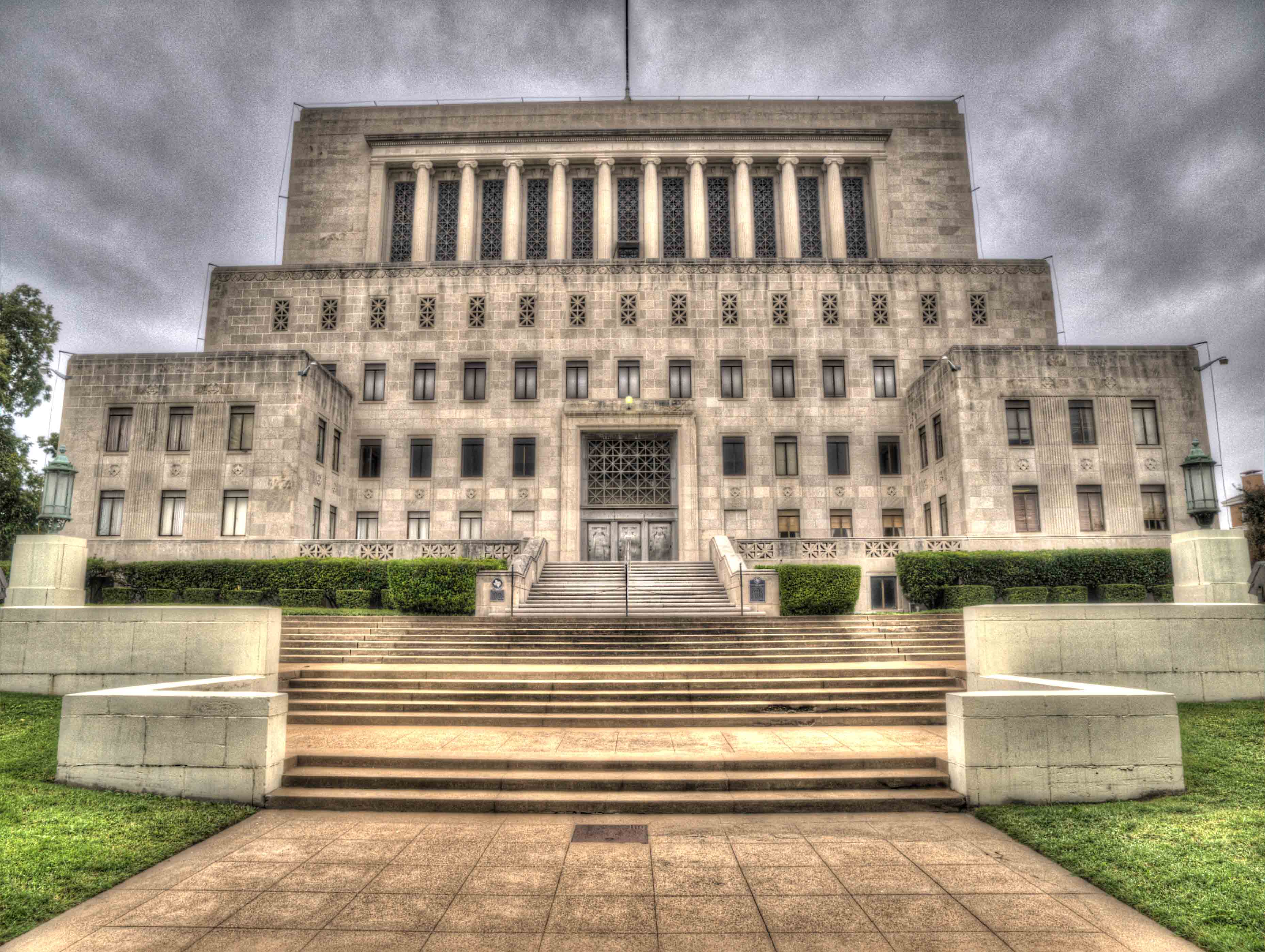
The Masonic Temple 1100 Henderson Street Fort Worth, Texas

The Masonic Temple
1100 Henderson Street
Fort Worth, Texas

Beware lest any man spoil you through philosophy and vain deceit, after the tradition of men, after the rudiments of the world, and not after Christ. (Colossians 2:8)

About 35 years ago, at the age of 29, I made friends with a coworker who became sort of a mentor to me. He seemed to be very knowledgeable in the tricks of the telecommunications trade, and unlike many of the seniors in the trade, he was willing to teach me all he knew. All the “old codgers” greedily guarded their knowledge for fear that the younger guys would outdo them (I guess). My friend, Mike, was not like that, and I appreciated him for that. So when I noticed his Masonic ring, I was naturally curious. Mike, a “Christian,” seemed like an upright fellow, and I remembered seeing similar rings worn by pastors; so naturally I surmised that Freemasonry (Masonry) was a good organization to which I might want to belong. Mike told me about all the charitable works Freemasons (Masons) did so, I was intrigued and asked if I could join. Masons do not recruit. They have a slogan: “To be one, ask one,” and Mike was more than happy to take me under his wing.

To enter the “Blue Lodge” one must undergo the work of memorizing a long dialog – a series of questions and responses in the form of a conversation. Since the “work” is secret, it is not written down and must be learned by rote memorization. After a couple of months I was ready to be initiated into the Blue Lodge. Mike prepared me for my first lodge meeting. He instructed me in proper Masonic etiquette, and I learned that discussion of religious (or political) topics at lodge meetings was strictly taboo – “where all discord on account of politics, religion, or private opinion shall be unknown and banished from within your walls.”[1] That seemed strange to me considering that many of these men were “Christian,” but I shrugged it off as just an effort to maintain harmony among the “brethren.” Without going into great detail about the initiation ritual, which involved reciting the memory work I had learned, I was led in taking a blood oath “binding myself under no less penalty than to have my throat cut across, my tongue torn out by the roots, and my body buried in the rough sands of the sea at low water-mark”[2] not to reveal any of the secrets of Masonry. I passed it off as simply a ritual and not to be taken literally; after all, this is just a fraternity. What did bother me (and I believe the Holy Spirit was speaking to me) was the emphasis placed on gaining entrance into “the celestial lodge, made without hands, eternal in the heavens” by the works of a Mason. Well, that’s a lie! The Bible says, “For by grace are ye saved through faith; and that not of yourselves: it is the gift of God: Not of works, lest any man should boast” (Ephesians 2:8-9, emphasis mine). “Not by works of righteousness which we have done, but according to his mercy he saved us, by the washing of regeneration, and renewing of the Holy Ghost” (Titus 3:5, emphasis mine). Having been “regenerated” by the “Holy Ghost,” that same Holy Spirit troubled me about that heresy and brought to mind the question of the taboo on religious discussion, and the “temple-like” furnishings of the lodge. It did not take me long to discern that I had become involved in a false religion. Consequently, I extracted myself after the second lodge meeting. Mike was naturally disappointed and could not understand my reasoning. Obviously, the Holy Spirit was not working in him the same way that He was working in me.

On the surface, most people, including Freemasons, think of Freemasonry as nothing more than a fraternity – a boy’s club complete with secret handshakes and codes known only to members. However, Freemasonry is a false religion complete with temples and secret rituals that would rival any religion. Even though many Masons are associated with a local church, for a good portion of them, Freemasonry is the only “religious” activity in which they participate. So, based on the same characteristics that I have presented in past articles, Freemasonry is a false religion.

First of all, Freemasonry denies the God of the Bible. This is not an overt rejection, but rather subtly by accepting all other gods on equal footing. “[I]n every country Masons are to embrace the prevalent religion, whatever it may be, and accept whatever is claimed in any country where they may reside, to be the law and will of God… It is well known and admitted that Masonry claims to have descended from the earliest ages, and the institution has existed in all countries and under all religions; and that the ancient philosophers of Greece and Rome, the astrologers and soothsayers, and the great men of all heathen nations have belonged to that fraternity… Multitudes of Universalists and Unitarians, and of terrorists of every grade, are Freemasons; and yet Freemasonry itself claims to save its disciples, to conduct them to heaven!”[3] This alone violates of the First Commandment: “Thou shalt have no other gods before me” (Exodus 20:3).

Secondly, Freemasonry denies the deity of Jesus Christ. Again, this is not an overt rejection, but the fact remains that Freemasonry excludes Jesus Christ from any of their ceremonies. Even in the closing of a prayer directed to the nebulous “Supreme Architect of the Universe,” the prayer ends with “So mote it be. Amen,” rather than “in Jesus’ name.” Jesus is never mentioned. Jesus said, “If ye shall ask any thing in my name, I will do it” (John 14:14), so Masonic prayers go to the nebulous Supreme Architect of the Universe unheeded. “It nowhere recognizes men as being justified by faith in Christ, as being sanctified by faith in Christ, and as being saved as the Gospel recognizes men as being saved.”[4]

Thirdly, Freemasonry rejects the Bible as the inerrant, infallible Word of God by the misuse and misapplication of Scripture, not to mention that “sacred” texts of pagan religions are given equal value. One such misrepresentation, if not blasphemous, misuse of Scripture occurs at the 17th degree, the Knights of the East and West. In this ceremony, the Senior Warden misquotes Revelation 5:2 when he says, “Is there any mortal here worthy to open the book with the seven seals?” Revelation 5:2 is the scene in heaven just after John’s arrival where he hears all the residents of that glorious place proclaim, “Thou art worthy, O Lord, to receive glory and honour and power: for thou hast created all things, and for thy pleasure they are and were created” Revelation 4:11). John says, “And I saw in the right hand of him that sat on the throne a book written within and on the backside, sealed with seven seals. And I saw a strong angel proclaiming with a loud voice, Who is worthy to open the book, and to loose the seals thereof?” (Revelation 5:1-2, emphasis mine). Note that there is no suggestion that a mortal might be able to open the book as suggested in the Masonic version. Indeed, in the heavenly scene, “… no man in heaven, nor in earth, neither under the earth, was able to open the book, neither to look thereon” (Revelation 5:3, emphasis mine). John at this point weeps because no man is worthy to open the book. The Masons mimic this scene and “sigh,” but according to Freemasonry, man can indeed be worthy to open the book. The Senior Warden says to them, “Venerable and respectable brethren, be not afflicted [sic] here is a victim (pointing to the candidate) whose courage will give you content.”[5] The Senior Warden asks a seemingly irrelevant question as to why the ancients had long beards. The candidate does not know, so he defers to the Senior Warden who then misquotes Revelation 7:14 in response: “They are those who came here after passing through great tribulation, and having washed their robes in their own blood: will you purchase your robes at so great a price?”[6] (emphasis mine). What Revelation 7:14 actually says is, “These are they which came out of great tribulation, and have washed their robes, and made them white in the blood of the Lamb” (emphasis mine). Note how Jesus’ (the Lamb) blood is of non-effect for the Mason and greater significance is given to the Mason’s own effort, i.e., “their own blood.” The ceremony continues and blood (a small amount) is drawn from both of the candidate’s forearms where he receives the ability to break open the seals. There are more examples of this kind of abuse of Scripture in Freemasonry, but even this small example should be sufficient for a thinking Christian to avoid such trappings, and if he is already involved, he should get out of it as soon as possible.

Finally, Freemasonry teaches salvation through the “works of a Mason,” as has already been shown above. The Bible teaches that, “Neither is there salvation in any other: for there is none other name under heaven given among men, whereby we must be saved” (Acts 4:12); and “For by grace are ye saved through faith; and that not of yourselves: it is the gift of God: Not of works, lest any man should boast” (Ephesians 2:8-9). And again, “Knowing that a man is not justified by the works of the law, but by the faith of Jesus Christ, even we have believed in Jesus Christ, that we might be justified by the faith of Christ, and not by the works of the law: for by the works of the law shall no flesh be justified” (Galatians 2:16, emphasis mine). Of course, Paul is referring to the Mosaic Law, but it is clearly applicable to any man-made system of good works.

I have quoted from Charles G. Finney’s work on Freemasonry. Finney, in the early 1800s, achieved the level of “Master Mason” (Third Degree). His knowledge of the higher workings of Masonry came from William Morgan, who published a book on Freemasonry and was subsequently murdered for it. To date, Masons deny the conspiracy and murder of Morgan and reject the veracity of his book. Finney also consults the work of “Elder Bernard, a Baptist elder … with the assistance of his brethren who had been appointed to this work [of Masons disposed to renounce and expose Freemasonry] obtained an accurate version of some forty-eight degrees … This work was entitled ‘Light on Masonry.’ In this work any person who is disposed may get a very correct view of what Freemasonry really is.”[7] [8]

From the little I have presented here, it is easy to see that Freemasonry is a false religion. It denies the God of the Bible. It rejects the deity of Christ. It rejects the inerrant, infallible Word of God in the way that it abuses Scripture, and it teaches salvation by the works of man. Any man calling himself a Christian should have nothing to do with this false religion. While it is true that the organization does a lot of benevolent work, and most Masons are good men of integrity, the fact remains that they are deceived into thinking that this is a harmless fraternity. It is not. If you are a Mason and claim Christ as your Savior and there is any sensibility to the Holy Spirit in you, you must open your ears to the recitations you are repeating. Listen for how Scripture, God’s Word, is misused and abused. Masonry is a fraud! Listen to the Holy Spirit and get yourself out of it. If the Holy Spirit is not speaking to you concerning this, then you have greater problems.

 NOTES:


[1] Quoted from the First Degree initiation rites, p. 27. http://www.sacred-texts.com/mas/morgan/morg04.htm, accessed September 17, 2014.

[2] Ibid., p. 23.

[3] Charles G. Finney, The Character, Claims and Practical Workings of Freemasonry 1869, (Tyler, Texas, JKI Publishing, 1998), 141.

[4] Ibid., 144.

[5] Ibid., 84.

[6] Ibid.

[7] Ibid., 11.

[8] William Morgan, Illustrations of Masonry [1827]: http://www.sacred-texts.com/mas/morgan/morg04.htm
2 Comments

Filed under Apologetics, Christianity, Evangelism, Gospel, Religion, Salvation, Theology

Is Pope Francis Preparing To Declare The ‘Virgin’ Mary To Be 4th Part Of The Trinity? – Now The End Begins : Now The End Begins

Is Pope Francis Preparing To Declare The ‘Virgin’ Mary To Be 4th Part Of The Trinity? – Now The End Begins : Now The End Begins.

This ties right in with my post for this week: “False Religion: Roman Catholicism

1 Comment

Filed under Apologetics, Christianity, Gospel, Religion, Theology

False Religion: Roman Catholicism

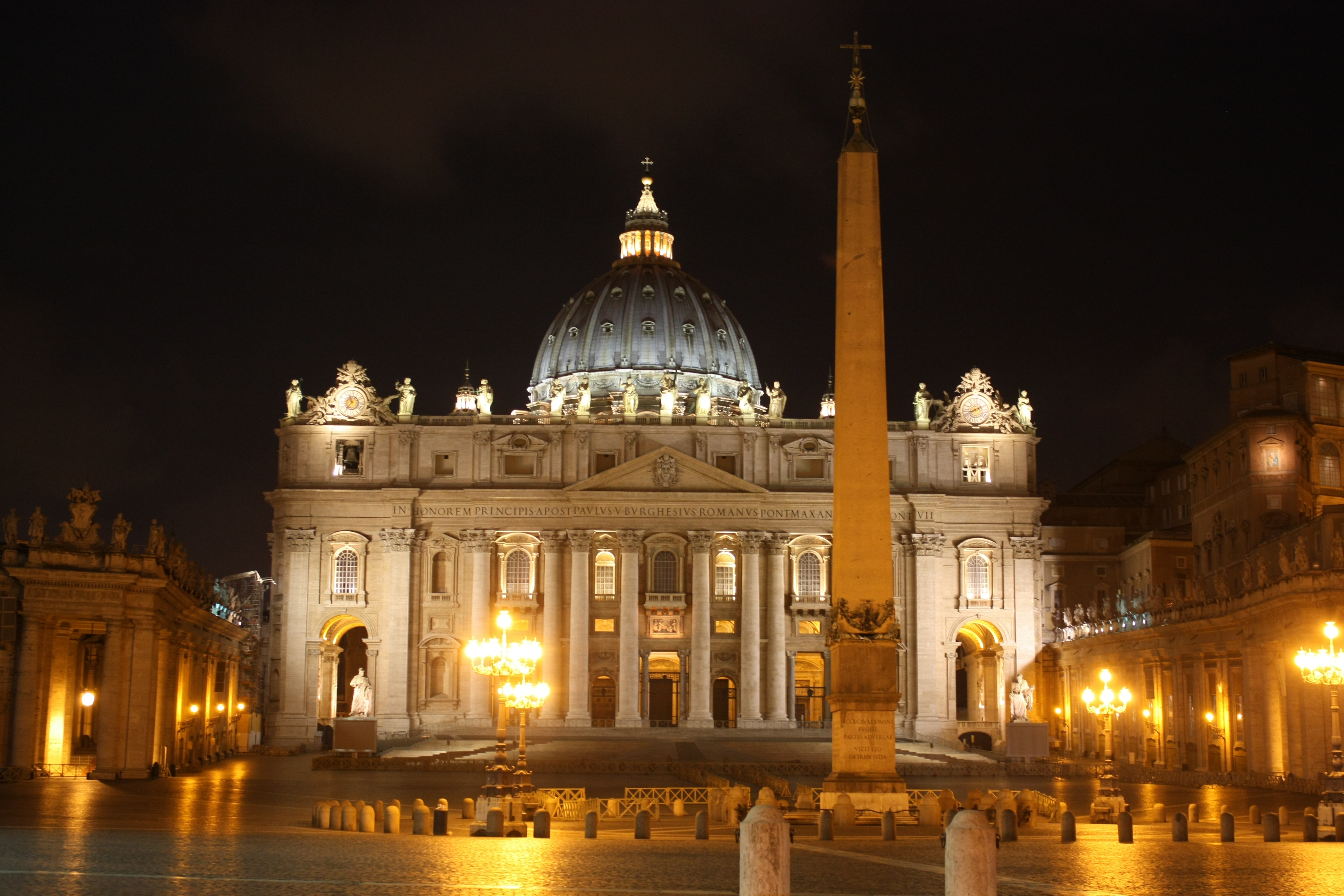
st-peters-basilica-night

So hast thou also them that hold the doctrine of the Nicolaitans, which thing I hate. (Revelation 2:15)

I took a brutal browbeating over my last article “False Religion: Protestantism” – not from unbelievers, but from Christian brothers and sisters. Granted, the title, on a cursory view, appears to be all-inclusive, but I wanted it to be provocative. The fact is that my focus was on “liberal” Protestantism and not Protestantism in general. But more than that, Jesus said, “And why beholdest thou the mote that is in thy brother’s eye, but considerest not the beam that is in thine own eye? Or how wilt thou say to thy brother, Let me pull out the mote out of thine eye; and, behold, a beam is in thine own eye? Thou hypocrite, first cast out the beam out of thine own eye; and then shalt thou see clearly to cast out the mote out of thy brother’s eye” (Matthew 7:3-5). How can we honestly critique or criticize what others believe without first taking a hard look at the beam that is in our own eye?

I believe I did that with my last post, so now let us examine the false religion of Roman Catholicism from an objective perspective. If the reader has been following my previous articles on false religions, the reader will recall I am evaluating false religions based on four characteristics: (1) the denial of the God of the Bible, (2) the denial or rejection of the deity of Christ, (3) the rejection of the Bible as the inerrant, infallible Word of God and (4) the teaching of salvation through the works or efforts of the individual believer.

Superficially, one might say that the Roman Catholic Church does not deny the God of the Bible or the deity of Christ. As I pointed out in my last post, “False Religion: Protestantism,” it is not necessarily what a religion professes to believe that matters, but rather what their practice demonstrates that is the true indicator of what they believe. So it is with the Roman Catholic Church; therefore, I need to begin with the last two characteristics to demonstrate that in practice, the Roman Catholic Church denies the God of the Bible and the deity of Christ.

The Roman Catholic Church (RCC) rejects the authority of the Bible as the inerrant and infallible Word of God. The RCC discourages parishioners from studying the Scripture for themselves claiming that it is too difficult for them to understand. Parishioners are taught that only a priest can give Scripture its proper interpretation, when in fact, priests are generally trained in church dogma only and not in the study of Scripture. The end result is that the RCC has an army of “blind leaders of the blind. And if the blind lead the blind, both shall fall into the ditch” (Matthew 15:14). The RCC teaches that Scripture along with tradition must be accepted and honored with equal reverence. In other words, the traditions of men are just as valid as God’s Word. In doing so, they supplant the authority of God with an authority of their own.[1] Up until the 16th century, the “Catholic” Bible contained only 66 books, but in the 16th century the Apocrypha was added to justify the doctrine of Purgatory.[2] In adding to Scripture, the RCC ignores God’s warnings against adding to or taking away from Scripture (Deuteronomy 4:2, Proverbs 30:6, Revelation 22:18).

Having stripped the Bible of its authority, the RCC has elevated the word of the Pope above the Word of God so that “by reason of his office as Vicar of Christ, [he] has full supreme and universal power over the whole church, a power he can exercise unhindered.”[3] As such, the RCC teaches a different gospel of salvation. Since the RCC has assumed supreme authority over Scripture, it now dictates the requirements for salvation. Salvation can only be found in the Catholic Church. The Catholic believer is obligated to comply with the requirements or “sacraments” of the Church. There are seven: (1)Baptism (typically as an infant), (2) Confirmation, (3) Eucharist, (4) Confession and Penance, (5) Holy Unction (anointing of the sick and last rites), (6) Holy Orders, and (7) Matrimony. In addition, the good Catholic must practice church membership, obey the commandments, and do good works. The good Catholic lives with the constant threat of failing at any point and dying in that condition, at which point the poor soul ends up in purgatory and special masses must be held (at a price to surviving family members, of course) until the full atonement is satisfied and the soul can enter into heaven. How many masses will be required is anybody’s guess. “The pope [sic] claims to have the power to transfer the merits of one sinner to another to reduce their punishment for sin.”[4] The Bible teaches that “For by grace are ye saved through faith; and that not of yourselves: it is the gift of God: Not of works, lest any man should boast” (Ephesians 2:8-9, emphasis mine). But the RCC says, “If anyone says the sinner is justified by faith alone, meaning that nothing else is required to cooperate in order to obtain the grace of justification, let him be anathema.”[5] Furthermore, the RCC “condemns with anathema those who say that indulgences are useless or that the Church does not have the power to grant them.”[6] “Rome also condemns anyone who believes they are assured of eternal life.”[7] The Bible says, “But though we, or an angel from heaven, preach any other gospel unto you than that which we have preached unto you, let him be accursed” (Galatians 1:8). That word “accursed” is the same Greek word, anathema that the RCC uses.

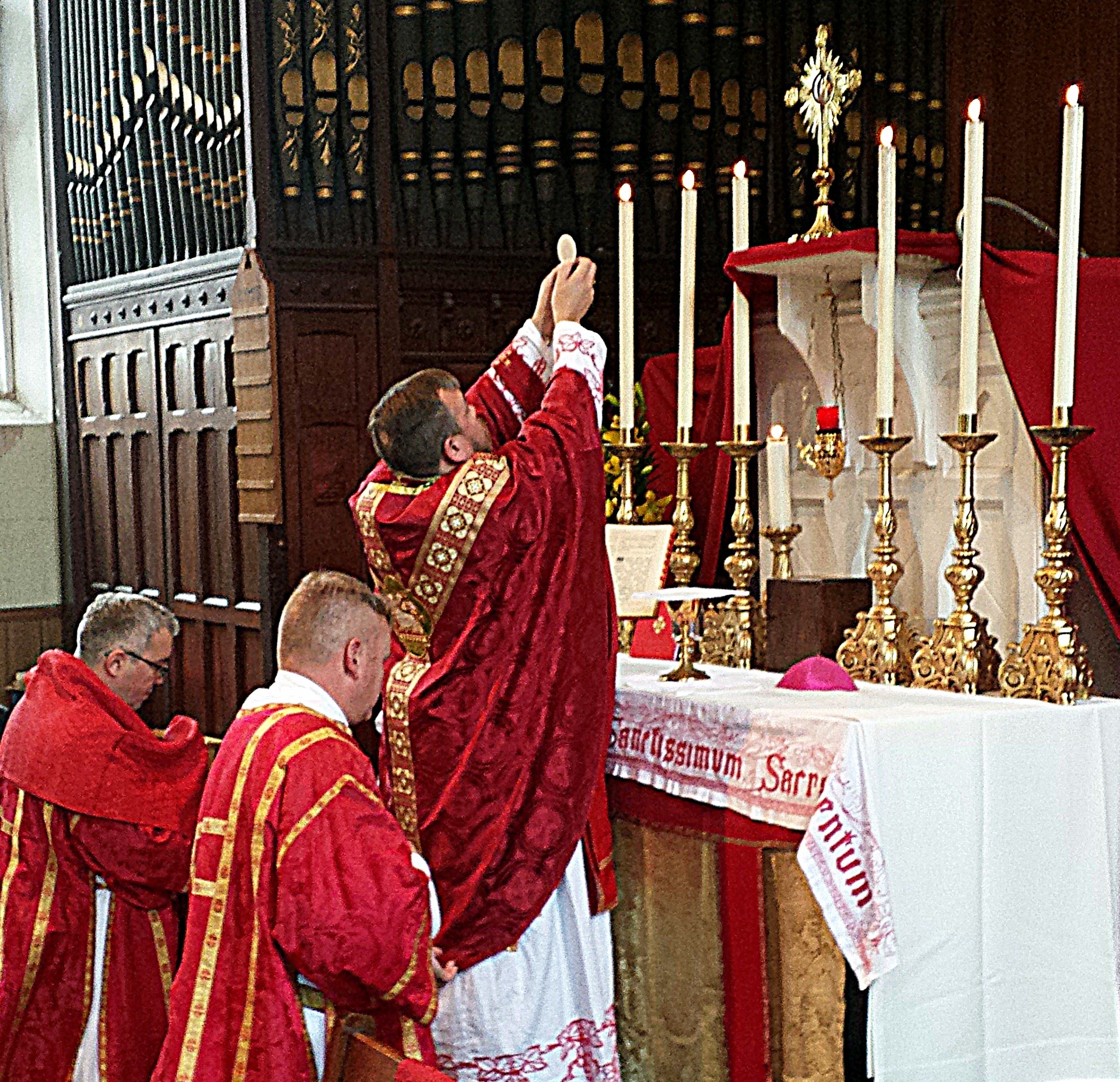
The Mass brings Christ down from heaven and sacrifices Him anew.

The Mass brings Christ down from heaven and sacrifices Him anew.

When the word of man is made superior to the Word of God, and the Gospel of Grace is replaced with the gospel of works, the RCC has effectively set itself in the place of God to decide what is right and what is wrong at the whim of a mere mortal man – the Pope. In effect, then, the RCC has denied the God of the Bible, and by their continuing practice of the mass (which brings Christ down from heaven and sacrifices Him anew), they have denied the deity of Christ “By the which will we are sanctified through the offering of the body of Jesus Christ once for all” (Hebrews 10:10, emphasis mine). By offering prayers to the saints and confessing sins to a priest, the RCC has replaced Christ as the sole mediator between God and man. “For there is one God, and one mediator between God and men, the man Christ Jesus” (1 Timothy 2:5). So, by the criteria I formerly laid out, Roman Catholicism is a false religion.

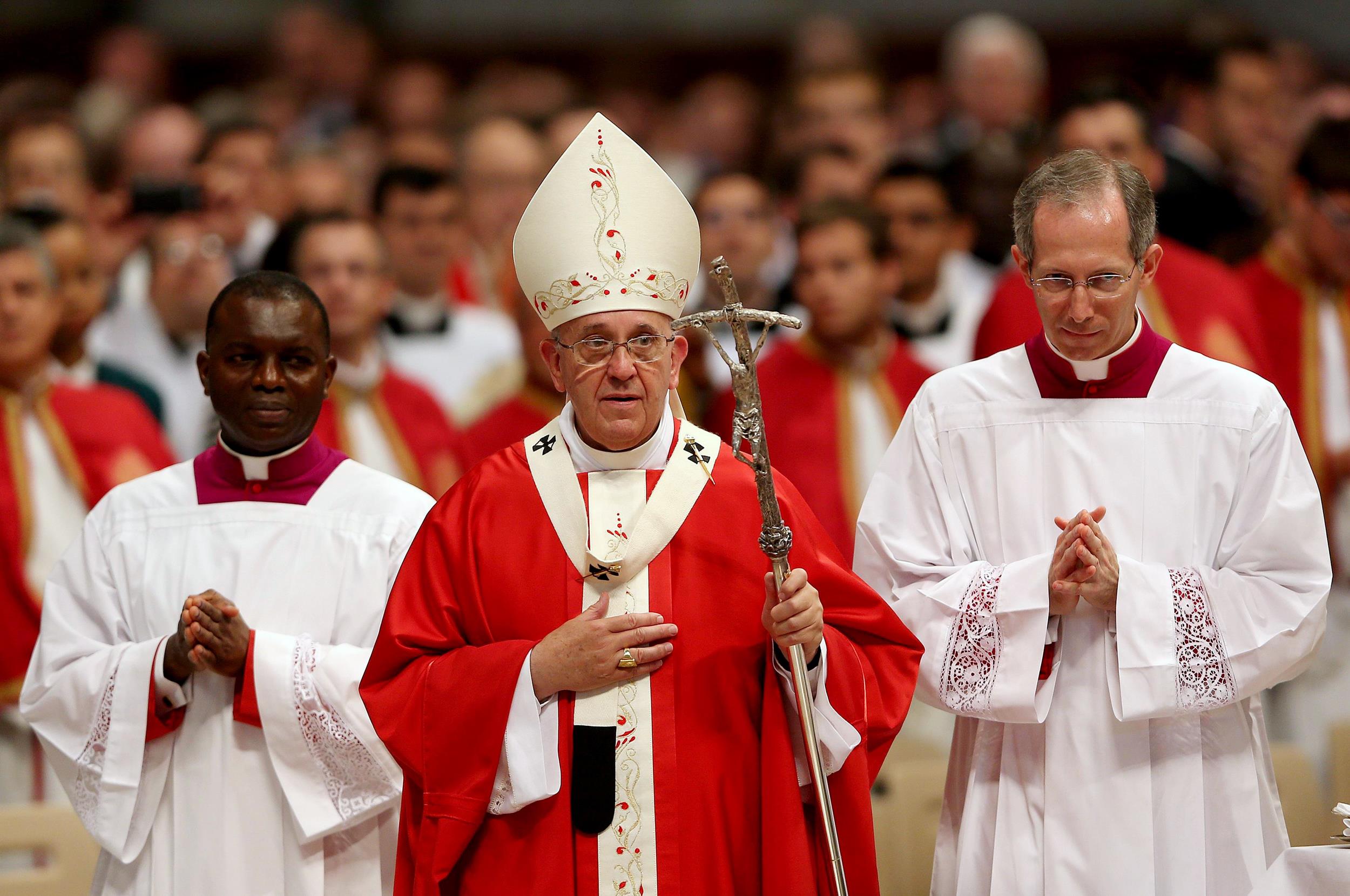
The highest ranking member is the Pope who sets himself up in the position of Christ and rules the people by fiat.

The highest ranking member is the Pope who sets himself up in the position of Christ and rules the people by fiat.

One final indictment that may not exactly fit the four characteristics of a false religion is the charge leveled by Jesus Himself in our beginning verse: “So hast thou also them that hold the doctrine of the Nicolaitans, which thing I hate” (Revelation 2:15). The word “Nicolaitans” is a transliteration of the Greek compound word Nikolaitēs. The first part comes from the Greek word nikaō meaning to subdue or to conquer, overcome, prevail, get the victory over. The second part comes from the Greek word laos from which we get our word “laity” meaning people. So, the Nicolaitans are those who subdue, overcome or conquer the people, and in this case, Jesus was referring to His Church. This is exactly what the RCC has done. They have set up a hierarchal system where the highest ranking member is the Pope who sets himself up in the position of Christ and rules the people by fiat. Such rule goes against Scripture and defies Christ, Who emphatically states that it is a thing He hates. That is a strong indictment from the One Whom the Pope claims to represent.

Is it possible for a Catholic to be saved? Yes, of course it is. Salvation, according to the Bible, is an individual matter that has nothing to do with religion, as I have stated in previous articles. My question is, why would someone who is saved by grace (Ephesians 2:8-9) want to continue in bondage to the Church of Rome? Instead, the Word of God urges, “Come out of her, my people, that ye be not partakers of her sins, and that ye receive not of her plagues” (Revelation 18:4).

Notes:


[1] Mike Gendron, “Roman Catholicism-Apostolic or Apostate?” http://www.worldviewweekend.com/news/article/roman-catholicism-apostolic-or-apostate/, accessed September 12, 2014.

[2] Ibid.

[3] The New Catholic Catechism of the Catholic Church, paragraph 882.

[4] Mike Gendron, “Roman Catholicism-Apostolic or Apostate?”

[5] Ibid.

[6] Ibid.

[7] Ibid.

1 Comment

Filed under Apologetics, Christianity, Gospel, Religion, Salvation, Theology

False Religion: Protestantism

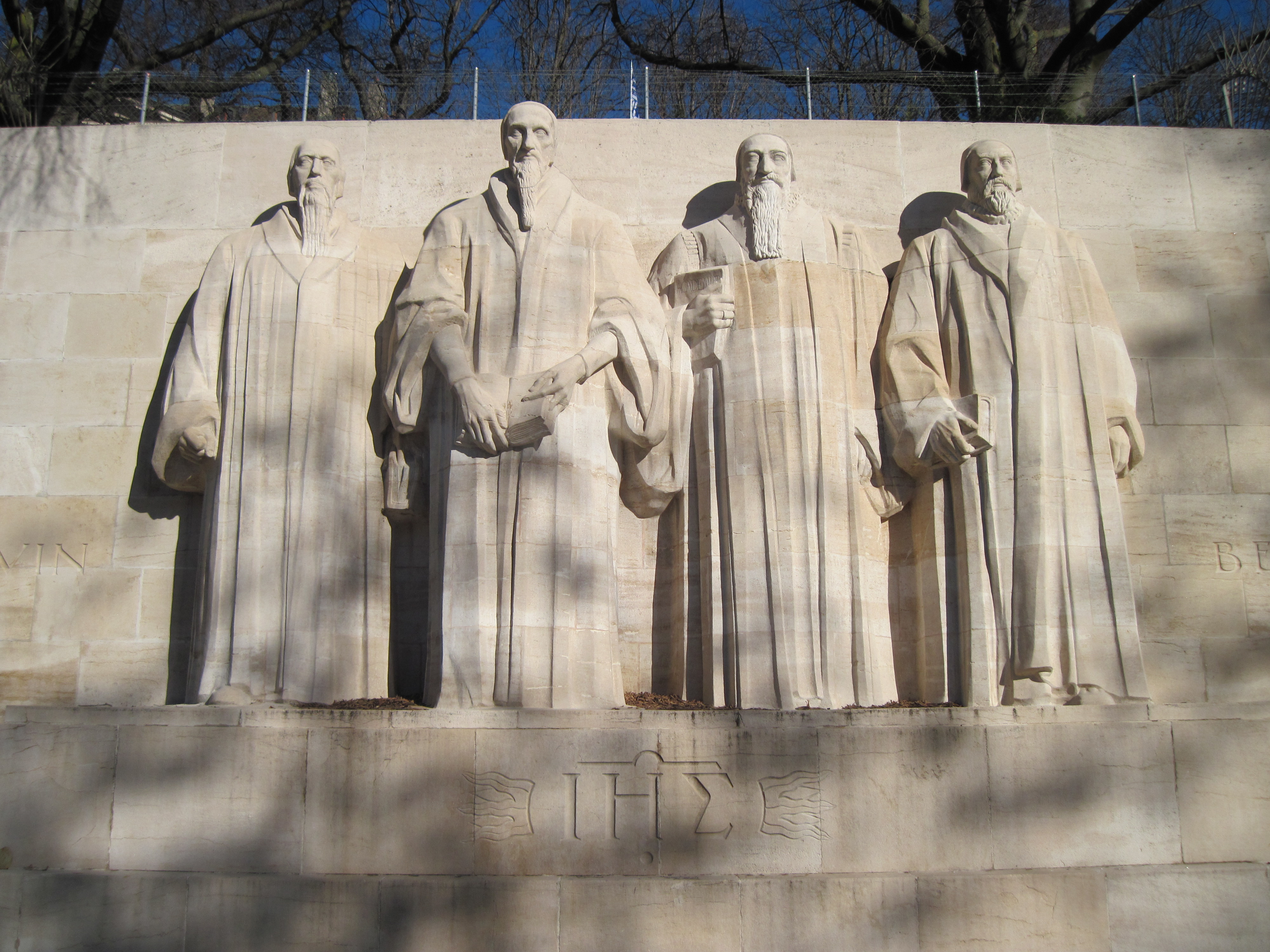
The Reformers

Knowing this first, that no prophecy of the scripture is of any private interpretation. For the prophecy came not in old time by the will of man: but holy men of God spake as they were moved by the Holy Ghost. (2 Peter 1:20-21)

How do I broach this topic delicately and objectively without coming off as if I am way out there in far, far left field? After all, I claim that “I Am A Christian.” “I Am A Baptist,” so I can rightfully disclaim Protestantism. In my articles “True Religion” and “False Religion” I offer four common characteristics of false religion namely: (1) Rejection or denial of the God of the Bible, (2) Rejection or denial of the deity of Christ, (3) Rejection or denial of the Bible as the inerrant, infallible Word of God, and (4) Rejection or denial of salvation by means of Grace alone totally apart from any works of man.

The obvious question is: how does Protestantism fit any of these four characteristics? After all, Protestantism gave us the “Five Solae”: Sola Scriptura, Sola Fide, Solius Chirstus, Sola Gratia, Soli Deo Gloria. Furthermore, all Protestant denominations accept some form of the Apostle’s Creed which states:

I believe in God, the Father Almighty, Maker of heaven and earth.

And in Jesus Christ, His only Son, our Lord, who was conceived by the Holy Spirit, born of the virgin Mary, suffered under Pontius Pilate, was crucified, died and was buried. He descended into hell. On the third day He rose again from the dead. He ascended into heaven and sits at the right hand of God the Father Almighty. From thence He will come to judge the living and the dead.

I believe in the Holy Spirit, the holy Christian Church, the communion of saints, the forgiveness of sins, the resurrection of the body, and the life everlasting. Amen.

That pretty well establishes that Protestantism affirms the triune Godhead and the deity of Jesus Christ. However, there is nothing there affirming the Word of God, and although it affirms “the forgiveness of sins,” it does not specify how that happens. Well, alright, these are not specifically stated in the creed, but generally speaking, Protestantism holds “The belief in the Bible as the supreme source of authority for the church”[1] and “The belief that believers are justified, or pardoned for sin, solely on condition of faith on Christ rather than a combination of faith and good works.”[2]

So, all seems well. But is it? If we look only on the stated beliefs of Protestantism,[3] my charge is baseless. I concede that, at least for the conservative variants of these denominations, these charges are unjustifiable, so I need to narrow my allegation to “liberal” Protestantism, and not “throw out the baby with the bath water.”

Liberal Protestantism has fallen away into an apostasy that, while it professes its creedal beliefs, in practice it denies the authority of Scripture, emphasizes salvation though works (mainly through baptism), and “spiritualizes” and/or minimizes the resurrection of Jesus Christ thereby denying His deity.

The fall of Protestantism (and from here forward, I am referring to liberal Protestantism) into apostasy began around the 19th century AD with the rise of “higher criticism” of the Scriptures.

[Higher criticism] generally takes a secular approach asking questions regarding the origin and composition of the text [of Scripture]…The principles of higher criticism are based on reason rather than revelation (emphasis mine) and are also speculative by nature…The higher critical methods…grew out of a German [Lutheran] school of Biblical studies in the late eighteenth and early nineteenth centuries…the origins of higher criticism are deeply intertwined with rationalism and naturalism (emphasis mine)…In later times, higher critical methods were deployed in conjunction with the contemporary philosophical trends to de-historicize Scripture (emphasis mine).[4]

Just a casual reading of the above statement leaves the impression that higher criticism elevates man’s reason above God’s Word, and this is the downfall of Protestantism. Strangely, in his autobiography, John Shelby Spong, Episcopal Bishop of Newark, Retired, talks about his love for the Bible from the time he received his first as a Christmas gift at the age of twelve. He recalls:

That Bible went on my bed stand and on that day a lifetime love affair with that book was first born in me. It has never yet departed. I began on that Christmas Day the habit of daily Bible reading. I have missed very few days from that one to this in which I did not spend some part of that day reading and studying the Scriptures. I suspect I have read the Bible through twenty-five time by now.[5]

Spong’s “love affair” with the Bible defies the normal understanding of that phrase. After becoming and ordained Episcopal priest he talks about holding Bible studies at his first church. Of his adult class he said:

A tradition of adult education had never been part of the life of this congregation. Their biblical knowledge was on a Sunday-school level. Christianity was, for the most of them, simply part of their culture and was exhibited by showing decency, good manners, and good citizenship.[6]

He describes his plan for “discipleship” as follows:

I would duck no issues, compromise no truth, and avoid no frontier to which my thought and study (emphasis mine) led me. I would resist no new insight out of some need to be defensive for God. I would adopt as my motto the words of my theology professor… “Any God who can be killed ought to be killed” (emphasis mine). I would allow every part of my faith system, its creeds, its Bible (emphasis mine), its sacred traditions, to be examined and questioned openly and honestly. If I discovered that any traditional belief could not stand the test of this challenge, I would abandon it publically. No protective barriers, no claim for inerrancy, infallibility, or divine revelation (emphasis mine) would be placed around any symbol of Christianity, including core doctrines like the Incarnation, the Trinity, the Resurrection (emphasis mine)…I would test in a parish church arena whether or not the total education a priest receives in the academy, including the questions it raises, can be made available to a congregation of pew sitters even if it reveals that the Christianity to which they are attached is not intellectually credible (emphasis mine)[7]

Besides Spong’s blatant arrogance, note how he elevates himself, his thoughts, and his intellect over and above Scripture so that he is willing to challenge the veracity of the Incarnation, the Trinity, and the Resurrection. Eventually, Spong abandons all those things to the point where he advocates for the ordination of the first homosexual Episcopal priest and later for female priests. What the Bible has to say on these matters becomes irrelevant, and the reason of man becomes supreme.

Spong is just a small sample, but he is indicative of what has happened to Protestantism. Granted, there has been a lot of pushback from conservative Protestant groups, which is commendable; but by and large, Protestantism has jettisoned the Word of God, and fallen into a great apostasy where theism has been replaced by humanism so that only the empty hulk of the Reformation remains. Protestantism has become, in the words of Jesus, “whited sepulchres, which indeed appear beautiful outward, but are within full of dead men’s bones, and of all uncleanness” (Matthew 23:27).

“Salvation” in these denominations is typically through baptism (usually as an infant) followed by some sort of catechism, confirmation and church membership. In other words, it is a “works-based” salvation. Although their confession affirms justification by Grace alone, through Faith alone, the definition of those terms degenerates into “works.” The shell is there, but the essence is gone.

Protestantism, the liberal kind, is a false religion. It gives lip service to God as a “figurehead” and elevates man above God in the form of humanism. It rejects the deity of Christ by questioning His bodily resurrection. It rejects the infallibility and inerrancy of Scripture, when it elevates man’s reason above the Word of God. It rejects the clear teachings of the Bible against such matters as homosexuality, or the ordination of female clergy, and it rejects the miracles of the Bible including creation and the resurrection of Christ. Finally, it teaches a works-based salvation.

 Notes:


[1] http://en.wikipedia.org/wiki/Protestantism (accessed August 18, 2014).

[2] Ibid.

[3] FYI: There are many “flavors” of Protestantism. Protestant Denominations include, but are not limited to: Lutheran, Presbyterian, Methodist, Episcopal (Anglican), and perhaps some others. All of these, with the exception of Methodist, are direct breakaways from the Roman Catholic Church. The Anglican Church (the Church of England) broke away from the Roman Catholic Church so that Henry VIII could divorce Catherine, but it basically maintained Catholic practices. Methodists then broke away from the Anglican Church. Many Protestant Denominations maintain the liturgical form of the Roman Catholic Church without the Roman Catholic distinctive of the veneration of Saints.

[4] http://www.theopedia.com/Biblical_criticism (accessed August 19, 2014)

[5] John Shelby Spong, Here I Stand, (San Francisco, Harper Collins Publishers, 2000), 30.

[6] Ibid, 134.

[7] Ibid, 134-135.

6 Comments

Filed under Apologetics, Christianity, Evangelism, Gospel, Religion, Resurrection, Salvation, Theology

False Religion: Jehovah’s Witnesses

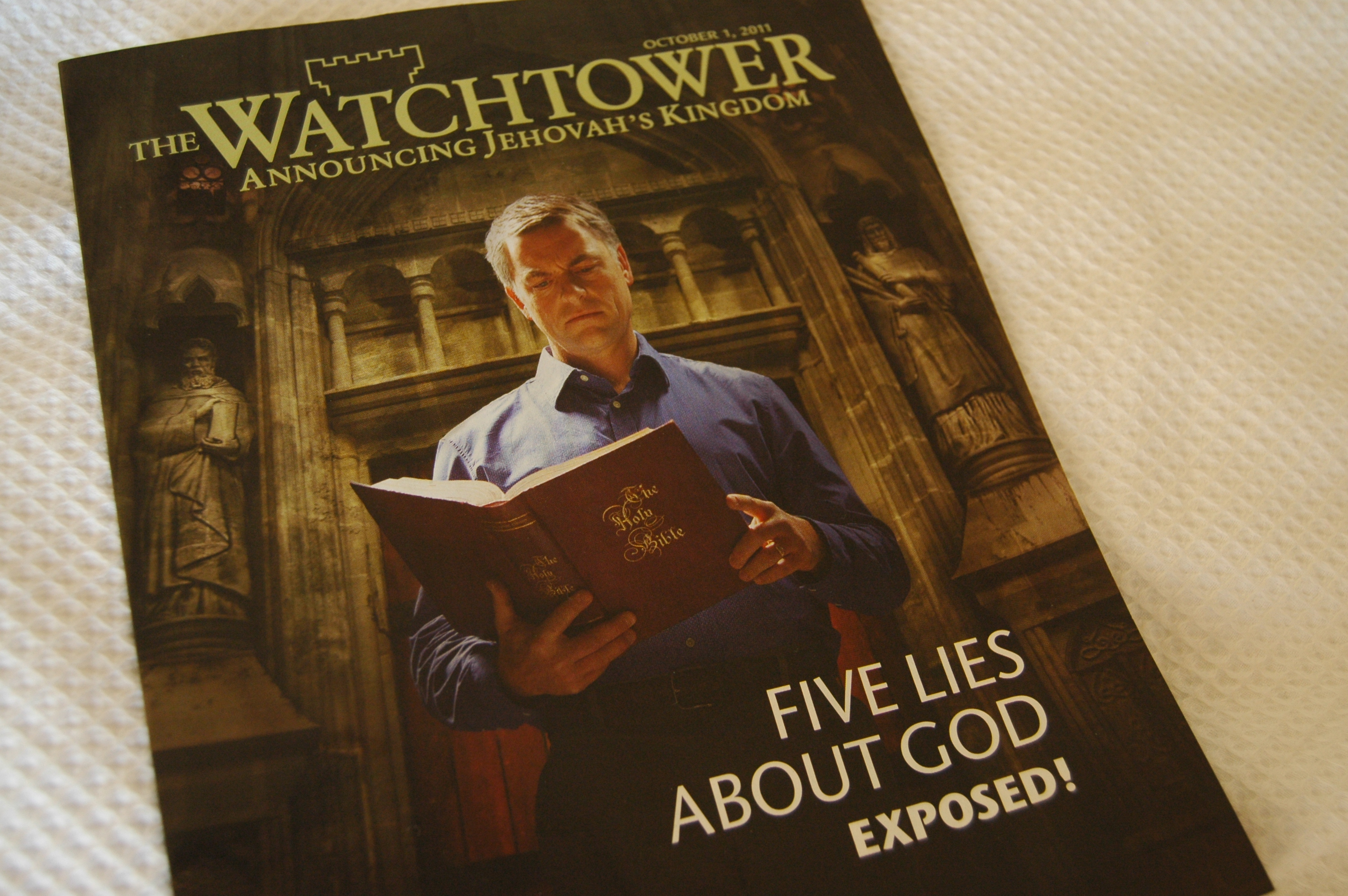
Watchtower

And Thomas answered and said unto him, My Lord and my God (John 20:28)

Almost any Saturday you will find them walking the neighborhoods in pairs smiling and handing out their literature. If you happen to have a face-to-face encounter with the Jehovah’s Witnesses (JWs or Witnesses), you may get the impression that these are really Christians, albeit with a few strange ideas. They quote Scripture, and they seem to be in agreement with some general tenets of Christianity, but do not be fooled, the Jehovah’s Witnesses and the Watchtower Society is a false religion.

As with my last post, False Religion: Mormonism, I will not spend a lot of time reviewing the history of this false religion, although it is very colorful to say the least. For an in-depth study of the Witnesses, I highly recommend The Kingdom of the Cults by Walter Martin (1985) from which I will quote from time to time. While the history of the Jehovah’s Witnesses is a worthwhile study, my main concern is to show how the Witnesses meet the criteria for a false religion: (1) Deny or reject the God of the Bible, (2) Deny or reject the deity of Christ, (3) reject the Bible as the inerrant, infallible Word of God, and (just to add a fourth characteristic of a false religion) (4) they teach salvation through the works or efforts of the believer.

The Witnesses have other problems besides the four “biggies.” JWs reject the doctrine of an eternal hell. They believe that a lost person, one not destined for heaven, i.e., eternal life, is annihilated, that is, they just cease to exist. “To the average Jehovah’s Witness, then, Hell (sheol) is literally ‘the grave,’ the place where mortals wait the resurrection” (Martin, p. 101). The Witnesses contend that the Greek word Gehenna, translated “hell” in English, means “everlasting destruction” (annihilation). “This is indeed a bold-faced misrepresentation of the Greek language and certainly ranks next to the ‘a god’ fallacy [to be discussed later] of John 1:1 as an outstanding example of complete falsehood. There is no evidence that Gehenna ever means annihilation in the New Testament but rather abundant evidence to the contrary” (Martin, p. 102). From the JWs perspective, “The doctrine of a burning hell where the wicked are tortured eternally after death cannot be true, mainly for four reasons: (1) Because it is wholly unscriptural; (2) it is unreasonable; (3) it is contrary to God’s love; and (4) it is repugnant to justice” (Martin, pp. 55-56 quoting Let God Be True, p. 99). By the way, JWs are not the only ones that are repulsed by the doctrine of an eternal hell. Many, both Christians and non-Christians alike, take offense to the doctrine of eternal hell. See my articles “You Don’t Go to Hell Because You’re A Sinner” and “The Book of Life.” While this is a significant problem, it is not the worst problem with this false religion.

Another curious teaching of the Witnesses concerns who will enter “the Kingdom of Heaven.” According to Watchtower literature, “Who and how many are able to enter it [the Kingdom]? The Revelation limits to 144,000 the number that become a part of the Kingdom and stand on heavenly Mount Zion…” (Martin, p. 56 quoting Let God Be True, p. 136). According to http://www.jw.org/en/jehovahs-witnesses/, there are currently 7,965,954 Jehovah’s Witnesses in the world. A little simple math reveals that only about 2% of them will make it into “the Kingdom of Heaven.” So what happens to the other 98%? With those odds, a Jehovah’s Witness is no better off than an atheist who basically believes in annihilationism. At least the atheist does not have to work as hard to achieve that status. The prospect of not making it in is probably the greatest motivator that keeps the JWs on the streets passing out their leaflets. From their perspective, the harder they work and maintain a “holy” life style, the better their chance of being numbered among the 144,000. This fervent work activity is one of the characteristics of false religion (the forth on my list).

Now let us look at why the Jehovah’s Witnesses is a false religion. The Witnesses reject the God of the Bible primarily by their rejection of the Trinity or the triune nature of God – Father, Son, and Holy Spirit. Some astute Witness may point out that the word “Trinity” appears nowhere in the Bible, and they would be correct. Tertullian first used the word in the early part of the third century to describe the triune nature of God. Jehovah’s Witnesses accuse Christians of believing in three gods or “three gods in one,” but Christians “do believe that there are three Persons all of the same Substance, co-equal, co-existent and co-eternal. There is ample ground for this belief in Scriptures, where plurality in the Godhead is very strongly intimated if not expressly declared” (Martin, p. 61). The very first verse of the Bible expresses this. “In the beginning God created the heaven and the earth” (Genesis 1:1, emphasis mine). The Hebrew word translated “God” is ‘ĕlôhı̂ym, a plural, masculine noun. The Hebrew word translated “created” is bârâ’, a singular, masculine verb. Under normal circumstances, the subject and predicate must agree in number and gender, but here they do not indicating that the plural subject acts as a single entity. Just a few verses down we have: “And God said, Let us make man in our image, after our likeness…” (Genesis 1:26, emphasis mine). Again we have the plural ‘ĕlôhı̂ym with the singular verb ‘âmar (“said”). In addition we have the Godhead speaking within Himself, “Let us make man in our image, after our likeness” indicating the plurality of the Godhead. This plurality is also seen in Genesis 11:7 at the Tower of Babel: “let us go down, and there confound their language…” (emphasis mine). In Isaiah’s great vision of God upon His throne we hear the Godhead speak, “Whom shall I send, and who will go for us?” (Isaiah 6:8, emphasis mine) Note how the uni-plurality of the Godhead is demonstrated here. Besides the physical manifestation of the Trinity at Jesus’ baptism (Matthew 3:16-17) there are several examples of the Trinity in the New Testament (See John 14:16; 15:26). More could be said on this, however, it ties into the second reason why the Jehovah’s Witnesses is a false religion.

The JWs deny the deity of Christ. “When Jesus said, ‘My Father is greater than I,” He spoke the truth, for in the form of a servant (Philippians 2:7) and as a man, the Son was subject to the Father willingly; but upon His Resurrection and in the radiance of His glory taken again from whence He veiled it (verses 7, 8), He showed forth His Deity when He declared, “All authority is surrendered to me in heaven and earth” (Matthew 28:18); proof positive of His intrinsic Nature and Unity of Substance. It is evident then that the Lord Jesus Christ was never inferior, speaking of His nature, to His Father during His sojourn on earth” (Martin, p. 63). One of the silly arguments offered by JWs against the deity of Christ concerns His time in the grave. “Who ran the universe the three days Jesus was dead and in the grave?” they say (Martin, p. 62). This reasoning comes from their curious idea that death is the extinction of consciousness. Naturally, if God is unconscious, how can He possibly run the universe? But Scripture clearly affirms the deity of Christ. Consider the following from the Old Testament Scriptures:

Therefore the Lord himself shall give you a sign; Behold, a virgin shall conceive, and bear a son, and shall call his name Immanuel [“God with us”] (Isaiah 7:14, emphasis mine).

For unto us a child is born, unto us a son is given: and the government shall be upon his shoulder: and his name shall be called Wonderful, Counsellor, The mighty God, The everlasting Father, The Prince of Peace (Isaiah 9:6, emphasis mine).

But thou, Bethlehem Ephratah, though thou be little among the thousands of Judah, yet out of thee shall he come forth unto me that is to be ruler in Israel; whose goings forth have been from of old, from everlasting (Micah 5:2).

These descriptions of the coming Messiah clearly show Him to be God: Immanuel (meaning “God with us”), mighty God, everlasting Father, “whose goings forth have been…from everlasting,” i.e., eternity past. Does that sound like any other mortal man? Of course there are many affirmations to Jesus’ deity in the New Testament, but probably none more poignant than Thomas’ confession, “My Lord and my God” (John 20:18). It is remarkable that Jesus did not correct him or reprove him of blasphemy, but rather accepted the worship. “Jesus saith unto him, Thomas, because thou hast seen me, thou hast believed: blessed are they that have not seen, and yet have believed” (John 20:29). Yet, the Jehovah’s Witnesses do not believe and this makes it a false religion.

Jehovah’s Witnesses reject the inerrant and infallible Word of God so much so that they have rewritten it in the form of The New World Translation of Holy Scriptures (NWT) to support their heretical teachings. Most of the changes are designed to deny the Trinity as a whole, but the deity of Christ in particular. One prime example is in their translation of John 1:1. Their translation reads:

In [the] beginning the Word was, and the Word was with God, and the Word was a god. (emphasis mine).

Witnesses have been taught that “a god” is the proper translation because there is no definite article (i.e., “the”) preceding god (theos) in the Greek. I do not want to go into an in-depth study of Greek syntax. Rather, I would simply point out some inconsistencies in their translation were they translate the same Greek construct, i.e., the missing article before “god.”

There arose a man that was sent forth as a representative of God: his name was John (John 1:6 NWT, emphasis mine).

Happy are the peaceable, since they will be called ‘sons of God’ (Matthew 5:9 NWT, emphasis mine).

No one can slave for two masters; for either he will hate the one and love the other, or he will stick to the one and despise the other. You cannot slave for God and for Riches. (Matthew 6:24 NWT, emphasis mine).

And the young child continued growing and getting strong being filled with wisdom and God’s favor continued upon him (Luke 2:40 NWT, emphasis mine).

These are just some examples; there are many more, but in each of the above, the Greek text uses theos alone without the aid of the definite article. If the translators had been consistent in the translation of the NWT, each one of the above examples should have read “a god” not “God.” What this indicates is that they have made a distinction when this Greek construct is referring to Jesus thereby denying His deity. Furthermore, they have ignored Scripture’s stern warning against tampering with the Word of God.

So, to recapitulate, the Jehovah’s Witnesses is a false religion because they deny the God of the Bible when they deny the triune nature of God, they deny the deity of Christ, they deny the inerrant, infallible World of God, and they teach a works based salvation. Again, this was a very brief overview. For an in-depth study, I recommend, The Kingdom of the Cults by Walter Martin.

Comments Off on False Religion: Jehovah’s Witnesses

Filed under Apologetics, Christianity, Evangelism, Gospel, Hell, Religion, Science, Theology