
Category Archives: Holidays

Here Comes 2025!

But seek ye first the kingdom of God, and his righteousness; and all these things shall be added unto you. Take therefore no thought for the morrow: for the morrow shall take thought for the things of itself. Sufficient unto the day is the evil thereof. (Matthew 6:33-34)

As I write this, the clock rapidly ticks away the seconds to wind down the year 2024 and zoom into the new year, 2025. When I think of the passage of time, I often contemplate the illusiveness of “the present.” Think about it. Everything we do, every thought we think is instantly in the past the moment we act or think about it. Then, our next move is in the immediate future, which soon becomes our past. The actual “present” is but a nanosecond as we travel through time. We are constantly moving toward the future. What we do in the present, however brief that may be, ultimately affects the future.

Our ultimate future lies in eternity. We have no idea how time will work in eternity. We know God is eternal, without beginning and without end. He is not confined by time. To God, all time is present. However, we, His creation, were created in time, “In the beginning …” (Genesis 1:1), and we exist in time. Will we experience time in eternity as we do here on earth? I do not know. When my mother went to be with the Lord 22 years ago, one of the last things I said to her was, “Mom, don’t worry. When you get to heaven, you will look back and see that we are right behind you.” I do not know for certain, but it seems to me that time, even though for us it will still exist, will somehow be irrelevant; it will all be “now.”

Meanwhile, here we are. The present is determined by how we prepared for the future in the past, however recent or long ago the past was. Jesus offered good advice for preparing for the future. In the negative, He said, “Therefore I say unto you, Take no thought for your life, what ye shall eat, or what ye shall drink; nor yet for your body, what ye shall put on. Is not the life more than meat, and the body than raiment? … Therefore take no thought, saying, What shall we eat? or, What shall we drink? or, Wherewithal shall we be clothed?” (Matthew 6:25, 31). We cannot control what the future will bring. It certainly makes sense to prepare for the unknown, but even then, the future often brings the unexpected. Therefore, Jesus encourages us not to fret over those things. More important than the immediate future is what lies beyond – eternity. Rather than worry about things over which we have no control, Jesus encourages us to “Seek first the kingdom of God and His righteousness” – i.e., those things which are eternal value. Then He promises, “all these things” – i.e., food, clothing, housing, etc. – will be added unto you, “for your heavenly Father knoweth that ye have need of all these things” (Matthew 6:32). God will provide for your needs if you will trust Him.

The year 2024, arguably, has not been a good year. The new year, 2025, promises to be better, or we may look back and remember the good ol’ days of 2024. Donald J. Trump promises to “Make America Great Again.” However, Trump’s enemies want to do all that is in their power to thwart all of his efforts. Will they succeed or will Trump achieve his goals? The world is in turmoil. Russia and Ukraine are at war. The Middle East is a seething caldron of unrest; the puzzle pieces of the prophesied war of Ezekiel 38-39 seem to be falling into place. China boasts that it will take Taiwan and no one can stop it. Violence and rioting plague all of Europe and other places around the world. Will Trump’s presidency make the difference that will bring peace to the world? I have my doubts, but we can hope. The future is unknown except to God, and He ultimately controls the outcome. Therefore, Jesus said, “Take therefore no thought for the morrow: for the morrow shall take thought for the things of itself. Sufficient unto the day is the evil thereof” (Matthew 6:34). Whatever 2025 brings, those who trust in the Lord will enjoy peace and security in Him. “It is better to trust in the LORD than to put confidence in man. It is better to trust in the LORD than to put confidence in princes” (Psalm 118:8-9).

The best resolution for 2025 is to prepare for eternity. If you feel insecure about what the future has in store, I would encourage you to place your trust in Christ. Read my page on “Securing Eternal Life.”
Happy New Year!

3 Comments

Filed under Current Events, Holidays, New Year's Day, Theology

The Resurrection Matters

He is not here, but is risen: remember how he spake unto you when he was yet in Galilee, (Luke 24:6)

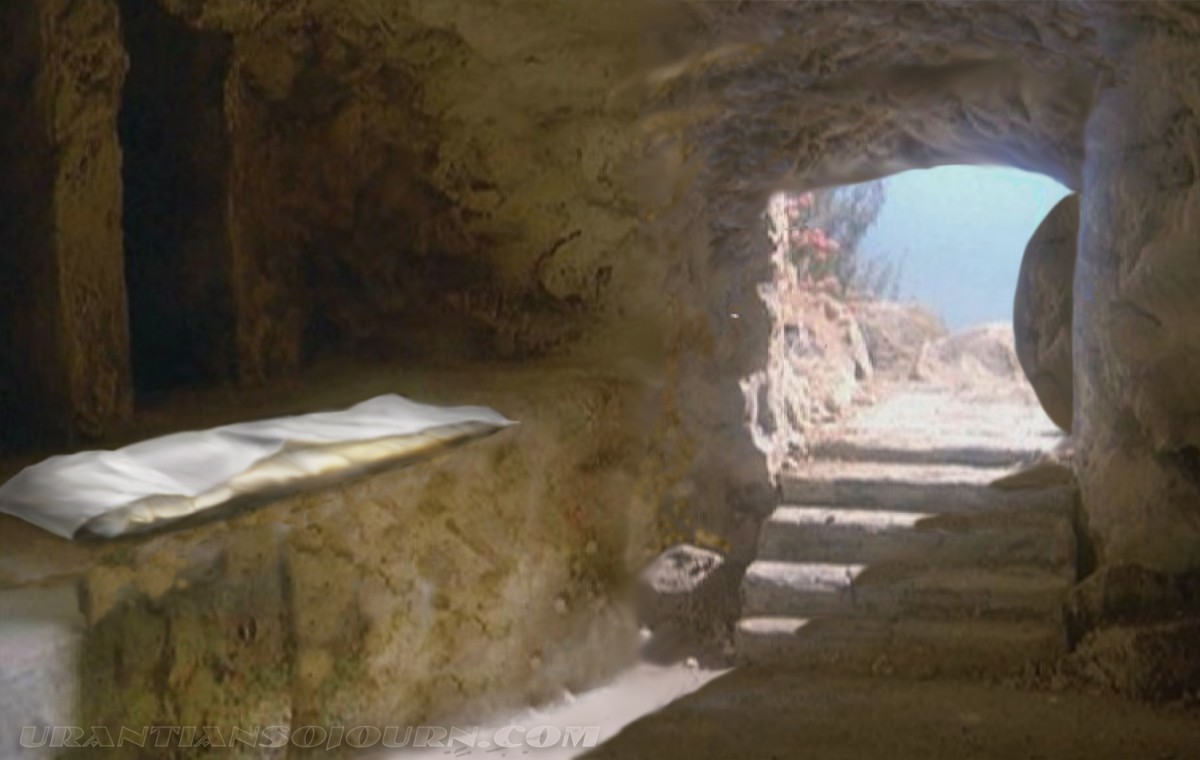
Christmas and Easter (I prefer “Resurrection Day”) are the two most important days on the Christian calendar with Resurrection Day being, arguably, the most important of the two. One might argue that we could not have the Resurrection without the Birth, but the Birth without the Resurrection would render both insignificant.

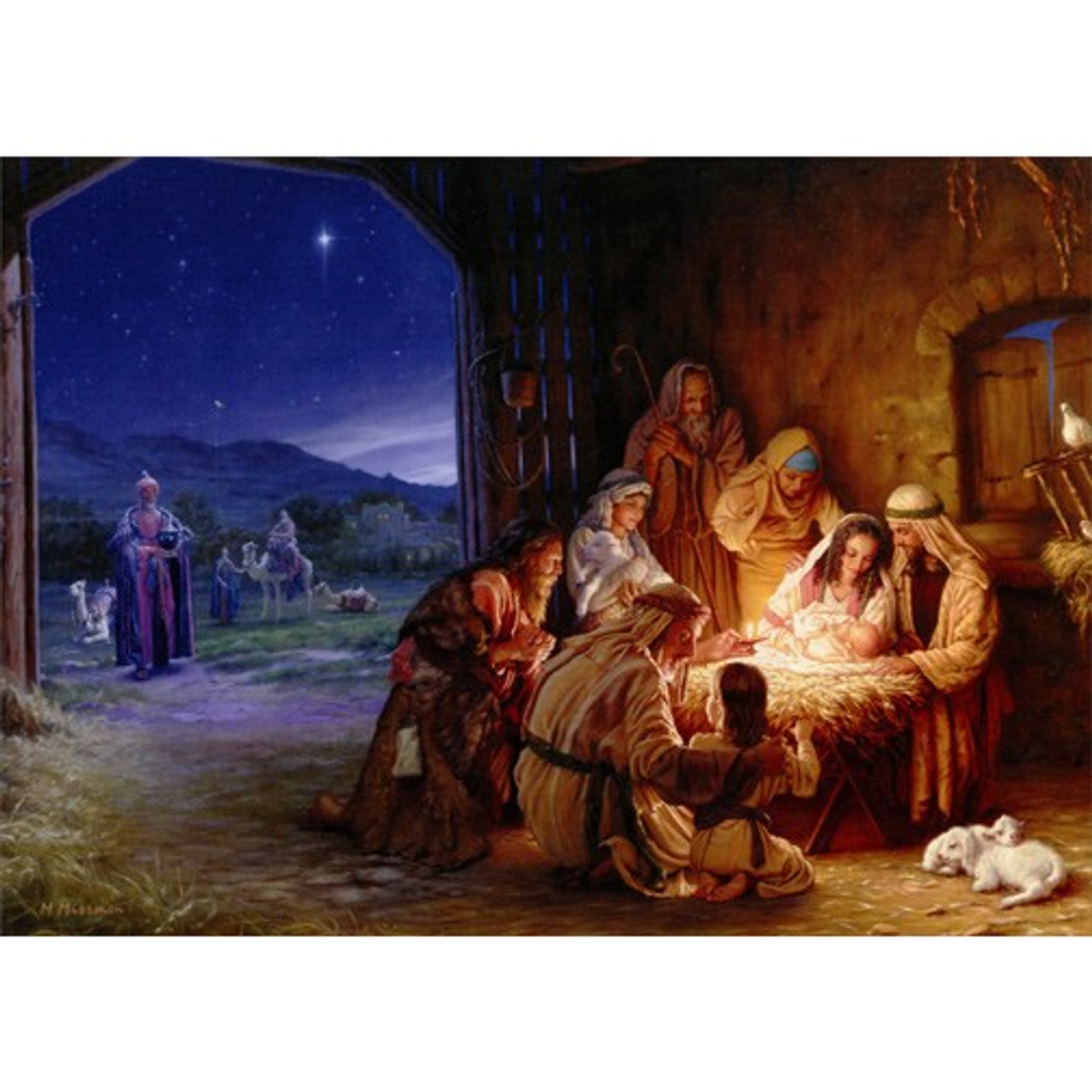
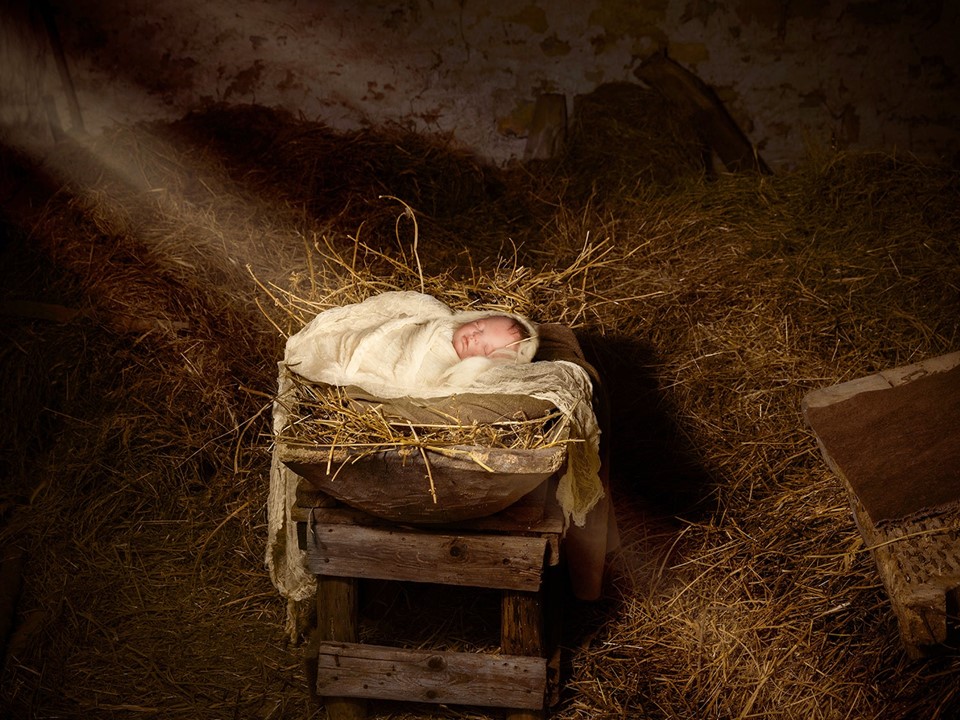
Jesus’ birth came like the birth of any other baby. The Gospel writer Luke records the event taking place in a humble animal shelter visited only by lowly shepherds. However, Luke points out an important fact that is summarily overlooked by most readers. Luke says that, “while they were there, the days were accomplished that she should be delivered” (Luke 2:6, emphasis mine). So, apparently, Joseph and Mary had been in Bethlehem a few days before the time of her delivery. Luke does not say, but it seems reasonable that in Bethlehem there were ladies who, seeing a young woman ready to give birth, would have offered their services as midwives. That is the way they did it in those days. Regardless, the birth was no different than any other. The conception nine months prior was the “miracle.” At that time, God planted His seed in Mary’s womb without human aid.

So Jesus came into the world and “dwelt among us”[1] and “increased in wisdom and stature, and in favour with God and man” (Luke 2:52). He grew up like any other Jewish boy and probably learned carpentry from His earthly father, Joseph. At the age of 30,[2] the age at which priests enter service,[3] Jesus started His three-year earthly ministry. We know from the four Gospel accounts that His ministry ended with His death on the cross. He was buried in a borrowed tomb and rose on the third day.

But what if the resurrection never happened? Paul put it quite succinctly when he said, “if Christ be not raised, your faith is vain; ye are yet in your sins” (1 Corinthians 15:17). If Jesus did not rise from the grave, His death for our sins is of no avail. We have no hope of eternal life, and, worse, our destiny is in hell. That explains why unbelievers live for this life alone because, for them, this life is all there is. They reject the concept of hell and prefer the idea that death ends it all, or that it begins a new cycle through reincarnation.

Many arguments against the resurrection of Jesus exist that have a long history from the very beginning. Some say that Jesus did not die on the cross but only “swooned” and revived in the cool dampness of the tomb, rolled the two-ton stone away, and walked out. That is a silly theory when one considers the beating, torture, and flogging Jesus received before being nailed to the cross. Also, the Roman soldiers who crucified Him were expert executioners and were familiar with death. Had they suspected that He “swooned,” they would have broken His legs like they did with the other two victims.[4] These were professionals; they knew death. Then, to ensure His death, one of the soldiers ran his spear into his side and punctured the pericardium.[5] 

Let us say, for argument’s sake, that this one they failed to recognize and Jesus did indeed pass out. Even if He did revive in the cool tomb, the loss of blood from the beatings and flogging, not to mention the puncturing of his heart sac, would have left Him too weak to roll away the heavy stone – one that took several men to move – by Himself.

Another argument suggests that Jesus’ disciples overpowered the Roman guard posted at the tomb.[6] This too is a silly argument. All four Gospels record how the disciples went into hiding at Jesus’ arrest. They feared for their lives. It seems unlikely that these frightened men, most of them fishermen, and at least one un-calloused tax collector, would dare to take on battle-hardened professional Roman soldiers. However, this fabrication spread from the very beginning. Matthew records that an angel came to roll back the stone and the soldiers on watch were scared stiff.[7] The soldiers, knowing the consequence (death) for failing in their responsibility to keep the tomb secure, went to the chief priests, rather than their leaders, hoping to get a sympathetic hearing about the empty tomb. They made a good choice as the Jewish religious leaders paid them off and covered for them as long as they would spread the lie that the disciples had stolen the body.[8]

Still another argument insists that the women who went to the tomb on Sunday morning were so grief-stricken that they failed to recognize Jesus’ tomb and went to the wrong sepulcher which was empty. This argument simply rejects what Scripture clearly reports. Three of the four Gospels record that the women witnessed the tomb where Jesus was laid.[9] John, who was present at the crucifixion along with Jesus’ mother and the other women, does not say, but it stands to reason that he would have accompanied them to the tomb.

Jesus rose from the dead. If that were not true, the Jews, because of their hatred for Him, only needed to exhume the body and present it to the world, but they had no body. Men have tried and failed to show Jesus’ remains, but they cannot.

Jesus rose from the dead. He conquered death, and because He conquered death, we have the assurance that our sins are covered and we have eternal life with him. “If in this life only we have hope in Christ, we are of all men most miserable. But now is Christ risen from the dead, and become the firstfruits of them that slept [died]. For since by man came death, by man came also the resurrection of the dead. For as in Adam all die, even so in Christ shall all be made alive” (1 Corinthians 15:19-22, emphasis mine). “For if by one man’s [Adam] offence death reigned by one; much more they which receive abundance of grace and of the gift of righteousness shall reign in life by one, Jesus Christ.) Therefore as by the offence of one [Adam] judgment came upon all men to condemnation; even so by the righteousness of one [Jesus] the free gift came upon all men unto justification of life. For as by one man’s [Adam] disobedience many were made sinners, so by the obedience of one [Jesus] shall many be made righteous” (Romans 5:17-19, emphasis mine).

Because Jesus conquered death, we can have the assurance of eternal life with Him. That is why the resurrection matters. If you are not sure where you stand before Jesus, please read my page on “Securing Eternal Life.”
Notes:


[1]  John 1:14

[2]  Luke 3:23

[3]  Numbers 4:3

[4]  John 19:32-33

[5]  John 19:34

[6]  Matthew 27:65-66

[7]  Matthew 28:2-4

[8]  Matthew 28:11-15

[9]  Matthew 27:61; Mark 15:47; Luke 23:55

Comments Off on The Resurrection Matters

Filed under Apologetics, Bible, Christianity, Easter, Gospel, Holidays, Resurrection, Salvation, Theology

Come 2024!

And the Spirit and the bride say, Come. And let him that heareth say, Come. And let him that is athirst come. And whosoever will, let him take the water of life freely. (Revelation 22:17)

The last chapter in the Book of Revelation was my final reading for the year. There, the verse above jumped out at me. The verse is an invitation to those who are “outside” of the body of Christ to come and “take of the water of life freely.” Notice who issues the invitation: “the Spirit and the Bride.” We understand that “the Spirit” is the Holy Spirit. The “Bride” is the Church of Christ (not the denomination by that name) – the body of believers who have been saved by grace through faith.

Although we find this verse in the middle of a passage that describes the New Jerusalem (i.e., Heaven), which is yet future, the invitation is current. The fact that the invitation comes from both the Spirit and the Bride informs us that the invitation issues primarily from the Church. In writing to the church in Corinth, the Apostle Paul says, “Know ye not that ye are the temple of God, and that the Spirit of God dwelleth in you?” (1 Corinthians 3:16). “Ye” in the King James English is a plural, second person pronoun, so he is addressing the whole body of the church saying that they are the “temple of God” in which the Holy Spirit dwells. So, as we read our starting verse, we can see that the invitation to come is from the Holy Spirit through the Church which is currently on Earth (but I pray not much longer).

The year (2024) that lies ahead does not promise improvement over the last. Indeed, since the year 2020 (and even long before that) things in the world continue to degenerate. The Middle East is on fire. The war in Ukraine continues with no end in sight. China will take Taiwan and the United States is too weak to do anything about it. Kim Jong Un is like a kid with a fist full of bottle rockets happily shooting them off daring anybody to stop him. Muslims are rioting and creating havoc in Europe, the United States, and other places around the world. The global decay of moral fiber infects every area of society and has even infiltrated the church. And there is no promise of improvement for 2024.

All of that seems rather gloomy and pessimistic, but I say, “Come 2024!” The darker the world becomes, the brighter will be the light of His appearing. Now, more than ever is the time for the church to shine her light. To His Bride, Jesus says, “Ye are the light of the world. A city that is set on an hill cannot be hid … Let your light so shine before men, that they may see your good works, and glorify your Father which is in heaven” (Matthew 5:14, 16). Jesus is coming for His Bride very soon; but while we are still here, our light must shine brighter than ever. “The Spirit and the Bride say, ‘Come!’ And I say, “Come 2024!”

Reader, the verse offers an invitation to come drink of the “water of life.” Are you thirsty for the only thing that can quench the thirst of your soul? Come to Jesus. If you want to know how to do that, please read my page on “Securing Eternal Life.”
Happy New Year!

Comments Off on Come 2024!

Filed under Apologetics, Bible, Christianity, Current Events, Holidays, New Year's Day, Salvation

Light of the World

In him was life; and the life was the light of men. And the light shineth in darkness; and the darkness comprehended it not. (John 1:4-5)

It is Christmas Eve as write this. June and I enjoyed a time of fellowship with our church. Our sermon today was based on Isaiah 9:6-7, which speaks of the child that was to be born whose name was “Wonderful Counselor, The Mighty God, The Everlasting Father, The Prince of Peace.” He is the One upon whose shoulder the government should rest and whose reign would have no end. It is one of those promises whose fulfillment is now and not yet. Truly He reigns within the heart of every believer, but He is yet to come to rule over all the earth.

After church, June and I came home to settle into our Sunday routine which includes “second breakfast” and listening to more Bible teachings and sermons on YouTube. One of those was Dr. Robert Jeffress of the First Baptist Church of Dallas. In his sermon, he spoke of Jesus coming to earth as “the Light of the World,” a term Jesus applied to Himself (John 8:12; 9:5).

As I listened to Jeffress’ exposition, my mind carried me back to Genesis 1:14-19 when God created all of the celestial bodies. “And God set them in the firmament of the heaven to give light upon the earth, And to rule over the day and over the night, and to divide the light from the darkness: and God saw that it was good” (Genesis 1:17-18, emphasis mine). Was that not also Jesus’ purpose for coming to the earth? – “to give light upon the earth” and “to divide the light from the darkness”? It seems that the Apostle John made the same point – “In him was life; and the life was the light of men. And the light shineth in darkness; and the darkness comprehended it not” (John 1:4-5, emphasis mine).

As I mused on this, I remembered that God created the celestial luminaries on the fourth day of creation. That brought to mind what the Apostle Peter wrote about the way God reckons time. “But, beloved, be not ignorant of this one thing, that one day is with the Lord as a thousand years, and a thousand years as one day” (2 Peter 3:8). Of course, Peter was using simile to express the timeless nature of God, but as we consider biblical chronology, the comparison does seem to fit. It has been about 6000 years since creation, which is comparable to six days, and creation was accomplished in six literal days. God ceased from creation on the seventh day, and we yet await our seventh day of rest when Jesus rules on earth for 1000 years (1 day) – Revelation 20:1-8. So, it appears that the days of creation and the years of Earth’s history have a 1:1000 correspondence.

Taking this a step further, Jesus was born around 4000 years after creation which corresponds with the fourth day of creation when God created all the heavenly bodies. I wonder if God did that on purpose?

“But when the fulness of the time was come, God sent forth his Son, made of a woman, made under the law, To redeem them that were under the law, that we might receive the adoption of sons” (Galatians 4:4-5).

3 Comments

Filed under Bible, Christianity, Christmas, Holidays, Theology

The Mystery of the Gospel

… that I may open my mouth boldly, to make known the mystery of the gospel, (Ephesians 6:19)

The Gospel is a mystery. The Gospel (Greek: euaggelion) means “good tidings” or “good news.” The angel brought the euaggelion to the shepherds who watched their flocks by night.[1] It was the euaggelion that the Savior was born in Bethlehem. But what did this euaggelion mean? When the angels departed, the shepherds hurried to Bethlehem to see the euaggelion for themselves. Once they had seen the baby, they spread the news to all who would hear. “And all they that heard it wondered at those things which were told them by the shepherds” (Luke 2:18, emphasis mine). It was a mystery!

At Christmastime, we sing the mournful carol, “Oh Come, Oh Come Emanuel.” The lyrics describe a deep yearning for the advent of Messiah. “Oh come, oh come Emanuel, and rescue captive Israel, that mourns in lonely exile here, until the Son of God appear.” However, Israel was not expecting the Son of God to appear. That was the mystery.

Indeed, the prophets foretold of the coming Messiah. When the magi later came searching for “he that is born King of the Jews,”[2] the religious leaders, who knew the Scriptures, directed them to Bethlehem. They quoted the Prophet Micah: “And thou Bethlehem, in the land of Juda, art not the least among the princes of Juda: for out of thee shall come a Governor, that shall rule my people Israel” (Matthew 2:6, emphasis mine). However, they omitted the last phrase of Micah’s prophecy: “whose goings forth have been from of old, from everlasting” (Micah 5:9). That last part was a mystery to them. How could an earthly ruler/king exist “from of old, from everlasting”? That would mean this king existed from eternity past. That could only mean this coming king would be God. To them, that was impossible. It was a mystery.

Four hundred years prior, the last prophet spoke of the coming Messiah. “And he shall sit as a refiner and purifier of silver: and he shall purify the sons of Levi, and purge them as gold and silver, that they may offer unto the LORD an offering in righteousness” (Malachi 3:3). This certainly speaks of authority, but the general tone of the prophecy expressed God’s displeasure with His people obscuring any hint of the Messiah’s divinity. After that, God stopped talking for four hundred years. A lot can be forgotten in four hundred years or blurred beyond recognition.

Previous prophets had spoken of a coming king who would sit on David’s throne. A favorite Christmas passage from Isaiah says, “For unto us a child is born, unto us a son is given: and the government shall be upon his shoulder: and his name shall be called Wonderful, Counsellor, The mighty God, The everlasting Father, The Prince of Peace. Of the increase of his government and peace there shall be no end, upon the throne of David, and upon his kingdom, to order it, and to establish it with judgment and with justice from henceforth even for ever. The zeal of the LORD of hosts will perform this” (Isaiah 9:6-7, emphasis mine). While Isaiah clearly stated that His name would be “The mighty God” and “The everlasting Father,” the promise of His reign on David’s throne overshadowed (in their minds) the fact of His divinity. Since the fifth century before Christ, Israel had been ruled by outside forces; first Babylon, then Persia, then Greece, and now the Romans. The Jews wanted a king to make them a superpower. God coming to reign on earth in human flesh was unthinkable. It was a mystery!

Other prophecies held an even more unimaginable mystery – Messiah would suffer and die. Psalm 22 describes His crucifixion when such execution methods did not exist. Isaiah 53 also details the suffering of Messiah. The prophet Daniel precisely foretold the number of years when Messiah would be “cut off.”[3] The Messiah that was to be king and rule the world would have to die. That makes no sense! It was a mystery!

Even today, the idea that the Almighty, Creator God took on human flesh, in a virgin’s womb, was born by natural means in the lowliest of estates, grew up among “his own, and his own received him not” (John 1:11). “He is despised and rejected of men; a man of sorrows, and acquainted with grief: and we hid as it were our faces from him; he was despised, and we esteemed him not” (Isaiah 53:3). He was nailed to a cross for our sins and rose on the third day so “that whosoever believeth in him should not perish, but have everlasting life” (John 3:16). “But as many as received him, to them gave he power to become the sons of God, even to them that believe on his name” (John 1:12). That is the mystery of the Gospel.

All religions of the world, including many so-called “Christian” religions, demand some kind of sacrifice from their adherents. The adherents of these false religions must do something to appease their gods in order to gain entry into eternal life. It is no wonder then that the idea that all one needs to do is believe in Jesus and trust in the sufficiency of His sacrifice for our sins. It’s too easy. It’s a mystery! Paul describes how Jesus left His first estate as God, and took on human flesh for the purpose of making Himself the perfect sacrifice for our sins.[4] Our God performed the work of salvation for us so that all we need to do is believe. “For by grace are ye saved through faith; and that not of yourselves: it is the gift of God: Not of works, lest any man should boast” (Ephesians 2:8-9, emphasis mine). It is a mystery! “But the natural man receiveth not the things of the Spirit of God: for they are foolishness unto him: neither can he know them, because they are spiritually discerned” (1 Corinthians 2:14). That is the mystery of the Gospel.

As we ponder the mystery of the Gospel, especially during this Christmas season, the thought of God coming to us in the form of a helpless baby should captivate us in awestruck wonder. How could such a thing be! The only thing that remains is praise and thanksgiving for the incalculable gift that He offers. “For God so loved the world, that he gave his only begotten Son, that whosoever believeth in him should not perish, but have everlasting life” (John 3:16).

Reader, if you have not accepted God’s free gift of salvation, there is nothing you have to do but believe. Please read my page on “Securing Eternal Life.”

Notes:


[1]  Luke 2:8-18

[2]  Matthew 2:1-12

[3]  Daniel 9:25-26

[4]  Philippians 2:5-11

Comments Off on The Mystery of the Gospel

Filed under Apologetics, Bible, Christianity, Christmas, Gospel, Holidays, Religion, Salvation, Theology