Category Archives: Religion

Clothing In Heaven

King Jesus 2

And white robes were given unto every one of them; (Revelation 6:11)

Recently we were reading our daily devotional Days of Praise. The devotional for that day was entitled “Clothing.” In that article, the author, John D. Morris, Ph.D., points out the fact that Adam and Eve were naked when they were created, and only after they sinned did their nakedness become apparent to them. The last book of the Bible informs us that we will be clothed with white robes in heaven – that is, those of us who go to heaven. So the question came up, why are we not naked in heaven the way God created us in the beginning? The Bible tells us that we will be clothed “in fine linen, clean and white,” but it makes no comment about why we are clothed rather than naked. That made me think.

When Adam and Eve sinned, God had to clothe them in skins to cover their nakedness (Genesis 3:21). Someone suggested that before they sinned, Adam and Eve were “clothed” in light. The Hebrew word for light is ‘ôr (אור). This reminds me of the time when Moses was in the presence of God for forty days, and his face shone with a light so that the people were afraid of him. He had to veil his face (Exodus 34:29-35) so that the people would not fear him. Then there was the time at the Mount of Transfiguration when Moses and Elijah appeared with Jesus, and all of them glowed (Matthew 17:1-2). Adam and Eve may have had a similar glow about them. Then when they sinned, they lost that glow so that their nakedness became apparent to them (Genesis 3:7). God then covered them with skins. The Hebrew word for skin is ‛ôr (עור). There may be a play on words here. Note that both Hebrew words are pronounced “or,” but they have different spellings in Hebrew. Before they sinned, they were clothed in אור (light), but after they sinned, God clothed them in עור (skin).

That may be a part of it, but what is of greater importance is that the skins were a covering for their nakedness which represented their sin. The idea of covering conveys the meaning of “atonement.” Throughout Scripture the shedding of innocent blood has always been the requirement for making atonement or the covering of sin.

For the life of the flesh is in the blood: and I have given it to you upon the altar to make an atonement for your souls: for it is the blood that maketh an atonement for the soul. (Leviticus 17:11, emphasis mine)

The robes given to the saints in heaven are made “white in the blood of the Lamb” (Revelation 7:14). Once again, the innocent blood of Jesus Christ, the Lamb of God (John 1:29), was shed, once for all, to cover our sin.

For if the blood of bulls and of goats, and the ashes of an heifer sprinkling the unclean, sanctifieth to the purifying of the flesh: How much more shall the blood of Christ, who through the eternal Spirit offered himself without spot to God, purge your conscience from dead works to serve the living God? (Hebrews 9:13-14, emphasis mine)

Perhaps this is why we wear robes in heaven. The robes will remind us for eternity that Jesus shed His blood to cover (atone for) our sin. Our clothing in heaven is His righteousness, not our own. “He that overcometh, the same shall be clothed in white raiment; and I [Jesus] will not blot out his name out of the book of life, but I will confess his name before my Father, and before his angels” (Revelation 3:5, emphasis mine). “For in this we groan, earnestly desiring to be clothed upon with our house which is from heaven: If so be that being clothed we shall not be found naked” (2 Corinthians 5:2-3).

Comments Off on Clothing In Heaven

Filed under Apologetics, Christianity, Creation, Heaven, Religion, Salvation, Theology

It’s All Good!

OLYMPUS DIGITAL CAMERA

And we know that all things work together for good to them that love God, to them who are the called according to his purpose.  (Romans 8:28)

 There are many passages of Scripture that I count as favorites like Genesis 1:1, “In the beginning God created the heaven and the earth,” and with it John 1:1-3 “In the beginning was the Word, and the Word was with God, and the Word was God. The same was in the beginning with God. All things were made by him; and without him was not any thing made that was made.” Both are foundational verses that identify who God is. Wrapped up in those words is the reason why we, as creatures, owe our allegiance to God as our Creator. Without Him, nothing that we enjoy, including life itself, would exist. Another favorite is John 3:16, “For God so loved the world, that he gave his only begotten Son, that whosoever believeth in him should not perish, but have everlasting life.” In light of His creative power that brought the universe into existence simply with His spoken word, it is incomprehensible to imagine that the all-powerful Creator could love His creation so much that He would condescend to the point of death on a cross to keep us from “perishing”! Then, as we trust Him, He promises to strengthen and to sustain us. “But they that wait upon the LORD shall renew their strength; they shall mount up with wings as eagles; they shall run, and not be weary; and they shall walk, and not faint” (Isaiah 40:21). And Jesus invites, “Come unto me, all ye that labour and are heavy laden, and I will give you rest” (Matthew 11:28). Then there are the promises of eternal life like, “In my Father’s house are many mansions: if it were not so, I would have told you. I go to prepare a place for you. And if I go and prepare a place for you, I will come again, and receive you unto myself; that where I am, there ye may be also” (John 14:2-3).

But perhaps my all-time favorite verse is the one above, Romans 8:28, “And we know that all things work together for good to them that love God, to them who are the called according to his purpose.” This verse is often misunderstood because it is quoted out of context. The verse does not imply that everything will work out to our liking or that because we trust in God that nothing will ever go wrong in our lives – no loss of income, no loss of health, no broken relationships, etc. Quite to the contrary, the Bible teaches that we will face trouble and trials. In fact, Jesus said, “In the world ye shall have tribulation: but be of good cheer; I have overcome the world” (John 16:33). Paul confirms this fact at the end of this chapter: “Who shall separate us from the love of Christ? shall tribulation, or distress, or persecution, or famine, or nakedness, or peril, or sword? As it is written, For thy sake we are killed all the day long; we are accounted as sheep for the slaughter” (Romans 8:35-36). The list of trials and persecution given here are as certain as Christ’s love for His children. So, Romans 8:28 is not my favorite because it paints a rosy picture. Indeed, it goes beyond a bed of roses.

What does Romans 8:28 really say? First of all it says that we “see” or “perceive” – the Greek word eidō translated “know.” In other words, this is something that we can observe; it is not a matter of “blind faith.” This is a fact that we can experience. “All things” – the Greek word panta is all-inclusive. All things “work together” – the Greek word sunergeō means to “cooperate” – for “good” – Greek agathon meaning “benefit.” So all things – good or bad – cooperate to the benefit – and here is the qualifier – “to them that love God.” In the Greek syntax priority is given to the qualifier. A strict rendering of the Greek to English would read “And we perceive that to them that love God, all things cooperate to their benefit.” So this verse is not universally applicable to all people – only those that love God. “Love” is the Greek word agapaō which is an unconditional love, the kind of love that God expressed to the world in sending His Son Jesus to die for our sins (John 3:16). To further focus the qualification, all things cooperate together for the benefit of “those who are the called according to His purpose.”

What is “His purpose”? That is explained in the verse that follows: “For whom he did foreknow, he also did predestinate to be conformed to the image of his Son, that he might be the firstborn among many brethren” (Romans 8:29, emphasis mine). God determined, before time began that man would be made in His image (Genesis 1:26). That image was marred by sin, but God’s purpose has never changed. He has determined that His “new creation” (2 Corinthians 5:17) will be “conformed to the image of his Son.” It should be of no surprise that Paul later exhorts, “be not conformed to this world: but be ye transformed by the renewing of your mind, that ye may prove what is that good, and acceptable, and perfect, will of God” (Romans 12:2, emphasis mine).

So what have we learned? Those that are called by God “according to His purpose,” and who love God unconditionally, will experience (will see/know) the blessings of God even in the face of abject adversity. These are they that can say, even in the worst of circumstances, “It’s all good!”

Comments Off on It’s All Good!

Filed under Apologetics, Christianity, Gospel, Religion, Theology

A Time to Speak

If it be so, our God whom we serve is able to deliver us from the burning fiery furnace, and he will deliver us out of thine hand, O king. But if not, be it known unto thee, O king, that we will not serve thy gods, nor worship the golden image which thou hast set up. (Daniel 3:17-18)

Recently the homosexual lesbian mayor of the city of Houston, Texas, Annise Parker instigated the Equal Rights Ordinance[1] dubbed “HERO[2],” which, in part, removed gender restrictions from public restrooms.[3] Needless to say, many are highly incensed over the local government overreach in abolishing longstanding social norms of etiquette in maintaining gender specific restroom facilities.

Having ramrodded the ordinance through the city council despite public protests and outcries, the public was allowed 30 days to collect 17,000 petition signatures to appeal the decision. On July 3, 2014 over 50,000 signatures were submitted to the city of Houston to repeal the ordinance, but the city rejected the petitions claiming the petitioners were 2000 “valid” signatures short of the required 17,000. The opponents of the ordinance filed a lawsuit against the city of Houston with the help of the Alliance Defending Freedom (ADF) group. Shortly thereafter, the city subpoenaed five local Houston pastors who were leading the petition drive, and demanded “all speeches, presentations, or sermons related to HERO, the Petition, Mayor Annise Parker, homosexuality, or gender identity prepared by, delivered by, revised by, or approved by you or in your possession.”[4] To date, the battle rages.

The five Houston pastors remain in steadfast opposition to local government overreach that attempts to chip away at the rights derived directly from God and supported by the First Amendment to the Constitution of the United States. It is not so much that they have anything to hide. Their sermons or speeches are open to the public. Anyone, including the Mayor, is welcome to sit in and listen. The problem comes from the intimidation tactics employed by the city designed to silence pastors from teaching what the Bible has to say about homosexuality or other deviant behavior. The Preacher once said, “[There is] a time to keep silence, and a time to speak” (Ecclesiastes 3:7). Now is the time to speak.

The Bible teaches: “Let every soul be subject unto the higher powers. For there is no power but of God” (Romans 13:1). The Greek word translated “powers” is exousia, and it refers to a magistrate or potentate, i.e., a governmental authority. As Christians, we are encouraged to pray “For kings, and for all that are in authority; that we may lead a quiet and peaceable life in all godliness and honesty” (1 Timothy 2:2), but at the same time “We ought to obey God rather than men” (Acts 5:29). This is such a time. We should pray for the Mayor of Houston; she is lost and she has a reprobate mind (Romans 1:28) that prevents her from seeing the error of her ways. At the same time, she is attempting to enforce a law that, in the first place, violates the Supreme Law of the Land, but ultimately it violates the law of God.

This is the time for Christians to speak, and to speak loudly. And not only about this, but about other laws that have been passed that violate the Law of God. This resulted because we Christians have been too timid or too politically correct to actively voice our objection.

Now is the time to speak and to speak loudly!  Expect the message to be unpopular. In fact, there will even be “Christians” that will rise up in opposition to the message, but the truth must be spoken in spite of the offence that will be taken. The old adage, “the truth hurts” applies, and those who are offended will retaliate, perhaps even with violence. Regardless, this is not the time for timidity or political correctness, but a time for courage and boldness. Jesus said, “He that is not with me is against me; and he that gathereth not with me scattereth abroad” (Matthew 12:30). He also said, “Whosoever therefore shall be ashamed of me and of my words in this adulterous and sinful generation; of him also shall the Son of man be ashamed, when he cometh in the glory of his Father with the holy angels” (Mark 8:38). It is about time that we stand with Jesus against abortion, same-sex unions, divorce, adultery, premarital sex, cohabitation, and all sorts of perversion. There are those that say, “live and let live,” and that would be fine were it not for those that would force their perversion on the rest of us. We can no longer sit quietly by and take the abuse. Slowly, piece by piece, the perverts have been tearing away at our social fiber. It has to end, and it will not end while Christians roll over and play dead.

Seriously, I do not anticipate that any of this will go away, but we should not give up without a fight. It is a time to speak; it is a time for war (Ecclesiastes 3:7, 8). Keep those brave Houston pastors in your prayers. Beyond prayer, support them in any way you can. Pray also for Houston’s mayor, that God will penetrate her heart.

Notes:


[1] http://www.click2houston.com/news/houston-city-council-passes-controversial-equal-rights-ordinance/26208968

[2] http://www.aleteia.org/en/politics/article/houston-pastors-dig-in-5836411638906880

[3] http://www.truthandaction.org/houston-eliminates-gender-based-restrooms/

[4] http://www.snopes.com/politics/religion/houston.asp

1 Comment

Filed under Apologetics, Christianity, Current Events, Gospel, Politics, Religion, Theology

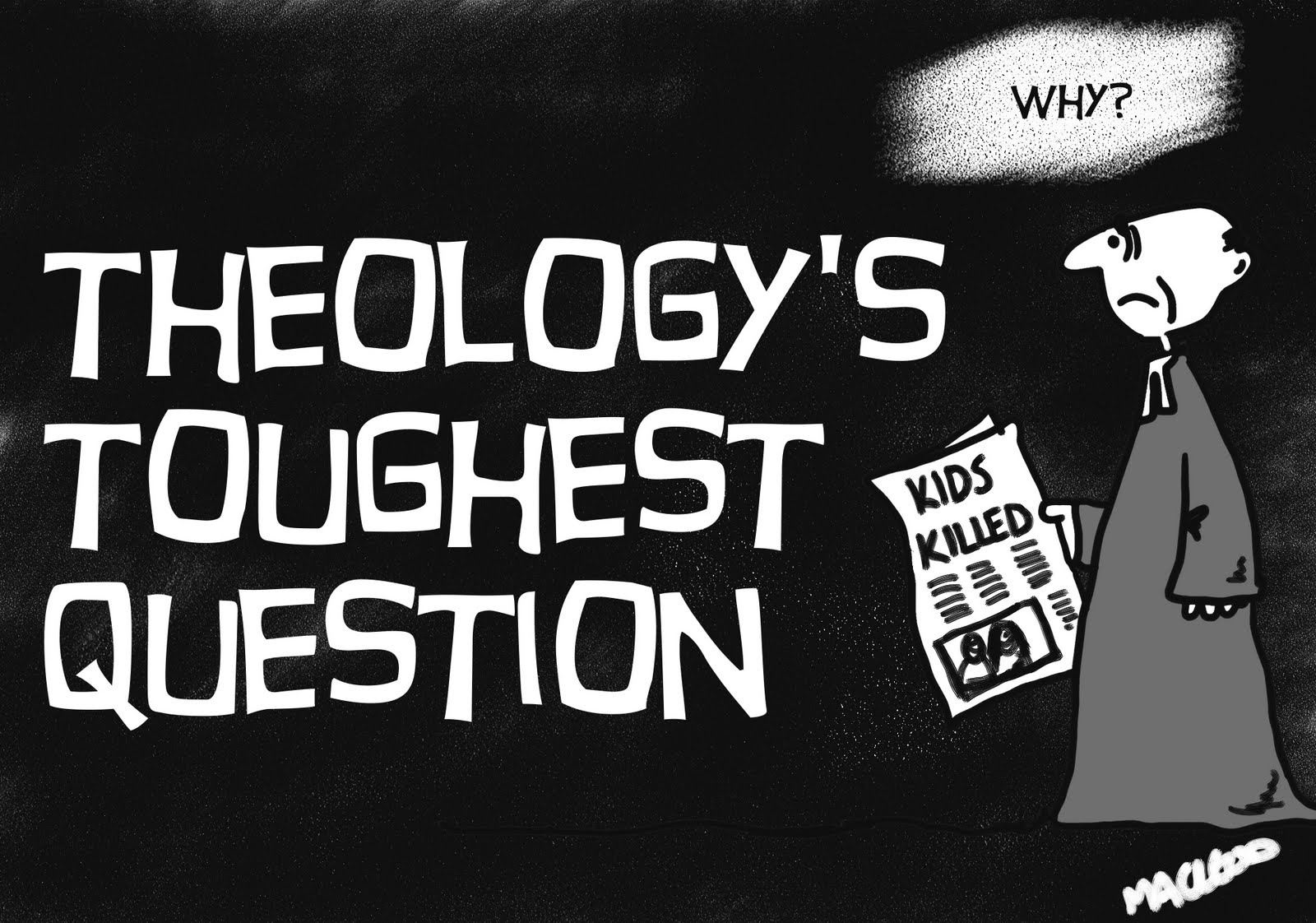
Did God Create Evil?

And, having made peace through the blood of his cross, by him to reconcile all things unto himself; by him, I say, whether they be things in earth, or things in heaven. (Colossians 1:20)

Question: Because the Lord is the Creator of all, He brought also evil in the universe. Did He do penance, when He died on the cross?

Answer: To accuse God of creating evil is a misunderstanding of God’s nature. The Bible says:

Let no man say when he is tempted, I am tempted of God: for God cannot be tempted with evil, neither tempteth he any man: But every man is tempted, when he is drawn away of his own lust, and enticed. (James 1:13-14, emphasis mine)

God did not create evil or sin, but in His wisdom “allowed” for it. Having created man in His own image (Genesis 1:26), He gave man the option to obey or disobey, to accept God or reject Him, to love Him or not to love Him. Without that option, we would be no more than androids that only function according to the programming of the designer. Without the option, it would be impossible for us to have a “personal” relationship with our Creator.

Therefore, it is not for His sin that Jesus died on the cross, but for ours. When you think about it, that is pretty incredible that God, should take upon Himself the penalty for our sin in order to restore the broken relationship between man and his Creator (Philippians 2:5-11) .

7 Comments

Filed under Apologetics, Atheism, Christianity, Creation, Evangelism, Gospel, Origins, Religion, Salvation, Theology

Top Priority

treasure

For where your treasure is, there will your heart be also. (Matthew 6:21)

But seek ye first the kingdom of God, and his righteousness; and all these things shall be added unto you. (Matthew 6:33)

A “Christian” young man once lamented the exhortation to holy living by exclaiming, “Do you expect me to become a monk!” Sadly, that is not an uncommon sentiment. Such a sentiment coming from an unbeliever is understandable, but too many Christians these days harbor the same sentiments. The call to holiness[1] is prevalent throughout Scripture, yet many Christians try to hide behind “grace” claiming that we are no longer under the Law.[2] Somehow the world has taught Christians that living a life dedicated, in all things, to the service of Christ denies them of the benefits that only the world can give. But is that true?

Our verse above is taken from Jesus’ Sermon on the Mount (Matthew 5-7). In this portion of the sermon, Jesus begins by calling attention to worldly “treasures”: “Lay not up for yourselves treasures upon earth, where moth and rust doth corrupt, and where thieves break through and steal” (Matthew 6:19). Here Jesus points out an undeniable fact that everyone understands: “things” do not last. There exists an unrelenting physical law which dictates that everything degenerates, wears out, or slows down. It is the inescapable Second Law of Thermodynamics.

65 T-Bird_SM

1965 Ford Thunderbird

My brother recently tempted me with the opportunity to purchase of a 1965 Ford Thunderbird – a beautiful automobile. For an antique of that type, the price was reasonable, and not outside my ability to purchase it. My brother mentioned that it had “some rust,” a couple of the electric widows were not operating properly, and the paint job was poorly done, but still, it was worth the money. As I battled the temptation, I considered the “little rust” that has the potential to spread like cancer. It would have to be cut out and replaced with “healthy” metal. Then it would need to be repainted. It needs some upholstery work. The windows need new motors. Many “minor” things are needed to make the car “right.” Then, after all that expense, I would end up with an old car that is still wearing out as parts for it become rarer. “Things” just do not last. Jesus says, “Don’t invest in things that will just wear out in the end.” Instead He says, “But lay up for yourselves treasures in heaven, where neither moth nor rust doth corrupt, and where thieves do not break through nor steal: For where your treasure is, there will your heart be also” (Matthew 6:20-21). What do you treasure?

Jesus goes on to talk about real needs: food, clothing, shelter (Matthew 6:25-30), and He emphasizes that “your heavenly Father” knows that you need all these things (v. 32). Just as the Father feeds the birds of the air and clothes the fields with flamboyant colors, He will provide for all your needs. After all, “Are ye not much better than they?” (Matthew 6:26). The birds of the air, and the lilies of the fields were not created in the image of God, but you were (Genesis 1:26). “Therefore take no thought, saying, What shall we eat? or, What shall we drink? or, Wherewithal shall we be clothed? (For after all these things do the Gentiles seek:) for your heavenly Father knoweth that ye have need of all these things” (Matthew 6:31-32). The Greek word translated as “thought” is merimnaō and it means to be “anxious,” and it carries the idea of being overly concerned about these things which are under God’s divine control.

An old hymn that my mother used to sing to us comes to mind. The third verse of that hymn says:

All you may need He will provide,
God will take care of you;
Nothing you ask will be denied,
God will take care of you.[3]

God will take care of you. He has promised to provide for all your needs (not necessarily your desire for a 1965 T-Bird). With your needs met, what should be your priority? “But seek ye first the kingdom of God, and his righteousness; and all these things shall be added unto you” (Matthew 6:33). Top priority is the kingdom of God.

This is the first place this phrase appears in Scripture. If the search for the kingdom of God is to be foremost, we should have an idea of what that is. The next occurrence of this phrase takes place after Jesus has been accused by the Pharisees of casting out demons by the power of Satan. Jesus asserts that He casts out demons by the “Spirit of God” testifying to the presence of the kingdom of God (Matthew 12:28). The “Spirit of God” indwells every believer (Romans 8:9-11; 1 Corinthians 3:16) so that we should strive to “walk not after the flesh [i.e., the desires of this world], but after the Spirit” (Romans 8:1, 4). “So then they that are in the flesh cannot please God” (Romans 8:8). But Christians can suppress the Holy Spirit (the Spirit of God) in their lives (1 Thessalonians 5:19). So, in seeking the kingdom of God, we need to continually turn over control to the Holy Spirit in our lives (Ephesians 5:18) so that through His power we can cast out the demons in our own lives.

The “kingdom of God” is synonymous with the “kingdom of heaven” and both terms seem to be used interchangeably in the New Testament. The kingdom of heaven seems more often to refer to the realm of the elect, i.e., the children of God (Luke 20:34-36, John 1:12), the saved (John 3:17), the church (Acts 2:47), etc. To that end our top priority is to expand the kingdom of God. “For whosoever shall call upon the name of the Lord shall be saved. How then shall they call on him in whom they have not believed? and how shall they believe in him of whom they have not heard? and how shall they hear without a preacher? And how shall they preach, except they be sent? as it is written, How beautiful are the feet of them that preach the gospel of peace, and bring glad tidings of good things!” (Romans 10:13-15). As we draw upon the power of the Holy Spirit, we each in our own way and as the Spirit leads can share the good news of God’s love. “For I am not ashamed of the gospel of Christ: for it is the power of God unto salvation to every one that believeth; to the Jew first, and also to the Greek” (Romans 1:16). The message is simple:

  1. We are all sinners (Romans 3:10, 23)
  2. We are all condemned to “eternal” death (Romans 6:23)
  3. God offers eternal life which we cannot earn (Romans 6:23, Ephesians 2:8-9)
  4. God’s offer is in spite of our sinfulness (Romans 5:8)
  5. Our only requirement is to believe and accept (Romans 10:9-10; John 1:12)

The other priority we should seek, according to our verse, is “His righteousness.” Note that it’s His righteousness, not our own. Because of our sin nature, our righteousness could never measure up to God’s standard of righteousness (Romans 3:23; Isaiah 64:6). It is Jesus’ righteousness we seek, “Whom God hath set forth to be a propitiation through faith in his blood, to declare his righteousness for the remission of sins that are past, through the forbearance of God; To declare, I say, at this time his righteousness: that he might be just, and the justifier of him which believeth in Jesus” (Romans 3:25-26, emphasis mine). The Greek word translated “propitiation” is hilastērion, and it is “an expiatory (place or thing), that is, (concretely) an atoning victim.”[4] In other words, Jesus, the sinless Son of God, offered Himself and His righteousness as the one and only atoning sacrifice worthy of acceptance by God and sufficient to cover (the meaning of “atone”) our sin and make us acceptable to Holy God. Notice that it comes by or “through faith in His blood.” When we receive Jesus as our Savior “through faith in His blood,” i.e. His sacrifice, we are “dressed in His righteousness.” The heavenly scene in Revelation says, “And white robes were given unto every one of them” (Revelation 6:11). Later the source of their whiteness is described: “And he said to me, These are they which came out of great tribulation, and have washed their robes, and made them white in the blood of the Lamb” (Revelation 7:14, emphasis mine). So, our entry into heaven is not gained through our own righteousness, but through His righteousness.

Our top priority then should be to “seek first the kingdom of God and His righteousness,” then all “these things” will be added. In fact, when your first priority is right, the stuff the world offers will seem worthless. It will no longer have same appeal to you. Top priority: God’s Kingdom and His righteousness.

NOTES:


[1] Be Ye Holy

[2] Is the Law Sin?

[3] “God Will Take Care of You” – Civilla D. Martin: http://library.timelesstruths.org/music/God_Will_Take_Care_of_You/

[4] Strong’s G2435

Comments Off on Top Priority

Filed under Christianity, Evangelism, Gospel, Religion, Salvation