Category Archives: Religion

Articles that deal with religions other than orthodox Christianity.

Plugged Ears

He that hath ears to hear, let him hear. (Matthew 11:15)

Lately I find myself at a loss for subject matter about which to write. I want to make my articles encouraging and uplifting, but as I look at what is going on around me, in our nation, and in the world, I find very little that is positive. Our government lacks leadership. Those in positions of power seem to be following the dictates of some unseen puppet master. Ultimately, that puppet master is Satan, but that is another topic altogether. Our world fares no better. Economies are failing all over the world placing the whole world at the brink of war. The powers that be continue to increase control over the populous through fear tactics over the supposed pandemic that threatens to kill us all. Pressure to take “the jab” comes from all directions so that, at least in the USA, the government can feign innocence in pushing an unconstitutional mandate. Soon we will not be able to travel, work, buy, or sell without proof that we have been jabbed. No, the jab is not the “mark of the beast,” but it is a good conditioning method to train a compliant society.

All of this may sound depressing to some, but I am actually encouraged. These “signs” indicate that the return of Christ is very near. Jesus foretold all of these things in his Olivet Discourse.[1] Of course, Jesus prophesied of the events that would take place during the Tribulation period seven years before[2] His Second Coming. Before that happens, those who are part of the “true Church,” His Bride, will be raptured out of this world to meet Him in the air.[3]

Some imagine that the Tribulation will begin as soon as Jesus takes His Church out of the world. Then all the Tribulation judgments will begin and escalate rapidly. However, I do not hold that opinion. I believe that the signs will begin slowly, and then steadily increase in frequency and intensity. Jesus described His Second Coming (at the end of the Tribulation) as “A woman when she is in travail hath sorrow, because her hour is come: but as soon as she is delivered of the child, she remembereth no more the anguish, for joy that a man is born into the world” (John 16:21). “All these are the beginning of sorrows” (Matthew 24:8). “And when these things begin to come to pass, then look up, and lift up your heads; for your redemption draweth nigh … So likewise ye, when ye see these things come to pass, know ye that the kingdom of God is nigh at hand.” (Luke 21:28; 31).

All the things of which Jesus spoke cannot take place in an instant. Things have to progress (or regress depending on your perspective) slowly. Economies must fail. Desperation must increase. Distrust in leaders must diminish. Governments must maneuver to gain advantage and power. Wars and rumors of wars will increase. Currently, the USA is under threat from China, Russia, Iran, and North Korea. Israel is surrounded by hostile nations. Iran, Turkey and Russia along with their allies are staging their armies in Syria and Lebanon to threaten Israel’s northern border.

The situation seems rather grim. I have heard several prophecy teachers offer this illustration: “When you see the Christmas decorations going up in all the stores, you know Thanksgiving is near.” In the same way, as we see all of the signs for His Second Coming intensify in number and frequency, we can be sure that the Rapture of the Church is very close.

For the believer, that should be cause for joy, hope, and anticipation! At least, that is how I feel about it. So, imagine my surprise when I recently shared a link to one of Jan Markell’s pod casts[4] and a “sister” asked me to remove her from my mailing list because she did not want to hear anything “political.” It occurred to me that some of our brothers and sisters in Christ want to plug their ears and not hear about what is going on in our world. They want to live their lives as “normal” without anything to disrupt the status quo. Ignorance is bliss, the saying goes. Jesus described these days as the days of Noah and the days of Lot[5] when people carried out their lives as normal without a care in the world of the impending doom. When judgment came, they were caught by surprise. In context, Jesus referred to the time of Tribulation, but the same principle can be applied to the time before the Rapture.

Many “blissful” Christians will be caught by surprise when Jesus snatches them out of this world. That is not so bad you may think. However, think of all those left behind who did not hear the Gospel because Jesus’ servants were carrying on their lives as if nothing were happening. Jesus described such servants in two separate parables.[6] In both examples, one servant did nothing with the charge left to him by his Master, and when the Master returned demanding an accounting, the unfaithful servant was chastised and demoted. So, how will these blissful Christians react when Jesus asks for a reckoning? “Lord! I didn’t know you were coming so soon!”

That is what will happen when you go around with plugged ears refusing to hear what is going on around you and what the Bible has to say about it. At least a third of the Bible, I am told, deals with end-times prophecy. It stands to reason that God put that much prophecy in the Bible to prepare us for the things to come. We cannot prepare for the coming days if we go around with plugged ears. The Bible commends the children of Issachar for their situational awareness. “And of the children of Issachar, which were men that had understanding of the times, to know what Israel ought to do; the heads of them were two hundred; and all their brethren were at their commandment” (1 Chronicles 12:32, emphasis mine). We should follow their example. “He that hath ears to hear, let him hear” (Matthew 11:15)

Reader, perhaps you do not have plugged ears, you are very aware of the decaying condition of the world around you, and you wonder what in the world is going on. I have many articles on the topic of last days under “Categories” that may help answer some of your questions. However, it will all be moot if you do not know the Savior. I encourage you to please read my page on “Securing Eternal Life.”

Notes:


[1]  Matthew 24; Mark 13; Luke 21

[2]  Daniel 9:27

[3]  1 Corinthians 15:51-53; 1 Thessalonians 4:15-17

[4]  “Who’s Behind the Shadow Government” Jan Markell with guest Bill Koenig, posted July 29, 2021 on Rumble: https://rumble.com/vkhgxr-whos-behind-the-shadow-government-bill-koenig.html


[5]  Luke 17:26-30

[6]  Matthew 25:14-30; Luke 19:11-27

2 Comments

Filed under Apologetics, Bible, Christianity, Current Events, End Times, Eschatology, Evangelism, Gospel, Rapture, Religion, Salvation, Second Coming of Christ, Theology

Crazy!

And they were filled with madness; and communed one with another what they might do to Jesus. (Luke 6:11)

These days I find it difficult to find topics about which to write. I want to write about encouraging topics, but politics and the social condition of our times occupy much of my thinking, and the only encouraging thing that comes to mind is the proximity of our Lord’s return to call His Bride home. As I look forward and look up, I am excited with anticipation, and I am encouraged. However, when I, like Peter,[1] look at the raging storm around me, my mood changes to desperation.

So, like Peter, I cried out “Lord, save me!” I took my Bible, and without looking, opened it at random, zigzagged my finger down the page and stopped at the verse above (Luke 6:11). This is not my usual method of Bible study, nor do I recommend it as an acceptable practice for searching the Scriptures, but on this occasion the Lord was merciful and gave me a thought.

It is never good to take one verse out of context and build a lesson on it, so I went to the top of the chapter and read the full context of the verse. At the beginning of Chapter 6, we find Jesus and His disciples walking through a grain field (barely or wheat, we are not told). Luke points out that it was “on the second sabbath after the first” (Luke 6:1). One commentator suggests that it is “an obscure expression, occurring here only, generally understood to mean, the first sabbath after the second day of unleavened bread. The reasons cannot be stated here, nor is the opinion itself quite free from difficulty.”[2]

Whatever Luke meant by including this detail, the issue remains that the act took place on a Sabbath. As usual, the Pharisees hovered around Jesus like vultures to see what infractions they could find for which to accuse Him. As Jesus and His disciples walked through the grain field, they plucked off heads of grain, rubbed them together between their hands to remove the chaff, and ate the grain. Ah ha! They were harvesting and winnowing on the Sabbath. That was work, and a clear violation of the fourth commandment![3] The Pharisees wasted no time in accusing Jesus of breaking the Sabbath law. Jesus responded by citing Scripture of the time when David ate the “show bread” from the Tabernacle that was reserved for the priests alone.[4] Then He made the audacious statement “That the Son of man is Lord also of the sabbath” (Luke 6:5). Well, it may have been an audacious statement to the Pharisees but Jesus made a truth claim, and it did not go unnoticed by the Pharisees.

Luke then goes on to recount another Sabbath in which Jesus was teaching in a local synagogue. Again, the Pharisees were present taking notes. In attendance was a man with a withered right hand.[5] He may have been there as a “plant” by the Pharisees as the verse seems to suggest. “And the scribes and Pharisees watched him, whether he would heal on the sabbath day; that they might find an accusation against him” (Luke 6:7). A well respected Bible teacher suggested that the man’s condition may have been a birth defect where the right arm never developed properly. Therefore, the miracle Jesus performed in healing the man gave evidence of Jesus’ divine power of creation.

However, that detail escaped the Pharisees who were more concerned about their legalities than in the welfare of the disabled man. Luke records that “they were filled with madness” (Luke 6:11). The Greek word translated “madness” is anoia. It sounds like it may be the root of our English word “annoy,” but it means more than that. It means to be “without understanding,” i.e. “foolish.” It is a “madness expressing itself in rage.” These men were so outraged at Jesus’ supposed infraction of their standards on top of Jesus’ claim to be “Lord of the Sabbath” that they failed to comprehend the significance of the miracle before their eyes. Crazy!

As I considered this, my mind drifted back to our current condition. Without getting into specifics, we see a mounting intolerance toward Bible-believing Christians. Regardless of the good acts performed by Christian organizations, just the fact that Christians believe that there is only one way to salvation makes Christians akin to “haters” and “terrorists.” Well, we can take courage knowing that the trend only brings us closer to the soon return of Christ. As for “crazy,” you ain’t seen nothing yet!

Reader, if you are not sure of your eternal destiny, please read my page on “Securing Eternal Life.” There really is only One Way.

Notes:


[1]  Matthew 14:22-33

[2]  Jamieson, Fausset and Brown Commentary, A Commentary on the Old and New Testaments by Robert Jamieson, A. R. Fausset and David Brown, Note on Luke 6:1.

[3]  Exodus 20:8-11

[4]  1 Samuel 21:1-6

[5]  Luke 6:6

Comments Off on Crazy!

Filed under Apologetics, Bible, Christianity, Current Events, End Times, Gospel, Religion, Second Coming of Christ, Theology

Memorial

memorial-day-wallpaper

And God said moreover unto Moses, Thus shalt thou say unto the children of Israel, The LORD God of your fathers, the God of Abraham, the God of Isaac, and the God of Jacob, hath sent me unto you: this is my name for ever, and this is my memorial unto all generations. (Exodus 3:15)

In the United States, we set aside (consecrate, sanctify, make holy) Memorial Day to commemorate those who paid the ultimate price in the defense and preservation of our freedom. As is common with all “holy” days, the significance of the day wanes after one or two generations lost in habitual and meaningless traditions and mechanical ceremony. True, one will find gatherings here and there in honor of our fallen heroes, but the crowds are usually small and composed mostly of those whose loved ones are entombed beneath the sacred ground. But for the majority of Americans today, Memorial Day is just another excuse for a three-day weekend.

Few veterans of the Second World War survive today, and many veterans of the Korean and Vietnam wars are quickly fading away. Our children scarcely remember Desert Storm, nor can they explain the wars in Iraq and Afghanistan. One may debate the legitimacy of our involvement in the wars since World War II, but the blood spilt and the lives sacrificed in those conflicts remain precious to their Creator and to us. They died, rightly or wrongly, for their country and for our freedom, and it is fitting that we sanctify a day for their memorial.

As our nation rapidly declines in the whirling vortex of moral decay (I can almost hear the sucking sound!), holy days lose their virtue and give way to debauchery. Just this week I read in the online Washington Times that a small display of crosses set up especially for this occasion was taken down after one person found the crosses offensive and complained.[1] Ultimately, things like this result from the nation’s rejection of and enmity with God.

It is interesting that the first time the word “memorial” appears in the Bible, it is in the context of God revealing Himself to Moses. God confronted Moses through the burning bush and commissioned him to liberate His people from Egyptian bondage. After a series of excuses as to why he was not up to the task, “Moses said unto God, Behold, when I come unto the children of Israel, and shall say unto them, The God of your fathers hath sent me unto you; and they shall say to me, What is his name? what shall I say unto them? And God said unto Moses, I AM THAT I AM: and he said, Thus shalt thou say unto the children of Israel, I AM hath sent me unto you” (Exodus 3:13-14, emphasis mine). The name, יehâyâh (I AM), means “to exist.” God was proclaiming Himself to be the “Self-existing One,” the One Who Is, the eternal One. God specified, “this is my name for ever, and this is my memorial unto all generations” (v. 15, emphasis mine).

“All generations” means ALL generations. That includes our generation, and our nation, but our nation – our generation – has rejected God. All that God opposes, our nation has embraced and even promoted. Therefore what used to be precious is now held in contempt. What used to be contemptible is now admired. What was shameful now is something for which to be proud. What was kept in secret is now flaunted. Therefore God says:

Woe unto them that call evil good, and good evil; that put darkness for light, and light for darkness; that put bitter for sweet, and sweet for bitter! Woe unto them that are wise in their own eyes, and prudent in their own sight! Woe unto them that are mighty to drink wine, and men of strength to mingle strong drink: Which justify the wicked for reward, and take away the righteousness of the righteous from him! Therefore as the fire devoureth the stubble, and the flame consumeth the chaff, so their root shall be as rottenness, and their blossom shall go up as dust: because they have cast away the law of the LORD of hosts, and despised the word of the Holy One of Israel. Therefore is the anger of the LORD kindled against his people, and he hath stretched forth his hand against them, and hath smitten them: and the hills did tremble, and their carcases were torn in the midst of the streets. For all this his anger is not turned away, but his hand is stretched out still. (Isaiah 5:20-25, emphasis mine)

Having forgotten our Memorial – the I AM – nothing is sacred, and Memorial Day simply becomes just another three-day weekend because those who gave their lives for “one nation under God” died for something that is now forgotten, or held in contempt. Yet God always has His remnant. He still has those “who have not bowed the knee to Baal” (1 Kings 19:18; Romans 11:4), and He does not forget His own. For those who remain, Memorial Day retains its sanctity as we remember those who selflessly offered up all that they could give that we might live free, if only for a little while longer. “Greater love hath no man than this, that a man lay down his life for his friends” (John 15:13). The God who spoke those words gave His life that we might live. He also promised, “In my Father’s house are many mansions: if it were not so, I would have told you. I go to prepare a place for you. And if I go and prepare a place for you, I will come again, and receive you unto myself; that where I am, there ye may be also” (John 14:2-3).

So, if my musings seem a little cynical (I am not), it is because I cannot obscure the putrid decay I plainly see taking place in our nation. Yet, the same gives me hope because I know what the future holds, and I know the One who holds the future. Jesus is coming back bringing the tree of life “for the healing of the nations” (Revelation 22:2). Men seek the Utopian state, but that will only come when the King of Kings and Lord of Lords reigns supreme upon the earth. That hope turns my cynicism into confidence for what my Memorial has in store. Even so, come Lord Jesus!

Notes:


[1]  The Washington Times online: http://www.washingtontimes.com/news/2016/may/24/memorial-day-crosses-for-fallen-soldiers-removed-a/ (accessed 05/25/2016).

5 Comments

Filed under Atheism, Christianity, Current Events, End Times, Holidays, Religion, Second Coming of Christ, Theology

Why the Resurrection Matters

He is not here, but is risen: remember how he spake unto you when he was yet in Galilee, (Luke 24:6)

Christmas and Easter (I prefer “Resurrection Day”) are the two most important days on the Christian calendar with Resurrection Day being, arguably, the most important of the two. One might argue that we could not have the Resurrection without the Birth, but the Birth without the Resurrection would render both insignificant.

Jesus’ birth came like the birth of any other baby. The Gospel writer Luke records the event taking place in a humble animal shelter visited only by lowly shepherds. However, Luke points out an important fact that is summarily overlooked by most readers. Luke says that, “while they were there, the days were accomplished that she should be delivered” (Luke 2:6, emphasis mine). So, apparently, Joseph and Mary had been in Bethlehem a few days before the time of her delivery. Luke does not say, but it seems reasonable that in Bethlehem there were ladies who, seeing a young woman ready to give birth, would have offered their services as midwives. That is the way they did it in those days. Regardless, the birth was no different than any other. The conception nine months prior was the “miracle.” At that time, God planted His seed in Mary’s womb without human aid.

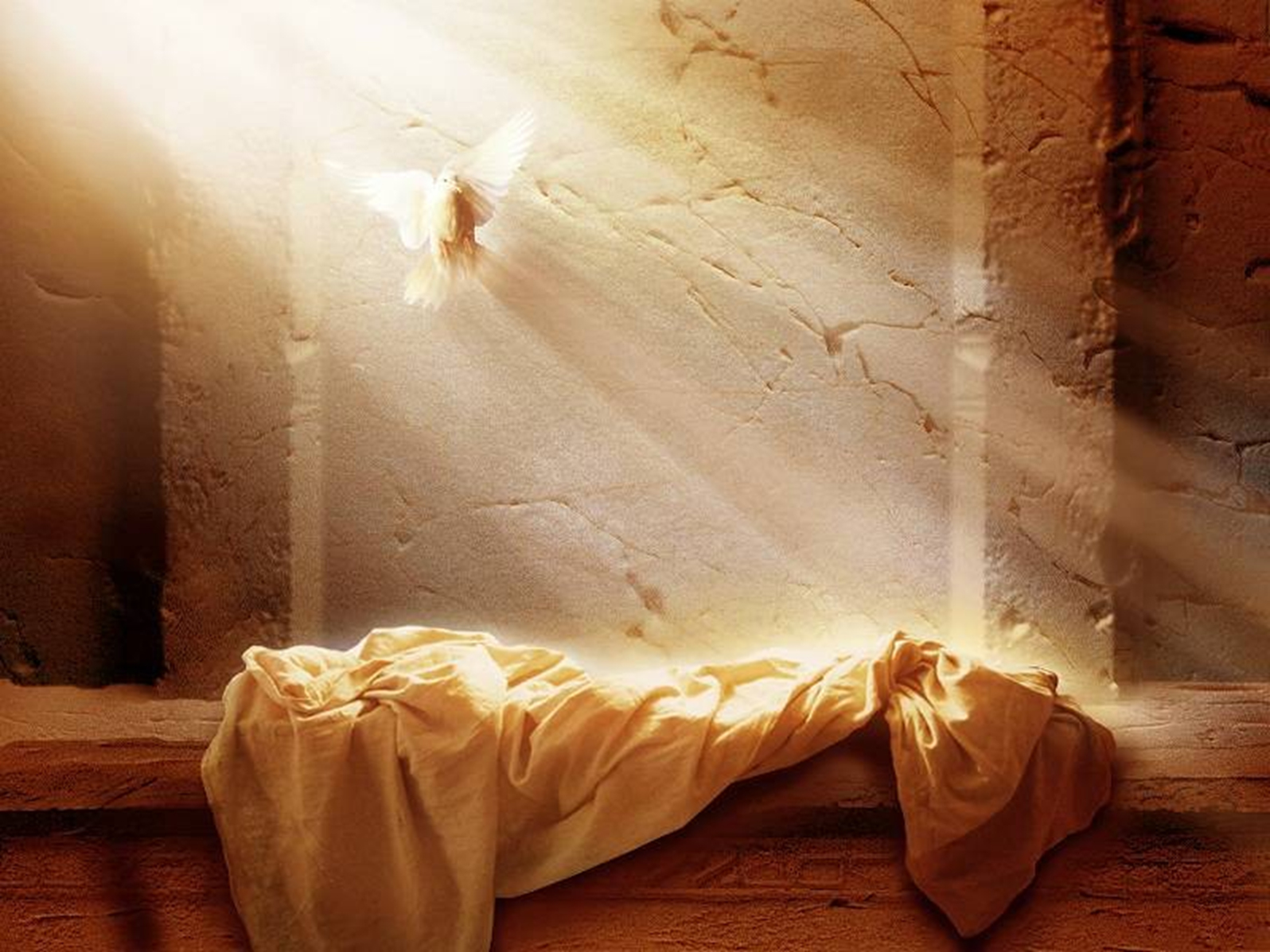
So Jesus came into the world and “dwelt among us”[1] and “increased in wisdom and stature, and in favour with God and man” (Luke 2:52). He grew up like any other Jewish boy and probably learned carpentry from His earthly father, Joseph. At the age of 30,[2] the age at which priests enter service,[3] Jesus started His three-year earthly ministry. We know from the four Gospel accounts that His ministry ended with His death on the cross. He was buried in a borrowed tomb and rose on the third day.

But what if the resurrection never happened? Paul put it quite succinctly when he said, “if Christ be not raised, your faith is vain; ye are yet in your sins” (1 Corinthians 15:17). If Jesus did not rise from the grave, His death for our sins is of no avail. We have no hope of eternal life, and, worse, our destiny is in hell. That explains why unbelievers live for this life alone because, for them, this life is all there is. They reject the concept of hell and prefer the idea that death ends it all, or that it begins a new cycle through reincarnation.

Many arguments against the resurrection of Jesus exist that have a long history from the very beginning. Some say that Jesus did not die on the cross but only “swooned” and revived in the cool dampness of the tomb, rolled the two-ton stone away and walked out. That is a silly theory when one considers the beating, torture, and flogging Jesus received before being nailed to the cross. Also the Roman soldiers who crucified Him were expert executioners and were familiar with death. Had they suspected that He “swooned,” they would have broken His legs like they did with the other two victims.[4] These were professionals; they knew death. Then, to ensure His death, one of the soldiers ran his spear into his side and punctured the pericardium.[5]  

Let us say, for argument’s sake, that this one they failed to recognize and Jesus did indeed pass out. Even if He did revive in the cool tomb, the loss of blood from the beatings and flogging, not to mention the puncturing of his heart sac, would have left Him too weak roll away the heavy stone – one that took several men to move – by Himself.

Another argument suggests that Jesus’ disciples overpowered the Roman guard posted at the tomb.[6] This too is a silly argument. All four Gospels record how the disciples went into hiding at Jesus’ arrest. They feared for their lives. It seems unlikely that these frightened men, most of them fishermen and at least one un-calloused tax collector, would dare to take on battle-hardened professional Roman soldiers. However, this fabrication spread from the very beginning. Matthew records that an angel came to roll back the stone and the soldiers on watch were scared stiff.[7] The soldiers, knowing the consequence (death) for failing in their responsibility to keep the tomb secure, went to the chief priests, rather than their leaders, hoping to get a sympathetic hearing about the empty tomb. They made a good choice as the Jewish religious leaders paid them off and covered for them as long as they would spread the lie that the disciples had stolen the body.[8]

Still another argument insists that the women that went to the tomb on Sunday morning were so grief-stricken that they failed to recognize Jesus’ tomb and went to the wrong sepulcher which was empty. This argument simply rejects what Scripture clearly reports. Three of the four Gospels record that the women witnessed the tomb where Jesus was laid.[9] John, who was present at the crucifixion along with Jesus’ mother and the other women, does not say, but it stands to reason that he would have accompanied them to the tomb.

Jesus rose from the dead. If that were not true, the Jews, because of their hatred for Him, only needed to exhume the body and present it to the world, but they had no body. Men have tried and failed to show Jesus’ remains, but they cannot.

Jesus rose from the dead. He conquered death, and because He conquered death, we have the assurance that our sins are covered and we have eternal life with him. “If in this life only we have hope in Christ, we are of all men most miserable. But now is Christ risen from the dead, and become the firstfruits of them that slept [died]. For since by man came death, by man came also the resurrection of the dead. For as in Adam all die, even so in Christ shall all be made alive” (1 Corinthians 15:19-22, emphasis mine). “For if by one man’s [Adam] offence death reigned by one; much more they which receive abundance of grace and of the gift of righteousness shall reign in life by one, Jesus Christ.) Therefore as by the offence of one [Adam] judgment came upon all men to condemnation; even so by the righteousness of one [Jesus] the free gift came upon all men unto justification of life. For as by one man’s [Adam] disobedience many were made sinners, so by the obedience of one [Jesus] shall many be made righteous” (Romans 5:17-19, emphasis mine).

Because Jesus conquered death, we can have the assurance of eternal life with Him. That is why the resurrection matters. If you are not sure where you stand before Jesus, please read my page on “Securing Eternal Life.”

Notes:


[1]  John 1:14

[2]  Luke 3:23

[3]  Numbers 4:3

[4]  John 19:32-33

[5]  John 19:34

[6]  Matthew 27:65-66

[7]  Matthew 28:2-4

[8]  Matthew 28:11-15

[9]  Matthew 27:61; Mark 15:47; Luke 23:55

Comments Off on Why the Resurrection Matters

Filed under Apologetics, Bible, Christianity, Christmas, Easter, Evangelism, Gospel, Heaven, Hell, Holidays, Religion, Resurrection, Salvation, Theology

Peace

These things I have spoken unto you, that in me ye might have peace. In the world ye shall have tribulation: but be of good cheer; I have overcome the world. (John 16:33)

What images enter your mind’s eye when you hear the word “peace”? Do you picture cloudless blue skies over a quiet deserted palm-lined tropical beach disturbed only by the lapping of the rising tide, the whisper of the ocean breeze, and the occasional caw of a soaring seagull? Or, do you imagine a silent stony perch atop a tall Rocky Mountain overlooking a thick pine and aspen forest below alternately lighted and shaded by passing puffy clouds? Is your idea of peace a serene humble home on five or ten acres of land far, far away from the rush and bustle of urban life? Do you think of a world without crime, without war, without pestilence and hunger, and without hate?

All those visions of peace exist only in the imagination, and if by experience, they are only temporary. The quiet beach will soon fill with noisy sunbathers. The silent mountain scene gets interrupted by an unpredicted thunderstorm. The endless chores disturb the serene little farm house. As for peace in the world, you can forget that.

As Jesus faced the cross, He tried to prepare His disciples for what lay ahead. “Peace I leave with you, my peace I give unto you: not as the world giveth, give I unto you. Let not your heart be troubled, neither let it be afraid” (John 14:27). He offered His peace, unlike the peace that the world can give. We personally enjoy quiet peaceful moments in this life, but they are temporary and fleeting. The world knows no peace. The interval between World War I, “the war to end all wars,” lasted less than 21 years before World War II flared up. Since then the United States prosecuted wars in Korea, Viet Nam, Iraq, Afghanistan, along with several “peace-keeping” skirmishes here and there. Meanwhile, the Middle East experiences fighting periodically and consistently throughout the Muslim world. If that were not enough, rioting breaks out in almost every country all the time. Now the entire world lives in fear of a man-made global pandemic. The world knows no peace.

Yet Jesus said, “My peace I give unto you.” To whom was this gift directed? Jesus addressed a very specific audience, His disciples. His peace is not for the world. It is for His disciples only. On that night, He spoke only to the twelve, but He intends all of His disciples to have the gift, that means you and me if we are truly His disciples – believers, followers of Jesus. In His high-priestly prayer He said, “I pray for them: I pray not for the world, but for them which thou hast given me; for they are thine” (John 17:9, emphasis mine). Then, so as not to exclude those that would follow, He said, “Neither pray I for these alone, but for them also which shall believe on me through their word” (John 17:20, emphasis mine).

The peace Jesus gives silences the most tempestuous storms of life, allays the deepest fear, and quiets the troubled mind. His supernatural peace confounds any false peace the world can offer. “These things I have spoken unto you, that in me ye might have peace. In the world ye shall have tribulation: but be of good cheer; I have overcome the world” (John 16:33, emphasis mine). His peace does not exempt us from the affliction, pressure, persecution, tribulation, or trouble that comes as part and parcel with life in this world. Indeed, He requested, “I pray not that thou shouldest take them out of the world, but that thou shouldest keep them from the evil [one]” (John 17:15, emphasis mine). Our peace comes from knowing that “[We] are not of the world, even as I am not of the world” (John 17:16). “For our [citizenship] is in heaven; from whence also we look for the Saviour, the Lord Jesus Christ” (Philippians 3:20).

The world labors in vain for peace. The world alters language to stifle hate. The world blames the weather for rioting in the streets, so it implements draconian measures to curtail carbon emissions. The world cries, “Peace, peace; when there is no peace” (Jeremiah 6:14; 8:11). The world knows no peace, but the believer in Jesus can know peace. As the axiom makes clear, “No Jesus, no peace; know Jesus, know peace.” One day soon, the world will know peace, but not now.

Every true believer, every Christian should know peace. If not, there can only be two reasons that a Christian does not have peace. Either they have not been “born again” and do not know Jesus personally, or they have momentarily taken their eyes off of Him like Peter did when he tried to walk on the water (Matthew 14:22-32). If you do not know Jesus, but you want to know peace, see my page on “Securing Eternal Life.”

2 Comments

Filed under Apologetics, Christianity, Current Events, Evangelism, Gospel, Religion, Salvation, Second Coming of Christ, Theology