But when the fulness of the time was come, God sent forth his Son, made of a woman, made under the law, (Galatians 4:4)
The year 2020 has been a historic year to say the least. It started with my retirement at the end of December 2019 and quickly followed by minor knee surgery on my left knee just three days after. Being new to retirement, I found it challenging to find what to do with all my spare time. I filled some of my time with volunteering opportunities at church and at the ICR Discovery Center for Science and Earth History. Of course, that occupied only part of my time. I also spent many hours, three to six hours a day, studying Scripture, something I enjoy the more I do it.
It was nice to have control of my own time and spend it at my own discretion. Then COVID-19 hit and everything changed, not just for me, but for everyone on Earth. I will spare all the details. I am certain that anyone reading this had similar experiences with masks, social distancing, restrictions on large gatherings, church shut-downs, etc. The year 2020 has been, in many respects, the worst year in the threescore and ten years of my life. Personally, I believe that what we experienced this year, especially with the draconian governmental intrusion into our lives, portends to the seven-year Tribulation prophesied in Scripture and the soon coming of our Lord Jesus Christ. That, in turn, gives me hope that the Rapture of the Church can happen at any moment now. That gives me joy and hope in spite of all this stink going on in our nation and the world.
The year 2020 quickly comes to a close, and we now come to Christmas. But like the rest of 2020, Christmas this year is very strange. My church just opened back up at the beginning of December, but with so many restrictions that it does not even “feel” like church. Attendees must wait to be ushered into a socially distanced place, wear masks during the worship portion of the service, and then wait to be ushered out at the end of the service. Any “fellowshipping” must be done outside of the building and hugs and handshakes are strongly discouraged. We normally put on a Christmas program at this season with choir and orchestra, which usually packs out the sanctuary. This year, we had a socially-distanced ensemble and a guest singer. The music was nice, but it lacked the pizzazz of past Christmas programs. Of course, the audience was at one-third of normal due to all the restrictions, and I missed the “feeling” of the event. I normally sing in the choir, but we could not do that because of COVID-19.
Christmas Eve service will be even stranger. This year it will be “virtual.” Our pastor will bring a Christmas message and we will observe the Lord’s Supper “online.” I do not mean to criticize. I am only stating reality. I know our church staff is trying to make the best of a stinky situation, but for all their effort, it is still a very strange Christmas.
For many years I have bemoaned the inflated sentimentality attached to the season. (You can read my past articles on the topic.) In the first place, it is highly unlikely that Jesus was born in December. In the second place, the overt commercialization of the season detracts from any significance of its true meaning. And in third place, the sentimentality attached to it makes it more about us, and it does about Him.
Our tree is up, the nativity is on the mantle, and Christmas lights illuminate our front yard, and it still feels like a very strange Christmas. What is not strange or unchanged is God’s love and gift to us in taking “upon him the form of a servant and was made in the likeness of men” (Philippians 2:7) “that whosoever believeth in him should not perish, but have everlasting life” (John 3:16). When you think about it, that in itself is strange. However, it is God’s plan, and it is in effect regardless of circumstances. Maybe it’s good that this is such a strange Christmas after all.
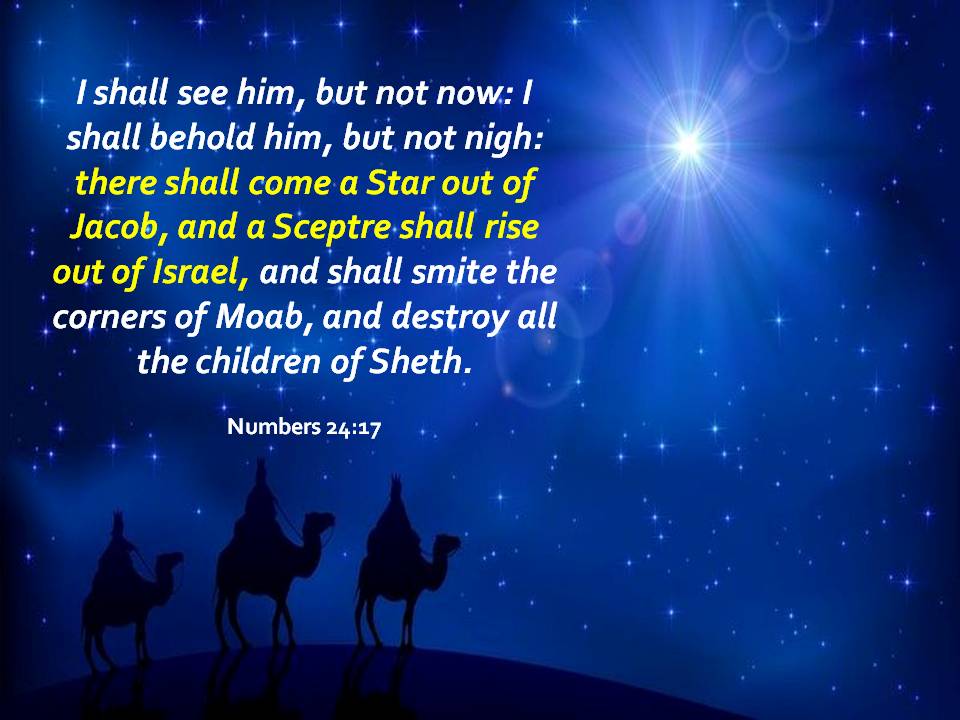
I shall see him, but not now: I shall behold him, but not nigh: there shall come a Star out of Jacob, and a Sceptre shall rise out of Israel, and shall smite the corners of Moab, and destroy all the children of Sheth. (Numbers 24:17)
As 2020 winds down to a close, we can look back and say, “It was a terrible year!” For me, it started with a drastic change in life called retirement. And before I could really adjust to my new lifestyle, COVID-19 hit and changed life for all of us. Do I need to recount the chaotic events? In November, we voted in the 2020 Presidential Election, and the candidate who campaigned the least and attracted the smallest following miraculously won the election – supposedly. Now we face the real possibility of having a Socialist government for the first time in our nation’s history. President Trump alleges that the election was stolen, and much evidence exists indicating that he has reason to protest and contest the results. He has a great team of lawyers that are fighting to get the election overturned (I pray that they do), but time is running out. However, there is still hope.
I have said this before, and I am still convinced that whether Biden becomes our next President or President Trump wins his second term, we face troubled times ahead. But there is hope. At least, for the Christian there is hope. We only need to remember that our primary citizenship is in heaven with our Lord, and the intensity of the trouble we experience today should alert us that He will soon return to take us home to be with Him. The intensity of the trouble will increase, and the more it increases, the closer we are to His calling us home. There is always hope.
Long ago, as the children of Israel wandered in the wilderness hoping for their Promised Land, their enemies rose up to thwart their plans. One such enemy was Balak, the king of Moab, who hired the prophet Balaam to curse Israel.[1] Balaam was not a “prophet of God,” but he knew God well enough to know that God would not allow him to speak against His people. No matter how Balaam tried, he could only speak the words God directed him to speak. In the end, Balaam pronounced a blessing on Israel, rather than a curse.
In that blessing, Balaam prophesied, “there shall come a Star out of Jacob, and a Sceptre shall rise out of Israel” (Numbers 24:17, emphasis mine). On the face of it, the prophecy refers to a coming king of Israel that “shall smite the corners of Moab.” If we stop there, the prophecy leaves us in a lurch, but the Holy Spirit keeps no secrets from those who have “ears to hear.”
In his Gospel, Matthew tells us that “there came wise men from the east to Jerusalem, saying, Where is he that is born King of the Jews? for we have seen his star in the east and are come to worship him” (Matthew 2:1-2, emphasis mine). Yes, the baby born in Bethlehem was the Star, but a real star – a celestial object – appeared out of Jacob (Israel) to announce His birth. It is because of that Star that we have our Blessed Hope.
If there arise among you a prophet, or a dreamer of dreams, and giveth thee a sign or a wonder, And the sign or the wonder come to pass, whereof he spake unto thee, saying, Let us go after other gods, which thou hast not known, and let us serve them; Thou shalt not hearken unto the words of that prophet, or that dreamer of dreams: for the LORD your God proveth you, to know whether ye love the LORD your God with all your heart and with all your soul. Ye shall walk after the LORD your God, and fear him, and keep his commandments, and obey his voice, and ye shall serve him, and cleave unto him. And that prophet, or that dreamer of dreams, shall be put to death; because he hath spoken to turn you away from the LORD your God, which brought you out of the land of Egypt, and redeemed you out of the house of bondage, to thrust thee out of the way which the LORD thy God commanded thee to walk in. So shalt thou put the evil away from the midst of thee. (Deuteronomy 13:1-5)
Before going into Babylonian captivity, false prophets arose in Judah proclaiming that Judah would have peace and not fall prey to the Babylonian Empire. At the same time, the prophet Jeremiah preached a much different message warning of coming invasion if the people did not repent from their idolatry. The people refused to listen to Jeremiah and instead treated him harshly for his message of impending doom. “Now Pashur the son of Immer the priest, who was also chief governor in the house of the LORD, heard that Jeremiah prophesied these things. Then Pashur smote Jeremiah the prophet, and put him in the stocks that were in the high gate of Benjamin, which was by the house of the LORD” (Jeremiah 20:1-2).
Jeremiah preached a message that was distasteful and unpopular, but it was the message God gave him to warn the people of Judah, and it was the truth. Jeremiah disliked giving the message. He said, “Mine heart within me is broken because of the prophets; all my bones shake; I am like a drunken man, and like a man whom wine hath overcome, because of the LORD, and because of the words of his holiness” (Jeremiah 23:9). God knew these false prophets well, and he would deal with them in due time. “Thus saith the LORD of hosts, Hearken not unto the words of the prophets that prophesy unto you: they make you vain: they speak a vision of their own heart, and not out of the mouth of the LORD. They say still unto them that despise me, The LORD hath said, Ye shall have peace; and they say unto every one that walketh after the imagination of his own heart, No evil shall come upon you … I have not sent these prophets, yet they ran: I have not spoken to them, yet they prophesied … I have heard what the prophets said, that prophesy lies in my name, saying, I have dreamed, I have dreamed. (Jeremiah 23:16-17, 21, 25). Not long after, Jeremiah was proven right and the others paid with their lives.
We have false prophets today. This should not come as a surprise. Jesus warned us to look out for them. “And many false prophets shall rise, and shall deceive many” (Matthew 24:11). Mark records Jesus’ words this way, “For false Christs and false prophets shall rise, and shall shew signs and wonders, to seduce, if it were possible, even the elect” (Mark 13:22, emphasis mine). Long before Jesus took on human flesh, Moses warned about false prophets. “If there arise among you a prophet, or a dreamer of dreams, and giveth thee a sign or a wonder, And the sign or the wonder come to pass, whereof he spake unto thee, … Thou shalt not hearken unto the words of that prophet, or that dreamer of dreams: for the LORD your God proveth you, to know whether ye love the LORD your God with all your heart and with all your soul” (Deuteronomy 13:1-3)
It becomes apparent that false prophets can actually make accurate predictions so that they can “seduce, if it were possible, even the elect” (Mark 13:22). I point this out because recently modern-day “prophets” have arisen making astonishing claims, and their claims have come to pass. All of these come from a Pentecostal background that supports the notion that the gift of prophecy given to some believers includes not only “forth-telling” – expounding Scripture – but “foretelling” future events as revealed to them directly from God. You hear them say things like, “God spoke to me and showed thus and so…” The revealed message is always something extra-biblical, but they will include Scripture to help validate the new revelation.
One such prophet was the late Kim Clement. You can still find his videos on YouTube. Clement dramatically and accurately prophesied the election of Donald J. Trump. There are others that have followed in his footsteps who predict that Donald J. Trump will win a second term. In many ways, I hope they are right because I do not like the alternative, but on the other hand, I hope they are wrong and that God will expose them as the false prophets that they are.
There exist among us other false prophets that do not presume to foretell future events. Rather, their forth-telling distorts Scripture making it say things that God never intended. Sadly, we have those in the Southern Baptist Convention (SBC) that are promoting Socialism – the redistribution of wealth – and promoting the “woke” church.[1]
Other false prophets have been around for a while now. These preach “another gospel” than the one delivered to us by the Apostles.[2] These include the LDS church (the Mormons), Jehovah’s Witnesses, Seventh-Day Adventists, and others. These have either added to Scripture, reinterpreted Scripture, or in some form or fashion distorted Scripture.
The true modern-day prophet is the one that says “Thus saith the Lord” by “rightly dividing the word of truth” (2 Timothy 2:15), not the one that says “God spoke to me …” Do not listen to the latter, even if his/her predictions do come true. Consider this. Satan is no dummy. He is crafty and cunning, and he knows the Scriptures. He can analyze current events and predict what “might” happen much better than we can. However, he is only making his best guess. Only God knows the future. We need to be careful to whom we listen, even if they get a prediction right every now and then or demonstrate some kind of “sign.” If they are not coming strictly from Scripture reject their message.
For I the LORD thy God will hold thy right hand, saying unto thee, Fear not; I will help thee. (Isaiah 41:13)
Dictionary.Com defines “fear”[1] as “a distressing emotion aroused by impending danger, evil, pain, etc., whether the threat is real or imagined; the feeling or condition of being afraid.” Note, first of all, that fear is an “emotion;” thus it is subject to irrationality. Note also that fear can be stirred up by a sense of “impending danger, evil, pain, etc., whether the threat is real or imagined.” Fear is rational when the danger is real as in the case of a physical attack. Fear is irrational when the danger is imagined as in the case of less than a 1% chance of catching COVID-19. In either case, the emotion of fear can cause us to react in an irrational manner.
We can prepare ourselves to confront fear rationally by training for a variety of scenarios. We can prepare for a physical attack by taking self-defense classes and practicing, at least mentally, for different situations in which we may come under attack. Our military and police do this on a regular basis so that when they come under threat, they can respond rationally to a fearful situation.
In the case of COVID-19, or any disease that may afflict us, we can prepare ourselves mentally with information, so that we can take proper and sensible precautions. The danger of COVID-19 is real, but it is not a threat to everyone. Ninety-nine percent of the population will not contract the virus. Yet the media bombard us daily with increased percentages of “cases” of COVID – not deaths, only “cases.” When they report a 50% increase in cases, that sounds like a lot, but they never report on what the percentages are based. Does 50% mean half of the entire population or only half of what was previously reported? Such careless reporting serves only to feed the fear in the audience who by and large do not exercise critical thinking when listening to news reports.
And how accurate are the tests anyway? Recently, Elon Musk tested positive and negative for COVID-19.[2] He tested four times. Two tests returned positive results and two tests returned negative results. With inconclusive results, he still has no idea if he really has had the virus.
By the way, has anyone, besides me, noticed that no flu deaths have been reported by the media this year? Yet, “During the 2019-2020 influenza season, CDC estimates that influenza was associated with 38 million illnesses, 18 million medical visits, 405,000 hospitalizations, and 22,000 deaths”[3] compared to 34,200 deaths in 2018-2019.[4] Why do we not hear about flu deaths? Could it be that the flu is less sensational?
As for deaths from COVID-19, only 6% of the deaths associated with the novel coronavirus died solely from the virus, the rest were brought about by other underlying conditions. In an article by “LiveScience” attempting to debunk the social media claim “that ‘only 6%’ of the reported COVID-19 deaths in the U.S. are solely attributable to the new coronavirus,” the writer seems to validate the claim. He says,
This claim stems from an Aug. 26 update the Centers for Disease Control (CDC) posted on its website, which provides a detailed breakdown of the accompanying health conditions (known as comorbidities) and contributing causes of death reported in people who have died of the new coronavirus in the United States. The CDC noted that “For 6% of the deaths, COVID-19 was the only cause mentioned.”
In other words, 6% of people who died when they had COVID-19 didn’t have underlying conditions, such as diabetes, asthma or heart disease, and didn’t experience any medical complications, such as kidney failure or sepsis. But the other 94% of deaths were still caused by COVID-19, infectious disease experts said. That’s because many chronic, underlying conditions can make diseases that a person might otherwise recover from, such as COVID-19, suddenly deadly.[5] (Emphasis mine)
The fact remains that of those that have died with COVID-19, only 6% died solely of COVID-19. The claim (in bold above) that the other deaths were “caused by COVID-19” is misleading. The deaths were caused by multiple complications including COVID-19.
A Google search on “Current COVID Deaths” reported 245,000 deaths with COVID-19 to death – at 6%, only 1470 from COVID only compared to 22,000 deaths from the flu. The current population of the United States is 328,200,000. Using simple math to calculate the percentage of the population that has died with COVID-19, results in an unimpressive 0.0074649% of the population.
Each one of us has a 0.007% chance of dying with COVID-19, and only 6% of those have a chance of dying from COVID-19 alone.
Why are we living in fear over COVID-19? Why have our churches been restricted from exercising our First Amendment right to assemble and worship as we please? Why have our churches capitulated to unconstitutional mandates rather than adhere to God’s command that we not forsake our assembling together (Hebrews 10:25)? Why do we continue to succumb to the irrational edicts of those who only desire to exercise control over our lives?
I, for one, am tired of wearing masks. I am tired of social distancing. I am tired of going to church in limited numbers. I am tired of singing praises with my face covered and muted. I am tired of restricting the fellowship with my brothers and sisters to the church parking lot – at a social distance, of course. I am tired of all the senseless restrictions imposed by self-appointed demagogues pretending to have our best interest at heart. Stop with the fear-mongering!
I have heard it said that the Bible has 365 admonitions to “fear not”[6] – one for every day of the year. I have not counted them for myself, but they do seem to come up frequently in my reading. The first “fear not” appears in the Book of Genesis. There God tells Abram, “Fear not, Abram: I am thy shield, and thy exceeding great reward” (Genesis 15:1). A shield protects us from incoming blows, and a reward is something we get for doing something right. What did Abram do that was right? “And he believed in the LORD; and [the LORD] counted it to him for righteousness” (Genesis 15:6). In the last book of the Bible, Jesus says to John, “Fear not; I am the first and the last” (Revelation 1:17). The Apostle Paul reminds Timothy, “For God hath not given us the spirit of fear; but of power, and of love, and of a sound mind” (2 Timothy 1:7). So, my brothers and sisters in Christ, why do we allow ourselves to get sucked into the fear over that which we cannot control?
C. S. Lewis once said, “If we are going to be destroyed by an atomic bomb [or the coronavirus], let that bomb when it comes find us doing sensible and human things—praying, working, teaching, reading, listening to music, bathing the children, playing tennis, chatting to our friends over a pint [he wasn’t Baptist!] and a game of darts—not huddled together like frightened sheep and thinking about bombs [or COVID-19]. They may break our bodies (any microbe can do that) but they need not dominate our minds.”[7] That sounds like excellent advice to me!
[7] Martindale, Wayne & Jerry Root, The Quotable Lewis, (Tydale House Publishers, Carol Stream, Illinois, 1990), p. 606, quoting Present Concerns: Essays by C. S. Lewis, “On Living in an Atomic Age” (1948), para. 3, pp. 73-74.
Let your loins be girded about, and your lights burning; (Luke 12:35)
I am currently reading the Gospel of Luke in my personal Bible study, and, as often happens when I read my Bible, something caught my attention that I had not seen before. In Luke Chapter 12, Jesus had finished telling the parable of the rich fool[1] who had a bumper crop and started planning about what he would do with his newly acquired wealth. That night, God called him to account. “But God said unto him, Thou fool, this night thy soul shall be required of thee: then whose shall those things be, which thou hast provided?” (Luke 12:20). Jesus’ point was that earthly riches do not amount to much in light of eternity. He said, “So is he [a fool] that layeth up treasure for himself, and is not rich toward God” (Luke 12:21). He went on to teach regarding the futility of worrying about the things of this world because God knows our needs, and He will provide for all our needs (not necessarily our “wants”). The ravens do not sow, reap, or store up food, yet God feeds them.[2] The lilies of the fields neither toil nor spin, yet God clothes the earth more beautifully than Solomon’s apparel.[3] So, Jesus taught, we should not overly concern ourselves with food or clothing because God will provide for our needs. Instead, He said, “But rather seek ye the kingdom of God; and all these things shall be added unto you … For where your treasure is, there will your heart be also” (Luke 12:31, 34)
With that in mind, since this life and this world does not last, He went on to encourage His listeners to be ready for His Second Coming. (I am not sure if His audience caught the significance of His message, but looking back, it should be clear to us.) “Let your loins be girded about, and your lights burning” (Luke 12:35). Having your “loins girded” is an expression that meant to prepare oneself for work, and one only lights a lamp when it gets dark. So the idea is that we should be on the alert and watching. We are to watch and work as we “seek the kingdom of God.”
He went on to amplify His meaning. “And ye yourselves like unto men that wait for their lord, when he will return from the wedding; that when he cometh and knocketh, they may open unto him immediately” (Luke 12:36, emphasis mine). I highlighted in bold italics what I missed before. Jesus spoke in the form of a parable which His audience, His disciples, and His apostles would not have clearly understood at that time. He often used the example of a landowner – a lord or master – leaving on a long journey and leaving the care of his properties in the hands of stewards, i.e., “servants.”[4] All of these parables convey the idea that the Lord will leave – which Jesus did in His ascension – and will return at some undetermined time. In the meantime, His servants continue to conduct His business – in our case that of proclaiming the Gospel – until He returns.
What popped out at me in this passage is the phrase “when he will return from the wedding.” What relevance does a wedding have with the main point of the story? Note also the definite article. It is not just “a” wedding; it is the wedding. The significance is subtle and easy to miss, but indeed it carries great relevance to Christians living in this day.
Before Jesus went to the cross, He told His apostles, “Let not your heart be troubled: ye believe in God, believe also in me. In my Father’s house are many mansions: if it were not so, I would have told you. I go to prepare a place for you. And if I go and prepare a place for you, I will come again, and receive you unto myself; that where I am, there ye may be also” (John 14:1-3, emphasis mine). When His apostles heard this, they caught the imagery of a Galilean wedding. When a man proposed marriage to a young woman, if she accepted the proposal, he would leave to build a house for her. Once the father of the groom inspected and approved the house, he would give his son permission to go get his bride. The wedding would take place and the wedding feast that followed would last for seven days.
Likewise, Jesus, the Bridegroom, is betrothed to His Bride, the Church. His Bride is made up of those who have accepted His proposal.[5] Now He is gone preparing a place for His Bride, and when the Father approves of the house,[6] He will come to get His Bride and take her to the home He has prepared for her. The wedding feast[7] will last one week (seven years).[8] At the end of the seven years, Jesus will return with His Bride to reclaim His kingdom on earth.
The audience that heard the parable was Jewish, and they probably missed the significance of the lord returning from the wedding. Weddings were frequent and common events in those days as they are today. Jews then and now, for the most part, missed the Messiah. Yet Jesus admonishes these who fail to recognize Him to have their “loins girded” and their “lamps burning” in preparation for their Lord’s return from the “wedding.”
After Jesus snatches away His Bride and the seven-year wedding feast begins, those who remain on the earth will experience the seven-year Tribulation. During that time, many Jews will recognize the Messiah they missed and 144,000 of them will preach the Gospel message around the world.[9] Many Jews as well as Gentiles will be saved by their message. It is these whom Jesus admonishes to work, watch, and be ready for His coming. “Blessed are those servants, whom the lord when he cometh shall find watching: verily I say unto you, that he shall gird himself, and make them to sit down to meat, and will come forth and serve them. And if he shall come in the second watch, or come in the third watch, and find them so, blessed are those servants” (Luke 12:37-38).
“The Lord is not slack concerning his promise, as some men count slackness; but is longsuffering to us-ward, not willing that any should perish, but that all should come to repentance” (2 Peter 3:9, emphasis mine). Even after the Rapture of the Church, even in the midst of the Great Tribulation, God is “not willing that any should perish.” Sadly, for many, that time will be the final opportunity for salvation but at such a high cost. Reader, if you do not know the Savior, please do not wait until the last moment. Accept the Bridegroom’s proposal today. Find my page on “Securing Eternal Life” and prepare to enjoy the wedding feast rather than work in the time of Great Tribulation.




 Ernie's Musings