
Category Archives: Worship

What Can I Give God?

For every beast of the forest is mine, and the cattle upon a thousand hills. (Psalm 50:10)

I heard a story about two bills that were printed on the same day. One was a one-dollar bill, and the other was a twenty-dollar bill. They became good friends, but as things go with paper money, they were soon separated at the bank and went off in different directions. After many years apart, the two ended up in the same wallet. The one-dollar bill immediately recognized his long lost friend. “Andy! How have you been? What have you been up to?” The twenty-dollar bill responded enthusiastically, “Well, Georgie, let me tell you. I have just been having a grand old time. I have been on several cruises up and down both coasts of the good old USA. I’ve been to all kinds of concerts, and sports events. I have dined at the finest restaurants all over the country. I’ve been having a blast! How about you, Georgie? What have you been up to?” The one-dollar bill sheepishly answered, “Well, you know me, Andy … church, church, church.”

Giving to God is a struggle for many. I could spend a lot of ink offering many scenarios and excuses for why Christians have trouble giving to God, but the simple truth of it is lack of trust in God. Everyone has “X” amount of money coming in, and “X” amount going out and the two Xs have to balance. Unlike the government that makes its money by legalized theft, most people work for a paycheck which is limited by what the employer is willing to pay. That paycheck only goes so far, and it has to cover housing, food, transportation, medical expenses and so on. Unlike the government, real people get into real financial trouble when they spend more than they take in. Unlike the government, real people cannot print extra money when they run out of cash; that’s against the law.

After all of that, the Bible teaches that we should give to God. The Old Testament teaches the concept of tithing (giving 10%) of our income to God. The first example of this takes place early in the book of Genesis when Abram gives a tithe of all his spoils to Melchizedek (Genesis 14:17-20). Melchizedek was the pre-incarnate Christ.[1] Later the practice of tithing was codified in the Mosaic Law tithes were collected for three different occasions. They were the Levitical tithe (Numbers 18:21, 24), the tithe of the feasts (Deuteronomy 14:22-27) and the tithe for the poor (Deuteronomy 14:28-29).[2] In all, the Israelites were giving 30% not just 10%.

Why did God demand so much? The answer is that God wants His children to depend on Him for their provision. God proved Himself as Provider by giving them manna daily and water in the desert. In all their 40 years of wandering in the wilderness, neither their clothes nor their shoes wore out (Deuteronomy 29:5). God took care of them even with all of their complaining. God showed that in spite of what they gave up in tithes, God abundantly provided for all of their needs.

Another purpose for the tithe was so that the people could participate in God’s work of provision. One of the tithes was for the maintenance of “the Church.” The Levites, the priestly tribe, were not allotted any land. They derived their sustenance from the tithes the people brought to the Tabernacle (later the Temple). It was also used for the maintenance of the facilities. The third tithe provided for the poor, and through it, the people participated with God in caring for those who could not care for themselves.

Doubtless, like in other aspects of their religion, the Jews were unfaithful in the giving of their tithes. God points this out through His prophet Malachi. “Will a man rob God? Yet ye have robbed me. But ye say, Wherein have we robbed thee? In tithes and offerings” (Malachi 3:8). Of course, we cannot rob God! As our lead verse affirms, God owns the cattle on a thousand hills. In another place God makes the claim, “The silver is mine, and the gold is mine, saith the LORD of hosts” (Haggai 2:8). Every created thing belongs to God, even our very souls. “Behold, all souls are mine; as the soul of the father, so also the soul of the son is mine: the soul that sinneth, it shall die” (Ezekiel 18:4). If God owns it all, what then can I give Him?

God created us in His image (Genesis 1:27), and with that image came a free will to choose. “The soul that sinneth, it shall die” (Ezekiel 18:4), but sin is a choice every soul makes individually. Our soul, then, is the only thing over which we exercise a small measure of control, and therefore the only thing which we can give to God. “The sacrifices of God are a broken spirit: a broken and a contrite heart, O God, thou wilt not despise” (Psalm 51:17). The “sacrifice” is our offering or “gift” to God. A broken and contrite spirit and heart recognize God for who He is and submits to His ownership. It acknowledges our sinfulness before the Great and Holy God and our unworthiness of all His beneficence. By His grace, we receive what we do not deserve. By His mercy, we are spared what we do deserve. “I beseech you therefore, brethren, by the mercies of God, that ye present your bodies a living sacrifice, holy, acceptable unto God, which is your reasonable service” (Romans 12:1).

Part of that “reasonable service” includes giving of tithes and offerings for the work of the Lord. I have heard Christians say that the New Testament does not mention tithing. This is true, but neither does it negate the practice. Jesus practiced Judaism perfectly and was therefore obligated to offer tithes. (He paid taxes also: Matthew 17:27; Mark 12:17.) Jesus expanded upon the law by going beyond the external practice to the very thoughts of man – “Ye have heard it said of old … but I say” (Matthew 5:21-46). By the same token, early Christians brought more than a tithe to the church; they sold all of their possessions and gave it to the church (Acts 2:44-45). Paul relates the attitude of the Macedonian church in their giving. He said, “And this they did, not as we hoped, but first gave their own selves to the Lord, and unto us by the will of God” (2 Corinthians 8:5, emphasis mine). There is the sacrifice!

Many Christians (80%) do not tithe for a variety of reasons, but most do not tithe because they fear they will not have enough to meet their financial obligations. This demonstrates a lack of faith in God’s provision. The Bible says that without faith it is impossible to please God (Hebrews 11:6). It also demonstrates that they have not given themselves to the Lord completely; therefore they are relying on themselves for their provision. Other Christians do not tithe because they view their possessions as their own. They have not learned that God ultimately owns everything; we are merely stewards of the blessings He has placed in our possession.

Tithing is an act of faith. It is the sacrifice of ourselves to God through our lives and our possessions. Tithing is the only practice in which God challenges us to test Him. “Bring ye all the tithes into the storehouse, that there may be meat in mine house, and prove me now herewith, saith the LORD of hosts, if I will not open you the windows of heaven, and pour you out a blessing, that there shall not be room enough to receive it” (Malachi 3:10 emphasis mine). Before you take up that challenge, be sure that you give yourself to Him first.

What can I give God? I can give Him all of my life and give back all that He has given to me.

 Notes:


[1]  “Is Salem Jerusalem?” – https://erniecarrasco.com/2015/08/16/is-salem-jerusalem/

[2]  “The Three Tithes of the Old Testament” – https://www.ministrymagazine.org/archive/1958/09/the-three-tithes-of-the-old-testament

Comments Off on What Can I Give God?

Filed under Apologetics, Christianity, Religion, Thanksgiving, Theology, Worship

Thank You, Lord Jesus!

Thank You, Lord Jesus!

You have preserved my life for 67 years and You have blessed me with a good, strong body and excellent health. And even though I have not escaped “the curse,” I still do pretty well, for an “old man.”

A couple of months ago I thought I was fit enough to run, and, while You kept whispering to me not to do it, I thought I could, and did. The next day, my right knee loudly complained that I should have listened to You.

Thank You for a good physical trainer that understands the anatomy that You designed and assembled enough to take it easy on my whining knee, and who encouraged me to have a doctor take a closer look. This time I listened, and I went to see my familiar orthopedist, Dr. Medlock. Thank You for the knowledge You have revealed to men and women in the medical field. Thank You for the desire You have instilled in them to devote their lives to the care of others.

Dr. Medlock started with conservative means – a cortisone shot to the knee. That did not help, so he ordered an MRI. Thank You for such wonderful technology You have allowed humans to develop that see inside the human body to help doctors pinpoint physical injuries. Dr. Medlock saw that I had, for the second time in one year, torn the medial meniscus in my right knee, and it would require surgery to repair.

Last Friday, May 26, 2017, I went to the Ambulatory Surgery Center at Medical City, Dallas to get the work done. Thank You, Jesus that You have allowed me to live in the United States of America where we have an abundance of good public and private hospitals staffed with talented and well-trained medical personnel that are efficiently run without oppressive government meddling. Dr. Medlock is an excellent doctor.  With the use of an arthroscope (again, thank You for technology) and the skill of an excellent surgeon (thank You for Dr. Medlock), I was out of the operating room in less than an hour.

Thank You for my wonderful wife, June, who drove me home in the car You gave us. Thank You for an abundance of food at every corner. June bought me a double-double Whataburger for my first meal with money You have provided through the ability You have given us and by the good employment You have provided. You have even provided the insurance to cover most of the medical expenses through the employment You have provided.

Lord Jesus, Thank You for a church family, and a choir and Sunday school family and all the many Christian brothers and sisters You have blessed us with that care for us, and pray for us, and encourage us as we go through the down parts of life. You have not left us alone!

Today, I am four days out of surgery. So far, You have given me the strength to walk eight blocks around the neighborhood, and I plan to walk at least four more before the day is done. Tomorrow, I will drive the pickup You gave me to the place of service You have provided for me.

Thank You, my Lord Jesus, most of all because I am Yours.

Lord, I feel sorry for all those who are so richly blessed by You, and they do not even realize from Whom their blessings flow. Open their eyes, Lord. All things come from Your hand, dear Lord Jesus. Thank You.

5 Comments

Filed under Random Musings, Thanksgiving, Worship

Loving God

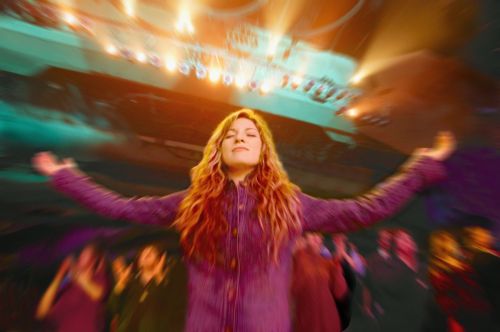
Woman in Worship 6214442_ml

If ye love me, keep my commandments … If a man love me, he will keep my words. (John 14:15, 23)

How can one love God? Jesus said, “God is a Spirit: and they that worship him must worship him in spirit and in truth” (John 4:24). How does one love or worship “a Spirit”? By definition, a spirit is immaterial. A spirit cannot be heard, seen, smelled, tasted, or touched. Those who choose not to believe in God use this as an excuse. Understandably, it is difficult for us material beings to relate to the Spirit of God. Some, I think, attempt to make the connection by raising hands and swaying to the music of a Sunday morning worship service in order to achieve some sort of euphoric state. (I’m not making fun. I have no way of knowing what goes on inside the heart of others. I’m only making an observation.) I cannot do that. I am not a touchy-feely person that requires a lot of external stimulus. I know God intuitively. God is real regardless of how I feel or whether I can sense Him or not, but to love Him, I must understand His personhood.

One aspect of God’s personhood is His desire to have fellowship with His creation. From the beginning we read, “And they [Adam and Eve] heard the voice of the LORD God walking in the garden in the cool of the day … And the LORD God called unto Adam, and said unto him, Where art thou?” (Genesis 3:8-9). God feels hurt when betrayed, but acts justly, yet with mercy. When Adam and Eve disobeyed, God expressed hurt when He said, “Behold, the man is become as one of us, to know good and evil” (Genesis 3:22), and although He had created the Garden of Eden just for them, He acted justly “and now, lest he put forth his hand, and take also of the tree of life, and eat, and live for ever: Therefore the LORD God sent him forth from the garden of Eden” (Genesis 3:22-23). Yet He showed mercy toward the couple. Rather than kill them outright, “Unto Adam also and to his wife did the LORD God make coats of skins, and clothed them” (Genesis 2:21) substituting the life of innocent animals to cover their sin.

From the beginning we find that, while God is just in punishing sin, His love for us, His creation created in the image of God (Genesis 1:26-27), manifests itself in His grace and mercy. We see this pattern revealed again in His dealing with Cain for murdering Abel (Genesis 4). We sense God’s pain: “And he said [to Cain], What hast thou done? the voice of thy brother’s blood crieth unto me from the ground” (Genesis 4:10). Because of this horrific act, God executed justice by banishing Cain to a life of wandering (Genesis 4:12), but He showed mercy on him by placing an identifying mark on him to keep others from taking revenge on him (Genesis 4:15).

Still, a greater example comes from the Flood account in Genesis 6-9. By that time mankind had become so wicked and corrupt, “And it repented the LORD that he had made man on the earth, and it grieved him at his heart” (Genesis 6:6, emphasis mine). The word translated “repented” is the Hebrew word nâcham, which means to “sigh” or “breathe strongly,” or, by implication, “to be sorry.” It does not mean that God changed His mind (Malachi 3:6). The end of that verse expresses God’s hurt over man’s depravity: “it grieved him at his heart.” God’s justice came in the form of the Flood. “But Noah found grace in the eyes of the LORD” (Genesis 6:8, emphasis mine). Because of His grace, i.e. love, God showed mercy in saving His creation from complete destruction.

We could go on and on with examples, but from the beginning of Genesis, the pattern was set for the personhood of God. He is just, loving and merciful (and much more). We should also note, in these first examples that it is man who does wrong, but it is God who first responds out of His love for us. Indeed, “We love him, because he first loved us” (1 John 4:19). John writes in his Gospel, “For God so loved the world, that he gave his only begotten Son, that whosoever believeth in him should not perish, but have everlasting life (John 3:16, emphasis mine). The word order in the Greek emphasizes God’s love – “so loved God the world.” So great is God’s love that He acted. “Herein is love, not that we loved God, but that he loved us, and sent his Son to be the propitiation for our sins” (1 John 4:10).

The shama proclaims “Hear, O Israel: The LORD our God is one LORD: And thou shalt love the LORD thy God with all thine heart, and with all thy soul, and with all thy might” (Deuteronomy 6:4-5). When Jesus was asked what was the greatest commandment, He quoted the shama, (Matthew 22:36-38). It seems rather paradoxical that God, who first loved us, demands that we love Him when our natural inclination is to reject Him. “As it is written, There is none righteous, no, not one: There is none that understandeth, there is none that seeketh after God” (Romans 3:10-11, emphasis mine). Yet this jilted lover reached down to those who rejected him (John 1:10-11) and literally gave His life to rescue us from the very clutches of eternal death.

When we come to a deep understanding of that reality, our desire should be to return that love. But how? We can’t wrap our arms around Him. We can’t kiss His wounded head, hands, and feet. How can we express our love for Him in a tangible way that truly demonstrates our love?  How can we “love the LORD [our] God with all [our] heart, and with all [our] soul, and with all [our] might”? God gave the answer. “And these words, which I command thee this day, shall be in thine heart: And thou shalt teach them diligently unto thy children, and shalt talk of them when thou sittest in thine house, and when thou walkest by the way, and when thou liest down, and when thou risest up. And thou shalt bind them for a sign upon thine hand, and they shall be as frontlets between thine eyes” (Deuteronomy 6:6-8). In short, we demonstrate our love for God by obeying His commandments. Someone might say, “But that is Old Testament. We live under the New Testament; we are not bound by the Law.” That is both true and false. We cannot be saved by obeying the Law, but that does not nullify the Law. It still serves as our standard, i.e. our guide book. There is a saying, “If you aim at nothing, you’ll hit it every time.”

The Law gives us something to aim for. The fact that we cannot perfectly meet that standard is the reason Jesus had to die in our place. And He said, “If ye love me, keep my commandments” (John 14:15). Note that “commandments” is plural. Jesus, who is God in the flesh (John 1:1, 14), gave those commandments to Moses, and He says, “For I am the LORD, I change not” (Malachi 3:6). However, He did condense all of His Law down to two: (1) “love the Lord thy God with all thy heart, and with all thy soul, and with all thy mind.”  (2) “And the second is like unto it, Thou shalt love thy neighbour as thyself.” Then He said, “On these two commandments hang all the law and the prophets” (Matthew 22:37-40). If we can do all of that, then we are keeping all of His commandments, and thereby we demonstrate our love for Him. But how do we know we are keeping those two? Check the guide book – the Old Testament.

Loving God has nothing to do with the euphoric experience you get, or don’t get, out of Sunday morning “worship” service. Loving God means obeying His commandments. That is how you show your love for God, and no fuzzy feelings are required.

3 Comments

Filed under Christianity, Religion, Theology, Worship

Eyes That See Not

Miracles 9812570_ml

Son of man, thou dwellest in the midst of a rebellious house, which have eyes to see, and see not; they have ears to hear, and hear not: for they are a rebellious house.  (Ezekiel 12:2)

In this day of technological marvels it is increasingly more difficult to believe in miracles. It seems that every extraordinary accomplishment or phenomenon can be explained by some naturalistic means. Today we possess the ability to send men to the moon and return them safely. We send probes deep into space to explore distant planets in our solar system. Our space telescopes look deep into the far reaches of our universe. Medical science, while it has yet to find the cure for cancer, has made remarkable progress in healing patients having the dread disease. Scientists in the study of eugenics continue to make inroads into the modification of human DNA with the hopes of creating super humans with capabilities for greater physical endurance, greater mental agility and intellectual acuity, better vision with the ability to see into the infrared light spectrum, and all of this while consuming less food.[1],[2] This, of course, is for the betterment of mankind, and is seen as our next step in human evolution.

No wonder, then, that scoffers deny the miracles recorded in the Bible. However, this is nothing new. Skepticism in the Word of God has existed since the Garden of Eden: “Yea, hath God said …” (Genesis 3:1). During the Age of Enlightenment (a misnomer in my opinion) “reason” supplanted “faith” so that every effect resulted from a natural cause. Reason, then, eliminated miracles because from this perspective, everything has a natural explanation. Enlightened theologians attempted to explain the miracles of the Bible though natural means. Some who were less capable for the task simply rejected the miracles altogether and relegated them to the category of myth. Thomas Jefferson, for example, redacted the New Testament by excluding every record of Jesus’ miracles from the Gospels.[3]

Rejection of the Bible continues today in greater force due to our technological advancements. So, what is a miracle, anyway? By definition, a miracle is “an effect or extraordinary event in the physical world that surpasses all known human or natural powers and is ascribed to a supernatural cause[4] (emphasis mine). By definition, a miracle has no natural explanation and can only be attributed to the supernatural. Arguably, the greatest miracle of all is the universe itself, and all that it contains – from the largest star to the tiniest subatomic particle. Even though there is great disagreement among atheistic scientists about the origin of the universe, they all tenaciously seek a natural explanation for the existence of it all. The Big Bang theory is in such crisis that some have proposed an “eternal” universe disregarding the Second Law of Thermodynamics (entropy – everything is dying). Yet the Bible offers the simplest explanation of all: “In the beginning God created the heaven and the earth” (Genesis 1:1, emphasis mine) – beginning (time), heaven (space), earth (matter/energy) – the universe. The existence of the universe is a miracle – an immense effect brought about by a “supernatural” cause – God.

If one rejects this greatest of all miracles, which has no natural explanation despite all the theories man can contrive, then no other miracles recorded in Scripture are credible. For this reason, liberal theologians contend that the Global Flood (Genesis 6-9) was just local in spite of the unreasonableness of the command to build an Ark for the event. The confusion of tongues at the Tower of Babel mythically explains the diversity of languages. The destruction of Sodom and Gomorrah resulted from an asteroid impact or a long-since vanished volcano. The Red Sea crossing came about by a hot easterly wind that died up the very shallow Reed Sea – a marsh. The quail with which God fed the Israelites in the wilderness (Exodus 16:13) were migrating and coincidently tired out exactly where Israel was camped so that about a million Israelites ate until full. Downplaying such miracles takes little effort, but they are equally defensible by employing some simple logic. What about the sun stopping (Joshua 10:11-13), or regressing ten degrees (2 Kings 20:11)? Can an ax head really float (2 Kings 6:5-6)? These things defy the physical laws as we know them, and since the skeptic fails in concocting natural explanations for such occurrences, these miracles are attributed to either fantasy or myth. Either way, the skeptic rejects all miracles. For the skeptic, miracles either have a natural explanation, or they will have a natural explanation when “science” learns more, or they are simply fantasy.

These are they who “have eyes to see, and see not” (our starting verse); but for those who “have eyes to see,” miracles are real, and they happen every day.  The creation of a new life in the womb occurs thousands of times daily. Those who “see not” attribute that to natural biological reproduction. But out of millions of sperm cells deposited during sexual intercourse, how does one particular sperm cell just happen to fertilize one particular ovum to create one very unique individual? Who writes the DNA code for the 46 chromosomes (23 from each parent) that make up the one-of-a-kind person we are individually? Even identical twins are not exactly identical. The naturalist has no explanation for this and attributes it to random chance. God says, “Before I formed thee in the belly I knew thee; and before thou camest forth out of the womb I sanctified thee …” (Jeremiah 1:5). Those who have “eyes to see” respond, “I will praise thee; for I am fearfully and wonderfully made: marvellous are thy works; and that my soul knoweth right well. My substance was not hid from thee, when I was made in secret, and curiously wrought in the lowest parts of the earth. Thine eyes did see my substance, yet being unperfect; and in thy book all my members were written, which in continuance were fashioned, when as yet there was none of them” (Psalm 139:14-16). They who “have eyes to see, and see not” suffer from a spiritual blindness that prevents them from seeing the supernatural work of God – the miracles that take place every day.

They who have “eyes to see,” believe the words of Jesus when He said, “Again I say unto you, That if two of you shall agree on earth as touching any thing that they shall ask, it shall be done for them of my Father which is in heaven” (Matthew 18:19). When God answers their prayer, they who have “eyes to see” recognize the Source and give credit to Whom credit is due.

Recently my brother-in-law was involved in a farming accident where he was run over by a huge farm tractor. There are so many ways that he could have died that day. He tells me that when the tractor ran over him he was completely at peace knowing that he would soon see Jesus. He says, “I kept looking around expecting to see heaven, but all I could see was corn stalks.” The tractor he had been driving was pulling a trailer full of silage, and it was coming toward him to get him a second time. The tractor had crushed his pelvis and broken his hip so that he was unable to move, yet he felt that “Someone” rolled him out of the way of the oncoming trailer. Some time elapsed before his son-in-law found him and contacted emergency services. He was flown to Omaha where he spent two weeks in the Intensive Care Unit of the hospital. He had several surgeries to reconstruct his pelvis and replace his hip. Today, nearly four months after the accident, he has returned to work and is walking with the assistance of a cane. The skeptic would attribute his recovery to the excellent work of the physicians that attended him, and they completely miss the miracle that transpired. Those who have “eyes to see” know that even before anyone knew of the accident, God was already at work to preserve his life. Then as soon as “believing” friends and family were made aware of the situation, petitions to the Father started flooding the gates of heaven on his behalf and continued throughout his recovery. Those with “eyes to see” see the miracle that those who “see not” miss.

For them who “see not” the miracles that God performs every day but have a desire to see, Jesus says, “blessed are they that have not seen, and yet have believed” (John 20:29). “But without faith it is impossible to please him: for he that cometh to God must believe that he is, and that he is a rewarder of them that diligently seek him” (Hebrews 11:6). “Now faith is the substance of things hoped for, the evidence of things not seen” (Hebrews 11:1). Jesus said, “Ask, and it shall be given you; seek, and ye shall find; knock, and it shall be opened unto you: For every one that asketh receiveth; and he that seeketh findeth; and to him that knocketh it shall be opened” (Matthew 7:7-8).  To have eyes that see requires only that one take God at His Word and ask. “[I]f thou shalt confess with thy mouth the Lord Jesus, and shalt believe in thine heart that God hath raised him from the dead, thou shalt be saved” (Romans 10:9). If you have “eyes that see not,” Jesus says, “anoint thine eyes with eyesalve, that thou mayest see” (Revelation 3:18). That “eye-salve” is the Word of God contained in the Bible. It will teach you how to see the miracles of God.

Notes:


[1]  http://www.inhumanthemovie.com/

[2]  Horn, Thomas and Nita Horn, Forbidden Gates: How Genetics, Robotics, Artificial Intelligence, Synthetic Biology, Nanotechnology, and Human Enhancement Herald The Dawn Of TechnoDimensional Spiritual Warfare, (Defender Publishing LLC, January 1, 2011)

[3]  https://en.wikipedia.org/wiki/Jefferson_Bible

[4]  http://dictionary.reference.com/browse/miracle?s=t

Comments Off on Eyes That See Not

Filed under Apologetics, Atheism, Bible, Christianity, Creation, Death, Evangelism, Evolution, Gospel, Heaven, Origins, Prayer, Religion, Salvation, Science, Theology, Worship

Psalm 103

All that is within me, bless His Holy Name!

All that is within me, bless His Holy Name!

Psalm 103

A Psalm of David. Bless the LORD, O my soul: and all that is within me, bless his holy name. (Psalm 103:1)

This wonderful psalm reminds us to give grateful praise to God for all His goodness and love that He continually demonstrates for His children. When we think of blessing someone, we often think of doing something good for that person. When we think of God blessing us, we might think of having good health, a nice home, a wonderful family and friends or any number of things – good things. But is that really what it means to be blessed? And if that is so, how can we possibly bless God? I mean, what can we give to God that He does not already have? (Besides your heart)

Perhaps “blessing” is not what we think it is. As translated in this psalm (and many other places in the Old Testament) the Hebrew word is bârak, and according to the Strong’s Dictionary, it means: “to kneel; by implication to bless God (as an act of adoration), and (vice-versa) man (as a benefit); also (by euphemism) to curse (God or the king, as treason): –  X abundantly, X altogether, X at all, blaspheme, bless, congratulate, curse, X greatly, X indeed, kneel (down), praise, salute, X still, thank.” I don’t know about you, but that definition is certainly confusing. In reading the context of the psalm, we gather that cannot mean to curse God, so by the general tone of the psalm we can infer “an act of adoration.” The Greek translation in the Septuagint (LXX) of this psalm uses the word eulόgei, which means “to speak well of,” and from which we get our English word “eulogy.” I have never been to a funeral where an ill word was spoken of the dearly departed; only good is spoken of the dead in a eulogy.

So this psalm encourages us to “eulogize” God from the very core of our being. We are to “speak well of” His holy name. Why should we do this? The next four verses instruct us. We “eulogize” Him because of how He treats us, i.e., “His benefits.” He forgives our perversities (“iniquities”) which is a disease that only He can heal. He “redeems” our lives, i.e., He “buys us back” from destruction, i.e., eternity in hell. Not only that, but He elevates us to royal status by awarding us a crown, and all of this is because of His “loving-kindness” and “tender mercies.” This reminds me of Jesus’ parable of the Prodigal Son (Luke 15:11-32) who spurned his father’s love and wasted all that his father gave to him. Then, while in the filthy, smelly pigsty, having hit absolute bottom, the son remembered all that the father’s house had to offer, and leaving his pride in the mud pit, he determined to return to his father’s house as a lowly servant. But rather than chastise him for his ingratitude and cast him out as a worthless vagrant, the father welcomed him with open arms and elevated him to his former status of the master’s son and heir to the father’s wealth. Then the father threw a huge party with lots of wonderful food – he killed the “fatted calf” that was reserved for special occasions – to celebrate his boy’s return. The fifth verse tells us that He “satisfieth thy mouth with good things; so that thy youth is renewed like the eagle’s.” Imagine how the son felt after a long season of hunger, shame, and disgrace! That is what God offers us, and we should speak well of Him for that.

We eulogize the Lord because He carries out righteous judgment on behalf of all who are oppressed. He is merciful – He withholds the punishment we deserve; He is slow to anger. He is gracious – granting us what we do not deserve; He is abounding in mercy. “He hath not dealt with us after our sins; nor rewarded us according to our iniquities” (v. 10). As great as His mercy is – greater than the heights of heaven – it is there for those “that fear Him.” Do not think for one moment that you can live like the devil and obtain His mercy; but His mercy is there when you recognize Him for Who He is – the great Creator God, Who is to be feared, and whose name is holy and deserves to be “well-spoken of.” When we understand that, He will remove our transgressions, “As far as the east is from the west so far hath he removed our transgressions from us” (v. 12).

“Like as a father pitieth his children, so the LORD pitieth them that fear him” (v. 13). “Pity” is an unfortunate translation here. The Hebrew word is râcham, and it means to fondle, love, show compassion. Picture a father or mother cuddling an infant child – that’s the picture; and again it is qualified by “them that fear Him.” His love and compassion stem from the fact that He knows our “frame.” That Hebrew noun is yêtser, whose verb form is yâtsar, which means to “mold” or “form” as a potter fashions a clay vessel. God knows how we were made because He made us out of the dust of the earth, and He cherishes us. This should cause us to “bless” His name!

Our life on earth is brief. Moses said, “The days of our years are threescore years and ten; and if by reason of strength they be fourscore years, yet is their strength labour and sorrow; for it is soon cut off, and we fly away” (Psalm 90:10). This psalm reminds us of that truth. When compared to eternity, our life is like grass or a Texas wild flower; when the hot winds of summer blow in, they dry up and their beauty is forgotten. But God’s mercy is not like that. This psalm says that His mercy “is from everlasting to everlasting” (v. 17). Once again, the promise is to “them that fear Him,” i.e., “To such as keep his covenant, and to those that remember his commandments to do them” (v. 18). For these “The LORD hath prepared his throne in the heavens; and his kingdom ruleth over all” (v. 19).

In light of all that God has done, all of His creation – the hosts of angels that do His bidding and all of His “works” over which He has dominion (that includes everything and excludes nothing) – can do no less than “speak highly, reverently, and fearfully of the Lord.” And if we fail to do so, Jesus says that the very “stones would immediately cry out” (Luke 19:40). Let not the stones do what we were created to do.  “Bless the LORD, O my soul: and all that is within me, bless his holy name.”

Comments Off on Psalm 103

Filed under Christianity, Creation, Evangelism, Gospel, Heaven, Origins, Thanksgiving, Theology, Worship