Tag Archives: Big Bang

What You Don’t Know

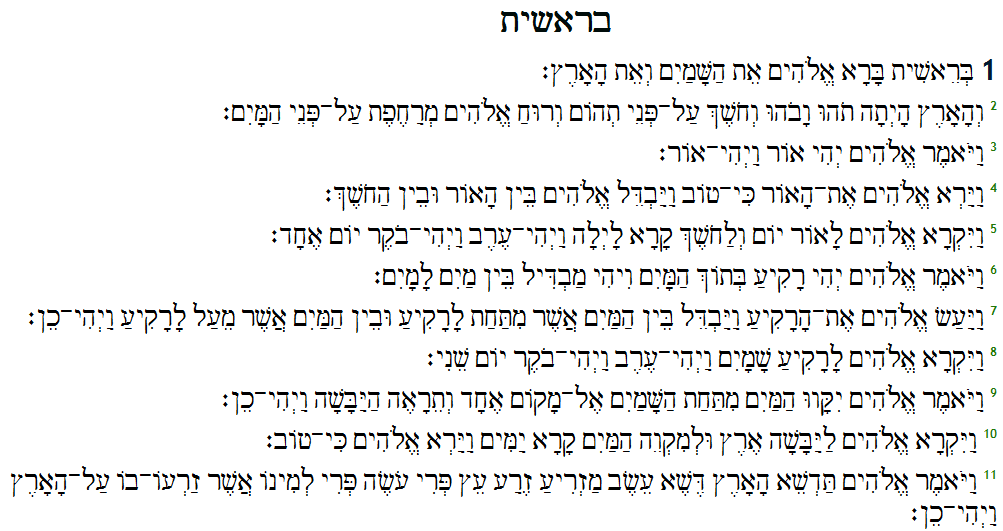
Genesis1

And Jesus answering said unto them, Do ye not therefore err, because ye know not the scriptures, neither the power of God? (Mark 12:24)

Jesus faced His crucifixion just days away. Jerusalem was already in full Passover mode as Jews descended on the capital city from all over the Roman world. This was one of three holy convocations where Jews were to gather to celebrate the Feasts of the Lord (Leviticus 23). The Jewish religious leaders were already plotting to have Jesus killed, but because of His popularity, they couldn’t just kill Him. They had to bring up charges against Him that would warrant execution, so they tried to trip Him up with questions regarding their Jewish laws and traditions.

So it was in this case. First they approached Him with a question on paying taxes to Rome. They first tried to butter Him up with false flattery: “Master, we know that thou art true, and carest for no man: for thou regardest not the person of men, but teachest the way of God in truth” (Mark 12:14). They addressed Him as “Master,” i.e., “teacher,” yet they disregarded His teaching even though they stated that He “taught the way of God.” Their question failed to challenge Jesus. The answer was easy: “Render to Caesar the things that are Caesar’s, and to God the things that are God’s” (Mark 12:17).

The Sadducees, who “say there is no resurrection” (Mark 12:18), followed up with a question concerning the resurrection. Their question was well thought out – they thought. Seven brothers had the same wife, and they all died including the wife. In the resurrection, whose wife shall she be? Aha! Answer that one, Jesus! Jesus replied that there is no marriage in heaven, but before giving His answer, He chided them for their ignorance of Scripture and consequently the power of God (our verse above).

We do often err because we “do not know the Scriptures.” It’s no great challenge to find this ignorance working in a non-believing world, but it’s sad to find the same ignorance, albeit perhaps not as pronounced, among “believers.” One common example is the controversy over creation. Did God cause the Big Bang and then use millions of years of death and suffering to create life by means of evolution? Or did God create in six 24-hour days as clearly recorded in Genesis 1?

Those believers that support the Big Bang and evolution come in different varieties, but they all prefer “science falsely so called” (1 Timothy 6:20) over the clear teaching of Scripture. They hold the word of man in higher regard than the Word of God. They do err because they “know not the scriptures, neither the power of God.” The power of God! God says, “My counsel shall stand, and I will do all my pleasure” (Isaiah 46:10). “I the LORD have spoken it, and I will do it” (Ezekiel 36:36). “And Jesus looking upon them saith, With men it is impossible, but not with God: for with God all things are possible” (Mark 10:27). If God cannot do what He clearly said He did in Genesis 1, then neither can He part the waters of the Red Sea, cause the Sun to stop, or turn back ten degrees, make an ax head float, cleans a leper’s spots, turn water into wine, walk on water or calm the raging sea. If God cannot create as He said He did in Genesis 1, neither can He raise the dead, much less raise Himself from the dead. You do err because you do not know the Scriptures, and because you do not know the Scriptures, you do not know the power of God. What you don’t know can lead you astray. Jesus said, “Search the scriptures; for in them ye think ye have eternal life: and they are they which testify of me” (John 5:39).

Comments Off on What You Don’t Know

Filed under Apologetics, Christianity, Creation, Easter, Evolution, Gospel, Origins, Religion, Resurrection, Science, Theology

Proof of God

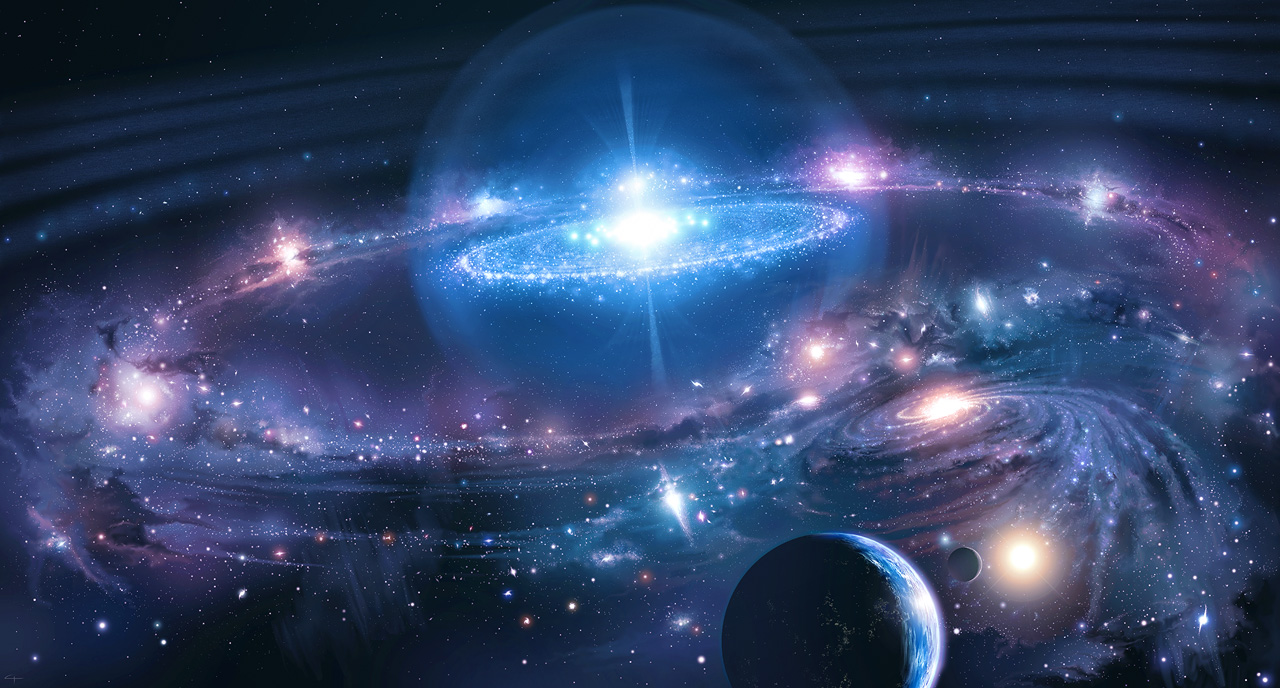
Big Bang or God?

Big Bang or God?

And God said unto Moses, I AM THAT I AM: and he said, Thus shalt thou say unto the children of Israel, I AM hath sent me unto you. (Exodus 3:14)

When someone asks, “What solid proof exists that there is a God who created everything?” that really is a foolish question. In order to “Answer a fool according to his folly, lest he be wise in his own conceit” (Proverbs 26:5), one must respond with a similar question: “What solid evidence is there that everything resulted from the Big Bang?” The God denier will attempt to make a case for the Big Bang by citing scientific consensus, but if pressed hard enough, he will have to concede that there is no “solid evidence” for the Big Bang. Hopefully, that should level the playing field.

Neither divine creation, nor the Big Bang can be proven with “solid” evidence because there was no one around to witness either one. So, we have to start with what we can observe. That is what true science is all about anyway – making observations, predictions and experiments. We cannot observe what is in the past, therefore we cannot make predictions about it because we are living the results of the past, and we cannot perform experiments to produce similar results. So, neither creation nor the Big Bang can be proven scientifically.

We are left with only what we can see today. The science that we use today is empirical science, and it is responsible for our advances in technology and medicine, but it does not tell us anything about the past. What one believes about origins has absolutely nothing to do with how one conducts empirical science. A medical doctor can be an excellent neurosurgeon regardless of whether he is an evolutionist or a creationist. Take Dr. Benjamin Carson, for example. He is a creationist, but that has not prevented him from being one of the foremost pediatric neurosurgeons in the world. (See article by ICR: http://www.icr.org/article/benjamin-carson-pediatric-neurosurgeon-with-gifted/)

The discussion of origins, then, falls into the realm of philosophy (from the Greek meaning “the love of wisdom” or “knowledge”) or theology (i.e., the study of God). Dealing in that realm involves looking at the available evidence, like the human genome, the fossil record, archeological records, ancient historical records, the Bible, etc. The investigator must then interpret the evidence and make a determination about what it reveals. This is called forensic science, and it is very subjective depending on the investigator’s presuppositions. If the investigator is an evolutionist and believes the earth is 4.5 Billion years old, he will interpret the evidence one way. If the investigator is a creationist, he will interpret the evidence another way.

So, what does this say about God? Well, the Institute for Creation Research (ICR) does a lot of scientific research on matters touching the Bible. ICR has highly qualified Ph.Ds. in micro-biology, physics, nuclear physics, astrophysics, and geology. ICR’s research has disproven evolution in the fields of biology, geology and cosmology. All their findings are published on their website and can be searched at http://www.icr.org/home/search/.

So, if we have disproven the Big Bang and evolution – order out of chaos – then what is left? Everything we observe in our universe shows signs of “design.” Everything that exists is designed with a purpose. So what does design require? It requires a designer. And what does a designer require? A designer requires intelligence! Scientists have only probed the surface of the intelligence contained in DNA. DNA in a human being is the specific instructions that make you unique to every other human being in the world or that has ever lived. But writing the programming code that makes you YOU, requires intelligence.

When someone writes an email to me, I naturally assume that it was thought out and written by an intelligent human being. It never occurs to me that some disturbance in the cosmos – a solar flare or a super nova – assembled thousands of ones and zeroes in the internet cloud in the correct order to produce intelligent communication directed specifically to me in the form of an email. That is just as ridiculous as believing that all the design and order we observe in our universe was some random, mindless accident caused by an inexplicable Big Bang.

There is intelligence – super intelligence – behind all that we see and experience. For those who reject the idea of a supreme being – i.e. God – they have to attribute the design to some other intelligence, i.e., ancient aliens, or the seed of life arriving to this planet on an asteroid, or something like that. But then, if you follow that line of reasoning, where did they get their intelligence, and on and on ad infinitum? There is no satisfactory answer in that! So, now what?

The Bible says, “In the beginning, God …” (Genesis 1:1). When Moses asked God for His name, He said “I AM THAT I AM” (Exodus 3:14). In other words, what God was saying is that He is the “Ever-Existent-One.” He has always existed, even before time began. He has no beginning and no end. When you think of it logically, that is the only thing that really makes sense. You understand by experience that any created thing is always subordinate to its creator. Just think about that for a moment. Can you name anything created by man that is greater than man? Even the world’s greatest super computer is not greater than man, and it is subject to its designer and programmer. It cannot even begin to compare to its creator.

So, whatever or whoever got the cosmos going of necessity must be greater than all that exists. God says, “That is Me.” You can reject that, if you wish, but you would be hard pressed to prove it false because His creation is hard to refute. The Bible says that, “that which may be known of God is manifest in them; for God hath shewed it unto them. For the invisible things of him from the creation of the world are clearly seen, being understood by the things that are made, even his eternal power and Godhead” (Romans 1:19-20, emphasis added). God’s creation proves that God exists. Furthermore, the Bible says that every human being has this knowledge deep within the core of their very being. Perhaps that is why the question of God comes up in the first place. Something inside every person tells them that God really does exist, but there exists another part that wants to suppress that knowledge, therefore they want “proof.” Everyone already has all the proof they need, and “they are without excuse” (Romans 1:20). One just needs to move forward with the little knowledge of God that He has given. No one really needs “proof” of God.

8 Comments

Filed under Apologetics, Atheism, Christianity, Creation, Evangelism, Evolution, Gospel, Origins, Religion, Science, Theology

An Atheist’s Challenge – Round Two

DNA Double Helix

… evil men and seducers shall wax worse and worse, deceiving, and being deceived.

(2 Timothy 3:13)

The atheist about whom I wrote last week actually responded. It surprised me. Something I’ve noticed about atheists is their inability to focus on any one thing and examine it thoroughly. Instead they resort the “fire hose tactic” by trying to overwhelm their opposition with more “evidence” than one can respond to – all of it unsubstantiated, of course. I find that one advantage of writing over speaking is that I can select the topic to which I will respond, and rather than going into great detail to defend my position, I just refer the atheist to articles written by real scientists that present a contrary view. The atheist prides himself in being “open-minded,” so this allows him to practice what he preaches.

I do not want to burden my readers with every detail of the conversation, but the following are some of the points the atheist attempted to make, along with my commentary.

  • Some species that have evolved throughout the recorded history of mankind. Examples – The fish in the Hudson River evolving to survive the toxic waste, the South-East Fence Lizard which has learnt [sic] a defensive ‘dance’ to fight off ant predators, the Lerista Skink that’s evolved to shrink its legs to travel through the Australian sands more efficiently, slithering instead of walking with legs.

Here the atheist is equivocating. I had previously warned the atheist not to do this, but there is only so much one can expect from a reprobate mind (Romans 1:28).  Evolutionists often confuse “adaptation” (microevolution) with macroevolution – one kind of animal changing into another. In his examples, the fish is still the same species of fish. It did not change into a whale or grow legs to walk out of the polluted waters. The lizard is still the same species of lizard. The lerista skink genus, according to the Wikipedia, “is especially notable for the variation in the amount of limb reduction. The variation ranges from short-bodied forms with large legs bearing five toes, to elongate forms completely lacking legs” (emphasis added). “Variation” does not equal “evolution.”

  • Humans share (approx) 96% of their genes with Chimpanzees, 90% with Cats, 80% with Cows, 75% with Mice (90% of Mice’s genome can be lined up with certain regions on the human genome, also with 99% of Mice’s genes turning out to have analogues in humans), 60% of Fruit Flies’ DNA is shared, 60% of genes with Chickens, and so on.

If anything, the similarity in DNA among animals and even plants speaks to a common designer not to evolution. The information coded and stored in DNA are the instructions necessary to make a human being human or a dog either a Great Dane or a Chihuahua.  Dr. Jeffrey Tomkins, biologist with the Institute for Creation Research (ICR) has written much on this subject. His research shows that the similarities between human and chimp DNA are not as close as first proclaimed, and the gap grows greater the more he investigates. (See: Chromosome Comparison Shows More Chimp-Human Differences.)

The atheist then pointed to Darwin’s finches at the Galapagos Islands. That really is no different than what has already been covered above. Typically, what I have noticed about atheists is that they parrot things that they have heard without bothering to think critically about what they have heard. They simply regurgitate what they have been fed. His next point is a good example:

  • Big Bang Theory… 13.7 billion years ago (somewhere around that mark), not 5,000 years (almost hilarious to believe the world is that young with the overwhelming amount of proof), something quite large happened. Not an explosion like most Religious parties believe happened, nothing like if a balloon were to pop and all its contents were to spill out in all different directions. It happened more like a small balloon finitely expanding to the size of the Universe as it is now. What caused this, no-one knows, the mathematics behind it are [sic] crazy and extreme for humans to even grasp.

If “religious parties” portray the Big Bang as an “explosion,” it is because that is how it was initially portrayed by Sir Fred Hoyle (and others), the man who coined the phrase in 1949. Current theoretical physicists promulgate this idea by what is presented on the mass media. While they speak about “inflation,” they present images that imply an explosion. Contrary to the atheist’s portrayal of “religious parties,” creation scientists would lean more toward the side of “inflation” (without the billions of years) as this view lines up better with biblical instruction (Job 26:7; Psalm 104:2; Isaiah 40:22; 44:24; Zechariah 12:1). The atheist ignores that there are competing views among secular scientists on how the Big Bang developed. The jury is still out on which is the correct interpretation. So, like all fools, the atheist builds on a foundation of sand (Matthew 7:26).

  • Our sun alone is 4.57 billion years old, after it collapsed (along with many other stars) from being a part of a giant molecular cloud (Hydrogen + Helium). For god to have created the sun 5,000 years ago, it would still be in the process of its collapse and Earth would still being in its process of creation, much more flat and disc-shaped.

In the first place, gas does not collapse; it expands, which is an argument against current star formation theories. This is a carefully guarded secret. As for God not being able to create in a short amount of time, obviously the atheist is not familiar with the omniscient, omnipotent God of creation.

At this point, the atheist begins his assault on God. He begins his attack with words straight from the devil’s mouth: “You’re god is the only true god?” Then he lists several pagan gods. Interestingly he finds the parallels between the pantheon of Asherah, who is impregnated by a ray from the sun god, gives virgin birth to a son, who is killed and rises again. There are several variations of this theme in ancient pagan religions which predate Christianity. Asherah is called the “Queen of Heaven,” a title which is currently carried by the Virgin Mary of the Roman Catholic Church. Let us face it; Satan is not stupid. He is the foremost counterfeiter. Jesus called him the father of lies (John 8:44). Sadly, the atheist has willfully accepted the lie as evidenced by his charge that “Christianity and its bible [sic] is simply a mish-mash, hand-me-down of all the most memorable elements and factors of thousands of different ‘pagan’ religions that came a long time before it.”

As previously stated, often the atheist’s strategy is to overwhelm his opponent with a barrage of stupid questions. (Yes, there are stupid questions – those that are not thought out before presenting them.) Here are some examples:

  • About Adam and Eve … They ate from the ‘Tree of Knowledge of Good and Evil’ which disobeyed god…right? Just one problem: How could have Adam and Eve been expected to comprehend the implications of their actions if, prior to their indiscretion, they had no concept of right and wrong, punishment, evil, pain, suffering and death? Even if god had been successful in adequately explaining all these beforehand, this means that he would have had to give them knowledge of good and evil anyways, which turns the entire story into one big ridiculous farce. A loving, just and secure god would realise [sic] that simply not believing in him is not a crime worthy of hellfire.

The atheist assumes that Adam and Eve were supposedly created with lower intelligence rendering them incapable of understanding God’s only rule (Genesis 2:16-17). This rule seems straightforward and simple enough that any child can comprehend it. This was answered in last week’s post, so I will not comment on it further other than to say the atheist was either not paying attention or his reprobate mind kept him from seeing it.

  • God doesn’t make mistakes, as you put it, he is perfect in every aspect, therefore his creations were perfect too… so why then did he flood the entire Earth killing thousands, if not millions of innocent people, along with some of the ‘sinners’… they couldn’t have been ‘sinful’ because god made them, and he’s perfect and so were his creations. There would be no way they could have turned against him, because they were perfect (research the word ‘perfect’ think you’re using the wrong one).

The atheist missed the part about the fall of man (Genesis 3:6), also covered in last week’s post. That is what makes these kinds of questions stupid, and they are designed to distract the opponent from the main point – that God is Creator of all and His creation is accountable to Him – like it or not.

The atheist went on to make more absurd arguments, and I do not want to bore my readers; but what follows is the saddest thing of all. This was his response to the Gospel message that I presented to him:

  • Jesus’ “sacrifise” [sic] … For Jesus to have made a blood sacrifice for our sins is impossible. A blood sacrifice cannot ‘pay’ for a person’s sin, it is an archaic, deeply flawed view of morality that says that, as long as there is blood spilled to appease god (and with Jesus’ blood being innocent at that), then the crime is forgiven. How can someone else pay for your sins? In what sense is morality and justice served if someone, let’s say, offers to take the place of a condemned criminal in the electric chair? Does this change the fact that the condemned criminal has not been held responsible for his actions? And how is the innocent death anything more than a sad, pointless waste that doesn’t add anything to the overall moral equation?

It intrigued me that he should see the futility of blood sacrifices. God shares the same attitude: “For it is not possible that the blood of bulls and of goats should take away sins” (Hebrews 10:4). But the innocent, sinless blood of the God-Man is ultimately superior: “By the which will we are sanctified through the offering of the body of Jesus Christ once for all” (Hebrews 10:10).

The atheist had much more to say, but I found it wearisome, tedious and mind-numbing. The Bible tells us to “be ready always to give an answer to every man that asketh you a reason of the hope that is in you with meekness and fear” (1 Peter 3:15). But the Bible does not put the burden of conversion on the shoulders of the witness; that work is for the Holy Spirit. But we should not withdraw when challenged by an unbeliever just because we assume it will be time wasted. Often, your words, no matter how well put together or how brilliantly argued, will fall upon deaf ears. Occasionally though, you may find that one that is ignorant, knows it, and truly wants to learn the truth. That one is worth the effort!

2 Comments

Filed under Apologetics, Atheism, Christianity, Creation, Evangelism, Evolution, Gospel, Religion, Salvation, Theology