Tag Archives: Image of God

A Special Kind of Stupid

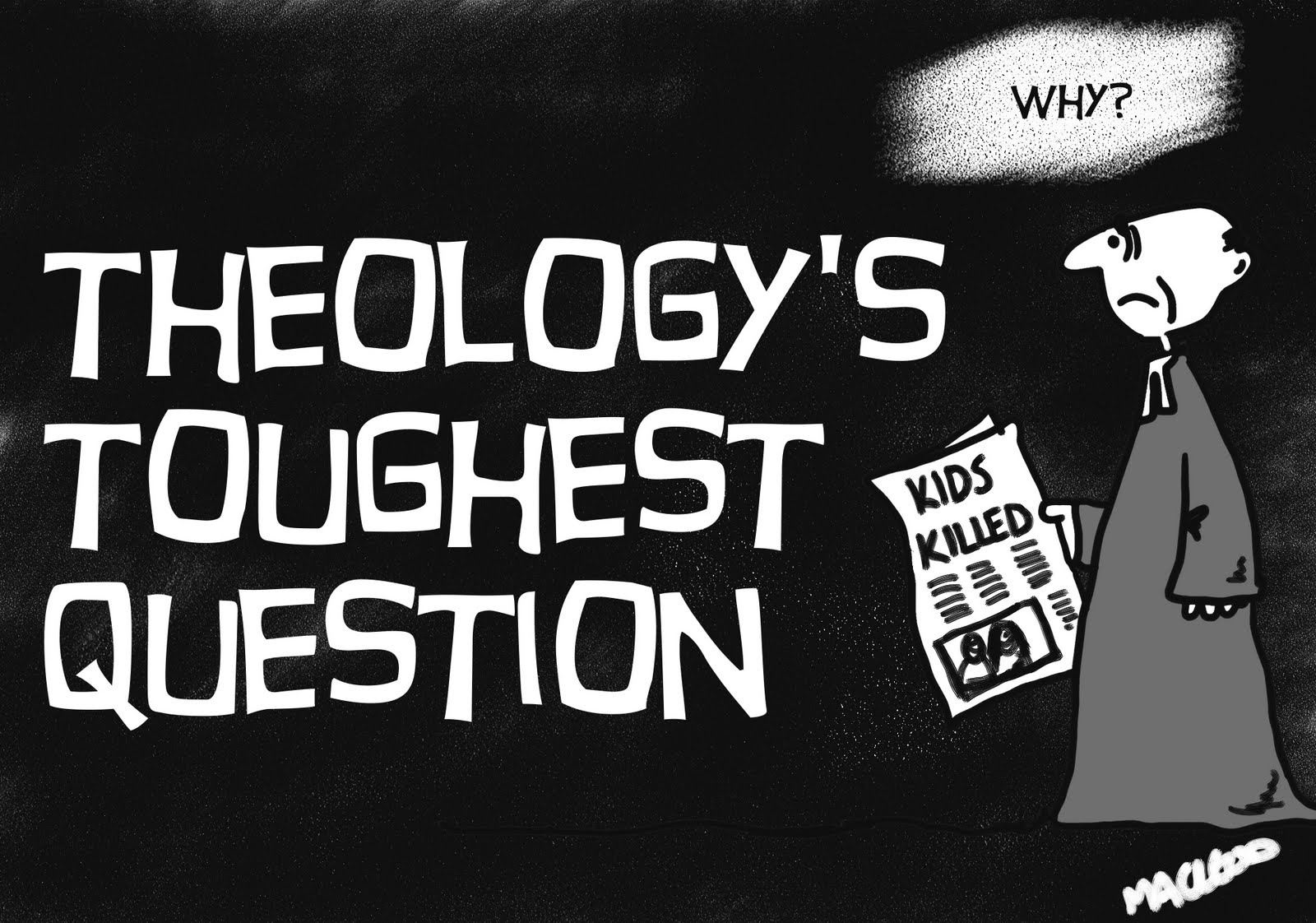
Image Credit: The Greanville Post, http://www.greanvillepost.com/2014/04/29/his-day-in-court-a-chimpanzee-makes-legal-history/

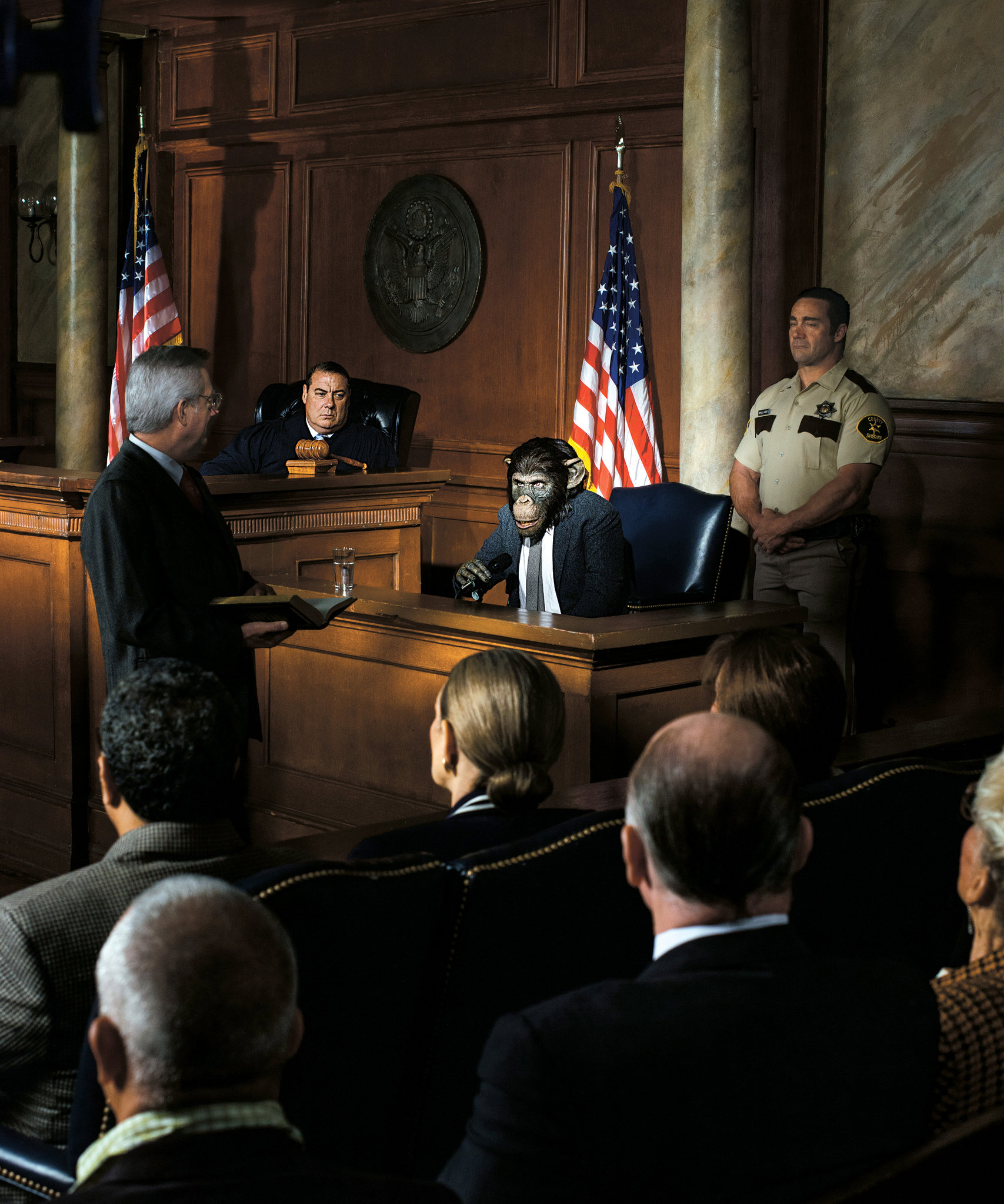
Image Credit: The Greanville Post: “His day in Court—A Chimpanzee Makes Legal History

And God said, Let us make man in our image, after our likeness: and let them have dominion over the fish of the sea, and over the fowl of the air, and over the cattle, and over all the earth, and over every creeping thing that creepeth upon the earth.  (Genesis 1:26)

This week “Two research chimps got their day in court … Steven Wise, an attorney with the Nonhuman Rights Project, told Manhattan Supreme Court Judge Barbara Jaffe that Hercules and Leo, the 8-year-old research chimps at Stony Brook University on Long Island, are ‘autonomous and self-determining beings’ who should be granted a writ of habeas corpus, which would effectively recognize them as legal persons. The chimps, he argued, should be moved from the university to a sanctuary in Florida”[1] (emphasis mine).

Well, what can one expect! For years now evolutionists have been claiming that chimpanzee DNA is 98% the same as that of humans. If that is so, then it stands to reason that they should at least be considered 98% persons. Is that not so? However, the DNA findings exaggerate the similarity in a narrow segment of the genome and deemphasize the vast differences that clearly separate chimps from humans. Biologist Dr. Jeffrey P. Tomkins, Research Associate in Life Sciences for the Institute for Creation Research, researches these claims made by the evolutionists. In comparing 40,000 chimpanzee genomic sequences against the human genome, Tomkins found “that reported levels of human-chimp DNA similarity were significantly lower than commonly reported … For the chimp autosomes, the amount of optimally aligned DNA sequence provided similarities between 66 and 76 percent, depending on the chromosome. Only 69 percent of the chimpanzee X chromosome was similar to human and only 43 percent of the Y chromosome. Genome-wide, only 70% of the chimpanzee DNA was similar to human under the most optimal alignment conditions.”[2] The 28% (give or take) variance may seem small, but in genomics, it is huge. “While, chimpanzees and humans share many localized protein-coding regions of high similarity, the overall extreme discontinuity between the two genomes defies evolutionary timescales and dogmatic presuppositions about a common ancestor.”[3]

I am no scientist, but even without getting into the coded information contained in DNA, the differences between chimps and humans seem obvious to me. To make an evaluation, one needs only to ask a few simple questions.  Aside from some basic similarities like: chimps have hands, humans have hands; chimps have feet, humans have feet (albeit chimps have “thumbs” on their feet and humans have a big toe); chimps have faces, humans have faces; chimps express emotions, humans express emotions; chimps nurture their young; humans nurture their young; chimps live in communities, humans live in communities; chimps communicate (as do most other animals), humans communicate; chimps make “tools,” humans make tools. There may be other similarities, but basically, it ends there. The questions reveal the differences.

Chimpanzees can make simple “tools,” but can they replicate a tool or mass produce it? Do they teach their tool making techniques to others in their community? Do they improve their tools to make them more functional or employ their tools for a variety of different purposes? Chimpanzees can build shelters, but can they build permanent structures? Do they employ aesthetic design in their building efforts or are their shelters simply utilitarian? For that matter, do chips create anything – paintings, sculptures, music, etc.? What is the extent of their creative abilities, if any, and how do they compare to those of humans? Can chimpanzees do even simple math? Do they develop economic systems or practice even the most basic exchange systems? We know that chimps can communicate in some rudimentary ways, but have they developed a language? Do they exchange ideas, and if so, how is that accomplished? Have they ever developed a system of writing, and if they have, do they value it enough to preserve it? Do chimps study chimpanzee anatomy in order to “doctor” on one another? Do they research in order to find cures for chimpanzee diseases? Along the same lines, do chimps study other animals to learn their habits and habitats? Do they observe the stars at night and dream about visiting other worlds? Chimps play, but do they develop games with rules and teach the game to others in order to stimulate healthy competition?

The comparisons are endless, but the more questions one considers, it becomes all the more obvious that chimpanzees fall far short of human achievements and capabilities. Sure chimps have greater strength than humans. They can swing from tree to tree even using their feet to grasp branches; but they do not have the manual dexterity to play a flamenco guitar, harp, piano, or violin; or the grace to match the agility of a gymnast or to dance a ballet or to figure skate.

The evolutionists claim that humans and chimps originated from a common ancestor. If that is the case, then why have chimpanzees not advanced even to the level of the most primitive human tribes? Supposedly they have had the same 100,000 years as humans (according to evolutionists) to evolve beyond their lowly “animal” status. So why are they stuck at the point of their origin? The fact is that they are animals and humans are, well, humans. Chimps were created by the spoken word of God (Genesis 1:24-25); humans were formed (Hebrew yâtsar meaning form or mold) in the image of God (Genesis 2:7; 1:26-27). The difference in creation between beast and man is so distinct, from the Creator’s point of view as recorded in Scripture, that one would really have to be some special kind of stupid to attribute personhood to an animal on par with that of a human being. But, this should really not surprise us. The Bible teaches that those who profess such things have “changed the truth of God into a lie, and worshipped and served the creature more than the Creator, who is blessed for ever” (Romans 1:25, emphasis mine).

So, if these chimps really are “legal persons” – the “autonomous and self-determining beings” their lawyers claim – they should go out and hire their own lawyers!


 Notes:

[1] Krishnadev Calamur, “Research Chimps Get Their Day in Court in New York,” (http://www.npr.org/sections/thetwo-way/2015/05/27/410058029/research-chimps-get-their-day-in-court-in-new-york). Accessed May 28, 2015.

[2] Jeffery Tomkins, “New Research Evaluating Similarities Between Human and Chimpanzee DNA,” (http://www.icr.org/i/pdf/technical/Research-Evaluating-Similarities-Human-Chimp-DNA.pdf). Accessed May 28, 2015.

[3] Ibid.

2 Comments

Filed under Apologetics, Creation, Current Events, Evolution, Origins, Science, Theology

The Unifying Theme

holy-bible

For all have sinned, and come short of the glory of God;  (Romans 3:23)

Critics of the Bible abound even among so-called mainline “Christian” denominations, but when examined closely, the criticisms always fail to stand up to the truth of God’s Word. As the Apostle Paul said, “let God be true, but every man a liar” (Romans 3:4). So it is.

Perhaps the greatest testament to the veracity of the Bible is the unifying theme that it carries throughout its pages. There exists no other so-called “holy” writing that compares with the Bible in clarity and unity of thought, even though it was penned by over 40 different authors (most of which did not know one another so that they could collaborate) over a period of about 1500 to 2000 years. Compare that to the Qur’an which was written by one man over a period of about 22 years (610-632 AD) and compiled over a period of only three years (653-656 AD). Or compare the Book of Mormon written by John Smith. It was produced in only two years between 1827 and 1829. Neither of the “holy” books compares to the Bible in unity of thought even though they were composed by one man each. Yet the Bible, with all of its various human writers over a very long period of time maintains a consistent theme. What is that theme?

The God of the Bible is unique among all other gods. All the gods devised by man demand that man lay down his life for them. The God of the Bible laid down His life for man. The gods devised by man demand that man earn their favor. The God of the Bible completed all the work of redemption, offers it as a free gift, and “asks” man to accept His gift. Let us examine how that plays out.

“In the beginning God created the heaven and the earth” (Genesis 1:1). From the very start, we are introduced to God as Creator. The verses that follow detail His work of creation and we are awestruck at His omniscience and omnipotence. So great is He that one must immediately decide whether to believe or reject the account of His creation, and therein lie the trappings of disbelief. As we continue in our reading we discover that God’s final and most cherished creation is man. “And God said, Let us make man in our image, after our likeness … So God created man in his own image, in the image of God created he him; male and female created he them” (Genesis 1:26, 27). Man bears the image of God. It is no wonder that God’s first command for human government was “Whoso sheddeth man’s blood, by man shall his blood be shed: for in the image of God made he man” (Genesis 9:6). The creation of man was the cherry on top of God’s cake, “And God saw every thing that he had made, and, behold, it was very good” (Genesis 1:31). “Very good” in God’s economy is flawless.

So far, so good, but then all that fell apart when man disobeyed God’s only command, “But of the tree of the knowledge of good and evil, thou shalt not eat of it: for in the day that thou eatest thereof thou shalt surely die” (Genesis 2:17). Adam and Eve disobeyed God’s only command (Genesis 3). They sinned. Some attempt to blunt the edge of the word “sin” by suggesting that it means to “miss the mark.” They arrive at this by quoting a passage from the book of Judges describing the accuracy of the Benjamites with a sling. “Among all this people there were seven hundred chosen men lefthanded; every one could sling stones at an hair breadth, and not miss” (Judges 20:16).   The Hebrew word translated “miss” is châṭâ’, which is often translated “sin.” It could be said that the Benjamites sling a stone without “sinning.” But sin is not so much like taking aim at a target, and missing the bull’s eye. Accurately hitting a target is a product of our own efforts. Sometimes we hit; sometimes we miss. Oh, well! “Sin” cannot be taken so lightly. Paul, quoting Psalm 14:1-3, tells us that, “As it is written, There is none righteous, no, not one: There is none that understandeth, there is none that seeketh after God” (Romans 3:10-11). To suggest that sin is “missing the mark” implies that the sinner is trying to “hit the mark,” Scripture suggests otherwise – there is none that seek to “hit the mark,” at least not the mark that God has set. No, sin is more egregious than, “Oops! I missed!”

Sin is outright rebellion against God. More than that, it is man’s attempt to usurp God’s rightful place. Note Satan’s threefold assault on Eve. First, he cast doubt on the Word of God: “Yea, hath God said …?” (Genesis 3:1). Second, he denies the truth of God’s Word: “Ye shall not surely die” (3:4). Finally, he accuses God of keeping something better from them: “For God doth know that in the day ye eat thereof, then your eyes shall be opened, and ye shall be as gods, knowing good and evil” (3:5, emphasis mine). And that, boys and girls, is the basis for all sin. Man desires to be his own god and determine good and evil for himself. This truth repeats itself over and over in a variety of different scenarios throughout Scripture. But look what God does.

After Adam and Eve sinned, God gave opportunity for redemption. Notice Who looks for who. “And the LORD God called unto Adam, and said unto him, Where art thou?” (Genesis 3:9). Does anyone really think that the omniscient and omnipresent God did not know where they were hiding? God gave Adam and Eve the opportunity to confess their sin and ask forgiveness. “If we confess our sins, he is faithful and just to forgive us our sins, and to cleanse us from all unrighteousness” (1 John 1:9).  But rather than confess, they started making excuses and refusing to take responsibility for their own actions – much like people do today. In His patience, God continued to probe, “And he said, Who told thee that thou wast naked? Hast thou eaten of the tree, whereof I commanded thee that thou shouldest not eat?” (Genesis 3:11).  Again, rather than accept responsibility and confess their sin, the couple made excuses. You can read the results for yourself. I want to highlight what God did.

The couple did not die instantly, but their sin set in motion the physical dying process. It has been said that from the moment of our birth, we all start dying. That is so true, but more than that, their sin disconnected them from their source of eternal life. “The Spirit of God hath made me, and the breath of the Almighty hath given me life” (Job 33:4). The penalty of their sin was death, “For the wages of sin is death” (Romans 6:23). Someone or something had to die to pay the penalty for their sin, but it could not be the man or the woman, for they were now corrupt, and their death could not satisfy Holy God. So God Himself intervened. “Unto Adam also and to his wife did the LORD God make coats of skins, and clothed them” (Genesis 3:21). In order to make “coats of skins,” innocent, perfect animals, probably sheep, were slaughtered to make coverings (atonement) for the naked pair. I believe that the preincarnate Christ performed the sacrifice before them to set the pattern that they would follow from then on. On an altar of stone the Lamb of God, shed innocent blood to atone for the sin of man.

That set the pattern for millions of similar blood sacrifices to follow. In the succeeding chapter we find righteous Abel continuing the practice handed down from God Himself (Genesis 4:4). Older brother Cain chose to sacrifice in a way not prescribed by God; he chose to do things his own way and bring the fruits of his own labor (Genesis 4:3). His offering may seem more “humane” in that no blood was shed, but it was what God demanded. “And the LORD had respect unto Abel and to his offering: But unto Cain and to his offering he had not respect. And Cain was very wroth, and his countenance fell” (Genesis 4:4-5). Like many people today, Cain thought his own efforts done in his own way should be acceptable to God, but God does not see it that way. Like people today, Cain thought that all ways lead to God, but for God, there is only one way and that is through the blood. “For the life of the flesh is in the blood: and I have given it to you upon the altar to make an atonement for your souls: for it is the blood that maketh an atonement for the soul” (Leviticus 17:11).

From the beginning, it has always been the shedding of innocent blood that made atonement (a covering) for sin. The sacrificial system was codified in the Mosaic Law and practiced throughout Old Testament history.  But, “it is not possible that the blood of bulls and of goats should take away sins” (Hebrews 10:4).  Something more permanent needed to be put in place. “But when the fulness of the time was come, God sent forth his Son, made of a woman, made under the law, To redeem them that were under the law, that we might receive the adoption of sons” (Galatians 4:4-5). “Christ Jesus: Who, being in the form of God, thought it not robbery to be equal with God: But made himself of no reputation, and took upon him the form of a servant, and was made in the likeness of men: And being found in fashion as a man, he humbled himself, and became obedient unto death, even the death of the cross” (Philippians 2:5-8).

In short, the unifying theme of the Bible is that Holy God created man in His image. Man sinned against God and earned the penalty of sin which is death, both physical and spiritual. God intervened on man’s behalf initially by substituting innocent animal blood to atone for sin, but ultimately He took on human form and as a sinless (innocent) man, shed His own blood on the cross for our sin. “By the which will we are sanctified through the offering of the body of Jesus Christ once for all” (Hebrews 10:10). There is no other “holy” book that makes such a claim. There is no other God that does for His creation, what the God of the Bible did for us.

Comments Off on The Unifying Theme

Filed under Apologetics, Bible, Christianity, Creation, Death, Evangelism, Gospel, Religion, Salvation, Theology

No Time Like the Present

timeflies

… behold, now is the accepted time; behold, now is the day of salvation. (2 Corinthians 6:2)

We understand time in three phases: past, present, and future. We receive wise counsel not to live in the past while at the same time we are advised to plan for the future. Indeed, even the Apostle Paul exhorts, “Brethren, I count not myself to have apprehended: but this one thing I do, forgetting those things which are behind, and reaching forth unto those things which are before, I press toward the mark for the prize of the high calling of God in Christ Jesus” (Philippians 3:13-14). Our minds help us in regard to the past by minimizing bad memories and enhancing the good ones. This is healthy for when we latch on to bitter memories, the effects degrade both our physical and mental health. If we focus too much on the future, we can set ourselves up for disappointment, if we fail to accomplish unrealistic goals.

Either dwelling too much on the past or focusing too much on the future can both have negative effects on our lives, so we are encouraged to live in the present. “Take time to smell the roses,” we are told. Recently, this has given me cause to ponder. Just how long is the present that we should dwell therein? A minute? A second? A millisecond? A nanosecond? Time constantly moves forward with no stops. In the blink of an eye, the present becomes the past, while in the same instant we arrive in the future and then that is gone. The question is really an existential one since it deals with our existence and experience. We experience life through our senses: touch, sight, taste, hearing, and smell. These all employ our nervous system with the brain and all of its complex network of nerves. So I thought perhaps the present has to do with the speed of nerve impulses. “Scientists have an idea how fast nerves send signals. It varies among different animals and humans, but in general, one can say it is very fast, on the order of 115197 ft/sec (3560 m/sec).”[1] That is amazingly fast, but even at that the nerve impulse itself has a start and stop time, so it too moves from the past into the future with no hesitation.

So, how long is the present? Apparently, the present cannot be measured by time, so this must be a philosophical question. I asked a coworker, whose opinion I value highly, how long he thought the present could be. He said the present does not exist. Similarly, I asked an astrophysicist friend, and he said suggested that it was zero. Both of these answers make sense to me because time is constantly moving forward. I envision standing on the zero point on a line graph that continually moves beneath me from positive to negative-positive being the future and negative being the past. I operate from the zero point as time whizzes by me, but what I do at the zero point – the present – influences the future that comes at me.

I posed the same question to my oldest son. He’s pretty smart in his own right, and he gave me the most provocative response of all. He said, “The present is eternal.” I do not know if he fully understood the ramifications of such a profound statement. For starters, God is eternal, and He identifies Himself to Moses as “I AM THAT I AM” (Exodus 3:14). He is ever-present. We understand that God is unfettered by time, so He is present at every point in time. He is present in the past and in the future simultaneously. That is why He could say to the Prophet Jeremiah, “Before I formed thee in the belly I knew thee; and before thou camest forth out of the womb I sanctified thee, and I ordained thee a prophet unto the nations” (Jeremiah 1:5). God can accurately foretell the future because He exists in the future. He is eternally present.

Unlike God, we are confined by time. We can only experience time at point zero, and that only for the briefest of moments. We experience the future as it passes us by, but our actions in that brief moment affect the unseen consequences that lie ahead. God created us in His image (Genesis 1:26), and as such we are eternal beings. Unlike God, we have a beginning and no end, and again, we exist at point zero. Our actions, therefore, incur eternal consequences. When Adam and Eve disobeyed God in the Garden of Eden (Genesis 3), they caused an eternal rift between God and mankind (Genesis 3:22) that affected all of their posterity – you and me. Their offense and our subsequent sins offend an eternal and holy God, and the offense is eternal. Since the offense is eternal, the consequence is also eternal, and therefore must be atoned for eternally. Hell is eternal because the offense is eternal, therefore the punishment must be eternal.

The good news is that God granted a way of escape from the eternal punishment that we all deserve. I AM is present in all of time from creation to re-creation; so that

Forasmuch as ye know that ye were not redeemed with corruptible things, as silver and gold, from your vain conversation received by tradition from your fathers; But with the precious blood of Christ, as of a lamb without blemish and without spot: Who verily was foreordained before the foundation of the world, but was manifest in these last times for you, Who by him do believe in God, that raised him up from the dead, and gave him glory; that your faith and hope might be in God. (1 Peter 1:18-21, emphasis mine)

At the perfect time (Galatians 4:4), God stepped out of eternity into our present time in the form of the first, sinless Adam, to offer up Himself as the perfect atoning sacrifice for all of mankind. That sacrifice had the eternal effect of mending the eternal rift between God and mankind.

But the remedy is not universal, and it is not automatic. Each individual must make the choice for himself. Making the right or wrong decision in the present will settle your fate for all eternity. “But as many as received him, to them gave he power to become the sons of God, even to them that believe on his name: Which were born, not of blood, nor of the will of the flesh, nor of the will of man, but of God” (John 1:12-13).

And as Moses lifted up the serpent in the wilderness, even so must the Son of man be lifted up: That whosoever believeth in him should not perish, but have eternal life. For God so loved the world, that he gave his only begotten Son, that whosoever believeth in him should not perish, but have everlasting life. (John 3:14-16, emphasis mine)

The present is eternal after all. There is no time like the present to change the course of your eternity.

 Notes:


[1] From http://scienceline.ucsb.edu/getkey.php?key=1950, accessed January 16, 2015.

Comments Off on No Time Like the Present

Filed under Apologetics, Christianity, Creation, Evangelism, Gospel, Hell, Philosophy, Religion, Salvation, Theology

It’s All Good!

OLYMPUS DIGITAL CAMERA

And we know that all things work together for good to them that love God, to them who are the called according to his purpose.  (Romans 8:28)

 There are many passages of Scripture that I count as favorites like Genesis 1:1, “In the beginning God created the heaven and the earth,” and with it John 1:1-3 “In the beginning was the Word, and the Word was with God, and the Word was God. The same was in the beginning with God. All things were made by him; and without him was not any thing made that was made.” Both are foundational verses that identify who God is. Wrapped up in those words is the reason why we, as creatures, owe our allegiance to God as our Creator. Without Him, nothing that we enjoy, including life itself, would exist. Another favorite is John 3:16, “For God so loved the world, that he gave his only begotten Son, that whosoever believeth in him should not perish, but have everlasting life.” In light of His creative power that brought the universe into existence simply with His spoken word, it is incomprehensible to imagine that the all-powerful Creator could love His creation so much that He would condescend to the point of death on a cross to keep us from “perishing”! Then, as we trust Him, He promises to strengthen and to sustain us. “But they that wait upon the LORD shall renew their strength; they shall mount up with wings as eagles; they shall run, and not be weary; and they shall walk, and not faint” (Isaiah 40:21). And Jesus invites, “Come unto me, all ye that labour and are heavy laden, and I will give you rest” (Matthew 11:28). Then there are the promises of eternal life like, “In my Father’s house are many mansions: if it were not so, I would have told you. I go to prepare a place for you. And if I go and prepare a place for you, I will come again, and receive you unto myself; that where I am, there ye may be also” (John 14:2-3).

But perhaps my all-time favorite verse is the one above, Romans 8:28, “And we know that all things work together for good to them that love God, to them who are the called according to his purpose.” This verse is often misunderstood because it is quoted out of context. The verse does not imply that everything will work out to our liking or that because we trust in God that nothing will ever go wrong in our lives – no loss of income, no loss of health, no broken relationships, etc. Quite to the contrary, the Bible teaches that we will face trouble and trials. In fact, Jesus said, “In the world ye shall have tribulation: but be of good cheer; I have overcome the world” (John 16:33). Paul confirms this fact at the end of this chapter: “Who shall separate us from the love of Christ? shall tribulation, or distress, or persecution, or famine, or nakedness, or peril, or sword? As it is written, For thy sake we are killed all the day long; we are accounted as sheep for the slaughter” (Romans 8:35-36). The list of trials and persecution given here are as certain as Christ’s love for His children. So, Romans 8:28 is not my favorite because it paints a rosy picture. Indeed, it goes beyond a bed of roses.

What does Romans 8:28 really say? First of all it says that we “see” or “perceive” – the Greek word eidō translated “know.” In other words, this is something that we can observe; it is not a matter of “blind faith.” This is a fact that we can experience. “All things” – the Greek word panta is all-inclusive. All things “work together” – the Greek word sunergeō means to “cooperate” – for “good” – Greek agathon meaning “benefit.” So all things – good or bad – cooperate to the benefit – and here is the qualifier – “to them that love God.” In the Greek syntax priority is given to the qualifier. A strict rendering of the Greek to English would read “And we perceive that to them that love God, all things cooperate to their benefit.” So this verse is not universally applicable to all people – only those that love God. “Love” is the Greek word agapaō which is an unconditional love, the kind of love that God expressed to the world in sending His Son Jesus to die for our sins (John 3:16). To further focus the qualification, all things cooperate together for the benefit of “those who are the called according to His purpose.”

What is “His purpose”? That is explained in the verse that follows: “For whom he did foreknow, he also did predestinate to be conformed to the image of his Son, that he might be the firstborn among many brethren” (Romans 8:29, emphasis mine). God determined, before time began that man would be made in His image (Genesis 1:26). That image was marred by sin, but God’s purpose has never changed. He has determined that His “new creation” (2 Corinthians 5:17) will be “conformed to the image of his Son.” It should be of no surprise that Paul later exhorts, “be not conformed to this world: but be ye transformed by the renewing of your mind, that ye may prove what is that good, and acceptable, and perfect, will of God” (Romans 12:2, emphasis mine).

So what have we learned? Those that are called by God “according to His purpose,” and who love God unconditionally, will experience (will see/know) the blessings of God even in the face of abject adversity. These are they that can say, even in the worst of circumstances, “It’s all good!”

Comments Off on It’s All Good!

Filed under Apologetics, Christianity, Gospel, Religion, Theology

Did God Create Evil?

And, having made peace through the blood of his cross, by him to reconcile all things unto himself; by him, I say, whether they be things in earth, or things in heaven. (Colossians 1:20)

Question: Because the Lord is the Creator of all, He brought also evil in the universe. Did He do penance, when He died on the cross?

Answer: To accuse God of creating evil is a misunderstanding of God’s nature. The Bible says:

Let no man say when he is tempted, I am tempted of God: for God cannot be tempted with evil, neither tempteth he any man: But every man is tempted, when he is drawn away of his own lust, and enticed. (James 1:13-14, emphasis mine)

God did not create evil or sin, but in His wisdom “allowed” for it. Having created man in His own image (Genesis 1:26), He gave man the option to obey or disobey, to accept God or reject Him, to love Him or not to love Him. Without that option, we would be no more than androids that only function according to the programming of the designer. Without the option, it would be impossible for us to have a “personal” relationship with our Creator.

Therefore, it is not for His sin that Jesus died on the cross, but for ours. When you think about it, that is pretty incredible that God, should take upon Himself the penalty for our sin in order to restore the broken relationship between man and his Creator (Philippians 2:5-11) .

7 Comments

Filed under Apologetics, Atheism, Christianity, Creation, Evangelism, Gospel, Origins, Religion, Salvation, Theology