

For many are called, but few are chosen. (Matthew 22:14)
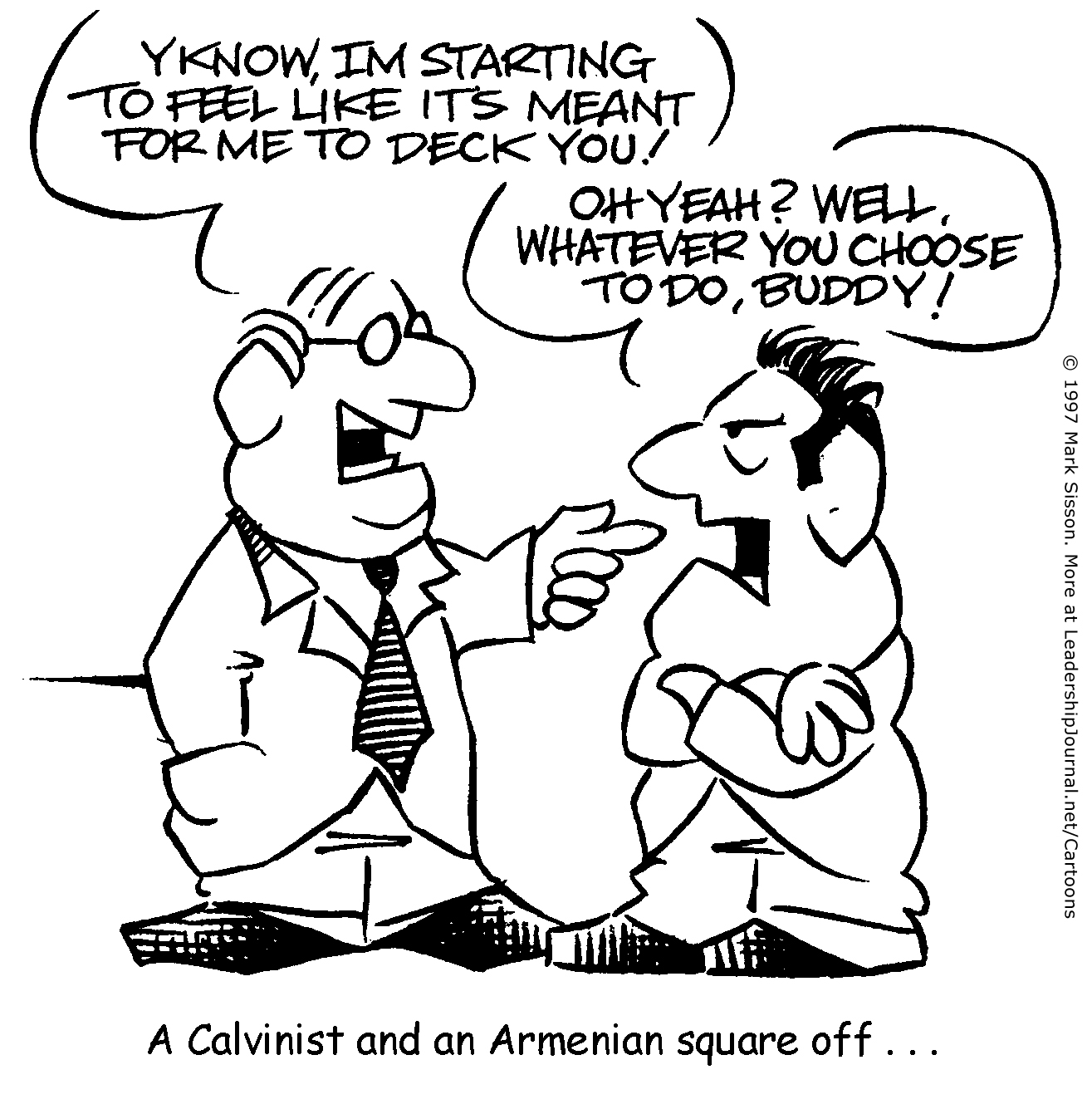
Some Christian brothers have strong Calvinist leanings. I accept most of the five points of Calvinism to some degree – Total Depravity, Unconditional Election, Limited Atonement, Irresistible Grace, and Perseverance of the Saints (T.U.L.I.P.) – but I cannot fully embrace U, L, and I. I completely agree with T and P – the Total Depravity of man, and the Perseverance of the Saints, i.e., “once saved, always saved.”
As already noted, the points that give me the most grief are U and L. Unconditional Election says that God predetermined from the beginning of time who would be saved, and by default, who would be damned for eternity. The argument is that God is sovereign, and He can do exactly as He pleases (no argument there). A favorite verse used to make this point is Romans 9:15 “For he saith to Moses, I will have mercy on whom I will have mercy, and I will have compassion on whom I will have compassion.” Here Paul referred to the time when Moses wanted to “see” God’s glory and God responded, “And he said, I will make all my goodness pass before thee, and I will proclaim the name of the LORD before thee; and will be gracious to whom I will be gracious, and will shew mercy on whom I will shew mercy” (Exodus 33:19, emphasis mine). Clearly, God was not speaking in soteriological terms. Indeed, neither was Paul in making the reference to Moses. When taken in context, Paul was referring to God’s sovereignty in determining the course of salvation in general, not in particular.
Limited Atonement builds on Unconditional Election. Limited Atonement says that Jesus died only for those who were unconditionally elected for salvation. That eliminates all the “whosoever” verses beginning with John 3:16 “For God so loved the world, that he gave his only begotten Son, that whosoever believeth in him should not perish, but have everlasting life” (emphasis mine). Since the Bible is always true and does not contradict itself in any way, this verse alone should serve to debunk Limited Atonement.
To a limited degree, I also disagree with Irresistible Grace. That teaches that when the Holy Spirit, Who convicts the individual’s heart of sin (John 16:8) and convinces him of his need for the Savior, calls on the individual’s heart, that call cannot be rejected. The “call” is ubiquitous (Romans 1:20), however, it is felt more strongly in some than it is in others. Thus, it can indeed be resisted, and more resist the call than respond to it (Matthew 7:13-14).
The Bible speaks to both man’s freedom in choosing and God’s work of “election.” I maintain that the answer is “Somewhere in the Middle,” and neither side of the argument can hold his view dogmatically.
The debate continues. I have made my case and the other side made their case. Neither side convinced the other, which is usually the case. However, since this debate keeps coming up, I determined to “Search the Scriptures; for in them ye think ye have eternal life: and they are they which testify of me” (John 5:39). I looked in the New Testament for all the verses I could find related to salvation for the individual. I divided my findings into three categories: (1) Choice/Free Will, (2) Predestination/Election, and (3) verses that can apply to both sides. Here is what I found: for Category 1, there were more than 80 verses; for Category 2, there were 15 verses. Of those, seven, when read in context, suggest that the “predestination” is of “purpose” not of salvation; for Category 3 there were 17. Rather than argue one side or the other, I think it best to allow the Bible to speak for itself, and the reader can decide for himself.
Verses for Category 1: Matthew 7:13-14, 21-24; 10:32-33; 11:28-30; 12:31-32, 50; 16:24-26; 18:3-4, 14; Mark 3:28-29, 35; 8:34-38; 9:37; 10:15; 16:16; Luke 6:47; 9:23-26, 48; 12:8-10; 13:3, 5, 23-24; 17:33; 18:17; John 1:12-13; 3:3, 15-18, 36; 4:14; 5:24; 6:28-29, 35, 40, 45, 47, 51; 10:9-10; 11:25-26; 14:6; 20:29; Acts 2:21, 38; 10:43; Romans 1:16; 3:28; 4:5; 5:6, 8, 12; 10:9-13; 2 Corinthians 5:21; Galatians 1:3-4; 2:16; 3:6-7, 11, 22, 24-27; Ephesians 1:7; 2:4-9; Philippians 2:5-11; Colossians 1:14; 2:13-14; 1 Thessalonians 5:9-10; 1 Timothy 1:15; 2:3-4; 4:10; 2 Timothy 1:9; Titus 2:11; 3:5-7; Hebrews 3:7-8, 15; 7:25; 9:28; 11:6; 1 Peter 2:6; 3:18; 2 Peter 3:9; 1 John 2:2; 5:1, 10-12; Revelation 22:14.
Verses for Category 2: Luke 10:22; John 6:37, 44, 65; 17:24; Romans 8:33;* Ephesians 1:5, 11; 2:10;* Colossians 3:12; 2 Thessalonians 2:13; 2 Timothy 2:10;* Titus 1:1;* 1 Peter 1:2;* 2 John 1:1, 13. The passages marked with an asterisk (*) speak of predestination, but when examined closely, the predestination is a “Predestination of Purpose” not predestination for salvation. In other words, it is the predetermined plan God has for those who are “justified” having placed their faith in the atoning work of Christ on the cross. As I read these passages my conclusion is that those who are “elect” are “elected” by virtue of their faith in Christ for salvation and their “predestination” is to be conformed to the image of Christ.
Verses for Category 3: Matthew 9:13; 10:39; 20:28; 22:14; Luke 5:32; John 7:38-39; 10:27-29; 14:23; Acts 4:12; 15:11; Romans 6:23; 8:1; 2 Corinthians 5:17; Hebrews 4:3; 1 Peter 3:18; 1 John 4:9-10. These verses can apply equally to either Category 1 or 2.
The message of the Gospel is simple. The Lord Jesus Christ left His place in Glory, took on human flesh (John 1:14; Philippians 2:5-11), took the penalty of our sins upon Himself, and shed His own blood on the cross to pay our sin debt. He was buried in a borrowed tomb and rose again on the third day, conquering death and the grave on our behalf to win our salvation (1 Corinthians 15:1-8). He did that for “whosoever” will accept His free, “grace” gift of salvation by faith in His finished work. “For God so loved the world, that he gave his only begotten Son, that whosoever believeth in him should not perish, but have everlasting life” (John 3:16). “Whosoever” accepts His offer by “believing in Him” is “elected” for “everlasting life.” This is the whole message of Christmas.
When one reads the Bible’s plain teaching on the topic of salvation (soteriology), the overwhelming weight of evidence supports the truth that the individual has a choice – to accept or reject – God’s free gift of salvation. So, from where does this doctrine of “election” – that God predetermines who will be saved – come? It does not come from Scripture if one truly believes in “Sola Scriptura.” The question prompted me to blow the dust off of my systematic theology textbook and review the section on soteriology. The authors of my textbook ask, “For whom did Christ die? Did the Father send his [SIC] Son into the world to die for all persons or only for the elect?”[1]
In my reading, I learned that the early church fathers, by and large, did not hold to the doctrine of election, at least not in the way proposed by John Calvin. “The apostolic fathers advanced no single theory of the atonement, but articulated a number of biblical motifs.”[2]
“Irenaeus interpreted Christ’s death as a victory over sin, death and the Devil … Christ conquered Satan, thereby freeing believing (emphasis mine) sinners from his power and giving them eternal life.”[3] Given that believing is a prerequisite for salvation, it makes sense that Jesus died for believers; however, that does not imply election. “Athanasius taught that in order to solve the problem posed by human sin and condemnation God sent the divine Word into the world. In his [SIC] body the Son bore the penalty and paid the debt that sinners owed to God. Thus Christ offered ‘the sacrifice on behalf of all, surrendering his own temple [body] to death in place of all, to settle man’s account with death and free him from the primal transgression’” (emphasis mine).[4]
“Concerning the intent or purpose of the atonement, most patristic authorities held that Christ died for the sins of the world. Athanasius maintained that in the divine scheme of things ‘death there had to be, and death for all, so that the due of all might be paid.’ Cyril of Jerusalem affirmed that ‘Jesus truly suffered for all men.’ While not speaking clearly on the issue, Augustine seemed to suggest that Christ died for the world, although the cross is effectual only for those who believe[5] (emphasis mine).
Later, Anselm of Canterbury (1033-1109) said that “adequate satisfaction [for sin] must come from one who is divine, that is, from God himself [SIC]. On the other hand, satisfaction must be paid by one who genuinely represents humanity … the sinless Jesus Christ voluntarily suffered and died, thereby accruing more merit than needed to pay the debt humanity owed. God accepted the surplus of Christ’s passion, credited it to the account of the sinful race, and thus is disposed to restore fellowship all who trust Christ’s saving provision”[6] (emphasis mine). “The English Reformer John Wycliffe also followed the main lines of the Anselmic satisfaction motif.”[7] That further supports the idea that Jesus’ sacrifice on the cross was sufficient for all mankind, but efficient only for those who believe. “Luther taught that Christ in his [SIC] life and death bore the sin, guilt, and punishment of a condemned race … As a result of his [SIC] propitiatory sacrifice, Christ frees trusting souls from the curse of the law; reconciles God and sinners; imparts perfect righteousness; and conquers sin, death and the Devil” (emphasis mine).[8]
Later came Arminius and Calvin who developed their differing views on the atonement. In opposition to the Calvinist view of Limited Atonement, “Arminian theologians consistently uphold a universal atonement: Christ died for the purpose of providing salvation for the entire world. Thus Arminius succinctly affirmed: ‘Christ died for all men and for every individual.’… The Arminians press their position by asking how persons could be held guilty for refusing to believe what was not intended for them.”[9] In this regard, Arminians hold a more correct view of Christ’s work of atonement in my opinion.
The authors of my text note that “As for John Calvin, several recent scholars believe that although Calvin held to double predestination he also taught a doctrine of unlimited atonement. In his Institutes Calvin wrote, ‘It is certain that the Lord offers us mercy and the pledge of his [SIC] grace both in his [SIC] Sacred Word and his [SIC] sacraments. But it is understood only by those who take Word and sacraments with sure faith, just as Christ is offered and held forth by the Father to all unto salvation, yet not all acknowledge and receive him.’ [SIC] In his later commentaries, Calvin more clearly postulates an unlimited atonement. With regard to Galatians 5:12 Calvin affirms: ‘God commends to us the salvation of all men without exception, even as Christ suffered for the sins of the whole world’” (emphasis mine).[10] Apparently, John Calvin was not all that “Calvinistic.”
“Scholastic Calvinism, however, narrowed the intent of the atonement and claimed that Christ died solely for the purpose of saving the elect, the exact number of whom are actually brought to salvation. Thus proponents argue that the design of the cross was not merely to provide salvation but to secure the salvation of those persons the Father gave to the Son. Christ allegedly died for all who were related to him [SIC], just as Adam sinned for all who were related to him … God purposed to save some persons and to condemn others, the high Calvinist claims that Christ died solely for those predestined to life”[11]
John Owen, a Puritan held in high regard by many who hold to this view of election, presents what to me is a ridiculous argument for the limited atonement of election. “If Christ dies for all and all are not saved, then Christ died ineffectively, which cannot be. If God loves all and not all are saved, then God loves ineffectually, which also cannot be. Thus Christ did not die for all, and God does not love all people. Says Owen: ‘We deny that all mankind are the object of that love of God which moved him [SIC] to send his [SIC] Son to die.’ God’s love is reflected in his [SIC] will to save the elect the heirs of the covenant of grace, for whose sins Christ made satisfaction on the cross. Owen concludes that if the death of Christ accomplishes all that the Father intended, ‘then died he only for those that are in the event sanctified, purged, redeemed, justified, freed from wrath and death, quickened, saved, etc.’ but that all are not thus sanctified, freed, etc., is most apparent: and, therefore they cannot be said to be the proper object of the death of Christ.’”[12] Owen’s conclusion, I believe, comes not from Scripture, but from his own feeble attempt at logic.
Against Scholastic Calvinism, Moses Amyraut, French theologian, proposed the theory of “hypothetical universalism.” “Amyraut insisted that God willed the salvation of all persons on the condition that they believe … Christ died for all persons sufficiently, but for the elect efficiently. Amyraut’s position was championed by later scholars such as Cameron of the Saumar Academy, Richard Baxter, John Bunyon, Samuel Hipkins, and Heinrich Heppe”[13] (emphasis mine).
I contend that the position of the “hyper-Calvinists” are the ideas of men – albeit well-meaning, godly men – and not necessarily the plain teaching of the Bible. Such a narrow soteriological position cannot be supported by “Sola Scriptura” as I attempted to demonstrate above with my list of biblical references in three categories. I encourage the reader to scrutinize those passages laying aside any preconceived ideas that you have been taught in the past. Allow the Bible to speak for itself without the aid of commentators or scholars of the past. The Word of God is perspicuous and perfectly able to speak for itself without outside influence.
Notes:
[1] Gordon R Lewis and Bruce A Demarest, Integrative Theology, Volume Two, (Zondervan Publishing House, Grand Rapids, Michigan, 1990), p. 372.
[2] Ibid, p. 378.
[3] Ibid, p. 373.
[4] Ibid, p. 379.
[5] Ibid, p. 380.
[6] Ibid, p. 375.
[7] Ibid.
[8] Ibid, p. 379
[9] Ibid, p. 376-377.
[10] Ibid, p. 380.
[11] Ibid, p. 381.
[12] Ibid.
[13] Ibid, p.382.

 Ernie's Musings