Tag Archives: Worship

All In the Details

For thou shalt worship no other god: for the LORD, whose name is Jealous, is a jealous God: (Exodus 34:14)

Once again I have taken up the challenge to read through the entire Bible. I am using a chronological reading plan on a new, unmarked Bible. I like the chronological system because it helps me keep the historical events (especially through the historical books) in logical order.

My reading, so far, has taken me into the books of Exodus and Leviticus. The first twenty chapters of Exodus are interesting because they detail how God delivered the children of Israel out of Egyptian captivity with His awesome power demonstrated through miraculous plagues specifically aimed at all the Egyptian gods. The tenth and final plague was the death of the firstborn of all the Egyptians both children and cattle. However, the children of Israel were saved by the faith-act of painting their door frames with the blood of a sacrificial lamb.[1] After that, the Egyptians were more than happy to let God’s people go, and they even sent them away with treasures. By the time the children arrived at the Red Sea, Pharaoh changed his mind and he assembled his army to go after them. Trapped between the sea and Egypt’s army, God parted the waters of the Red Sea for the Israelites to cross over on dry land, while placing Himself as a pillar of fire between the Egyptian army and the children of Israel. Once the Israelites were across, God removed Himself so that Pharaoh’s troops could follow in pursuit. When the Egyptians were all in the middle of the Red Sea, God closed the waters in on them and drowned the entire army.[2]

God provided food and water for His people until they arrived at Mount Sinai. There God gave the Ten Commandments in the hearing of all the people. God’s voice terrified the people, and they begged Moses not to let God speak to them but that he intercede for them.[3] They promised they would do everything that God commanded. Not long after that, Moses went up into the mountain to receive the rest of God’s instructions and commandments. He was up on the mountain for forty days and forty nights, and when he descended, he found the people partying in “worship” to a golden calf they had made.[4]

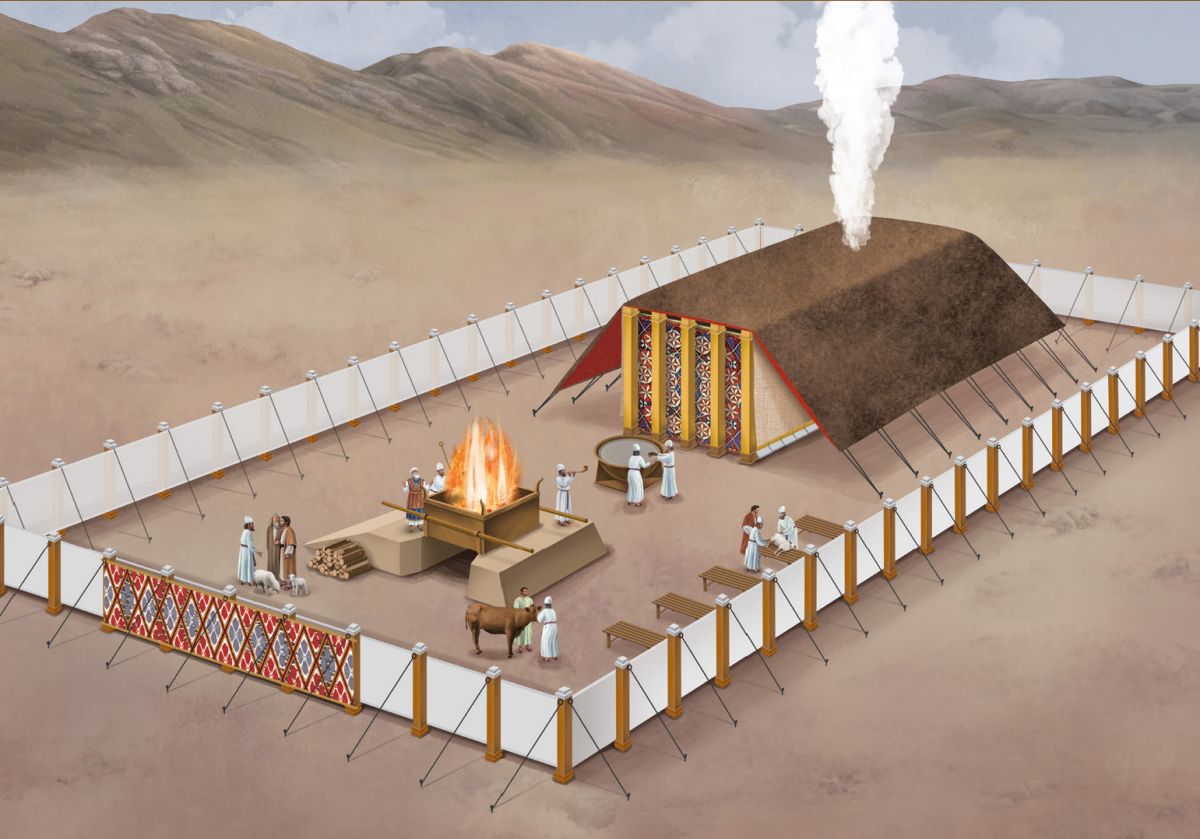
While Moses was up on the mountain, God gave him very specific commandments besides the initial ten. Besides the laws and commandments, God gave very detailed instructions on the construction of the Tabernacle and all implements and furnishings for use in the Tabernacle. These included the golden menorah, the altar of incense, the table of showbread, the Ark of the Covenant, the altar of burnt offering, etc. God specified the materials to be used in making the curtains inside the Tabernacle and the materials to be used in the construction of the outer court, down to how many rings were needed to hang the outer curtain. God gave the dimensions of every single item; no detail is omitted. Then God gave directions for the proper attire for the high priest and the other assistant priests.

The reading becomes very tedious at this point, and it continues on to Leviticus. One might wonder why God includes such minutia in the pages of Scripture. For those of us who are under grace, such detail has little meaning. We have no Tabernacle or Temple as described in which to worship. We do not offer animal sacrifices for every infraction we might commit. Our once-for-all sacrifice was that of Jesus on the cross.[5] We have no need for priests dressed in special apparel to offer sacrifices on our behalf or pray for the forgiveness of our sins. Jesus intercedes for us to the Father in heaven.[6] So, why should God include all those dry details for us to read? I could be wrong, but if you are like me, when you come to these pages, you skip right over them in order to get to the good stuff.

Well, I have not skipped these pages, and I have concluded that the reason God gave us all these minute details is precisely so that we understand that He takes the way we worship very seriously. As a matter of fact, at the end of Leviticus 9 and the beginning of Leviticus 10, He proves just how seriously He takes the way we worship. At this time, the Tabernacle had just been erected, and Aaron and his sons were consecrated as priests to minister before the LORD. They had done everything exactly as God had directed. “And Moses and Aaron went into the tabernacle of the congregation, and came out, and blessed the people: and the glory of the LORD appeared unto all the people. And there came a fire out from before the LORD, and consumed upon the altar the burnt offering and the fat: which when all the people saw, they shouted, and fell on their faces” (Leviticus 9:23-24, emphasis mine). This was God’s way of saying, “Good job!”

That was good, but what came next was shocking. “And Nadab and Abihu, the sons of Aaron, took either of them his censer, and put fire therein, and put incense thereon, and offered strange fire before the LORD, which he commanded them not. And there went out fire from the LORD, and devoured them, and they died before the LORD” (Leviticus 10:1-2, emphasis mine). What! After God gives them an “atta boy,” He kills them for offering “strange fire.” What is all that about?

God had given very specific instructions on the making of the incense which was to be burned on the altar of incense that stood before the holy of holies inside the Tabernacle. That special incense was not to be used for any other purpose. Duplicating the formula for personal use incurred capital punishment. The continuous burning of the incense before the holy of holies (where God’s presence resided) represented the prayers of the people going before the Lord. Furthermore, the incense could only be ignited by coals from the altar of burnt sacrifices that stood outside of the tabernacle. In this case, God had just ignited the burnt offering with His own fire from above.

These two clowns did not think it was such a big deal to get fire from somewhere else. After all, fire is just fire. Right? It was a big deal for God, and He struck them dead on the spot. This is really not much different than Cain’s offering.[7] Cain brought an offering that was not what God required, and God “had not respect” for Cain’s offering.

God takes the way we worship Him seriously. On this side of the cross, we are not obligated to follow any set of rigid “religious” rituals in order to come into the presence of God. However, too often we take our worship of God much too casually. It’s just something we do. It becomes habit; we do it without giving it a second thought. Mostly when we think about “worship,” we think about attending a “worship service” inside a church building. We sing worship songs and listen to a sermon, and then go home to watch a game on TV or go out for lunch.

Actually, worship is so much more than that. The Apostle Paul exhorts us, “I beseech you therefore, brethren, by the mercies of God, that ye present your bodies a living sacrifice, holy, acceptable unto God, which is your reasonable service. And be not conformed to this world: but be ye transformed by the renewing of your mind, that ye may prove what is that good, and acceptable, and perfect, will of God” (Romans 12:1-2, emphasis mine). The way we conduct our lives from day to day, moment by moment is our “reasonable service” (i.e., “logical worship”). How casually do you conduct your life without giving a second thought to how you are presenting your life to God? God may not strike you dead like Nadab and Abihu, but He does take it seriously.

So, how can we be a pleasing sacrifice to God? Well, for the Christian, that is easy because you have a big advantage. “Know ye not that ye are the temple of God, and that the Spirit of God dwelleth in you?” (1 Corinthians 3:16). You have the Spirit of God in you. So, each morning, when you awake, thank the Lord for a new day, and dedicate the day to Him and all that you do, do for His honor and glory. I promise you will falter and stumble, but you will instantly recognize your fault, you will ask forgiveness, and you will continue on. Paul says, “Pray without ceasing” (1 Thessalonians 5:17). Well, if you are down on your knees constantly praying, you would never get anything done! That is not what Paul is intending. What he means is that you need to be in a constant attitude of prayer. Talk to God about everything you are doing or plan on doing. He, because His dwelling place is in you, is your best and constant friend. But don’t take that for granted. He is God and you should never forget that. He takes your worship seriously and so should you.

Reader, if this made little sense to you, it is because, while you may know “about” God, you really do not know God. If you would like to know Him, I would encourage you to read my page on “Securing Eternal Life.”

Notes:

[1]  Exodus 12

[2]  Exodus 13

[3]  Exodus 20

[4]  Exodus 32

[5]  Hebrews 10:6-10

[6]  1 Timothy 2:5; Hebrews 12:24

[7]  Genesis 4:3-6

1 Comment

Filed under Bible, Christianity, Religion, Theology, Worship

God Is Particular

(For the LORD thy God is a jealous God among you) lest the anger of the LORD thy God be kindled against thee, and destroy thee from off the face of the earth. (Deuteronomy 6:15)

This year I have been following a chronological reading plan for reading the Bible through in the year, and currently, I am trudging through the book of Leviticus. Beginning with Exodus 20 when God speaks the Ten Commandments in the hearing of the children of Israel, Scripture goes into tedious detail for the proper worship of God by the Israelites.

Not only do the Scriptures detail the “thou shalt not” commandments, but every minute detail of the construction of the Tabernacle with all of its implements, and the garments of the priests, especially that of the high priest. The methods and occasions for the offering of sacrifices follows that in great detail. Reading the monotonous minutia might make the reader skip over all of those pages to get to more interesting reading, like Numbers. One is tempted to wonder why God would put all of that boring stuff in the Bible and actually expect readers to take it seriously.

For Christians, who are under grace and not under the Law, the reading may seem non-applicable, and to some degree, that is true. We who are born-again, Spirit-filled, children of God ARE the Temple of God[1] and priests unto God.[2] That being the case, where is the value in reading monotonous tedium? Much indeed.

The sacrificial system prescribed by God to Moses made clear God’s view of sin. To God, ALL sin is repulsive. That was true then and it is true today. When one considers the amount of blood shed for every manner of sin, one wonders how their herds were never depleted. To our animal-loving Western minds, the slaughter of innocent animals and the method (the throat was slit to drain blood while the heart continues to pump) for the holocaust is grotesque – it had to be. The revolting procedure dramatically illustrated how abhorrent sin is to God.

God specifies in great detail exactly how the priests were to handle the sacrifice. God gives precise descriptions on how to make the oil for the lampstand, the bread for the showbread, the incense for the altar of incense, and how to maintain all these things on a perpetual basis. Even if one scans quickly through these pages, it becomes readily apparent that God is very particular about how He is to be worshiped. However, this is not a new revelation.

From the beginning, God shed the blood of innocent animals to cover the nakedness of Adam and Eve after the Fall.[3] Apparently, the practice of sacrificing animals for sin in worship to God continued because later we find Cain and Abel sacrificing to God. However, Cain did not offer his sacrifice in the prescribed manner, so his offering was rejected by God.[4] The practice continued until the time of Noah and afterward with Abraham, Isaac, and Jacob (Israel). However, the practice was not codified until God gave the Law to Moses. Not long after the Tabernacle was dedicated and the form of worship was implemented, the first infraction took place. Two of Aaron’s sons, Nadab and Abihu (priests), took fire for the incense altar from somewhere other than from the altar of sacrifice (outside the tent) as prescribed. For their disobedience, God rained fire from heaven and incinerated them instantly.[5] God made His point clear. He is particular about the way He is worshipped.

The modern-day Christian might ask, “What does this have to do with us?” I asked myself the same question. However, as I browsed the minutia, which is not minutia to God, the broad understanding I gleaned is that God is particular about how His people approach Him in worship. We, Christians, are far removed from the sacrificial system and are not bound by the Levitical laws. Jesus is our once-and-for-all sacrifice. “But Christ being come an high priest of good things to come, by a greater and more perfect tabernacle, not made with hands, that is to say, not of this building; Neither by the blood of goats and calves, but by his own blood he entered in once into the holy place, having obtained eternal redemption for us” (Hebrews 9:11-12, emphasis mine).

For the law having a shadow of good things to come, and not the very image of the things, can never with those sacrifices which they offered year by year continually make the comers thereunto perfect. For then would they not have ceased to be offered? because that the worshippers once purged should have had no more conscience of sins. But in those sacrifices there is a remembrance again made of sins every year. For it is not possible that the blood of bulls and of goats should take away sins. Wherefore when he [the Lord Jesus Christ] cometh into the world, he saith, Sacrifice and offering thou wouldest not, but a body hast thou prepared me: In burnt offerings and sacrifices for sin thou hast had no pleasure. Then said I [Jesus speaking], Lo, I come (in the volume of the book it is written of me,) to do thy will, O God. Above when he said, Sacrifice and offering and burnt offerings and offering for sin thou wouldest not, neither hadst pleasure therein; which are offered by the law; Then said he, Lo, I come to do thy will, O God. He taketh away the first, that he may establish the second. By the which will we are sanctified through the offering of the body of Jesus Christ once for all. And every priest standeth daily ministering and offering oftentimes the same sacrifices, which can never take away sins: But this man [Jesus], after he had offered one sacrifice for sins for ever, sat down on the right hand of God; From henceforth expecting till his enemies be made his footstool. (Hebrews 10:1-13, emphasis mine)

So, Jesus, by His sacrifice on the cross, ended the sacrificial system prescribed by the Law. As He breathed out His final breath, He proclaimed, “It is finished”[6] – paid in full. For those who are “born again,” who have placed their faith and trust in Christ, the rigors of the Levitical system of worship have been done away. Does that mean that God no longer cares about how we approach Him in worship? Is He less worthy of awe and reverence now than when He struck down Aaron’s sons for bringing “strange fire” before Him? I think not.

How one comes before God is a matter of one’s personal attitude, so I cannot judge the condition of an individual’s heart. However, as I observe many public gatherings called “worship services,” the focus of the activities seems designed to stir the emotions of the “worshipers,” and even though Christian lingo is randomly repeated, the direction of the “worship” is horizontal (i.e., human to human) rather than vertical.

I follow several well-known pastors who I consider to be very biblically sound and who preach the Gospel without reservation, yet, before they stand to preach, their “band” comes out to warm up the congregation in preparation for the sermon. As the cameras scan the crowd, some stand there unmoved while others raise their hands and sway to the music as if they are at a rock concert.  I wonder how God, Who was so particular in the OT about how He was to be worshipped, feels about the “worship” offered up these days. Indeed, far too often that worship is man-centered, not God-centered; it is not even directed to God. It is all about us and how we feel. Again, I cannot judge the heart of individual worshipers; only God can see into the heart, but what I observe on the surface comes across more as entertainment than worship.

So, regardless of the “atmosphere” of the “worship service” in which we participate, we need to remove all distractions from our minds and focus our thoughts, our minds, and our hearts on the greatness and majesty of our awesome, all-mighty, Creator God. Let Him be the object of our worship, not the performers on the stage.

“I beseech you therefore, brethren, by the mercies of God, that ye present your bodies a living sacrifice, holy, acceptable unto God, which is your reasonable [act of worship]. And be not conformed to this world: but be ye transformed by the renewing of your mind, that ye may prove what is that good, and acceptable, and perfect, will of God” (Romans 12:1-2).

Notes:


[1]  1 Corinthians 3:16

[2]  Revelation 1:6

[3]  Genesis 3:21

[4]  Genesis 4:3-5

[5]  Leviticus 10:1-2

[6]  John 19:30

Comments Off on God Is Particular

Filed under Apologetics, Bible, Christianity, Religion, Theology, Worship

Loving God

Woman in Worship 6214442_ml

If ye love me, keep my commandments … If a man love me, he will keep my words. (John 14:15, 23)

How can one love God? Jesus said, “God is a Spirit: and they that worship him must worship him in spirit and in truth” (John 4:24). How does one love or worship “a Spirit”? By definition, a spirit is immaterial. A spirit cannot be heard, seen, smelled, tasted, or touched. Those who choose not to believe in God use this as an excuse. Understandably, it is difficult for us material beings to relate to the Spirit of God. Some, I think, attempt to make the connection by raising hands and swaying to the music of a Sunday morning worship service in order to achieve some sort of euphoric state. (I’m not making fun. I have no way of knowing what goes on inside the heart of others. I’m only making an observation.) I cannot do that. I am not a touchy-feely person that requires a lot of external stimulus. I know God intuitively. God is real regardless of how I feel or whether I can sense Him or not, but to love Him, I must understand His personhood.

One aspect of God’s personhood is His desire to have fellowship with His creation. From the beginning we read, “And they [Adam and Eve] heard the voice of the LORD God walking in the garden in the cool of the day … And the LORD God called unto Adam, and said unto him, Where art thou?” (Genesis 3:8-9). God feels hurt when betrayed, but acts justly, yet with mercy. When Adam and Eve disobeyed, God expressed hurt when He said, “Behold, the man is become as one of us, to know good and evil” (Genesis 3:22), and although He had created the Garden of Eden just for them, He acted justly “and now, lest he put forth his hand, and take also of the tree of life, and eat, and live for ever: Therefore the LORD God sent him forth from the garden of Eden” (Genesis 3:22-23). Yet He showed mercy toward the couple. Rather than kill them outright, “Unto Adam also and to his wife did the LORD God make coats of skins, and clothed them” (Genesis 2:21) substituting the life of innocent animals to cover their sin.

From the beginning we find that, while God is just in punishing sin, His love for us, His creation created in the image of God (Genesis 1:26-27), manifests itself in His grace and mercy. We see this pattern revealed again in His dealing with Cain for murdering Abel (Genesis 4). We sense God’s pain: “And he said [to Cain], What hast thou done? the voice of thy brother’s blood crieth unto me from the ground” (Genesis 4:10). Because of this horrific act, God executed justice by banishing Cain to a life of wandering (Genesis 4:12), but He showed mercy on him by placing an identifying mark on him to keep others from taking revenge on him (Genesis 4:15).

Still, a greater example comes from the Flood account in Genesis 6-9. By that time mankind had become so wicked and corrupt, “And it repented the LORD that he had made man on the earth, and it grieved him at his heart” (Genesis 6:6, emphasis mine). The word translated “repented” is the Hebrew word nâcham, which means to “sigh” or “breathe strongly,” or, by implication, “to be sorry.” It does not mean that God changed His mind (Malachi 3:6). The end of that verse expresses God’s hurt over man’s depravity: “it grieved him at his heart.” God’s justice came in the form of the Flood. “But Noah found grace in the eyes of the LORD” (Genesis 6:8, emphasis mine). Because of His grace, i.e. love, God showed mercy in saving His creation from complete destruction.

We could go on and on with examples, but from the beginning of Genesis, the pattern was set for the personhood of God. He is just, loving and merciful (and much more). We should also note, in these first examples that it is man who does wrong, but it is God who first responds out of His love for us. Indeed, “We love him, because he first loved us” (1 John 4:19). John writes in his Gospel, “For God so loved the world, that he gave his only begotten Son, that whosoever believeth in him should not perish, but have everlasting life (John 3:16, emphasis mine). The word order in the Greek emphasizes God’s love – “so loved God the world.” So great is God’s love that He acted. “Herein is love, not that we loved God, but that he loved us, and sent his Son to be the propitiation for our sins” (1 John 4:10).

The shama proclaims “Hear, O Israel: The LORD our God is one LORD: And thou shalt love the LORD thy God with all thine heart, and with all thy soul, and with all thy might” (Deuteronomy 6:4-5). When Jesus was asked what was the greatest commandment, He quoted the shama, (Matthew 22:36-38). It seems rather paradoxical that God, who first loved us, demands that we love Him when our natural inclination is to reject Him. “As it is written, There is none righteous, no, not one: There is none that understandeth, there is none that seeketh after God” (Romans 3:10-11, emphasis mine). Yet this jilted lover reached down to those who rejected him (John 1:10-11) and literally gave His life to rescue us from the very clutches of eternal death.

When we come to a deep understanding of that reality, our desire should be to return that love. But how? We can’t wrap our arms around Him. We can’t kiss His wounded head, hands, and feet. How can we express our love for Him in a tangible way that truly demonstrates our love?  How can we “love the LORD [our] God with all [our] heart, and with all [our] soul, and with all [our] might”? God gave the answer. “And these words, which I command thee this day, shall be in thine heart: And thou shalt teach them diligently unto thy children, and shalt talk of them when thou sittest in thine house, and when thou walkest by the way, and when thou liest down, and when thou risest up. And thou shalt bind them for a sign upon thine hand, and they shall be as frontlets between thine eyes” (Deuteronomy 6:6-8). In short, we demonstrate our love for God by obeying His commandments. Someone might say, “But that is Old Testament. We live under the New Testament; we are not bound by the Law.” That is both true and false. We cannot be saved by obeying the Law, but that does not nullify the Law. It still serves as our standard, i.e. our guide book. There is a saying, “If you aim at nothing, you’ll hit it every time.”

The Law gives us something to aim for. The fact that we cannot perfectly meet that standard is the reason Jesus had to die in our place. And He said, “If ye love me, keep my commandments” (John 14:15). Note that “commandments” is plural. Jesus, who is God in the flesh (John 1:1, 14), gave those commandments to Moses, and He says, “For I am the LORD, I change not” (Malachi 3:6). However, He did condense all of His Law down to two: (1) “love the Lord thy God with all thy heart, and with all thy soul, and with all thy mind.”  (2) “And the second is like unto it, Thou shalt love thy neighbour as thyself.” Then He said, “On these two commandments hang all the law and the prophets” (Matthew 22:37-40). If we can do all of that, then we are keeping all of His commandments, and thereby we demonstrate our love for Him. But how do we know we are keeping those two? Check the guide book – the Old Testament.

Loving God has nothing to do with the euphoric experience you get, or don’t get, out of Sunday morning “worship” service. Loving God means obeying His commandments. That is how you show your love for God, and no fuzzy feelings are required.

3 Comments

Filed under Christianity, Religion, Theology, Worship

Psalm 103

All that is within me, bless His Holy Name!

All that is within me, bless His Holy Name!

Psalm 103

A Psalm of David. Bless the LORD, O my soul: and all that is within me, bless his holy name. (Psalm 103:1)

This wonderful psalm reminds us to give grateful praise to God for all His goodness and love that He continually demonstrates for His children. When we think of blessing someone, we often think of doing something good for that person. When we think of God blessing us, we might think of having good health, a nice home, a wonderful family and friends or any number of things – good things. But is that really what it means to be blessed? And if that is so, how can we possibly bless God? I mean, what can we give to God that He does not already have? (Besides your heart)

Perhaps “blessing” is not what we think it is. As translated in this psalm (and many other places in the Old Testament) the Hebrew word is bârak, and according to the Strong’s Dictionary, it means: “to kneel; by implication to bless God (as an act of adoration), and (vice-versa) man (as a benefit); also (by euphemism) to curse (God or the king, as treason): –  X abundantly, X altogether, X at all, blaspheme, bless, congratulate, curse, X greatly, X indeed, kneel (down), praise, salute, X still, thank.” I don’t know about you, but that definition is certainly confusing. In reading the context of the psalm, we gather that cannot mean to curse God, so by the general tone of the psalm we can infer “an act of adoration.” The Greek translation in the Septuagint (LXX) of this psalm uses the word eulόgei, which means “to speak well of,” and from which we get our English word “eulogy.” I have never been to a funeral where an ill word was spoken of the dearly departed; only good is spoken of the dead in a eulogy.

So this psalm encourages us to “eulogize” God from the very core of our being. We are to “speak well of” His holy name. Why should we do this? The next four verses instruct us. We “eulogize” Him because of how He treats us, i.e., “His benefits.” He forgives our perversities (“iniquities”) which is a disease that only He can heal. He “redeems” our lives, i.e., He “buys us back” from destruction, i.e., eternity in hell. Not only that, but He elevates us to royal status by awarding us a crown, and all of this is because of His “loving-kindness” and “tender mercies.” This reminds me of Jesus’ parable of the Prodigal Son (Luke 15:11-32) who spurned his father’s love and wasted all that his father gave to him. Then, while in the filthy, smelly pigsty, having hit absolute bottom, the son remembered all that the father’s house had to offer, and leaving his pride in the mud pit, he determined to return to his father’s house as a lowly servant. But rather than chastise him for his ingratitude and cast him out as a worthless vagrant, the father welcomed him with open arms and elevated him to his former status of the master’s son and heir to the father’s wealth. Then the father threw a huge party with lots of wonderful food – he killed the “fatted calf” that was reserved for special occasions – to celebrate his boy’s return. The fifth verse tells us that He “satisfieth thy mouth with good things; so that thy youth is renewed like the eagle’s.” Imagine how the son felt after a long season of hunger, shame, and disgrace! That is what God offers us, and we should speak well of Him for that.

We eulogize the Lord because He carries out righteous judgment on behalf of all who are oppressed. He is merciful – He withholds the punishment we deserve; He is slow to anger. He is gracious – granting us what we do not deserve; He is abounding in mercy. “He hath not dealt with us after our sins; nor rewarded us according to our iniquities” (v. 10). As great as His mercy is – greater than the heights of heaven – it is there for those “that fear Him.” Do not think for one moment that you can live like the devil and obtain His mercy; but His mercy is there when you recognize Him for Who He is – the great Creator God, Who is to be feared, and whose name is holy and deserves to be “well-spoken of.” When we understand that, He will remove our transgressions, “As far as the east is from the west so far hath he removed our transgressions from us” (v. 12).

“Like as a father pitieth his children, so the LORD pitieth them that fear him” (v. 13). “Pity” is an unfortunate translation here. The Hebrew word is râcham, and it means to fondle, love, show compassion. Picture a father or mother cuddling an infant child – that’s the picture; and again it is qualified by “them that fear Him.” His love and compassion stem from the fact that He knows our “frame.” That Hebrew noun is yêtser, whose verb form is yâtsar, which means to “mold” or “form” as a potter fashions a clay vessel. God knows how we were made because He made us out of the dust of the earth, and He cherishes us. This should cause us to “bless” His name!

Our life on earth is brief. Moses said, “The days of our years are threescore years and ten; and if by reason of strength they be fourscore years, yet is their strength labour and sorrow; for it is soon cut off, and we fly away” (Psalm 90:10). This psalm reminds us of that truth. When compared to eternity, our life is like grass or a Texas wild flower; when the hot winds of summer blow in, they dry up and their beauty is forgotten. But God’s mercy is not like that. This psalm says that His mercy “is from everlasting to everlasting” (v. 17). Once again, the promise is to “them that fear Him,” i.e., “To such as keep his covenant, and to those that remember his commandments to do them” (v. 18). For these “The LORD hath prepared his throne in the heavens; and his kingdom ruleth over all” (v. 19).

In light of all that God has done, all of His creation – the hosts of angels that do His bidding and all of His “works” over which He has dominion (that includes everything and excludes nothing) – can do no less than “speak highly, reverently, and fearfully of the Lord.” And if we fail to do so, Jesus says that the very “stones would immediately cry out” (Luke 19:40). Let not the stones do what we were created to do.  “Bless the LORD, O my soul: and all that is within me, bless his holy name.”

Comments Off on Psalm 103

Filed under Christianity, Creation, Evangelism, Gospel, Heaven, Origins, Thanksgiving, Theology, Worship