Category Archives: Death

The Unifying Theme

holy-bible

For all have sinned, and come short of the glory of God;  (Romans 3:23)

Critics of the Bible abound even among so-called mainline “Christian” denominations, but when examined closely, the criticisms always fail to stand up to the truth of God’s Word. As the Apostle Paul said, “let God be true, but every man a liar” (Romans 3:4). So it is.

Perhaps the greatest testament to the veracity of the Bible is the unifying theme that it carries throughout its pages. There exists no other so-called “holy” writing that compares with the Bible in clarity and unity of thought, even though it was penned by over 40 different authors (most of which did not know one another so that they could collaborate) over a period of about 1500 to 2000 years. Compare that to the Qur’an which was written by one man over a period of about 22 years (610-632 AD) and compiled over a period of only three years (653-656 AD). Or compare the Book of Mormon written by John Smith. It was produced in only two years between 1827 and 1829. Neither of the “holy” books compares to the Bible in unity of thought even though they were composed by one man each. Yet the Bible, with all of its various human writers over a very long period of time maintains a consistent theme. What is that theme?

The God of the Bible is unique among all other gods. All the gods devised by man demand that man lay down his life for them. The God of the Bible laid down His life for man. The gods devised by man demand that man earn their favor. The God of the Bible completed all the work of redemption, offers it as a free gift, and “asks” man to accept His gift. Let us examine how that plays out.

“In the beginning God created the heaven and the earth” (Genesis 1:1). From the very start, we are introduced to God as Creator. The verses that follow detail His work of creation and we are awestruck at His omniscience and omnipotence. So great is He that one must immediately decide whether to believe or reject the account of His creation, and therein lie the trappings of disbelief. As we continue in our reading we discover that God’s final and most cherished creation is man. “And God said, Let us make man in our image, after our likeness … So God created man in his own image, in the image of God created he him; male and female created he them” (Genesis 1:26, 27). Man bears the image of God. It is no wonder that God’s first command for human government was “Whoso sheddeth man’s blood, by man shall his blood be shed: for in the image of God made he man” (Genesis 9:6). The creation of man was the cherry on top of God’s cake, “And God saw every thing that he had made, and, behold, it was very good” (Genesis 1:31). “Very good” in God’s economy is flawless.

So far, so good, but then all that fell apart when man disobeyed God’s only command, “But of the tree of the knowledge of good and evil, thou shalt not eat of it: for in the day that thou eatest thereof thou shalt surely die” (Genesis 2:17). Adam and Eve disobeyed God’s only command (Genesis 3). They sinned. Some attempt to blunt the edge of the word “sin” by suggesting that it means to “miss the mark.” They arrive at this by quoting a passage from the book of Judges describing the accuracy of the Benjamites with a sling. “Among all this people there were seven hundred chosen men lefthanded; every one could sling stones at an hair breadth, and not miss” (Judges 20:16).   The Hebrew word translated “miss” is châṭâ’, which is often translated “sin.” It could be said that the Benjamites sling a stone without “sinning.” But sin is not so much like taking aim at a target, and missing the bull’s eye. Accurately hitting a target is a product of our own efforts. Sometimes we hit; sometimes we miss. Oh, well! “Sin” cannot be taken so lightly. Paul, quoting Psalm 14:1-3, tells us that, “As it is written, There is none righteous, no, not one: There is none that understandeth, there is none that seeketh after God” (Romans 3:10-11). To suggest that sin is “missing the mark” implies that the sinner is trying to “hit the mark,” Scripture suggests otherwise – there is none that seek to “hit the mark,” at least not the mark that God has set. No, sin is more egregious than, “Oops! I missed!”

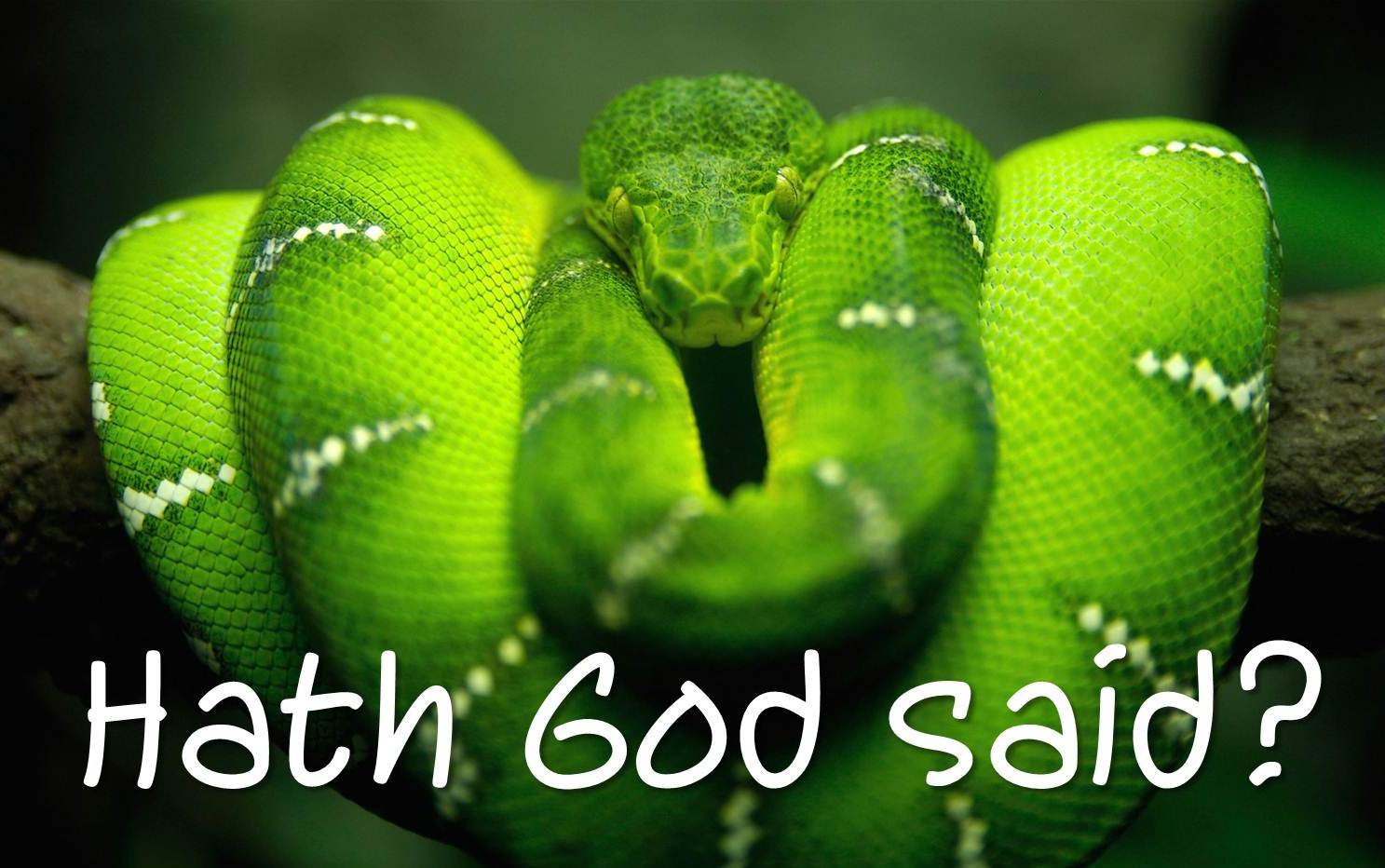
Sin is outright rebellion against God. More than that, it is man’s attempt to usurp God’s rightful place. Note Satan’s threefold assault on Eve. First, he cast doubt on the Word of God: “Yea, hath God said …?” (Genesis 3:1). Second, he denies the truth of God’s Word: “Ye shall not surely die” (3:4). Finally, he accuses God of keeping something better from them: “For God doth know that in the day ye eat thereof, then your eyes shall be opened, and ye shall be as gods, knowing good and evil” (3:5, emphasis mine). And that, boys and girls, is the basis for all sin. Man desires to be his own god and determine good and evil for himself. This truth repeats itself over and over in a variety of different scenarios throughout Scripture. But look what God does.

After Adam and Eve sinned, God gave opportunity for redemption. Notice Who looks for who. “And the LORD God called unto Adam, and said unto him, Where art thou?” (Genesis 3:9). Does anyone really think that the omniscient and omnipresent God did not know where they were hiding? God gave Adam and Eve the opportunity to confess their sin and ask forgiveness. “If we confess our sins, he is faithful and just to forgive us our sins, and to cleanse us from all unrighteousness” (1 John 1:9).  But rather than confess, they started making excuses and refusing to take responsibility for their own actions – much like people do today. In His patience, God continued to probe, “And he said, Who told thee that thou wast naked? Hast thou eaten of the tree, whereof I commanded thee that thou shouldest not eat?” (Genesis 3:11).  Again, rather than accept responsibility and confess their sin, the couple made excuses. You can read the results for yourself. I want to highlight what God did.

The couple did not die instantly, but their sin set in motion the physical dying process. It has been said that from the moment of our birth, we all start dying. That is so true, but more than that, their sin disconnected them from their source of eternal life. “The Spirit of God hath made me, and the breath of the Almighty hath given me life” (Job 33:4). The penalty of their sin was death, “For the wages of sin is death” (Romans 6:23). Someone or something had to die to pay the penalty for their sin, but it could not be the man or the woman, for they were now corrupt, and their death could not satisfy Holy God. So God Himself intervened. “Unto Adam also and to his wife did the LORD God make coats of skins, and clothed them” (Genesis 3:21). In order to make “coats of skins,” innocent, perfect animals, probably sheep, were slaughtered to make coverings (atonement) for the naked pair. I believe that the preincarnate Christ performed the sacrifice before them to set the pattern that they would follow from then on. On an altar of stone the Lamb of God, shed innocent blood to atone for the sin of man.

That set the pattern for millions of similar blood sacrifices to follow. In the succeeding chapter we find righteous Abel continuing the practice handed down from God Himself (Genesis 4:4). Older brother Cain chose to sacrifice in a way not prescribed by God; he chose to do things his own way and bring the fruits of his own labor (Genesis 4:3). His offering may seem more “humane” in that no blood was shed, but it was what God demanded. “And the LORD had respect unto Abel and to his offering: But unto Cain and to his offering he had not respect. And Cain was very wroth, and his countenance fell” (Genesis 4:4-5). Like many people today, Cain thought his own efforts done in his own way should be acceptable to God, but God does not see it that way. Like people today, Cain thought that all ways lead to God, but for God, there is only one way and that is through the blood. “For the life of the flesh is in the blood: and I have given it to you upon the altar to make an atonement for your souls: for it is the blood that maketh an atonement for the soul” (Leviticus 17:11).

From the beginning, it has always been the shedding of innocent blood that made atonement (a covering) for sin. The sacrificial system was codified in the Mosaic Law and practiced throughout Old Testament history.  But, “it is not possible that the blood of bulls and of goats should take away sins” (Hebrews 10:4).  Something more permanent needed to be put in place. “But when the fulness of the time was come, God sent forth his Son, made of a woman, made under the law, To redeem them that were under the law, that we might receive the adoption of sons” (Galatians 4:4-5). “Christ Jesus: Who, being in the form of God, thought it not robbery to be equal with God: But made himself of no reputation, and took upon him the form of a servant, and was made in the likeness of men: And being found in fashion as a man, he humbled himself, and became obedient unto death, even the death of the cross” (Philippians 2:5-8).

In short, the unifying theme of the Bible is that Holy God created man in His image. Man sinned against God and earned the penalty of sin which is death, both physical and spiritual. God intervened on man’s behalf initially by substituting innocent animal blood to atone for sin, but ultimately He took on human form and as a sinless (innocent) man, shed His own blood on the cross for our sin. “By the which will we are sanctified through the offering of the body of Jesus Christ once for all” (Hebrews 10:10). There is no other “holy” book that makes such a claim. There is no other God that does for His creation, what the God of the Bible did for us.

Comments Off on The Unifying Theme

Filed under Apologetics, Bible, Christianity, Creation, Death, Evangelism, Gospel, Religion, Salvation, Theology

Thou Fool!

lightstock_80572_xsmall_ernie

But God said unto him, Thou fool, this night thy soul shall be required of thee: then whose shall those things be, which thou hast provided? (Luke 12:20)

That seems like a rather harsh assessment considering that Jesus Himself said, “but whosoever shall say, Thou fool, shall be in danger of hell fire” (Matthew 5:22). What would cause God to look upon an individual and make such an assessment? What qualifies as a fool in the eyes of God?

To begin with, “The fool hath said in his heart, There is no God” (Psalm 14:1, 53:1). Actually the words “there is” have been inserted in the English for readability, but they are not found in the original Hebrew. Therefore, the strict literal translation would be: “The fool has said in his heart, ‘No God.’” This implies more than just denial. It is outright rejection. The Bible teaches that there are no true atheists, i.e., someone who truly believes there is no higher power, i.e. God; “Because that which may be known of God is manifest in them; for God hath shewed it unto them” (Romans 1:19). Every person knows that God, or some “higher power” exists. So when the fool says, “No God,” he is not simply in denial, or ignorant; he is in rebellion. And when one considers against Whom he is rebelling, he really is a fool!

Fools display distinct characteristics. A fool prates; that is, he utters empty or foolish talk and talks excessively and pointlessly (Proverbs 10:8, 10). A fool utters slander (Proverbs 10:18). “The way of a fool is right in his own eyes” (Proverbs 12:15). “A fool’s wrath is presently known” (Proverbs 12:16). A fool readily displays his silliness (Proverbs 13:16). “A fool despiseth his father’s instruction” (Proverbs 15:5). A fool is hard-headed (Proverbs 17:10); he doesn’t learn (Proverbs 26:11). A fool is contentious and his mouth often gets him into trouble (Proverbs 18:6-7); he continually gets into arguments (Proverbs 20:3), and he is always happy and eager to speak his mind (Proverbs 29:11). A fool does not seek nor listen to advice (Proverbs 23:9). One can also recognize a fool by his self-centeredness or self-focus as seen in one of Jesus’ parables.

Our beginning verse concludes the parable Jesus told starting at verse 16. He recounted a story of a rich land owner who experienced a bumper crop one year, and rather than give thanks to God for the blessing, he took the credit for his success upon himself and planned on what to do with his profits. In the course of this short parable, the protagonist employs personal pronouns (I, me, my, mine) thirteen times in only three verses (vv. 17-19). Like any fool, he boasted of his own success. His plans for the future were “right in his own eyes,” and he had no qualms about taking all the credit for his gains.

God called him a fool. In all of his efforts he discounted God – the One who gave him the very basis for obtaining his wealth – his very life. Now, at the height of his self-perceived success, God comes to claim what belongs to Him – the fool’s life. And what about all of his stuff? “Then whose shall those things be?” What a fool! Jesus said, “So is he that layeth up treasure for himself, and is not rich toward God” (Luke 12:21). Jesus admonishes, “Lay not up for yourselves treasures upon earth, where moth and rust doth corrupt, and where thieves break through and steal: But lay up for yourselves treasures in heaven, where neither moth nor rust doth corrupt, and where thieves do not break through nor steal: For where your treasure is, there will your heart be also” (Matthew 6:19-21). The fool is self-focused rather than God-focused. The fool lives his life in either overt or covert rebellion against God. He behaves as though God does not exist, and presumptuously assumes credit for all of his achievements. How terrible it would be to hear God say, “Thou fool! Today your soul is required of you.” In the words of the Doxology: “Praise God from Whom all blessings flow,” and you may not hear those awful words, “thou fool !”

2 Comments

Filed under Apologetics, Christianity, Death, Evangelism, Gospel, Religion, Salvation, Theology

Why Satan?

And he said unto them, I beheld Satan as lightning fall from heaven.  (Luke 10:18)

Since God is omniscient and knows all things including the future, why would He create Satan knowing full well that he would rebel against Him and bring about the Fall of man? That question does not have a simple answer. I covered much of this in my article “How Thou Hast Fallen,” but perhaps this will answer some questions I did not address there.

To begin with, we cannot fully understand the ways of God or His thoughts. God says:

For my thoughts are not your thoughts, neither are your ways my ways, saith the LORD. For as the heavens are higher than the earth, so are my ways higher than your ways, and my thoughts than your thoughts” (Isaiah 55:8-9).

Remember the former things of old: for I am God, and there is none else; I am God, and there is none like me, Declaring the end from the beginning, and from ancient times the things that are not yet done, saying, My counsel shall stand, and I will do all my pleasure: (Isaiah 46:9-10)

One of the first things we need to understand about God is that He is omniscient; that is, His knowledge is absolute. God does not “learn;” He innately knows all that there is to know. That’s why evolution is such a stupid idea. First of all it attempts to explain all that there is as having come about by natural causes without God. Even many Christians try to compromise by suggesting that God used evolution to create. Why would God have to use evolution to create, as if He is some kind of mad scientist experimenting in order to get everything to work just right? No, God did not have to “think” about His creation; He knew exactly how to make all things perfectly without needing a blueprint. Not only that, but as expressed in Isaiah 46:10 above, He knows “the end from the beginning” and everything will be accomplished according to His pleasure. Everything God does is for His pleasure and for His glory.

I am the LORD: that is my name: and my glory will I not give to another, neither my praise to graven images. (Isaiah 42:8)

Even every one that is called by my name: for I have created him for my glory, I have formed him; yea, I have made him. (Isaiah 43:7)

In context, in Isaiah 43:7, God is referring to His bringing back all the Israelites that have been scattered all over the earth to the land of Israel; but notice why He is doing it. It is because He has created them all for His “glory.” In a larger sense, that is true for all of God’s creation; it is all to bring Him glory.

Now, if you have a good handle on that, we can talk about why God created Satan. When God created angels and humans, He gave them a free will so that they are able to choose for themselves whether they want to obey or disobey God. Humans, unlike the angels, were created in the “image of God,” and God gave humans dominion over all of His creation (Genesis 1:26). He did not give angels that kind of authority. In fact, of the angels, the Bible says, “Are they not all ministering spirits, sent forth to minister for them who shall be heirs of salvation?” (Hebrews 1:14). So God created humans superior to the angels even though, for now, angels have supernatural powers which humans do not possess.

What is man, that thou art mindful of him? and the son of man, that thou visitest him? For thou hast made him a little lower than the angels, and hast crowned him with glory and honour. (Psalm 8:4-5)

Back to Satan: God did not create Satan as “the evil one” in the beginning. How do we know this? We know this because at the end of creation, God declared everything – all of His creation including all the angels and Satan – as “very good” (Genesis 1:31). We cannot have a “very good” creation, if evil exists. So, at this point, Satan – his name is actually Lucifer (Isaiah 14:12) – had not yet sinned. By sin I mean that he had not yet rebelled against God. Sin is rebellion against God, and it manifests in many different forms, but the root is rebellion against God’s authority. When Satan tempted Eve in the Garden, he told her “ye shall be as gods, knowing good and evil” (Genesis 3:5). We still deal with that same temptation. We want to be gods. We want to decide for ourselves what is good and what is evil, rather than let God be God.

I believe that this is the point where Satan sinned. It started with his pride:

How art thou fallen from heaven, O Lucifer, son of the morning! how art thou cut down to the ground, which didst weaken the nations! For thou hast said in thine heart, I will ascend into heaven, I will exalt my throne above the stars of God: I will sit also upon the mount of the congregation, in the sides of the north: I will ascend above the heights of the clouds; I will be like the most High. (Isaiah 14:12-14)

You can see that he had an “I” problem. All of this he “said in his heart,” but it was not sin until he actually acted upon it:

But every man is tempted, when he is drawn away of his own lust, and enticed. Then when lust hath conceived, it bringeth forth sin: and sin, when it is finished, bringeth forth death. (James 1:14-15)

The Greek word translated as “lust” is epithumia and it means “a longing” or “desire” especially for something that is forbidden. “Conceived” is the Greek word sullambanō which means “to grasp” or “to seize.” So, it begins in the mind with a strong desire for something that is forbidden and once that desire is seized upon or acted upon, then there is sin, and then sin brings death. Death, in this case is speaking of “spiritual” death, i.e., separation from God. It happens this way for humans just as it happens for angels.

You can see the same pattern in Satan (Lucifer). He started with the desire in his mind to ascend above God. The way he planned to do it was to take God’s most prized creation, man, and cause them to disobey God. Knowing that God would “disown” them, he could then become their god. In many ways, he has accomplished that. When you think of all those pagan gods that people worship, Muslims worship Allah who is none other than Satan himself, and if they don’t worship idols, they worship themselves. Think about the attitude that people are encouraged to have today – “It’s all about ME!”

So, what have we learned? Satan was good in the beginning. Shortly after the creation was complete, he rebelled and was sentenced to “death,” but the sentence has not been carried out yet. Satan still has access to the throne of God (Read Job 1-2). So, since God knows the end from the beginning, why did He allow this? As stated earlier, humans and angels have a free will to obey or disobey God. If God removed that option from us, if He removed our will to love Him or reject Him, there would be no love in that. The Bible says that “God is Love” (1 John 4:8). For love to be love, it cannot be coerced for forced. It must be given willingly of our own volition and choice. Without giving us that option, God could not enjoy the love returned from His creation. He had to allow for, not create, evil.

Knowing “the end from the beginning,” God provided the “tree of Life” – the Lamb of God, “slain from the foundation of the world” (Revelation 13:8) “that whosoever believeth in him should not perish, but have everlasting life” (John 3:16). The option remains, choose the Advocate (Jesus Christ), or choose the Accuser (Satan). Why Satan? Without Satan, there would be no choice. Without a choice, there would be no love. Without love, God could not be glorified

2 Comments

Filed under Apologetics, Christianity, Creation, Death, Evangelism, Evolution, Gospel, Origins, Resurrection, Salvation, Satan, Theology

A Memorial

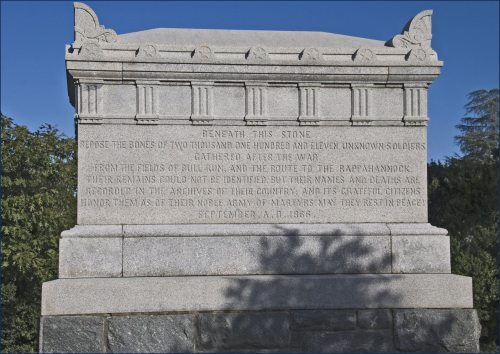
Near Arlington House, in what was once part of its famous rose garden, stands a monument dedicated to the unknown soldiers who died in the Civil War. This monument was the first memorial at Arlington to be dedicated to soldiers who had died in battle, and who later could not be identified.

Near Arlington House, in what was once part of its famous rose garden, stands a monument dedicated to the unknown soldiers who died in the Civil War. This monument was the first memorial at Arlington to be dedicated to soldiers who had died in battle, and who later could not be identified.

And this day shall be unto you for a memorial; and ye shall keep it a feast to the LORD throughout your generations; ye shall keep it a feast by an ordinance for ever. (Exodus 12:14)

Throughout Scripture God gave the children of Israel memorials as memory aids in keeping alive in their conscience His miraculous provision for them. His very name was to be a memorial. “I AM THAT I AM … this is my name for ever, and this is my memorial unto all generations” (Exodus 3:14-15, emphasis added). The celebration of the Passover reminded them of God’s deliverance from their bondage in Egypt. “And it shall be for a sign unto thee upon thine hand, and for a memorial between thine eyes, that the LORD’S law may be in thy mouth: for with a strong hand hath the LORD brought thee out of Egypt” (Exodus 13:9, emphasis added).

The written Word is a memorial. Not long after leaving Egypt, the Israelites faced their first adversary. Amalek, king of the Amalekites, came out in opposition to their progress in the land. The Israelites fought and won against the enemy, “And the LORD said unto Moses, Write this for a memorial in a book, and rehearse it in the ears of Joshua: for I will utterly put out the remembrance of Amalek from under heaven” (Exodus 17:14, emphasis added). Without the written Word, all “remembrance of Amalek from under heaven” would have been forgotten.

Monuments can also serve as memorials. When the children of Israel crossed the Jordan River – on dry ground – to take possession of the Promised Land, God instructed that the head of each of the twelve tribes should pick up a stone as they crossed the Jordan to be assembled on the other side. The purpose was so “That this may be a sign among you, that when your children ask their fathers in time to come, saying, What mean ye by these stones? Then ye shall answer them, That the waters of Jordan were cut off before the ark of the covenant of the LORD; when it passed over Jordan, the waters of Jordan were cut off: and these stones shall be for a memorial unto the children of Israel for ever” (Joshua 4:6-7, emphasis added).

The problem with memorials is that we become so familiar with them that they can be taken for granted. If not accompanied with the instruction and the history behind it, the memorial becomes just another day of festivities, just another book on a bookshelf, or just another pile of rocks. We celebrate Memorial Day this weekend. For many, it is just another three-day weekend suitable for a short getaway, or time spent with family and friends cooking steaks on a grill and just taking it easy without even a thought to the significance of the day.

This weekend is a memorial to all the men and women who have spilt their life’s blood on the battlefield defending this nation’s right to exist and to enjoy the unalienable rights of life, liberty and the pursuit of happiness that come to us from God alone. This is the time when we honor those who have fought and who have died to preserve the American way of life. This way of life is in danger of slipping through our fingers. One of the main reasons for this is that we have forgotten the meaning of our memorials. God help each one of us when that is finally gone.

1 Comment

Filed under Christianity, Current Events, Death, Holidays

What’s Special About Sunday?

In the end of the sabbath, as it began to dawn toward the first day of the week ... (Matthew 28:1)

In the end of the sabbath, as it began to dawn toward the first day of the week … (Matthew 28:1)

And very early in the morning the first day of the week, they came unto the sepulchre at the rising of the sun. (Mark 16:2)

Why should Christians worship on Sunday instead of Saturday as do the Jews and certain other “Christian” denominations? After all, in fourth of the Ten Commandments, God specifically says, “Remember the sabbath day, to keep it holy. Six days shalt thou labour, and do all thy work: But the seventh day is the sabbath of the LORD thy God: in it thou shalt not do any work, thou, nor thy son, nor thy daughter, thy manservant, nor thy maidservant, nor thy cattle, nor thy stranger that is within thy gates: For in six days the LORD made heaven and earth, the sea, and all that in them is, and rested the seventh day: wherefore the LORD blessed the sabbath day, and hallowed it” (Exodus 20:8-11). So, are we in violation of God’s commandment by worshiping on Sunday?

First of all, let me say that setting aside one day of the week for rest and worship is right and proper whether that day be Friday, Saturday, or Sunday or any day of the week for that matter.  “One man esteemeth one day above another: another esteemeth every day alike. Let every man be fully persuaded in his own mind” (Romans 14:5).

Much of the confusion comes with the interpretation of the word “Sabbath” in the Bible.  The word in the Hebrew does not mean “seventh” (shebəiʽi), but rather “rest” or “to rest” (shebbot).  Genesis 2:2 tells us that “on the shebəiʽi day God ended his work which he had made; and he shebbot on the shebəiʽi day from all his work which he had made.”  Translating that seventh day to mean Saturday “assumes” that God began His creative acts on Sunday, and we really have no textual basis for that conclusion other than what has been handed down to us by Jewish tradition – that, however, is not to say that this tradition is in error.  Furthermore, as you study the “Feasts of the Lord” given in Exodus and Leviticus, you find that each of those days is considered a shebbot (Sabbath) regardless of what day of the week it falls on.  So, we need to be careful not to become dogmatic over things on which the Bible is unclear.  However, it is clear that we need to “sanctify” – set aside – one day a week for the Lord.

Today, on Resurrection Day, we celebrate our Lord’s victory over death. (See “Risen Indeed,” where I cover the facts of the Resurrection.) The Resurrection is significant for us who believe because we have the promise that because Christ conquered death, we too can be assured of a resurrection to eternal life. “But if there be no resurrection of the dead, then is Christ not risen: And if Christ be not risen, then is our preaching vain, and your faith is also vain … But now is Christ risen from the dead, and become the firstfruits of them that slept.” (1 Corinthians 15:13-14, 20). Today we rejoice in Christ’s resurrection and look forward to our own resurrection to be with Him eternally.

In the New Testament, the first Jewish Christians went to the temple or synagogue on the Sabbath (Acts 13:14; 17:2; 18:4) for the sake of the Jews, but they also met on the First Day of the week (Acts 20:7; 1 Corinthians 16:2) because this was “the Lord’s Day” and also for the sake of the Gentiles which were not obligated to follow Jewish custom (Colossians 2:16). The reason for this change is because this is when Christ was raised from the dead (Matthew 28:1, Mark 16:2; Luke 24:1; John 20:1).

The First Day of the week was also the day that the Holy Spirit descended upon the disciples gathered in the upper room (Acts 2:1). Scripture does not specify the day of the week, but when you consider that Jesus arose on the first day of the week and count forward 50 days (the Day of Pentecost) you will find that day to be Sunday also. The day that Jesus arose was the “First Omer” (Nisan 16) and the Day of Pentecost was the “50th Omer (Sivan 6). Not only were these days important on the Jewish calendar, but they have even greater significance in the Christian calendar. For this reason, it is proper that Christians should meet on the First Day of the week to celebrate the Risen Lord and the coming of the Holy Spirit.

 So, as you celebrate this Resurrection Lord’s Day, remember why it is so special. He is risen indeed!

Comments Off on What’s Special About Sunday?

Filed under Apologetics, Christianity, Death, Evangelism, Gospel, Heaven, Hell, Religion, Salvation, Theology