Category Archives: Easter

Good For Who?

Set Apart

For I am the LORD your God: ye shall therefore sanctify yourselves, and ye shall be holy; for I am holy: neither shall ye defile yourselves with any manner of creeping thing that creepeth upon the earth.  (Leviticus 11:44)

We are right in the middle of the Lenten Season observed by many mainline Protestant denominations and different varieties of Catholic churches (Roman, Greek, Russian, etc.). Beginning with Ash Wednesday (this year observed on February 10, 2016), the faithful observe 40 days of “fasting” in preparation for Easter. (I prefer calling it Resurrection Sunday.) Celebrants observe the season by giving up something “sacrificial” for Lent. The sacrifice could be anything like giving up TV, Snickers candy bars, eating meat on Fridays, not going to movies or anything equally superfluous, but prior to the season of deprivation, celebrants indulge in a day of depravation known as Fat Tuesday. They stoke up on enough indulgence to last through the 40 days of deprivation.

If it sounds as if I am making light of the observance, please understand that I know many who are sincere in the practice, and that is admirable; however, there are more who observe the season by rote without taking into account the significance. However my theme here is not about Lent, but rather it is about holiness. Would it not be better to live a godly lifestyle consistently as a matter of practice rather than trying to force upon oneself a token meaningless act that, if kept, lasts for a short time and then is forgotten? Indeed, God would have us conduct ourselves in holiness all the time.

I have addressed this topic in the past perhaps because the older I get, the more I recognize my own deficiency in this area. I also see the growing invasion of “worldliness” spreading in our churches, including our more “conservative” evangelical churches. I attribute much of this to a general lack of biblical literacy, especially with regard to Old Testament teaching regarding the Mosaic Law.[1] To many modern Christians, only the New Testament applies to us because we are living under “Grace,” not under the “Law.”[2] That, I believe, comes from a misunderstanding of both Grace and Law.

I recently read through the book of Leviticus, and it once again became apparent to me that many of the laws given had no other purpose than to distinguish the “people of God” from the goyim (Gentiles/nations) among whom they lived. The phrase “be holy” is repeated some 29 times in the Pentateuch, and whether applied to objects used in worship or to the people themselves, it means to set that thing apart for a special and unique purpose. Our leading verse instructs the people to “sanctify yourselves,” i.e. consecrate or set yourselves apart. Where the implements of worship were concerned, they were not to be used for common purposes. Every object used in the Tabernacle (and later in the Temple) was dedicated only for the purpose it was designed. If a platter held the showbread, it could not be used for any other purpose. It was “holy” – dedicated, consecrated, sanctified, set apart for one purpose only.

The people likewise were to be set apart. “Ye shall be holy: for I the LORD your God am holy” (Leviticus 19:2, emphasis mine). For what were they to be holy? “And ye shall be unto me a kingdom of priests, and an holy nation” (Exodus 19:6, emphasis mine). God’s purpose for His people has not changed in that regard. Note John’s description of the risen Christ in his address to the churches: “Unto him [the Lord Jesus Christ] that loved us, and washed us from our sins in his own blood, And hath made us kings and priests unto God and his Father; to him be glory and dominion for ever and ever. Amen (Revelation 1:5b-6).  Just like the nation of Israel, the Church of Christ (not the denomination that takes that name) is to be holy – set apart – to be a kingdom of priests to the world around us.[3]

As kings and priests, we should exemplify the Law of God. We do not obey the Law in order to obtain our position as kings and priests, but because we have obtained that position through Grace. In order to obey the Law, we must first know and understand the Law, and that understanding comes from studying the Law that God gave to Israel in the Old Testament. Granted, much of particulars, such as dress code and dietary laws do not apply to us, but the principle of distinctiveness from the “world” remains.

One example that came to mind was the prohibition from wine that was given to the priests. “And the LORD spake unto Aaron, saying, Do not drink wine nor strong drink, thou, nor thy sons with thee, when ye go into the tabernacle of the congregation, lest ye die: it shall be a statute for ever throughout your generations: And that ye may put difference between holy and unholy, and between unclean and clean” (Leviticus 10:8-10, emphasis mine). Notice that the prohibition was limited to their going into the Tabernacle (later that applied to the Temple). Now consider what Paul said to the Corinthian Church: “Know ye not that ye are the temple of God, and that the Spirit of God dwelleth in you? If any man defile the temple of God, him shall God destroy; for the temple of God is holy, which temple ye are” (1 Corinthians 3:16-17, emphasis mine). Not only are we kings and priests, but we are also the Temple of the Holy Spirit, so with regard to “wine and strong drink” Christians should abstain. Yet there are many Christians that will excuse themselves from this prohibition by saying that the Bible only condemns drunkenness and not simply the occasional glass of wine or just one brewski. Well then, what about the fact that we are kings and priests and that we are the Temple of God? We are to be “holy” in all things. “Be ye holy” was not only meant for the Israelites; it applies to us as well. “But as he which hath called you is holy, so be ye holy in all manner of conversation; Because it is written, Be ye holy; for I am holy” (1 Peter 1:15-16, emphasis mine). That archaic word “conversation” refers to one’s life-conduct; so in every manner in which we conduct our lives, we should be holy.

More examples could be cited. What about the prohibition against tattoos (Leviticus 19:28)? Yet we have many Christians following the pattern of the world rather than being distinct from the world. But the point here is not so much about following an arbitrary set of rules, but following the One who put those rules in place. Over 73 times in the Pentateuch God emphasizes “I AM the LORD.” Forty-five (45) of those (62%, almost 2/3) appear in the book of Leviticus. Might God be trying to tell us something – “Do what I say because I AM the Lord!”

In closing, let me stress that this is meant for God’s people. One does not have to keep the Law to become a child of God. But as any good son desires to please his father, should not God’s children desire to please their Heavenly Father? And how does one do that? One does it by following His laws. He gave them to us as a pattern for our life conduct. Can we do that perfectly? I know I can’t, but that does not mean I don’t try. Nor should it be something over which we fret, because He has given us His Holy Spirit to help our weakness. “I am crucified with Christ: nevertheless I live; yet not I, but Christ liveth in me: and the life which I now live in the flesh I live by the faith of the Son of God, who loved me, and gave himself for me” (Galatians 2:20, emphasis mine). The faith “of the Son of God” is our source of strength. We live holy lives for Him and by Him.

Notes:


[1]  See “Is the Law Sin?” https://erniecarrasco.com/2014/06/08/is-the-law-sin/

[2]  See “God’s Laws” https://erniecarrasco.com/2016/01/10/gods-laws/

[3]  See “Kings and Priests” https://erniecarrasco.com/2015/09/06/kings-and-priests/

1 Comment

Filed under Apologetics, Bible, Christianity, Easter, Religion, Theology

Rich And Ignorant

easter-egg-hunt

A faithful man shall abound with blessings: but he that maketh haste to be rich shall not be innocent.  (Proverbs 28:20)

Several years ago, I had the privilege and distinct joy of taking my beautiful granddaughter, Amri, on an Easter Egg Hunt. She was about five or six at the time. The field where the great hunt took place was littered with a rainbow of candy Easter eggs to the point where one could not take a single step without crushing one of the sweet treasures.  To call it a hunt was a colossal misnomer.  Even a blind person could have scored a bountiful booty by simply falling face down, spread-eagle on the ground and gathering a full wingspan to himself

I was at once amazed and amused as I watched my little one run here, pick up one egg, and then run there and pick up another.  When all was said and done, she may have gathered a dozen eggs even though she could have had a basket full.  If she had just stayed in one place and gathered all that was immediately around her she could have filled her basket in short time, but instead, she went running from one bright attraction to another with absolutely no sense of direction.  She could have “abounded with blessings,” but instead, “she who made haste” came up short.

Aren’t we like that many times?  God has richly blessed us.  His blessings are all around us and yet we fail to see them.  We keep running from one attraction to another and never getting our baskets full and never getting fully satisfied.  I can imagine that as God watches, He is probably more amazed than amused at our frantic search for happiness while He has surrounded us with His blessings.  If we would only slow down long enough to take a good look around, we might see that we are truly rich beyond measure.

In the “Parable of the Soils” Jesus described a soil (a metaphor for people) infested with thorns (the cares of this world).  The sower (God) sows the seed (the Word of God) which falls on different kinds of soil.  Jesus says: “these are they which are sown among thorns; such as hear the word, And the cares of this world, and the deceitfulness of riches, and the lusts of other things entering in, choke the word, and it becometh unfruitful.” (Mark 4:18-19)  If our focus is on the things of this world, i.e., worries, riches, desire for things, the Word will be choked and we will become unfruitful.  Though we are surrounded by the blessings and true riches of God, we will be oblivious to them, running from one candy egg to the next never having our basket full.

Father, God, give us the wisdom and the sight to see the blessings You have provided.  Help us to have our focus rightly placed on You and not on the deceitful riches of this world, in Jesus’ Name, Amen.

2 Comments

Filed under Christianity, Easter, Religion, Thanksgiving

Seeing to Believe

"My Lord and my God."

“My Lord and my God.”

And I will pour upon the house of David, and upon the inhabitants of Jerusalem, the spirit of grace and of supplications: and they shall look upon me whom they have pierced, and they shall mourn for him, as one mourneth for his only son, and shall be in bitterness for him, as one that is in bitterness for his firstborn. (Zechariah 12:10)

My blog is titled “Ernie’s Musings” because I write about things that cross my mind – when I can remember them. So it was this last week as I was in the shower in an effort to wake up and start the day. These days I think a lot about the Lord’s return with great anticipation as well as some dread for loved ones that are not prepared for the event. As I thought about that great event, I recalled the Scripture passage above and imagined the scene described in Revelation 19:11-16:

And I saw heaven opened, and behold a white horse; and he that sat upon him was called Faithful and True, and in righteousness he doth judge and make war. His eyes were as a flame of fire, and on his head were many crowns; and he had a name written, that no man knew, but he himself. And he was clothed with a vesture dipped in blood: and his name is called The Word of God. And the armies which were in heaven followed him upon white horses, clothed in fine linen, white and clean. And out of his mouth goeth a sharp sword, that with it he should smite the nations: and he shall rule them with a rod of iron: and he treadeth the winepress of the fierceness and wrath of Almighty God. And he hath on his vesture and on his thigh a name written, KING OF KINGS, AND LORD OF LORDS.

God long ago selected Israel among all the other nations for a particular purpose:

For thou art an holy people unto the LORD thy God: the LORD thy God hath chosen thee to be a special people unto himself, above all people that are upon the face of the earth. The LORD did not set his love upon you, nor choose you, because ye were more in number than any people; for ye were the fewest of all people: But because the LORD loved you, and because he would keep the oath which he had sworn unto your fathers, hath the LORD brought you out with a mighty hand, and redeemed you out of the house of bondmen, from the hand of Pharaoh king of Egypt. (Deuteronomy 7:6-8, emphasis mine)

God chose Israel for the purpose of bringing Messiah into the world and identifying Him with an undeniable lineage so that He wouldn’t be missed (see Matthew 1:1-16; Luke 3:23-38). God also promised the land of Israel to Abraham as an eternal possession (see Genesis 13:14-15). “Know therefore that the LORD thy God, he is God, the faithful God, which keepeth covenant and mercy with them that love him and keep his commandments to a thousand generations” (Deuteronomy 7:9, emphasis mine).

The history of Israel, from the time of the Exodus to the Babylonian captivity and beyond has been one of rebellion against God. Even now the majority of Israelis practice Judaism more out of tradition than out of a sincere devotion to God. Indeed, Israel is primarily a secular nation. Salvation for Israel has never been a “done deal.” God’s salvation is for individuals, not nations. John the Baptist made this point when a group of Pharisees and Sadducees came to him to be baptized: “And think not to say within yourselves, We have Abraham to our father: for I say unto you, that God is able of these stones to raise up children unto Abraham” (Matthew 3:9).  Salvation is not a national right for Israel. Israel exists as a sign to the world and to give testimony of God’s faithfulness. “God is not a man, that he should lie; neither the son of man, that he should repent: hath he said, and shall he not do it? or hath he spoken, and shall he not make it good?” (Numbers 23:19) God, because of His mercy and faithfulness, will give Israel one final chance to repent, and when they see the Lord returning in the clouds, “they shall look upon me whom they have pierced, and they shall mourn for him, as one mourneth for his only son, and shall be in bitterness for him, as one that is in bitterness for his firstborn” (Zechariah 12:10), but each individually, not as a nation.

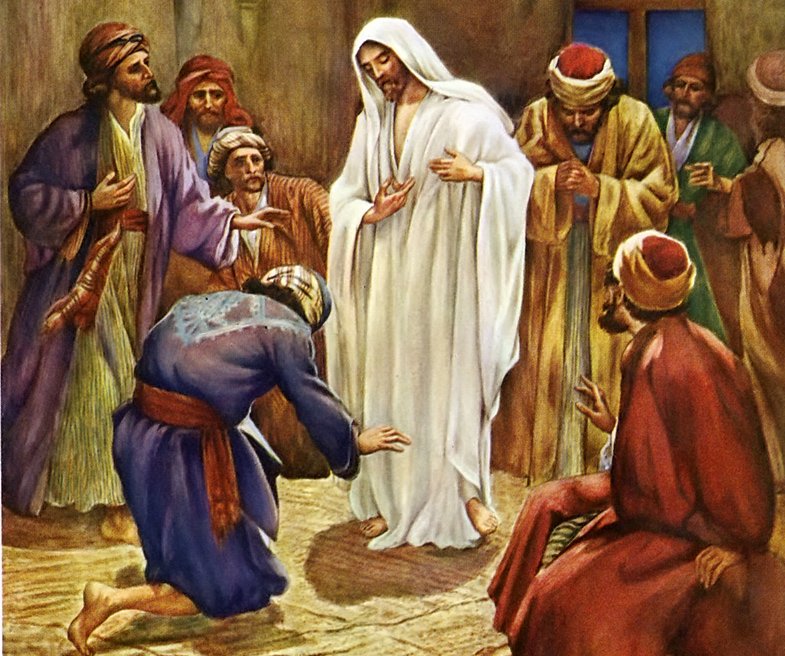
As I mused on this, I recalled John’s account of Thomas, the apostle, following the resurrection of Christ. Jesus was crucified during Passover and placed in a tomb where He laid for three nights and three days (John 19:38-42). Then early on the first day of the week (Sunday), He reclaimed His life and rose from the grave (John 20:1). There He was seen by Mary Magdalene who clung to Him when she saw Him. “Jesus saith unto her, Touch me not; for I am not yet ascended to my Father: but go to my brethren, and say unto them, I ascend unto my Father, and your Father; and to my God, and your God” (John 20:17). Apparently, His absence was brief. Mary Magdalene gave Jesus’ message to the disciples who were holed up in the upper room “for fear of the Jews” (John 20:19). It was the same day in the evening (prior to 6 PM), when “came Jesus and stood in the midst, and saith unto them, Peace be unto you” (v. 19). Thomas was not in the group. When the others gave Thomas the news, “he said unto them, Except I shall see in his hands the print of the nails, and put my finger into the print of the nails, and thrust my hand into his side, I will not believe” (John 20:25). The following Sunday, Jesus once again appeared to His disciples, and this time Thomas was with the group.

Then saith he to Thomas, Reach hither thy finger, and behold my hands; and reach hither thy hand, and thrust it into my side: and be not faithless, but believing. And Thomas answered and said unto him, My Lord and my God. Jesus saith unto him, Thomas, because thou hast seen me, thou hast believed: blessed are they that have not seen, and yet have believed. (John 20:27-29, emphasis mine)

I see a parallel here between this account of Jesus’ resurrection and His return at the last days. The day of Jesus’ resurrection is the presentation of the Gospel which the Apostles received upon seeing Him. Thomas was not there to witness the risen Christ, but the message was presented to him, and he rejected it. The period between the Sunday of Christ’s resurrection and the following Sunday can be compared to the “Church Age” where the Gospel – the good news – is proclaimed but the only evidence is the testimony of the messengers. Those who believe must do so by faith and the credibility of the message. The following week, Christ returns and this time Thomas sees Him in the flesh. This can be compared to the end of this age when the Lord returns to set up His millennial kingdom (Revelation 20). At that time many of the Jews who rejected Him by faith shall look upon Him “whom they have pierced, and they shall mourn for him, as one mourneth for his only son, and shall be in bitterness for him, as one that is in bitterness for his firstborn” (Zechariah 12:10). And Jesus will say, “because thou hast seen me, thou hast believed: blessed are they that have not seen, and yet have believed” (John 20:29, emphasis mine). Jesus will return very soon. Don’t wait to see Him in order to believe. It may be too late then.

2 Comments

Filed under Bible, Christianity, Easter, End Times, Evangelism, Gospel, Religion, Resurrection, Salvation, Second Coming of Christ, Theology

What You Don’t Know

Genesis1

And Jesus answering said unto them, Do ye not therefore err, because ye know not the scriptures, neither the power of God? (Mark 12:24)

Jesus faced His crucifixion just days away. Jerusalem was already in full Passover mode as Jews descended on the capital city from all over the Roman world. This was one of three holy convocations where Jews were to gather to celebrate the Feasts of the Lord (Leviticus 23). The Jewish religious leaders were already plotting to have Jesus killed, but because of His popularity, they couldn’t just kill Him. They had to bring up charges against Him that would warrant execution, so they tried to trip Him up with questions regarding their Jewish laws and traditions.

So it was in this case. First they approached Him with a question on paying taxes to Rome. They first tried to butter Him up with false flattery: “Master, we know that thou art true, and carest for no man: for thou regardest not the person of men, but teachest the way of God in truth” (Mark 12:14). They addressed Him as “Master,” i.e., “teacher,” yet they disregarded His teaching even though they stated that He “taught the way of God.” Their question failed to challenge Jesus. The answer was easy: “Render to Caesar the things that are Caesar’s, and to God the things that are God’s” (Mark 12:17).

The Sadducees, who “say there is no resurrection” (Mark 12:18), followed up with a question concerning the resurrection. Their question was well thought out – they thought. Seven brothers had the same wife, and they all died including the wife. In the resurrection, whose wife shall she be? Aha! Answer that one, Jesus! Jesus replied that there is no marriage in heaven, but before giving His answer, He chided them for their ignorance of Scripture and consequently the power of God (our verse above).

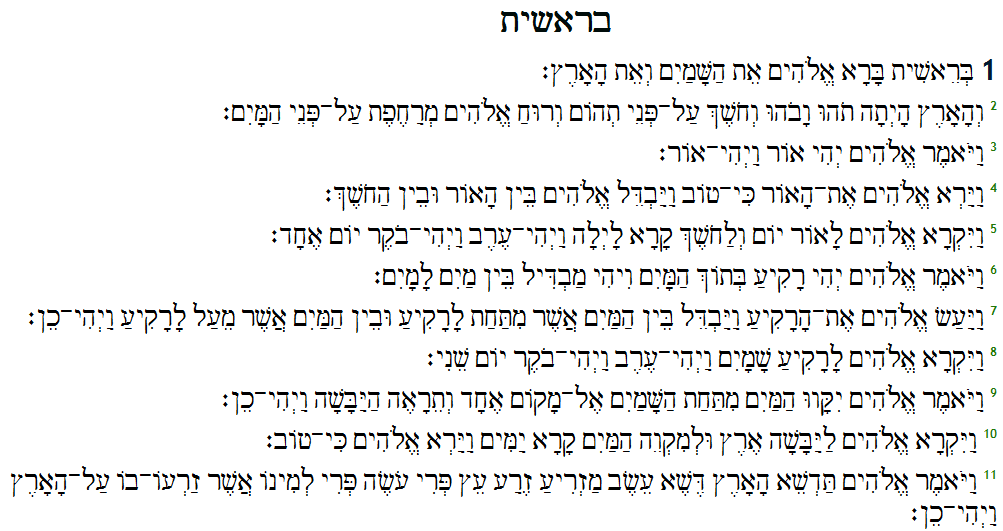
We do often err because we “do not know the Scriptures.” It’s no great challenge to find this ignorance working in a non-believing world, but it’s sad to find the same ignorance, albeit perhaps not as pronounced, among “believers.” One common example is the controversy over creation. Did God cause the Big Bang and then use millions of years of death and suffering to create life by means of evolution? Or did God create in six 24-hour days as clearly recorded in Genesis 1?

Those believers that support the Big Bang and evolution come in different varieties, but they all prefer “science falsely so called” (1 Timothy 6:20) over the clear teaching of Scripture. They hold the word of man in higher regard than the Word of God. They do err because they “know not the scriptures, neither the power of God.” The power of God! God says, “My counsel shall stand, and I will do all my pleasure” (Isaiah 46:10). “I the LORD have spoken it, and I will do it” (Ezekiel 36:36). “And Jesus looking upon them saith, With men it is impossible, but not with God: for with God all things are possible” (Mark 10:27). If God cannot do what He clearly said He did in Genesis 1, then neither can He part the waters of the Red Sea, cause the Sun to stop, or turn back ten degrees, make an ax head float, cleans a leper’s spots, turn water into wine, walk on water or calm the raging sea. If God cannot create as He said He did in Genesis 1, neither can He raise the dead, much less raise Himself from the dead. You do err because you do not know the Scriptures, and because you do not know the Scriptures, you do not know the power of God. What you don’t know can lead you astray. Jesus said, “Search the scriptures; for in them ye think ye have eternal life: and they are they which testify of me” (John 5:39).

Comments Off on What You Don’t Know

Filed under Apologetics, Christianity, Creation, Easter, Evolution, Gospel, Origins, Religion, Resurrection, Science, Theology

Three Days, Three Nights

For he taught his disciples, and said unto them, The Son of man is delivered into the hands of men, and they shall kill him; and after that he is killed, he shall rise the third day. (Mark 9:41)

Bible critics often charge the Scripture with error pointing out that Jesus said He would be in the tomb three days and three nights, but the actual time from Friday evening to Sunday morning is less than 36 hours. That would give Him one full day and two full nights in the grave. That is not exactly what He prophesied. So, is the Bible wrong on this account?

First of all, we need to make one thing perfectly clear: Jesus was raised on the “third day” (Acts 10:40) which was the “first day” of the week (Matthew 28:1; Mark 16:2; Luke 24:1; John 20:1). So, Jesus was in the tomb three days; however, the problem comes up in how those days are reckoned.

Secondly, we need to remember that much of our Christian “practice” has come to us by way of almost 2000 years of “tradition.” The birth of Christ being celebrated on December 25 is one such tradition and “Good Friday” being another. Neither have biblical support. The important thing to remember is that Christ was born, He lived, He died and He rose again. Those events are well worthy of memorializing and celebrating even if our dates (and by that I mean the time of year) are in error. Of course, for those of us who really want to go deeper, those questions do matter, and they are important.

Now, the arguments for the crucifixion having occurred on Friday are weak ones, in my opinion. I arrive at that conclusion from what Jesus clearly said in Matthew 12:40 (at least it’s clear to me): “For as Jonas was three days and three nights in the whale’s belly; so shall the Son of man be three days and three nights in the heart of the earth” (emphasis mine). To me that sounds like 72 hours, but bound by the tradition that Jesus was crucified on Friday, many commentators try to make it work by arguing that any part of a day is considered a day. Jesus was buried at the end of the day (before 6 PM) on Friday; that is one day. He was in the tomb all day on Saturday; that is two days. Finally He arose on Sunday morning (after 6 AM); that makes three days. However, even given partial days counting as a whole, there is no way to get three nights out of that.

In the book, Hard Sayings of the Bible (Intervarsity Press, 1996) the writers argue:

[We] know (emphasis mine) that Jesus was not in the tomb more than thirty-six to thirty-eight hours, since he was buried at evening (which began at about 6 p.m.) on Friday and rose by morning (about 6 a.m.) on Sunday. (p. 380)

Note that they “know.” How do they know? They concede that we understand the phrase “three days and three nights” to mean a 72-hour period, but:

[We] know (emphasis mine) that the phrase “three days and three nights” was not a problem for Matthew, for he can use both that and “on the third day” and include no explanation, which he does in other cases where he senses a problem. (pp. 380-381)

The problem with this argument is that the phrase “three days and three nights” and the phrase “on the third day” have different meanings and certainly different connotations. They go on:

In quoting the scriptural phase [Matthew 12:40] Jesus probably (emphasis mine) did not mean that he [sic] would be buried the exact length of time as Jonah was in the fish, but that he [sic] would like Jonah be “buried” for that approximate (emphasis mine) time and then be “raised.” (p. 381)

Now, I have a real problem with second guessing Jesus. Jesus spoke clearly, and even when He spoke in parables to hide His meaning from the Pharisees, He later clarified the meaning for His disciples. Even when He did not explain His sayings to His disciples, the Gospel writers would parenthetically interpret His meaning. For example, when Jesus said, “Destroy this temple, and in three days I will raise it up” (John 2:19), John quickly explains, “But he spake of the temple of his body” (v. 21). There is no such clarification in Matthew 12:40 given by either Jesus or the Gospel writer, Matthew. That leads me to conclude that when Jesus said He would be in the earth “three days, and three nights,” that is exactly what He meant. A Friday burial does not allow for that even if one concedes partial days because this allows for only two nights, which contradicts Jesus’ words. As an aside, note how God defines His creation days in Genesis 1 by “the evening and the morning;” both are necessary to define a complete 24-hour day. Why would Jesus, the Creator (John 1:1-3), redefine His terms on such an important issue without clarifying His meaning, if He meant something other than what He said?

Some argue for Friday because Scripture tells us that Jesus had to be buried quickly because the following day (which started at 6 PM) was a Sabbath (Mark 15:42; Luke 23:54-56; John 19:31). This error comes from the mistaken idea that the Sabbath means the seventh day of the week (Saturday). The fact is that all Jewish feast days are considered Sabbaths (a day of “rest” – the meaning of the word in Hebrew) regardless of the day of the week on which they fall. Christians do not normally pay attention to Jewish feast days, but if they did, they would find that Passover does not always fall on the same day of the week. Furthermore, the day following Passover is the Feast of Unleavened Bread, and that too is considered a Sabbath regardless of the day of the week on which it falls (see Leviticus 23:4-7). So, the fact that they had to quickly bury Jesus because the following day was the Sabbath does not necessarily mean that the following day was Saturday; it could have been Thursday or Friday.

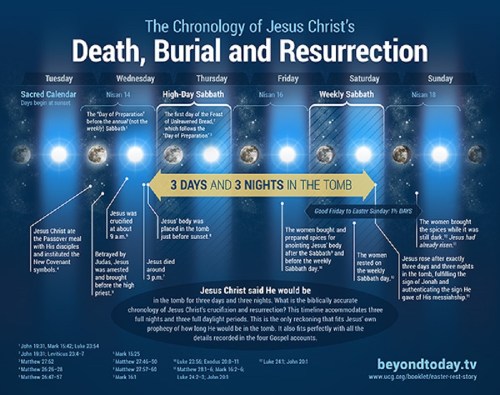
It might be apparent by now that I do not favor a Friday crucifixion and burial. I base my conclusion solely on the words of Jesus and that He meant exactly what He said, i.e., that He would be in the earth (the tomb) three days and three nights. Some reckon this to mean that He was buried on Wednesday and rose on Sunday morning, but this gives four nights and three days if one discounts any part of Wednesday afternoon (3 PM to 6 PM). This is more than 72 hours. However, this discrepancy is resolved when one considers that the first day of the week started after 6 PM on Saturday, so that eliminates Jesus having to spend an extra night in the tomb. I would also be comfortable with a Thursday crucifixion and burial counting the last three hours of Thursday (3 PM to 6 PM) as “a day” with the resurrection taking place on Sunday morning after 6 AM. This will render three days and three nights albeit not exactly 72 hours. Either of these two options are preferable to a Friday crucifixion and burial.

The Bible is not in error because the Bible never specifies the day of the week on which Jesus was crucified. We know that Jesus was crucified on Passover. We know that the following day was “the Day of Preparation” ( Matthew 27:62; Mark 15:42; Luke 23:54; John 19: 42) otherwise known as the Feast of Unleavened Bread – a Sabbath. We also know that Jesus rose on the first day of the week (Matthew 28:1; Mark 16:2; Luke 24:1; John 20:1), and we know He was in the tomb three days. So, counting back three full days from Sunday takes us back to Thursday or Wednesday, but not Friday. So, the Bible is true and the traditions of men are false.

2 Comments

Filed under Apologetics, Christianity, Easter, Evangelism, Gospel, Religion, Resurrection, Salvation, Theology