Category Archives: End Times

Coming Soon!

But the end of all things is at hand: be ye therefore sober, and watch unto prayer.  (1 Peter 4:7)

I have been looking for the return of Christ from the time I read Hal Lindsey’s The Late Great Planet Earth back in 1971. Since that time, and through further studies into the “Feasts of the Lord” (Leviticus 23),[1] I have concluded that Jesus will probably return at the Feast of Trumpets, in early fall, around late September or early October. For the last 20 years or so, I have looked forward with anticipation to the coming of Rosh Hashanah in hopes that Jesus will appear to take us home. Obviously, I am disappointed every year, but my hope remains strong. I know Jesus will return as He said, “And if I go and prepare a place for you, I will come again, and receive you unto myself; that where I am, there ye may be also” (John 14:3).

It surprises me (although it shouldn’t) that many, including “Christians,” do not share the same hope, or at least do not seem as enthusiastic about it as I am. Many Christians that I know, although they say they wish Jesus would return soon, conduct their lives as if that hope is just a fanciful dream that lies ahead in some nebulous future. Consequently, their conversations center around the things that currently most occupy their minds – the status of their favorite sports team, the latest movie, what goes on in government or in the news, the antics of their children, grandchildren or their dogs, etc. Rarely do I find a brother who wants to have a conversation about what is going on in the world and how that fits into End-Times prophecy. The Apostle Peter said that such times would come: “Knowing this first, that there shall come in the last days scoffers, walking after their own lusts, And saying, Where is the promise of his coming? for since the fathers fell asleep, all things continue as they were from the beginning of the creation.” (2 Peter 3:3-4, emphasis mine).

To be fair, my Christian brothers (those that I know) are not “scoffers,” per se. Scoffers are typically not Christians, but among the “Evangelical” ranks there is a growing number of scoffers that have stopped “Looking for that blessed hope, and the glorious appearing of the great God and our Saviour Jesus Christ” (Titus 2:13, emphasis mine).

Four times in the Apocalypses our Lord affirms, “I come quickly” (Revelation 3:11; 22:7, 12, 20). He repeats phrase three times at the closing of the prophecy with the added affirmation, “Surely” on His final reprise. Jesus is coming soon – very soon!

This year, 2017, looks like a very good candidate for this event. I realize that a variety of views exist concerning the Second Coming of Christ. I have written on this topic on numerous occasions,[2] so I will not spend time reviewing all the different views here. I will present this argument from a pre-millennial, pre-Tribulation Rapture perspective. Basically, that means that I believe in the literal reign of Christ on earth for 1000 years after His return (Revelation 20). I understand Christ’s return to be in two phases: (1) He comes for His Bride (the Church) before the beginning of the Tribulation, and (2) He returns with His Bride at the end of the 7-year Tribulation to reign on earth for 1000 years.

In discussing End-Times prophecy, the nation of Israel is the key. All end-times prophecy focuses on Israel. When the scoffers say, “Where is the promise of his coming? for since the fathers fell asleep, all things continue as they were from the beginning of the creation” (2 Peter 3:4), their assessment is valid except for the “Israel factor.” Before 1948, End-Times prophecy made no sense, because things indeed continued, “as they were from the beginning.” When one studies End-Times prophecy in the Old Testament, Israel plays a prominent role; therefore, without Israel, those prophecies cannot be fulfilled. That all changed on May 14, 1948, when Israel once again became a sovereign nation. Those of us with “eyes to see” current cosmic and world conditions observe End-Times prophecy taking place before our very eyes. Obviously, those with no “eyes to see” miss it, and they carry on “as in the days of Noah” (Matthew 24:37-39).

So, what makes me think 2017 is the year? Well, this is a complicated study, but I will try to keep it simple. First, and most importantly, the Jews are back in their Promised Land, and Israel. This fulfills Ezekiel’s prophecy of the “dry bones” (Ezekiel 37).

Second, God established a system of Jubilee years where every 50 years, all property reverted to the original owner, and all debts were canceled (Leviticus 25). This law was given around 1433 B.C. and 2017 will complete the 70th Jubilee since the law was given. Seven and 70 are significant numbers in the Bible that denote completion. God completed His creation in six days and rested on the seventh (Genesis 2:1-3). Israel failed in keeping the Sabbath Years (allowing the land to lay fallow and rest from production) for 490 years; therefore God sent them captive to Babylon for 70 years (2 Chronicles 36:21; Jeremiah 29:10; Daniel 9:2) – one year for every Sabbath Year they failed to keep (7 x 70 = 490).

Third, in 1917, the Belfour Declaration (the 68th Jubilee) returned the Promised Land to the Jews. On May 14, 1948, the United States and the United Nations recognized Israel as a sovereign nation. Not long after that, Israel ceded control of Jerusalem and the West Bank to Jordan “for peace.”  Then in 1967 (the 69th Jubilee – 1917+50 = 1967), the Arab nations (Egypt, Saudi Arabia, Jordan, Syria, and Iraq) surrounded and attacked Israel. In what can only be called “Divine intervention,” Israel repelled all her enemies, conquered the Sinai Peninsula, and regained Jerusalem and the West Bank. They gave back the Sinai Peninsula to Egypt “for peace.” Even though Israel regained control of Jerusalem (their “eternal” capital), they gave control of the Temple Mount to the Palestinians “for peace.” (Lesson: Land for peace is a failed policy.) Considering God’s faithfulness, it is possible that this year, 2017 (the 70th Jubilee), control of the Temple Mount could return to Israel where they will rebuild their Temple. The plans are in the works. The Temple implements and furnishings are ready. The priests have been identified and the high priest has been selected. They have the right kind of sheep for the sacrifices, and they even have red heifers for the Temple dedication. Rumor has it that President Donald Trump has someone in mind to negotiate “permanent peace” with Israel and her Arab neighbors. Could this be the peace that will allow Israel to build her Temple? Could this peacemaker be the “prince” (aka, the Antichrist) spoken of by Daniel the prophet (Daniel 9:26-27)?  The year 2017 is prime for such an event.

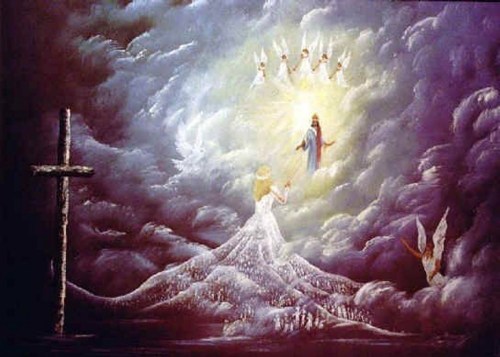
Fourth, Revelation 12:1-6 speaks of a “sign” – “a great wonder” – in heaven. Genesis 1:14 says that God created the “lights in the firmament” to “be for signs, and for seasons.” The Hebrew word translated as “signs” is ‘ôth, and it means “a signal, flag, beacon, or omen.” In the “Unveiling,” John describes “a woman clothed with the sun, and the moon under her feet, and upon her head a crown of twelve stars” (v. 1). The woman is pregnant and gives birth to “a man child, who was to rule all nations with a rod of iron” (v. 5). When the child is born, he is “caught up” to heaven to save him from the “dragon” that is waiting to “devour” him (v. 4).

In the past, scholars understood this passage as either the Virgin Mary giving birth to Jesus or Jesus coming forth from Israel. The latter makes more sense from an End-Times prophecy perspective, and I have always understood it this way. However, recently some amateur astronomers made an amazing discovery in the heavens. On September 23/24, 2017, the constellation Virgo will appear[3] “clothed with the sun, and the moon under her feet, and upon her head a crown of twelve stars.” The constellation Leo, which precedes Virgo in the Zodiac, will be at Virgo’s head with a conjunction of three planets (Mercury, Venus, and Mars) next to it. Leo has nine stars in its constellation and the three planets will make a crown of “twelve stars.” According to these astronomers, this unique phenomenon, which can only be observed from the area around Israel, only occurs once in 7000 years.[4] Furthermore (again this is as viewed from Israel), Jupiter, the King Planet, entered the Virgo’s “womb” around mid-December 2016 and has remained there in retrograde motion all this time. It will exit from between Virgo’s feet (as in childbirth) on September 23, 2017, 40 weeks after it entered, the normal time for human gestation. Some suggest that the “birth” of the King planet represents the Rapture of the Church, not the birth of Christ. Since the Church is the “body” (and Bride) of Christ, and since the male child is “caught up” (v. 5) to heaven (Greek: harpazō, i.e. “raptured”), they conclude that the Rapture of the Church is represented here. Prophecy often carries more than one application; therefore, this idea has merit.  I find that fascinating!

Let me respond to the obvious objections. First of all, God forbids the practice of astrology – the practice of foretelling the future and guiding our lives by the Zodiac. Furthermore, the ancients worshiped the stars; they saw their gods in the stars, i.e., in the Zodiac. However, God placing an alert sign in the heaven is consistent with what God has done in the past. Remember, God placed a special star in the heavens that alerted the Magi to the birth of the Savior (Matthew 2:1-2). Some have studied the Zodiac and determined that God placed the entire Gospel message in the stars.[5], [6] This is not such a farfetched idea when we consider that everything God does, Satan attempts to pervert. With that in mind, it is certainly plausible that God arranged this “Revelation 12 Sign” to mark the time for the beginning of the Tribulation and the Second Coming of Christ.

Another objection comes from Jesus’ own words.  “But of that day and hour knoweth no man, no, not the angels of heaven, but my Father only” (Matthew 24:36). However, what many do not know is that the Feast of Trumpets, Rosh Hashanah, is the feast that “no man knows the day or the hour.”  Two days are reserved for Rosh Hashanah because the sighting of the New Moon marks the beginning of the feast. They know “about” when the New Moon will appear, but they do not know the exact day or hour. When the New Moon is sighted and verified, the feast can begin. “Watch therefore: for ye know not what hour your Lord doth come” (Matthew 24:42).  Without being dogmatic or setting a date, September 23, 2017, seems like a good candidate for the Rapture event. If it does not take place, I will be disappointed, but not disheartened.

Other recent “signs in the sun, and in the moon, and in the stars” (Luke 21:25) include the Tetrad of Blood Moons that fell on feast days in the spring and fall of 2015 and 2016. Those have been seen as ominous harbingers of things to come. Additionally, the United States will experience the first total solar eclipse in 26 years on August 21, 2017. While lunar eclipses are harbingers for Israel, solar eclipses are considered harbingers for the Gentile nations. That this eclipse transits the continental United States from coast to coast (along with other factors) has many seeing dark days ahead for America.

Finally, the world is in a mess. The tinderbox of the Middle East could erupt at any moment, and the enemies that surround Israel are poised for any excuse to wipe her off the map. The nations of the world clamor for a one-world order. Even in the United States, many would willingly relinquish our sovereignty to the UN. Economies worldwide are failing. Some prophets of doom predict that the US economy will collapse this summer. If that happens, the effect will impact the entire world. Violence in Europe, the Middle East, Venezuela, and our own nation continues to escalate. For those who place their hope in the things of this world, the prospect is terrifying, but for me and others who place their hope in Christ, the future could not look any brighter.

Reader, if you fear the future, I invite you to turn to Jesus and place your trust and hope in Him. He is coming soon!

For more information on End-Times Prophecy, here are a few sites that I recommend:

Olive Tree Ministries: http://www.olivetreeviews.org/

Discovery Missions: https://garyfrazier.com/

Prophecy Watchers: https://prophecywatchers.com/

Terry James Prophecy Line: https://terryjamesprophecyline.com/

Rapture Ready: http://www.raptureready.com/

Prophecy in the News: https://prophecyinthenews.com/

Notes:


[1]  I discuss the seven Feasts of the Lord in my article “Rosh HaShanah” https://erniecarrasco.com/2016/10/03/rosh-hashanah/

[2]  My writings on the Second Coming: https://erniecarrasco.com/category/second-coming-of-christ/

[3]  “Appear” is a relative term because this particular conjunction of stars and planets will be obscured because Virgo will be “clothed” with the sun.

[4]  For a young-earth/universe creationist and biblical dispensationalist, this means that this event has never happened before making its appearance so much more significant.

[5]  “Is There a Gospel in the Stars?” http://www.setterfield.org/stargospel.html

[6]  Joseph A. Seiss, The Gospel in the Stars, available at most book outlets.

2 Comments

Filed under Apologetics, Christianity, Current Events, End Times, Evangelism, Religion, Second Coming of Christ

MIND GAMES – By Camilla Smith « Terry James Prophecy Line

Source: MIND GAMES – By Camilla Smith « Terry James Prophecy Line

“How much time are you spending watching videos about giants, fallen angels and CERN?   How many hours are you worrying about politics and making America great again? Reality shows?   Celebrity stories?   Video games?   How’s that working for you?   How does it make you feel?   Sad?  Depressed?   A little nervous and anxious?   Can you still function? … Disconnect from the world and tune in to your Master.   It’s time to walk and talk with Him and pray us Home.”

This article offers great insight for our times … https://terryjamesprophecyline.com/2017/06/29/mind-games-by-camilla-smith/

1 Comment

Filed under Christianity, Current Events, End Times, Second Coming of Christ

Pentecost

And they were all filled with the Holy Ghost, and began to speak with other tongues, as the Spirit gave them utterance. (Acts 2:4)

God gave the Feast of Weeks, a.k.a. Shavu’ot, (Leviticus 23:15-22) as the fourth of the Feasts of the Lord and the last of the spring feasts. God gave seven feasts to be observed as holy (i.e., set apart, consecrated, dedicated) convocations where all males over the age of 20 were required to attend. Later in their history, the Jews added Purim to celebrate their divine preservation in Babylon/Persia (Esther 9:20-32) and Chanukah, the Festival of Lights, to celebrate the rededication of the Temple after Antiochus IV Epiphanes desecrated it in 165 B.C. These last two are rabbinical festivals and do not bear the same significance as the Feasts of the Lord. The Lord’s feasts not only have religious significance, but they are prophetic of the coming Messiah. Jesus fulfilled the four spring feasts (Passover, Unleavened Bread, First Fruits, and Pentecost) at His first coming; the fall feasts (Feast of Trumpets, Day of Atonement, and Feast of Tabernacles) He will fulfill at His second coming.

Pentecost, a.k.a. Feast of Weeks, a.k.a. Shavu’ot, came 50 days after the Feast of First Fruits (Leviticus 23:16). At First Fruits, the devotee would bring some of the sprouts of the barley crop to the priest as a thank (wave) offering to God for the promise of bountiful harvest. Jesus fulfilled this feast when He rose from the dead (1 Corinthians 15:20). Forty days later (Acts 1:3), Jesus ascended to heaven, but before He did, He instructed His disciples (not just the apostles), “that they should not depart from Jerusalem, but wait for the promise of the Father, which, saith he, ye have heard of me.  For John [the Baptist] truly baptized with water; but ye shall be baptized with the Holy Ghost not many days hence” (Acts 1:4-5, emphasis mine). Pentecost came ten days later. This was the barley harvest celebration. Prophetically, this feast looked forward to the birth of the Church.

On Pentecost, Luke records that the disciples, about 120 in number (Acts 1:15), were gathered together “with one accord” (Acts 2:1), “And suddenly there came a sound from heaven as of a rushing mighty wind, and it filled all the house where they were sitting. And there appeared unto them cloven tongues like as of fire, and it sat upon each of them” (Acts 2:2-3, emphasis mine). This occasion reminds us of a similar manifestation in the Old Testament. When the children of Israel erected the tabernacle in the wilderness, “Then a cloud covered the tent of the congregation, and the glory of the LORD filled the tabernacle” (Exodus 40:34, emphasis mine). Similarly, at the dedication of Solomon’s Temple, “Now when Solomon had made an end of praying, the fire came down from heaven, and consumed the burnt offering and the sacrifices; and the glory of the LORD filled the house. And the priests could not enter into the house of the LORD, because the glory of the LORD had filled the LORD’S house. (2 Chronicles 7:1-2, emphasis mine).

The tongues of fire resting upon each of the disciples at Pentecost proclaimed that no longer would the Spirit of God be confined to a manmade structure, but in a temple created by God. “Know ye not that ye are the temple of God, and that the Spirit of God dwelleth in you?” (1 Corinthians 3:16, emphasis mine). At Pentecost, the Holy Spirit took up residence in the heart of every believer, and thus the Church of God (not the denomination that takes that name) was born.

This year, Pentecost falls on May 31, 2017. The year 2017 is significant to many who study end-times prophecy for a number of reasons, which I cannot go into detail at this time. One of these is that 2017 is a Year of Jubilee (Leviticus 25:8-13). Briefly, in 1917, the Balfour Declaration returned the land of Israel back to the Jews. Fifty years later, 1967, the Israelis recaptured their ancient capitol of Jerusalem. Since Jubilee is the time when all property reverts to its original owner, perhaps this year the Temple Mount will be returned to its rightful owners, the Jews.  This is the hope among many faithful Jews. All the instruments for the Temple are ready and even the priests are ready to take up their duties. The only thing missing is the Temple and the land on which the Temple is to be built. Perhaps this Jubilee will be the year that takes place.

There is also much talk about the Revelation 12 sign. Supposedly, on September 23, 2017 the constellation Virgo will appear “clothed with the sun, and the moon under her feet, and upon her head a crown of twelve stars” (Revelation 12:1). That Virgo appears clothed with the sun and the moon at its feet is an annual occurrence.  However, this year the constellation Leo will be accompanied by a conjunction of three planets, Mercury, Mars and Venus. Together with the nine major stars in Leo’s constellation, this grouping will form a crown of 12 stars above Virgo’s head. Supposedly, this particular configuration of heavenly objects has never before been observed, and it would only come about once every 7,000 years. In addition, Jupiter, the King Planet, entered Virgo’s “womb” on December 16, 2016, and will remain there 40 weeks, the normal length of human gestation. Then on September 23, 2017 (Feast of Trumpets), it is due to exit Virgo from between her feet (Revelation 12:5). Many prophecy teachers, while maintaining that they are not “date setting,” see this as a “possible” time for the Rapture of the Church. Other prophecy teachers see the Revelation 12 sign as merely analogous to Israel (the woman) giving birth to Jesus and His being taken up unto heaven.  Those that argue for the Rapture sign rightly point out that prophecies in the Bible often carry more than one meaning. Therefore, they suggest that the birth of this “man child” is the “body” of Christ, i.e. the Church, which is “caught up” (Greek: harpazō) or raptured up to heaven.

However, some suggest that Pentecost 2017 is also a good candidate for the Rapture. They conclude that since Jesus ascended ten days before Pentecost, He did not truly fulfill that feast, and that the “harvest” is yet ahead. Maybe so. Whether the Rapture takes place this year on May 31 (Pentecost), September 23 (Feast of Trumpets), or some other time, Jesus admonished us, “Occupy till I come” (Luke 19:14). The Apostle Paul informs us of a special reward that awaits those who anxiously look for Jesus’ return. “Henceforth there is laid up for me a crown of righteousness, which the Lord, the righteous judge, shall give me at that day: and not to me only, but unto all them also that love his appearing” (2 Timothy 4:8, emphasis mine). “Even so, come, Lord Jesus” (Revelation 22:20).

6 Comments

Filed under Christianity, End Times, Religion, Second Coming of Christ

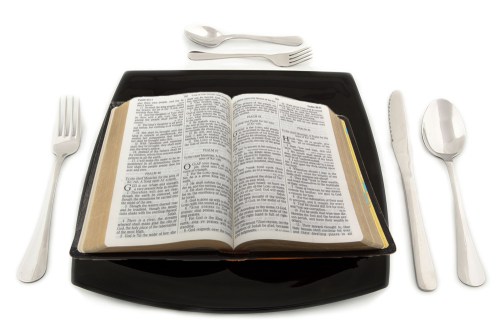
Tasty Book

And I went unto the angel, and said unto him, Give me the little book. And he said unto me, Take it, and eat it up; and it shall make thy belly bitter, but it shall be in thy mouth sweet as honey. And I took the little book out of the angel’s hand, and ate it up; and it was in my mouth sweet as honey: and as soon as I had eaten it, my belly was bitter. (Revelation 10:9-10)

Before ascending to His throne “on the right hand of the power of God” (Luke 22:69); Jesus hinted at the possibility that John the Beloved, might live until His return. “Jesus saith unto him [Peter], If I will that he [John] tarry till I come, what is that to thee? follow thou me” (John 21:22). In a way, that did indeed come to pass. John is probably the only one of Jesus’ apostles that died a natural death and did not experience martyrdom. Jesus granted John the unique privilege of seeing end-time events from a heavenly perspective.

While exiled on the island of Patmos for the sake of the Gospel (Revelation 1:9), John had a vision of the risen Christ and was “raptured” up to heaven to witness events at the end of time (Revelation 4:1). So, in a manner of speaking, John did indeed tarry until the coming of the Lord.

Beginning with Chapter 6 of the Apocalypse, John witnesses the horrors of the first half of the Tribulation. Following the sounding of the Sixth Trumpet (Revelation 9:13-21), there is a pause in the activity on earth and the scene shifts to what is taking place in heaven.

John describes the scene this way. “And I saw another mighty angel come down from heaven, clothed with a cloud: and a rainbow was upon his head, and his face was as it were the sun, and his feet as pillars of fire: And he had in his hand a little book open: and he set his right foot upon the sea, and his left foot on the earth” (Revelation 10:1-2, emphasis mine). The “mighty angel” that John saw is the Lord Jesus Christ. We know this by the description given by John. The Mighty Angel is clothed with a cloud as He was when He ascended to heaven (Acts 1:9). He is crowned with a rainbow like the one John saw around the throne of God (Revelation 4:3), and “His feet as pillars of fire” take us back to John’s initial meeting with the risen Christ (Revelation 1:15). He stands with one foot on the sea and the other on the land indicating His dominion over all the earth. Furthermore, He declares, “that there should be time no longer” (Revelation 10:6), something only God can control.

In His hand, He carries “a little book open.” A voice from heaven instructs John to take the little book from the Mighty Angel. Fearlessly, John records, “And I went unto the angel, and said unto him, Give me the little book” (Revelation 10:9a). We are awestruck by John’s boldness in the presence of the risen Lord until we recall that this was “that disciple whom Jesus loved” (John 21:7). “And he said unto me, Take it, and eat it up; and it shall make thy belly bitter, but it shall be in thy mouth sweet as honey. And I took the little book out of the angel’s hand, and ate it up; and it was in my mouth sweet as honey: and as soon as I had eaten it, my belly was bitter” (Revelation 10:9b-10, emphasis mine).

Eating a book seems rather strange to us, but this is not the first time such imagery is presented in the Bible. The book represents the Word of God. God instructed the Prophet Ezekiel, “But thou, son of man, hear what I say unto thee; Be not thou rebellious like that rebellious house: open thy mouth, and eat that I give thee. And when I looked, behold, an hand was sent unto me; and, lo, a roll of a book was therein; And he spread it before me; and it was written within and without: and there was written therein lamentations, and mourning, and woe. (Ezekiel 2:8-10, emphasis mine). He continues, “So I opened my mouth, and he caused me to eat that roll. And he said unto me, Son of man, cause thy belly to eat, and fill thy bowels with this roll that I give thee. Then did I eat it; and it was in my mouth as honey for sweetness” (Ezekiel 3:2-3, emphasis mine).

The Prophet Jeremiah experienced something similar when he said, “Thy words were found, and I did eat them; and thy word was unto me the joy and rejoicing of mine heart: for I am called by thy name, O LORD God of hosts” (Jeremiah 15:16, emphasis mine). The psalmist says, “The fear of the LORD is clean, enduring for ever: the judgments of the LORD are true and righteous altogether. More to be desired are they than gold, yea, than much fine gold: sweeter also than honey and the honeycomb” (Psalm 19:9-10, emphasis). “How sweet are thy words unto my taste! yea, sweeter than honey to my mouth!” (Psalm 119:103).

For the child of God, His Word is sweet. It gives comfort, hope and security. Some have called it God’s love letter to the world. It is sweet to feast upon the Word of God. However, its consumption also brings bitterness. Why? Perhaps it is precisely because we are His children that we share His remorse for the lost who reject His Word. “Have I any pleasure at all that the wicked should die? saith the Lord GOD: and not that he should return from his ways, and live?” (Ezekiel 18:23). “Say unto them, As I live, saith the Lord GOD, I have no pleasure in the death of the wicked; but that the wicked turn from his way and live: turn ye, turn ye from your evil ways; for why will ye die, O house of Israel?” (Ezekiel 33:11, emphasis mine). “The Lord is not slack concerning his promise, as some men count slackness; but is longsuffering to us-ward, not willing that any should perish, but that all should come to repentance” (2 Peter 3:9, emphasis mine).

The Word of God is Good News to the one who accepts it and consumes it; but it is bad news for the one who rejects its warnings. To the one who “eats” of its sweetness, it becomes bitterness knowing that friends and loved ones who reject its message are doomed to an eternity in “the lake of fire: (Revelation 20:15). Still, the Word of God is a “tasty book.”

Reader, if you have not tasted of God’s Word, time is getting short. Do not waste another day!

1 Comment

Filed under Bible, Christianity, End Times, Gospel, Heaven, Hell, Religion, Salvation, Theology

Good Guys Go to Hell

And in hell he lift up his eyes, being in torments, and seeth Abraham afar off, and Lazarus in his bosom. (Luke 16:23)

A popular idea going around these days suggests that anyone can go to heaven, if he or she is a “good” person. That sounds good, but by what standard does one measure “goodness”? The fornicator may say, “I’m not so bad; I won’t cheat on my wife.” The adulterer might say, “I’m not so bad; I’ve never molested a child.” The child molester could say, “I’m not so bad; I’ve never murdered anyone.” The murderer excuses himself, “I’m not so bad; the one I killed had it coming.” He would also add, “I am not a mass murderer,” and so on. Each one is not as bad as the other person is; by their own standard, they qualify for heaven. However, heaven’s standards exceed those we place on ourselves.

Jesus recounts the death of two men. The account is often mistaken as one of Jesus’ parables; however, the matter-of-fact telling of the account carries no alternative meaning, as do the regular parables of Jesus. In this instance, Jesus gives the proper name of one of the characters, Lazarus. He refers to the second man simply as “a rich man.” In this account, Jesus gives the impression that He has firsthand knowledge of the parties involved, so it makes one wonder why the rich man remains unnamed. The Bible tells us that “when the roll is called up yonder,” those who have died without Christ will be judged by their works recorded in “the books” (Revelation 20:12-13). When their “works” fail to meet heavenly standards, those being judged will be looked up in the Book of Life, and when their names are not found there, they will be cast into “the lake of fire” (Revelation 20:15). Perhaps this is why Jesus does not name the rich man. On the other hand, Jesus knows Lazarus by name. Jesus said, “My sheep hear my voice, and I know them, and they follow me: And I give unto them eternal life; and they shall never perish, neither shall any man pluck them out of my hand” (John 10:27-28, emphasis mine). Apparently, Jesus did not know the rich man meaning that the rich man was not one of His sheep.

As Jesus relates the account, the worst thing said about the rich man is that he “was clothed in purple and fine linen, and fared sumptuously every day” (Luke 16:19). Is there anything sinful about being rich? Surely, that cannot be the reason for his eternal life sentence! Indeed, “in hell he lift up his eyes, being in torments, and seeth Abraham afar off,” (Luke 16:23, emphasis mine). Abraham was one of the richest men recorded in the Bible, yet there he is in paradise, so wealth was not the man’s problem.

Jesus tells us that Lazarus, a beggar, “was laid at his gate, full of sores, And desiring to be fed with the crumbs which fell from the rich man’s table” (Luke 16:20-21). The account implies that the rich man took no notice of the beggar’s plight, although Jesus does not explicitly say so. Very possibly the rich man tossed a few coins to the beggar from time to time as might be expected of a man of his status. Even here, we find no “sin” worthy of an eternal sentence to hell.

One characteristic about the rich man that clearly comes through in Jesus’ account is his self-centeredness or self-focus, especially upon his arrival in hell. “And he cried and said, Father Abraham, have mercy on me, and send Lazarus, that he may dip the tip of his finger in water, and cool my tongue; for I am tormented in this flame” (Luke 16:24, emphasis mine). Even in his circumstance, he considered himself superior to Lazarus so that Lazarus should serve him. His request denied and realizing that his fate is permanent, he suddenly becomes evangelistic. “Then he said, I pray thee therefore, father, that thou wouldest send him to my father’s house: For I have five brethren; that he may testify unto them, lest they also come into this place of torment.” (Luke 16:27-28, emphasis mine). Notice his concern is not for a lost world, but only for his family.

We see that the rich man was self-indulgent – “But Abraham said, Son, remember that thou in thy lifetime receivedst thy good things” (Luke 16:25) – and egocentric. So what! Did that make him an evil person deserving hell? My guess is that the rich man was probably a pretty good guy over all. Jesus does not say that he mistreated Lazarus in any way, only that Lazarus desired “to be fed with the crumbs which fell from the rich man’s table” (Luke 16:21). That only means that the rich man took no real notice of the beggar’s plight. If such neglect condemns one to hell, then I plead guilty as charged. Not a day goes by that I do not see someone begging on some street corner of Dallas, and I drive on by. No, that was not the rich man’s problem.

The unnamed rich man’s problem was his ignorance of the Good Shepherd. The rich man was not one of Jesus’ sheep; Lazarus was, though. Jesus knew his name, and he gained entry into the presence of God. The rich man did not go to hell because he was some kind of great sinner; he went to hell because his name was not written in the Lamb’s Book of Life. Heaven – the New Jerusalem – is an exclusive place. “And there shall in no wise enter into it any thing that defileth, neither whatsoever worketh abomination, or maketh a lie: but they which are written in the Lamb’s book of life” (Revelation 21:27, emphasis mine). The rich man’s name was not recorded in that book, but Lazarus’ name was recorded there, which is why Jesus knew his name.

How about you, Reader? Is your name recorded in the Lamb’s Book of Life? If not, you will end up with that nameless rich man, and humanly speaking, you may even be a better person than the rich man. You may consider yourself to be a good person, but at the Great White Throne Judgment, when the books are brought out (Revelation 20:12-13) (one of which is the Word of God, the Bible), your good deeds will be judged according to the standard of God’s Word. Prepare yourself. You will not measure up. “For all have sinned, and come short of the glory of God” (Romans 3:23). Your only hope is for your name to be listed in the Lamb’s Book of Life. Ask Jesus to write your name in His book today. “For whosoever shall call upon the name of the Lord shall be saved” (Romans 10:13). “That if thou shalt confess with thy mouth the Lord Jesus, and shalt believe in thine heart that God hath raised him from the dead, thou shalt be saved” (Romans 10:9). Good guys go to hell, but those whose names are written in the Lamb’s Book of Life will be saved. Do it today!

Jesus’ account of the rich man and Lazarus is recorded in Luke 16:19-31.

Comments Off on Good Guys Go to Hell

Filed under Apologetics, Christianity, Death, End Times, Evangelism, Gospel, Heaven, Hell, Religion, Salvation, Theology