Category Archives: Evangelism

Jesus’ Seven ‘I AM’ Statements in John (3)

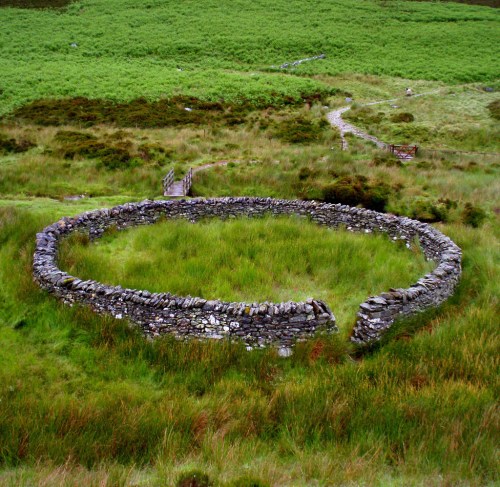
sheepfold

I am the door: by me if any man enter in, he shall be saved, and shall go in and out, and find pasture. (John 10:9)

This third “I AM” statement directly follows Jesus’ healing of the man who was blind from birth (John 9). That event was the sixth of seven signs highlighted in John’s gospel, which I will cover later. Jesus charges the religious leaders with incurable blindness because, in their blindness, they do not recognize their own blind condition. “Jesus said unto them, If ye were blind, ye should have no sin: but now ye say, We see; therefore your sin remaineth” (John 9:41, emphasis mine). It is true that before it is resolved, a problem must first be acknowledged. The alcoholic must acknowledge his alcoholism before he can work on the cure. The drug addict must recognize her addiction before she will submit to rehabilitation. A couple must admit their marriage is in trouble before they seek counselling. The blind must “see” their darkened condition before they will seek the light. The sinner must admit he is a sinner before he will seek the Savior.

To make His point, Jesus offers these spiritually self-blinded Pharisees a simple illustration obvious only to a spiritually sighted person. He draws a word picture of a sheepfold. This was a low-wall stone enclosure with only one entrance constructed for the protection of the flock from predators. After a long day of grazing in the pasture, the shepherd led the sheep to the sheepfold for the night. There, a gatekeeper or, “porter” (John 10:3), guarded the entrance where only the shepherd could gain access to the sheep. Jesus points out that a thief jumps the wall (John 10:1), but the shepherd enters by way of the door. The sheep recognize the shepherd’s voice and follow him, and he knows his sheep by name (John 10:3); but a stranger they will not follow (John 10:5).

As we read the account of Jesus healing the blind man in Chapter Nine, we find that the religious leaders, i.e. the false shepherds, aka “thieves,” harassed the healed blind man and the blind man’s parents to discover the source of his healing – on the Sabbath, no less! In the end, when the healed blind man identifies Jesus as the source of his healing, they excommunicated him for becoming a “sheep” of Jesus. (More on this on the next installment.)

Authorized entry into the sheepfold – the place of safety – comes by way of the only door. “Then said Jesus unto them again, Verily, verily, I say unto you, I am the door of the sheep” (John 10:7). “Verily” translates the Greek word amēn, meaning “truly” or “certainly.” The fact that Jesus said it twice makes it doubly and emphatically true. Then, unlike a common teacher, Jesus stresses His authority when He says, I say unto you, rather than “Thus saith the Lord.” He is Lord and speaks by His own authority. He then affirms His Lordship with His claim εγω ειμι (ego eimi – I, I AM) – the name of God. He is the door, the only authorized entry. No other way is permissible.

The porter guarded the sheepfold by placing his body across the entrance. Sometimes the shepherd himself was the “porter,” and he slept across the entrance. In effect, he was “the door.” Anyone wanting to get in would have to step over “the door.” Jesus says, “I am the door: by me if any man enter in, he shall be saved, and shall go in and out, and find pasture” (John 10:9, emphasis mine).

The sheepfold, an allegory of heaven, provides safety and refuge. Jesus places Himself at the entrance where no one can enter without going through Him. Today, many false shepherds – thieves and robbers – steal the sheep by deceiving them into believing that there are other entrances into the sheepfold. “They be blind leaders of the blind. And if the blind lead the blind, both shall fall into the ditch” (Matthew 15:14). In warning young Timothy, the Apostle Paul says, “This know also, that in the last days perilous times shall come … evil men and seducers shall wax worse and worse, deceiving, and being deceived” (2 Timothy 3:1, 13). Do not be deceived, little sheep. There is only one entrance into the sheepfold – heaven, and Jesus said, “I AM the door.” There is no other option.


Comments Off on Jesus’ Seven ‘I AM’ Statements in John (3)

Filed under Christianity, Evangelism, Gospel, Religion, Salvation, Theology

Jesus’ Seven ‘I AM’ Statements in John (2)

Light of the World

Then spake Jesus again unto them, saying, I am the light of the world: he that followeth me shall not walk in darkness, but shall have the light of life. (John 8:12)

This second “I AM” statement directly follows Jesus’ encounter with the woman caught in adultery (John 8:1-12). Jesus came to Jerusalem to celebrate the Feast of Tabernacles (John 7:1-13), and was soon confronted the “Jews” who constantly sought to catch Him in a fault.

On this day, they brought a woman “taken in adultery, in the very act” (John 8:4) on the pretext that they sought His counsel on how to deal with the matter. The Mosaic Law gave clear direction for dealing with such matters: “the adulterer and the adulteress shall surely be put to death” (Leviticus 20:10). Little did the Pharisees realize that they stood in the presence of the One who wrote the law. Their arrogance blinded them to their oversight of a major detail in their accusation. Where was the adulterer? They had no desire for justice. “This they said, tempting him, that they might have to accuse him” (John 8:6).

Jesus seemingly ignored their request and proceeded to write something on the ground. Many have speculated about the content of His writing, but we really do not know what He wrote on the ground. Perhaps He was writing the names of all those present that had consorted with this very woman in the past. Maybe He wrote down each man’s name and listed each man’s sins – He would certainly know. In any case, they became impatient and pressed Him for a verdict. “So when they continued asking him, he lifted up himself, and said unto them, He that is without sin among you, let him first cast a stone at her. And again he stooped down, and wrote on the ground” (John 8:7-8). John notes that each was convicted by his own conscience and left one by one beginning with the oldest to the youngest. Apparently, the longevity of the oldest allowed for the accumulation of greater sins.

They all left Jesus alone with the woman. “Woman, where are those thine accusers? hath no man condemned thee?” (John 8:10). Not one remained. “Neither do I condemn thee: go, and sin no more” (John 8:11, emphasis mine). Often overlooked is the fact that Jesus did not excuse the woman’s sin of adultery. Perhaps selling sexual favors was her only means of support. We do not know, but Jesus did not excuse or accept her behavior. He forgave her – as only God can do – but He identified what she did as “sin” and charged her to stop sinning – “go, and sin no more.”

Evidently a crowd had gathered and witnessed the event. “Then spake Jesus again unto them, saying, I am the light of the world: he that followeth me shall not walk in darkness, but shall have the light of life” (John 8:12, emphasis mine). Again John uses the Greek phrase, egō eimi, which literally means “I, I am.” Eime suffices to get the point across. For example Matthew records Jesus’ words: “Take my yoke upon you, and learn of me; for I am meek and lowly in heart: and ye shall find rest unto your souls” (Matthew 11:29, emphasis mine). In this case, a simple eimi makes the point. John also uses the simple eimi when appropriate. For example, in the previous chapter he records: “Then cried Jesus in the temple as he taught, saying, Ye both know me, and ye know whence I am: and I am not come of myself, but he that sent me is true, whom ye know not. But I know him: for I am from him, and he hath sent me” (John 7:28-29, emphasis mine). Twice in these two verses, John simply uses eimi. (By the way, the “I am not” that I did not emphasize is the single Greek word ou, which simply means “no” or “not.”)

When John uses egō eimi, he emphasizes the deity of Christ. (See last week’s post.)[1] “The Light of the World” identifies Himself with the Creator. “And God said, Let there be light: and there was light” (Genesis 1:3, emphasis mine).  Our Lord Jesus Christ “Who only hath immortality, dwelling in the light which no man can approach unto; whom no man hath seen, nor can see: to whom be honour and power everlasting. Amen” (1 Timothy 6:16, emphasis mine). “The Light of the World” was not created as might be inferred by a strict reading of Genesis 1:3.

“Light,” the most basic form of energy, is mentioned specifically, but its existence necessarily implies the activation of all forms of electro-magnetic energies. Light was not created, since God Himself dwells in light. On the other hand, He created darkness (Isaiah 45:7).

The existence of visible light prior to the establishment of the sun, moon and stars (Genesis 1:16) emphasizes the fact that light (energy) is more fundamental than light givers. God could just as easily (perhaps more easily) have created waves of light energy as He could construct material bodies in which processes function which generate light energy. The first is direct (since God is light!), the second indirect. For the creation of such light generators, see note on Genesis 1:14.[2] (Emphasis mine)

“The Word of God (John 1:1) speaks in Genesis 1:3. The result is light …”[3] Jesus is the light. “In him was life; and the life was the light of men. And the light shineth in darkness; and the darkness comprehended it not” (John 1:4-5). Light displaces darkness, hence Jesus says, “he that followeth me shall not walk in darkness, but shall have the light of life” (John 8:12).

I know a young man who was once exposed to The Light, but he turned his back to “The Light of the World” preferring rather to follow the “enlightened one,” Buddha , the dead and darkened one. His state now is worse than had he never known The Light. “For it is impossible for those who were once enlightened, and have tasted of the heavenly gift, and were made partakers of the Holy Ghost, And have tasted the good word of God, and the powers of the world to come, If they shall fall away, to renew them again unto repentance; seeing they crucify to themselves the Son of God afresh, and put him to an open shame” (Hebrews 6:4-6, emphasis mine). “And this is the condemnation, that light is come into the world, and men loved darkness rather than light, because their deeds were evil” (John 3:19, emphasis mine).

Jesus, the Word of God, the “I AM,” said, “I am the light of the world: he that followeth me shall not walk in darkness, but shall have the light of life” (John 8:12, emphasis mine). “But as many as received [the light of the world], to them gave he power to become the sons of God, even to them that believe on his name” (John 1:12, emphasis mine). If that is so, “Ye are all the children of light, and the children of the day: we are not of the night, nor of darkness” (1 Thessalonians 5:5). If that is not the case, “Wherefore (as the Holy Ghost saith, Today if ye will hear his voice, Harden not your hearts … (Hebrews 3:7-8). Come to “The Light of the World,” and be truly enlightened.

Notes:


[1]  https://erniecarrasco.com/2016/08/28/jesus-seven-i-am-statements-in-john-1/

[2]  Henry M. Morris, Ph.D., The Henry Morris Study Bible, (Green Forest, AR, Master Books, 2012), 8. Accessible online at http://www.icr.org/bible/genesis/1:3/.

[3]  Ibid.

Comments Off on Jesus’ Seven ‘I AM’ Statements in John (2)

Filed under Apologetics, Christianity, Evangelism, Gospel, Religion, Salvation, Theology

Jesus’ Seven ‘I AM’ Statements in John (1)

Bread

In the beginning was the Word, and the Word was with God, and the Word was God. (John 1:1)

Like the other Gospel writers, John purposed to present Jesus from a unique perspective with the goal “that ye might believe that Jesus is the Christ, the Son of God; and that believing ye might have life through his name” (John 20:31). Matthew presented Jesus as the promised King of the Jews. Mark presented Jesus as the suffering Servant. Luke emphasized the perfect humanity of the Son of Man, but John stressed the divinity of Christ as evidenced by his opening sentence: “the Logos was God.” “And the Logos was made flesh, and dwelt among us” (John 1:14).

To solidify his point, John employs a trinity of sevens that demonstrate the divinity of Christ: (1) seven “I Am” statements, (2) seven miraculous signs, and (3) seven truth-revealing discourses. In the next few weeks, I plan to look at the 21 affirmations individually beginning with the seven “I Am” statements.

“I am” in the Greek is ego eime. At face value, the phrase seems rather innocuous. We use it a couple of hundred times a day without giving it a second thought, but in the Gospel of John, the phrase takes on greater significance. As employed by John, it harkens back to Moses’ first encounter with Yahweh at the burning bush (Exodus 3). “And Moses said unto God, Behold, when I come unto the children of Israel, and shall say unto them, The God of your fathers hath sent me unto you; and they shall say to me, What is his name? what shall I say unto them? And God said unto Moses, I AM THAT I AM: and he said, Thus shalt thou say unto the children of Israel, I AM hath sent me unto you” (Exodus 3:13-14, emphasis mine). “I AM” is one word in the Hebrew, hâyâh, and it means simply “to exist.” Similarly, the Greek eime means “I exist” or “I am.” We can tie the two together looking at how the Septuagint (LXX, the Greek translation of the Hebrew text) renders the Hebrew hâyâh in Exodus 3:14. Not surprisingly, we find that the LXX translates hâyâh as ego eime. God identifies Himself as “the self-existing One.”

Some of the strongest “I Am” affirmations by Jesus are not included in the list of seven I Am statements. For example, in a discussion with the Pharisees, “Jesus said unto them, Verily, verily, I say unto you, Before Abraham was, I am” (John 8:58, emphasis mine). The Pharisees understood precisely what Jesus said, “Then took they up stones to cast at him” (John 8:59) because, as far as they were concerned, Jesus spoke blasphemy by applying the name of God to Himself. In another discussion with the Pharisees, Jesus plainly stated, “I and my Father are one” (John 10:30). “Then the Jews took up stones again to stone him” (v. 31). In His final conversation with His disciples the night before the cross, “Philip saith unto him, Lord, shew us the Father, and it sufficeth us” (John 14:8). Jesus’ reply was clear, “he that hath seen me hath seen the Father” (v. 9). After seeing the risen Lord, “Thomas answered and said unto him, My Lord and my God” (John 20:28, emphasis mine), and Jesus approved the attribution without correction. With that, we will examine the first of the seven “I Am” statements.

In the first of the “I Am” statements recorded by John, “Jesus said unto them, I am the bread of life: he that cometh to me shall never hunger; and he that believeth on me shall never thirst” (John 6:35, emphasis mine). Bread is a staple food meaning that it “is eaten routinely and in such quantities that it constitutes a dominant portion of a standard diet in a given people, supplying a large fraction of the needs for energy-rich materials and generally a significant proportion of the intake of other nutrients as well.”[1] Bread is one of the oldest prepared foods; it has been around since the beginning of time. “Bread is known as an ample source for the grains category of nutrition … [and] is considered a good source of carbohydrates through the whole grains, nutrients such as magnesium, iron, selenium, B vitamins, and dietary fiber … bread is often used as a synecdoche for food in general in some languages and dialects.”[2] Indeed, along with water, bread is sufficient to sustain life. Many a prisoner has been kept alive on a diet of bread and water. “Obadiah took an hundred prophets, and hid them by fifty in a cave, and fed them with bread and water” (1 Kings 18:4). Bread is food. Bread sustains life. It provides nourishment and gives strength. How is Jesus bread?

The day before making this statement, Jesus fed 5000 men (not counting women and children) by multiplying five barley loaves and two fish (John 6:1-14). Now they came looking for more. “Jesus answered them and said, Verily, verily, I say unto you, Ye seek me, not because ye saw the miracles, but because ye did eat of the loaves, and were filled” (John 6:26, emphasis mine). Apparently the miracles they witnessed, including the feeding of a multitude from one boy’s lunch made little impression on this crowd, and they were hungry for more. Jesus advised, “Labour not for the meat which perisheth, but for that meat which endureth unto everlasting life, which the Son of man shall give unto you: for him hath God the Father sealed” (John 6:27, emphasis mine). “Meat” could also be translated as “bread,” or “food.” Jesus presented an interesting option. Even with preservatives, food has a limited shelf life. Once consumed, it burns up quickly in our body, and we are soon hungry again. Jesus offered nourishment that would endure forever.

What a great option! Never to experience hunger again! Sign us up, Jesus! “Then said they unto him, What shall we do, that we might work the works of God?” (John 6:28) The “work,” Jesus said, is “that ye believe on him whom [God] hath sent” (John 6:29).

“They said therefore unto him, What sign shewest thou then, that we may see, and believe thee? what dost thou work? Our fathers did eat manna in the desert; as it is written, He gave them bread from heaven to eat” (John 6:30-31, emphasis mine). Less than 24 hours had elapsed since Jesus fed them, and they wanted to see a sign – “bread from heaven.” They forgot, or overlooked, the fact that “their fathers” quickly tired of the heavenly bread God provided in the desert (Numbers 11:4-6). Not even that bread promised to satisfy their real need.

Their real need and our real need is not physical, but spiritual. “For the bread of God is he [Jesus] which cometh down from heaven, and giveth life unto the worldI am the bread of life: he that cometh to me shall never hunger; and he that believeth on me shall never thirst.” (John 6:33, 35, emphasis mine). One must consume food – bread – in order to receive any benefit from it. One must take it in internally otherwise it is of no use. Jesus gave a graphic illustration of this fact. “I am the living bread which came down from heaven: if any man eat of this bread, he shall live for ever: and the bread that I will give is my flesh, which I will give for the life of the world” (John 6:51, emphasis mine).

When we ingest bread, it becomes a part of us. When we take in Jesus, He becomes part of us, only the effect is eternal. “Whoso eateth my flesh, and drinketh my blood, hath eternal life; and I will raise him up at the last day … He that eateth my flesh, and drinketh my blood, dwelleth in me, and I in him” (John 6:54, 56).

The great I AM is the Bread that gives eternal Life.

Notes:


[1]  https://en.wikipedia.org/wiki/Staple_food

[2]  https://en.wikipedia.org/wiki/Bread

3 Comments

Filed under Apologetics, Christianity, Evangelism, Gospel, Religion, Salvation, Theology

Alpha And Omega

Alpha Omega Bible

I am Alpha and Omega, the beginning and the ending, saith the Lord, which is, and which was, and which is to come, the Almighty.  (Revelation 1:8)

These words recorded by the Apostle John, the one “whom Jesus loved” (John 13:23; 20:2; 21:7, 20), introduce the One who would “reveal” the details of the final events of world history. At this time, John was an old man probably in his nineties, exiled on the island of Patmos “for the word of God, and for the testimony of Jesus Christ” (Revelation 1:9). It was Sunday, “the Lord’s Day,” and John was “in the Spirit” (Revelation 1:10).  John does not say, but I imagine that he was reading and meditating on Daniel’s prophecy and praying. John earned the nickname “Camel Knees” (so I am told) for the calluses he developed from hours on his knees in prayer. While in that posture, “a great voice, as of a trumpet” interrupted his meditation, and the resurrected Lord introduced Himself as “Alpha and Omega, the first and the last” (Revelation 1:10-11).

John recognized Him, although he had never seen Him like this before – “clothed with a garment down to the foot, and girt about the paps with a golden girdle. His head and his hairs were white like wool, as white as snow; and his eyes were as a flame of fire; And his feet like unto fine brass, as if they burned in a furnace; and his voice as the sound of many waters” (Revelation 1:13-15). John, in the company of Peter and James, witnessed Jesus transfigured on the mountain (Luke 9:28-36) in the days of Jesus’ short ministry on earth. That experience left the disciples awestruck, but it was nothing compared to this appearance.

Alpha, the first letter in the Greek alphabet, represents the beginning of the Word. In his Gospel, John wrote, “In the beginning was the Word, and the Word was with God, and the Word was God. The same was in the beginning with God. All things were made by him; and without him was not any thing made that was made” (John 1:1-3, emphasis mine). The Word of God, the Holy Bible, opens with the same phrase: “In the beginning God created the heaven and the earth” (Genesis 1:1, emphasis mine). God, the “uni-plural” Elohim, created the universe – all things – through His spoken Word: “And God said, Let there be light: and there was light. And God saw the light, that it was good: and God divided the light from the darkness” (Genesis 1:3-4, emphasis mine). John says, “In him [the Word] was life; and the life was the light of men. And the light shineth in darkness; and the darkness comprehended it not” (John 1:4-5, emphasis mine).

The Alpha of the Bible goes on to describe the six-day creation acts of God. On the sixth day, the Elohim created all the land-dwelling animals, and at last, He created man. “And God said, Let us make man in our image, after our likeness: and let them have dominion over the fish of the sea, and over the fowl of the air, and over the cattle, and over all the earth, and over every creeping thing that creepeth upon the earth. So God created man in his own image, in the image of God created he him; male and female created he them” (Genesis 1:26-27, emphasis mine). The switch between the plural (us/our) and the singular (his/he) provides the first insight (in English) to the triune nature of God, which is developed later in Scripture. However, in the original language of Hebrew, that insight appears in the very first verse. God (Elohim) is the plural form of the noun for god (el); however, the verb “created” (bara) appears in the singular form, which under other circumstances would be a grammatical booboo in Hebrew.

So, God creates man in His own image, which among other things, implies that man too is triune in nature. One aspect of that triune nature involves the physical form that animates and transports “the soul” of man. “And the LORD God formed man of the dust of the ground, and breathed into his nostrils the breath of life; and man became a living soul” (Genesis 2:7, emphasis mine). What physical shape would reflect “the image of God”? The Hebrew word translated “formed,” yâtsar, describes the work of a potter molding and shaping a lump of clay into a useful vessel. The Word, by whom “all things were made,” molded and shaped the kind of body He would one day inhabit. “And the Word was made flesh, and dwelt among us, (and we beheld his glory, the glory as of the only begotten of the Father,) full of grace and truth” (John 1:14, emphasis mine).

God took His image bearer “And the LORD God planted a garden eastward in Eden; and there he put the man whom he had formed” (Genesis 2:8). There God provided for man’s every need. The Garden of Eden provided an abundance of food and water (Genesis 2:9-10) with a perfect climate (Genesis 2:5-6). Best of all, sickness and death did not exist. God gave His stamp of approval on His perfect creation. “And God saw every thing that he had made, and, behold, it was very good. And the evening and the morning were the sixth day” (Genesis 1:31, emphasis mine). Death could not exist in a “very good” creation because the Bible says that death is “the last enemy” (1 Corinthians 15:26).

God and His image enjoyed intimate fellowship as God walked “in the garden in the cool of the day” (Genesis 3:8). However, love coerced is not love. Love must be a willful choice, and God allowed for the choice. “And the LORD God commanded the man, saying, Of every tree of the garden thou mayest freely eat: But of the tree of the knowledge of good and evil, thou shalt not eat of it: for in the day that thou eatest thereof [dying] thou shalt surely die” (Genesis 2:16-17, emphasis mine). Death did not exist in the Garden of Eden, but the potential did exist. Man had the choice, and man made the wrong choice. “And when the woman saw that the tree was good for food, and that it was pleasant to the eyes, and a tree to be desired to make one wise, she took of the fruit thereof, and did eat, and gave also unto her husband with her; and he did eat” (Genesis 3:6, emphasis mine). Man made the choice, and death entered God’s perfect creation.

The remainder of the Bible tells the story of God’s work in restoring fellowship with His fallen and dying creation. Only the blood of a perfect and innocent victim could make amends or reparation for the perpetual infraction. “For the life of the flesh is in the blood: and I have given it to you upon the altar to make an atonement for your souls: for it is the blood that maketh an atonement for the soul” (Leviticus 17:11, emphasis mine). The blood of animals fell short of the requirement because it was man, not animals, that sinned. “For it is not possible that the blood of bulls and of goats should take away sins” (Hebrews 10:4). The atoning blood-sacrifice must be that of a perfect, innocent man; nothing less would do. However, no man fit the bill, for “As it is written, There is none righteous, no, not one” (Romans 3:10). No human solution could be found. Therefore, “the Word was made flesh, and dwelt among us” (John 1:14, emphasis mine). “But [the Word] made himself of no reputation, and took upon him the form of a servant, and was made in the likeness of men: And being found in fashion as a man, he humbled himself, and became obedient unto death, even the death of the cross” (Philippians 2:7-8, emphasis mine). “But this man [the Word], after he had offered one sacrifice for sins for ever, sat down on the right hand of God” (Hebrews 10:12, emphasis mine). The debt is paid in full, and God offers the pardon as a gift to whoever will accept it. A choice must still be made – accept the gift or reject it. Love is not coerced.

Omega is the final letter in the Greek alphabet. Just as Alpha opens the book with God’s perfect image bearers in the pristine Garden of Eden, Omega closes the final book in a new heaven and new earth (Revelation 21:1) – Eden restored. There, the fellowship between Creator and creature is renewed (Revelation 21:3). Death and the grave no longer exist (Revelation 20:14), neither do tears, sorrow or pain (Revelation 21:4). The Tree of Life is there (Revelation 22:2), but not the Tree of the Knowledge of Good and Evil. The residents of the new heaven and new earth chose God’s free pardon during their time on earth. They chose to love God of their own volition; therefore there is no longer any curse, nor the option to choose evil (Revelation 22:3), “and they shall see His face” (Revelation 22 4) – the One who started it all. “I am Alpha and Omega, the beginning and the end, the first and the last” (Revelation 22:13).

2 Comments

Filed under Bible, Christianity, Creation, End Times, Evangelism, Gospel, Heaven, Origins, Religion, Salvation, Theology

When the Sky Really Is Falling: Repent, And Be The Church

Source: When the Sky Really Is Falling: Repent, And Be The Church

Re-blogged from Prophecy News Watch

repentaug012016

My musings:

I appreciate Rod Dreher’s (I believe) optimism, but consider Jeremiah 15:4. After Manasseh, king of Judah, followed Amon who was equally wicked. Then came Josiah who brought in “revival,” That lasted about 30 years. Subsequent kings reversed direction, but note that God had already judged the nation from the time of Manasseh, even though he repented in the end (2 Chronicles 33:11-13). Josiah’s revival did not deter God from following through with His plans to punish Judah.

Compare that with the recent history of our nation. During WWII, there was revival, but not long after, the nation started going downhill. Then we had Reagan and there seemed to be a “new revival,” but after him, things started going south again.

Nationally, we started turning our back on God by banning prayer and Bible reading in public schools in the 60’s. Then we legalized the murder of unborn babies in the 70’s. Finally, sodomy was “accepted” and then legalized at the turn of the new century. Knowing how God has dealt with “His people” in the past, can we really expect Him to overlook our national sin?

I agree that we Christians, as “His people,” need to repent and renew our commitment to Christ our Lord, but I don’t think that will have any effect on the course of our nation. While this may sound pessimistic, I am not. I am hopeful that our Lord’s return is very near. Good news for us, but bad news for those who will be left behind. Hopefully, we can leave behind clear enough testimony that those “who have ears to hear” will recognize what has happened and take advantage of their second chance.

2 Comments

Filed under Christianity, Current Events, End Times, Evangelism, Religion, Second Coming of Christ