Category Archives: Gospel

Smart Ass

And the LORD opened the mouth of the ass, and she said unto Balaam, What have I done unto thee, that thou hast smitten me these three times? (Numbers 22:28)

My daily Bible reading brings me to the Book of Numbers, and as the name suggests, there are many long, detailed lists of names and numbers, which make for very dry reading. The minutiae serve as an important resource for deep study, but for casual reading, it can be a little boring. It is easy to forget that it is, after all, God’s Word, and God included everything in it for a reason. That said, Numbers does include some interesting accounts that play out later in Scripture.

There is the account in Chapter 11 where the children of Israel complained because all they had to eat was the manna that God sent from heaven every morning. They were tired of the heavenly bread and wanted meat to eat. (Someone rightly questioned, “With all the herds of sheep, goats, and cattle they had with them, how is it they had no meat to eat?” Good question. I do not know the answer.) Their complaining angered God and He sent them quail to eat for a whole month until it was coming out of their nostrils![1] The lesson – don’t complain about what you don’t have, but be thankful for what you do have.

In Chapter 12, Moses’ siblings, Aaron and Miriam, speak against Moses for his marriage to an Ethiopian woman.

Presumably this woman was Zipporah (Ex. 2:21; 4:25), the daughter of Jethro, since there is no other indication that Moses had more than one wife. However she is also called a Midianite (Ex 2:16), and this leaves her identity somewhat uncertain. Ethiopia is Cush in Hebrew, and the Cushites originally settled on the western shores of Arabia before moving across the Red Sea to Ethiopia, being gradually replaced by the Midianites. Thus, the Cushites and the Midianites probably experienced considerable intermingling and intermarriage in the process. Habakkuk 3:7 indicates that Cushan and Midian were sometimes considered equivalent.[2]

Evidently, they felt they were not getting their share of the limelight. “And they said, Hath the LORD indeed spoken only by Moses? hath he not spoken also by us? And the LORD heard it” (Numbers 12:2). The LORD called a meeting of the three. “And he said, Hear now my words: If there be a prophet among you, I the LORD will make myself known unto him in a vision, and will speak unto him in a dream. My servant Moses is not so, who is faithful in all mine house. With him will I speak mouth to mouth, even apparently, and not in dark speeches; and the similitude of the LORD shall he behold: wherefore then were ye not afraid to speak against my servant Moses?” (Numbers 12:6-8, emphasis mine). God struck Miriam with leprosy for only seven days because Moses interceded on her behalf. Aaron, being the high priest, was not stricken, but the sight of his sister’s punishment was lesson enough for him. The lesson – do not speak out against the Lord’s anointed.

In Chapters 13 and 14, we have the account of the 12 spies sent out to spy out the Promised Land. Ten returned with a good news/bad news report. Yes, the land was rich and fruitful as God had promised, but it was also full of giants against whom they felt powerless. Their negative report caused the people to become fearful. Only two, Caleb and Joshua encouraged the people saying that God would fight for them to give them the land. However, the people listened to the ten negative reports rather than the two positive ones. They were ready to choose a new leader and return to their life of slavery in Egypt. This too angered the LORD, and He was ready to smite them all with plague and start all over with just Moses. But Moses interceded for the people and assuaged God’s wrath, but not without consequences for the people. For forty years they would wander in the desert until the last of the fearful died out in the desert, except for Caleb and Joshua. Hearing the LORD’s decree, the people repented and took it upon themselves to go fight against the Amalekites on their own. That did not work out well for them and the Amalekites whooped up on them! The lesson – when you trust in your own strength and abilities, you will certainly fail. It always works out better when you trust God to fight your battles.

There is also the account of the sons of Korah, Levites, who rebelled against Moses and Aaron, Chapter 16. These were swallowed up by the ground. Again, don’t mess with God’s anointed. The fate of Korah’s sons failed to penetrate the brains of those that remained, so they continued to “murmur,” and they came against Moses and Aaron. Once more, God was ready to wipe them all out, but Moses and Aaron interceded for the people.

Even so, God sent a plague that killed 14,700 of them.[3] Chapter 17 records another strange event. Following the rebellion, God had Moses gather the heads of the 12 tribes with their staffs (walking sticks) to lay before the Testimony (i.e., the Ark of the Covenant). Each staff bore the name of its respective tribe. Aaron’s staff was also placed among them. To settle who God selected as leader, that man’s staff would blossom. Keep in mind, these staffs were made of hard, dead wood completely devoid of life and completely incapable of producing fruit. All staffs were laid before the Ark that resided in the Holy of Holies. The following morning, Aaron’s staff blossomed and produced almonds.[4] “And the LORD said unto Moses, Bring Aaron’s rod again before the testimony, to be kept for a token against the rebels; and thou shalt quite take away their murmurings from me, that they die not” (Numbers 17:10).

God made it perfectly clear who He had selected to lead the congregation. Yet with all of his qualities, Moses was not perfect. Chapter 20 records what was arguably Moses’ greatest failure. Their wanderings in the desert brought the children of Israel to Kadesh where they found themselves without water once again. As was their pattern, they started whining to Moses about their lack of water and accusing him of having brought them out to the desert to die. Understandably, Moses was more than a little angry with the people, but he took their complaint before the LORD. God told Moses to gather the people around a large rock that was there. He told Moses to “speak” to the rock and that it would bring forth water. “And Moses took the rod from before the LORD, as he commanded him. And Moses and Aaron gathered the congregation together before the rock, and he said unto them, Hear now, ye rebels; must we fetch you water out of this rock? And Moses lifted up his hand, and with his rod he smote the rock twice: and the water came out abundantly, and the congregation drank, and their beasts also. And the LORD spake unto Moses and Aaron, Because ye believed me not, to sanctify me in the eyes of the children of Israel, therefore ye shall not bring this congregation into the land which I have given them” (Numbers 20:9-12, emphasis mine). Moses’ failure was not that he struck the rock, but that he did not speak to it as instructed. His failure was that he took the credit for bringing water out of the rock rather than attributing the credit to God. His punishment was that he would not lead the people into the Promised Land. The lesson – when God tells you to do something, do it the way He says to do it and not like you think it ought to be done.

The next chapter records an account repeated in the New Testament making the previous lesson clear. In Chapter 21, the Canaanite king, Arad, made an unprovoked attack on the Israelite camp and took some captive. Israel made a vow to God to utterly destroy all the cities of the Canaanites if He would deliver them into their hands. God granted their request, but along the way, they started complaining “because of the way.”[5] God must have thought, “You think this is tough, I’ll show you tough,” so He sent fiery serpents to bite them and many were dying. It did not take long for them to repent and cry out to Moses to save them. So, God instructed Moses to make a brass serpent and put it atop a pole. Then, when anyone was bitten, all they needed to do was look up at the serpent on the pole and they would not die from the snake bite. Jesus referred to this event when He spoke to Nicodemus. “And as Moses lifted up the serpent in the wilderness, even so must the Son of man be lifted up: That whosoever believeth in him should not perish, but have eternal life” (John 3:14-15). There is no other cure for the sting of sin. “Jesus saith unto him, I am the way, the truth, and the life: no man cometh unto the Father, but by me” (John 14:6, emphasis mine). The lesson – God has provided only one way to survive the sting of death; there is no other way.

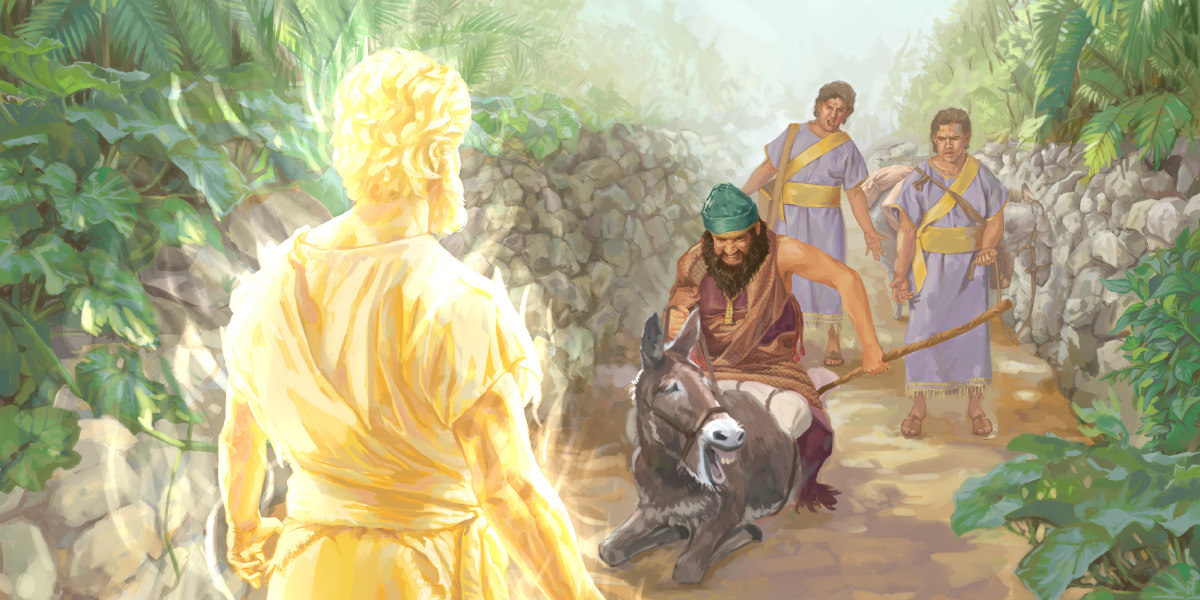
I now arrive at the subject of my provocative title. The children of Israel were nearing the end of their wanderings in the wilderness. They were approaching the borders of Moab. The Moabites were the descendants of one of Lot’s daughters.[6] Numbers 22-24 records the encounter between Moab and Israel. Balak, the king of Moab, heard about the approach of the Israelites, and God’s reputation preceded them. “And Moab was sore afraid of the people, because they were many: and Moab was distressed because of the children of Israel” (Numbers 22:3). Balak got the great idea to hire Balaam to curse Israel, “for,” he said, “I [know] that he whom thou blessest is blessed, and he whom thou cursest is cursed” (Numbers 22:6). However, Balaam assured him that he could only speak as the LORD directed him, so he turned down the job. Balak would not be deterred. He sent a second delegation with a greater offer. When Balaam consulted with God about the matter, God instructed him to return with the delegation, but that he should only speak the words He gave him. So, the next day, Balaam saddled his donkey (ass) and went to see Balak. Along the way, “the Angel of the Lord with sword drawn” confronted him. Balaam did not see Him, but the donkey did, and she veered off the main road. That angered Balaam and he beat the donkey and tried to force her back on the main road. There was a stone wall along one side of the road, and when the donkey saw the Angel of the Lord, she went up against the wall and knocked Balaam off her back. That really made Balaam angry, and he beat her again. The Angel of the Lord moved further down the road again to a place where the donkey could not get around, so she just dropped down. Balaam got off and started beating her again. Then the most remarkable thing happened. “And the LORD opened the mouth of the ass, and she said unto Balaam, What have I done unto thee, that thou hast smitten me these three times?” (Numbers 22:28). What is even more remarkable is that Balaam was not taken aback because the donkey talked. Instead, he engaged her in conversation. “And Balaam said unto the ass, Because thou hast mocked me: I would there were a sword in mine hand, for now would I kill thee” (Numbers 22:29). The donkey then laid a guilt trip on Balaam. “And the ass said unto Balaam, Am not I thine ass, upon which thou hast ridden ever since I was thine unto this day? was I ever wont to do so unto thee? And he said, Nay” (Numbers 22:30).

At that point, God opened Balaam’s eyes so that he could see what the donkey saw. Balaam saw the pre-incarnate Christ with a sword drawn. “And the angel of the LORD said unto him, Wherefore hast thou smitten thine ass these three times? behold, I went out to withstand thee, because thy way is perverse before me: And the ass saw me, and turned from me these three times: unless she had turned from me, surely now also I had slain thee, and saved her alive. And Balaam said unto the angel of the LORD, I have sinned; for I knew not that thou stoodest in the way against me: now therefore, if it displease thee, I will get me back again. And the angel of the LORD said unto Balaam, Go with the men: but only the word that I shall speak unto thee, that thou shalt speak. So Balaam went with the princes of Balak” (Numbers 22:32-35, emphasis mine).

Balaam did go to Balak, and three different times, instead of cursing Israel, to Balak’s chagrin, all Balaam could utter was a blessing upon the children of Israel. In one of those blessings, he foretold the coming of the Messiah. “I shall see him, but not now: I shall behold him, but not nigh: there shall come a Star out of Jacob, and a Sceptre shall rise out of Israel, and shall smite the corners of Moab, and destroy all the children of Sheth” (Numbers 24:17, emphasis mine).

At the end of the chapter, it appears that Balak and Balaam part ways in defeat. In the following chapter, we learn that the children of Israel started fornicating with the Moabite women. The fornication involved more than just illicit sex. The act was part of Baal worship in violation of the first two of the Ten Commandments. God had all the violators hanged or killed by the non-participants.

When we read further, we learn that Balaam had something to do with Israel’s sin. “And the LORD spake unto Moses, saying, Avenge the children of Israel of the Midianites: afterward shalt thou be gathered unto thy people” (Numbers 31:1-2). This event took place just prior to Israel entering the Promised Land. “And they warred against the Midianites, as the LORD commanded Moses; and they slew all the males. And they slew the kings of Midian, beside the rest of them that were slain; namely, Evi, and Rekem, and Zur, and Hur, and Reba, five kings of Midian: Balaam also the son of Beor they slew with the sword” (Numbers 31:7-8, emphasis mine). The Midianite women they took captive for which Moses reprimanded them. “And Moses said unto them, Have ye saved all the women alive? Behold, these caused the children of Israel, through the counsel of Balaam, to commit trespass against the LORD in the matter of Peor, and there was a plague among the congregation of the LORD” (Numbers 31:15-16, emphasis mine). So, Balaam did not just give up in defeat. He counseled Balak to seduce the men of Israel to fornicate in worship to Baal.

Evidently, Balaam was paid for his advice to Balak. The Apostle Peter writes, “… cursed children Which have forsaken the right way, and are gone astray, following the way of Balaam the son of Bosor, who loved the wages of unrighteousness” (2 Peter 2:14-15, emphasis mine). Jude adds, “Woe unto them! for they have gone in the way of Cain, and ran greedily after the error of Balaam for reward, and perished in the gainsaying of Core” (Jude 1:11, emphasis mine). Jesus Himself affirmed as much. “But I have a few things against thee, because thou hast there them that hold the doctrine of Balaam, who taught Balac to cast a stumblingblock before the children of Israel, to eat things sacrificed unto idols, and to commit fornication” (Revelation 2:14, emphasis mine). At least Balaam’s donkey was smart enough not to try to circumvent the Lord’s will. The lesson – you need to be at least as smart as Balaam’s donkey and not try to find a way around God’s will. In the end, you lose.

However, the greater lesson I learned through my reading in Numbers is that even though Israel is constantly obstinate against God (even today – their majority is secular), God is consistently faithful to His promise to Abraham, and He will bless those who bless Israel and curse those who curse Israel. Would that our government would learn that lesson. Our puppet president is making all the wrong decisions in opposition to Israel – cursing Israel. That will only result in God cursing our country. And, if you are paying attention, God has already removed His hand of blessing from our nation. Do not be fooled. Israel will survive without the US, but the US will fade from its former place of greatness. “Be not deceived; God is not mocked: for whatsoever a man soweth, that shall he also reap” (Galatians 6:7).

Notes:


[1]  Numbers 11:20

[2]  Henry M. Morris, Ph.D., The Henry Morris Study Bible, (Master Books, Green Forest, AR, 2012), p. 259.

[3]  Numbers 16:49

[4]  Numbers 17:8

[5]  Numbers 21:4

[6]  Genesis 19:36-38

3 Comments

Filed under Apologetics, Bible, Christianity, Current Events, Gospel, Theology, Worship

The Mystery of the Gospel

… that I may open my mouth boldly, to make known the mystery of the gospel, (Ephesians 6:19)

The Gospel is a mystery. The Gospel (Greek: euaggelion) means “good tidings” or “good news.” The angel brought the euaggelion to the shepherds who watched their flocks by night.[1] It was the euaggelion that the Savior was born in Bethlehem. But what did this euaggelion mean? When the angels departed, the shepherds hurried to Bethlehem to see the euaggelion for themselves. Once they had seen the baby, they spread the news to all who would hear. “And all they that heard it wondered at those things which were told them by the shepherds” (Luke 2:18, emphasis mine). It was a mystery!

At Christmastime, we sing the mournful carol, “Oh Come, Oh Come Emanuel.” The lyrics describe a deep yearning for the advent of Messiah. “Oh come, oh come Emanuel, and rescue captive Israel, that mourns in lonely exile here, until the Son of God appear.” However, Israel was not expecting the Son of God to appear. That was the mystery.

Indeed, the prophets foretold of the coming Messiah. When the magi later came searching for “he that is born King of the Jews,”[2] the religious leaders, who knew the Scriptures, directed them to Bethlehem. They quoted the Prophet Micah: “And thou Bethlehem, in the land of Juda, art not the least among the princes of Juda: for out of thee shall come a Governor, that shall rule my people Israel” (Matthew 2:6, emphasis mine). However, they omitted the last phrase of Micah’s prophecy: “whose goings forth have been from of old, from everlasting” (Micah 5:9). That last part was a mystery to them. How could an earthly ruler/king exist “from of old, from everlasting”? That would mean this king existed from eternity past. That could only mean this coming king would be God. To them, that was impossible. It was a mystery.

Four hundred years prior, the last prophet spoke of the coming Messiah. “And he shall sit as a refiner and purifier of silver: and he shall purify the sons of Levi, and purge them as gold and silver, that they may offer unto the LORD an offering in righteousness” (Malachi 3:3). This certainly speaks of authority, but the general tone of the prophecy expressed God’s displeasure with His people obscuring any hint of the Messiah’s divinity. After that, God stopped talking for four hundred years. A lot can be forgotten in four hundred years or blurred beyond recognition.

Previous prophets had spoken of a coming king who would sit on David’s throne. A favorite Christmas passage from Isaiah says, “For unto us a child is born, unto us a son is given: and the government shall be upon his shoulder: and his name shall be called Wonderful, Counsellor, The mighty God, The everlasting Father, The Prince of Peace. Of the increase of his government and peace there shall be no end, upon the throne of David, and upon his kingdom, to order it, and to establish it with judgment and with justice from henceforth even for ever. The zeal of the LORD of hosts will perform this” (Isaiah 9:6-7, emphasis mine). While Isaiah clearly stated that His name would be “The mighty God” and “The everlasting Father,” the promise of His reign on David’s throne overshadowed (in their minds) the fact of His divinity. Since the fifth century before Christ, Israel had been ruled by outside forces; first Babylon, then Persia, then Greece, and now the Romans. The Jews wanted a king to make them a superpower. God coming to reign on earth in human flesh was unthinkable. It was a mystery!

Other prophecies held an even more unimaginable mystery – Messiah would suffer and die. Psalm 22 describes His crucifixion when such execution methods did not exist. Isaiah 53 also details the suffering of Messiah. The prophet Daniel precisely foretold the number of years when Messiah would be “cut off.”[3] The Messiah that was to be king and rule the world would have to die. That makes no sense! It was a mystery!

Even today, the idea that the Almighty, Creator God took on human flesh, in a virgin’s womb, was born by natural means in the lowliest of estates, grew up among “his own, and his own received him not” (John 1:11). “He is despised and rejected of men; a man of sorrows, and acquainted with grief: and we hid as it were our faces from him; he was despised, and we esteemed him not” (Isaiah 53:3). He was nailed to a cross for our sins and rose on the third day so “that whosoever believeth in him should not perish, but have everlasting life” (John 3:16). “But as many as received him, to them gave he power to become the sons of God, even to them that believe on his name” (John 1:12). That is the mystery of the Gospel.

All religions of the world, including many so-called “Christian” religions, demand some kind of sacrifice from their adherents. The adherents of these false religions must do something to appease their gods in order to gain entry into eternal life. It is no wonder then that the idea that all one needs to do is believe in Jesus and trust in the sufficiency of His sacrifice for our sins. It’s too easy. It’s a mystery! Paul describes how Jesus left His first estate as God, and took on human flesh for the purpose of making Himself the perfect sacrifice for our sins.[4] Our God performed the work of salvation for us so that all we need to do is believe. “For by grace are ye saved through faith; and that not of yourselves: it is the gift of God: Not of works, lest any man should boast” (Ephesians 2:8-9, emphasis mine). It is a mystery! “But the natural man receiveth not the things of the Spirit of God: for they are foolishness unto him: neither can he know them, because they are spiritually discerned” (1 Corinthians 2:14). That is the mystery of the Gospel.

As we ponder the mystery of the Gospel, especially during this Christmas season, the thought of God coming to us in the form of a helpless baby should captivate us in awestruck wonder. How could such a thing be! The only thing that remains is praise and thanksgiving for the incalculable gift that He offers. “For God so loved the world, that he gave his only begotten Son, that whosoever believeth in him should not perish, but have everlasting life” (John 3:16).

Reader, if you have not accepted God’s free gift of salvation, there is nothing you have to do but believe. Please read my page on “Securing Eternal Life.”

Notes:


[1]  Luke 2:8-18

[2]  Matthew 2:1-12

[3]  Daniel 9:25-26

[4]  Philippians 2:5-11

Comments Off on The Mystery of the Gospel

Filed under Apologetics, Bible, Christianity, Christmas, Gospel, Holidays, Religion, Salvation, Theology

Chose or Chosen?

For many are called, but few are chosen. (Matthew 22:14)

I have found some Christian brothers that have strong Calvinist leanings. I accept most of the five points of Calvinism to some degree – Total Depravity, Unconditional Election, Limited Atonement, Irresistible Grace, and Perseverance of the Saints (T.U.L.I.P.) – but I cannot fully embrace U, L, and I. I completely agree with T and P – the Total Depravity of man, and the Perseverance of the Saints, i.e., “once saved, always saved.”

As already noted, the points that give me the most grief are U and L. Unconditional Election says that God predetermined from the beginning of time who would be saved and who would be damned for eternity. The argument is that God is sovereign, and He can do exactly as He pleases (no argument there). A favorite verse used to make this point is Romans 9:15 “For he saith to Moses, I will have mercy on whom I will have mercy, and I will have compassion on whom I will have compassion.” Here Paul referred to the time when Moses wanted to “see” God’s glory and God responded, “And he said, I will make all my goodness pass before thee, and I will proclaim the name of the LORD before thee; and will be gracious to whom I will be gracious, and will shew mercy on whom I will shew mercy” (Exodus 33:19, emphasis mine). Clearly, God was not speaking in soteriological terms. Indeed, neither was Paul in making the reference to Moses. When taken in context, Paul was referring to God’s sovereignty in determining the course of salvation in general, not in particular.

Limited Atonement builds on Unconditional Election. Limited Atonement says that Jesus died only for those who were unconditionally elected for salvation. That eliminates all the “whosoever” verses beginning with John 3:16 “For God so loved the world, that he gave his only begotten Son, that whosoever believeth in him should not perish, but have everlasting life” (emphasis mine). Since the Bible is always true and does not contradict itself in any way, this verse alone should serve to debunk Limited Atonement.

To a limited degree, I also disagree with Irresistible Grace. It is the Holy Spirit who convicts the individual’s heart of sin (John 16:8) and convinces him of his need for the Savior. The “call” is ubiquitous (Romans 1:20), however, it is felt more strongly in some than it is in others. Thus, it can indeed be resisted, and more resist the call than respond to it (Matthew 7:13-14).

The Bible speaks to both man’s autonomy in choosing and God’s work of “election.” I maintain that the answer is “Somewhere in the Middle,” and neither side of the argument can hold his view dogmatically.

Recently the debate came up again in my church. I made my case and the other side made their case and neither side convinced the other, which is usually the case. However, the fact that this debate keeps raising its ugly head, I determined to “Search the Scriptures; for in them ye think ye have eternal life: and they are they which testify of me” (John 5:39). I looked in the New Testament for all the verses I could find related to salvation for the individual. I divided my findings into three categories: (1) Choice/Free Will, (2) Predestination/Election, and (3) verses that can apply to both sides. Here is what I found: for Category 1, there were 77 verses; for Category 2, there were 15 verses. Of those, 7, when read in context, suggest that the “predestination” is of “purpose” not of salvation; for Category 3 there were 17. Rather than argue one side or the other, I think it best to allow the Bible to speak for itself, and the reader can decide for himself.

Verses for Category 1: Matthew 7:13-14, 24; 10:32-33; 11:28-30; 12:31-32, 50; 16:24-26; 18:3-4, 14; Mark 3:28-29, 35; 8:34-38; 9:37; 10:15; 16:16; Luke 6:47; 7:23; 9:23-25, 48; 12:8-10; 13:3, 5, 23-24; 17:33; 18:17; John 1:12-13; 3:3, 15-18, 36; 4:14; 5:24; 6:28-29, 35, 40, 45, 47, 51; 10:9-10; 11:25-26; 14:6; 20:29; Acts 2:21, 38; 10:43; Romans 1:16; 3:28; 4:5; 5:6, 12; 10:13; 2 Corinthians 5:21; Galatians 1:3-4; 2:16; 3:6-7, 11, 22, 24-27; Ephesians 1:7; 2:4-9; Philippians 2:5-11; Colossians 1:14; 2:13-14; 1 Thessalonians 5:9-10; 1 Timothy 1:15; 2:3-4; 4:10; 2 Timothy 1:9; Titus 2:11; 3:5-7; Hebrews 3:7-8, 15; 7:25; 9:28; 11:6; 2 Peter 3:9; 1 John 2:2; 5:1, 10-12; Revelation 22:14.

Verses for Category 2: Luke 10:22; John 6:37, 44, 65; 17:24; Romans 8:33;* Ephesians 1:5, 11; 2:10;* Colossians 3:12; 2 Thessalonians 2:13; 2 Timothy 2:10;* Titus 1:1;* 1 Peter 1:2;* 2 John 1:1, 13. The passages marked with an asterisk (*) speak of predestination, but when examined closely, the predestination is a “Predestination of Purpose” not predestination for salvation. In other words, it is the predetermined plan God has for those who are “justified” having placed their faith in the atoning work of Christ on the cross. As I read these passages my conclusion is that those who are “elect” are “elected” by virtue of their faith in Christ for salvation and their “predestination” is to be conformed to the image of Christ.

Verses for Category 3: Matthew 9:13; 10:39; 20:28; 22:14; Luke 5:32; John 7:38-39; 10:27-29; 14:23; Acts 4:12; 15:11; Romans 6:23; 8:1; 2 Corinthians 5:17; Hebrews 4:3; 1 Peter 3:18; 1 John 4:9-10. These verses can apply equally to either Category 1 or 2.

As we enter this Advent Season, we remember that God took on human flesh and entered time and space by way of a virgin’s womb to live and walk among His creation (John 1:1-3, 14). “He came unto his own, and his own received him not. But as many as received him, to them gave he power to become the sons of God, even to them that believe on his name” (John 1:11-12). He took the penalty of our sins upon Himself and shed His own blood on the cross to pay our sin debt. He was buried in a borrowed tomb and rose again on the third day, conquering death and the grave on our behalf to win our salvation. He did that for “whosoever” will accept His free, “grace” gift of salvation by faith in His finished work. “For God so loved the world, that he gave his only begotten Son, that whosoever believeth in him should not perish, but have everlasting life” (John 3:16). “Whosoever” accepts His offer by “believing in Him” is “elected” for “everlasting life.” This is the whole message of Christmas.

Reader, have you accepted Jesus’ free gift of salvation? If not, or if you are unsure, please read my page on “Securing Eternal Life.”

6 Comments

Filed under Apologetics, Bible, Christianity, Christmas, Gospel, Salvation, Theology

Three Anointings

There came unto him a woman having an alabaster box of very precious ointment, and poured it on his head, as he sat at meat. (Matthew 26:7)

In one of my Bible readings this week, I came across an account of a woman anointing Jesus. All four Gospels record such an event. A detached, casual reading of the event can make the reader conclude that all four accounts are the same. Indeed, if we check the cross-references in our Bibles, they all seem to point to the other accounts leading the reader to assume they are all the same account. However, a close and careful examination of the four accounts will reveal a different story.

We have two, arguably three, different accounts of Jesus’ anointing. Luke’s account places the anointing long before the transfiguration while He was still in Capernaum (Luke 7:36-50).

Luke 7:36-39  And one of the Pharisees desired him that he would eat with him. And he went into the Pharisee’s house, and sat down to meat.  (37)  And, behold, a woman in the city, which was a sinner, when she knew that Jesus sat at meat in the Pharisee’s house, brought an alabaster box of ointment,  (38)  And stood at his feet behind him weeping, and began to wash his feet with tears, and did wipe them with the hairs of her head, and kissed his feet, and anointed them with the ointment.  (39)  Now when the Pharisee which had bidden him saw it, he spake within himself, saying, This man, if he were a prophet, would have known who and what manner of woman this is that toucheth him: for she is a sinner.

Matthew 26:6-9  Now when Jesus was in Bethany, in the house of Simon the leper(7)  There came unto him a woman having an alabaster box of very precious ointment, and poured it on his head, as he sat at meat.  (8)  But when his disciples saw it, they had indignation, saying, To what purpose is this waste?  (9)  For this ointment might have been sold for much, and given to the poor.

Mark 14:1-5  After two days was the feast of the passover, and of unleavened bread … (3)  And being in Bethany in the house of Simon the leper, as he sat at meat, there came a woman having an alabaster box of ointment of spikenard very precious; and she brake the box, and poured it on his head.  (4)  And there were some that had indignation within themselves, and said, Why was this waste of the ointment made?  (5)  For it might have been sold for more than three hundred pence, and have been given to the poor. And they murmured against her.

John 12:1-6  Then Jesus six days before the passover came to Bethany, where Lazarus was which had been dead, whom he raised from the dead.  (2)  There they made him a supper; and Martha served: but Lazarus was one of them that sat at the table with him.  (3)  Then took Mary a pound of ointment of spikenard, very costly, and anointed the feet of Jesus, and wiped his feet with her hair: and the house was filled with the odour of the ointment.  (4)  Then saith one of his disciples, Judas Iscariot, Simon’s son, which should betray him,  (5)  Why was not this ointment sold for three hundred pence, and given to the poor?  (6)  This he said, not that he cared for the poor; but because he was a thief, and had the bag, and bare what was put therein.

Matthew and Mark place the anointing after the Triumphal Entry (Matthew 21:1-11; Mark 11:1-11) and two days before the Passover. John places the anointing the day before the Triumphal Entry (John 12:12). Matthew and Mark place the anointing in the “house of Simon the Leper.” John seems to place the anointing in the house of Lazarus following the raising of Lazarus from the dead. Neither Matthew nor Mark names the woman who anointed Jesus. Had she been Mary, they certainly would have known who she was. John names Lazarus, Martha, and Mary who anointed Jesus. Matthew records that the “disciples” were indignant about the waste. Mark only records that “there were some that had indignation within themselves.” The difference and precision in detail between Matthew and Mark’s account and the account of John are too distinct to be an error in recording. Therefore, these are two separate anointings. Luke’s account came too early to be confused with these that took place just before the crucifixion. Luke records that the anointing took place in the house of a Pharisee named Simon – not a leper – and the woman that anointed Jesus was “a sinner.” Surely, Mary, named by John, would not have been identified as a “sinner.” She is the one that “sat at Jesus’ feet, and heard His word” (Luke 10:39). Also, Luke’s account records nothing said about the cost of the ointment being used.

In all, we have three separate accounts of Jesus being anointed by women. Even though there are some similarities, the differences are too great to conflate them as one or two. The lesson here is to let the Bible speak for itself. The experts, while we can learn much from them, are also fallen men after all; they can make mistakes too.

Matthew and Mark describe the same anointing. John records a second anointing by Mary, Lazarus’ sister (Lazarus whom Jesus raised from the dead, John 11). Both accounts take place before the Passover when Jesus would be crucified. In both instances, Jesus commented that the anointing was for His burial (Matthew 26:12; John 12:7). Jesus knew that the cross lay before Him, and He went willingly to take our sin upon Himself. He paid a debt He did not owe to cancel the debt we could never pay. Reader, our sin debt was paid by Jesus who bought our pardon with His blood. All we have to do is accept that pardon. Have you done that? If not please read my page on “Securing Eternal Life.”

Comments Off on Three Anointings

Filed under Apologetics, Bible, Christianity, Gospel, Salvation, Theology

Little Ones

Take heed that ye despise not one of these little ones; for I say unto you, That in heaven their angels do always behold the face of my Father which is in heaven. (Matthew 18:10)

The verse above was part of my daily Bible reading this week. It is a very familiar verse that I have read hundreds of times perhaps, heard sermons preached on it, and participated in Bible studies that covered it. When read out of context, it seems that Jesus refers to children – “little ones” – in this discourse, and that is the way it has been presented, or at least the way I have understood it, in the past.

However, as I read the assigned Bible passage (Matthew 18:7-35), it occurred to me that “little ones” did not refer to children. That made me stop and dig a little deeper. In order to understand the complete meaning of a passage, it is advisable always to read a single verse in its full context. In this case, we need to go back to the beginning of the chapter to get a clear picture of what was taking place.

As the chapter opens, we find Jesus’ disciples wondering and questioning Jesus as to who (among them, supposedly) would be the greatest in the “kingdom of heaven” (18:1). Matthew does not name the participants in the discussion nor do the other two synoptic Gospels.[1] Interestingly, all three record this event as having taken place shortly after the Transfiguration.[2] Mark records that the discussion took place on the return trip from Caesarea Philippi, the location of the “Mount of the Transfiguration,” to Capernaum. Three of the twelve, Peter, James, and John, were the only witnesses to the Transfiguration. Surely these three, because the special privilege afforded them, felt that they should be chiefest among them. Moreover, all of the disciples discounted what Jesus told them a short time before. “And while they abode in Galilee, Jesus said unto them, The Son of man shall be betrayed into the hands of men: And they shall kill him, and the third day he shall be raised again. And they were exceeding sorry” (Matthew 17:22-23).[3] The idea was unthinkable, so they quickly eliminated it from memory.

As an object lesson, Jesus took a small child and set him before them. “And said, Verily I say unto you, Except ye be converted, and become as little children, ye shall not enter into the kingdom of heaven. Whosoever therefore shall humble himself as this little child, the same is greatest in the kingdom of heaven. And whoso shall receive one such little child in my name receiveth me” (Matthew 18:3-5, emphasis mine). The Greek word translated as “converted” is strephō. The word, as defined by Strong’s,[4] means “to twist, that is, turn quite around or reverse,” which is similar to “repent.” Obviously, Jesus identified the problem as pride manifested as misguided ambition for greatness. The solution requires repentance, conversion, or transformation from a position of pride to that of humility, like that of a child. Those who make the transformation will achieve greatness in the kingdom of heaven. Jesus then adds that one who receives “one such little child,” i.e., one that has made the “conversion,” in “My name, receives Me.” Jesus was not speaking of a child, but rather one who becomes “like a little child” in humility.  The child in their midst was just the “prop” for the object lesson.

As He continued the object lesson, He added, “But whoso shall offend one of these little ones which believe in me, it were better for him that a millstone were hanged about his neck, and that he were drowned in the depth of the sea” (Matthew 18:6, emphasis mine). At this point, we need to examine the language closer to understand what Jesus was actually saying. At the beginning, Jesus used a child as a prop for the object lesson. The Greek word translated “little child” (18:2) is paidion, which, according to Strong’s means “a childling (of either sex), that is, (properly) an infant, or (by extension) a half grown boy or girl; figuratively an immature Christian” (emphasis mine). Notice that Jesus switches from “little child” to “little ones.” That is a different word in the Greek: mikros. Strong’s defines that word as “small (in size, quantity, number or (figuratively) dignity)” (emphasis mine). This agrees with Strong’s definition of “paidon” being “figuratively an immature Christian” who would also be “figuratively small in dignity.”

Jesus then pronounces a “woe” to the world for the offenses it brings to these “little ones” (mikron, plural). He notes that offences will come, but He issues a warning, “woe to that man by whom the offence cometh!” (18:7). By way of hyperbole, Jesus stresses the seriousness of offending a “little one.” He suggested removing any body part that causes offence rather than going to hell completely whole.[5] The obvious exaggeration is a warning to the mature Christian to cast off anything in life that would cause offense to an immature Christian, causing him to stumble. I see this a lot among Christians who, because of the “freedom” in Christ, conduct their lives closely imitating the ways of the world without consideration for their weaker brethren. Jesus says to cast off such things.

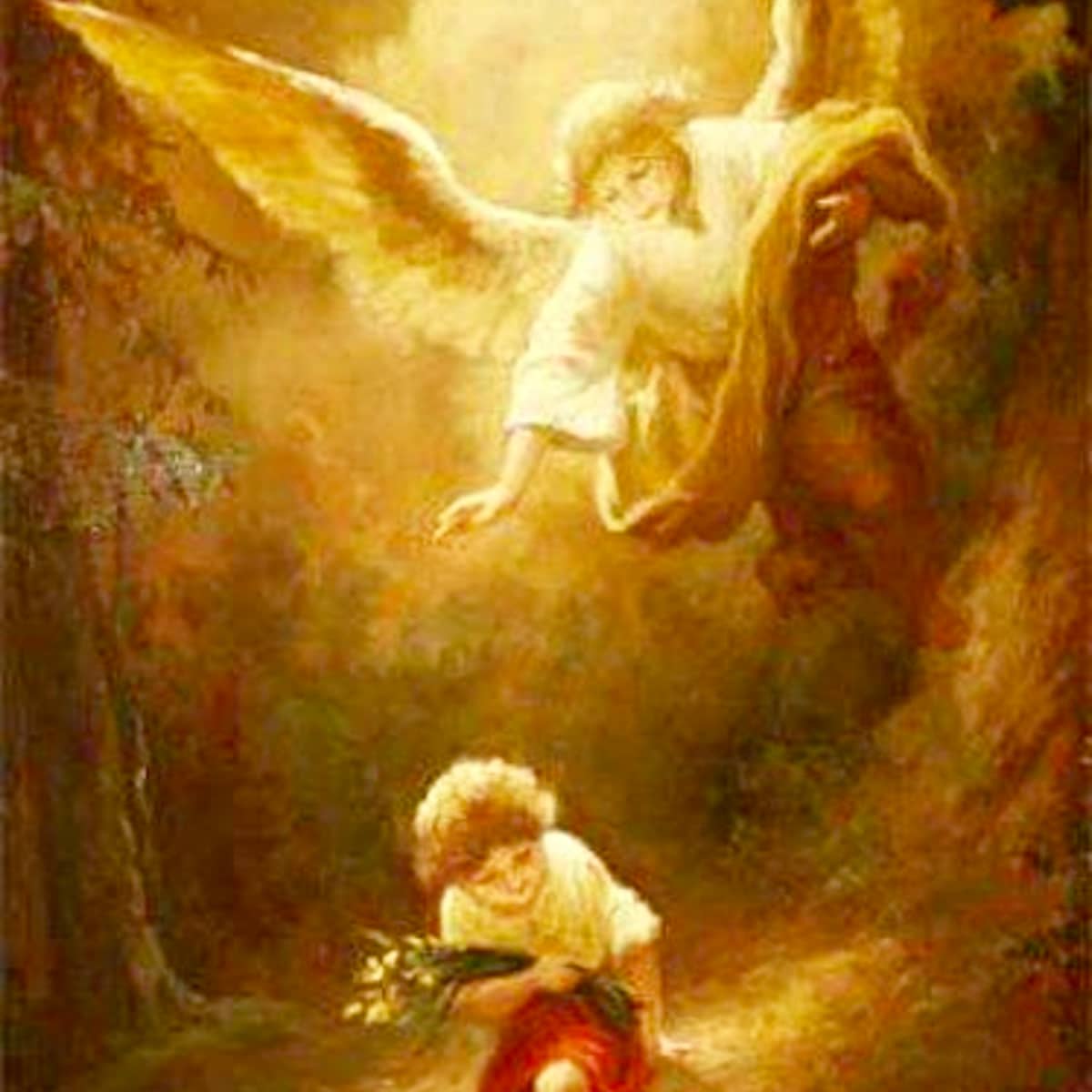
Jesus warns, “Take heed that ye despise not one of these little ones; for I say unto you, That in heaven their angels do always behold the face of my Father which is in heaven” (Matthew 18:10). So, rather than speaking of children having their guardian angels watching over them, as I was taught in the past, Jesus is talking about the mikron (little ones), or immature Christians, who, as mature Christians, we are not to “despise,” i.e., consider lesser than ourselves or count them of low esteem. It is they whose angels watch over them, who stand before the Father. “For the Son of man is come to save that which was lost” (Matthew 18:11).

Jesus illustrates His concern for these “little ones” with the “Parable of the Lost Sheep.”[6] In the parable, the Good Shepherd has 100 sheep, analogous to mature Christians, and one, analogous to the immature Christian, wanders away from the flock. Presumably, that one was offended and caused to leave the flock. The Good Shepherd leaves the 99 behind and goes after that one lost sheep. “And if so be that he find it, verily I say unto you, he rejoiceth more of that sheep, than of the ninety and nine which went not astray. Even so it is not the will of your Father which is in heaven, that one of these little ones should perish” (Matthew 18:13-14, emphasis mine). This further strengthens the argument that Jesus was not speaking of children necessarily, although the application could certainly be made in reference to children. Children watch and learn from adults and many come to Jesus at an early age, so it behooves adult, mature Christians to set a good example that they can follow.

The remainder of the chapter (vv. 15-35) deals with the way we should forgive one another. Forgiveness among the brethren goes a long way in maintaining the bond of fellowship and deters the possibility of offending a “little one.” To illustrate this, Jesus offered another parable of a servant who owed his master (God by analogy) an unimaginable amount of money that could never be repaid. When the master comes to collect, the servant throws himself at the mercy of his master. The master moved with compassion, forgives the debtor, and absolves him of all his debt. God, through Jesus’ sacrifice, has forgiven us of a sin debt that cannot be paid in all of eternity.

Continuing with Jesus’ parable, the servant leaves his master free of all debt, but when he finds a fellow servant who owes him a small amount, he refuses to forgive his fellow servant and has him cast into prison. When the master finds out about the servant’s unforgiving actions, he has him cast into prison until all is paid.

What we learn from this lesson is that we should likewise forgive those “little ones” their offenses toward us, because God has also forgiven us from an eternal debt that we can never repay.

We all carry a debt that we can in no way repay. Jesus died in our place to pay the debt due us. However, we need to come to Him and ask that He, in His mercy, will forgive us. Reader, if you have not asked the Master for that forgiveness, please read my page on “Securing Eternal Life.”

Notes:


[1]  Mark 9:33-34; Luke 9:46-47

[2] Matthew 17:1-9; Mark 9:2-9; Luke 9:28-36

[3]  Mark 9:31-32; Luke 9:44-45

[4]  All references to “Strong’s” come from the Strong’s Hebrew and Greek Dictionaries, Dictionaries of Hebrew and Greek Words taken from Strong’s Exhaustive Concordance by James Strong, S.T.D., LL.D., (Published in 1890; public domain).

[5]  Matthew 18:8-9

[6]  Matthew 18:12-13

Comments Off on Little Ones

Filed under Apologetics, Christianity, Gospel, Theology