Category Archives: Gospel

Alpha And Omega

Alpha Omega Bible

I am Alpha and Omega, the beginning and the ending, saith the Lord, which is, and which was, and which is to come, the Almighty.  (Revelation 1:8)

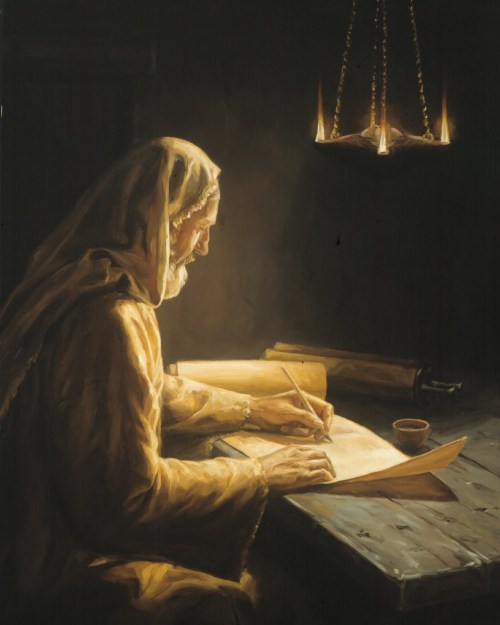
These words recorded by the Apostle John, the one “whom Jesus loved” (John 13:23; 20:2; 21:7, 20), introduce the One who would “reveal” the details of the final events of world history. At this time, John was an old man probably in his nineties, exiled on the island of Patmos “for the word of God, and for the testimony of Jesus Christ” (Revelation 1:9). It was Sunday, “the Lord’s Day,” and John was “in the Spirit” (Revelation 1:10).  John does not say, but I imagine that he was reading and meditating on Daniel’s prophecy and praying. John earned the nickname “Camel Knees” (so I am told) for the calluses he developed from hours on his knees in prayer. While in that posture, “a great voice, as of a trumpet” interrupted his meditation, and the resurrected Lord introduced Himself as “Alpha and Omega, the first and the last” (Revelation 1:10-11).

John recognized Him, although he had never seen Him like this before – “clothed with a garment down to the foot, and girt about the paps with a golden girdle. His head and his hairs were white like wool, as white as snow; and his eyes were as a flame of fire; And his feet like unto fine brass, as if they burned in a furnace; and his voice as the sound of many waters” (Revelation 1:13-15). John, in the company of Peter and James, witnessed Jesus transfigured on the mountain (Luke 9:28-36) in the days of Jesus’ short ministry on earth. That experience left the disciples awestruck, but it was nothing compared to this appearance.

Alpha, the first letter in the Greek alphabet, represents the beginning of the Word. In his Gospel, John wrote, “In the beginning was the Word, and the Word was with God, and the Word was God. The same was in the beginning with God. All things were made by him; and without him was not any thing made that was made” (John 1:1-3, emphasis mine). The Word of God, the Holy Bible, opens with the same phrase: “In the beginning God created the heaven and the earth” (Genesis 1:1, emphasis mine). God, the “uni-plural” Elohim, created the universe – all things – through His spoken Word: “And God said, Let there be light: and there was light. And God saw the light, that it was good: and God divided the light from the darkness” (Genesis 1:3-4, emphasis mine). John says, “In him [the Word] was life; and the life was the light of men. And the light shineth in darkness; and the darkness comprehended it not” (John 1:4-5, emphasis mine).

The Alpha of the Bible goes on to describe the six-day creation acts of God. On the sixth day, the Elohim created all the land-dwelling animals, and at last, He created man. “And God said, Let us make man in our image, after our likeness: and let them have dominion over the fish of the sea, and over the fowl of the air, and over the cattle, and over all the earth, and over every creeping thing that creepeth upon the earth. So God created man in his own image, in the image of God created he him; male and female created he them” (Genesis 1:26-27, emphasis mine). The switch between the plural (us/our) and the singular (his/he) provides the first insight (in English) to the triune nature of God, which is developed later in Scripture. However, in the original language of Hebrew, that insight appears in the very first verse. God (Elohim) is the plural form of the noun for god (el); however, the verb “created” (bara) appears in the singular form, which under other circumstances would be a grammatical booboo in Hebrew.

So, God creates man in His own image, which among other things, implies that man too is triune in nature. One aspect of that triune nature involves the physical form that animates and transports “the soul” of man. “And the LORD God formed man of the dust of the ground, and breathed into his nostrils the breath of life; and man became a living soul” (Genesis 2:7, emphasis mine). What physical shape would reflect “the image of God”? The Hebrew word translated “formed,” yâtsar, describes the work of a potter molding and shaping a lump of clay into a useful vessel. The Word, by whom “all things were made,” molded and shaped the kind of body He would one day inhabit. “And the Word was made flesh, and dwelt among us, (and we beheld his glory, the glory as of the only begotten of the Father,) full of grace and truth” (John 1:14, emphasis mine).

God took His image bearer “And the LORD God planted a garden eastward in Eden; and there he put the man whom he had formed” (Genesis 2:8). There God provided for man’s every need. The Garden of Eden provided an abundance of food and water (Genesis 2:9-10) with a perfect climate (Genesis 2:5-6). Best of all, sickness and death did not exist. God gave His stamp of approval on His perfect creation. “And God saw every thing that he had made, and, behold, it was very good. And the evening and the morning were the sixth day” (Genesis 1:31, emphasis mine). Death could not exist in a “very good” creation because the Bible says that death is “the last enemy” (1 Corinthians 15:26).

God and His image enjoyed intimate fellowship as God walked “in the garden in the cool of the day” (Genesis 3:8). However, love coerced is not love. Love must be a willful choice, and God allowed for the choice. “And the LORD God commanded the man, saying, Of every tree of the garden thou mayest freely eat: But of the tree of the knowledge of good and evil, thou shalt not eat of it: for in the day that thou eatest thereof [dying] thou shalt surely die” (Genesis 2:16-17, emphasis mine). Death did not exist in the Garden of Eden, but the potential did exist. Man had the choice, and man made the wrong choice. “And when the woman saw that the tree was good for food, and that it was pleasant to the eyes, and a tree to be desired to make one wise, she took of the fruit thereof, and did eat, and gave also unto her husband with her; and he did eat” (Genesis 3:6, emphasis mine). Man made the choice, and death entered God’s perfect creation.

The remainder of the Bible tells the story of God’s work in restoring fellowship with His fallen and dying creation. Only the blood of a perfect and innocent victim could make amends or reparation for the perpetual infraction. “For the life of the flesh is in the blood: and I have given it to you upon the altar to make an atonement for your souls: for it is the blood that maketh an atonement for the soul” (Leviticus 17:11, emphasis mine). The blood of animals fell short of the requirement because it was man, not animals, that sinned. “For it is not possible that the blood of bulls and of goats should take away sins” (Hebrews 10:4). The atoning blood-sacrifice must be that of a perfect, innocent man; nothing less would do. However, no man fit the bill, for “As it is written, There is none righteous, no, not one” (Romans 3:10). No human solution could be found. Therefore, “the Word was made flesh, and dwelt among us” (John 1:14, emphasis mine). “But [the Word] made himself of no reputation, and took upon him the form of a servant, and was made in the likeness of men: And being found in fashion as a man, he humbled himself, and became obedient unto death, even the death of the cross” (Philippians 2:7-8, emphasis mine). “But this man [the Word], after he had offered one sacrifice for sins for ever, sat down on the right hand of God” (Hebrews 10:12, emphasis mine). The debt is paid in full, and God offers the pardon as a gift to whoever will accept it. A choice must still be made – accept the gift or reject it. Love is not coerced.

Omega is the final letter in the Greek alphabet. Just as Alpha opens the book with God’s perfect image bearers in the pristine Garden of Eden, Omega closes the final book in a new heaven and new earth (Revelation 21:1) – Eden restored. There, the fellowship between Creator and creature is renewed (Revelation 21:3). Death and the grave no longer exist (Revelation 20:14), neither do tears, sorrow or pain (Revelation 21:4). The Tree of Life is there (Revelation 22:2), but not the Tree of the Knowledge of Good and Evil. The residents of the new heaven and new earth chose God’s free pardon during their time on earth. They chose to love God of their own volition; therefore there is no longer any curse, nor the option to choose evil (Revelation 22:3), “and they shall see His face” (Revelation 22 4) – the One who started it all. “I am Alpha and Omega, the beginning and the end, the first and the last” (Revelation 22:13).
2 Comments

Filed under Bible, Christianity, Creation, End Times, Evangelism, Gospel, Heaven, Origins, Religion, Salvation, Theology

Burden of a Prophet

Prophet

Before I formed thee in the belly I knew thee; and before thou camest forth out of the womb I sanctified thee, and I ordained thee a prophet unto the nations. (Jeremiah 1:5)

As I look back on my recent posts, I think, “Man! Some of that is pretty depressing stuff! I should write something more uplifting, and fun.” I titled my blog, “Ernie’s Musings” because I write about things that engage my thoughts. Lately, the things happening around our nation and the world, and the upcoming presidential election weigh heavily on my mind. Honestly, I find it difficult, if not altogether impossible, to look on the bright side. This stems from the fact that I have a phlegmatic personality with leanings to melancholic and choleric. No sanguine bone exists in my body, and I find those with that personality to be rather annoying. However, God has a sense of humor, and He surrounds me with sanguine friends in order to keep me on an even keel.

Along with my serious nature, God gave me the gift of prophecy (Romans 12:5-8; 1 Corinthians 12:8-11; Ephesians 4:8-11). I say that with all humility, not that I “think more highly of myself than I ought to think” (Romans 12:3). This is not something that I dreamed up on my own. Many churches that strive to get members involved in the ministries of the church – and do it right – give a “spiritual gifts assessment” in order to properly “fit” the member in an area for which he/she is spiritually gifted. I have taken at least three such assessments, and I consistently score highly in prophecy, teaching, discernment, and encouragement. The confirmation for my statement comes from external and independent sources, so this is not my own fabrication.

I am a prophet, not a “seer” or fortuneteller. As with prophets of old, I can only say what God reveals. The prophets of old heard directly from God and repeated the message, “Thus saith the Lord,” and they recorded that message in Scripture. Nothing has been, or can be, added to the written Word of God. Thus saith the Lord, “Ye shall not add unto the word which I command you, neither shall ye diminish ought from it, that ye may keep the commandments of the LORD your God which I command you” (Deuteronomy 4:2). The New Testament repeats, “For I testify unto every man that heareth the words of the prophecy of this book, If any man shall add unto these things, God shall add unto him the plagues that are written in this book” (Revelation 22:18).

God’s revelation to us is complete and permanent. Jesus affirmed this fact when He said, “For verily I say unto you, Till heaven and earth pass, one jot or one tittle shall in no wise pass from the law, till all be fulfilled. (Matthew 5:18). Therefore, when I speak or write, I only say what God has already revealed in His Word. I have no new material. You will not hear me say, “I heard a new word from the Lord,” and then present something that does not already appear in Scripture. I take seriously James’ admonition, “My brethren, be not many masters, knowing that we shall receive the greater condemnation” (James 3:1). The Greek word translated “masters” is didaskalos, and it means “instructor” or “teacher.” God does not take kindly to those who misuse or abuse His Word and claim to speak for Him. God instructed the people to stone false prophets (Deuteronomy 13:1-5).

As a prophet, I must speak God’s Word. I am compelled to do so. In the words of Jeremiah the prophet, “But his word was in mine heart as a burning fire shut up in my bones, and I was weary with forbearing, and I could not stay” (Jeremiah 20:9). The Hebrew word translated “forbearing” is kûl, and it means to “hold in.” The prophet is saying that withholding (holding in) the Word of God is tiring, and he cannot hold it in. He must let it out. In a note on this verse, Henry M. Morris says:

The Word of God simply cannot be quenched for one who truly loves God and understands what God’s Word has done for him and what it means for the world. Even though that man is the object of reproach and derision because of it (20:8), he must proclaim it to others in whatever way he can.[1]

I kind of feel like that. David, the psalmist, expressed a similar sentiment. “My heart was hot within me, while I was musing the fire burned: then spake I with my tongue” (Psalm 39:3). The problem with speaking what God has put in my heart is that people will often not like what I have to say. I have learned to expect this. In Jeremiah’s case, he said, “O LORD, thou hast deceived me, and I was deceived: thou art stronger than I, and hast prevailed: I am in derision daily, every one mocketh me. For since I spake, I cried out, I cried violence and spoil; because the word of the LORD was made a reproach unto me, and a derision, daily” (Jeremiah 20:7-8, emphasis mine). The word “deceived” is an unfortunate translation in the KJV.[2] God deceives no one. It is Satan who is the “father of lies” (John 8:44). The Hebrew word used there is pâthâh, and it means rather “to entice.” God places a burden on the heart of a prophet and entices him, or calls him to deliver that message.

For a modern prophet like myself, God lets me see the condition of the world around me through the lens of His Holy Word; that goes with the gift of discernment that He gave me along with prophecy. The message is not new. This same message has been proclaimed through the ages. God does not change. God’s Word does not change. When I look at the world around me, I do not like what I see. When I see the condition of our nation, I do not like what I see. Then I read God’s Word, and I see the problem. Others may see the same problems I see and shake their heads and go on about their business, but I cannot do that. God, the Holy Spirit that resides in me (and all of God’s children), compels me to speak out, and I must. God has not given me a pulpit from which to preach, but He has given me a blog, and so I write. It is the burden of a prophet that God has given me.

I admit that my message may not be popular, and it may even be offensive at times. Sometimes, even I do not like what I have to say, and I would rather keep it to myself. However, the burden weighs on my heart and mind, and I am compelled to express it. When I consider the message, I look for ways to soften it, but given the conditions, I find that difficult. In those same spiritual gift assessments, I consistently score poorly in the “gift of mercy,” so it is difficult for me to make the message “kinder.”

God also made me an “encourager.” As bleak as my messages may be sometimes, I find hope in God’s sovereignty, in His faithfulness, and in His promise. I know our Lord’s return is very near, and although the world around us grows darker by the day, we have the promise of His coming. No matter what the political climate or social morass, our God reigns, and He cares for the welfare of His children. Until He comes, He will provide for us, pilot us, and protect us. So if my message seems gloomy at times, remember that is just the burden of this prophet, but along with the message, there is hope.

Notes:


[1]  Henry M. Morris, The Henry Morris Study Bible, (Green Forest, AR: Master Books, 2012), 1114.

[2]  Many other modern translations also mistranslate this word. However it is correctly translated in others like the Young’s Literal Translation (YLT) translates as “enticed”, New Living Translation (NLT) translates as “misled,” New English Translation (NET) translates as “coerced,” New American Bible-Revised (NABRE) translates as “seduced,” and the Common English Bible (CEB) translates as “enticed.”

Comments Off on Burden of a Prophet

Filed under Apologetics, Christianity, Current Events, End Times, Gospel, Random Musings, Religion, Second Coming of Christ, Theology

The Curse of Blessings

Hosea

According to their pasture, so were they filled; they were filled, and their heart was exalted; therefore have they forgotten me. (Hosea 13:6)

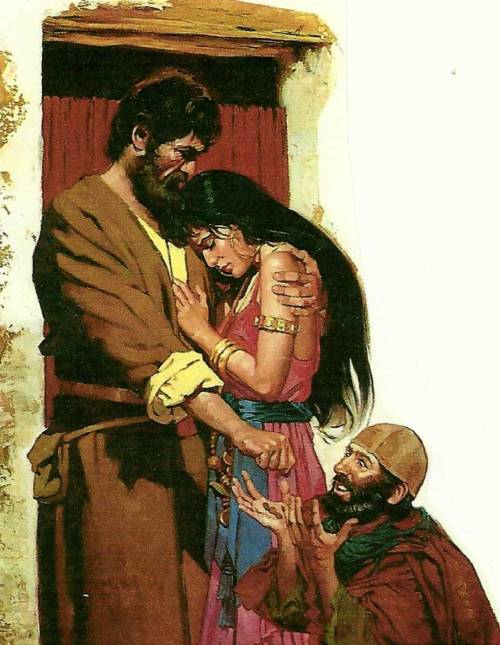
Hosea, whose name means “deliverer,” is an interesting character. God instructed Hosea to marry a prostitute (Hosea 1:2). He married Gomer (v. 3) who bore three children to him. Soon after that, Gomer left Hosea and returned to her whoring ways. After that God instructed Hosea to go after her and buy her back (Hosea 3:1-3).

The image presented depicts God, the Deliverer, who brought Abraham out of idolatry (Joshua 24:2), i.e. “whoredom,” gave him the promise of progeny, and the promise of the Land of Canaan. Abraham’s grandson, Jacob (renamed Israel), had 12 sons who became the 12 tribes of Israel. These ended up in Egypt for over 400 years where they picked up the idolatrous ways of the Egyptians. God delivered them from Egyptian captivity and returned them to the Promised Land.

Within a generation, as recorded in the book of Judges, Israel fell back into idolatry – they went whoring after the gods of the Canaanites. Without rehearsing every detail of their history, Israel was continually unfaithful to God. In their history, God blessed them as a nation, but they soon forgot the source of the blessings.

Our passage above begins with God addressing Ephraim. Ephraim, probably the strongest of the northern ten tribes of Israel (the northern kingdom), symbolizes all of Israel. “[T]hey sin more and more, and have made them molten images of their silver, and idols according to their own understanding, all of it the work of the craftsmen: they say of them, Let the men that sacrifice kiss the calves” (Hosea 13: 2). Like Gomer, after God rescued them out of idolatry, they fell right back into it.

While Gomer was with Hosea, he cared for her and provided for her. She did not need to prostitute herself to meet her needs, but the source of her (unmerited) privileged status never entered her mind, and she fell back into her old habits. Through Hosea’s experience with Gomer, God strikes the parallel with Israel: “I did know thee [intimately] in the wilderness, in the land of great drought” (v. 5), i.e. in the land of false gods. Then God brought them into a good “land flowing with milk and honey” (Exodus 3:8).  In this new land, they lived well and enjoyed God’s blessings. “According to their pasture, so were they filled; they were filled, and their heart was exalted; therefore have they forgotten me” (Hosea 13:6, emphasis mine). In that blessed condition, they forgot God.

The very thing about which God warned them, they did. “When thou hast eaten and art full, then thou shalt bless the LORD thy God for the good land which he hath given thee. Beware that thou forget not the LORD thy God, in not keeping his commandments, and his judgments, and his statutes, which I command thee this day: Lest when thou hast eaten and art full, and hast built goodly houses, and dwelt therein; And when thy herds and thy flocks multiply, and thy silver and thy gold is multiplied, and all that thou hast is multiplied; Then thine heart be lifted up, and thou forget the LORD thy God, which brought thee forth out of the land of Egypt, from the house of bondage” (Deuteronomy 8:10-14, emphasis mine).

We risk falling into the same trap as Israel when God blesses us with good things: home, family, good health, steady income, etc. God warned Israel before they entered the Promised Land not to get too full of themselves “And thou say in thine heart, My power and the might of mine hand hath gotten me this wealth” (Deuteronomy 8:17, emphasis mine). We tend to do the same when life favors us. We assume the credit when things go well, but when trouble comes we blame God. That second assessment may not be too far from the mark. “And it shall be, if thou do at all forget the LORD thy God, and walk after other gods, and serve them, and worship them, I testify against you this day that ye shall surely perish” (Deuteronomy 8:19, emphasis mine). Israel failed to heed God’s warning: “Therefore I will be unto them as a lion: as a leopard by the way will I observe them: I will meet them as a bear that is bereaved of her whelps, and will rend the caul of their heart, and there will I devour them like a lion: the wild beast shall tear them” (Hosea 13:7-8). Not long after, the Assyrian Empire devoured Israel and expatriated the population to other parts of Assyria. In a sense, God ripped Israel to pieces. We should take notice!

The psalmist says, “Bless the LORD, O my soul, and forget not all his benefits” (Psalm 103:2). One of President Obama’s most infamous sayings is, “You didn’t build that.” In some respects, he is correct (but not in the context of his ideology). When we become too confident in our own abilities, God says, “Yet I am the LORD thy God from the land of Egypt, and thou shalt know no god but me: for there is no saviour beside me” (Hosea 13:4, emphasis mine). David reminds us that “Both riches and honour come of thee, and thou reignest over all; and in thine hand is power and might; and in thine hand it is to make great, and to give strength unto all” (1 Chronicles 29:12, emphasis mine). The Book of Psalms repeats the refrain reminding us to “give thanks unto the Lord.” All that we have comes from God. When we forget, our blessings become a curse – perhaps not in a perceivable sense, but in the real sense that we become self-focused. We take our blessings for granted, and we drift away from the source of our blessings. That in itself is a curse. Paul reminds us: “In every thing give thanks: for this is the will of God in Christ Jesus concerning you” (1 Thessalonians 5:18).  “And we know that all things work together for good to them that love God, to them who are the called according to his purpose” (Romans 8:28). With the right mindset, we recognize that our blessings come in all forms so that we can rejoice in “all things,” and our blessings remain blessings and not curses.

2 Comments

Filed under Christianity, Gospel, Religion, Theology

All Things Work Together For Good

Everything will be alright

And we know that all things work together for good to them that love God, to them who are the called according to his purpose. (Romans 8:28)

Were you to ask me what my all-time favorite verse of the Bible is, without hesitation I would say Romans 8:28.  I favor many verses for various reasons, for example, Genesis 1:1 is foundational: “In the beginning God created the heaven[s] and the earth.” God as Creator settles a lot of unanswered and unanswerable questions. Along with that is John 1:1-3, “In the beginning was the Word, and the Word was with God, and the Word was God. The same was in the beginning with God. All things were made by him; and without him was not any thing made that was made” reveals that Jesus Christ is the Creator, who “was made flesh, and dwelt among us” (John 1:14). It was He who, “being found in fashion as a man, he humbled himself, and became obedient unto death, even the death of the cross” (Philippians 2:8) because, “God so loved the world, that he gave his only begotten Son, that whosoever believeth in him should not perish, but have everlasting life” (John 3:16). I take comfort from knowing that, “The LORD is my shepherd, I shall not want” (Psalm 23:1). He will meet my every need.

Sometimes, everyone comes to a point in life, maybe more than once in a lifetime, when we feel abandoned by our Shepherd, and we feel that our needs are not being met. In those times, I take refuge in the assurance of Romans 8:28, but it can easily be misunderstood to mean that everything will always be good. That has certainly not been my life experience. To properly understand the significance of this verse, we must see it in its context and examine it in its original language, Greek.

In context, Paul is addressing a group of Christians in Rome. He assures them that for those who have placed their trust in Christ, there is “no condemnation to them which are in Christ Jesus, who walk not after the flesh, but after the Spirit” (Romans 8:1). Those who “are in Christ Jesus” manifest that fact in the way they conduct their lives, i.e. “who walk not after the flesh, but after the Spirit,” and he explains what that means in the succeeding verses. Those who walk (conduct their life) after (according to the leading of) the Spirit have the Spirit of God dwelling (residing) in them (v. 9). Let that thought sink in and penetrate your heart. If you are a child of God, you have His Spirit taking up residence in you! Because that is true, “The Spirit itself beareth witness with our spirit, that we are the children of God” (v. 16). If you are truly God’s child, you should never have a doubt about that. If you do, the Holy Spirit is there to reassure you of that fact. Now, if you never get that reassurance, you need to reexamine your status before God and get that settled. God will let you know whether you are His or not; He does not want you to be deceived.

Another benefit of being a child of God, is that you share the same inheritance with Christ (v. 17). All the unimaginable glory of heaven belongs to God’s children for eternity! The condition (“if so be that we suffer with him”) means we “who walk not after the flesh, but after the Spirit” (v. 1). Here in America, we have not experienced persecution like many of our brothers and sisters in other parts of the world, but we should not get too comfortable in that thought. Persecution may yet come. Jesus said, “If the world hate you, ye know that it hated me before it hated you. If ye were of the world, the world would love his own: but because ye are not of the world, but I have chosen you out of the world, therefore the world hateth you” (John 15:18-19, emphasis mine). Unless you have just not been paying attention, there is a growing animosity toward Christians in this nation. Have you sensed it? Have you been rejected by friends or family because of your faith in Christ? Have you suffered with Him and because of Him? Take heart, such suffering is only temporary for God’s children, but the payoff is out of this world (v. 18)!

God’s Spirit in us also helps us in our weakness. When we stray and “walk after the flesh,” the Spirit is there to remind us and bring us back in line. Also, when our heart is burdened to the point that we cannot express what is in our heart so that “we know not what we should pray for as we ought: but the Spirit itself maketh intercession for us with groanings which cannot be uttered” (v.26). Because God’s Spirit indwells us, He knows us intimately, better than we know ourselves, and He gives expression to the Father of what is on our hearts.

Verse 29 tells us that God, in His foreknowledge, predetermined (predestined) that His children would be conformed – molded into – to the image of His Son. That is God’s purpose for our lives. We are not completely passive in this process, but as we make ourselves available and malleable to the Holy Spirit’s leading in our life, God, not we, shapes us into the form of Jesus Christ to minister to the world around us, and yes, even to suffer for Him.

It is in this context we read, “And we know that all things work together for good to them that love God, to them who are the called according to his purpose” (v. 28). The Greek syntax places the words of greatest significance at the beginning of the sentence, and those of secondary significance at the end of the sentence. The strict translation of the Greek text is: “We know, moreover, that to those [who are] loving God, all things work together for good, to those according to [His] purpose called [are] being.” First, we who are His children know. This is not up for debate. It is firm. It is assured, and this we know because the Spirit informs us. We are those “who are loving God” consistently. For us, “all things” – the Greek panta is all inclusive – work together for our “good” (Greek: agathon, meaning benefit). This does not say that everything that happens to us will be “good.” Just look around. We see our brothers and sisters suffering with cancer or other illnesses. We see them losing employment or in financial difficulty. We see them struggle with familial difficulties or other relationship problems. Perhaps we experience those things ourselves. No one can say these things are “good.” But the promise of this verse is that God will use those trials for our benefit. God blesses us with many good things, but often, when things go well, we forget the source of those blessings. Sadly, it is the trials that come into our lives that draw us closer to God. Those are the times of our greatest benefit, and God uses those times to help conform us into the image of His Son. Remember, our inheritance is not in this world but with Christ.

God uses ALL things – good and bad – to work for good for His children. This promise does not apply generally to all people. This promise is specifically for God’s people – those “who are called according to His purpose” – that of being conformed to the image of His Son.

When I experience trials in my life, Romans 8:28 gives me the assurance that God works all things for my benefit, and I trust Him for that. Paul ends this chapter in Romans by asking, “If God be for us, who can be against us? … Who shall separate us from the love of Christ? shall tribulation, or distress, or persecution, or famine, or nakedness, or peril, or sword?” (vv. 31, 35). His answer, “Nay, in all these things we are more than conquerors through him that loved us … [nothing] shall be able to separate us from the love of God, which is in Christ Jesus our Lord” (vv. 37, 39). No, all of these things work together for our good – our benefit.

3 Comments

Filed under Apologetics, Christianity, Evangelism, Gospel, Religion, Theology

No Accident


CAUSE: Hydroplaning. EFFECT: Wreck. No Accident!

CAUSE: Hydroplaning. EFFECT: Wreck. No Accident!

All things were made by him; and without him was not any thing made that was made. (John 1:3)

Commuting to work on the rain-drenched LBJ Freeway in Dallas, Texas this past week, I was at once amused and terrified at the maneuvers made by some crazy drivers obviously unaware of the hazardous road conditions. It reminded me of something that my old Driver’s Ed teacher repeated often a hundred years ago, “Accidents don’t happen; they are caused.” Apparently the crazies on LBJ never took driving lessons from my old Driver’s Ed teacher.

The truth of the adage obeys the very basic law of physics, that of cause and effect. Simply stated, everything that happens, i.e. every “effect,” has a cause. On the highway, this basic law expresses itself through Newton’s three Laws of Motion: (1) Inertia – an object in motion tends to stay in motion unless some external force acts upon it, (2) Acceleration – when a force acts on a mass (object) to produce motion, and (3) Reaction – for every action, there is an equal and opposite reaction. These three laws are expressions of the primary law of cause and effect. There is a series of cause-and-effect scenarios that propel a vehicle down the road at high rates of speed. Friction is a stabilizing force acting upon the tires of a car to counter the inertia that would maintain the car’s high rate of speed. However, on a wet, rainy day, friction yields to a phenomenon known as hydroplaning. This “cause” creates a thin barrier of water between the surface of the road and the tires, which effectively negates the force of friction on the tires. The tires lose contact with the road surface and now skim along on a slippery sheet of water. Inertia now controls the forward motion of the vehicle, and the incognizant operator unwittingly presumes he is in full control until he has to make a quick lane change or a sudden stop. It takes little imagination to visualize the “effects” that may result. The frequent “mishaps” witnessed on the highway are “incidents” not “accidents.” The majority of the time, the main cause of these incidents is the loose nut behind the wheel. Lesson: be aware of road conditions!

Forgive the defensive driving lesson, but the point was to illustrate the law of cause and effect. Nothing that exists just happens. There are no accidents. This simple and common fact is overlooked or ignored by naturalists/evolutionists/atheists when dealing with the matter of origins. What caused the universe? The Big Bang they say. What caused the Big Bang? They say that an infinitesimal “singularity” rapidly expanded and produced all that there is. Even though no one existed to witness or record this great event, they (the “theoretical” physicists) can tell us what happened one second after the Big Bang, one minute after, five minutes after, and so on. So, from where did this singularity come? What caused the singularity? What made it expand? “We don’t know,” they admit, “but we are still working on it.” This is what is passed off as science today.

Everything must have a cause, but cause-and-effect can only be taken back so far. Eventually, we must arrive at the cause that caused all other causes, and this cause cannot itself be caused. “Science” has no explanation for this, therefore hypotheses abound. In desperation, absurdities, like the “multiverse” hypothesis, arise to account for what cannot be proven in this universe. Since it cannot be proven in this universe, it must be true in another. The problem is that this universe is the only universe to which we have access to do science. There remains this nagging requirement for science called observation, and we cannot observe other universes, if indeed they do exist. Ours is the only universe we can observe. Our science is limited to what we can observe in this universe.

That brings us back to question of origins. How did our universe come to be? If nothing else, the Big Bang asserts that our universe must have had a beginning. But what caused it all? Reason demands that the original cause cannot itself have a cause. Our universe is no accident.

Where science fails us, the Bible provides a reasonable answer. Naturalists automatically reject this notion; however they offer nothing in its place that makes more sense. “In the beginning God …” (Genesis 1:1). Time, “the beginning,” was caused by God. The reader will note that nothing is presented before God, the Cause. God is the “uncaused Cause,” and the Scripture’s presentation of nothing prior to God expresses His eternal nature, His infiniteness. His eternal existence is the only reasonable and logical response to an infinite series of causes and effects. God is no accident. He is and always has been and ever will be. He is the eternal “I AM THAT I AM” (Exodus 3:14). John identifies Jesus as the eternal Creator (John 1:1-3), and later records the Lord’s self-identification as the Eternal One: “I am Alpha and Omega, the beginning and the end” (Revelation 1:18; 21:6), “I am Alpha and Omega, the first and the last” (Revelation 1:11), “I am Alpha and Omega, the beginning and the end, the first and the last” (Revelation 22:13). He is the One, the initial Cause that started it all. Before Him nothing else existed.

Our universe is no accident; it had a cause – God the Creator. Our world, our earth, is no accident; it had a cause – God the Creator. You and I are no accidents. We have a Creator that fashioned us in His own image (Genesis 1:27), and loved us enough to give us the choice to accept or reject Him. Either choice produces eternal effects. If we choose to reject Him, that decision is eternal. If we choose to accept Him, that decision is eternal. The choice is no accident.

2 Comments

Filed under Apologetics, Atheism, Bible, Christianity, Creation, Evangelism, Evolution, Gospel, Origins, Philosophy, Religion, Science, Theology