Category Archives: Hell

Not Expecting to Die

And as it is appointed unto men once to die, but after this the judgment: (Hebrews 9:27)

Everyone dies eventually, but that is not my expectation. No, I have not discovered the fountain of youth, nor do I possess some secret, life-extending formula. Neither am I in denial about the certainty of death as it applies to me, nor do I fear the inevitability of death – although the process of dying is not too appealing. I fully accept the possibility that God could take my life at any moment. My life (and yours) belongs to Him, and He can recall it at His will. As the psalmist prayed, “LORD, make me to know mine end, and the measure of my days, what it is; that I may know how frail I am” (Psalm 39:4).

That said, I expect not to die. Although our leading verse emphasizes that “it is appointed unto men once to die,” there is biblical precedence for it not being true for all men.

And Enoch walked with God: and he was not; for God took him (Genesis 5:24).

And it came to pass, as they still went on, and talked, that, behold, there appeared a chariot of fire, and horses of fire, and parted them both [Elijah and Elisha] asunder; and Elijah went up by a whirlwind into heaven” (2 Kings 2:11).

Two men recorded in the Bible escaped natural death, Enoch and Elijah. Some believe that the two unnamed witnesses described in Revelation 11:3 are Enoch and Elijah brought back to fulfill their unfinished prophetic mission. “And when they shall have finished their testimony, the beast that ascendeth out of the bottomless pit shall make war against them, and shall overcome them, and kill them” (Revelation 11:7, emphasis mine). Those who hold this view use this passage as confirmation of the truth of Hebrews 9:27 above, i.e., Enoch and Elijah did not die while they were on earth, so they must complete their earthly task and die as appointed to all men.

However, Hebrews 9:27 does not say παντες [all] οι ανθρωποι [men] – transliterated, pantes hoi anthropoi. While some may say that I am arguing from silence, I believe I have a valid point. The truth of this verse begins in Genesis when God commanded Adam, “But of the tree of the knowledge of good and evil, thou shalt not eat of it: for in the day that thou eatest thereof thou shalt surely die” (Genesis 2:17, emphasis mine). Adam and Eve disobeyed God and the curse of death fell upon mankind.  “In the sweat of thy face shalt thou eat bread, till thou return unto the ground; for out of it wast thou taken: for dust thou art, and unto dust shalt thou return” (Genesis 3:19, emphasis mine). “Wherefore, as by one man sin entered into the world, and death by sin; and so death passed upon all men, for that all have sinned” (Romans 5:12, emphasis mine). Adam’s sin brought the curse of death “upon” all men. The Greek word translated “upon” is the preposition eis, which can also be translated “toward” or “among,” meaning that all men are under the curse of death, but that does not necessarily mean that all men will die physically, although that is generally true for all men. All of us are susceptible to physical death – for the most part. However, the spirit lives on forever.

Death is more than physical death. Indeed, the worst death of all is that of the spirit separated from its Creator. Every person is born under this curse. Without Christ, everyone is dead in sin – eternally, but not irrevocably, separated from God. “Even when we were dead in sins, hath quickened [made alive] us together with Christ, (by grace ye are saved;) (Ephesians 2:5, emphasis mine). Those who continue in that condition will suffer the second death. “And death and hell [the grave] were cast into the lake of fire. This is the second death” (Revelation 20:14, emphasis mine). The second death is eternal separation from God for eternity in hell. What a chilling thought!

Everyone is born under the curse of death and is spiritually separated (dead) from God; but God has provided the way to be made spiritually alive by placing one’s faith in the Savior, Jesus Christ. However, along with that remains the fact that physical death is part of the curse. It is appointed to humans to die once, i.e., physical death, but those without Christ can also expect the second death – eternal spiritual separation from God.

However, Hebrews 9:27 implies that not all die physically. Indeed, there is coming a time when many millions of Christians from all over the earth will escape the bonds of this world without experiencing physical death.[1] “Behold, I shew you a mystery; We shall not all sleep [die], but we shall all be changed, In a moment, in the twinkling of an eye, at the last trump: for the trumpet shall sound, and the dead shall be raised incorruptible, and we shall be changed” (1 Corinthians 15:51-52, emphasis mine). “For the Lord himself shall descend from heaven with a shout, with the voice of the archangel, and with the trump of God: and the dead in Christ shall rise first: Then we which are alive and remain shall be caught up together with them in the clouds, to meet the Lord in the air: and so shall we ever be with the Lord” (1 Thessalonians 4:16-17, emphasis mine). The Greek word translated “caught up” is harpazō, and it means “to seize,” “to catch away,” or “to pluck or take by force.” In Latin, it is the word rapturo, from which we get our English word “rapture.” That time is very near.[2]

While the possibility remains that God may take me at any moment – all of us live with that possibility – I rather anticipate that I will not experience physical death. I expect to be caught up in the Rapture. That too can happen at any moment, but I fully expect that it will happen before I die, and I fully expect it to happen very soon[3] – perhaps this very year.

When the Rapture takes place, millions from all around the globe will vanish in an instant. I will be one of them. The Rapture will cause havoc around the world, but especially in the United States. Many in our government, including President Trump (from what I hear), are “born-again” believers in Christ – genuine Christians. At the Rapture, they will all vanish. Think of the chaos that will ensue when that happens! The US Government and economy is on the verge of collapse right now. Think of what will happen when many of our leaders disappear!

Reader, how about you? Will you go to meet Jesus in the air with me, or be left behind to face the seven terrible years that will follow. If you do not know, I would invite you to place your trust in Jesus for your salvation. “For whosoever shall call upon the name of the Lord shall be saved” (Romans 10:13).

If you want to know more about the “Rapture” and the “Second Coming” of Christ, just type the phrase into the search box on this page or under the “Categories” column, select “Second Coming of Christ.”

Notes:


[1]  “Coming Soon!” – https://erniecarrasco.com/2017/07/09/coming-soon/

[2]  “Pentecost” – https://erniecarrasco.com/2017/05/28/pentecost/

[3]  “Rosh HaShannah” – https://erniecarrasco.com/2016/10/03/rosh-hashanah/
Comments Off on Not Expecting to Die

Filed under Apologetics, Christianity, Current Events, End Times, Evangelism, Gospel, Hell, Religion, Salvation, Second Coming of Christ

Tasty Book

And I went unto the angel, and said unto him, Give me the little book. And he said unto me, Take it, and eat it up; and it shall make thy belly bitter, but it shall be in thy mouth sweet as honey. And I took the little book out of the angel’s hand, and ate it up; and it was in my mouth sweet as honey: and as soon as I had eaten it, my belly was bitter. (Revelation 10:9-10)

Before ascending to His throne “on the right hand of the power of God” (Luke 22:69); Jesus hinted at the possibility that John the Beloved, might live until His return. “Jesus saith unto him [Peter], If I will that he [John] tarry till I come, what is that to thee? follow thou me” (John 21:22). In a way, that did indeed come to pass. John is probably the only one of Jesus’ apostles that died a natural death and did not experience martyrdom. Jesus granted John the unique privilege of seeing end-time events from a heavenly perspective.

While exiled on the island of Patmos for the sake of the Gospel (Revelation 1:9), John had a vision of the risen Christ and was “raptured” up to heaven to witness events at the end of time (Revelation 4:1). So, in a manner of speaking, John did indeed tarry until the coming of the Lord.

Beginning with Chapter 6 of the Apocalypse, John witnesses the horrors of the first half of the Tribulation. Following the sounding of the Sixth Trumpet (Revelation 9:13-21), there is a pause in the activity on earth and the scene shifts to what is taking place in heaven.

John describes the scene this way. “And I saw another mighty angel come down from heaven, clothed with a cloud: and a rainbow was upon his head, and his face was as it were the sun, and his feet as pillars of fire: And he had in his hand a little book open: and he set his right foot upon the sea, and his left foot on the earth” (Revelation 10:1-2, emphasis mine). The “mighty angel” that John saw is the Lord Jesus Christ. We know this by the description given by John. The Mighty Angel is clothed with a cloud as He was when He ascended to heaven (Acts 1:9). He is crowned with a rainbow like the one John saw around the throne of God (Revelation 4:3), and “His feet as pillars of fire” take us back to John’s initial meeting with the risen Christ (Revelation 1:15). He stands with one foot on the sea and the other on the land indicating His dominion over all the earth. Furthermore, He declares, “that there should be time no longer” (Revelation 10:6), something only God can control.

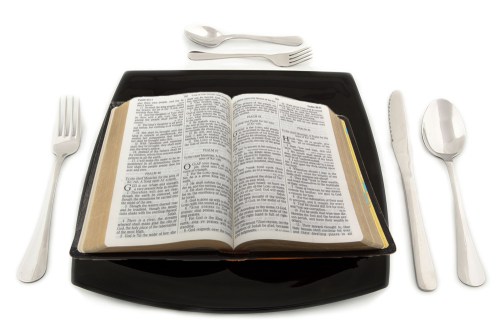
In His hand, He carries “a little book open.” A voice from heaven instructs John to take the little book from the Mighty Angel. Fearlessly, John records, “And I went unto the angel, and said unto him, Give me the little book” (Revelation 10:9a). We are awestruck by John’s boldness in the presence of the risen Lord until we recall that this was “that disciple whom Jesus loved” (John 21:7). “And he said unto me, Take it, and eat it up; and it shall make thy belly bitter, but it shall be in thy mouth sweet as honey. And I took the little book out of the angel’s hand, and ate it up; and it was in my mouth sweet as honey: and as soon as I had eaten it, my belly was bitter” (Revelation 10:9b-10, emphasis mine).

Eating a book seems rather strange to us, but this is not the first time such imagery is presented in the Bible. The book represents the Word of God. God instructed the Prophet Ezekiel, “But thou, son of man, hear what I say unto thee; Be not thou rebellious like that rebellious house: open thy mouth, and eat that I give thee. And when I looked, behold, an hand was sent unto me; and, lo, a roll of a book was therein; And he spread it before me; and it was written within and without: and there was written therein lamentations, and mourning, and woe. (Ezekiel 2:8-10, emphasis mine). He continues, “So I opened my mouth, and he caused me to eat that roll. And he said unto me, Son of man, cause thy belly to eat, and fill thy bowels with this roll that I give thee. Then did I eat it; and it was in my mouth as honey for sweetness” (Ezekiel 3:2-3, emphasis mine).

The Prophet Jeremiah experienced something similar when he said, “Thy words were found, and I did eat them; and thy word was unto me the joy and rejoicing of mine heart: for I am called by thy name, O LORD God of hosts” (Jeremiah 15:16, emphasis mine). The psalmist says, “The fear of the LORD is clean, enduring for ever: the judgments of the LORD are true and righteous altogether. More to be desired are they than gold, yea, than much fine gold: sweeter also than honey and the honeycomb” (Psalm 19:9-10, emphasis). “How sweet are thy words unto my taste! yea, sweeter than honey to my mouth!” (Psalm 119:103).

For the child of God, His Word is sweet. It gives comfort, hope and security. Some have called it God’s love letter to the world. It is sweet to feast upon the Word of God. However, its consumption also brings bitterness. Why? Perhaps it is precisely because we are His children that we share His remorse for the lost who reject His Word. “Have I any pleasure at all that the wicked should die? saith the Lord GOD: and not that he should return from his ways, and live?” (Ezekiel 18:23). “Say unto them, As I live, saith the Lord GOD, I have no pleasure in the death of the wicked; but that the wicked turn from his way and live: turn ye, turn ye from your evil ways; for why will ye die, O house of Israel?” (Ezekiel 33:11, emphasis mine). “The Lord is not slack concerning his promise, as some men count slackness; but is longsuffering to us-ward, not willing that any should perish, but that all should come to repentance” (2 Peter 3:9, emphasis mine).

The Word of God is Good News to the one who accepts it and consumes it; but it is bad news for the one who rejects its warnings. To the one who “eats” of its sweetness, it becomes bitterness knowing that friends and loved ones who reject its message are doomed to an eternity in “the lake of fire: (Revelation 20:15). Still, the Word of God is a “tasty book.”

Reader, if you have not tasted of God’s Word, time is getting short. Do not waste another day!

1 Comment

Filed under Bible, Christianity, End Times, Gospel, Heaven, Hell, Religion, Salvation, Theology

Good Guys Go to Hell

And in hell he lift up his eyes, being in torments, and seeth Abraham afar off, and Lazarus in his bosom. (Luke 16:23)

A popular idea going around these days suggests that anyone can go to heaven, if he or she is a “good” person. That sounds good, but by what standard does one measure “goodness”? The fornicator may say, “I’m not so bad; I won’t cheat on my wife.” The adulterer might say, “I’m not so bad; I’ve never molested a child.” The child molester could say, “I’m not so bad; I’ve never murdered anyone.” The murderer excuses himself, “I’m not so bad; the one I killed had it coming.” He would also add, “I am not a mass murderer,” and so on. Each one is not as bad as the other person is; by their own standard, they qualify for heaven. However, heaven’s standards exceed those we place on ourselves.

Jesus recounts the death of two men. The account is often mistaken as one of Jesus’ parables; however, the matter-of-fact telling of the account carries no alternative meaning, as do the regular parables of Jesus. In this instance, Jesus gives the proper name of one of the characters, Lazarus. He refers to the second man simply as “a rich man.” In this account, Jesus gives the impression that He has firsthand knowledge of the parties involved, so it makes one wonder why the rich man remains unnamed. The Bible tells us that “when the roll is called up yonder,” those who have died without Christ will be judged by their works recorded in “the books” (Revelation 20:12-13). When their “works” fail to meet heavenly standards, those being judged will be looked up in the Book of Life, and when their names are not found there, they will be cast into “the lake of fire” (Revelation 20:15). Perhaps this is why Jesus does not name the rich man. On the other hand, Jesus knows Lazarus by name. Jesus said, “My sheep hear my voice, and I know them, and they follow me: And I give unto them eternal life; and they shall never perish, neither shall any man pluck them out of my hand” (John 10:27-28, emphasis mine). Apparently, Jesus did not know the rich man meaning that the rich man was not one of His sheep.

As Jesus relates the account, the worst thing said about the rich man is that he “was clothed in purple and fine linen, and fared sumptuously every day” (Luke 16:19). Is there anything sinful about being rich? Surely, that cannot be the reason for his eternal life sentence! Indeed, “in hell he lift up his eyes, being in torments, and seeth Abraham afar off,” (Luke 16:23, emphasis mine). Abraham was one of the richest men recorded in the Bible, yet there he is in paradise, so wealth was not the man’s problem.

Jesus tells us that Lazarus, a beggar, “was laid at his gate, full of sores, And desiring to be fed with the crumbs which fell from the rich man’s table” (Luke 16:20-21). The account implies that the rich man took no notice of the beggar’s plight, although Jesus does not explicitly say so. Very possibly the rich man tossed a few coins to the beggar from time to time as might be expected of a man of his status. Even here, we find no “sin” worthy of an eternal sentence to hell.

One characteristic about the rich man that clearly comes through in Jesus’ account is his self-centeredness or self-focus, especially upon his arrival in hell. “And he cried and said, Father Abraham, have mercy on me, and send Lazarus, that he may dip the tip of his finger in water, and cool my tongue; for I am tormented in this flame” (Luke 16:24, emphasis mine). Even in his circumstance, he considered himself superior to Lazarus so that Lazarus should serve him. His request denied and realizing that his fate is permanent, he suddenly becomes evangelistic. “Then he said, I pray thee therefore, father, that thou wouldest send him to my father’s house: For I have five brethren; that he may testify unto them, lest they also come into this place of torment.” (Luke 16:27-28, emphasis mine). Notice his concern is not for a lost world, but only for his family.

We see that the rich man was self-indulgent – “But Abraham said, Son, remember that thou in thy lifetime receivedst thy good things” (Luke 16:25) – and egocentric. So what! Did that make him an evil person deserving hell? My guess is that the rich man was probably a pretty good guy over all. Jesus does not say that he mistreated Lazarus in any way, only that Lazarus desired “to be fed with the crumbs which fell from the rich man’s table” (Luke 16:21). That only means that the rich man took no real notice of the beggar’s plight. If such neglect condemns one to hell, then I plead guilty as charged. Not a day goes by that I do not see someone begging on some street corner of Dallas, and I drive on by. No, that was not the rich man’s problem.

The unnamed rich man’s problem was his ignorance of the Good Shepherd. The rich man was not one of Jesus’ sheep; Lazarus was, though. Jesus knew his name, and he gained entry into the presence of God. The rich man did not go to hell because he was some kind of great sinner; he went to hell because his name was not written in the Lamb’s Book of Life. Heaven – the New Jerusalem – is an exclusive place. “And there shall in no wise enter into it any thing that defileth, neither whatsoever worketh abomination, or maketh a lie: but they which are written in the Lamb’s book of life” (Revelation 21:27, emphasis mine). The rich man’s name was not recorded in that book, but Lazarus’ name was recorded there, which is why Jesus knew his name.

How about you, Reader? Is your name recorded in the Lamb’s Book of Life? If not, you will end up with that nameless rich man, and humanly speaking, you may even be a better person than the rich man. You may consider yourself to be a good person, but at the Great White Throne Judgment, when the books are brought out (Revelation 20:12-13) (one of which is the Word of God, the Bible), your good deeds will be judged according to the standard of God’s Word. Prepare yourself. You will not measure up. “For all have sinned, and come short of the glory of God” (Romans 3:23). Your only hope is for your name to be listed in the Lamb’s Book of Life. Ask Jesus to write your name in His book today. “For whosoever shall call upon the name of the Lord shall be saved” (Romans 10:13). “That if thou shalt confess with thy mouth the Lord Jesus, and shalt believe in thine heart that God hath raised him from the dead, thou shalt be saved” (Romans 10:9). Good guys go to hell, but those whose names are written in the Lamb’s Book of Life will be saved. Do it today!

Jesus’ account of the rich man and Lazarus is recorded in Luke 16:19-31.

Comments Off on Good Guys Go to Hell

Filed under Apologetics, Christianity, Death, End Times, Evangelism, Gospel, Heaven, Hell, Religion, Salvation, Theology

The Devils Believe!

Thou believest that there is one God; thou doest well: the devils also believe, and tremble. (James 2:19)

I do not run into many Christians these days except at church or at the Christian ministry where I work. Oh, I am certain that they are out there, and it is possible that I encounter them everywhere I go; I just cannot tell them apart from non-Christians. A recent Barna study[1] on the state of the Church in America revealed that while 75% of Americans pray to God, 35% attend a church service, 34% read the Bible, 19% volunteer at a non-profit, 18% volunteer at church, 17% attend adult Sunday school and 16% attend small group.

Judging from those statistics, it seems that at least ¾ of Americans acknowledge God. The 35% and 34% that attend church and read their Bible are pretty much the same group of people, so if we subtract them from the 75% who say they pray to God, that leaves 40% who acknowledge God, but there it ends. Just knowing about God or tacitly acknowledging Him gains no one entry into heaven.

James was brutally direct when he says, “Thou believest that there is one God; thou doest well: the devils also believe, and tremble” (James 2:19). Imagine that! The devils believe, and yet their destiny is sealed. To those who think that “knowing” God and “being good” should be sufficient, “Then shall he [Jesus] say also unto them on the left hand, Depart from me, ye cursed, into everlasting fire, prepared for the devil and his angels” (Matthew 25:41, emphasis mine). “And the devil that deceived them was cast into the lake of fire and brimstone, where the beast and the false prophet are, and shall be tormented day and night for ever and ever” (Revelation 20:10, emphasis mine).

The devil knows God better than any of us here on earth. The Book of Job records that Satan has direct access to God. “Now there was a day when the sons of God came to present themselves before the LORD, and Satan came also among them” (Job 1:6, emphasis mine). The devil is an eyewitness to God’s creative power. In responding to Job’s questions, God replies, “Where wast thou when I laid the foundations of the earth? declare, if thou hast understanding. Who hath laid the measures thereof, if thou knowest? or who hath stretched the line upon it? Whereupon are the foundations thereof fastened? or who laid the corner stone thereof; When the morning stars sang together, and all the sons of God shouted for joy? (Job 38:4-7, emphasis mine). The “morning stars” are the “sons of God” (bene elohim), and they are the whole host of created angelic beings including Satan and all of his angels (demons). They witnessed God’s power in creation. As humans, we benefit from all that God has created, and we marvel at the incredible design in all that He has made; but no one saw Him do it – not even Adam and Eve. However, Satan and all of his demons were eye witnesses to God’s awesome power.

The devils believe, and they “tremble” before God. The Greek word translated “tremble” is phrissō, and it means to “bristle”, to “chill”, or to “shudder.” In other words, in the presence of God, they get goose bumps, their hair stands on end, and they shiver in fear. Jesus illustrated this fact when He confronted a “Legion” of them who had taken possession of a man. “And, behold, they cried out, saying, What have we to do with thee, Jesus, thou Son of God? art thou come hither to torment us before the time?” (Matthew 8:29, emphasis mine). They know Him, and they know His power. They also know what awaits them in the end. However, no matter how intimately they “know” God, their knowledge does not alter their status. They are doomed to hell.

Reader, do you know God? Do you believe that He exists? Do you even toss a prayer up to Him now and then? Perhaps you even “say grace” before you eat: “God is good. God is great. Let us thank Him for this food. Amen.” Maybe you even visit church from time to time – especially on Christmas and Easter. “Thou believest that there is one God; thou doest well: the devils also believe, and tremble” (James 2:19). If that is all you have, you are in the same company with the devils, and their destiny is your destiny. However, while their destiny is fixed, you have a way out. “Jesus saith unto him, I am the way, the truth, and the life: no man cometh unto the Father, but by me” (John 14:6, emphasis mine). “But as many as received him, to them gave he power to become the sons of God, even to them that believe on his name” (John 1:12, emphasis mine).

“Believing in Him” means more than simply “knowing” about Him. Knowing God will not help the devils, because, while they acknowledge God as God, they do not “submit” to Him as Lord. Jesus said, “If ye love me, keep my commandmentsHe that hath my commandments, and keepeth them, he it is that loveth me: and he that loveth me shall be loved of my Father, and I will love him, and will manifest myself to him” (John 14:15, 21, emphasis mine). The context within which James exposes the “belief” of the devils, he discusses how “true faith” (belief) is expressed. “Yea, a man may say, Thou hast faith, and I have works: shew me thy faith without thy works, and I will shew thee my faith by my works … But wilt thou know, O vain man, that faith without works is dead?” (James 2:18, 20, emphasis mine). True faith is demonstrated in a tangible ways, not for show nor under duress, nor as a sense of obligation, but out of a sincere love for the Savior, Jesus. Remember, the devils believe, but they are still bound for hell.

Notes:


[1] “The State of the Church 2016” https://www.barna.com/research/state-church-2016/ – accessed 03/31/2017.

3 Comments

Filed under Christianity, End Times, Evangelism, Geology, Heaven, Hell, Religion, Resurrection, Salvation, Satan, Theology

Are You Good Enough?

And the sea gave up the dead which were in it; and death and hell delivered up the dead which were in them: and they were judged every man according to their works. (Revelation 20:13)

What will become of you when you die? That is arguably the most profound and important question one can ponder, yet it is probably the least considered. Perhaps the reason lies in the fear of the unknown.

Everyone, except perhaps for the very young, has experienced the death of a loved one, and witnessed the lifeless hulk of a once warm and animated person displayed peacefully in an ornate and satin lined casket. All that remains is a well dressed and made up, cold, waxy, empty corpse. Viewers often comment on his or her appearance noting how “life-like” they look without giving a thought to the departed’s final destination much less their own. That is something we do not like to think about.

Many people carefully plan for retirement by building up their nest egg to ensure they can meet their financial needs when they stop working. Others think they cannot afford to set money aside for their old age, and presume they will figure something out when the time comes. However, both planners and non-planners give more thought to retirement than they do to life after death. If pressed on the question of what happens after death they might say they do not know, or they might view death as “the end.” Those who suggest that death is the end are in denial, and they are lying to themselves. “[God] hath made every thing beautiful in his time: also he hath set [eternity] in their heart, so that no man can find out the work that God maketh from the beginning to the end” (Ecclesiastes 3:11, emphasis mine). Every person alive, whether they will admit it or not, knows that this life – the life experienced in this physical body – is not all there is. Because they fear the unknown, many would rather not think about it hoping to cross that bridge when they come to it.

Some who have pondered the question of life after death think heaven and hell might exist. They see hell as the destination for only the most evil of people, like Hitler, Stalin, Mao, mass murderers, child molesters, rapists, etc. Comparing themselves to these really evil people, they see themselves as prime candidates for heaven. When asked why God should allow them into heaven, they will provide a long list of their good deeds hoping that will suffice. However, if they compare their good deeds against the Ten Commandments, their shortcomings are soon exposed. With that realization, the hope then becomes that their good deeds will outweigh the bad.

John describes the scene in heaven at the end of time. He says:

And I saw a great white throne, and him that sat on it, from whose face the earth and the heaven fled away; and there was found no place for them. And I saw the dead, small and great, stand before God; and the books were opened: and another book was opened, which is the book of life: and the dead were judged out of those things which were written in the books, according to their works. And the sea gave up the dead which were in it; and death and hell delivered up the dead which were in them: and they were judged every man according to their works. And death and hell were cast into the lake of fire. This is the second death” (Revelation 20:11-14, emphasis mine).

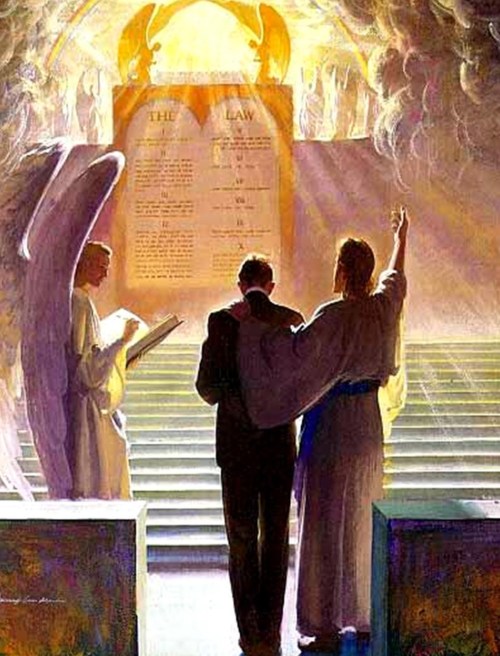
It does seem that all who die will indeed be judged “according to their works” by “those things which were written in the books.” I envision a detailed ledger book for every person who has ever lived. That book contains every act, good and bad, ever committed by every individual. As with any court of law, the defendant’s actions are measured against an objective standard – the law. In this heavenly courtroom, known as the Great White Throne Judgment, one of the books by which every individual will be judged is the Law Book – the Bible. God’s Word is His perfect standard by which every person’s works will be measured – good and bad. There is only one big problem. Only a perfectly lived life gains entry into heaven. “For whosoever shall keep the whole law, and yet offend in one point, he is guilty of all” (James 2:10).

No one will be guiltless. “As it is written, There is none righteous, no, not one … For all have sinned, and come short of the glory of God” (Romans 3:10, 23). But wait! There is still hope! “Another book was opened, which is the book of life … And whosoever was not found written in the book of life was cast into the lake of fire” (Revelation 20:12, 15, emphasis mine). That means that if the defendant’s name is logged in the Book of Life, that individual will gain entry into heaven.

Reader, is your name written in the Book of Life? Do not think for one moment that your good acts will outweigh your bad. Many “good” people will end up in hell. Only perfection qualifies for entry into heaven, and according to the Bible, no one qualifies. There is only one way to have your name written in the Book of Life. “And they said, Believe on the Lord Jesus Christ, and thou shalt be saved, and thy house” (Acts 16:31, emphasis mine). “Jesus saith unto him, I am the way, the truth, and the life: no man cometh unto the Father, but by me. (John 14:6, emphasis mine).

2 Comments

Filed under Christianity, Death, End Times, Evangelism, Gospel, Heaven, Hell, Religion, Salvation, Theology