Category Archives: Resurrection

When Faith Makes No Sense

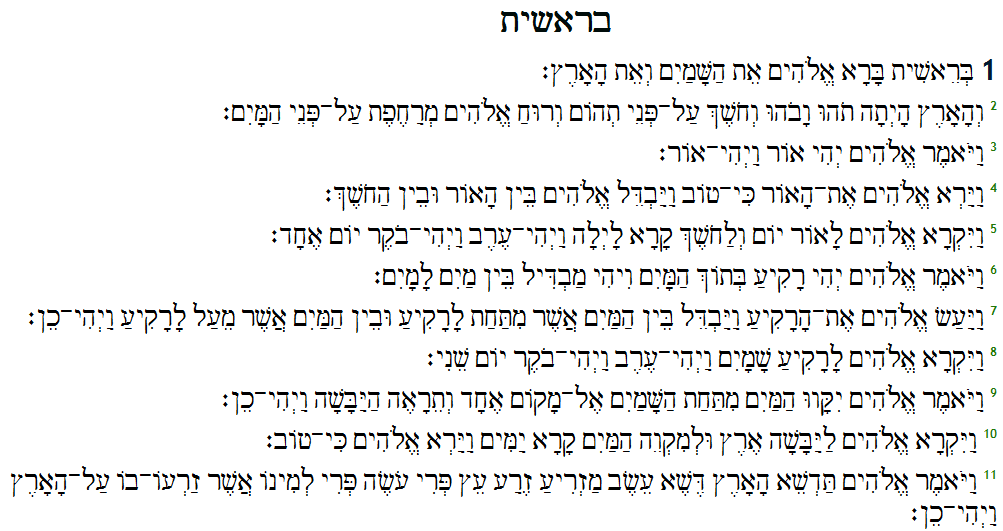
Elisha heals the child.

Behold, his soul which is lifted up is not upright in him: but the just shall live by his faith.  (Habakkuk 2:4)

Those who subject themselves to circumstances criticize those who live by faith, assuming a false pride in their own determination to react to whatever life may throw their way. Their pride forces them to deny that, for the most part, circumstances usually fail to land in their favor, and when circumstances favor them, they behave as if they had something to do with it.

On Father’s Day I wrote about my Dad, and how I learned to trust in God from him. The writer of the book of Hebrews says, “Now faith is the substance of things hoped for, the evidence of things not seen” (Hebrews 11:1). The Greek word translated “substance” is hupostasis, a compound word meaning “under” (hupo) “support” (stasis). “Stasis” in English is a state of equilibrium where things are consistent and unchanging. Faith, then, is immovable, and it is not “blind.” It is the “evidence of things not seen.” The Greek word translated “evidence” is elegchos meaning “proof.”

Well, how can one prove what cannot be seen? One way is experience. As I tried to relate in last week’s article, God showed Himself faithful in providing for our family in times of serious need.

In reading my Bible this past week, I once again came upon the account of the Shunammite in 2 Kings 4:8-37. According to the account, Elisha the prophet often passed through the town of Shunem on his way to and from Mt. Carmel. A certain woman there (we are not told her name) would invite him to stay in her home and would prepare a meal for him. Recognizing that he as “a man of God,” she suggested to her husband that they should build a room for the prophet to stay in as he traveled back and forth. This they did and Elisha, wishing to repay the kindness, asked what he could do for her. She refused to make a request, but Elisha still wished to bless her in some way. He consulted with his assistant, Gehazi, to see if there was any need that might be met. Gehazi noticed that the couple had no children, so Elisha had Gehazi called her. “And he said, About this season, according to the time of life, thou shalt embrace a son” (2 Kings 4:16). Now, the Bible says that she was a “great woman” (v. 8). The Hebrew word there is gâdôl which can also be translated “older.” On top of that, Gehazi, reported that “her husband is old” (v. 14) – Hebrew word zâqên meaning “elderly.” Not surprisingly, she responded, “Nay, my lord, thou man of God, do not lie unto thine handmaid” (v. 16). Despite her misgivings, her faith was rewarded, and she delivered a boy the following year as promised by the prophet.

Life continued as normal for the family of three, and then one day as the boy, now a young teenager, helped his father in the field, he started complaining of a headache (v. 19) and was taken home to his mother. As she cared for him, the boy eventually died the same day (v. 20). The narrative gives no sign of panic on her part. Instead, she carried him up to the prophet’s chamber and laid him on the prophet’s bed (v. 21). Then she made arrangements to go get Elisha. Even though her son was dead, she knew that the prophet could make things right; “And she said, It shall be well” (v. 23). Elisha recognized her as she approached his abode at Mr. Carmel, and dispatched Gehazi inquire as to her wellbeing. To all of his questions she replied, “It is well” (v. 26), but when she came to Elisha, her desperation came through. “And when she came to the man of God to the hill, she caught him by the feet: but Gehazi came near to thrust her away. And the man of God said, Let her alone; for her soul is vexed within her: and the LORD hath hid it from me, and hath not told me. Then she said, Did I desire a son of my lord? did I not say, Do not deceive me?” (2 Kings 4:27-28, emphasis mine). She had not abandoned hope. Her faith was intact. Her question was not one of doubt, but rather one of reminder that a promise had been made by the man of God, speaking for God, and God is faithful to His promise.

Elisha dispatched Gehazi with his staff and with instructions to place the staff on the boy’s body. The commentator, Matthew Henry, suggests that “He wished to teach the Shunammite, who obviously placed too great dependence upon him, a memorable lesson to look to God. By sending his servant forward to lay his staff on the child, he raised [the Shunammite’s] expectations, but, at the same time, taught her that his own help was unavailing.” Laying the staff on the boy’s body had no effect. When Elisha and the Shunammite woman arrived, the boy was still dead (v.32). What follows has been interpreted by some as mouth-to-mouth resuscitation, but that is a silly notion considering that the boy had been in that condition for at least 24 hours and perhaps more. The Bible says that Elisha “went up, and lay upon the child, and put his mouth upon his mouth, and his eyes upon his eyes, and his hands upon his hands: and he stretched himself upon the child; and the flesh of the child waxed warm. Then he returned, and walked in the house to and fro; and went up, and stretched himself upon him: and the child sneezed seven times, and the child opened his eyes” (2 Kings 4:34-35). Anyone knowing CPR knows that, given the condition described in the Bible, CPR would have been ineffective. The Bible definitively states that they boy was dead (vv. 20, 32). The boy was resurrected, not resuscitated and the Shunammite woman’s faith was confirmed.

This is not the last we hear about this woman. In 2 Kings 8:1-6 she reappears. This time Elisha warns her of a seven-year famine coming to the land where she lived. He instructs her simply to leave that place and “and sojourn wheresoever thou canst sojourn. And the woman arose, and did after the saying of the man of God: and she went with her household, and sojourned in the land of the Philistines seven years.” (2 Kings 8:1-2). At the end of seven years she returned to find that apparently her land had been unlawfully taken. She took her complaint before the king of Israel, and it happened that Gehazi was conversing with the king relating the account of the Shunammite’s son when the woman came before the king. “And when the king asked the woman, she told him. So the king appointed unto her a certain officer, saying, Restore all that was hers, and all the fruits of the field since the day that she left the land, even until now” (2 Kings 8:6).

In both of these instances, the Shunammite woman had no way of knowing what the future held, but she trusted in the unseen evidence of God’s Word for her provision.  Some may read this biblical account and say, “That’s just a Bible story,” but I have witnessed God’s hand in and throughout all of my life and in the life of my family as I was growing up. One somewhat recent confirmation happened about 24 years ago when my wife June and I purchased our first home together. We did not have a lot of money to put down on a home, and I had a bankruptcy on my record resulting from a divorce; so our options were very limited. We started looking at HUD repossessions, and to make a long story short, bid on a house which was outside of our desired price range. As a result, we made a low offer, and, to our amazement, God gave us the house with the low bid. We scheduled to close on the house on August 15, 1991, and on August 8, 1991, I was laid off from my job. June and I were faced with a faith challenge. Should we back out of the deal? That was a viable and honorable option. Or, should we trust in God’s provision? We decided that since God worked it out for us to win the bid, surely He would provide for the rest of it. We went through with the closure. The house needed some work – part of the deal included the “as is” condition of the house. We had to be out of our apartment by September 1, so I had plenty of free time to get the house ready. In the mean time I made one phone call that landed me a job in Dallas starting the first of September. We completed the work needed on the house, moved in, and I started work right after that. Friends, I do not believe in luck. That was all God.

I realize that the faith examples I have given here may seem a little on the materialistic side. They are not. These are all “needs” that God has met. Jesus said, “Therefore I say unto you, Take no thought for your life, what ye shall eat, or what ye shall drink; nor yet for your body, what ye shall put on. Is not the life more than meat, and the body than raiment? Behold the fowls of the air: for they sow not, neither do they reap, nor gather into barns; yet your heavenly Father feedeth them. Are ye not much better than they?” (Matthew 6:25-26). God cares about our every need, and as we learn to trust Him in the little things, He will prove Himself faithful in the greater things. And if He provides our material needs, how much more will He provide for our spiritual needs! And if He is faithful to His promise for our material well being, how much more will He be faithful to keep all of His Word?

Faith is the evidence of things unseen. Even when faith makes no sense, we can trust God because He has a proven track record – He has always been faithful.

2 Comments

Filed under Apologetics, Bible, Christianity, Religion, Resurrection, Theology

Nephology

blue-sky-and-white-clouds-high-definition-green-sky

Ye men of Galilee, why stand ye gazing up into heaven? this same Jesus, which is taken up from you into heaven, shall so come in like manner as ye have seen him go into heaven. (Acts 1:11)

“Nephology” is the study of clouds. As a young boy between six and ten, I was quite the nephologist.  I could spend what seemed to be hours observing cloud formations in the blue Texas skies. Cloud types were of no great concern. I didn’t care if the clouds were cirrus, cumulus, cumulonimbus, or whatever; I searched for recognizable figures within the clouds: birds, dogs, giants, cars, etc.

I still study the clouds, but for a very different reason. In our passage above, Jesus had just spent His final 40 days on earth. Now He made His final declaration: “ye shall receive power, after that the Holy Ghost is come upon you: and ye shall be witnesses unto me both in Jerusalem, and in all Judaea, and in Samaria, and unto the uttermost part of the earth” (Acts 1:8). And as He said these final words, “he was taken up; and a cloud received him out of their sight” (Acts 1:9). What an incredible sight! It reminds me of watching my helium-filled balloon float away into the clouds as a boy. I stood there mouth gaping, staring after the vanishing orb until it became a dot and was finally swallowed up by the clouds. No matter how long I searched the skies, the balloon never reappeared. It was gone. Jesus’ disciples must have felt the same way. So consumed were they in their nephology that they failed to notice the newly arrived heavenly beings that now accompanied them. “Ye men of Galilee, why stand ye gazing up into heaven? this same Jesus, which is taken up from you into heaven, shall so come in like manner as ye have seen him go into heaven” (Acts 1:11).

I’m a nephologist not because I study clouds for weather patterns or even for the fanciful shapes my mind can conjure. I look to the clouds because Jesus ascended into the clouds and beyond, and the angels delivered His promise saying that He would return “in like manner.”

For the Lord himself shall descend from heaven with a shout, with the voice of the archangel, and with the trump of God: and the dead in Christ shall rise first: Then we which are alive and remain shall be caught up together with them in the clouds, to meet the Lord in the air: and so shall we ever be with the Lord. (1 Thessalonians 4:16-17, emphasis added)

After this I looked, and, behold, a door was opened in heaven: and the first voice which I heard was as it were of a trumpet talking with me; which said, Come up hither … (Revelation 4:1, emphasis added)

Henceforth there is laid up for me a crown of righteousness, which the Lord, the righteous judge, shall give me at that day: and not to me only, but unto all them also that love his appearing. (2 Timothy 4:8, emphasis added)

For the grace of God that bringeth salvation hath appeared to all men, Teaching us that, denying ungodliness and worldly lusts, we should live soberly, righteously, and godly, in this present world; Looking for that blessed hope, and the glorious appearing of the great God and our Saviour Jesus Christ; Who gave himself for us, that he might redeem us from all iniquity, and purify unto himself a peculiar people, zealous of good works. (Titus 2:11-14, emphasis)

I practice nephology daily hoping that perhaps today, I will see Him coming in the clouds.

5 Comments

Filed under Christianity, End Times, Heaven, Religion, Resurrection, Salvation, Second Coming of Christ, Theology

Seeing to Believe

"My Lord and my God."

“My Lord and my God.”

And I will pour upon the house of David, and upon the inhabitants of Jerusalem, the spirit of grace and of supplications: and they shall look upon me whom they have pierced, and they shall mourn for him, as one mourneth for his only son, and shall be in bitterness for him, as one that is in bitterness for his firstborn. (Zechariah 12:10)

My blog is titled “Ernie’s Musings” because I write about things that cross my mind – when I can remember them. So it was this last week as I was in the shower in an effort to wake up and start the day. These days I think a lot about the Lord’s return with great anticipation as well as some dread for loved ones that are not prepared for the event. As I thought about that great event, I recalled the Scripture passage above and imagined the scene described in Revelation 19:11-16:

And I saw heaven opened, and behold a white horse; and he that sat upon him was called Faithful and True, and in righteousness he doth judge and make war. His eyes were as a flame of fire, and on his head were many crowns; and he had a name written, that no man knew, but he himself. And he was clothed with a vesture dipped in blood: and his name is called The Word of God. And the armies which were in heaven followed him upon white horses, clothed in fine linen, white and clean. And out of his mouth goeth a sharp sword, that with it he should smite the nations: and he shall rule them with a rod of iron: and he treadeth the winepress of the fierceness and wrath of Almighty God. And he hath on his vesture and on his thigh a name written, KING OF KINGS, AND LORD OF LORDS.

God long ago selected Israel among all the other nations for a particular purpose:

For thou art an holy people unto the LORD thy God: the LORD thy God hath chosen thee to be a special people unto himself, above all people that are upon the face of the earth. The LORD did not set his love upon you, nor choose you, because ye were more in number than any people; for ye were the fewest of all people: But because the LORD loved you, and because he would keep the oath which he had sworn unto your fathers, hath the LORD brought you out with a mighty hand, and redeemed you out of the house of bondmen, from the hand of Pharaoh king of Egypt. (Deuteronomy 7:6-8, emphasis mine)

God chose Israel for the purpose of bringing Messiah into the world and identifying Him with an undeniable lineage so that He wouldn’t be missed (see Matthew 1:1-16; Luke 3:23-38). God also promised the land of Israel to Abraham as an eternal possession (see Genesis 13:14-15). “Know therefore that the LORD thy God, he is God, the faithful God, which keepeth covenant and mercy with them that love him and keep his commandments to a thousand generations” (Deuteronomy 7:9, emphasis mine).

The history of Israel, from the time of the Exodus to the Babylonian captivity and beyond has been one of rebellion against God. Even now the majority of Israelis practice Judaism more out of tradition than out of a sincere devotion to God. Indeed, Israel is primarily a secular nation. Salvation for Israel has never been a “done deal.” God’s salvation is for individuals, not nations. John the Baptist made this point when a group of Pharisees and Sadducees came to him to be baptized: “And think not to say within yourselves, We have Abraham to our father: for I say unto you, that God is able of these stones to raise up children unto Abraham” (Matthew 3:9).  Salvation is not a national right for Israel. Israel exists as a sign to the world and to give testimony of God’s faithfulness. “God is not a man, that he should lie; neither the son of man, that he should repent: hath he said, and shall he not do it? or hath he spoken, and shall he not make it good?” (Numbers 23:19) God, because of His mercy and faithfulness, will give Israel one final chance to repent, and when they see the Lord returning in the clouds, “they shall look upon me whom they have pierced, and they shall mourn for him, as one mourneth for his only son, and shall be in bitterness for him, as one that is in bitterness for his firstborn” (Zechariah 12:10), but each individually, not as a nation.

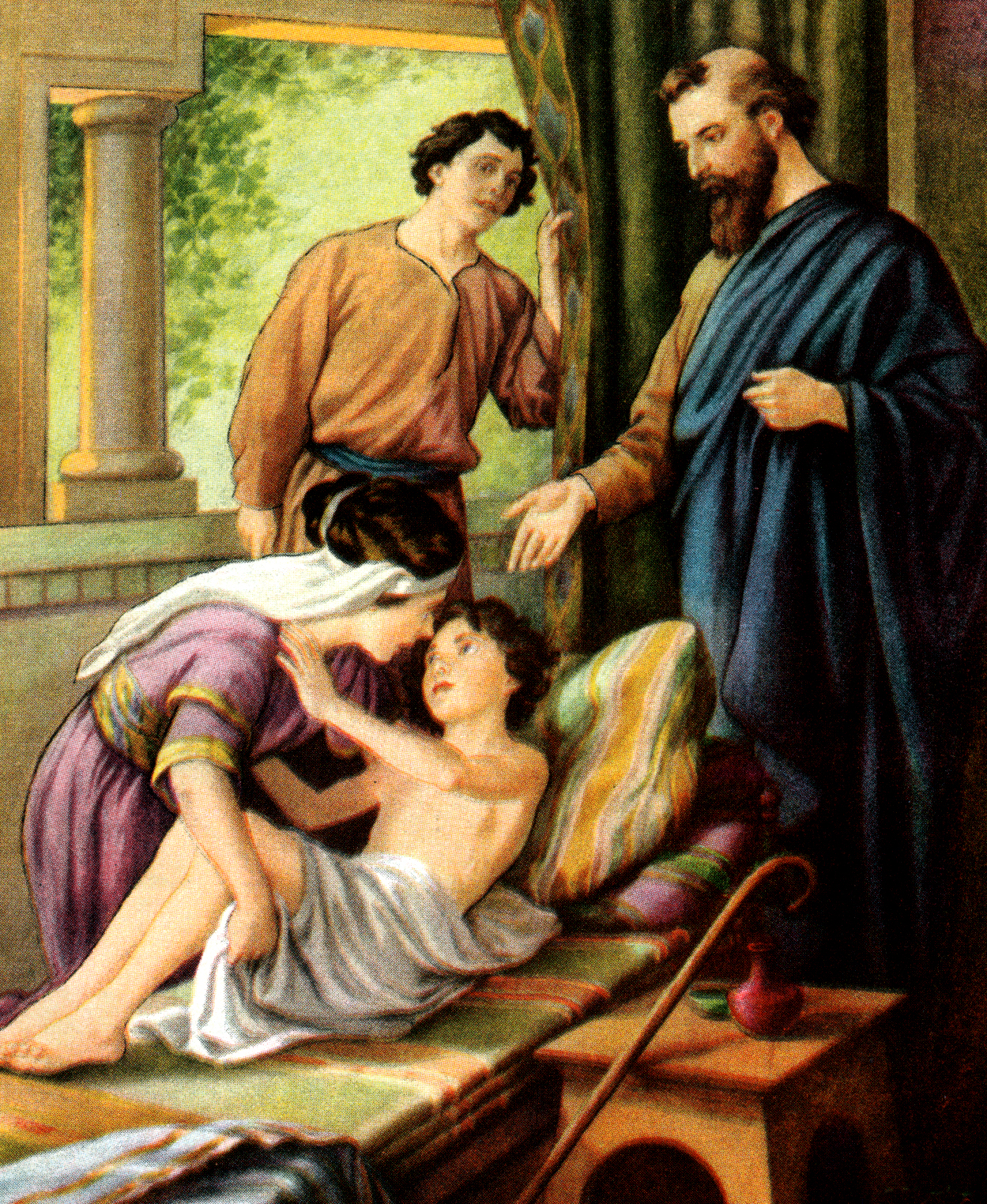
As I mused on this, I recalled John’s account of Thomas, the apostle, following the resurrection of Christ. Jesus was crucified during Passover and placed in a tomb where He laid for three nights and three days (John 19:38-42). Then early on the first day of the week (Sunday), He reclaimed His life and rose from the grave (John 20:1). There He was seen by Mary Magdalene who clung to Him when she saw Him. “Jesus saith unto her, Touch me not; for I am not yet ascended to my Father: but go to my brethren, and say unto them, I ascend unto my Father, and your Father; and to my God, and your God” (John 20:17). Apparently, His absence was brief. Mary Magdalene gave Jesus’ message to the disciples who were holed up in the upper room “for fear of the Jews” (John 20:19). It was the same day in the evening (prior to 6 PM), when “came Jesus and stood in the midst, and saith unto them, Peace be unto you” (v. 19). Thomas was not in the group. When the others gave Thomas the news, “he said unto them, Except I shall see in his hands the print of the nails, and put my finger into the print of the nails, and thrust my hand into his side, I will not believe” (John 20:25). The following Sunday, Jesus once again appeared to His disciples, and this time Thomas was with the group.

Then saith he to Thomas, Reach hither thy finger, and behold my hands; and reach hither thy hand, and thrust it into my side: and be not faithless, but believing. And Thomas answered and said unto him, My Lord and my God. Jesus saith unto him, Thomas, because thou hast seen me, thou hast believed: blessed are they that have not seen, and yet have believed. (John 20:27-29, emphasis mine)

I see a parallel here between this account of Jesus’ resurrection and His return at the last days. The day of Jesus’ resurrection is the presentation of the Gospel which the Apostles received upon seeing Him. Thomas was not there to witness the risen Christ, but the message was presented to him, and he rejected it. The period between the Sunday of Christ’s resurrection and the following Sunday can be compared to the “Church Age” where the Gospel – the good news – is proclaimed but the only evidence is the testimony of the messengers. Those who believe must do so by faith and the credibility of the message. The following week, Christ returns and this time Thomas sees Him in the flesh. This can be compared to the end of this age when the Lord returns to set up His millennial kingdom (Revelation 20). At that time many of the Jews who rejected Him by faith shall look upon Him “whom they have pierced, and they shall mourn for him, as one mourneth for his only son, and shall be in bitterness for him, as one that is in bitterness for his firstborn” (Zechariah 12:10). And Jesus will say, “because thou hast seen me, thou hast believed: blessed are they that have not seen, and yet have believed” (John 20:29, emphasis mine). Jesus will return very soon. Don’t wait to see Him in order to believe. It may be too late then.

2 Comments

Filed under Bible, Christianity, Easter, End Times, Evangelism, Gospel, Religion, Resurrection, Salvation, Second Coming of Christ, Theology

What You Don’t Know

Genesis1

And Jesus answering said unto them, Do ye not therefore err, because ye know not the scriptures, neither the power of God? (Mark 12:24)

Jesus faced His crucifixion just days away. Jerusalem was already in full Passover mode as Jews descended on the capital city from all over the Roman world. This was one of three holy convocations where Jews were to gather to celebrate the Feasts of the Lord (Leviticus 23). The Jewish religious leaders were already plotting to have Jesus killed, but because of His popularity, they couldn’t just kill Him. They had to bring up charges against Him that would warrant execution, so they tried to trip Him up with questions regarding their Jewish laws and traditions.

So it was in this case. First they approached Him with a question on paying taxes to Rome. They first tried to butter Him up with false flattery: “Master, we know that thou art true, and carest for no man: for thou regardest not the person of men, but teachest the way of God in truth” (Mark 12:14). They addressed Him as “Master,” i.e., “teacher,” yet they disregarded His teaching even though they stated that He “taught the way of God.” Their question failed to challenge Jesus. The answer was easy: “Render to Caesar the things that are Caesar’s, and to God the things that are God’s” (Mark 12:17).

The Sadducees, who “say there is no resurrection” (Mark 12:18), followed up with a question concerning the resurrection. Their question was well thought out – they thought. Seven brothers had the same wife, and they all died including the wife. In the resurrection, whose wife shall she be? Aha! Answer that one, Jesus! Jesus replied that there is no marriage in heaven, but before giving His answer, He chided them for their ignorance of Scripture and consequently the power of God (our verse above).

We do often err because we “do not know the Scriptures.” It’s no great challenge to find this ignorance working in a non-believing world, but it’s sad to find the same ignorance, albeit perhaps not as pronounced, among “believers.” One common example is the controversy over creation. Did God cause the Big Bang and then use millions of years of death and suffering to create life by means of evolution? Or did God create in six 24-hour days as clearly recorded in Genesis 1?

Those believers that support the Big Bang and evolution come in different varieties, but they all prefer “science falsely so called” (1 Timothy 6:20) over the clear teaching of Scripture. They hold the word of man in higher regard than the Word of God. They do err because they “know not the scriptures, neither the power of God.” The power of God! God says, “My counsel shall stand, and I will do all my pleasure” (Isaiah 46:10). “I the LORD have spoken it, and I will do it” (Ezekiel 36:36). “And Jesus looking upon them saith, With men it is impossible, but not with God: for with God all things are possible” (Mark 10:27). If God cannot do what He clearly said He did in Genesis 1, then neither can He part the waters of the Red Sea, cause the Sun to stop, or turn back ten degrees, make an ax head float, cleans a leper’s spots, turn water into wine, walk on water or calm the raging sea. If God cannot create as He said He did in Genesis 1, neither can He raise the dead, much less raise Himself from the dead. You do err because you do not know the Scriptures, and because you do not know the Scriptures, you do not know the power of God. What you don’t know can lead you astray. Jesus said, “Search the scriptures; for in them ye think ye have eternal life: and they are they which testify of me” (John 5:39).

Comments Off on What You Don’t Know

Filed under Apologetics, Christianity, Creation, Easter, Evolution, Gospel, Origins, Religion, Resurrection, Science, Theology

The Church Universal is at Our Doorstep

The Church Universal is at Our Doorstep

By Geri Ungurean.

There is only One God. His name is Jesus. “Neither is there salvation in any other: for there is none other name under heaven given among men, whereby we must be saved” (Acts 4:12) .

2 Comments

Filed under Apologetics, Christianity, End Times, Evangelism, Gospel, Resurrection, Second Coming of Christ