Category Archives: Salvation

Why Jesus?

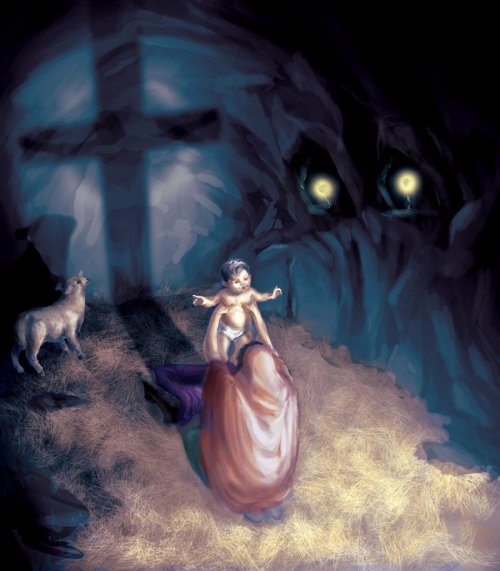
jesus_and_mary_manger_by_bnw20401

But when the fulness of the time was come, God sent forth his Son, made of a woman, made under the law, To redeem them that were under the law, that we might receive the adoption of sons.    (Galatians 4:4-5)

At this time of year we pause to consider and reflect on the entry of God into the world in human form. When we take the time to seriously ponder this wonder, the notion that He chose to make His entry as a helpless newborn baby, makes us marvel in awe. He, “being in the form of God, thought it not robbery to be equal with God: But made himself of no reputation, and took upon him the form of a servant, and was made in the likeness of men” (Philippians 2:6-7, emphasis mine), as a baby. Why? And why in this way?

Too often we get caught up in the “story” of Christmas and overlook the greater significance. God had to intervene into the hopeless human condition in order to ransom back His most prized creature ruined shortly after creation. Man, Adam, disobeyed God’s only prohibition. “And the LORD God commanded the man, saying, Of every tree of the garden thou mayest freely eat: But of the tree of the knowledge of good and evil, thou shalt not eat of it: for in the day that thou eatest thereof thou shalt surely die. (Genesis 2:16-17, emphasis mine). “And when the woman saw that the tree was good for food, and that it was pleasant to the eyes, and a tree to be desired to make one wise, she took of the fruit thereof, and did eat, and gave also unto her husband with her; and he did eat” (Genesis 3:6, emphasis mine). What weakness is there in man that even in a pristine environment that, without a need or care in the world, he cannot keep one simple commandment?

That single act brought the curse of death upon all subsequent generations – not only physical death (Genesis 3:17-19) but, worse, spiritual death separating us from our Creator (Ephesians 2:1). “Wherefore, as by one man sin entered into the world, and death by sin; and so death passed upon all men, for that all have sinned” (Romans 8:12, emphasis mine). Being that man offended Holy God (and because God is eternal, the offense is eternal), only man can right the wrong, and the only thing that can reverse the curse of death, is the gift of life. God tells us in His Word, “For the life of the flesh is in the blood: and I have given it to you upon the altar to make an atonement for your souls: for it is the blood that maketh an atonement for the soul” (Leviticus 17:11, emphasis mine).

As a temporary measure, God (I believe in the form of the pre-incarnate Christ) offered the first blood sacrifice to atone for (cover) the sin of the first couple. “Unto Adam also and to his wife did the LORD God make coats of skins, and clothed them” (Genesis 3:21, emphasis mine). In order to make “coats of skins” innocent animals had to shed their blood to cover the nakedness of the disobedient couple. But animal blood is insufficient; “For it is not possible that the blood of bulls and of goats should take away sins” (Hebrews 10:4). Neither is the tainted blood of man sufficient to take away sins because the sacrifice must be “without blemish” (Exodus 12:5). The innocent blood of animals cannot qualify because the sin belongs to man, and the blood of humans cannot qualify because it is blemished with sin.

Enter Christ. Innocent animal blood was insufficient because they are not at fault; animals did not sin. The one responsible for sin and death is the only one that can pay the “wages of sin” (Romans 6:23). That responsibility falls on man, but man’s blood cannot atone for sin, because man’s blood is tainted by sin. So God became man, engendered in a virgin’s womb, gestated for nine months until the proper time to be delivered as a helpless baby. Then, He grew up as a normal child (Luke 2:52) into adulthood, and He “was in all points tempted like as we are, yet without sin” (Hebrews 4:15, emphasis mine). Jesus, God in human flesh, voluntarily became “a lamb without blemish and without spot” – the only acceptable sacrifice to atone for the sins of man. John the Baptist recognized Him at the beginning of His earthly ministry: “and saith, Behold the Lamb of God, which taketh away the sin of the world.” (John 1:29, emphasis mine) – perfect man; sinless blood; problem solved! Thus, He is the only path to redemption. “Jesus saith unto him, I am the way, the truth, and the life: no man cometh unto the Father, but by me” (John 14:6). “Neither is there salvation in any other: for there is none other name under heaven given among men, whereby we must be saved” (Acts 4:12).

As we celebrate this Christmas, let us look beyond the baby in the manger. If you do not know the Savior, this is a great time of the year to get acquainted.

1 Comment

Filed under Apologetics, Christianity, Christmas, Creation, Death, Evangelism, Gospel, Origins, Religion, Salvation, Theology

Thank You, Lord

pray-hands

Every good gift and every perfect gift is from above, and cometh down from the Father of lights, with whom is no variableness, neither shadow of turning.  (James 1:17)

Name one thing – anything – that you have that does not come from God. How much time do you need to think about it? In the meantime, think about this:

So God created man in his own image, in the image of God created he him; male and female created he them. And God blessed them, and God said unto them, Be fruitful, and multiply, and replenish the earth, and subdue it: and have dominion over the fish of the sea, and over the fowl of the air, and over every living thing that moveth upon the earth. (Genesis 1:27-28)

And the LORD God formed man of the dust of the ground, and breathed into his nostrils the breath of life; and man became a living soul. (Genesis 2:7)

I will praise thee; for I am fearfully and wonderfully made: marvellous are thy works; and that my soul knoweth right well. My substance was not hid from thee, when I was made in secret, and curiously wrought in the lowest parts of the earth. Thine eyes did see my substance, yet being unperfect; and in thy book all my members were written, which in continuance were fashioned, when as yet there was none of them. (Psalm 139:14-16)

Thou hast clothed me with skin and flesh, and hast fenced me with bones and sinews. Thou hast granted me life and favour, and thy visitation hath preserved my spirit. And these things hast thou hid in thine heart: I know that this is with thee. (Job 10:11-13)

The Spirit of God hath made me, and the breath of the Almighty hath given me life. (Job 33:4)

How excellent is thy lovingkindness, O God! therefore the children of men put their trust under the shadow of thy wings. They shall be abundantly satisfied with the fatness of thy house; and thou shalt make them drink of the river of thy pleasures. For with thee is the fountain of life: in thy light shall we see light. (Psalm 36:7-9)

Thus saith God the LORD, he that created the heavens, and stretched them out; he that spread forth the earth, and that which cometh out of it; he that giveth breath unto the people upon it, and spirit to them that walk therein: (Isaiah 42:5)

In him was life; and the life was the light of men. (John 1:4)

God that made the world and all things therein, seeing that he is Lord of heaven and earth, dwelleth not in temples made with hands; Neither is worshipped with men’s hands, as though he needed any thing, seeing he giveth to all life, and breath, and all things; (Acts 17:24:25)

And the rib, which the LORD God had taken from man, made he a woman, and brought her unto the man. (Genesis 2:22)

Thy wife shall be as a fruitful vine by the sides of thine house: thy children like olive plants round about thy table. (Psalm 128:3)

Whoso findeth a wife findeth a good thing, and obtaineth favour of the LORD. (Proverbs 18:22)

House and riches are the inheritance of fathers: and a prudent wife is from the LORD. (Proverbs 19:14)

And Sarai said unto Abram, Behold now, the LORD hath restrained me from bearing: (Genesis 16:2)

And God said unto Abraham, As for Sarai thy wife, thou shalt not call her name Sarai, but Sarah shall her name be. And I will bless her, and give thee a son also of her: yea, I will bless her, and she shall be a mother of nations; kings of people shall be of her. (Genesis 17:15-16)

So Abraham prayed unto God: and God healed Abimelech, and his wife, and his maidservants; and they bare children. (Genesis 20:17)

And Joseph said unto his father, They are my sons, whom God hath given me in this place. And he said, Bring them, I pray thee, unto me, and I will bless them. (Genesis 48:9)

Elkanah knew Hannah his wife; and the LORD remembered her. Wherefore it came to pass, when the time was come about after Hannah had conceived, that she bare a son, and called his name Samuel, saying, Because I have asked him of the LORDFor this child I prayed; and the LORD hath given me my petition which I asked of him (1 Samuel 1:19-20 )

He maketh the barren woman to keep house, and to be a joyful mother of children. Praise ye the LORD. (Psalm 113:9)

Lo, children are an heritage of the LORD: and the fruit of the womb is his reward. As arrows are in the hand of a mighty man; so are children of the youth. (Psalm 127:3-4)

Children’s children are the crown of old men; and the glory of children are their fathers. (Proverbs 17:6)

And out of the ground made the LORD God to grow every tree that is pleasant to the sight, and good for food; the tree of life also in the midst of the garden, and the tree of knowledge of good and evil. (Genesis 2:9)

And when the children of Israel saw it, they said one to another, It is manna: for they wist not what it was. And Moses said unto them, This is the bread which the LORD hath given you to eat. (Exodus 16:15)

For the LORD your God is God of gods, and Lord of lords, a great God, a mighty, and a terrible, which regardeth not persons, nor taketh reward: He doth execute the judgment of the fatherless and widow, and loveth the stranger, in giving him food and raiment. (Deuteronomy 10:17-18)

He causeth the grass to grow for the cattle, and herb for the service of man: that he may bring forth food out of the earth; And wine that maketh glad the heart of man, and oil to make his face to shine, and bread which strengtheneth man’s heart. (Psalm 104:14-15)

Who giveth food to all flesh: for his mercy endureth for ever. O give thanks unto the God of heaven: for his mercy endureth for ever (Psalm 136:25-26)

The LORD upholdeth all that fall, and raiseth up all those that be bowed down. The eyes of all wait upon thee; and thou givest them their meat in due season. Thou openest thine hand, and satisfiest the desire of every living thing. (Psalm 145:14-16)

I would seek unto God, and unto God would I commit my cause: Which doeth great things and unsearchable; marvellous things without number: Who giveth rain upon the earth, and sendeth waters upon the fields: (Job 5:8-10)

Sing unto the LORD with thanksgiving; sing praise upon the harp unto our God: Who covereth the heaven with clouds, who prepareth rain for the earth, who maketh grass to grow upon the mountains. He giveth to the beast his food, and to the young ravens which cry. (Psalm 147:7-9)

Neither say they in their heart, Let us now fear the LORD our God, that giveth rain, both the former and the latter, in his season: he reserveth unto us the appointed weeks of the harvest. (Jeremiah 5:24)

Who in times past suffered all nations to walk in their own ways. Nevertheless he left not himself without witness, in that he did good, and gave us rain from heaven, and fruitful seasons, filling our hearts with food and gladness. (Acts 14:16-17)

He maketh his sun to rise on the evil and on the good, and sendeth rain on the just and on the unjust. (Matthew 5:45)

Behold the fowls of the air: for they sow not, neither do they reap, nor gather into barns; yet your heavenly Father feedeth them. Are ye not much better than they? (Matthew 6:26)

And I commanded you at that time, saying, The LORD your God hath given you this land to possess it: ye shall pass over armed before your brethren the children of Israel, all that are meet for the war. (Deuteronomy 3:18)

And he hath brought us into this place, and hath given us this land, even a land that floweth with milk and honey. (Deuteronomy 26:9)

And God is able to make all grace abound toward you; that ye, always having all sufficiency in all things, may abound to every good work: (As it is written, He hath dispersed abroad; he hath given to the poor: his righteousness remaineth for ever. Now he that ministereth seed to the sower both minister bread for your food, and multiply your seed sown, and increase the fruits of your righteousness;) (2 Corinthians 9:8-10)

Charge them that are rich in this world, that they be not highminded, nor trust in uncertain riches, but in the living God, who giveth us richly all things to enjoy; (1 Timothy 6:17)

Thine, O LORD, is the greatness, and the power, and the glory, and the victory, and the majesty: for all that is in the heaven and in the earth is thine; thine is the kingdom, O LORD, and thou art exalted as head above all. Both riches and honour come of thee, and thou reignest over all; and in thine hand is power and might; and in thine hand it is to make great, and to give strength unto all. Now therefore, our God, we thank thee, and praise thy glorious name. (1 Chronicles 29:11-13)

Wisdom and knowledge is granted unto thee; and I [God] will give thee riches, and wealth, and honour, such as none of the kings have had that have been before thee, neither shall there any after thee have the like. (2 Chronicles 1:12)

O LORD, how manifold are thy works! in wisdom hast thou made them all: the earth is full of thy riches. (Psalm 104:24)

Wealth and riches shall be in his house: and his righteousness endureth for ever. (Psalm 112:3)

Every man also to whom God hath given riches and wealth, and hath given him power to eat thereof, and to take his portion, and to rejoice in his labour; this is the gift of God. (Ecclesiastes 5:19)

For the LORD giveth wisdom: out of his mouth cometh knowledge and understanding. (Proverbs 2:6)

And he changeth the times and the seasons: he removeth kings, and setteth up kings: he giveth wisdom unto the wise, and knowledge to them that know understanding: (Daniel 2:21)

Bless the LORD, O my soul, and forget not all his benefits: Who forgiveth all thine iniquities; who healeth all thy diseases; Who redeemeth thy life from destruction; who crowneth thee with lovingkindness and tender mercies; Who satisfieth thy mouth with good things; so that thy youth is renewed like the eagle’s. (Psalm 103:2-5)

The God of my rock; in him will I trust: he is my shield, and the horn of my salvation, my high tower, and my refuge, my saviour; thou savest me from violence. (2 Samuel 22:3)

And my soul shall be joyful in the LORD: it shall rejoice in his salvation. (Psalm 35:9)

Behold, God is my salvation; I will trust, and not be afraid: for the LORD JEHOVAH is my strength and my song; he also is become my salvation. (Isaiah 12:2)

I, even I, am the LORD; and beside me there is no saviour.  (Isaiah 43:11)

Yet I am the LORD thy God from the land of Egypt, and thou shalt know no god but me: for there is no saviour beside me. (Hosea 13:4)

Yet I will rejoice in the LORD, I will joy in the God of my salvation. (Habakkuk 3:18)

[Jesus says] Come unto me, all ye that labour and are heavy laden, and I will give you rest. (Matthew 11:28)

Even as the Son of man came not to be ministered unto, but to minister, and to give his life a ransom for many. (Matthew 20:28)

For the Son of man is come to seek and to save that which was lost. (Luke 19:10)

But as many as received him, to them gave he power to become the sons of God, even to them that believe on his name (John 1:12)

For God so loved the world, that he gave his only begotten Son, that whosoever believeth in him should not perish, but have everlasting life. For God sent not his Son into the world to condemn the world; but that the world through him might be saved. (John 3:16-17)

And this is the record, that God hath given to us eternal life, and this life is in his Son. (1 John 5:11)

Then Jesus said unto them, Verily, verily, I say unto you, Moses gave you not that bread from heaven; but my Father giveth you the true bread from heaven. For the bread of God is he which cometh down from heaven, and giveth life unto the world. (John 6:32-33)

[Jesus said] I am the living bread which came down from heaven: if any man eat of this bread, he shall live for ever: and the bread that I will give is my flesh, which I will give for the life of the world. (John 6:51)

The thief cometh not, but for to steal, and to kill, and to destroy: I am come that they might have life, and that they might have it more abundantly. I am the good shepherd: the good shepherd giveth his life for the sheep. (John 10:10-11)

And I give unto them eternal life; and they shall never perish, neither shall any man pluck them out of my hand. (John 10:28)

Jesus saith unto him, I am the way, the truth, and the life: no man cometh unto the Father, but by me. (John 14:6)

Peace I leave with you, my peace I give unto you: not as the world giveth, give I unto you. Let not your heart be troubled, neither let it be afraid. (John 14:27)

Neither is there salvation in any other: for there is none other name under heaven given among men, whereby we must be saved. (Acts 4:12)

For I am not ashamed of the gospel of Christ: for it is the power of God unto salvation to every one that believeth; to the Jew first, and also to the Greek. (Romans 1:16)

That if thou shalt confess with thy mouth the Lord Jesus, and shalt believe in thine heart that God hath raised him from the dead, thou shalt be saved. For with the heart man believeth unto righteousness; and with the mouth confession is made unto salvation. (Romans 10:9-10)

And walk in love, as Christ also hath loved us, and hath given himself for us an offering and a sacrifice to God for a sweet-smelling savour. (Ephesians 5:2)

For God hath not appointed us to wrath, but to obtain salvation by our Lord Jesus Christ, Who died for us, that, whether we wake or sleep, we should live together with him. (1 Thessalonians 5:9-10)

For the grace of God that bringeth salvation hath appeared to all men, (Titus 2:11)

Were you able to think of anything that does not come from God? Everything comes from God and He pours out His riches on believers and non-believers alike. Even His free gift of salvation is available to all, but unlike the sun and rain that fall on all alike, the gift of salvation must be accepted as a matter of choice. Thank God from Whom ALL blessings flow.

Happy Thanksgiving!

2 Comments

Filed under Bible, Christianity, Creation, Evangelism, Gospel, Holidays, Religion, Salvation, Thanksgiving, Theology, Worship

God’s Not Fair

Judgment of God

O man, who art thou that repliest against God? Shall the thing formed say to him that formed it, Why hast thou made me thus? (Romans 9:20)

Someone complained that God is unfair to send people to hell simply because they don’t know any better. She said, “I’ve recently hit a point where my faith is all but dead, not by will but by fear that the worst is true, that there is no God after all.” Her reasons for arriving at this conclusion are as follows: “It’s two-fold in that [1] God has never revealed Himself to me in ways that I was taught He would (Pentecostal background), and [2] more recently that I just cannot wrap my head around the idea of a God of ultimate love knowingly creating even one single soul knowing it was destined for eternal damnation. I question why God would create such a being, knowing beforehand the choices he would make.”

Her first reason, it seems to me, finds an explanation in her “Pentecostal background.” I see this problem with many Pentecostals because many (not all) are taught (if not directly then by inference) that God must reveal Himself in miraculous ways: speaking in tongues, healings, tangible answers to prayer, etc. The fact is that God is not obligated to reveal Himself to us in any way other than He has already done, i.e., through His creation (Romans 1:19-20) and through His Word (John 1:1-3, 14; Psalm 119:105; 2 Timothy 3:16, et. al.). Her Pentecostal background may also have something to do with her second issue against God in the Arminian soteriology of Pentecostals, which holds, in part, that a believer can “fall from grace,” and if they die in that condition, they will go to hell. So, Pentecostals must continuously “work out their own salvation” so as not to lose their salvation. That, in itself I think, might give one a tenuous grasp on their eternal status and sense of eternal security.

Her Pentecostal background may be the source of her sense of insecurity which she then projects on those whom she sees as victims of a merciless God. Why would God create humans knowing that He is going to send them to hell? Not only is God merciless, but she finds eternity in hell to be cruel and unusual punishment.  She said, “I am a pale imitation of God, an ignorant human born in a world of decay, yet to me the pain of one soul, any soul, even the worst example of humanity, is not worth the existence of this universe” (emphasis mine). Can you see what she has done? She made moral judgment against God and placed herself in a position of moral superiority above God. Though she is “a pale imitation of God,” she makes herself morally superior  to God because she would not cause pain even to the worst example of humanity. If she were in the place of God, she would not even create the universe, if even one soul would suffer eternal torment. Furthermore, God has no basis “to extend this eternal punishment further to those that fail to heed words in a book thousands of years old when other books tell their own versions (other religions).”

As I read her tirade, I distinctly heard echoes of Genesis 3:1-5: “Tssssssssssssssss! Yea, hath God said in the Bible? That book is so ancient. Those are just the words of men. What about all those other holy books? Aren’t they just as valid? Ye shall not surely die. If God is so loving, He wouldn’t send anyone to hell would He? And even if He did, surely He wouldn’t make someone suffer for eternity. If He does, then God’s not fair! Why should you follow a God like that!”

When we put ourselves in a position where we question why God made us the way He did, we in effect pass judgment on Him and make ourselves superior to Him because we are saying that we could have done it better. “Who art thou that repliest against God? Shall the thing formed say to him that formed it, Why hast thou made me thus? Hath not the potter power over the clay, of the same lump to make one vessel unto honour, and another unto dishonour?” (Romans 9:20-21 also Isaiah 29:16, emphasis mine). We are not in a position to question God’s motives in creating us as He did. We are not God. Humanly speaking, does not a creator/inventor of anything have the right to assign value to his/her creation/invention, and to decide how to dispose of it? By the same token, can we not allow the Creator to decide the “worth” of His creation and select what He will keep and what He will discard without our input? Let’s be fair here!

The fact is that God made us in His image (Genesis 1:27), and part of that image includes rational thought and the ability to make decisions and exercise our free will. Along with that comes the responsibility to assume the consequences for our decisions.  When God made Adam and Eve and He placed them in the Garden, He gave them one choice: eat of the tree of life and live, or eat of the tree of the knowledge of good and evil and die, i.e., be eternally separated from God (Genesis 2:16-17). God created Adam and Eve with a will and the ability to choose whether to obey or disobey God. Had God not given that choice, His creatures would be no different than any other animal, and they certainly would not have the “image” of God. The will and the ability to make choices is part of having the image of God. Without that, we are just animals.

Adam and Eve disobeyed God’s only prohibition (Genesis 3:1-6). Eve was deceived, but Adam disobeyed willingly (1 Timothy 2:14). That disobedience, whether willful or through deception, brought death upon all of God’s creation. Because of that original sin, all of mankind receives the curse of sin which is death (Genesis 3:19). Every human being is born “dead” – eternally damned – due to Adam’s original sin. We are not sinners because we sin; we sin because we are sinners. We are all in the same condition; there is no escaping it. How well informed or how misinformed one is has nothing to do with it.

Wherefore, as by one man sin entered into the world, and death by sin; and so death passed upon all men, for that all have sinned. (Romans 5:12)

And you, being dead in your sins and the uncircumcision of your flesh, hath he quickened together with him, having forgiven you all trespasses (Colossians 2:13)

And you hath he quickened, who were dead in trespasses and sins … Even when we were dead in sins, hath quickened us together with Christ, (by grace ye are saved;) (Ephesians 2:1, 5)

Behold, all souls are mine; as the soul of the father, so also the soul of the son is mine: the soul that sinneth, it shall die. (Ezekiel 18:4)

This is the truth, and it is not going to change simply because it offends our sensibilities. It does not matter whether someone is duped by evolution, or whether they have not had the Gospel explained clearly enough for them to understand; the fact of the matter is that every human being that is born, is born “dead” because of sin. The penalty for sin is eternal death (separation from God) in hell.

However, this dead condition is not without resolution. God provided the way to eternal life through the death and resurrection of Jesus Christ. God makes Himself available to all who will seek Him. “For by [the free gift of] grace [i.e., unmerited favor] are ye saved through faith [Hebrews 11:6]; and that not of yourselves [even the faith to believe comes from God]: it is the gift of God: Not of works, lest any man should boast” (Ephesians 2:8-9). What God asks of us is not that difficult: “That if thou shalt confess with thy mouth the Lord Jesus, and shalt believe in thine heart that God hath raised him from the dead, thou shalt be saved” (Romans 10:9). “Neither is there salvation in any other [than Jesus]: for there is none other name under heaven given among men, whereby we must be saved” (Acts 4:12). “Jesus saith unto him, I am the way, the truth, and the life: no man cometh unto the Father, but by me” (John 14:6).

People like to quote John 3:16 because it expresses the love of God for the entire world, but two verses later it says, “He that believeth on him is not condemned: but he that believeth not is condemned already, because he hath not believed in the name of the only begotten Son of God” (John 3:18, emphasis mine). A choice has to be made. Because of Adam’s sin, we all begin from the point of “condemned already.” We all have the same choice: believe or disbelieve. Not choosing is actually choosing to disbelieve. And to remove any excuses, God’s creation testifies to His existence, “For the invisible things of him from the creation of the world are clearly seen, being understood by the things that are made, even his eternal power and Godhead; so that they are without excuse” (Romans 1:20, emphasis mine). God reveals Himself in His creation. Without exception, everyone has a choice.

The charge that God is somehow unmerciful and unloving dissolves in light of His personal intervention on our behalf. God’s grace and mercy was expressed on the cross of Christ. “The gift of God is eternal life through Jesus Christ our Lord” (Romans 6:23). God has given sufficient evidence in His creation to make man wonder about his origin and about the origin of the world around him. God says, “And ye shall seek me, and find me, when ye shall search for me with all your heart” (Jeremiah 29:13). God does not hide Himself. The fault is with man for rejecting the evidence God has provided and refusing to seek God. Jesus said that the way to destruction is broad, and many go that way; but the way to life is narrow and difficult to find, and very few find it (Matthew 7:13-14).

Answering the criticism of God sending people to hell: God created hell for “the devil and his angels” (Matthew 25:41), not for human beings. People choose to go to hell by not choosing God. God demonstrated “his love toward us, in that, while we were yet sinners, Christ [God in the flesh] died for us” (Romans 5:8, emphasis mine). What more could He possibly do and still respect our will and our right to choose? He could have made us animals, but He didn’t. He made each one of us unique, created in His very image. That is why He values us, and because He values us, He gives us the choice to either accept Him or reject Him. Because He cherishes us, He will not impose Himself on any one of us. But, if we reject Him, we make an eternal choice, but it is our choice. God didn’t create us for hell. Do you think for one moment that God has any desire to destroy His image! “The Lord is not slack concerning his promise, as some men count slackness; but is longsuffering to us-ward, not willing that any should perish, but that all should come to repentance” (2 Peter 3:9), but He respects our choice.

There you have it. Rather than criticize God for His methods with which we may disagree, why not simply submit to Him? He is God, and by definition, His way is right regardless of what we may think. “For my thoughts are not your thoughts, neither are your ways my ways, saith the LORD. For as the heavens are higher than the earth, so are my ways higher than your ways, and my thoughts than your thoughts” (Isaiah 55:8-9, emphasis mine). If we are truly concerned for those that are bound for hell, perhaps rather than criticizing God for His methods, we should be a light to show the way (Matthew 5:14).

5 Comments

Filed under Apologetics, Atheism, Christianity, Creation, Death, Evangelism, Evolution, Gospel, Heaven, Hell, Origins, Religion, Salvation, Theology

No Gap

earth-implosion

And the earth was without form, and void; and darkness was upon the face of the deep. And the Spirit of God moved upon the face of the waters. (Genesis 1:2)

Ever since Charles Darwin published his On the Origin of Species by Means of Natural Selection or the Preservation of Favored Races in the Struggle for Life, (in which, by the way, he never addresses the main thesis of his book) it seems that Christian theologians have been scrambling to defend the Genesis creation account and allow for millions of years of evolution. Even now with all the great research being done by creation scientists in the fields of biology, cosmology, geology, meteorology, paleontology, physics, and others, and by great organizations like Answers In Genesis, Creation Ministries International, the Creation Research Society, the Institute for Creation Research and others, still we have far too many Christian pastors and theologians that cower at the roar of atheists and evolutionists when it comes to the question of origins. They fear being labeled as ignorant and uneducated and likened to geocentric flat-earthers. Rather than defend the clear teaching of Scripture on this matter, they will either completely capitulate to the evolutionists, or they will find some compromise to accommodate evolutionary concepts. What really frustrates me is when some of these cowards claim to defend the infallible, inerrant, Word of God. If the Word of God is truly infallible and inerrant, then compromise is not an option.

One such compromise is known as the Gap Theory which proposes that there is a “gap” of long ages – billions of years – between the first two verses of Genesis 1. “According to this concept, Genesis 1:1 describes the initial creation of the universe. Following this, the standard events of cosmic evolution took place, which eventually produced our solar system about five billion years ago. Then, on the earth, the various geologic ages followed, as identified by their respective assemblages of fossils (trilobites, dinosaurs, etc.).”[1] Following this, some sort of global cataclysm takes place destroying all life and God must re-create the earth. Thus, Genesis 1:2 is describing the earth “becoming” without form and void. This idea was popularized by the Scofield Bible, and widely accepted for almost a century, but it was due more to fear of ridicule than solid Bible apologetics.

The first problem with this view begins with the first word of the second verse – “And.” We must first keep in mind that the original text did not include chapter and verse divisions. The text was a continuous reading. The “And” at the beginning of verse two is the Hebrew letter waw (pronounced “vav”). In Hebrew grammar, this construct is known as a “waw consecutive” indicating that there is no break between what precedes it and what follows. The text, then, is one continuous thought without any break: “In the beginning God created the heaven and the earth, and the earth was without form, and void.” By the way, punctuation marks were not part of the original Hebrew text; punctuations were added by the translators as they thought proper according to English grammar. The same is true for the remainder of verse two: “and darkness was upon the face of the deep. And the Spirit of God moved upon the face of the waters.” Each of those “ands” is a “waw consecutive” indicating no break in the action. Furthermore, verses 3-5 all begin with a “waw consecutive,” indicating no break in the action from the beginning of verse one to the end of verse five. Simply analyzing the Hebrew grammatical construction of these first five verses of Genesis destroys any notion of “gaps” in the creation account in Genesis. Attempting to insert a gap in the text is simply sloppy hermeneutics.

The second problem presents itself with the final statement in verse five: “And the evening and the morning were the first day.” “Evening and morning” define a normal 24-hour day. In addition, the Hebrew word translated “day” is yom, and it is normally understood to mean a single 24-hour day. Although it is rarely used to indicate an undetermined time as in “the day of the Lord” or “in that day” or “in those days”; it is never used to indicate an indefinite amount of time as in millions of years. There are other options for specifying longer periods of time. For example, in Daniel 9:24, the use of shâbûa‛ meaning “seven” and translated “weeks” in the King James Bible (KJV), is used to indicate a period of seven years. Later, in Daniel 12:7, the use of mô‛êd, meaning “an appointment” or a “fixed season” and translated “time” in the KJV, is used to indicate a year, although “year” in Hebrew is actually shâneh. Hebrew does have a word for an indefinite amount of time; that word is ‛ôlâm, which is often used in the sense of eternity. So, God had other word options to indicate eons of time, yet He chose to use the word for a normal 24-hour day.

Finally, God regards “death” as an enemy. “The last enemy that shall be destroyed is death” (1 Corinthians 15:26, emphasis mine). At the end of the sixth day, God assessed His work, “And God saw every thing that he had made, and, behold, it was very good. And the evening and the morning were the sixth day” (Genesis 1:31, emphasis mine). Think about this: God, who is incapable of any error whatsoever, declares His creation, not just “good,” but “very good.” The Hebrew word for “very” is mǝ‘ôd, and it is an adjective meaning “vehemence” or “vehemently.” That is a very strong word describing God’s assessment of His perfect creation. Now think about this: if God considers death the enemy, why would He allow billions of years of death inserted between Genesis 1:1 and 1:2 and then turn around and exuberantly declare His creation “very good”? That makes no sense! God does not contradict Himself like that. Furthermore, the enemy, death, entered through Adam’s sin (Romans 5:12), and the penalty for sin is death (Romans 6:23). That being true, then how could death have existed before Adam’s sin? And if death existed in “the gap” prior to Adam’s sin, then how could death be “the enemy” and the “penalty” for sin? So, the “Gap Theory” raises some serious theological issues.

If a preacher, pastor, theologian or layman professes to believe in the infallibility and inerrancy of Scripture, it is time to claim ALL of it, stand by ALL of it, defend ALL of it, and stop making excuses and compromising with the secularists that disregard both the Bible and the Creator. There is NO GAP in Genesis. The only gap that exists is the chasm of sin that separates man from God, and that gap cannot be bridged by compromising any part of God’s Word.

Notes:


[1]  Henry M. Morris, “Why the Gap Theory Won’t Work” (http://www.icr.org/article/why-gap-theory-wont-work), accessed October 16, 2015.

12 Comments

Filed under Apologetics, Atheism, Christianity, Creation, Evolution, Gospel, Origins, Religion, Salvation, Theology

Clothing

Fashion-And-Modern-Youth

Behold, I have caused thine iniquity to pass from thee, and I will clothe thee with change of raiment.   (Zechariah 3:4b)

Someone asked about clothing. How did it develop, and what does the Bible have to say about it? If you consult secular sources, you may learn that “Evidence suggests that human beings may have begun wearing clothing as far back as 100,000 to 500,000 years ago.”[1] Of course, those guesses find their basis in evolutionary thought, which is inconsistent with biblical chronology.  These same sources admit that “It is not known when humans began wearing clothes, but anthropologists believe that animal skins and vegetation were adapted into coverings as protection from cold, heat and rain…”[2] We can agree that clothing has been important in human history from the very beginning.  “The wearing of clothing is exclusively a human characteristic and is a feature of most human societies.”[3] I do not know this for a fact, but I would venture to say all human societies, even the most primitive, wear some type of clothing.

As for what the Bible has to say, Genesis 2:25 tells us that both the man and the woman were naked at the time of their creation. Genesis 3:7-8 tells us that after they sinned, they discovered that they were naked, and were ashamed. Why were they ashamed? I cannot be dogmatic about this, but I think that when they were first created (in the image of God), they had an aura (light) about them. I arrive at this conclusion from examples given in the Bible of individuals, like Moses, acquiring a glow or radiance about them from being in the presence of God. Angels are described as having this glow (Acts 10:30). Jesus had this glow at His transfiguration (Matthew 17:2), and He has it in the descriptions of Him given in Revelation 1:16. So, I believe Adam and Eve had this glow about them, and when they sinned, the light went out, and they saw that they were naked. More than that, they recognized that they had lost something of the image of the One in whose image they were made. They lost their identity with their Creator, and they were afraid (Genesis 3:10).

At the end, God (and I believe this was God in human form – the pre-incarnate Christ) sacrificed innocent animals (probably sheep or goats), and He made clothes to cover the fallen couple. There is an interesting but subtle play on words here with the Hebrew word for skins – ‛ôr. It is pronounced the same as the Hebrew word for light – ‘ôr – but it is spelled differently. The former is spelled with an aleph (א), and the latter is spelled with an ayin, (ע). Before the Fall, they were clothed in light, ‛ôr, and after the Fall they were clothed in skins, ‘ôr. That Jesus shed the blood of innocent animals in order to provide coverings for His fallen creatures, Adam and Eve, speaks of “atonement” – Hebrew kâphar meaning “to cover.” We see in this a representation of the Gospel: Jesus, the innocent Lamb of God, shedding His blood to cover our sins.

Our clothing, then, should serve as a reminder of our sinfulness and of God’s provision for covering that sin. Like the fig leaves Adam and Eve sewed together (Genesis 3:7), our clothing is inadequate to cover our sins. Clothes wear out, they get dirty, or they fall out of fashion. Daily we have to change one outfit for another. However, in heaven, our clothing will not wear out or have to be replaced.[4] “After this I beheld, and, lo, a great multitude, which no man could number, of all nations, and kindreds, and people, and tongues, stood before the throne, and before the Lamb, clothed with white robes, … These are they which came out of great tribulation, and have washed their robes, and made them white in the blood of the Lamb” (Revelation 7:9, 14). I do not know, but I think that our “robes” will be that same “light” which covered Adam and Eve before the Fall.

Do you have your heavenly wardrobe reserved? If you are not sure, here are some other articles that may help answer your questions:

No One Escapes Judgment

You Don’t Go to Hell Because You’re A Sinner

Only One Way In

Notes:


[1]  https://en.wikipedia.org/wiki/History_of_clothing_and_textiles accessed October 9, 2015.

[2]  Ibid.

[3]  Ibid.

[4]  See “Clothing In Heaven” https://erniecarrasco.com/2014/11/30/clothing-in-heaven/

3 Comments

Filed under Apologetics, Christianity, Creation, Current Events, End Times, Gospel, Heaven, Salvation, Second Coming of Christ, Theology