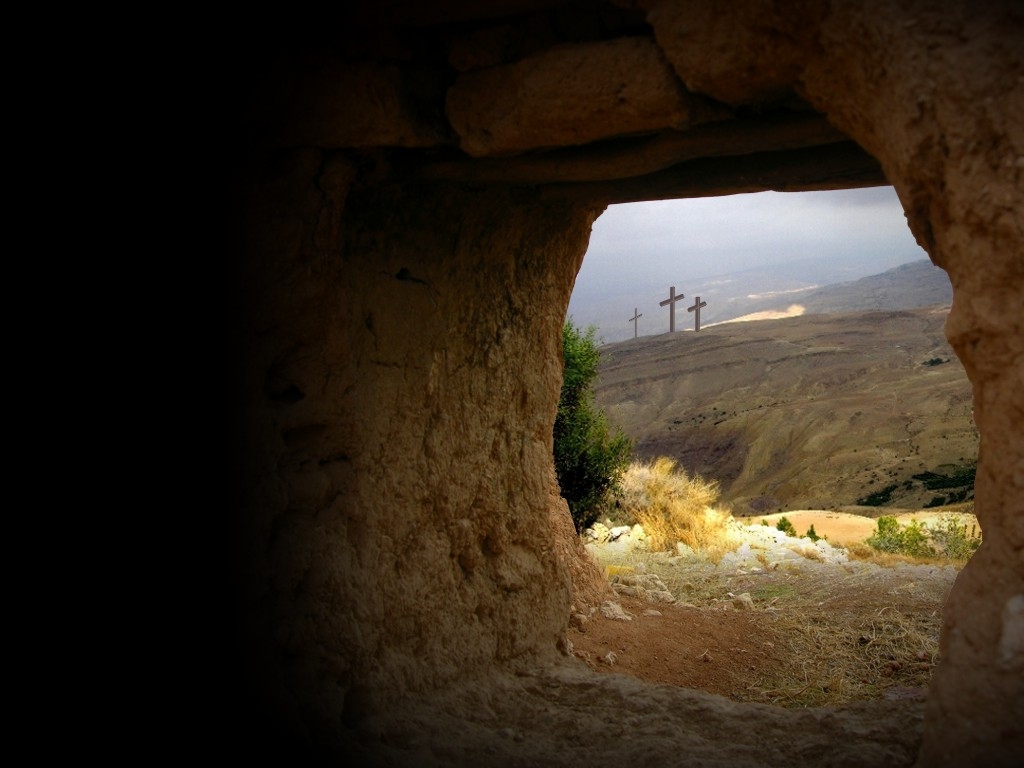
And very early in the morning the first day of the week, they came unto the sepulchre at the rising of the sun … And when they looked, they saw that the stone was rolled away: for it was very great. (Mark 16:2, 4)
The story of mankind is brief and straightforward despite the naturalistic stories invented by evolutionists. God created man in His own image (Genesis 1:26). God created man to enjoy fellowship with Him, but man erected a barrier between himself and God by his disobedience to God’s only command: “But of the tree of the knowledge of good and evil, thou shalt not eat of it: for in the day that thou eatest thereof thou shalt surely die” (Genesis 2:17). That disobedience brought the curse of death – separation from God who is life and the giver of life. “Jesus said unto her, I am the resurrection, and the life: he that believeth in me, though he were dead, yet shall he live: And whosoever liveth and believeth in me shall never die. Believest thou this?” (John 11:25-26). Holy God cannot abide sin. “Shall the throne of iniquity have fellowship with thee, which frameth mischief by a law?” (Psalm 94:20).
From that time on, innocent blood has been shed to cover or atone for the sins of man “For all have sinned, and come short of the glory of God” (Romans 3:23). Starting with that first sacrificial lamb slaughtered by the Lamb of God (Genesis 3:21), the innocent pay the penalty for the sins of the guilty. So the sacrificial system began carried on by Abel (Genesis 4:4), Noah (Genesis 8:20) and the law delivered by Moses. But the practice failed to bridge the chasm rived by sin “For it is not possible that the blood of bulls and of goats should take away sins” (Hebrews 10:4).
This hopeless situation required a better and permanent solution. This was mankind’s problem and the responsibility fell upon man for resolution. But Holy God cannot be satisfied with anything less a perfect, sinless sacrifice. Only the blood of a perfect, sinless man would do. Where could such a man be found? For, “As it is written, There is none righteous, no, not one … They are all gone out of the way, they are together become unprofitable; there is none that doeth good, no, not one” (Romans 3:10, 12). Such a conundrum was no puzzle for an omniscient God. “[He] made himself of no reputation, and took upon him the form of a servant, and was made in the likeness of men: And being found in fashion as a man, he humbled himself, and became obedient unto death, even the death of the cross” (Philippians 2:7-8). “Wherefore, as by one man sin entered into the world, and death by sin; and so death passed upon all men, for that all have sinned” (Romans 5:12). So, God in human form died in the stead of His human creation, and He took upon Himself the penalty that was due to each one of us individually. This is an awesome thing! In all the world religions of man, man sacrifices himself to his god, but the Bible teaches that God sacrificed Himself for man. Is that not incredible!
So Jesus died on the cross at Passover. He became the sacrificial Lamb of God to atone for the sins of mankind. He took on the crushing blow of the curse of death. In His final words He declared, “It is finished!” (John 19:30), and He died. Death took its greatest prize, but then came Sunday! The curse of death was broken. “Therefore as by the offence of one judgment came upon all men to condemnation; even so by the righteousness of one the free gift came upon all men unto justification of life” (Romans 5:18).
When I survey the wondrous cross
On which the Prince of glory died,
My richest gain I count but loss,
And pour contempt on all my pride.
Forbid it, Lord, that I should boast,
Save in the death of Christ my God!
All the vain things that charm me most,
I sacrifice them to His blood.
See from His head, His hands, His feet,
Sorrow and love flow mingled down!
Did e’er such love and sorrow meet,
Or thorns compose so rich a crown?
Were the whole realm of nature mine,
That were a present far too small;
Love so amazing, so divine,
Demands my soul, my life, my all.
(“When I Survey the Wondrous Cross” – Isaac Watts, 1707)
His death on the cross covered our sins once and for all. His resurrection bridged the chasm of death separating sinful humanity from Holy God. He has made the way for you and for me. He said, “I am the way, the truth, and the life: no man cometh unto the Father, but by me” (John 14:6). After all He has done for you, the least you can do is follow the way He has prepared. “Love so amazing, so divine, demands my soul, my life, my all!”
And in hell he lift up his eyes, being in torments, and seeth Abraham afar off, and Lazarus in his bosom. (Luke 16:23)
No one wants to hear about hell, but someone needs to talk about it. Why not me? I do not write this blog to be popular or become famous. If anything, dealing with topics such as this may win my place in infamy. That is okay; I will take my chances.
Most people largely ignore hell. They ask, “How can a loving God send anyone to hell?” Indeed, God sends no one to hell. “The Lord is not slack concerning his promise, as some men count slackness; but is longsuffering to us-ward, not willing that any should perish, but that all should come to repentance” (2 Peter 3:9, emphasis mine). In fact, when God unleashes the full force of His wrath upon the world during the seven-year Tribulation, He provides 144,000 witnesses to preach the Gospel to all nations.[1] He brings two Old Testament prophets from the dead to preach repentance and perform miracles in Jerusalem.[2] If that is not enough, God sends an angel to proclaim the Gospel to all of the world.[3] God does not want to send anyone to hell. He gives mankind every opportunity to avoid that place. (That is the main purpose of this blog.) However, it is up to every individual to make that choice for themselves. God does not force His affection on anyone.
If hell is not real, why would God go to such extremes – like taking on human form[4] to die on a cross for our sins[5] – to keep us out of that place? The Bible speaks more about hell than it speaks about heaven. Yet, some scoffers foolishly mock claiming that they look forward to going to hell so that they can party with all of their friends. Little do they know that they will suffer hell alone. (More on that later.) Still others, while accepting the fact of hell, reject the eternal nature of hell. Obviously, they have misinterpreted the multiple times that Jesus referred to hell as a place of “everlasting fire.”[6] While some may acknowledge that hell is eternal, they believe a sentence to hell is not. They believe that those that go to hell will only spend enough time there to pay for their sins and then cease to exist. However, that amounts to a lot of wishful thinking with no basis in Scripture.
In the Old Testament, “hell” often translates the Hebrew word she’ôl, which is the abode of the dead. Sometimes it is translated as “the grave” or “the pit,” and it is a place of no return. It is not clear to me, but it seems that she’ôl refers to “life after death,” and it could be either bad or good. King David expressed this idea at the death of his son by Bathsheba.[7] When the child was sick, David fasted and prayed unto God for the child’s life, but when the child died, he washed, dressed in his kingly apparel, and ended his fast. When asked about this seemingly odd behavior, David said, “But now he [the child] is dead, wherefore should I fast? can I bring him back again? I shall go to him, but he shall not return to me” (2 Samuel 12:23, emphasis mine). David understood that there was life after death, and his anticipation of that event was not cause for dread; rather, David looked forward to that day.
She’ôl also has a not-so-pleasant side to it. In describing Israel’s reward for idolatry, Moses records God’s plan. “And he [God] said, I will hide my face from them [Israel], I will see what their end shall be: for they are a very froward generation, children in whom is no faith. They have moved me to jealousy with that which is not God; they have provoked me to anger with their vanities: and I will move them to jealousy with those which are not a people; I will provoke them to anger with a foolish nation. For a fire is kindled in mine anger, and shall burn unto the lowest hell, and shall consume the earth with her increase, and set on fire the foundations of the mountains. I will heap mischiefs upon them; I will spend mine arrows upon them” (Deuteronomy 32:20-23, emphasis mine). While the language may be figurative (I take it literally), it describes the extent of God’s wrath against sin, and it is not pretty.
We see, then, that she’ôl, the abode of the dead, has both a good and a bad side. Jesus confirmed this idea when He recounted the death of a rich man and Lazarus.[8] Some assume that this was one of Jesus’ parables, but a close inspection reveals that Jesus relayed this as an actual account. Lazarus died as did the unnamed rich man, but they ended up in two different locations. Lazarus died “and was carried by the angels into Abraham’s bosom: the rich man also died, and was buried” (Luke 16:22). Albert Barnes points out that “Burial was thought to be an honor, and funerals were, as they are now, often expensive, splendid, and ostentatious. This is said of the rich man to show that he had “every” earthly honor, and all that the world calls happy and desirable.”[9]
That the rich man was buried also expresses the finality of, at least, his earthly life. However, that was not his end. “And in hell he lift up his eyes, being in torments, and seeth Abraham afar off, and Lazarus in his bosom” (Luke 16:23, emphasis mine). “Hell” here translates the Greek word hadēs which is equivalent to the Hebrew she’ôl. Two regions of the abode of the dead are expressed here: “Abraham’s bosom” and “torments.”
“Torments” is what we normally understand as “hell.” Notice that the rich man possessed consciousness. He could see Abraham and Lazarus “afar off.” However, Lazarus seems to be unaware of the rich man’s suffering. It appears that part of the torture of those in hell is seeing those who are enjoying heaven. At the same time, those in heaven remain unaware of those suffering in hell. Heaven would not be so heavenly knowing the fate of friends and loved ones suffering in hell.
Jesus described the rich man’s end as a place of fire. “And he cried and said, Father Abraham, have mercy on me, and send Lazarus, that he may dip the tip of his finger in water, and cool my tongue; for I am tormented in this flame” (Luke 16:24, emphasis mine). Some deny the fire of hell, but Jesus never did.[10] Notice that the rich man retains his selfish nature in hell. He dares to ask Abraham to send Lazarus to relieve him of some of his suffering. Later, he asks that Lazarus be sent to preach to his five brothers (vv. 27-28). He does not care about the rest of the lost, only his brothers. Sinners in hell do not change their sinful ways.
Finally, Jesus does not mention others suffering along with the rich man. He appears to be alone and isolated. So much for those who think they will party in hell with their friends. When one rejects God’s free offer of salvation, that one alone bears the responsibility for that choice. It is important to point out that nothing in this account describes the rich man as a particularly wicked or sinful person. Nor does it portray Lazarus as a particularly upright man. However, by implication, the rich man took no thought about God, while Lazarus depended on no one else but God. The rich man counted on his riches and thereby rejected God – not overtly – he probably attended synagogue regularly – but in his attitude of self-sufficiency.
Hell is a real place and the final destination of many. Jesus said, “Enter ye in at the strait [i.e., “narrow”] gate: for wide is the gate, and broad is the way, that leadeth to destruction, and many there be which go in thereat: Because strait is the gate, and narrow is the way, which leadeth unto life, and few there be that find it” (Matthew 7:13-14, emphasis mine). Sadly, Jesus makes it clear that the majority of people will end up in hell.
Many believe that at “judgement day” their good deeds will outweigh the bad and they will gain access into heaven by their good works. They correctly conclude that their deeds will be judged, but the standard to which they will be evaluated is the perfect, sinless life of Jesus Christ, and all will fall short of that standard. Everyone’s life is recorded in the annals of heaven and everyone will give an account. John the Revelator writes, “And I saw the dead, small and great, stand before God; and the books were opened: and another book was opened, which is the book of life: and the dead were judged out of those things which were written in the books, according to their works … And death and hell [hadēs] were cast into the lake of fire. This is the second death. And whosoever was not found written in the book of life was cast into the lake of fire” (Revelation 20:12, 14-15, emphasis mine). “The lake of fire” is the place we understand as “hell,” and it is eternal.
The question remains. Which way do you choose, the broad way or the narrow way? Do you want to follow the majority on the way to hell or choose the narrow way that leads to eternal life? The choice is yours and yours alone. Jesus said, “I am the way, the truth, and the life: no man cometh unto the Father, but by me” (John 14:6, emphasis mine). Does that seem narrow? It is! If you are on the broad way with the majority, you can get off of that road to destruction. Please read my page on “Securing Eternal Life.”
Give not that which is holy unto the dogs, neither cast ye your pearls before swine, lest they trample them under their feet, and turn again and rend you. (Matthew 7:6)
I am certain that my title stirred my Christian brothers and sisters to protest, “It is too!” Well, hang on and allow me to explain.
I assume, wrongly perhaps, that most Christians understand that Jesus was not born on December 25, or any time in December. I have covered that in other articles,[1],[2],[3] but that is not my purpose here. Regardless of the accuracy of the date, it is right that we, as Christians, take time to celebrate and give thanks to God for sending us His Son to “save His people from their sins.”[4]
But let us face it. The majority of the world who celebrates this season see it as the season of giving (and getting). They may have a remote idea for the Reason for the season, but only as a matter fact and not necessarily the focal point. In fact, any reminder of Christ’s birth is seen as offensive. The mere greeting of “Merry Christmas” is socially unacceptable and the preferred greeting is “happy holidays” or “season’s greetings,” but most choose to leave Christ out of it.
I could give more examples of the rampant materialism that takes place at that this time, but why harp on the obvious? For all these reasons I say that Christmas is not Christian; it is largely a secular plunge into self-indulgence and avarice. However, Christians need not get sucked into the fray. Lay aside the world’s Xmas and focus on the true meaning of this special time of celebration. “This is a faithful saying, and worthy of all acceptation, that Christ Jesus came into the world to save sinners; of whom I am chief” (1 Timothy 1:15).
Therefore I say unto you, Take no thought for your life, what ye shall eat, or what ye shall drink; nor yet for your body, what ye shall put on. Is not the life more than meat, and the body than raiment? (Matthew 6:25)
Last week the Wuhan Bug arrived at our house. I felt it first. It came on me Saturday evening in the form of a low-grade fever. I felt my ears “burn” as I worked on a sermon that I was supposed to deliver the following day at an assisted living facility. I called Linda, the lady in charge of the services, to let her know the situation. At that time, I was not aware that I had been “bitten” by the bug, but knowing the precautions taken at the facility to keep the residents safe, I felt obligated to report my condition. Linda, our leader, was a little distraught because she did not have a substitute on such short notice. So, I promised that if my fever left, I would show up and fulfill my obligation. The next morning, I was ready to preach.
I battle allergies constantly, especially this time of the year. So, for me, what I experienced was “normal.” My wife June, on the other hand started feeling bad Monday. That evening, she took her temperature and it was over 100º. The next day she called in sick to work and made an appointment to see a doctor. She was tested and diagnosed with COVID-19. Naturally, when she tested positive, they called me in and I tested positive as well. Keep in mind that I was not “feeling” sick during all of this time, except for the low-grade fever on Saturday night. The doctor prescribed an infusion of monoclonal antibodies and a medical team came to our house on Wednesday to administer the infusion to us. Following the infusion, I experienced chills and high fever the next two days. June had a similar experience, but after that, we both felt much better.
Our experience with the Wuhan Bug was a mild one compared to some. God made each one of us unique. Each one of us has a one-of-a-kind genetic makeup so that viruses affect us differently. One of the reasons I oppose the COVID injection being pushed by our government is that it is designed to manipulate your DNA. In simple terms, the mRNA injected into your body is supposed to “train” your God-created DNA into fighting of the spike protein of the coronavirus. The scientists that developed this “gene therapy” are ignorant (compared to the Designer and Creator of DNA), fallen, humans who are trying to manipulate what God has created. We must remember that these scientists, for the most part, believe that humans evolved from some common ancestor with ape, therefore they have a low regard for the notion that we were created in the image of God. I could go on, but that is not the purpose of this article.
From the beginning of the “plandemic” June and I have rejected the fearmongering propaganda surrounding it. We decided from the onset that we would trust God rather than men. Some will argue that God gave men intelligence to develop medicines and vaccines to help improve the health of mankind. To a large extent, I agree. In the past, medicines and vaccines have been developed from substances God created in nature. Past remedies stemmed from men “thinking God’s thoughts after Him.” These new so-called mRNA vaccines are none of that. They are all developed from manmade substances which attempt to alter or manipulate what God designed and created. You are welcome to disagree, and you have every right to be wrong, but I digress.
In Jesus’ Sermon on the Mount He stressed, “Take no thought for your life, what ye shall eat, or what ye shall drink; nor yet for your body, what ye shall put on. Is not the life more than meat, and the body than raiment?” The Greek word translated “thought” is merimnaō and it means “to be anxious about” something. The word “anxious” carries the connotation of “sickening worry.” This Wuhan Bug has many people I know and love living in fear, too afraid to come out of their homes for fear of being infected. June and I refuse to live like that without presuming upon God for our safety. We understood that we could be infected, but we also trusted that God would see us through – and He did!
Jesus says to “take no thought for your life.” The Greek word translated “life” here is not the common Greek words translated as “life.” Rather, it is the Greek word, psuchē, which means “breath” or “spirit.” It carries the connotation of the “soul,” which is the very essence of one’s being and existence. A Christian, of all people, should not be worried or anxious about his life knowing that, as Paul said, “We are confident, I say, and willing rather to be absent from the body, and to be present with the Lord. (2 Corinthians 5:8, emphasis mine). If you claim to be a Christian and lack that confidence, then you may need to reassess your position before God.
Jesus goes on to list material things over which we should not worry, but He tied all these back to what He stated earlier. Note that He begins the verse with “Therefore I say unto you.” Anytime we see “therefore” in the Bible, we need to see what it’s “there for.” In this case, Jesus had spoken of storing up treasures in heaven.[1] He stressed the folly of accumulating treasures here on earth, because it decays or can be stolen. “Treasures” can be anything that we value – our home, material possessions, family, time, work, life, etc. These are all temporal in nature. Jesus instructed that we should “lay up for yourselves treasures in heaven, where neither moth nor rust doth corrupt, and where thieves do not break through nor steal” (Matthew 6:20).
I really long for the day when “the Lord himself shall descend from heaven with a shout, with the voice of the archangel, and with the trump of God: and the dead in Christ shall rise first: Then we which are alive and remain shall be caught up together with them in the clouds, to meet the Lord in the air: and so shall we ever be with the Lord” (1 Thessalonians 4:16-17, emphasis mine). I am shocked when I run into Christians that do not share my enthusiasm for the Lord’s return, and in fact, they hope that He does not return anytime soon because they have so many treasures here on earth that they are unwilling to turn loose. Jesus reminds us, “For where your treasure is, there will your heart be also” (Matthew 6:21). Where is your treasure?
Divided loyalties weaken the Christian and make him susceptible to fear and worry. Jesus said, “No man can serve two masters: for either he will hate the one, and love the other; or else he will hold to the one, and despise the other. Ye cannot serve God and mammon” (Matthew 6:24). You can either put your trust in and serve the things of this world (“mammon”) or you can place your trust in God for His provision knowing that your life, your psuchē, is in His strong and loving hands. If your trust is in Him, the Wuhan Bug should not scare you.
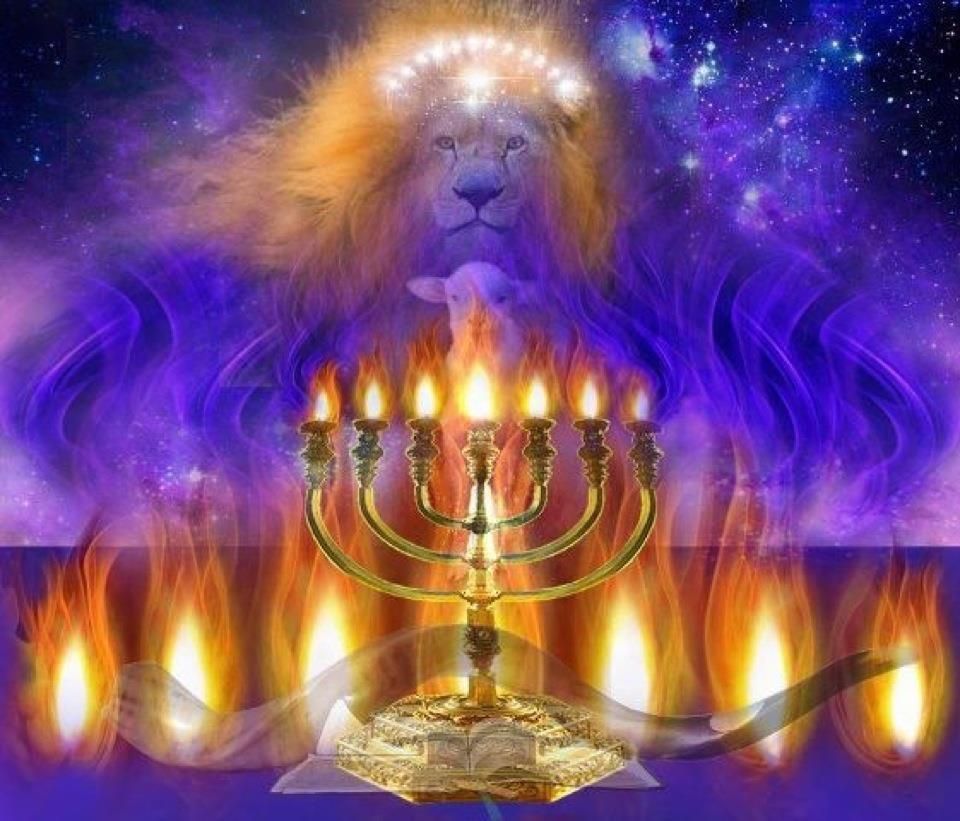
And out of the throne proceeded lightnings and thunderings and voices: and there were seven lamps of fire burning before the throne, which are the seven Spirits of God. (Revelation 4:5)
Recently, I started reading my Bible through again beginning with the New Testament, but this time in Spanish. I arrived at Apocalipsis (Revelation) Chapter 4, and Verse 5 gave me pause. I am reading in the Reina-Valera Revisión 1960, which translates επτα πνευματα του θεου (the seven spirits of God) as “los siete espíritus de Dios.” What caught my attention is that “espíritus” was in lower case suggesting this is NOT the Holy Spirit.
I cross-referenced my KJV (1873), and it too had “spirits” in lower case. However, my e-Sword[1] electronic Bible that resides on my computer, uses the 1769 KJV and it capitalizes “Spirits.” Seeing the difference between the 1769 and 1873 made me look to the original 1611; it capitalized “Spirits” – “the seuen Spirits of God.” Looking further back to the 1599 Geneva Bible (the one used by the Pilgrims), I found “spirits” in lower case. Finally, I looked at the Reina-Valera Revisión 1909 and found “Espíritus” capitalized.
Obviously, the translators cannot agree if the Greek πνευματα refers to the Holy Spirit or spirits in general. Spanish is notorious for putting in lower case most words that we in English normally capitalize, like days of the weeks, names of months, and reserving capitals mostly for proper names only. It could be argued that the problem with English was the lack of orthographical standardization prior to the 18th and 19th centuries so that the translators could not agree to capitalize or not.
The question remains, are “the seven spirits of God” the Holy Spirit or is this referring to something else? Throughout the NT, the Holy Spirit is always spoken of in the singular, never in the plural. The only possible exceptions are here in Revelation 4:5, and in Revelation 1:4; 3:1; 5:6. That the “spirits” belong to God is perfectly clear, but to conclude that they refer to the Holy Spirit is rather nebulous.
I looked to some reputable prophecy teachers for insight. Clarence Larkin, whose commentary on Revelation is the foundation upon which others build, completely overlooked Revelation 4:5. He commented extensively on Verse 4 and skipped right over to Verse 6.[2] Apparently, he was unconvinced one way or the other. Ed Hindson, Professor of Religion and Dean of the Institute of Biblical Studies at Liberty University commented, “The seven lamps of fire depict the seven Spirits of God (cf. 1:4)”[3] without any further explanation. Note too that he capitalizes “Spirits” indicating that he believes these to be the One referring only to Revelation 1:4 for support.
Let us examine that verse. “John to the seven churches which are in Asia: Grace be unto you, and peace, from him which is, and which was, and which is to come; and from the seven Spirits which are before his throne” (Revelation 1:4, KJV 1769, emphasis mine). This is the first appearance of this phrase in the NT. Note the capitalization of “Spirits” for no apparent reason. Nothing in the text itself warrants the capitalization. For comparison, the 1873 KJV does not capitalize “spirits” nor does the 1611. The 1599 Geneva Bible does capitalize “Spirits” but adds a note which I will address later. So, we remain in a biblical fog on the meaning of “the seven spirits.”
Tim LaHaye, another well-respected prophecy teacher who is now in the presence of our Lord and knows all things perfectly now, suggested that “the seven Spirits of God” represent seven characteristics of the Holy Spirit as described in Isaiah 11:2: (1) the spirit of the Lord, (2) the spirit of wisdom, (3) the spirit of understanding, (4) the spirit of counsel, (5) the spirit of might, (6) the spirit of knowledge, and (7) the spirit of the fear of the Lord. LaHaye draws a convincing parallel of the seven attributes of the Holy Spirit, but why would John make such an ambiguous connection when elsewhere in the Revelation he refers to “the Spirit” in the singular?[4]
In all the 50 years that I have studied end-times prophecy, I have been taught and have come to believe that “the seven spirits of God” referred to the Holy Spirit. I am unconvinced now. Looking at this from a different perspective, I have arrived at the conclusion that “the seven spirits of God” represent the raptured churches that are before the throne of God. Here is how I arrive at this conclusion.
As I stated earlier, throughout the NT the Holy Spirit is always referred to in the singular, never in the plural. The Godhead a unified plurality composed of three single entities working separately and together simultaneously. (I know that is a difficult concept to grasp, but that is what the Bible teaches, and we must accept that by faith.) So, the Holy Spirit is always the Holy Spirit, not Holy Spirits. Therefore, in this verse (and also 1:4, 3:1 and 5:6), “the seven spirits of God” must refer to something else which helps explain the confusion about capitalization. Here’s what I think.
Revelation 4:5 says, “And out of the throne proceeded lightnings and thunderings and voices: and there were seven lamps of fire burning before the throne, which are the seven spirits of God” (KJV 1873, emphasis mine). Have we been introduced to seven lamps before this point? Yes, indeed we have; the first time John sees Jesus. “And I turned to see the voice that spake with me. And being turned, I saw seven golden candlesticks … The mystery of the seven stars which thou sawest in my right hand, and the seven golden candlesticks. The seven stars are the angels of the seven churches: and the seven candlesticks which thou sawest are the seven churches” (Revelation 1:12, 20, emphasis mine).
Someone might well say, “There is a big difference between a “lamp” and a “candlestick” (some modern translations say lampstand). Amen (‘tis true)! John saw Jesus standing in the midst of seven candlesticks (lampstands) representing the seven churches Jesus would address. The word in the Greek is luchnia, which is a lampstand or candelabrum designed for supporting a lamp (or torch). In 4:5, John sees seven lamps before the throne. The Greek word there is lampas, which is a torch or lamp. Thayer’s Greek Definitions adds further, “a lamp, the flame of which is fed with oil.” Isn’t that interesting? Oil is also symbolic of the Holy Spirit.
So, on earth, John sees Jesus in the midst of seven lampstands designed to support lamps, i.e., flaming torches. The Holy Spirit is often depicted as a flame of fire. That could be a study on its own, but by way of example, the flaming bush that Moses confronted in the wilderness was the Spirit of God.[5] The Spirit of God was seen as a pillar of fire by night as the children of Israel wandered in the desert.[6] Later, when the Holy Spirit descended on the disciples at Pentecost, He appeared as “tongues of fire” over their heads.[7]
We know that the Holy Spirit indwells every true believer and by extension, He indwells every true church of Christ. So, as John sees Jesus in the midst of the seven churches (which represent all of His churches throughout the ages), he sees the lampstands, the churches, shining forth the lamps (torches) which are, in fact, One Spirit. Jesus said, “Ye are the light of the world. A city that is set on an hill cannot be hid. Neither do men light a candle, and put it under a bushel, but on a candlestick; and it giveth light unto all that are in the house” (Matthew 5:14-15, emphasis mine). Now, John does not describe the candlesticks as having torches. However, it seems silly to think that Jesus would be in the midst of lampstands with no lamps burning. That, in fact, would be rather sad because it would mean that the Holy Spirit was not in the Churches. Why then would Jesus be in their midst?
Jesus then addresses the seven churches, which represent the churches of all the ages, in chapters two and three. Now we come to Chapter 4. John says, “After this I looked, and, behold, a door was opened in heaven: and the first voice which I heard was as it were of a trumpet talking with me; which said, Come up hither, and I will shew thee things which must be hereafter. And immediately I was in the spirit: and, behold, a throne was set in heaven, and one sat on the throne” (Revelation 4:1-2). Every good prophecy teacher I know suggests that this represents the Rapture of the Church. The first three chapters dealt with the Church on earth at this present time. Now, John is called up to heaven and from this point on, the Church is no longer seen until the Wedding Supper of the Lamb and she returns to earth with Christ.[8]
This is John’s first vision of heaven and the first thing he sees is God on His throne surrounded by (among other things) “seven lamps of fire burning before the throne, which are the seven Spirits of God” (4:5). These seven lamps, I say, represent the seven churches that John saw on earth, which were raptured up with John when he heard the command, “Come up hither!” They are now just lamps. There is no further need for the lampstand, because they have done their job.
I found a note from the 1599 Geneva Bible on Revelation 1:4 very interesting. It says, “That is, from the Holy Spirit who proceeds from the Father and the Son. This Spirit is one in person according to his subsistence: but in communication of his power, and in demonstration of his divine works in those seven churches, perfectly manifests himself as if there were many spirits, every one perfectly working in his own church” (emphasis mine). That goes along with what I have concluded.
Without completely rejecting the notion that “the seven spirits of God” refers to the Holy Spirit, I suggest that the “seven lamps of fire burning before the throne” are the seven churches that are “the seven spirits of God” through the work of the Holy Spirit.




 Ernie's Musings