Coming soon….
Here we are at the end of November, 2016 and prophetic possibilities are popping all around us. Israel is in the process of –as usual– being pressured as part of trying to divide God’s…
Source: Damascus and Doomsday
Coming soon….
Here we are at the end of November, 2016 and prophetic possibilities are popping all around us. Israel is in the process of –as usual– being pressured as part of trying to divide God’s…
Source: Damascus and Doomsday
Filed under Christianity, End Times, Religion, Second Coming of Christ

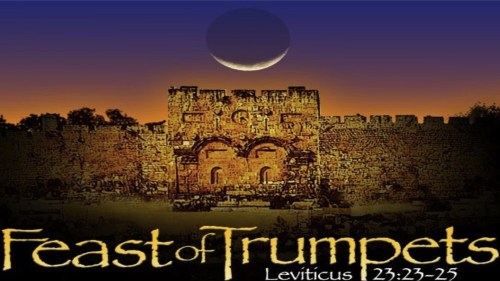
Speak unto the children of Israel, saying, In the seventh month, in the first day of the month, shall ye have a sabbath, a memorial of blowing of trumpets, an holy convocation. (Leviticus 23:24)
Today, October 3, 2016, is Rosh HaShanah, the first month and day of the Jewish civil year. It is the seventh month (Tishri) of the ecclesiastical year which begins on Nissan 1, sometime in early spring.
Rosh HaShanah is also known as the Feast of Trumpets, and it is celebrated by the daily sounding of trumpets leading up to Yom Kippur, the Day of Atonement, ten days later. This year, that day begins on the evening of October 11, 2016.
Most Christians are unfamiliar with the Jewish feast days that are observed in keeping with the Law given to Moses on Mt. Sinai. These are not your run-of-the-mill festivals. They were ordained by God and are collectively known as the “Feasts of the Lord;” therefore, they are solemn observations. The first four feasts occur in the spring beginning with Passover, and the last three take place in the fall ending with Sukkot, the Feast of Tabernacles (or “Booths”).
For the Christian, these feasts offer a picture of Christ. Jesus “fleshed out” the first four feasts at His first advent. Arguably, He has yet to fulfill the final three. Consider the following and how these feasts represent the ministry of Christ:
I’ve said this before. Each year around time, I start looking up and listening for the trumpet to sound. Yes, I know that the Rapture can occur at any time, but to me it seems logical that it would be consistent with God’s calendar. Of course, God is not obligated to follow my line of reasoning. At any rate, this time of year causes me to pray ever more earnestly that God would call us home and fix this really messed up world once and for all.
However, at the same time, it causes me even greater concern because I know that those who are left behind will literally experience hell on earth for the next seven years, not to mention for eternity. I have two sons with their wives that are lost and hell bound. My youngest son has two daughters, my granddaughters, that by now have reached the age of accountability. My heart aches for them knowing what is ahead unless they repent and turn to Christ as their personal Savior. I have nieces and nephews and other relatives who are lost. I have friends and acquaintances who are doomed to an eternity in hell. That is not a pleasant thought. So, on the one hand I long to go and be with the Lord right now, but on the other hand, I am deeply concerned for those that will be left behind. The longer the Lord delays His return, the more time and opportunity they have to alter their course.
The Lord is not slack concerning his promise, as some men count slackness; but is longsuffering to us-ward, not willing that any should perish, but that all should come to repentance. But the day of the Lord will come as a thief in the night; in the which the heavens shall pass away with a great noise, and the elements shall melt with fervent heat, the earth also and the works that are therein shall be burned up. (2 Peter 3:9-10, emphasis mine)
On the other hand, the longer He delays the more time for unbelievers to scoff: “And saying, Where is the promise of his coming? for since the fathers fell asleep, all things continue as they were from the beginning of the creation” (2 Peter 3:4).
Even so, come Lord Jesus! (Revelation 22:20)
Filed under Christianity, Current Events, End Times, Evangelism, Gospel, Hell, Holidays, Salvation, Second Coming of Christ

If my people, which are called by my name, shall humble themselves, and pray, and seek my face, and turn from their wicked ways; then will I hear from heaven, and will forgive their sin, and will heal their land. (2 Chronicles 7:14)
Fear hangs like a dark, menacing storm cloud over our nation. Insecurity saps the courage of our people to venture into the unknown. Anger and hostility ignite flames of anarchy in our streets and everyone yearns for a savior. Our nation is deeply troubled. Anyone with any sense of awareness can see it. Many feel helpless to stem the tide, while many others tenaciously cling to the hope that the downward spiral can be arrested and reversed through a spiritual awakening and revival. The latter frequently quote, “If my people, which are called by my name, shall humble themselves, and pray, and seek my face, and turn from their wicked ways; then will I hear from heaven, and will forgive their sin, and will heal their land” (2 Chronicles 7:14, emphasis mine).
The passage quoted intends for “God’s people” to collectively storm the gates of heaven petitioning God on behalf of our wicked and sinful nation. The petition is conditional and incumbent upon “God’s people,” not the general populous, but who are God’s people and where are they?
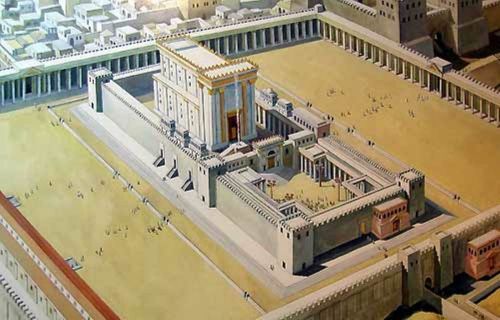
Before I respond to that question, I need to restate what have emphasized in the past concerning this particular verse in Second Chronicles that is so often quoted. Regarding the United States of America, the verse is taken out of context and misapplied. The Second Chronicles begins with Solomon’s ascension to the throne of Israel and the building of the first temple in Jerusalem. At the completion of Temple, the priests placed the Ark of the Covenant in its place in the Holy of Holies (2 Chronicles 5:1-12) and “the glory of God” in the form of a cloud that filled the temple in such a way that the priests could not minister in the place (vv. 13-14). As the dedication service continued, Solomon prayed and asked God to “Hearken therefore unto the supplications of thy servant, and of thy people Israel, which they shall make toward this place: hear thou from thy dwelling place, even from heaven; and when thou hearest, forgive” (2 Chronicles 6:21, emphasis mine). Solomon’s plea for God’s forgiveness goes beyond individual sins and extends to the sins of nation collectively.
And if thy people Israel be put to the worse before the enemy, because they have sinned against thee; and shall return and confess thy name, and pray and make supplication before thee in this house; Then hear thou from the heavens, and forgive the sin of thy people Israel, and bring them again unto the land which thou gavest to them and to their fathers. When the heaven is shut up, and there is no rain, because they have sinned against thee; yet if they pray toward this place, and confess thy name, and turn from their sin, when thou dost afflict them; Then hear thou from heaven, and forgive the sin of thy servants, and of thy people Israel, when thou hast taught them the good way, wherein they should walk; and send rain upon thy land, which thou hast given unto thy people for an inheritance … If they return to thee with all their heart and with all their soul in the land of their captivity, whither they have carried them captives, and pray toward their land, which thou gavest unto their fathers, and toward the city which thou hast chosen, and toward the house which I have built for thy name: Then hear thou from the heavens, even from thy dwelling place, their prayer and their supplications, and maintain their cause, and forgive thy people which have sinned against thee. (2 Chronicles 6:24-27, 38-39, emphasis mine)
Notice that Solomon’s request specifies God’s people (Israel), the Temple (this house), Jerusalem (the city), and the nation (their land). “Now when Solomon had made an end of praying, the fire came down from heaven, and consumed the burnt offering and the sacrifices; and the glory of the LORD filled the house. And the priests could not enter into the house of the LORD, because the glory of the LORD had filled the LORD’S house. And when all the children of Israel saw how the fire came down, and the glory of the LORD upon the house, they bowed themselves with their faces to the ground upon the pavement, and worshipped, and praised the LORD, saying, For he is good; for his mercy endureth for ever” (2 Chronicles 7:1-3, emphasis mine).
Obviously, God approved of the Temple and the offerings presented there. The dedication of the Temple took place in the midst of the Fall Feasts. Scripture tells us that it was “in the seventh month” (2 Chronicles 5:3). The Feast of Trumpets (Rosh Ha Shanna) was celebrated on the first day of the seventh month (Leviticus 23:24). Then on the tenth day of the month, they observed the Day of Atonement (Yom Kippur – Leviticus 23:27). That was followed by the Feast of Tabernacles (Succoth) fifteen days later (Leviticus 23:34), which was celebrated for seven days. Solomon dedicated the Temple on the eighth day (2 Chronicles 7:9), and the celebration lasted through the Day of Atonement for seven days. The dedication ended in time to celebrate the Feast of Tabernacles, which lasted an additional seven days (1 Kings 8:65-66). “And on the three and twentieth day of the seventh month he sent the people away into their tents, glad and merry in heart for the goodness that the LORD had shewed unto David, and to Solomon, and to Israel his people.” (2 Chronicles 7:10).
It is in this context that God responds.
And the LORD appeared to Solomon by night, and said unto him, I have heard thy prayer, and have chosen this place to myself for an house of sacrifice. If I shut up heaven that there be no rain, or if I command the locusts to devour the land, or if I send pestilence among my people; If my people, which are called by my name, shall humble themselves, and pray, and seek my face, and turn from their wicked ways; then will I hear from heaven, and will forgive their sin, and will heal their land. Now mine eyes shall be open, and mine ears attent unto the prayer that is made in this place. For now have I chosen and sanctified this house, that my name may be there for ever: and mine eyes and mine heart shall be there perpetually. (2 Chronicles 7:12-16, emphasis mine)
As specific as Solomon’s prayer was, so was God’s response. Note that God is responding to Solomon’s prayer: “I have heard thy prayer.” Solomon’s prayer request focused on the Temple, Jerusalem, and the “nation” of Israel as noted above. In response, God says that He has “chosen this place to myself.” His people which are called by His name is the nation of Israel collectively. If they sin, which they did and which resulted in expatriation for the northern kingdom and Babylonian captivity for Judah, and they humble themselves, repent and seek God, then He will heal their land. Note also that the prayer must either originate in that place or be directed toward that place. We see this exact scenario when Daniel recognizes that the 70-year captivity had been met (Daniel 9:1-19).
Christians these days have adopted 2 Chronicles 7:14 as their own and applied it to what is currently going on in the United States of America. They rightly claim we are “God’s people.” You will not arouse an argument from me on that point. The New Testament repeatedly teaches that we are the children of God. “But as many as received him, to them gave he power to become the sons of God, even to them that believe on his name” (John 1:12). However, the claim ends right there. Where is God’s Temple right now? “Know ye not that ye are the temple of God, and that the Spirit of God dwelleth in you?” (1 Corinthians 3:16, emphasis mine). What borders mark the land of God’s people? Americans claim the United States. Are there no Christians in Australia, Canada, China, France, Great Britain, etc.? What of all the Christians being martyred in the Middle East and Africa, are thy not God’s people, and do they not have the right to intercede on behalf of their land? God’s “grafted in” people have no land here on earth. “For our conversation [i.e. citizenship] is in heaven; from whence also we look for the Saviour, the Lord Jesus Christ” (Philippians 3:20).
It seems somewhat hypocritical that many Christians today want to reject the Old Testament Law claiming that we are “under grace” – those things no longer apply – and yet will take this verse, completely out of context and force it apply to 21st Century America. Sorry, folks, it will not work. There is still a nation of Israel with whom God is dealing. To date, the majority of Israelis are secular. Many are agnostics or atheists. There exists a small minority of “completed Jews” in the land, but with laws against proselytizing, their numbers remain small. Israel exists to show God’s faithfulness to His promises, and in the end, those who survive the Great Tribulation that is coming, “they shall look upon me whom they have pierced, and they shall mourn for him, as one mourneth for his only son, and shall be in bitterness for him, as one that is in bitterness for his firstborn” (Zechariah 12:10), and they will be saved.
So, what can the Christian get out of 2 Chronicles 7:14? Taken in context, we can rest in the assurance that God does hear the prayers of His people, and He does answer according to His will.
Filed under Apologetics, Bible, Christianity, Current Events, End Times, Prayer, Second Coming of Christ, Theology
And, behold, I come quickly; and my reward is with me, to give every man according as his work shall be. (Revelation 22:12)
More than ever it seems that Christians are “Looking for that blessed hope, and the glorious appearing of the great God and our Saviour Jesus Christ” (Titus 2:13). Given all that is taking place in the all over the world today, I am not surprised when I get questions like the following:
I was wondering if it is possible, according to the information we have in the Bible, to calculate how many years have elapsed since the very beginning of the world, so that we know approximately how close we are to the end of this present age of man’s self-rule of 6,000 years, and the return of Jesus Christ?
Also, are we the last generation, and how many years is a Biblical generation?
Generally speaking, the 6000 years people try to associate with Christ’s return is based more on inference and speculation rather than clear Bible teaching. The Bible does not teach that Jesus will return 6000 years after creation. Jesus said, “Watch therefore, for ye know neither the day nor the hour wherein the Son of man cometh” (Matthew 25:13, emphasis mine).
God created in six 24-hour days, not in six 1000-year periods. The Apostle Peter says, “But, beloved, be not ignorant of this one thing, that one day is with the Lord as a thousand years, and a thousand years as one day” (2 Peter 3:8, emphasis mine). Notice that Peter says “as a thousand years.” Grammatically, that phrase is a simile, i.e. comparing two different but “similar” things to each other. For example, a cat is “like” (or “as”) a dog. They are different animals, but they do have similarities: fur, four legs, a tail, etc. What Peter really says is that time makes no difference to God; He is ageless/timeless. God is not constrained by time.
Many who study eschatology (the study of end times) take what Peter says in 2 Peter 3:8 and associate it with the Creation Week, i.e. one day of creation compares to 1000 years of history. They infer that God has determined 7000 years to complete history: 6000 years of “work” plus 1000 years of “rest” during the millennial reign of Christ. That is a logical assumption, and it makes sense; however, it takes a lot of liberty with Scripture to make that jump. That said, I personally agree with that view, but we should not be dogmatic about it. We certainly should not try to predict the return of Christ based on such skimpy evidence. Remember what Jesus said, “ye know neither the day nor the hour.”
The problem with trying to determine when we arrive at the 6000-year mark is that we have lost track of time. God has not lost track of time, but man has. From Scripture, we can measure time from Creation fairly accurately. However, following Israel’s entry into Egypt, the biblical chronology becomes a little hazy. Reconciling biblical chronology with our modern chronology becomes pretty much a guessing game, especially when secular historians attempt to justify 100,000 years of human history based on evolutionary thinking.
According to Chinese chronology, 2016 is the Chinese year 4713. When we consider the biblical chronology given in Genesis 5, the Flood took place around 1656 years after Creation. If we take that time and add the Chinese account of 4713 years, we come up with 6369 years. If we expect Jesus to return 6000 years after Creation, He is 369 years late by that account, either that or Chinese civilization started some 300 years before the Flood, which makes no sense considering that all of earth’s population was destroyed except for the eight on the Ark. It is interesting to note that the Chinese account places the beginning of their history near the time of the Tower of Babel – 100-150 years after the Flood.[1]
For the Jews, 2016 is year 5776. (It will be 5777 this coming September.) Supposedly, the Jewish calendar begins at Creation. If we expect Jesus to return 6000 years after Creation, we have to wait another 224 years.
I hope you can see why trying to determine Christ’s return by calculating the number of years from Creation is a fruitless endeavor. I believe He will return exactly 6000 years from Creation, but we do not know exactly when Creation took place. We can say it has been “about” 6000 years, but we cannot tell with certainty. However, we can trust that God knows exactly how much time has passed, and Jesus will return precisely when that time is accomplished.
Rather than counting days and years, Jesus said to “Watch therefore: for ye know not what hour your Lord doth come” (Matthew 24:42). It has been “about” 6000 years since Creation, and it is about time for history to take a shâbath (rest). God gave us some signs to watch for. Israel is back in the land, and we are the generation[2] that witnessed it happen (Matthew 24:32-34). Wars and rumors of wars abound around the nation of Israel (Matthew 24:6). There is rampant persecution of Christians in the world, particularly in the Middle East and in all Muslim nations. The world is on the verge of economic collapse. World leaders cry out for a one-world government. Wickedness increases rapidly (2 Timothy 3:1-7). The “signs,” rather than chronology, tell us that the Lord’s return is very near. So, look up! We are almost there!
[1] Genesis 10:25 informs us that the earth was “divided” in the days of Peleg. Some think this refers to the dividing of the continents, but the dividing of the continents more likely resulted from the catastrophic Global Flood. The division of Peleg’s day makes better sense if understood as the division of languages, and, by implication, nations described in Genesis 11:1-9. Peleg was born to Eber about 100 years after the Flood (Genesis 11:16). His son, Reu was born 30 years later (Genesis 11:18). Peleg lived a total of 239 years (Genesis 11:19) – 209 years after the birth of Reu. The division of “people groups” could have happened anytime within his lifespan; 100-150 years for the Tower of Babel seems like a reasonable timeframe.
[2] Determining the length of a generation is irrelevant at this point; anyone living now is part of “that generation.” Generally speaking, a generation is from father to son. From Adam to Seth was 130 years (Genesis 5:3); from Abraham to Isaac was 100 years (Genesis 21:5). Some of the O.T. kings begat sons in their twenties; so, a generation can be anywhere from 20 to perhaps 140 years. The nation of Israel was reborn on May 14, 1948. That was almost 70 years ago. Surely, anyone born since that time is in that generation that will see the Lord’s return.
Comments Off on Are We There Yet?
Filed under Apologetics, Christianity, Creation, End Times, Evolution, Religion, Second Coming of Christ, Theology
Source: When the Sky Really Is Falling: Repent, And Be The Church
I appreciate Rod Dreher’s (I believe) optimism, but consider Jeremiah 15:4. After Manasseh, king of Judah, followed Amon who was equally wicked. Then came Josiah who brought in “revival,” That lasted about 30 years. Subsequent kings reversed direction, but note that God had already judged the nation from the time of Manasseh, even though he repented in the end (2 Chronicles 33:11-13). Josiah’s revival did not deter God from following through with His plans to punish Judah.
Compare that with the recent history of our nation. During WWII, there was revival, but not long after, the nation started going downhill. Then we had Reagan and there seemed to be a “new revival,” but after him, things started going south again.
Nationally, we started turning our back on God by banning prayer and Bible reading in public schools in the 60’s. Then we legalized the murder of unborn babies in the 70’s. Finally, sodomy was “accepted” and then legalized at the turn of the new century. Knowing how God has dealt with “His people” in the past, can we really expect Him to overlook our national sin?
I agree that we Christians, as “His people,” need to repent and renew our commitment to Christ our Lord, but I don’t think that will have any effect on the course of our nation. While this may sound pessimistic, I am not. I am hopeful that our Lord’s return is very near. Good news for us, but bad news for those who will be left behind. Hopefully, we can leave behind clear enough testimony that those “who have ears to hear” will recognize what has happened and take advantage of their second chance.
Filed under Christianity, Current Events, End Times, Evangelism, Religion, Second Coming of Christ