Category Archives: Theology

What Next?

Happy-New-Year-2016-Images

Remember the former things of old: for I am God, and there is none else; I am God, and there is none like me, Declaring the end from the beginning, and from ancient times the things that are not yet done, saying, My counsel shall stand, and I will do all my pleasure:  (Isaiah 46:9-10)

The Christmas lights are down. The tree and the ornaments are put away. The year 2015 is history. As I mentioned in my previous post, the year began with great expectations, most of which did not materialize, much to my dismay.  But isn’t that the way it often happens! That aside, I did accomplish some personal goals. I donated[1] my 1/60-scale model of Noah’s Ark[2] to the Institute for Creation Research.  I read the English Standard Version (ESV) Bible through.  My wife and I signed up with a physical trainer in May and stuck with the program. I lost 25 pounds, so far, and gained noticeable strength and endurance, which encouraged my doctor to take me off of my blood pressure meds. We also took a cruise along the northeast coast which granted me a longtime dream of standing on the deck of the USS Constitution, “Old Ironsides” – a wish-come-true for this old Navy boy.

In retrospect, many positive experiences and accomplishments took place in 2015, but my greatest desire did not come to pass – the return of our Lord Jesus Christ. In spite of many positive “signs,” the Lord, in His omniscience, determined that the time was not right. That in itself is a positive thing, especially for those who are lost and in need of the Savior. God in His mercy has delayed His judgment on this world (2 Peter 3:9).

So, what is in store for 2016? What comes next? Will the Lord return in 2016, or will we go to meet Him in death? Will we enjoy good health or will we or one of our loved ones experience serious illness?  Will this be the year that our lost loved ones accept Jesus as their Lord and Savior? Will our national economy implode, or will it take an upswing turn for the better? Who will be voted President, and will he (or she) have a positive influence on the country? Will our nation once more get dragged into an unwanted war?

There are so many questions for which we cannot know the answers! Certainly as we analyze world affairs, the outlook seems grim, and it makes for a good source for depression. Several coping methods can be employed to deal with the unknown and unpredictable. We can isolate and insolate ourselves from negative input. Shut off TV news, turn off the radio, and stop reading newspapers, magazines and social media. Another option is to numb your mind through chemistry, entertainment, pleasure, or other distractions. If you can’t hear it, see it or feel it, it’s not really there. Right? A third option is to face the world head on. Be aware of what is going on around you and in the world. Prepare for adversity but with hope, not paranoia. Rest in the assurance that you are under God’s protection. “And fear not them which kill the body, but are not able to kill the soul: but rather fear him which is able to destroy both soul and body in hell. Are not two sparrows sold for a farthing? and one of them shall not fall on the ground without your Father … Fear ye not therefore, ye are of more value than many sparrows” (Matthew 10:28-29, 31).

What next? There is no way to know what the future holds, so trust Him who holds the future. “Take therefore no thought for the morrow: for the morrow shall take thought for the things of itself. Sufficient unto the day is the evil thereof” (Matthew 6:34). The Lord knows what 2016 will bring. He knows “the end from the beginning,” and we can be sure that He has included us in His plans. Happy 2016!

Notes:


[1]  http://www.icr.org/article/noahs-ark-model

[2]  https://erniecarrasco.com/2015/03/01/building-the-ark/

Comments Off on What Next?

Filed under Christianity, Current Events, End Times, New Year's Day, Religion, Second Coming of Christ, Theology

Almost Gone

new-year-clock

Brethren, I count not myself to have apprehended: but this one thing I do, forgetting those things which are behind, and reaching forth unto those things which are before, I press toward the mark for the prize of the high calling of God in Christ Jesus. (Philippians 3:13-14)

The presents are gone from under the tree. The wrappings, ribbons and bows are all in the trash, and all the guests left days ago. Not many days remain in what’s left of this year, and soon we’ll be singing “Auld Lang Syne.”

The older I get, the quicker the years seem to zoom by. This year is no exception. I must confess that this year has been somewhat of a disappointment to me. You may attribute that to the state of politics, the economy, the rise of terror, the decline of morality in our nation, etc., and while all those things can put a damper on one’s outlook, they really are not the source of my disappointment.

I started this year with the genuine hope that this would be the year that Christ returned, and we, His children, would be taken up in the clouds to meet Him in the air (1 Thessalonians 4:17).  Many of the signs seemed to converge to make a good case for this being the year. First there was the third Blood Moon of the rare tetrad at Passover in April that was preceded by a total solar eclipse in March. Then the fourth Blood Moon of the tetrad appeared during the Feast of Tabernacles in late September. Add to that, the final Blood Moon followed the end of the Shamitah which modern “prophets” saw as a sign of economic collapse, (which did not occur in any way to cause great consternation). To boot, all of this leads to the Year of Jubilee, which began on Rosh Ha-Shanna, September 13.

All this year, I have looked toward the eastern sky and cupped my ear for the sound of the trumpet, and it didn’t come.

Jesus did not come. 😦

I am disappointed, but not disheartened or discouraged. After all, Jesus said, “But of that day and that hour knoweth no man, no, not the angels which are in heaven, neither the Son, but the Father” (Mark 13:32, emphasis mine). The modern day prophets made some good guesses solidly based on Scripture, but they obviously missed it. To their credit, none would dogmatically set a date for Christ’s return, and all offered the disclaimer that God is not bound by their speculations. Still, there was the hope.

Should that hope be abandoned simply because mortal men guessed wrong? As Paul would say, “God forbid!” Jesus promised to return: “Let not your heart be troubled: ye believe in God, believe also in me. In my Father’s house are many mansions: if it were not so, I would have told you. I go to prepare a place for you. And if I go and prepare a place for you, I will come again, and receive you unto myself; that where I am, there ye may be also” (John 14:1-3, emphasis mine). There is absolutely no reason not to believe that He will do as He promised. The Old Testament is full of prophecies foretelling of His first coming, and all were proven true beyond any shadow of doubt. So accurately were those promises fulfilled, that the probability of one man fulfilling just eight of them is a virtual impossibility, yet Jesus fulfilled them all. If Scripture proved true about His first coming, then it will certainly prove true for His second coming.

A few days still remain in 2015. Jesus may return before the clock strikes midnight on December 31st, or He may yet delay. Twenty-Sixteen is the Year of Jubilee and that would be a great time for Christ to return. And what if He does not come in 2016? So what! Jesus promised He will return. In the meantime He said, “It is not for you to know the times or the seasons, which the Father hath put in his own power. But ye shall receive power, after that the Holy Ghost is come upon you: and ye shall be witnesses unto me both in Jerusalem, and in all Judaea, and in Samaria, and unto the uttermost part of the earth” (Acts 1:7-8, emphasis mine). “Go ye therefore, and teach all nations, baptizing them in the name of the Father, and of the Son, and of the Holy Ghost: Teaching them to observe all things whatsoever I have commanded you: and, lo, I am with you alway, even unto the end of the world. Amen” (Matthew 28:19-20, emphasis mine). We must do this because, “The Lord is not slack concerning his promise, as some men count slackness; but is longsuffering to us-ward, not willing that any should perish, but that all should come to repentance” (2 Peter 3:9, emphasis mine). Likewise, we should not be willing that any should perish.

Does this mean I should stop looking and listening? Of course not! “Blessed is he that readeth, and they that hear the words of this prophecy, and keep those things which are written therein: for the time is at hand” (Revelation 1:3, emphasis mine). “Henceforth there is laid up for me a crown of righteousness, which the Lord, the righteous judge, shall give me at that day: and not to me only, but unto all them also that love his appearing” (2 Timothy 4:8). So, no lollygagging! There is work yet to be done! “Blessed is that servant, whom his lord when he cometh shall find so doing” (Matthew 24:46). Perhaps in 2016!

2 Comments

Filed under Apologetics, Christianity, Current Events, End Times, Evangelism, Gospel, New Year's Day, Religion, Salvation, Second Coming of Christ, Theology

Christmas Trees

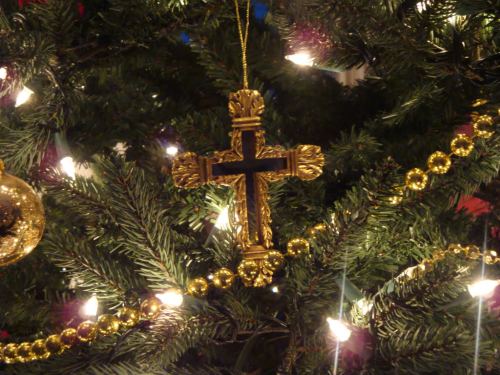
Cross Christmas Ornament on tree

Christ hath redeemed us from the curse of the law, being made a curse for us: for it is written, Cursed is every one that hangeth on a tree.    (Galatians 3:13)

For most of my adult life I have bemoaned the blatant commercialization of Christmas. Long before the satanic observance of Halloween, Christmas displays start showing up in stores enticing consumers to bring their offerings to the god of mammon. Featured in every display is a wide assortment of Christmas trees in all shapes, sizes, and styles all professionally adorned to put the buyer in the Christmas spirit. Who cares if it is still 90° outside in Texas! What would Christmas be without a Christmas tree!

What does a Christmas tree have to do with Christmas anyway? Google is a wonderful thing and a great resource for information on a number of things, including Christmas trees. Generally speaking, the Christmas tree has pagan origins typically associated with the winter solstice and the lengthening of daylight. The evergreen tree symbolizes life, and the arrival of longer days shows the triumph of life over death and darkness. One can easily see the association of the evergreen with eternal life and the coming of the “Sun of Righteousness” (Malachi 4:2). However, it is doubtful that the “Sun of Righteousness,” whom we celebrate, arrived during the winter solstice.

Not long ago I discovered a sweet story about Christmas trees. It is “The Legend of the Three Trees.” The story tells of three young trees and their dreams of what they wanted to be when they grew up. The first wanted be made into a beautiful chest and hold a wealth of treasure. The second wanted to be made into a great ship that would carry kings. The third just wanted to stay atop its high hill and point men to God. As the story concludes, the first tree was made into a feed trough which held the greatest treasure ever – the Christ child. The second was made into a simple fishing boat that carried the King of King and Lord of Lords. Finally the third was made into a despicable cross on which the Lamb of God was sacrificed. Atop that lonely hill, that ugly tree pointed the way to God.

Perhaps that is the best image of a Christmas tree – the old rugged cross with God’s greatest gift hung on it. “And as Moses lifted up the serpent in the wilderness, even so must the Son of man be lifted up: That whosoever believeth in him should not perish, but have eternal life. For God so loved the world, that he gave his only begotten Son, that whosoever believeth in him should not perish, but have everlasting life” (John 3:14-16). No brightly lit and decorated tree could be more beautiful than God’s Christmas tree!

1 Comment

Filed under Christianity, Christmas, Evangelism, Gospel, Religion, Salvation, Theology

Why Jesus?

jesus_and_mary_manger_by_bnw20401

But when the fulness of the time was come, God sent forth his Son, made of a woman, made under the law, To redeem them that were under the law, that we might receive the adoption of sons.    (Galatians 4:4-5)

At this time of year we pause to consider and reflect on the entry of God into the world in human form. When we take the time to seriously ponder this wonder, the notion that He chose to make His entry as a helpless newborn baby, makes us marvel in awe. He, “being in the form of God, thought it not robbery to be equal with God: But made himself of no reputation, and took upon him the form of a servant, and was made in the likeness of men” (Philippians 2:6-7, emphasis mine), as a baby. Why? And why in this way?

Too often we get caught up in the “story” of Christmas and overlook the greater significance. God had to intervene into the hopeless human condition in order to ransom back His most prized creature ruined shortly after creation. Man, Adam, disobeyed God’s only prohibition. “And the LORD God commanded the man, saying, Of every tree of the garden thou mayest freely eat: But of the tree of the knowledge of good and evil, thou shalt not eat of it: for in the day that thou eatest thereof thou shalt surely die. (Genesis 2:16-17, emphasis mine). “And when the woman saw that the tree was good for food, and that it was pleasant to the eyes, and a tree to be desired to make one wise, she took of the fruit thereof, and did eat, and gave also unto her husband with her; and he did eat” (Genesis 3:6, emphasis mine). What weakness is there in man that even in a pristine environment that, without a need or care in the world, he cannot keep one simple commandment?

That single act brought the curse of death upon all subsequent generations – not only physical death (Genesis 3:17-19) but, worse, spiritual death separating us from our Creator (Ephesians 2:1). “Wherefore, as by one man sin entered into the world, and death by sin; and so death passed upon all men, for that all have sinned” (Romans 8:12, emphasis mine). Being that man offended Holy God (and because God is eternal, the offense is eternal), only man can right the wrong, and the only thing that can reverse the curse of death, is the gift of life. God tells us in His Word, “For the life of the flesh is in the blood: and I have given it to you upon the altar to make an atonement for your souls: for it is the blood that maketh an atonement for the soul” (Leviticus 17:11, emphasis mine).

As a temporary measure, God (I believe in the form of the pre-incarnate Christ) offered the first blood sacrifice to atone for (cover) the sin of the first couple. “Unto Adam also and to his wife did the LORD God make coats of skins, and clothed them” (Genesis 3:21, emphasis mine). In order to make “coats of skins” innocent animals had to shed their blood to cover the nakedness of the disobedient couple. But animal blood is insufficient; “For it is not possible that the blood of bulls and of goats should take away sins” (Hebrews 10:4). Neither is the tainted blood of man sufficient to take away sins because the sacrifice must be “without blemish” (Exodus 12:5). The innocent blood of animals cannot qualify because the sin belongs to man, and the blood of humans cannot qualify because it is blemished with sin.

Enter Christ. Innocent animal blood was insufficient because they are not at fault; animals did not sin. The one responsible for sin and death is the only one that can pay the “wages of sin” (Romans 6:23). That responsibility falls on man, but man’s blood cannot atone for sin, because man’s blood is tainted by sin. So God became man, engendered in a virgin’s womb, gestated for nine months until the proper time to be delivered as a helpless baby. Then, He grew up as a normal child (Luke 2:52) into adulthood, and He “was in all points tempted like as we are, yet without sin” (Hebrews 4:15, emphasis mine). Jesus, God in human flesh, voluntarily became “a lamb without blemish and without spot” – the only acceptable sacrifice to atone for the sins of man. John the Baptist recognized Him at the beginning of His earthly ministry: “and saith, Behold the Lamb of God, which taketh away the sin of the world.” (John 1:29, emphasis mine) – perfect man; sinless blood; problem solved! Thus, He is the only path to redemption. “Jesus saith unto him, I am the way, the truth, and the life: no man cometh unto the Father, but by me” (John 14:6). “Neither is there salvation in any other: for there is none other name under heaven given among men, whereby we must be saved” (Acts 4:12).

As we celebrate this Christmas, let us look beyond the baby in the manger. If you do not know the Savior, this is a great time of the year to get acquainted.

1 Comment

Filed under Apologetics, Christianity, Christmas, Creation, Death, Evangelism, Gospel, Origins, Religion, Salvation, Theology

A Day to Give Thanks

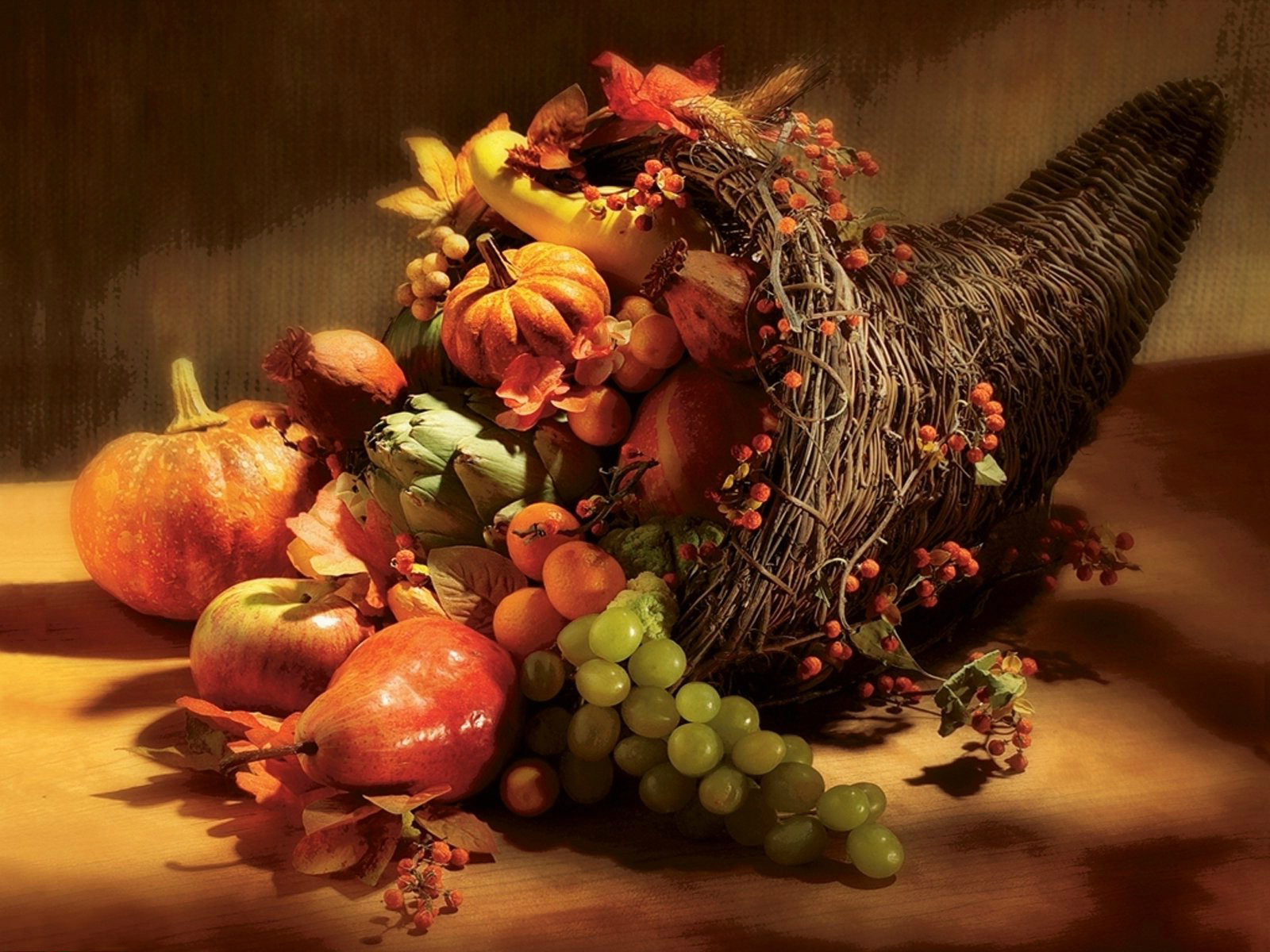
horn-of-plenty

In every thing give thanks: for this is the will of God in Christ Jesus concerning you. (1 Thessalonians 5:18)

In the “Jaywalking” segment of the “Tonight Show,” Jay Leno posed some Thanksgiving Day trivia questions to passersby, and the results were humorous and sad at the same time. Here is a sample of questions asked and the responses:

  1. What year was the first Thanks giving? 1966, 1492
  2. Pilgrims are often shown wearing what on their shoes and their hats? Moccasins
  3. What is a male turkey called? Fred, Richard
  4. 280 Million Americans will cook turkey on Thanksgiving. How many Americans are there in our country? 8 Million
  5. Where did the first Pilgrims land? Hawaii, the East Coast
  6. What President declared Thanksgiving a national holiday? Ronald Reagan, Theodore Roosevelt, Benjamin Franklin
  7. How many days did the first Thanksgiving last? Three: one day for breakfast, one day for lunch, and one day for dinner
  8. What is the name of the ship the Pilgrims came over on? the Nina
  9. Where did the Pilgrims come from? Spain

This may be good for a belly laugh, but it is really tragic that Americans today are so ignorant of our nation’s history and traditions. In today’s culture, Thanksgiving Day is just a good excuse to have a day (or two) off of work, indulge in gluttonous behavior, and worship before the luminous god of football followed by the giving of alms to the god of materialism the next day all the while in complete ignorance of the significance of the day.

It does not have to be that way. The psalmist said, “Therefore will I give thanks unto thee, O LORD, among the heathen, and sing praises unto thy name” (Psalm 18:49). The “heathen,” in this case, were the gôyim, Hebrew for the “nations” or the “Gentiles,” and by implication, the “godless.” Our attitude of thanksgiving should be a testimony to those that are without God not just on Thanksgiving Day, but everyday of our lives. In these “last days” we should live in contrast to those who are “lovers of their own selves, covetous, boasters, proud, blasphemers, disobedient to parents, unthankful, unholy (2 Timothy 3:2).

C. S. Lewis once said, “We ought to give thanks for all fortune: if it is ‘good,’ because it is good, if ‘bad’ because it works in us patience, humility and the contempt of this world and the hope of our eternal country.” Paul expressed this same idea when he said, “Not that I speak in respect of want: for I have learned, in whatsoever state I am, therewith to be content. I know both how to be abased, and I know how to abound: every where and in all things I am instructed both to be full and to be hungry, both to abound and to suffer need” (Philippians 4:11-12). We assimilate this attitude when “we know that all things work together for good to them that love God, to them who are the called according to his purpose” (Romans 8:28). “Them who are the called according to His purpose” do not live their lives like the “heathen” who are ungrateful or “unthankful” in their life conduct.

Perhaps the reason the “heathen” are unthankful is because they do not know to whom they should be thankful. That, of course, presupposes that in every other respect they are caring of others beyond themselves. If expressed at all, we often hear such empty platitudes as: I’m thankful for my job; I’m thankful for my family; I’m thankful for good friends, etc. That is fine, but thankful to whom?

When the Pilgrims landed at Plymouth in 1620, they arrived in the face of a harsh New England winter. They were without food and without shelter. Of the 121 souls that departed England to escape religious persecution and “for the Glory of God, and advancements of the Christian faith and honor of our King and Country,” only 47 of the original colonists survived that brutal winter. With the help of neighboring Indian tribes, the colonists learned to cultivate and enjoy the bounty of the land. At the harvest that followed, they celebrated a season of thanksgiving to God for His providence and protection. The third year after having landed, William Bradford officially proclaimed November 29, 1623 a day of thanksgiving.

In as much as the great Father has given us this year an abundant harvest … and in as much as He has protected us from the ravages of the savages, has spared us from pestilence and disease, has granted us freedom to worship God according to the dictates of our own conscience; now I, your magistrate, do proclaim that all ye Pilgrims, with your wives and ye little ones, do gather at ye meeting house on ye hill, between the hours of 9 and 12 in the day time, on Thursday, November ye 29th, of the year of our Lord one thousand six hundred and twenty-three … there to listen to ye pastor and render thanksgiving to ye Almighty God for all His blessings.

Our nation, from its beginning, has always set aside a special day to give thanks to God, but not always on a consistent basis. George Washington declared a national day of thanksgiving on November 26, 1789 with these words:

Whereas it is the duty of all nations to acknowledge the providence of Almighty God, to obey His will, to be grateful for his benefits, and humbly to implore His protection and favor … Now, therefore, I do recommend and assign Thursday, the twenty-sixth day of November next, to be devoted by the people of these United States to the service of that great and glorious Being, who is the beneficent Author of all the good that was, that is or that will be … that we may then unite in most humbly offering our prayers and supplications to the great Lord and Ruler of Nations, and beseech Him to pardon our national and other transgressions …

Would that our current national leaders adopt that attitude!

Finally, Thanksgiving Day was proclaimed an annual national holiday by President Abraham Lincoln in 1863. He said:

No human counsel hath devised, nor hath any mortal hand worked out these great things. They are the gracious gifts of the most high God, who, while dealing with us in anger for our sins, hath nevertheless remembered mercy … I do, therefore, invite my fellow citizens in every part of the United States, and those who are sojourning in foreign lands, to set apart and observe the last Thursday of November next as a day of Thanksgiving and Praise to our beneficent Father who dwelleth in the heavens … [it is] announced in the Holy Scriptures and proven by all history, that those nations are blessed whose God is the Lord … It has seemed fit to me and proper that God should be solemnly, reverently and gratefully acknowledged, as with one heart and one voice, by the whole American people.

This Thanksgiving Day, amid all the festivities and family gatherings, try to devote at least some time to “Sing unto the LORD, O ye saints of his, and give thanks at the remembrance of his holiness” (Psalm 30:4). “Praise God from whom all blessings flow.”

Comments Off on A Day to Give Thanks

Filed under Atheism, Christianity, Current Events, Holidays, Religion, Thanksgiving, Theology