
The reflection shining in the night sky above the tree tops was nothing short of a thousand-watts of brilliance. I crossed the little bridge and rounded the curve where acres of pastureland opened …
Source: WHERE IS THE LAMB?
The reflection shining in the night sky above the tree tops was nothing short of a thousand-watts of brilliance. I crossed the little bridge and rounded the curve where acres of pastureland opened …
Source: WHERE IS THE LAMB?
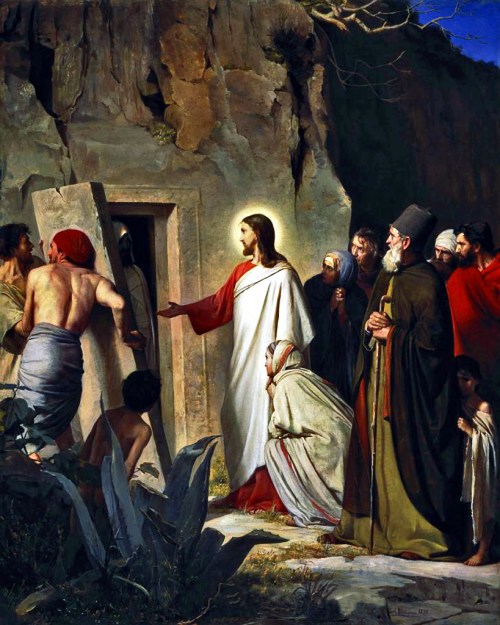
Jesus saith unto her, Said I not unto thee, that, if thou wouldest believe, thou shouldest see the glory of God? (John 11:40)
The events surrounding this seventh sign were previously covered in the discussion of Jesus’ fifth I AM statement:[1] “Jesus said unto her, I am the resurrection, and the life: he that believeth in me, though he were dead, yet shall he live: And whosoever liveth and believeth in me shall never die. Believest thou this?” (John 11:25-26, emphasis mine).
Jesus “stedfastly set his face to go to Jerusalem” (Luke 9:51) as He made a stopover in Jericho along the way. The cross loomed ominous – less than two weeks away – when He received word from Bethany, “Lord, behold, he whom thou lovest is sick” (John 11:3). It was Lazarus. The content of the message did not convey the gravity of the matter. “When Jesus heard that, he said, This sickness is not unto death, but for the glory of God, that the Son of God might be glorified thereby” (John 11:4, emphasis mine).
However, it was “unto death,” and the Lord knew it. “When he had heard therefore that he was sick, he abode two days still in the same place where he was” (John 11:6, emphasis). After the two-day delay, Jesus “saith he to his disciples, Let us go into Judaea again … Our friend Lazarus sleepeth; but I go, that I may awake him out of sleep.” (John 11:7, 11). Sleep, for someone who is sick, helps the healing process. The disciples understood this. They also understood that Jesus’ life was in peril in Jerusalem. “His disciples say unto him, Master, the Jews of late sought to stone thee; and goest thou thither again? … Then said his disciples, Lord, if he sleep, he shall do well” (John 11:8, 12, emphasis mine). Jesus completely knew and understood the situation although the euphemism escaped the disciples’ conscious thought, so to clarify, “Then said Jesus unto them plainly, Lazarus is dead” (John 11:14, emphasis mine).
The small village of Bethany was about a day’s walk from Jericho. Lazarus probably died shortly after the messengers departed to Jericho. The travel took a day. Jesus delayed two days before leaving for Bethany and He took another day to arrive – four days total.
When Jesus arrived in Bethany, Martha met Him with the “news” that Lazarus had died (John 11:20). Mary followed Martha. “Then when Mary was come where Jesus was, and saw him, she fell down at his feet, saying unto him, Lord, if thou hadst been here, my brother had not died” (John 11:32). Both Martha and Mary believed that Jesus could heal the sick. They had probably witnessed many of His healing miracles, and perhaps they heard about or witnessed Jesus restoring life to the dead.[2] Those other resurrections Jesus performed involved someone who was dead just a matter of hours. However, it had been FOUR DAYS! They also believed that Jesus could raise the dead “at the resurrection” (John 11:24), but that was future. “Then when Jesus came, he found that he had lain in the grave four days already” (John 11:17, emphasis mine). FOUR DAYS! – “There is a tradition in Judaism (that still exists today), that the soul after death does not immediately depart the deceased, but hovers over the body for a period of three days, during which time resurrection is possible.”[3]
In the minds of Martha and Mary, Lazarus was too far gone for a resurrection now. They were resigned to wait until the resurrection at the end of time.
Jesus asked to see the grave (John 11:34), and to their shock, Jesus asked for the stone to be rolled away from the opening. “Martha, the sister of him that was dead, saith unto him, Lord, by this time he stinketh: for he hath been dead four days” (John 11:39, emphasis mine). What was He doing? Did Jesus want a private viewing? By now, the process of decomposition would have caused the body to reek. Surely, Jesus could not bring life to a decaying body! “Jesus saith unto [Martha], Said I not unto thee, that, if thou wouldest believe, thou shouldest see the glory of God? … And when he thus had spoken, he cried with a loud voice, Lazarus, come forth” (John 11:40, 43). The dead man responded, and though bound in grave clothes, walked out of the cave.
Jesus demonstrated His power over death. He said, “I AM the resurrection and the life” (John 11:25, emphasis mine), and He proved it by giving life to one for whom consensus offered no hope. FOUR DAYS dead and Jesus brought Lazarus back to the land of the living. From the beginning, Jesus knew what He would do. “When Jesus heard that, he said, This sickness is not unto death, but for the glory of God, that the Son of God might be glorified thereby” (John 11:4, emphasis mine). Then before the skeptical crowd that included that included some of His harshest opponents (John 11:45-53) Jesus prayed, “Father, I thank thee that thou hast heard me. And I knew that thou hearest me always: but because of the people which stand by I said it, that they may believe that thou hast sent me” (John 11:41-42, emphasis mine).
Luke relays an account given by Jesus of a rich man that died and went to hell and a beggar by the name of Lazarus (different person) who also died and was carried by the angels to Abraham’s bosom (Luke 16:19-31). The rich man in hell could see Lazarus enjoying paradise with Abraham. After failing get relief for himself, he requested that Lazarus be sent back to the world of the living and evangelize his brothers, for he thought, “if one went unto them from the dead, they will repent” (Luke 16:30). The brothers had the Law and the Prophets, i.e., the Bible. In other words, they had all they needed to avoid the same fate. Abraham’s response settled the matter. “And he said unto him, If they hear not Moses and the prophets, neither will they be persuaded, though one rose from the dead” (Luke 16:31, emphasis mine). The truth of this assertion could not be better illustrated than in the reaction of the religious leaders that witnessed “one that rose from the dead.” Rather than believe in Jesus, who raised the dead, they sought to kill Him. “Then from that day forth they took counsel together for to put him to death” (John 11:53). Not only that, but now Lazarus was a liability. “But the chief priests consulted that they might put Lazarus also to death; Because that by reason of him many of the Jews went away, and believed on Jesus” (John 12:10-11, emphasis mine).
Truth is offensive. “Jesus saith unto him, I am the way, the truth, and the life: no man cometh unto the Father, but by me” (John 14:6, emphasis mine). Many would rather destroy the Truth than submit to Him, but the Truth will not die. “And the Jews’ passover was nigh at hand: and many went out of the country up to Jerusalem before the passover, to purify themselves” (John 11:55). In a few days, Jesus would be put to death, but after three days, He would do an even greater miracle than raising Lazarus. Jesus Himself would conquer death and rise from the grave. Yet, many are not “persuaded, though one rose from the dead.” – Jesus Himself.
Do you believe? You have the Bible. You have the voices of thousands of “prophets” declaring the Word of the Lord. Jesus is not in the grave. What more do you need? This life you have been given is the only opportunity you will ever have to make that choice. Tomorrow is not guaranteed. “While it is said, To day if ye will hear his voice, harden not your hearts” (Hebrews 3:15). After this life, there are no more chances. Jesus rose from the dead and lives forever to give us eternal life. “Believe on the Lord Jesus Christ, and thou shalt be saved” (Acts 16:31), and you will not end up like the rich man being tortured in the flames (Luke 16:24) with no escape.
[1] See: https://erniecarrasco.com/2016/10/02/jesus-seven-i-am-statements-in-john-5/
[2] See Matthew 9:18-26; Mark 5:21-43; Luke 8:40-56; Luke 7:11-16.
[3] Eli Lizorkin-Eyzenberg, The Jewish Gospel of John: Discovering Jesus, King of All Israel, (Jewish Studies for Christians, Tel Aviv, Israel, 2015), 184.
Comments Off on Jesus’ Seven Signs in John (7)
Filed under Bible, Christianity, Death, Evangelism, Gospel, Heaven, Hell, Religion, Resurrection, Salvation, Theology
Coming soon….
Here we are at the end of November, 2016 and prophetic possibilities are popping all around us. Israel is in the process of –as usual– being pressured as part of trying to divide God’s…
Source: Damascus and Doomsday
Filed under Christianity, End Times, Religion, Second Coming of Christ
I sang this last night as part of a men’s choir at my church last night. I am as gentile as can be, but the message of this hymn never fails to bring a tear to my eye, because I know the meaning of the message, and I know the main subject of the song – Emmanuel – God, the Creator, with us! Amen!
Source: O Come, O Come, Emmanuel
Comments Off on O Come, O Come, Emmanuel
Filed under Christmas, Uncategorized
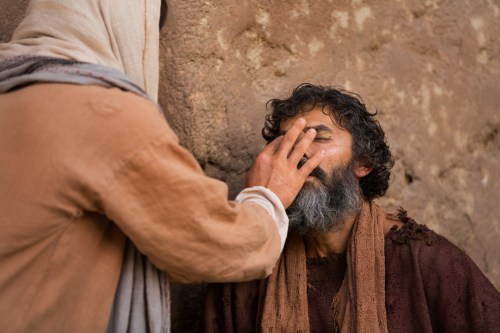
I must work the works of him that sent me, while it is day: the night cometh, when no man can work. (John 9:4)
Why does God allow suffering? That question usually comes from God deniers uninterested in finding truth, but more interested in challenging the faith of those who claim to know the truth. Of course, the fundamental answer to the question fails to satisfy the skeptic, that is, that the origin of human suffering, and all other forms of evil, is due to the fall of man (Genesis 3). However, regardless of that fact, the doubter thinks, “There has to be something more to it than that!”
The disciples were no different. Popular thought at the time said that human suffering, i.e. illness, poverty, calamity, etc., was the result of personal sin, while good health, wealth, good fortune, etc., were signs of God’s favor on a righteous individual.
Jesus went to Jerusalem to celebrate the Feast of Tabernacles (John 7:2), a 21-day long celebration which started on Tishri 1 with the Feast of Trumpets, included the Day of Atonement, and culminated Feast of Tabernacles. The latter lasted eight days. The timing of this event in the ninth chapter of John’s Gospel is not clear from John’s account, and the other Gospels are silent about this time – perhaps because Jesus went to Jerusalem alone (John 7:10) – but John records the events in Chapters 7 through 9 sequentially as if they all transpired during this feast time. How John came by these details is uncertain, but perhaps he accompanied Jesus alone.
Regardless, the events of Chapters 7 and 8 include several encounters with the Pharisees. In one very memorable event, the Pharisees brought to Jesus a woman caught “in the very act” (John 8:4) of adultery so that He could pronounce judgement on her. After this, Jesus made His second I AM statement, “I am the light of the world” (John 8:12).[1] More emphatic than that was His outright proclamation: “Verily, verily, I say unto you, Before Abraham was, I am” (John 8:58, emphasis mine). They clearly understood His point. “Then took they up stones to cast at him: but Jesus hid himself, and went out of the temple, going through the midst of them, and so passed by” (John 8:59, emphasis mine).
Evidently, His disciples discovered that He was in Jerusalem and joined Him. “And as Jesus passed by, he saw a man which was blind from his birth. And his disciples asked him, saying, Master, who did sin, this man, or his parents, that he was born blind?” (John 9:1-2, emphasis mine). In their way of thinking, someone sinned resulting in total blindness for this man from birth. “There were grave difficulties in seeing how a man could have sinned before his birth. And it is not much easier to think that a man should bear such a terrible punishment for the sin of his parents. So the disciples put the matter to Jesus.”[2]
“Jesus answered, Neither hath this man sinned, nor his parents: but that the works of God should be made manifest in him” (John 9:3). Jesus made it clear that human suffering is not necessarily the result of sin. The account of Job exemplifies the opposite (Job 1-2). Job was righteous before God, yet God allowed Satan to bring calamity into his life. In the end, God restored to Job all that he had lost and more. However, that is not always the case. Sin does have consequences. Think of David’s sin with Bathsheba (2 Samuel 11-12). Even though God forgave David, the baby that resulted from the affair died, and David’s house knew nothing but conflict the remainder of his life. Then there was the one Jesus healed at the Pool of Bethesda.[3] After he was healed, Jesus cautioned him, “Behold, thou art made whole: sin no more, lest a worse thing come unto thee” (John 5:14, emphasis mine). Apparently, his malady resulted from sin, but that was not the case with the blind man. “Neither hath this man sinned, nor his parents.” (Only God could know that!) This blindness could not be explained other than the result of a fallen world, and “that the works of God should be made manifest in him.”
The day before, following the incident with the woman caught in adultery, Jesus made His second I AM statement: “I am the light of the world” (John 8:12). This day He encounters a man who has never experienced “the light of the world,” and He reiterates, “As long as I am in the world, I am the light of the world” (John 9:5, emphasis mine). John said as much at the beginning of his Gospel: “In him [Jesus] was life; and the life was the light of men. And the light shineth in darkness; and the darkness comprehended it not” (John 1:4-5, emphasis mine). Such an idea is rather abstract, but now Jesus would manifest it in a physical way.
“When he had thus spoken, he spat on the ground, and made clay of the spittle, and he anointed the eyes of the blind man with the clay” (John 9:6). Unlike other healings performed by Jesus where His word sufficed to accomplish the miracle, here the Creator actually did something. The act of making clay with His spittle reminds us of His initial creation of man where “the LORD God formed man of the dust of the ground, and breathed into his nostrils the breath of life; and man became a living soul” (Genesis 2:7). The man, having been “born blind,” possibly had no eyeballs. By forming clay to anoint the eyes, Jesus many have been going back to the original “specs” to create an entire new set for the man. The Bible does not say, but that is “my guess.”
This blind man had not asked for healing, as others had (e.g., Mark 10:46-52), and thus had not yet exhibited any kind of trust in Jesus. This is probably why Jesus used a process, rather than merely a word, to heal on this occasion. The man whose eyes had been anointed with the clay still had to exhibit faith by washing in the pool of Siloam before he could see.[4]
“And said unto him, Go, wash in the pool of Siloam, (which is by interpretation, Sent.) He went his way therefore, and washed, and came seeing” (John 9:7, emphasis mine). Oh, did I mention? “And it was the sabbath day when Jesus made the clay, and opened his eyes” (John 9:14, emphasis mine). The blind Pharisees concerned themselves more with a breach of their protocol than they did for the man’s suffering, and they completely missed the creation miracle by “the Lord of the Sabbath” (Mark 2:28; Luke 6:5). Sometimes the answer to suffering is so that Jesus can be glorified.
[1] See https://erniecarrasco.com/2016/09/04/jesus-seven-i-am-statements-in-john-2/
[2] Leon Morris, The New International Commentary on the New Testament: The Gospel According to John, Revised, (Wm. B. Eerdmans Publishing Co., Grand Rapids, MI, 1995), 425.
[3] See https://erniecarrasco.com/2016/11/06/jesus-seven-signs-in-john-3/
[4] Henry M. Morris, The Henry Morris Study Bible, (Master Books, Green Forest, AR, 2012), 1591.
 Ernie's Musings