Jesus’ Seven Discourses in John (1)

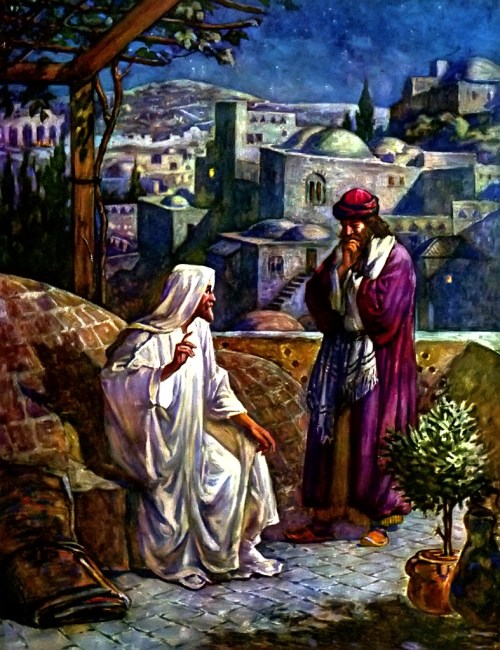
john3_1_jesusandnicodemus

Jesus answered and said unto him, Verily, verily, I say unto thee, Except a man be born again, he cannot see the kingdom of God.(John 3:3)

                   This passage, recorded in John 3:1-21, is the first of seven discourses spoken by Jesus and recorded by John. Certainly Jesus preached many more sermons than the seven recorded by John, but these seven, as least for John, uniquely demonstrated the deity of Jesus. Indeed, John records, “And many other signs truly did Jesus in the presence of his disciples, which are not written in this book: But these are written, that ye might believe that Jesus is the Christ, the Son of God; and that believing ye might have life through his name” (John 20:30-31, emphasis mine).

                   The passage opens with the introduction to the audience – one man, Nicodemus, “a man of the Pharisees … a ruler of the Jews” (John 3:1). His name means “conqueror of the people”[1] or “victorious among his people.”[2] Given the strength of his name, it seems strange that “The same came to Jesus by night” (John 3:2). At a glance, it seems as though Nicodemus came by stealth to avoid detection by those more adamantly opposed to Jesus, but that is not the case. “The Pharisee may have chosen this time in order to be sure of an uninterrupted and leisurely interview. During the day, Jesus would be busy and there would be crowds (crowds of common people!). Not so at night. Then there could be a long, private discussion.”[3]

                   At this point in his Gospel, John had not detailed many of Jesus’ miracles or any of His teachings. Certainly, turning water into wine (John 2:1-12) rates highly as the first of His seven signs. From there, Jesus celebrated the first Passover of His ministry by turning over the tables of the moneychangers at the Temple (John 2:13-22). His action drew fire from the “Jews” who challenged Him: “What sign shewest thou unto us, seeing that thou doest these things?” (John 2:18). Apparently, Jesus made Himself known during this time, although John provides little detail. “Now when he was in Jerusalem at the passover, in the feast day, many believed in his name, when they saw the miracles which he did” (John 2:23).

                   So, it seems that Nicodemus had at least heard of Jesus. Perhaps he witnessed the miracles of Jesus, and heard Him teach. Now he comes to Jesus by night for a private meeting. “Rabbi, we know that thou art a teacher come from God: for no man can do these miracles that thou doest, except God be with him” (John 3:2). Nicodemus addresses Jesus with the sincere title of respect. “Rabbi” acknowledged Jesus as “Master,” that is to say, “Master Teacher.” What little he knew of Jesus instructed him that He was more than an ordinary man. Jesus, he concluded, came “from God” because “no man can do these miracles … except God be with him.”

                   Nicodemus assessed correctly, but Jesus was not interested confirming what He knew to be fact. Nicodemus was not unlike the other “Jews” in many respects. “But Jesus did not commit himself unto them, because he knew all men, And needed not that any should testify of man: for he knew what was in man” (John 2:24-25, emphasis mine). Instead, He went right to the heart of the matter. “Jesus answered and said unto him, Verily, verily, I say unto thee, Except a man be born again, he cannot see the kingdom of God” (John 3:3, emphasis mine). “Again” is a poor translation of the Greek anōthen, which means “from above.” Being “born from above” is in keeping with what John penned in the prologue to his Gospel. “But as many as received him, to them gave he power to become the sons of God, even to them that believe on his name: Which were born, not of blood, nor of the will of the flesh, nor of the will of man, but of God” (John 1:12-13, emphasis mine). Nicodemus clearly understood the term “born,” genneithei, in the normal sense of procreation (John 3:4), but he missed the spiritual aspect of Jesus’ message.

                   To clear up the confusion, Jesus affirms John’s statement in the opening chapter. “Jesus answered, Verily, verily, I say unto thee, Except a man be born of water and of the Spirit, he cannot enter into the kingdom of God. That which is born of the flesh is flesh; and that which is born of the Spirit is spirit” (John 3:5-6). Jesus prefaces His statement with “verily, verily,” i.e. “truly, truly.” Coming from God incarnate, this makes the statement immutable – it is unchangeable. Rebirth is not a matter of external changes, but rather it is a transformation from within, and accomplished “from above” through the saturation of the Holy Spirit. “That which is born of the flesh is flesh; and that which is born of the Spirit is spirit” (John 3:6). We are all born of flesh. That is by design. The spirit of man died at the Garden of Eden (Genesis 3), and thus we are excluded from “the kingdom of God.” Only the rebirth of our spirit can fit us for heaven.

                   The “teacher of Israel” failed to grasp the lesson the Master taught. This called for further instruction. “Verily, verily, I say unto thee, We speak that we do know, and testify that we have seen; and ye receive not our witness. If I have told you earthly things, and ye believe not, how shall ye believe, if I tell you of heavenly things?” (John 3:11-12, emphasis mine). Jesus addresses Nicodemus (thee). “We speak that we do know.” Some commentators suggest that Jesus refers to Himself and His disciples. However, at this point in His ministry, His disciples were novices; there was little that they “did know.” Indeed, His disciples did not receive “full knowledge” until after His resurrection, and the arrival of the Holy Spirit (Acts 2). Therefore, I believe the “we” Jesus refers to is the Trinity. I conclude that from His statement in the next verse: “And no man hath ascended up to heaven, but he that came down from heaven, even the Son of man which is in heaven” (John 3:13). He, the Son of Man, has direct knowledge “from heaven,” from the Creator Himself (John 1:1-3). When Jesus said, “ye receive not our witness,” the “ye” in the KJV indicates that the Greek, second person personal pronoun is plural. Jesus did not single out Nicodemus; He referred to all the “Jews,” i.e., the religious establishment to whom Jesus later referred to as “blind guides” (Matthew 23:16, 24).

                   The rebirth is simple; Jesus explained. “And as Moses lifted up the serpent in the wilderness, even so must the Son of man be lifted up: That whosoever believeth in him should not perish, but have eternal life” (John 3:14-15). Jesus referred to Jewish history recorded in Scripture, the Torah to be precise. Numbers 21:4-9 records the time when the children of Israel wandering in the wilderness complained against God and Moses for the free food God provided daily. “And the LORD sent fiery serpents among the people, and they bit the people; and much people of Israel died” (Numbers 21:6). The Hebrew word translated as “fiery” is śârâph, which means, “burning.” The same Hebrew word (seraphim) is applied to the angelic creatures witnessed by Isaiah in his vision of God on His throne (Isaiah 6:2, 6). In the case of the Hebrew Children, it referred to the burning bite inflicted by the venomous snakes. It may also imply the copper color of the serpents. We derive this from the instructions given to Moses. “And the LORD said unto Moses, Make thee a fiery serpent, and set it upon a pole: and it shall come to pass, that every one that is bitten, when he looketh upon it, shall live. And Moses made a serpent of brass, and put it upon a pole, and it came to pass, that if a serpent had bitten any man, when he beheld the serpent of brass, he lived.” (Numbers 21:8-9, emphasis mine). The Hebrew word translated as “brass” is nechôsheth, which means “copper.”

                   The act of looking upon the bronze snake on the pole when bitten included recognition of the sin that brought about the snake bite, and the faith to believe that simply looking upon the likeness of the serpent on the pole would result in healing and preservation of life. In the same way, Jesus compared the simplicity of the rebirth. “And as Moses lifted up the serpent in the wilderness, even so must the Son of man be lifted up: That whosoever believeth in him should not perish, but have eternal life” (John 3:14-15, emphasis mine). Once again, this reaffirms John’s assertion, “But as many as received him, to them gave he power to become the sons of God, even to them that believe on his name” (John 1:12, emphasis mine).

                   If one has a red-letter edition Bible, verses 16-21 are attributed to Jesus. However, man, not God, inspires red letters. While many Bible scholars agree that Jesus spoke these words, to me this seems that John added his commentary to expand on what Jesus said. It seems redundant that Jesus would say, “That whosoever believeth on him should not perish, but have eternal life (v. 15), and then repeat “that whosoever believeth in him should not perish, but have everlasting life” (v. 16) in the next sentence. Regardless, the Holy Spirit, inspired these words through John’s pen, so they remain God’s Word whether they were spoken directly by Jesus, or whether John, through the Holy Spirit, expounded on Jesus’ words.

                   The teaching is clear. “That old serpent, called the Devil, and Satan” (Revelation 12:9) inflicted a deadly bite on mankind in the Garden of Eden (Genesis 3) from which there is no cure.  “For the wages of sin is death…” (Romans 6:23). “For God so loved the world, that he gave his only begotten Son, that whosoever believeth in him should not perish, but have everlasting life” (John 3:16). Death is antithetical to God who is life (John 1:4; 14:6). Simultaneously, God is holy and cannot tolerate sin. Yet, He loves His creation too much to allow it to “perish,” i.e., die, with no hope for reconciliation.  So, “He gave.” His gift stemmed not from man’s merit, but from His love. “For by grace are ye saved through faith; and that not of yourselves: it is the gift of God: Not of works, lest any man should boast” (Ephesians 2:8-9, emphasis mine). “He gave His only begotten Son.” The burden of sin was too great for any man to bear, so God Himself took on the insurmountable debt of man’s sin. “And the Word [who was God] was made flesh, and dwelt among us, (and we beheld his glory, the glory as of the only begotten of the Father,) full of grace and truth” (John 1:14). God became man so “that whosoever believeth in him should not perish, but have everlasting life.” The Greek word translated “perish” is apótai meaning “to destroy fully.”  The verb is in the aorist tense indicating that it occurred in the past and its effects continue into the present. It is in the middle voice indicating that the subject is acting on itself, and it is in the subjunctive mood meaning that the action is contingent, probable and eventual. That all means that man in the past brought eventual death and destruction upon himself contingent on what he does with the gift God offers.

                   As in the beginning, it comes down to two choices: the tree of life or the tree of death, aka the tree of the knowledge of good and evil. For the children of Israel in the wilderness it was to look upon the bronze serpent and live, or doubt and die. We all have the curse of death upon us. “For all have sinned, and come short of the glory of God” (Romans 3:23).  We also have a choice. “Whosoever believeth in him should not perish, but have everlasting life” (John 3:16). The other choice is unbelief. “He that believeth on him is not condemned: but he that believeth not is condemned already, because he hath not believed in the name of the only begotten Son of God” (John 3:18, emphasis mine). We are “condemned already” because, to begin with, we are all born of the flesh, but not of the Spirit. Then, we are “condemned already” when we reject the gift of salvation God freely offers.

                   “For God sent not his Son into the world to condemn the world; but that the world through him might be saved” (John 3:17).  The condemnation was accomplished at the Fall. God’s solution was to take on human flesh to pay the “wages of sin.”  He paid the debt with His own innocent blood. “For if the blood of bulls and of goats … sanctifieth to the purifying of the flesh: How much more shall the blood of Christ, who through the eternal Spirit offered himself without spot to God, purge your conscience from dead works to serve the living God? (Hebrews 9:13-14, emphasis mine). He did all the work. The choice to believe  or not believe is ours.

                   Nicodemus took Jesus’ words to heart. In the end, he came to His defense. At the Feast of Tabernacles when the Jews wanted to arrest Jesus, Nicodemus spoke up for him. “Nicodemus saith unto them, … Doth our law judge any man, before it hear him, and know what he doeth?” (John 7:50-51). After they crucified Him, Nicodemus accompanied Joseph of Arimathaea in the burial of Jesus, without regard to his Pharisaical reputation (John 19:38-40). He made the choice to believe. We have the same choice.

Notes:


[1]  Eli Lizorkin-Eyzenbert, The Jewish Gospel of John: Discovering Jesus, King of All Israel, (Tel Aviv, Israel, Jewish Studies for Christians, 2015), 32-33.

[2]  Definition from Strong’s Hebrew and Greek Dictionaries.

[3]  Leon Morris, The New International Commentary on the New Testament: The Gospel According to John, Revised, (Grand Rapids, MI, Wm. B. Eerdmans Publishing Co., 1995), 187.


Comments Off on Jesus’ Seven Discourses in John (1)

Filed under Apologetics, Bible, Christianity, Death, Evangelism, Gospel, Religion, Salvation, Theology

What’s Wrong!

dying-uncle-sam

And I will bless them that bless thee, and curse him that curseth thee: and in thee shall all families of the earth be blessed. (Genesis 12:3)

            Recently, shortly after the New Year’s celebrations ended, I was listening to my favorite cable news channel, and I heard one of the news anchors, a lady as I recall, lament, “What’s wrong with our country!”  The outcry was in response to the shooting at the Ft. Lauderdale Airport in Florida.

            These days many echo the same lament as our nation morphs from a nation of laws to a nation of lawlessness. One could point to our outgoing President dragging our country into the gutter, but, in truth, the decline began more than half a century ago. However, except for those living in ignorant bliss, it is obvious to the observant that the degeneration has markedly accelerated over the past eight years. My good friend and author, DiAne Gates, details the decline in her recent blog post: “A SYMPHONY OF DECEPTION.”

            What’s wrong with our country! Lawmakers carelessly vomit out laws aimed at curbing the anarchy of the lawless while, wittingly or unwittingly, denying the God-given freedoms of honest, law-abiding citizens. In the meantime, the “moral majority” celebrates victory for their part in replacing one narcissist with another in hopes of turning the nation around. I voted for Donald Trump, and I thank God that he won the presidential election rather than Hillary Clinton; but I am under no delusion that he is the salve to heal our wounds.

            Our nation is sick. That is obvious to anyone having a sense of awareness, and no one has the solution. Anyone familiar with troubleshooting techniques knows that before finding a solution to a problem, one must clearly understand the cause of the problem. What is wrong with our country? The cause and the solution are simple, but the implementation is hard.

            Both the cause and the solution are contained in the verse above. The promise given to Abram (Abraham) is generally understood to apply to the nation of Israel. That is indisputable (except by those with a perverted understanding of Scripture). After Abram arrived in the land of Canaan, God expanded on His promise. “And the LORD appeared unto Abram, and said, Unto thy seed will I give this land: and there builded he an altar unto the LORD, who appeared unto him” (Genesis 12:7, emphasis mine). God amplified His promise after Abram and Lot separated. “For all the land which thou seest, to thee will I give it, and to thy seed for ever” (Genesis 13:15, emphasis mine). If God’s Word is true, then the promise is irrevocable. The modern nation of Israel occupies only a fraction of the land given to them through Abraham by God. It matters not what the United Nations or the United States say about it, and it belongs to them forever! There you have the source of the problem to the Middle East.

            So, what has that to do with America? Perhaps you missed it. Note that the promise was directed to Abraham’s “seed.” That “seed” certainly applies to Israel, but “the seed” is much more than that. The Apostle Paul made the case that the “seed” applies to Christ more so than it does to Israel. “Now to Abraham and his seed were the promises made. He saith not, And to seeds, as of many; but as of one, And to thy seed, which is Christ” (Galatians 3:16, emphasis mine). Paul bases his argument on Hebrew grammar, which records the “seed” as singular, not “seeds” as plural. The promise made was to Christ, i.e., Messiah, who would come as a descendant of Abraham.

            You still wonder what that has to do with America and the solution to America’s problem. The answer is in our leading verse. “And I will bless them that bless thee, and curse him that curseth thee: and in thee shall all families of the earth be blessed” (Genesis 12:3, emphasis mine). Look first at the last half of the verse: “in thee shall all the families of the earth be blessed.” That is the promise of Messiah, our Savior. Through His death, burial and resurrection, Jesus made the way for all nations to be blessed, if they will accept and submit to Him. He is that Seed of Abraham. Contained in the first half of the verse is the cause and solution to our national problem. God said, “I will bless them that bless Thee, and curse him that curseth Thee.” The emphasis serves to highlight the object of the blessing or curse.

            In its infancy, our nation blessed and honored our God, our Savior. At its founding, God took center stage and our lawmakers unashamedly proclaimed that we are a Christian nation. Oh! How God blessed our beginnings! Why? Because our nation blessed Him. Can the same be said today? Not hardly! Today we, as a nation, curse Christ and cast Him out of every area of public life. Then we wonder, what’s wrong with our country? As a nation, we have called what is good evil, and what is evil, we call good. The solution is equally simple. Stop cursing God, and start blessing Him again. Can it be done? I don’t know, but I do know this, “as for me and my house, we will serve the LORD” (Joshua 24:15).

2 Comments

Filed under Apologetics, Christianity, Current Events, Politics, Random Musings, Salvation

A New Thing

2017-future-road

Remember ye not the former things, neither consider the things of old. Behold, I will do a new thing; now it shall spring forth; shall ye not know it? I will even make a way in the wilderness, and rivers in the desert. (Isaiah 43:18-19)

Whew! Got by that one! We dodged a bullet in 2016! While I remain skeptical of a Donald Trump presidency, I believe God granted us a reprieve by saving us from Hillary Clinton. Even so, the current administration continues to do its best to inflict as much damage to this nation, while in the death throes of its waning days.

Who knows what lies ahead in 2017? The stock market has taken an upward turn with the prospect of “President” Donald Trump. If he follows through on half of his promises, there is hope for better days ahead. However, the best of intentions must still deal with reality, and the reality is that we live in a very unstable and volatile world. The future is future. We can look to the past. We exist in the present, but the future is opaque at best, and dark and obscure for the most part. We cannot know what will come to pass. We can plan and hope for the best, but there is no guarantee of a calamity-free future. We can sound the waters, but sometimes there are hidden shoals that can sink our ship.

When navigating unfamiliar waters, an experienced pilot can help the captain guide the ship through safe waterways. A wise captain will turn the ship over to the pilot who knows the way. William Ernest Henley said, “I am the captain of my soul.” That foolish boast failed to avert his bout with tuberculosis, and did not stay the death angel when Henley succumbed to the disease at the age of 53.

We cannot know what 2017 will bring, nor can we avert the adversities that may come upon us. Like Henley, we may prefer to “captain” our own soul, but if we are wise, we will turn the helm over to The Pilot that knows the way. “Remember the former things of old: for I am God, and there is none else; I am God, and there is none like me, Declaring the end from the beginning, and from ancient times the things that are not yet done, saying, My counsel shall stand, and I will do all my pleasure” (Isaiah 46:9-10, emphasis mine).

No matter what 2017 may bring, God promises to give us “a new thing” and to “make a way in the wilderness, and in rivers in the desert.” If God is your Pilot, you will do fine!

Happy New Year!

4 Comments

Filed under Christianity, Holidays, New Year's Day, Politics, Theology

Jesus’ Birthday

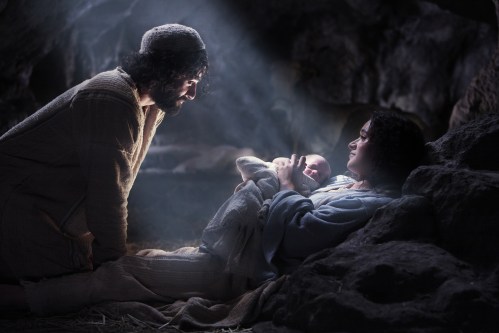
DF-09134 Nativity , May 18, 2006 Photo by Jaimie Trueblood/newline.wireimage.com To license this image (9139053), contact NewLine: U.S. +1-212-686-8900 / U.K. +44-207 659 2815 / Australia +61-2-8262-9222 / Japan: +81-3-5464-7020 +1 212-686-8901 (fax) info@wireimage.com (e-mail) NewLine.wireimage.com (web site)

And she brought forth her firstborn son, and wrapped him in swaddling clothes, and laid him in a manger; because there was no room for them in the inn. (Luke 2:7)

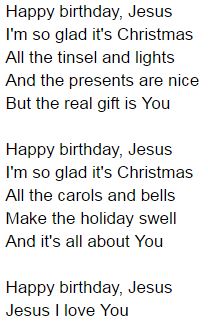
In 1992, Carol Cymbala published a song, which brings a tear to my eyes when I hear the sweet, tender voice of a child sing, “Happy Birthday, Jesus.” The words are simple and true, and when intoned by a puerile melody, they grip the heart and focus the mind on the real meaning of Christmas.

happy-b-day-jesus

Everyone, I assume, knows that Jesus was not born on December 25. The Bible does not give us a date. Was it Kislev 25, the first day of Chanukah? If that were the case, the date on the western calendar would fluctuate within the months of mid-November to mid-December. Luke recorded the events around the time of His birth thus providing an approximate year for Jesus’ arrival to earth. Augustus was emperor of Rome, and he issued an order for a census “that all the world should be taxed” (Luke 2:1), and “Cyrenius was governor of Syria” (Luke 2:2).

From Matthew’s account, we know that Herod the Great was “king” in Judah (Matthew 2:1). If secular history records accurately (and the record is dubious[1]), Herod the Great died in 4 B.C. Matthew reports that Herod, upon hearing of Jesus’ birth and not receiving word from the magi, ordered all the babies in Bethlehem, two years and under, slaughtered (Matthew 2:16). After the magi left, an angel warned Joseph to take the family and flee to Egypt, and Matthew says that they remained there until after the death of Herod. Given that we have no record of the time that elapsed between the family’s flight into Egypt and the death of Herod, Jesus’ birth could have occurred in 6 B.C. or earlier. That creates other chronological problems that distract from the point I am trying to make. (I find it strangely humorous that Jesus would be born “Before Christ.”)

The “time” of year also presents a problem. Luke records that “shepherds [were] abiding in the field, keeping watch over their flock by night” (Luke 2:8). Late December would not be a good time for shepherds to be out in the field by night. It gets cold in Jerusalem/Bethlehem in December at night! Some attempt to rationalize December 25 by suggesting that it may have been the actual time of the conception, making the delivery sometime around mid-September to mid-October, the Jewish month of Tishri. That is certainly plausible. Some suggest the conception may have been in the Jewish month of Tishri (September-October), and the birth in the Jewish month of Tammuz (June-July), and that the magi arrived on December 25, after the family had moved into a house as recorded by Matthew 2:11. That is also feasible.

Who cares! The point is that the Creator God took human form and presented Himself to His creation as fully one of them – Son of God, Son of Man; fully God, fully man. He came to us because that was the ONLY way He could save us from our sins. God took extreme measures[2] to rescue His fallen creation. That is worthy of commemoration and celebration.

December 25 seems to be a fitting time in other respects. During this time, Chanukah, the “Festival of Lights,” is celebrated. By this time, the winter solstice is past and the days start getting longer. The prophet exhorts, “Arise, shine; for thy light [speaking of Jesus] is come, and the glory of the LORD is risen upon thee. For, behold, the darkness shall cover the earth, and gross darkness the people: but the LORD shall arise upon thee, and his glory shall be seen upon thee. And the Gentiles shall come to thy light, and kings to the brightness of thy rising” (Isaiah 60:1-3). Jesus also said, “I am the light of the world: he that followeth me shall not walk in darkness, but shall have the light of life” (John 8:12, emphasis mine). With all the talk about “light,” December 25 makes as much sense as any other day to celebrate Jesus’ birthday.  Happy Birthday, Jesus!

Notes:


[1] It is very probable, and more in line with the biblical account that Herod died in 1 B.C. http://www.biblicalarchaeology.org/daily/people-cultures-in-the-bible/jesus-historical-jesus/herods-death-jesus-birth-and-a-lunar-eclipse/

[2] “Extreme Measures” https://erniecarrasco.com/2016/12/11/extreme-measures/

Comments Off on Jesus’ Birthday

Filed under Apologetics, Bible, Christianity, Christmas, Evangelism, Gospel, Holidays, Religion, Salvation

Bethlehem

But thou, Bethlehem Ephratah, though thou be little among the thousands of Judah, yet out of thee shall he come forth unto me that is to be ruler in Israel; whose goings forth have been from of old, from everlasting. (Micah 5:2)

Bethlehem. The name means “house of bread” and Ephratah means “fruitfulness.” The additional moniker served to distinguish this town from another of the same name in Zebulun (Joshua 19:15). By worldly standards, Bethlehem was a humble and insignificant little hamlet, a home to wheat and sheep farmers. Bethlehem is first mentioned in Genesis 39:19 as the burial place of Jacob’s beloved Rachel. One of Israel’s judges, Ibzan hailed from Bethlehem (Judges 12:8-10). Ruth, the Moabitess, met and married Boaz in Bethlehem and became the great-grandmother of King David (Ruth 4:17-22). Thus Bethlehem gained acclaim as “The City of David,” yet it remained “little among the thousands of Judah.”

Out of the little town of Bethlehem the prophet proclaimed would come forth He “that is to be ruler in Israel.” God promised David, “thine house and thy kingdom shall be established for ever before thee: thy throne shall be established for ever” (2 Samuel 7:16). That promise was repeated for David’s son, Solomon, with the condition that he continue in that pattern modeled by his father (2 Chronicles 7:17-19), but beginning with Solomon, that condition was unmet until at last Jeconiah (a.k.a. Jehoiachin and Coniah) caused the Lord to curse Solomon’s line saying “Write ye this man childless, a man that shall not prosper in his days: for no man of his seed shall prosper, sitting upon the throne of David, and ruling any more in Judah” (Jeremiah 22:30). Joseph, Jesus’ adoptive father, was from this cursed line (Matthew 1:11). But in this, God did not fail in His promise to David, for Mary too was of “the house and lineage of David” through another branch that did not include any of Solomon’s descendants (Luke 3:23-31). Her line was free of the curse, establishing Jesus’ right to the throne both legally and by inheritance.

So it was that in the “House of Bread” the Bread of Life (John 6:48) came into the world – He “whose goings forth have been from of old, from everlasting,” i.e. He is eternal. He said, “I am the bread of life: he that cometh to me shall never hunger; and he that believeth on me shall never thirst” (John 6:35). He also compared Himself to the vine and His followers as the branches. “I am the vine, ye are the branches: He that abideth in me, and I in him, the same bringeth forth much fruit: for without me ye can do nothing” (John 15:5). Bethlehem Ephratah – the Fruitful House of Bread – birthplace of the Fruitful Bread of Life.

2 Comments

Filed under Apologetics, Christianity, Christmas, Gospel, Religion, Salvation, Theology