Tag Archives: Bible

Jesus’ Seven Discourses in John (2)

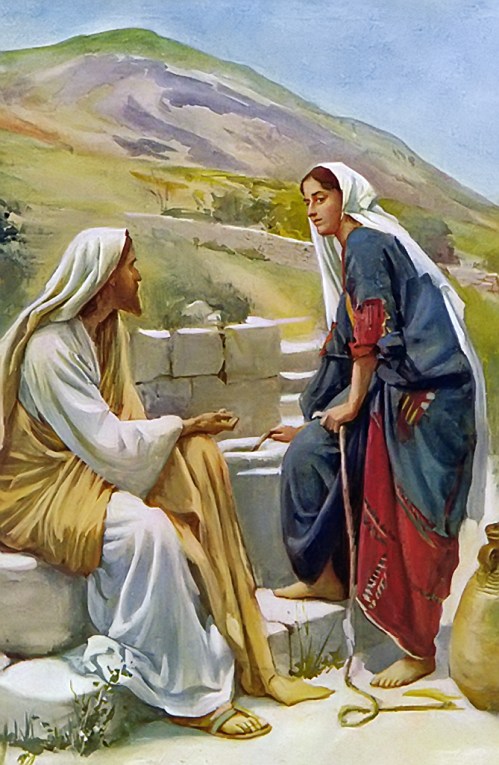
john4_13_jesusandwomanofsamaria

But whosoever drinketh of the water that I shall give him shall never thirst; but the water that I shall give him shall be in him a well of water springing up into everlasting life. (John 4:14)

The time Jesus spent in Jerusalem to celebrate the spring feasts (John 2:13-22) increased Jesus’ notoriety among the common people, but negatively drew the attention of the Jewish religious leaders. “When therefore the Lord knew how the Pharisees had heard that Jesus made and baptized more disciples than John … He left Judaea, and departed again into Galilee” (John 4:1, 3). Obviously, Jesus threatened the status quo, but now was not the time for confrontation.

Jesus took the most direct route to Galilee – directly north through Samaria. Samaritans and Jews shared a mutual animosity toward one another. The Jews considered the Samaritans illegitimate inhabitants of the land. “The term ‘Kuthim’ applied by Jews to the Samaritans had clear pejorative connotations, implying that they were interlopers brought in from Kutha in Mesopotamia and rejecting their claim of descent from the ancient Tribes of Israel.”[1] However, “The Samaritans called themselves – ‘the sons of Israel’ and ‘the keepers’ (shomrim) … The Samaritan Israelites were the faithful remnant of the Northern tribes – the keepers of the ancient faith.”[2] The hatred between the two groups was so great that Jews preferred to take the long way around when traveling north to Galilee. “Strict Jews, like the Pharisees, disliked the Samaritans so intensely that they avoided the territory as much as possible. Their route from Jerusalem to Galilee lay through the region beyond the Jordan.”[3] The route forced them to cross the River Jordan to the east bank, and take a northerly route to circumvent Samaria. Once past the northern boundary of Samaria, they would then cross back over to the west bank of the Jordan.

John indicates some sense of urgency in Jesus’ choice of this route. “And he must needs go through Samaria” (John 4:4, emphasis mine). Jesus never did anything without reason and without purpose. So, it seems that this shortcut was planned with this encounter in mind. He had a “divine appointment,” and He planned to keep it. Upon arriving at the city of Sychar, formerly known as Shechem, John provides for us a glimpse of Jesus’ humanity. “Now Jacob’s well was there. Jesus therefore, being wearied with his journey, sat thus on the well: and it was about the sixth hour” (John 4:6, emphasis mine). If Jesus were only God, He would not have tired, but being fully man also, He grew tired of the long walk and needed to stop and rest, but more than that, He had an appointment to keep.

John records the time of day as noon: “it was about the sixth hour,” and “There cometh a woman of Samaria to draw water” (John 4:7). Many point to the noon hour as evidence that the woman was one of ill repute, and came at that hour to avoid the scorn of the “decent” ladies that came for water in the early hours. However, Eli Lizorkin-Eyzenbert suggests that may be an incorrect assumption.[4] Eyzenbert points to the fact that we often do “regular things during unusual hours,” so the fact that she came at this hour proves nothing. He also points out that the noon hour was not necessarily the hottest time of the day. Recall that Jesus departed Jerusalem immediately following the Passover. It was still early spring at this time; noon would not have been the hottest time of the day. Eyzenbert also questions how a woman of such ill repute could cause an entire village of conservative Samaritans to drop whatever they were doing to go investigate her claim. Perhaps her five former husbands all died. It happens.

Jesus’ approach was direct. “Jesus saith unto her, Give me to drink: (John 4:7, emphasis mine). “That he [sic] should ask a woman for water is perhaps not so surprising, since it was women who generally drew water.”[5] There was also the fact that women at that time accepted their role as subservient to men. The request did not surprise her; it was the requester that gave her pause. “Then saith the woman of Samaria unto him, How is it that thou, being a Jew, askest drink of me, which am a woman of Samaria? for the Jews have no dealings with the Samaritans” (John 4:9, emphasis mine).

As usual, Jesus got right to the heart of the matter. “Jesus answered and said unto her, If thou knewest the gift of God, and who it is that saith to thee, Give me to drink; thou wouldest have asked of him, and he would have given thee living water” (John 4:10). At Jesus’ encounter with Nicodemus, John records “For God so loved the world that he gave his only begotten son,” (John 3:16, emphasis mine). Of course, she did not recognize the “gift of God” sitting before her. To her, He was simply a thirsty Jew needing a drink of water with no way of getting water for Himself, much less getting water for her.

Like Nicodemus, her mind focused on earthly, material things, while Jesus spoke of otherworldly, heavenly things. “The woman saith unto him, Sir, thou hast nothing to draw with, and the well is deep: from whence then hast thou that living water? Art thou greater than our father Jacob, which gave us the well, and drank thereof himself, and his children, and his cattle?” (John 4:11-12, emphasis mine). However, Jesus’ statement was meant to draw her attention heavenward, and away from the earthly.

With her curiosity piqued, Jesus pressed ahead. “Jesus answered and said unto her, Whosoever drinketh of this water shall thirst again: But whosoever drinketh of the water that I shall give him shall never thirst; but the water that I shall give him shall be in him a well of water springing up into everlasting life” (John 4:13-14, emphasis mine). Experientially, she could attest to the recurring need for water. After all, that was the purpose of her daily trek to the water well. But what was this perpetual source of water offering everlasting life? Still thinking in earthly terms, “The woman saith unto him, Sir, give me this water, that I thirst not, neither come hither to draw” (John 4:15).

Jesus accomplished His goal of capturing her attention, but He needed to narrow her focus. Rather than answer her directly, “Jesus saith unto her, Go, call thy husband, and come hither” (John 4:16). As God in the flesh, He knew this woman intimately, so her answer did not surprise Him. “The woman answered and said, I have no husband” (John 4:17). Jesus knew that.  “Jesus said unto her, Thou hast well said, I have no husband: For thou hast had five husbands; and he whom thou now hast is not thy husband: in that saidst thou truly” (John 4:17b-18). Note that Jesus did not chide her for her immoral lifestyle. Unlike the woman caught in adultery to whom Jesus admonished, “go, and sin no more” (John 8:11), Jesus offered no words of reprimand to the Samaritan woman. As I suggested earlier, perhaps her first five husbands died, and the man with whom she lived was just a gracious benefactor. We do not know. Perhaps her promiscuousness is only a product of our sullied minds. At any rate, Jesus exposed a truth about her life that no stranger could have known.

The woman became uneasy and wished to change the subject. Surmising that Jesus was “a prophet,” a reasonable diversion would be change the topic to religion. “Our fathers worshipped in this mountain; and ye say, that in Jerusalem is the place where men ought to worship” (John 4:20). Jesus, not prone to political correctness, shocked her with His response. “Jesus saith unto her, Woman, believe me, the hour cometh, when ye shall neither in this mountain, nor yet at Jerusalem, worship the Father. Ye worship ye know not what: we know what we worship: for salvation is of the Jews. But the hour cometh, and now is, when the true worshippers shall worship the Father in spirit and in truth: for the Father seeketh such to worship him. God is a Spirit: and they that worship him must worship him in spirit and in truth” (John 4:21-24, emphasis mine).

‘Ye’ (plural), Samaritans do not know what you worship” Jesus told her flatly. The Jews had the correct understanding of the Torah even though they failed in its application. By stating that “salvation is of the Jews,” Jesus did not mean that only Jews could be saved, but rather that they were the source through which salvation should come. Jesus’ genealogies recorded by Matthew and Luke (Matthew 1:1-17; Luke 3:23-38) show the O.T. lineage of the promised Messiah from the tribe of Judah (the Jews) and the kingly line of David. “Salvation is of the Jews.” Furthermore, the worship of God cannot be confined to any one place. “God is Spirit.” God is “omnipresent.” Following Jesus’ ascension into heaven, He sent the Holy Spirit to indwell every believer, so that “where two or three are gathered together in my name, there am I in the midst of them” (Matthew 18:20), and the location is irrelevant.  Therein is the “fountain of living water” for which the woman longed.

The light started to come on. “The woman saith unto him, I know that Messias cometh, which is called Christ: when he is come, he will tell us all things” (John 4:25). She knew of the coming Messiah, the Christ, and apparently she accepted that He was of the Jews. “Jesus saith unto her, I that speak unto thee am he” (John 4:26, emphasis mine). She found for what she thirsted and believed. The news was too good to keep to herself. “The woman then left her waterpot, and went her way into the city, and saith to the men, Come, see a man, which told me all things that ever I did: is not this the Christ?” (John 4:28-29). John points out that she ran off without her water pot. She came to get water that quenches thirst temporarily and left with the water of everlasting life.

“Then they went out of the city, and came unto him” (John 4:30).  It is worth noting that the men responded immediately. Had the woman been of immoral character, it is doubtful they would have heeded her invitation. They came because of her witness, but then believed because they heard for themselves. “And many of the Samaritans of that city believed on him for the saying of the woman, which testified, He told me all that ever I did. So when the Samaritans were come unto him, they besought him that he would tarry with them: and he abode there two days. And many more believed because of his own word; And said unto the woman, Now we believe, not because of thy saying: for we have heard him ourselves, and know that this is indeed the Christ, the Saviour of the world” (John 4:39-42, emphasis mine).

Oh, that our witness could bring others to the feet of Jesus that they might say, “Now we believe, not because of what you said, but because we have heard Him ourselves.”

Notes:


[1]  https://en.wikipedia.org/wiki/Samaritans, accessed January 25, 2017.

[2]  Eli Lizorkin-Eyzenbert, The Jewish Gospel of John: Discovering Jesus, King of All Israel, (Tel Aviv, Israel, Jewish Studies for Christians, 2015), 46.

[3]  Leon Morris, The New International Commentary on the New Testament: The Gospel According to John, Revised, (Grand Rapids, MI, Wm. B. Eerdmans Publishing Co., 1995), 226.

[4]  Eyzenbert, 48-49.

[5]  Morris, 229.
Comments Off on Jesus’ Seven Discourses in John (2)

Filed under Apologetics, Bible, Christianity, Evangelism, Gospel, Religion, Salvation, Theology

Jesus’ Seven Discourses in John (1)

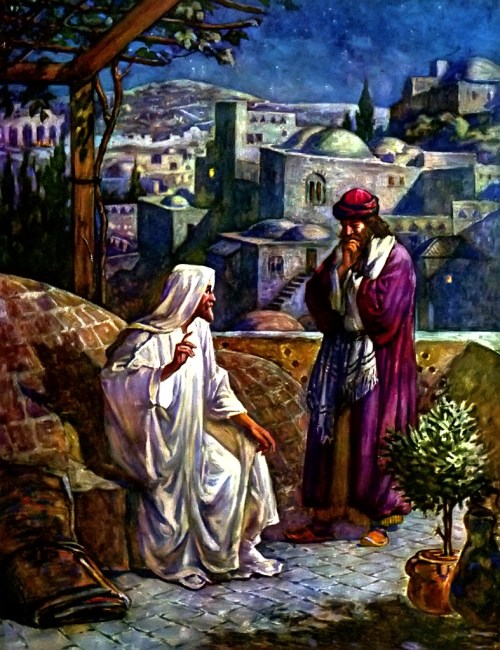
john3_1_jesusandnicodemus

Jesus answered and said unto him, Verily, verily, I say unto thee, Except a man be born again, he cannot see the kingdom of God.(John 3:3)

                   This passage, recorded in John 3:1-21, is the first of seven discourses spoken by Jesus and recorded by John. Certainly Jesus preached many more sermons than the seven recorded by John, but these seven, as least for John, uniquely demonstrated the deity of Jesus. Indeed, John records, “And many other signs truly did Jesus in the presence of his disciples, which are not written in this book: But these are written, that ye might believe that Jesus is the Christ, the Son of God; and that believing ye might have life through his name” (John 20:30-31, emphasis mine).

                   The passage opens with the introduction to the audience – one man, Nicodemus, “a man of the Pharisees … a ruler of the Jews” (John 3:1). His name means “conqueror of the people”[1] or “victorious among his people.”[2] Given the strength of his name, it seems strange that “The same came to Jesus by night” (John 3:2). At a glance, it seems as though Nicodemus came by stealth to avoid detection by those more adamantly opposed to Jesus, but that is not the case. “The Pharisee may have chosen this time in order to be sure of an uninterrupted and leisurely interview. During the day, Jesus would be busy and there would be crowds (crowds of common people!). Not so at night. Then there could be a long, private discussion.”[3]

                   At this point in his Gospel, John had not detailed many of Jesus’ miracles or any of His teachings. Certainly, turning water into wine (John 2:1-12) rates highly as the first of His seven signs. From there, Jesus celebrated the first Passover of His ministry by turning over the tables of the moneychangers at the Temple (John 2:13-22). His action drew fire from the “Jews” who challenged Him: “What sign shewest thou unto us, seeing that thou doest these things?” (John 2:18). Apparently, Jesus made Himself known during this time, although John provides little detail. “Now when he was in Jerusalem at the passover, in the feast day, many believed in his name, when they saw the miracles which he did” (John 2:23).

                   So, it seems that Nicodemus had at least heard of Jesus. Perhaps he witnessed the miracles of Jesus, and heard Him teach. Now he comes to Jesus by night for a private meeting. “Rabbi, we know that thou art a teacher come from God: for no man can do these miracles that thou doest, except God be with him” (John 3:2). Nicodemus addresses Jesus with the sincere title of respect. “Rabbi” acknowledged Jesus as “Master,” that is to say, “Master Teacher.” What little he knew of Jesus instructed him that He was more than an ordinary man. Jesus, he concluded, came “from God” because “no man can do these miracles … except God be with him.”

                   Nicodemus assessed correctly, but Jesus was not interested confirming what He knew to be fact. Nicodemus was not unlike the other “Jews” in many respects. “But Jesus did not commit himself unto them, because he knew all men, And needed not that any should testify of man: for he knew what was in man” (John 2:24-25, emphasis mine). Instead, He went right to the heart of the matter. “Jesus answered and said unto him, Verily, verily, I say unto thee, Except a man be born again, he cannot see the kingdom of God” (John 3:3, emphasis mine). “Again” is a poor translation of the Greek anōthen, which means “from above.” Being “born from above” is in keeping with what John penned in the prologue to his Gospel. “But as many as received him, to them gave he power to become the sons of God, even to them that believe on his name: Which were born, not of blood, nor of the will of the flesh, nor of the will of man, but of God” (John 1:12-13, emphasis mine). Nicodemus clearly understood the term “born,” genneithei, in the normal sense of procreation (John 3:4), but he missed the spiritual aspect of Jesus’ message.

                   To clear up the confusion, Jesus affirms John’s statement in the opening chapter. “Jesus answered, Verily, verily, I say unto thee, Except a man be born of water and of the Spirit, he cannot enter into the kingdom of God. That which is born of the flesh is flesh; and that which is born of the Spirit is spirit” (John 3:5-6). Jesus prefaces His statement with “verily, verily,” i.e. “truly, truly.” Coming from God incarnate, this makes the statement immutable – it is unchangeable. Rebirth is not a matter of external changes, but rather it is a transformation from within, and accomplished “from above” through the saturation of the Holy Spirit. “That which is born of the flesh is flesh; and that which is born of the Spirit is spirit” (John 3:6). We are all born of flesh. That is by design. The spirit of man died at the Garden of Eden (Genesis 3), and thus we are excluded from “the kingdom of God.” Only the rebirth of our spirit can fit us for heaven.

                   The “teacher of Israel” failed to grasp the lesson the Master taught. This called for further instruction. “Verily, verily, I say unto thee, We speak that we do know, and testify that we have seen; and ye receive not our witness. If I have told you earthly things, and ye believe not, how shall ye believe, if I tell you of heavenly things?” (John 3:11-12, emphasis mine). Jesus addresses Nicodemus (thee). “We speak that we do know.” Some commentators suggest that Jesus refers to Himself and His disciples. However, at this point in His ministry, His disciples were novices; there was little that they “did know.” Indeed, His disciples did not receive “full knowledge” until after His resurrection, and the arrival of the Holy Spirit (Acts 2). Therefore, I believe the “we” Jesus refers to is the Trinity. I conclude that from His statement in the next verse: “And no man hath ascended up to heaven, but he that came down from heaven, even the Son of man which is in heaven” (John 3:13). He, the Son of Man, has direct knowledge “from heaven,” from the Creator Himself (John 1:1-3). When Jesus said, “ye receive not our witness,” the “ye” in the KJV indicates that the Greek, second person personal pronoun is plural. Jesus did not single out Nicodemus; He referred to all the “Jews,” i.e., the religious establishment to whom Jesus later referred to as “blind guides” (Matthew 23:16, 24).

                   The rebirth is simple; Jesus explained. “And as Moses lifted up the serpent in the wilderness, even so must the Son of man be lifted up: That whosoever believeth in him should not perish, but have eternal life” (John 3:14-15). Jesus referred to Jewish history recorded in Scripture, the Torah to be precise. Numbers 21:4-9 records the time when the children of Israel wandering in the wilderness complained against God and Moses for the free food God provided daily. “And the LORD sent fiery serpents among the people, and they bit the people; and much people of Israel died” (Numbers 21:6). The Hebrew word translated as “fiery” is śârâph, which means, “burning.” The same Hebrew word (seraphim) is applied to the angelic creatures witnessed by Isaiah in his vision of God on His throne (Isaiah 6:2, 6). In the case of the Hebrew Children, it referred to the burning bite inflicted by the venomous snakes. It may also imply the copper color of the serpents. We derive this from the instructions given to Moses. “And the LORD said unto Moses, Make thee a fiery serpent, and set it upon a pole: and it shall come to pass, that every one that is bitten, when he looketh upon it, shall live. And Moses made a serpent of brass, and put it upon a pole, and it came to pass, that if a serpent had bitten any man, when he beheld the serpent of brass, he lived.” (Numbers 21:8-9, emphasis mine). The Hebrew word translated as “brass” is nechôsheth, which means “copper.”

                   The act of looking upon the bronze snake on the pole when bitten included recognition of the sin that brought about the snake bite, and the faith to believe that simply looking upon the likeness of the serpent on the pole would result in healing and preservation of life. In the same way, Jesus compared the simplicity of the rebirth. “And as Moses lifted up the serpent in the wilderness, even so must the Son of man be lifted up: That whosoever believeth in him should not perish, but have eternal life” (John 3:14-15, emphasis mine). Once again, this reaffirms John’s assertion, “But as many as received him, to them gave he power to become the sons of God, even to them that believe on his name” (John 1:12, emphasis mine).

                   If one has a red-letter edition Bible, verses 16-21 are attributed to Jesus. However, man, not God, inspires red letters. While many Bible scholars agree that Jesus spoke these words, to me this seems that John added his commentary to expand on what Jesus said. It seems redundant that Jesus would say, “That whosoever believeth on him should not perish, but have eternal life (v. 15), and then repeat “that whosoever believeth in him should not perish, but have everlasting life” (v. 16) in the next sentence. Regardless, the Holy Spirit, inspired these words through John’s pen, so they remain God’s Word whether they were spoken directly by Jesus, or whether John, through the Holy Spirit, expounded on Jesus’ words.

                   The teaching is clear. “That old serpent, called the Devil, and Satan” (Revelation 12:9) inflicted a deadly bite on mankind in the Garden of Eden (Genesis 3) from which there is no cure.  “For the wages of sin is death…” (Romans 6:23). “For God so loved the world, that he gave his only begotten Son, that whosoever believeth in him should not perish, but have everlasting life” (John 3:16). Death is antithetical to God who is life (John 1:4; 14:6). Simultaneously, God is holy and cannot tolerate sin. Yet, He loves His creation too much to allow it to “perish,” i.e., die, with no hope for reconciliation.  So, “He gave.” His gift stemmed not from man’s merit, but from His love. “For by grace are ye saved through faith; and that not of yourselves: it is the gift of God: Not of works, lest any man should boast” (Ephesians 2:8-9, emphasis mine). “He gave His only begotten Son.” The burden of sin was too great for any man to bear, so God Himself took on the insurmountable debt of man’s sin. “And the Word [who was God] was made flesh, and dwelt among us, (and we beheld his glory, the glory as of the only begotten of the Father,) full of grace and truth” (John 1:14). God became man so “that whosoever believeth in him should not perish, but have everlasting life.” The Greek word translated “perish” is apótai meaning “to destroy fully.”  The verb is in the aorist tense indicating that it occurred in the past and its effects continue into the present. It is in the middle voice indicating that the subject is acting on itself, and it is in the subjunctive mood meaning that the action is contingent, probable and eventual. That all means that man in the past brought eventual death and destruction upon himself contingent on what he does with the gift God offers.

                   As in the beginning, it comes down to two choices: the tree of life or the tree of death, aka the tree of the knowledge of good and evil. For the children of Israel in the wilderness it was to look upon the bronze serpent and live, or doubt and die. We all have the curse of death upon us. “For all have sinned, and come short of the glory of God” (Romans 3:23).  We also have a choice. “Whosoever believeth in him should not perish, but have everlasting life” (John 3:16). The other choice is unbelief. “He that believeth on him is not condemned: but he that believeth not is condemned already, because he hath not believed in the name of the only begotten Son of God” (John 3:18, emphasis mine). We are “condemned already” because, to begin with, we are all born of the flesh, but not of the Spirit. Then, we are “condemned already” when we reject the gift of salvation God freely offers.

                   “For God sent not his Son into the world to condemn the world; but that the world through him might be saved” (John 3:17).  The condemnation was accomplished at the Fall. God’s solution was to take on human flesh to pay the “wages of sin.”  He paid the debt with His own innocent blood. “For if the blood of bulls and of goats … sanctifieth to the purifying of the flesh: How much more shall the blood of Christ, who through the eternal Spirit offered himself without spot to God, purge your conscience from dead works to serve the living God? (Hebrews 9:13-14, emphasis mine). He did all the work. The choice to believe  or not believe is ours.

                   Nicodemus took Jesus’ words to heart. In the end, he came to His defense. At the Feast of Tabernacles when the Jews wanted to arrest Jesus, Nicodemus spoke up for him. “Nicodemus saith unto them, … Doth our law judge any man, before it hear him, and know what he doeth?” (John 7:50-51). After they crucified Him, Nicodemus accompanied Joseph of Arimathaea in the burial of Jesus, without regard to his Pharisaical reputation (John 19:38-40). He made the choice to believe. We have the same choice.

Notes:


[1]  Eli Lizorkin-Eyzenbert, The Jewish Gospel of John: Discovering Jesus, King of All Israel, (Tel Aviv, Israel, Jewish Studies for Christians, 2015), 32-33.

[2]  Definition from Strong’s Hebrew and Greek Dictionaries.

[3]  Leon Morris, The New International Commentary on the New Testament: The Gospel According to John, Revised, (Grand Rapids, MI, Wm. B. Eerdmans Publishing Co., 1995), 187.

Comments Off on Jesus’ Seven Discourses in John (1)

Filed under Apologetics, Bible, Christianity, Death, Evangelism, Gospel, Religion, Salvation, Theology

Jesus’ Birthday

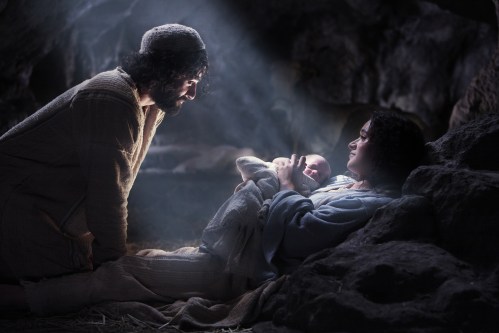
DF-09134 Nativity , May 18, 2006 Photo by Jaimie Trueblood/newline.wireimage.com To license this image (9139053), contact NewLine: U.S. +1-212-686-8900 / U.K. +44-207 659 2815 / Australia +61-2-8262-9222 / Japan: +81-3-5464-7020 +1 212-686-8901 (fax) info@wireimage.com (e-mail) NewLine.wireimage.com (web site)

And she brought forth her firstborn son, and wrapped him in swaddling clothes, and laid him in a manger; because there was no room for them in the inn. (Luke 2:7)

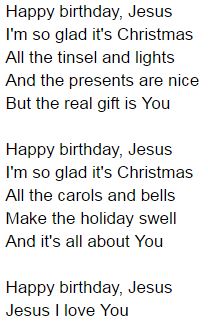
In 1992, Carol Cymbala published a song, which brings a tear to my eyes when I hear the sweet, tender voice of a child sing, “Happy Birthday, Jesus.” The words are simple and true, and when intoned by a puerile melody, they grip the heart and focus the mind on the real meaning of Christmas.

happy-b-day-jesus

Everyone, I assume, knows that Jesus was not born on December 25. The Bible does not give us a date. Was it Kislev 25, the first day of Chanukah? If that were the case, the date on the western calendar would fluctuate within the months of mid-November to mid-December. Luke recorded the events around the time of His birth thus providing an approximate year for Jesus’ arrival to earth. Augustus was emperor of Rome, and he issued an order for a census “that all the world should be taxed” (Luke 2:1), and “Cyrenius was governor of Syria” (Luke 2:2).

From Matthew’s account, we know that Herod the Great was “king” in Judah (Matthew 2:1). If secular history records accurately (and the record is dubious[1]), Herod the Great died in 4 B.C. Matthew reports that Herod, upon hearing of Jesus’ birth and not receiving word from the magi, ordered all the babies in Bethlehem, two years and under, slaughtered (Matthew 2:16). After the magi left, an angel warned Joseph to take the family and flee to Egypt, and Matthew says that they remained there until after the death of Herod. Given that we have no record of the time that elapsed between the family’s flight into Egypt and the death of Herod, Jesus’ birth could have occurred in 6 B.C. or earlier. That creates other chronological problems that distract from the point I am trying to make. (I find it strangely humorous that Jesus would be born “Before Christ.”)

The “time” of year also presents a problem. Luke records that “shepherds [were] abiding in the field, keeping watch over their flock by night” (Luke 2:8). Late December would not be a good time for shepherds to be out in the field by night. It gets cold in Jerusalem/Bethlehem in December at night! Some attempt to rationalize December 25 by suggesting that it may have been the actual time of the conception, making the delivery sometime around mid-September to mid-October, the Jewish month of Tishri. That is certainly plausible. Some suggest the conception may have been in the Jewish month of Tishri (September-October), and the birth in the Jewish month of Tammuz (June-July), and that the magi arrived on December 25, after the family had moved into a house as recorded by Matthew 2:11. That is also feasible.

Who cares! The point is that the Creator God took human form and presented Himself to His creation as fully one of them – Son of God, Son of Man; fully God, fully man. He came to us because that was the ONLY way He could save us from our sins. God took extreme measures[2] to rescue His fallen creation. That is worthy of commemoration and celebration.

December 25 seems to be a fitting time in other respects. During this time, Chanukah, the “Festival of Lights,” is celebrated. By this time, the winter solstice is past and the days start getting longer. The prophet exhorts, “Arise, shine; for thy light [speaking of Jesus] is come, and the glory of the LORD is risen upon thee. For, behold, the darkness shall cover the earth, and gross darkness the people: but the LORD shall arise upon thee, and his glory shall be seen upon thee. And the Gentiles shall come to thy light, and kings to the brightness of thy rising” (Isaiah 60:1-3). Jesus also said, “I am the light of the world: he that followeth me shall not walk in darkness, but shall have the light of life” (John 8:12, emphasis mine). With all the talk about “light,” December 25 makes as much sense as any other day to celebrate Jesus’ birthday.  Happy Birthday, Jesus!

Notes:


[1] It is very probable, and more in line with the biblical account that Herod died in 1 B.C. http://www.biblicalarchaeology.org/daily/people-cultures-in-the-bible/jesus-historical-jesus/herods-death-jesus-birth-and-a-lunar-eclipse/

[2] “Extreme Measures” https://erniecarrasco.com/2016/12/11/extreme-measures/

Comments Off on Jesus’ Birthday

Filed under Apologetics, Bible, Christianity, Christmas, Evangelism, Gospel, Holidays, Religion, Salvation

Jesus’ Seven Signs in John (7)

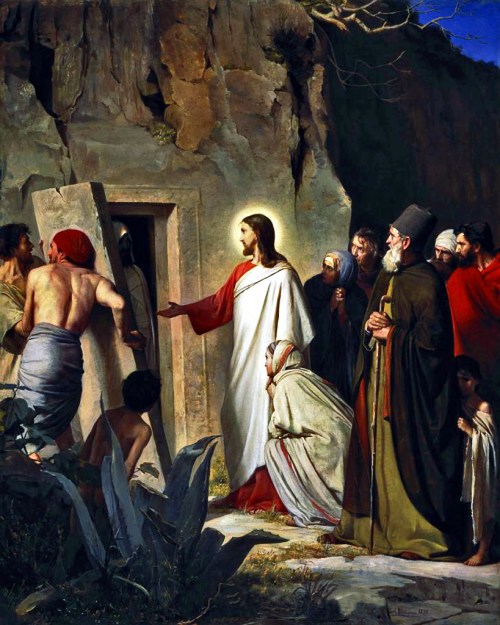
john11_1_raising_lazarus_bloch

Jesus saith unto her, Said I not unto thee, that, if thou wouldest believe, thou shouldest see the glory of God? (John 11:40)

The events surrounding this seventh sign were previously covered in the discussion of Jesus’ fifth I AM statement:[1] “Jesus said unto her, I am the resurrection, and the life: he that believeth in me, though he were dead, yet shall he live: And whosoever liveth and believeth in me shall never die. Believest thou this?” (John 11:25-26, emphasis mine).

Jesus “stedfastly set his face to go to Jerusalem” (Luke 9:51) as He made a stopover in Jericho along the way. The cross loomed ominous – less than two weeks away – when He received word from Bethany, “Lord, behold, he whom thou lovest is sick” (John 11:3). It was Lazarus. The content of the message did not convey the gravity of the matter. “When Jesus heard that, he said, This sickness is not unto death, but for the glory of God, that the Son of God might be glorified thereby” (John 11:4, emphasis mine).

However, it was “unto death,” and the Lord knew it. “When he had heard therefore that he was sick, he abode two days still in the same place where he was” (John 11:6, emphasis). After the two-day delay, Jesus “saith he to his disciples, Let us go into Judaea again … Our friend Lazarus sleepeth; but I go, that I may awake him out of sleep.” (John 11:7, 11). Sleep, for someone who is sick, helps the healing process. The disciples understood this. They also understood that Jesus’ life was in peril in Jerusalem. “His disciples say unto him, Master, the Jews of late sought to stone thee; and goest thou thither again? … Then said his disciples, Lord, if he sleep, he shall do well” (John 11:8, 12, emphasis mine). Jesus completely knew and understood the situation although the euphemism escaped the disciples’ conscious thought, so to clarify, “Then said Jesus unto them plainly, Lazarus is dead” (John 11:14, emphasis mine).

The small village of Bethany was about a day’s walk from Jericho. Lazarus probably died shortly after the messengers departed to Jericho. The travel took a day. Jesus delayed two days before leaving for Bethany and He took another day to arrive – four days total.

When Jesus arrived in Bethany, Martha met Him with the “news” that Lazarus had died (John 11:20). Mary followed Martha. “Then when Mary was come where Jesus was, and saw him, she fell down at his feet, saying unto him, Lord, if thou hadst been here, my brother had not died” (John 11:32). Both Martha and Mary believed that Jesus could heal the sick. They had probably witnessed many of His healing miracles, and perhaps they heard about or witnessed Jesus restoring life to the dead.[2] Those other resurrections Jesus performed involved someone who was dead just a matter of hours. However, it had been FOUR DAYS! They also believed that Jesus could raise the dead “at the resurrection” (John 11:24), but that was future. “Then when Jesus came, he found that he had lain in the grave four days already” (John 11:17, emphasis mine). FOUR DAYS! – “There is a tradition in Judaism (that still exists today), that the soul after death does not immediately depart the deceased, but hovers over the body for a period of three days, during which time resurrection is possible.”[3]

In the minds of Martha and Mary, Lazarus was too far gone for a resurrection now. They were resigned to wait until the resurrection at the end of time.

Jesus asked to see the grave (John 11:34), and to their shock, Jesus asked for the stone to be rolled away from the opening. “Martha, the sister of him that was dead, saith unto him, Lord, by this time he stinketh: for he hath been dead four days” (John 11:39, emphasis mine). What was He doing? Did Jesus want a private viewing? By now, the process of decomposition would have caused the body to reek. Surely, Jesus could not bring life to a decaying body! “Jesus saith unto [Martha], Said I not unto thee, that, if thou wouldest believe, thou shouldest see the glory of God? … And when he thus had spoken, he cried with a loud voice, Lazarus, come forth” (John 11:40, 43). The dead man responded, and though bound in grave clothes, walked out of the cave.

Jesus demonstrated His power over death. He said, “I AM the resurrection and the life” (John 11:25, emphasis mine), and He proved it by giving life to one for whom consensus offered no hope. FOUR DAYS dead and Jesus brought Lazarus back to the land of the living. From the beginning, Jesus knew what He would do. “When Jesus heard that, he said, This sickness is not unto death, but for the glory of God, that the Son of God might be glorified thereby” (John 11:4, emphasis mine). Then before the skeptical crowd that included that included some of His harshest opponents (John 11:45-53) Jesus prayed, “Father, I thank thee that thou hast heard me. And I knew that thou hearest me always: but because of the people which stand by I said it, that they may believe that thou hast sent me” (John 11:41-42, emphasis mine).

Luke relays an account given by Jesus of a rich man that died and went to hell and a beggar by the name of Lazarus (different person) who also died and was carried by the angels to Abraham’s bosom (Luke 16:19-31). The rich man in hell could see Lazarus enjoying paradise with Abraham. After failing get relief for himself, he requested that Lazarus be sent back to the world of the living and evangelize his brothers, for he thought, “if one went unto them from the dead, they will repent” (Luke 16:30). The brothers had the Law and the Prophets, i.e., the Bible. In other words, they had all they needed to avoid the same fate. Abraham’s response settled the matter. “And he said unto him, If they hear not Moses and the prophets, neither will they be persuaded, though one rose from the dead” (Luke 16:31, emphasis mine).  The truth of this assertion could not be better illustrated than in the reaction of the religious leaders that witnessed “one that rose from the dead.” Rather than believe in Jesus, who raised the dead, they sought to kill Him. “Then from that day forth they took counsel together for to put him to death” (John 11:53). Not only that, but now Lazarus was a liability. “But the chief priests consulted that they might put Lazarus also to death; Because that by reason of him many of the Jews went away, and believed on Jesus” (John 12:10-11, emphasis mine).

Truth is offensive. “Jesus saith unto him, I am the way, the truth, and the life: no man cometh unto the Father, but by me” (John 14:6, emphasis mine). Many would rather destroy the Truth than submit to Him, but the Truth will not die. “And the Jews’ passover was nigh at hand: and many went out of the country up to Jerusalem before the passover, to purify themselves” (John 11:55). In a few days, Jesus would be put to death, but after three days, He would do an even greater miracle than raising Lazarus. Jesus Himself would conquer death and rise from the grave. Yet, many are not “persuaded, though one rose from the dead.” – Jesus Himself.

Do you believe? You have the Bible. You have the voices of thousands of “prophets” declaring the Word of the Lord. Jesus is not in the grave. What more do you need? This life you have been given is the only opportunity you will ever have to make that choice. Tomorrow is not guaranteed. “While it is said, To day if ye will hear his voice, harden not your hearts” (Hebrews 3:15). After this life, there are no more chances. Jesus rose from the dead and lives forever to give us eternal life. “Believe on the Lord Jesus Christ, and thou shalt be saved” (Acts 16:31), and you will not end up like the rich man being tortured in the flames (Luke 16:24) with no escape.

 Notes:


[1]  See: https://erniecarrasco.com/2016/10/02/jesus-seven-i-am-statements-in-john-5/

[2]  See Matthew 9:18-26; Mark 5:21-43; Luke 8:40-56; Luke 7:11-16.

[3]  Eli Lizorkin-Eyzenberg, The Jewish Gospel of John: Discovering Jesus, King of All Israel, (Jewish Studies for Christians, Tel Aviv, Israel, 2015), 184.

Comments Off on Jesus’ Seven Signs in John (7)

Filed under Bible, Christianity, Death, Evangelism, Gospel, Heaven, Hell, Religion, Resurrection, Salvation, Theology

Jesus’ Seven Signs in John (6)

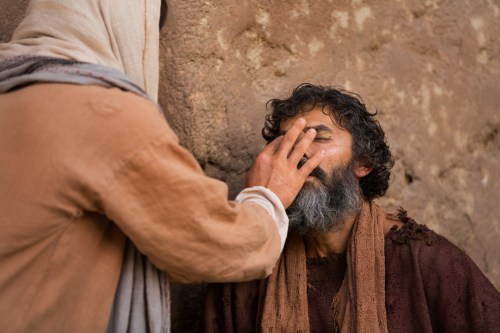
jesus-annoints-a-man-born-blind

I must work the works of him that sent me, while it is day: the night cometh, when no man can work. (John 9:4)

Why does God allow suffering? That question usually comes from God deniers uninterested in finding truth, but more interested in challenging the faith of those who claim to know the truth. Of course, the fundamental answer to the question fails to satisfy the skeptic, that is, that the origin of human suffering, and all other forms of evil, is due to the fall of man (Genesis 3). However, regardless of that fact, the doubter thinks, “There has to be something more to it than that!”

The disciples were no different. Popular thought at the time said that human suffering, i.e. illness, poverty, calamity, etc., was the result of personal sin, while good health, wealth, good fortune, etc., were signs of God’s favor on a righteous individual.

Jesus went to Jerusalem to celebrate the Feast of Tabernacles (John 7:2), a 21-day long celebration which started on Tishri 1 with the Feast of Trumpets, included the Day of Atonement, and culminated Feast of Tabernacles. The latter lasted eight days. The timing of this event in the ninth chapter of John’s Gospel is not clear from John’s account, and the other Gospels are silent about this time – perhaps because Jesus went to Jerusalem alone (John 7:10) – but John records the events in Chapters 7 through 9 sequentially as if they all transpired during this feast time. How John came by these details is uncertain, but perhaps he accompanied Jesus alone.

Regardless, the events of Chapters 7 and 8 include several encounters with the Pharisees. In one very memorable event, the Pharisees brought to Jesus a woman caught “in the very act” (John 8:4) of adultery so that He could pronounce judgement on her. After this, Jesus made His second I AM statement, “I am the light of the world” (John 8:12).[1] More emphatic than that was His outright proclamation: “Verily, verily, I say unto you, Before Abraham was, I am” (John 8:58, emphasis mine). They clearly understood His point. “Then took they up stones to cast at him: but Jesus hid himself, and went out of the temple, going through the midst of them, and so passed by” (John 8:59, emphasis mine).

Evidently, His disciples discovered that He was in Jerusalem and joined Him. “And as Jesus passed by, he saw a man which was blind from his birth. And his disciples asked him, saying, Master, who did sin, this man, or his parents, that he was born blind?” (John 9:1-2, emphasis mine). In their way of thinking, someone sinned resulting in total blindness for this man from birth. “There were grave difficulties in seeing how a man could have sinned before his birth. And it is not much easier to think that a man should bear such a terrible punishment for the sin of his parents. So the disciples put the matter to Jesus.”[2]

“Jesus answered, Neither hath this man sinned, nor his parents: but that the works of God should be made manifest in him” (John 9:3). Jesus made it clear that human suffering is not necessarily the result of sin. The account of Job exemplifies the opposite (Job 1-2). Job was righteous before God, yet God allowed Satan to bring calamity into his life. In the end, God restored to Job all that he had lost and more. However, that is not always the case. Sin does have consequences. Think of David’s sin with Bathsheba (2 Samuel 11-12). Even though God forgave David, the baby that resulted from the affair died, and David’s house knew nothing but conflict the remainder of his life. Then there was the one Jesus healed at the Pool of Bethesda.[3] After he was healed, Jesus cautioned him, “Behold, thou art made whole: sin no more, lest a worse thing come unto thee” (John 5:14, emphasis mine). Apparently, his malady resulted from sin, but that was not the case with the blind man. “Neither hath this man sinned, nor his parents.” (Only God could know that!) This blindness could not be explained other than the result of a fallen world, and “that the works of God should be made manifest in him.”

The day before, following the incident with the woman caught in adultery, Jesus made His second I AM statement: “I am the light of the world” (John 8:12). This day He encounters a man who has never experienced “the light of the world,” and He reiterates, “As long as I am in the world, I am the light of the world” (John 9:5, emphasis mine). John said as much at the beginning of his Gospel: “In him [Jesus] was life; and the life was the light of men. And the light shineth in darkness; and the darkness comprehended it not” (John 1:4-5, emphasis mine). Such an idea is rather abstract, but now Jesus would manifest it in a physical way.

“When he had thus spoken, he spat on the ground, and made clay of the spittle, and he anointed the eyes of the blind man with the clay” (John 9:6). Unlike other healings performed by Jesus where His word sufficed to accomplish the miracle, here the Creator actually did something. The act of making clay with His spittle reminds us of His initial creation of man where “the LORD God formed man of the dust of the ground, and breathed into his nostrils the breath of life; and man became a living soul” (Genesis 2:7). The man, having been “born blind,” possibly had no eyeballs. By forming clay to anoint the eyes, Jesus many have been going back to the original “specs” to create an entire new set for the man. The Bible does not say, but that is “my guess.”

This blind man had not asked for healing, as others had (e.g., Mark 10:46-52), and thus had not yet exhibited any kind of trust in Jesus. This is probably why Jesus used a process, rather than merely a word, to heal on this occasion. The man whose eyes had been anointed with the clay still had to exhibit faith by washing in the pool of Siloam before he could see.[4]

“And said unto him, Go, wash in the pool of Siloam, (which is by interpretation, Sent.) He went his way therefore, and washed, and came seeing” (John 9:7, emphasis mine). Oh, did I mention? “And it was the sabbath day when Jesus made the clay, and opened his eyes” (John 9:14, emphasis mine). The blind Pharisees concerned themselves more with a breach of their protocol than they did for the man’s suffering, and they completely missed the creation miracle by “the Lord of the Sabbath” (Mark 2:28; Luke 6:5).  Sometimes the answer to suffering is so that Jesus can be glorified.

Notes:


[1]  See https://erniecarrasco.com/2016/09/04/jesus-seven-i-am-statements-in-john-2/

[2]  Leon Morris, The New International Commentary on the New Testament: The Gospel According to John, Revised, (Wm. B. Eerdmans Publishing Co., Grand Rapids, MI, 1995), 425.

[3]  See https://erniecarrasco.com/2016/11/06/jesus-seven-signs-in-john-3/

[4]  Henry M. Morris, The Henry Morris Study Bible, (Master Books, Green Forest, AR, 2012), 1591.

Comments Off on Jesus’ Seven Signs in John (6)

Filed under Apologetics, Bible, Creation, Gospel, Origins, Religion, Theology