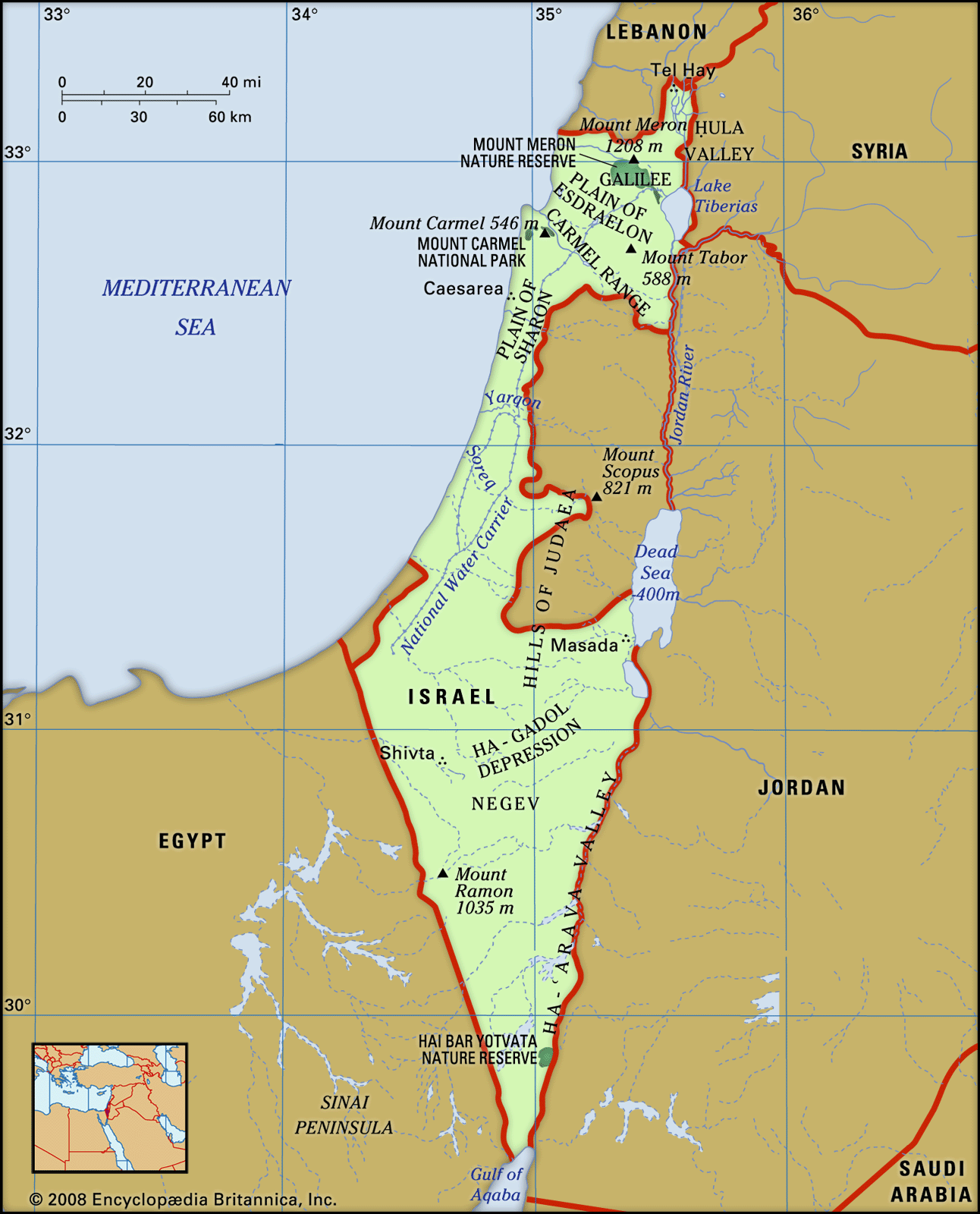
“And there were in the same country shepherds abiding in the field, keeping watch over their flock by night.” (Luke 2:8)
One of the best arguments against the birth of Christ having taken place in late December is this fact recorded by Luke in his Gospel. There were shepherds out in the fields watching over their flocks. By late December, there is not sufficient grazing to sustain large flocks of sheep. Jerusalem is near the same latitude as Dallas, Texas where I used to live, and by the middle to the end of November, there is not much left on which cattle can graze. So, they need to be fed on hay or “cake” until the next spring. So, it seems very unlikely that shepherds would be out in the fields tending to sheep in the wintertime.
The shepherds around Bethlehem generally kept the sheep and goats that were used for sacrifice in the Temple in nearby Jerusalem. Some have suggested that Jesus’ birth was around late September which coincides with the Jewish Fall Feasts: Feast of Trumpets (Rosh Hashanah), Day of Atonement (Yom Kippur), and Feast of Tabernacles (Sukkoths). These feasts required all Jewish men to make a pilgrimage to the Temple in Jerusalem. The fact that this requirement happened to coincide with the decree from Caesar Augustus for the census (Luke 2:1) may explain why “there was no room for them in the inn” (Luke 2:7) for the expectant couple. In fact, His birth may have occurred during the Feast of Tabernacles making John’s statement that “the Word was made flesh, and [tabernacled] among us” (John 1:14) even more significant. Interestingly, if one counts back nine months from the end of September, one arrives at a date sometime in late December. It could be that rather than celebrating Christ’s birth on December 25, we are actually celebrating His conception!
Regardless, it was to these simple shepherds that this paramount announcement was delivered. “For unto you is born this day in the city of David a Saviour, which is Christ the Lord” (Luke 2:11). To these shepherds who were known for feeding and protecting their flocks; who sought out the lost sheep, and rescued those that were attacked. It seems appropriate that to these the news of the arrival of the “Shepherd of Israel” should be first delivered. He who would later say, “I am the good shepherd: the good shepherd giveth his life for the sheep” (John 10:11) had come. So without hesitation, they said, “Let us now go even unto Bethlehem, and see this thing which is come to pass, which the Lord hath made known unto us” (Luke 2:15). They came “with haste” Luke tells us, “and found Mary, and Joseph, and the [Lamb of God] lying in a manger” (Luke 2:16). The name given the babe was Jesus, “for he shall save his people from their sins” (Matthew 1:21). This little Lamb of God, who was to be the Shepherd of shepherds, had finally come to them. He did not come to a palace but to a dirty, smelly stable. He was not announced to the kings of the world, but to those of the lowest social status – to shepherds.
After two days will he revive us: in the third day he will raise us up, and we shall live in his sight. (Hosea 6:2)
In one of my Bible readings this week, I was reading Luke’s account of Jesus’ resurrection. Luke records that two disciples (not apostles) were returning to their home in Emmaus.[1] Because they invited Jesus into their home, I assume that they were husband and wife; Luke does not say. Regardless, after Jesus broke bread with them and disappeared from their sight, they finally recognized that it was Jesus who had traveled with them. They immediately returned to Jerusalem and found “the eleven” together. However, according to John’s account, Thomas was not with them.[2] Apparently, Luke used the term (“the eleven”) in a generic sense referring to the Apostles.
While the two recounted their experience, Jesus appeared in their midst. After assuring them that He was not a ghost by inviting them to inspect His wounds and by eating a piece of broiled fish and bread with them, Luke writes, “Then opened he their understanding, that they might understand the scriptures, And said unto them, Thus it is written, and thus it behoved Christ to suffer, and to rise from the dead the third day” (Luke 24:45-46, emphasis mine). That last phrase stopped my reading. Jesus said, “Thus it is written,” meaning that His suffering and resurrection had been prophesied. I checked the cross-reference in my Bible and found two: Isaiah 53:3-12 dealing with His suffering and Hosea 6:2 predicting His resurrection.
There is no question that Hosea’s prophecy, quoted above, refers to Jesus’ resurrection because Jesus applied the prophecy to Himself. However, what caught my attention was the use of the plural first-person pronouns, “us” and “we” rather than “me” and “I.” It is always best to read a single Bible verse within its context to get a clear understanding. Backing up to the previous verse, we understand that the prophet is addressing Israel. “Come, and let us return unto the LORD: for he hath torn, and he will heal us; he hath smitten, and he will bind us up” (Hosea 6:1, emphasis mine). In the previous chapter (Hosea 5), the prophet foretold the demise of Israel (Judah and Ephraim). The Lord says, “I will go and return to my place, till they acknowledge their offence, and seek my face: in their affliction they will seek me early” (Hosea 5:15). The “I” here refers to the Lord Jesus. He fulfilled this prophecy when He ascended and returned to “His place,” and He waits there until they repent and turn to Him. The Prophet Zechariah says, “they shall look upon me [Jesus] whom they have pierced, and they shall mourn for him, as one mourneth for his only son, and shall be in bitterness for him, as one that is in bitterness for his firstborn” (Zechariah 12:10).
In 70 A.D. the Romans destroyed Jerusalem, razed the Jewish temple, and scattered the Jews all over the world. Hosea encourages Israel, the Jews, to “return unto the LORD.” Then he adds this prophecy that Jesus applied to Himself. “After two days will he revive us: in the third day he will raise us up, and we shall live in his sight” (Hosea 6:2, emphasis mine). In context, the primary application is to Israel. They have been torn. They have been smitten, and the promise is that God will heal and bind their wounds “after two days” and “in the third day he will raise us up.” That raises the question, are the days literal or symbolic? Obviously, when applied to Jesus’ resurrection, the days are literal; He was in the tomb for three days and raised on the third. However, the days cannot be literal when applied to Israel.
Three days have long passed since the destruction of Jerusalem. Indeed, almost 2000 years have gone by. However, we see the prophecy taking place with the rebirth of the nation of Israel, which is yet another event that was foretold by the prophets. However, they have yet to turn to their Messiah, but we see the dry bones taking on flesh.[3]
Perhaps the “days” have something to do with what Peter said in his second epistle. “But, beloved, be not ignorant of this one thing, that one day is with the Lord as a thousand years, and a thousand years as one day” (2 Peter 3:8, emphasis mine). Because of his use of simile, I have always understood, and still do, that this verse refers primarily to God’s timelessness. The psalmist echoes the same refrain. “For a thousand years in thy sight are but as yesterday when it is past, and as a watch in the night” (Psalm 90:4, emphasis mine). God is not bound by time, and so time for Him is irrelevant. However, that is not true for us.
Therefore, if we take the days in Hosea symbolically to mean 1000 years, 2 days equals 2000 years, which is where we are now since the resurrection of Jesus Christ. God has returned the Jews to their homeland as foretold by the prophets, but yet, as Ezekiel described, the breath of God is not in them yet. They have yet to undergo the final seven years assigned to them by Daniel the Prophet.[4] Then, after the seven years (of Tribulation), Israel will be fully restored (“raised”) as prophesied on the third day, the final 1000 years[5] when Christ will rule as absolute monarch from His throne in Jerusalem.
If you would like to study more on end-times prophecy, find my page on “Revelation.” There you will find links to articles I have written that will take you systematically through the Book of Revelation along with other articles that cover end-times in general.
There came unto him a woman having an alabaster box of very precious ointment, and poured it on his head, as he sat at meat. (Matthew 26:7)
In one of my Bible readings this week, I came across an account of a woman anointing Jesus. All four Gospels record such an event. A detached, casual reading of the event can make the reader conclude that all four accounts are the same. Indeed, if we check the cross-references in our Bibles, they all seem to point to the other accounts leading the reader to assume they are all the same account. However, a close and careful examination of the four accounts will reveal a different story.
We have two, arguably three, different accounts of Jesus’ anointing. Luke’s account places the anointing long before the transfiguration while He was still in Capernaum (Luke 7:36-50).
Luke 7:36-39 And one of the Pharisees desired him that he would eat with him. And he went into the Pharisee’s house, and sat down to meat. (37) And, behold, a woman in the city, which was a sinner, when she knew that Jesus sat at meat in the Pharisee’s house, brought an alabaster box of ointment, (38) And stood at his feet behind him weeping, and began to wash his feet with tears, and did wipe them with the hairs of her head, and kissed his feet, and anointed them with the ointment. (39) Now when the Pharisee which had bidden him saw it, he spake within himself, saying, This man, if he were a prophet, would have known who and what manner of woman this is that toucheth him: for she is a sinner.
Matthew 26:6-9 Now when Jesus was in Bethany, in the house of Simon the leper, (7) There came unto him a woman having an alabaster box of very precious ointment, and poured it on his head, as he sat at meat. (8) But when his disciples saw it, they had indignation, saying, To what purpose is this waste? (9) For this ointment might have been sold for much, and given to the poor.
Mark 14:1-5After two days was the feast of the passover, and of unleavened bread … (3) And being in Bethany in the house of Simon the leper, as he sat at meat, there came a woman having an alabaster box of ointment of spikenard very precious; and she brake the box, and poured it on his head. (4) And there were some that had indignation within themselves, and said, Why was this waste of the ointment made? (5) For it might have been sold for more than three hundred pence, and have been given to the poor. And they murmured against her.
John 12:1-6 Then Jesus six days before the passover came to Bethany, where Lazarus was which had been dead, whom he raised from the dead. (2) There they made him a supper; and Martha served: but Lazarus was one of them that sat at the table with him. (3)Then took Mary a pound of ointment of spikenard, very costly, and anointed the feet of Jesus, and wiped his feet with her hair: and the house was filled with the odour of the ointment. (4) Then saith one of his disciples, Judas Iscariot, Simon’s son, which should betray him, (5) Why was not this ointment sold for three hundred pence, and given to the poor? (6) This he said, not that he cared for the poor; but because he was a thief, and had the bag, and bare what was put therein.
Matthew and Mark place the anointing after the Triumphal Entry (Matthew 21:1-11; Mark 11:1-11) and two days before the Passover. John places the anointing the day before the Triumphal Entry (John 12:12). Matthew and Mark place the anointing in the “house of Simon the Leper.” John seems to place the anointing in the house of Lazarus following the raising of Lazarus from the dead. Neither Matthew nor Mark names the woman who anointed Jesus. Had she been Mary, they certainly would have known who she was. John names Lazarus, Martha, and Mary who anointed Jesus. Matthew records that the “disciples” were indignant about the waste. Mark only records that “there were some that had indignation within themselves.” The difference and precision in detail between Matthew and Mark’s account and the account of John are too distinct to be an error in recording. Therefore, these are two separate anointings. Luke’s account came too early to be confused with these that took place just before the crucifixion. Luke records that the anointing took place in the house of a Pharisee named Simon – not a leper – and the woman that anointed Jesus was “a sinner.” Surely, Mary, named by John, would not have been identified as a “sinner.” She is the one that “sat at Jesus’ feet, and heard His word” (Luke 10:39). Also, Luke’s account records nothing said about the cost of the ointment being used.
In all, we have three separate accounts of Jesus being anointed by women. Even though there are some similarities, the differences are too great to conflate them as one or two. The lesson here is to let the Bible speak for itself. The experts, while we can learn much from them, are also fallen men after all; they can make mistakes too.
Matthew and Mark describe the same anointing. John records a second anointing by Mary, Lazarus’ sister (Lazarus whom Jesus raised from the dead, John 11). Both accounts take place before the Passover when Jesus would be crucified. In both instances, Jesus commented that the anointing was for His burial (Matthew 26:12; John 12:7). Jesus knew that the cross lay before Him, and He went willingly to take our sin upon Himself. He paid a debt He did not owe to cancel the debt we could never pay. Reader, our sin debt was paid by Jesus who bought our pardon with His blood. All we have to do is accept that pardon. Have you done that? If not please read my page on “Securing Eternal Life.”
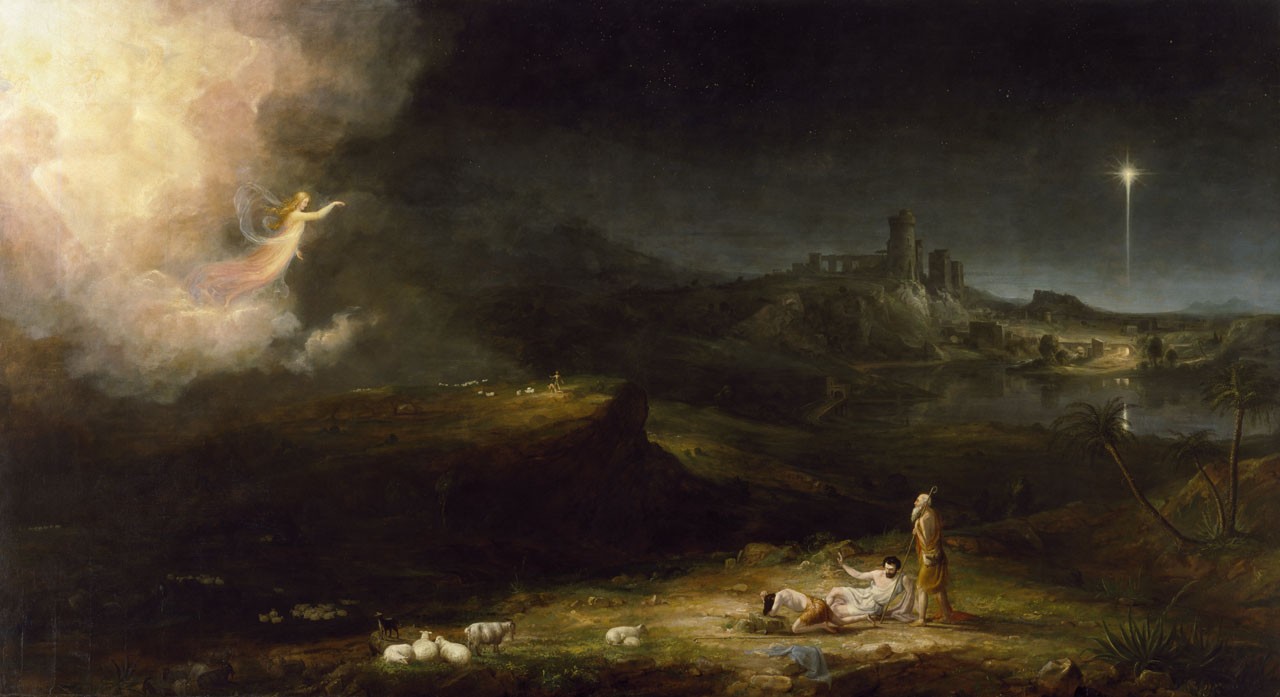
But now thus saith the LORD that created thee, O Jacob, and he that formed thee, O Israel, Fear not: for I have redeemed thee, I have called thee by thy name; thou art mine. (Isaiah 43:1)
One cannot escape the flood of wars and rumors of wars coming from the Middle East. More than two weeks ago, at the climax of the Feast of Tabernacles in Israel, Hamas terrorists invaded southern Israel. They killed many innocent civilians and took away many captives. They raped women and tortured and killed children and babies. Their atrocities left the world in shock. Not since ISIS have such horrors been on full display for the world to see.
As expected, the “free” world denounced the heinous acts and pledged to stand with Israel. After shaking off the shock, Israel took the offensive against Hamas in the Gaza Strip. Typical of Israel’s approach, the IDF took great measures to warn the civilians in the Gaza Strip to flee to the southern border for their own safety. Then the relentless bombing of Gaza City by the IDF started striking strategic targets of known Hamas strongholds. Unlike Israel and the IDF who value innocent human life, Hamas hunkers down in schools, mosques, hospitals, and civilian housing buildings. They use their own people as human shields knowing that Israel will not attack where innocents may be harmed. However, this time Israel took off the gloves. With sufficient warning to the civilian population, all Hamas targets were attacked.
It did not take long for the “friends” of Israel to start pressuring Israel for restraint in sympathy for the poor Palestinians. Certainly, a (very) small percentage of Palestinians do not agree with the actions of Hamas against innocent Israeli citizens. However, a great majority of them voted for Hamas leadership. In their schools, they teach their children to hate Jews and encourage them from a very young age to kill Jews. When Palestinian terrorists kill Jews in Israel, there are celebrations in the streets of Gaza. So, we should not be so quick to feel sorry for their sufferings; it is not totally undeserved.
It was not long before the US visited Israel to publicly profess solidarity with Israel in this war against terror, while behind the scenes pressuring Israel to allow for “humanitarian” aid for the poor suffering Palestinians. The US threatened to withhold munitions, support parts for Israeli fighters (F-16s and others), and money for the war effort. In the meanwhile, the US continues to send money to Iran which funds its proxies (Hamas, Hezbollah, Islamic Jihad, etc.) to do its dirty work. Money also continues to flow to the Palestinians from the US, which Hamas diverts for its own purposes. They do not care for the Palestinian people.
As Israel continues to prosecute this war, world support for her effort will quickly wane. Even now protests in favor of the poor Palestinians are rising all over the world, including here in the US, Israel’s “friend.” The world has a perverted idea that somehow the Palestinians have some kind of claim to the land of “Palestine.” Without going into great detail, the “Palestinian State” was established in 1965 by the Palestinian Liberation Organization (PLO), and Yasser Arafat, an Egyptian. Before then, there were no “Palestinian” people. The land was called Palestine because the Roman Emperor Hadrian renamed Judea to Syria Palestina and Jerusalem to Aelia Capitolina in order to remove Judah and Jerusalem from the memory of rebellious Jews. Thus, even our Bible maps continue to name the land Palestine. However, the land never belonged to Palestinians, nor did Palestinians ever exist.
The land belongs to God and He says so in so many words. In fact, He begins by asserting ownership of the entire planet. “Now therefore, if ye will obey my voice indeed, and keep my covenant, then ye shall be a peculiar treasure unto me above all people: for all the earth is mine” (Exodus 19:5, emphasis mine). Notice that while making this claim, He also identifies the children of Israel as His “peculiar treasure … above all people,” not Arabs, Palestinians, or any other nation. Furthermore, God claims the land of Israel as His own. “The land shall not be sold for ever: for the land is mine; for ye are strangers and sojourners with me” (Leviticus 25:23, emphasis mine). God “gave” the land to Israel for their stewardship, not to be sold to anyone else, because it belongs to God, not to them. Through the psalmist, David, God names some of the parcels of land. “Gilead is mine; Manasseh is mine; Ephraim also is the strength of mine head; Judah is my lawgiver” (Psalm 108:8). See the following (linked) passages where God makes claim to the land: 2 Chronicles 7:19-20; Isaiah 14:24-25; Jeremiah 2:7; 16:17-18; Ezekiel 38:16; Joel 1:6; 3:2.
Before the children of Israel inhabited the land, it was possessed by the cursed line of Canaan, son of Noah’s son Ham (Genesis 9:25). For reasons known only to God, He called Abram (Abraham) out of the land of the Chaldees (Genesis 11:28) and promised to give him the land (Genesis 12:7). The land God promised extended beyond the current boundaries of Israel including the Sinai Peninsula, parts of Jordan, all of Syria and Lebanon, to the Euphrates River and up to the southern border of Turkey (Genesis 13:14-15). The land was promised to Abraham and his descendants unconditionally with no strings attached (Genesis 15:7, 9-21). “In the same day the LORD made a covenant with Abram, saying, Unto thy seed have I given this land, from the river of Egypt unto the great river, the river Euphrates” (Genesis 15:18, emphasis mine). The promise has no term limits; it is an eternal promise. “For all the land which thou seest, to thee will I give it, and to thy seed for ever” (Genesis 13:15, emphasis mine).
The promise did not remain with Abraham. It was passed on to his son Isaac (Genesis 26:3, 5) and his grandson, Jacob (later renamed Israel – Genesis 28:3-4, 13-15). Time and again, the promise of the land to the descendants of Abraham, Isaac, and Jacob (Israel) is repeated in Scripture: Genesis 17:8; Exodus 6:8; 12:25; 13:5, 11; 33:1; Deuteronomy 1:8; 8:1; 10:11; 11:9, 21; 19:8; 28:11; 30:20, 21, 23; 34:4; Joshua 1:6; 21:43; Judges 2:1; Nehemiah 9:15, 23. God swore upon Himself to uphold His promise. “For when God made promise to Abraham, because he could swear by no greater, he sware by himself, Saying, Surely blessing I will bless thee, and multiplying I will multiply thee” (Hebrews 6:13-14). God promised the land to the descendants of Abraham, Isaac, and Israel (Jacob), not for a certain timeframe but forever. “Be ye mindful always of his covenant; the word which he commanded to a thousand generations; Even of the covenant which he made with Abraham, and of his oath unto Isaac; And hath confirmed the same to Jacob for a law, and to Israel for an everlasting covenant, Saying, Unto thee will I give the land of Canaan, the lot of your inheritance” (1 Chronicles 16:15-18, emphasis mine). “Everlasting” means that it will never end.
The land belongs to Israel and more land than they currently occupy. The Bible describes the boundaries of the promised land. God showed Abraham the extent of the land promised (Genesis 13:14-15). God repeated the boundaries to Moses (Exodus 23:31) and again to Joshua upon entering the Promised Land (Joshua 1:4). The land on which the Nation of Israel exists today is only a small part of what God has given them, and yet, wrongheaded people want to take away what little they possess now. God will not have it! It is His land, and He will not allow it to be parceled out by outsiders. “Defile not therefore the land which ye shall inhabit, wherein I dwell: for I the LORD dwell among the children of Israel” (Numbers 35:34, emphasis mine). God also has a special affinity for Jerusalem. “Since the day that I brought forth my people out of the land of Egypt I chose no city among all the tribes of Israel to build an house in, that my name might be there; neither chose I any man to be a ruler over my people Israel: But I have chosen Jerusalem, that my name might be there; and have chosen David to be over my people Israel” (2 Chronicles 6:5-6, emphasis mine)
God did drive the Jews out of their land for their rejection of their Messiah, but that was only a temporary measure. God has not permanently disinherited His people. There has always been the promise of restoration in the latter days. “And I will send the sword, the famine, and the pestilence, among them, till they be consumed from off the land that I gave unto them and to their fathers” (Jeremiah 24:10). “For, lo, the days come, saith the LORD, that I will bring again the captivity of my people Israel and Judah, saith the LORD: and I will cause them to return to the land that I gave to their fathers, and they shall possess it … Therefore fear thou not, O my servant Jacob, saith the LORD; neither be dismayed, O Israel: for, lo, I will save thee from afar, and thy seed from the land of their captivity; and Jacob shall return, and shall be in rest, and be quiet, and none shall make him afraid … For I will restore health unto thee, and I will heal thee of thy wounds, saith the LORD; because they called thee an Outcast, saying, This is Zion, whom no man seeketh after. Thus saith the LORD; Behold, I will bring again the captivity of Jacob’s tents, and have mercy on his dwellingplaces; and the city shall be builded upon her own heap, and the palace shall remain after the manner thereof” (Jeremiah 30:3, 10, 17-18, emphasis mine).
Even though Israel has sinned and remains in sin even now, God in His mercy will restore His people. “Fear thou not, O Jacob my servant, saith the LORD: for I am with thee; for I will make a full end of all the nations whither I have driven thee: but I will not make a full end of thee, but correct thee in measure; yet will I not leave thee wholly unpunished” (Jeremiah 46:28, emphasis mine). The full restoration of Israel will happen when the nation, as a whole, recognizes and turns to their Messiah. “And I will pour upon the house of David, and upon the inhabitants of Jerusalem, the spirit of grace and of supplications: and they shall look upon ME whom they have pierced, and they shall mourn for him, as one mourneth for his only son, and shall be in bitterness for him, as one that is in bitterness for his firstborn” (Zechariah 12:10, emphasis mine).
The land of Israel belongs to God. He has allotted it to the descendants of Abraham, Isaac, and Jacob, i.e., Israel. No one else has any right to that land, and there will be no peace in the Middle East until those who would divide the land, or who would exterminate the Jews from the land acknowledge that the land belongs to them.
When he had thus spoken, he spat on the ground, and made clay of the spittle, and he anointed the eyes of the blind man with the clay, (John 9:6)
Jesus performed many healing miracles during His time of ministry on earth. The miracles were not only an expression of His compassion for the hurting, but they served as evidence of who He was according to predictive prophecy.
John the Baptist, who baptized Jesus, recognized who He was. “And John bare record, saying, I saw the Spirit descending from heaven like a dove, and it abode upon him. And I knew him not: but he that sent me to baptize with water, the same said unto me, Upon whom thou shalt see the Spirit descending, and remaining on him, the same is he which baptizeth with the Holy Ghost. And I saw, and bare record that this is the Son of God” (John 1:32-34, emphasis mine). Later, John was imprisoned by Herod Antipas, and he started having doubts about the authenticity of Jesus. In order to reassure himself that he had baptized the right man, he sent his disciples to verify that Jesus was indeed the expected Messiah. Responding to their questions, “Jesus answered and said unto them, Go and shew John again those things which ye do hear and see: The blind receive their sight, and the lame walk, the lepers are cleansed, and the deaf hear, the dead are raised up, and the poor have the gospel preached to them” (Matthew 11:4-5, emphasis mine).
Jesus quoted prophecy with which John would be familiar as proof of who He was. “Then the eyes of the blind shall be opened, and the ears of the deaf shall be unstopped. Then shall the lame man leap as an hart, and the tongue of the dumb sing: for in the wilderness shall waters break out, and streams in the desert” (Isaiah 35:5-6, emphasis mine). “Thy dead men shall live, together with my dead body shall they arise. Awake and sing, ye that dwell in dust: for thy dew is as the dew of herbs, and the earth shall cast out the dead” (Isaiah 26:19, emphasis mine). “The Spirit of the Lord GOD is upon me; because the LORD hath anointed me to preach good tidings unto the meek; he hath sent me to bind up the brokenhearted, to proclaim liberty to the captives, and the opening of the prison to them that are bound” (Isaiah 61:1, emphasis mine).
Jesus performed many miracles proving His power and divinity. So many were His miracles that of Him that the Gospel writer, John said, “And there are also many other things which Jesus did, the which, if they should be written every one, I suppose that even the world itself could not contain the books that should be written. Amen” (John 21:25).
Blindness was one of the more common healings Jesus performed. In most cases, Jesus simply spoke the word and the blind were healed. For example, the first restoral of sight recorded by Matthew was of two blind men. “And when Jesus departed thence, two blind men followed him, crying, and saying, Thou Son of David, have mercy on us. And when he was come into the house, the blind men came to him: and Jesus saith unto them, Believe ye that I am able to do this? They said unto him, Yea, Lord. Then touched he their eyes, saying, According to your faith be it unto you. And their eyes were opened; and Jesus straitly charged them, saying, See that no man know it” (Matthew 9:27-30, emphasis mine). On another occasion, Matthew records, “Then was brought unto him one possessed with a devil, blind, and dumb: and he healed him, insomuch that the blind and dumb both spake and saw (Matthew 12:22, emphasis mine). In most cases, the healing required faith on the part of the recipient, but in this case, it was the faith of those who brought the demon possessed man to Jesus.
Many more examples could be cited of Jesus healing the blind simply at His word. However, two cases recorded in the Gospels stand out among the others for the “unorthodox” method Jesus employed in healing the blindness. One is recorded in Mark’s Gospel and the other in John’s.
“And he cometh to Bethsaida; and they bring a blind man unto him, and besought him to touch him. And he took the blind man by the hand, and led him out of the town; and when he had spit on his eyes, and put his hands upon him, he asked him if he saw ought” (Mark 8:22-23, emphasis mine). This was not an instantaneous healing as in other cases where Jesus healed with just His word. At first the man’s vision was unclear. “And he looked up, and said, I see men as trees, walking. After that he put his hands again upon his eyes, and made him look up: and he was restored, and saw every man clearly.” (Mark 8:24, emphasis mine). Could Jesus not have just spoken the word, as He had on other occasions, and healed the man’s blindness instantly? This has puzzled commentators through the years. Adam Clark suggests, “Our Lord could have restored this man to sight in a moment; but he chose to do it in the way mentioned in the text, to show that he is sovereign of his own graces; and to point out that, however insignificant means may appear in themselves, they are divinely efficacious when he chooses to work by them.”[1] That seems like a reasonable conclusion, but why here and not in all cases?
Albert Barnes is equally puzzled. “Why this was done is not known. It was evidently not intended to perform the cure by any natural effect of the spittle. It was to the man a “sign,” an evidence that it was the power of Jesus. The eyes were probably closed. They were perhaps “gummed” or united together by a secretion that had become hard. To apply spittle to them – to wet them – would be a “sign,” a natural expression of removing the obstruction and opening them. The power was not in the spittle, but it attended the application of it.”[2] This too seems a reasonable explanation, but why spit; why not water or olive oil?
Matthew Henry probably offers the best explanation. “That Christ used a sign; he spat on his eyes (spat into them, so some), and put his hand upon him. He could have cured him, as he did others, with a word speaking, but thus he was pleased to assist his faith which was very weak, and to help him against his unbelief. And this spittle signified the eye-salve wherewith Christ anoints the eyes of those that are spiritually blind.”[3] It is true that Jesus, by the faith of the recipients, healed immediately. But here the blind man was brought to Jesus; he did not come of his volition. Furthermore, Jesus took him by the hand and led him out of the city. This act initiated the man’s trust in the Healer. Spitting into his eyes further convinced the man that Jesus was doing something. At first, he is vision was blurred, but it was better than before. This too served to further increase his faith in Jesus’ healing touch. The second time Jesus touched his eyes, his vision was fully restored.
John records the other vision restoration by spittle in John 9. In this account, Jesus was in Jerusalem, possibly on the Feast of Tabernacles.[4] As he walked in the vicinity of the Temple, He saw a man that was blind from birth.[5] The text implies that Jesus knew that the man was blind from birth, but how the disciple knew is not clear for they asked Him, “Master, who did sin, this man, or his parents, that he was born blind?” (John 9:2). They had the common understanding that such tragedies came as a result of sin. Jesus assured them that neither was the case, “but that the works of God should be made manifest in him” (v. 3). With that, Jesus proceeded to restore the man’s vision. “When he had thus spoken, he spat on the ground, and made clay of the spittle, and he anointed the eyes of the blind man with the clay, And said unto him, Go, wash in the pool of Siloam, (which is by interpretation, Sent.) He went his way therefore, and washed, and came seeing” (John 9:6-7, emphasis mine).
This is another sight restoration that puzzles the commentators. Why would Jesus employ such methods? It could not have been to prove anything to His disciples; they had already seen Him heal blindness. If the purpose was merely to show that sin was not the cause of the man’s blindness, He could have healed him as He had done others. Besides applying mud spitballs to the man’s eyes, Jesus encouraged the man’s faith by sending him to wash in the Pool of Siloam.
Without consulting other commentaries, I suspect I know the reason behind Jesus’ method. (I could be wrong, of course, but I think I have good reason for my conclusion.) Jesus is the Creator. “All things were made by him; and without him was not any thing made that was made” (John 1:3). “For by him [Jesus] were all things created, that are in heaven, and that are in earth, visible and invisible, whether they be thrones, or dominions, or principalities, or powers: all things were created by him, and for him: (Colossians 1:16).
With that understanding, we can look back to Genesis. “And the LORD God formed man of the dust of the ground, and breathed into his nostrils the breath of life; and man became a living soul” (Genesis 2:7). God “formed” man out of dirt. The Hebrew word translated “formed” is yâtsar, which Strong’s defines as “to mould into a form; especially as a potter.” By implication, it required God (Jesus) to form and shape the human body out of moist clay.
Coming back to the blind man’s condition, John records that he was “born blind.”[6] That leads me to suspect that the man may have been born with a birth defect where his eyeballs did not develop completely or did not develop at all. The fact that Jesus made clay with His spittle harkens back to the original creation account. Here, Jesus created the missing eyeballs out of the clay. In this, Jesus demonstrated to His disciples and to us in a very clear and visual object lesson that He is the Creator God.
There is physical blindness that impairs the victim from seeing the physical world. There is also a spiritual blindness that impairs the sinner from seeing the spiritual world. Jesus heals both kinds of blindness, but of the two, spiritual blindness is the more severe, for it leads the victim to an eternity separated from the only One that can heal. Reader, if you do not know Jesus, you are spiritually blind. Come to Jesus and be forever healed of that blindness. Read my page on “Securing Eternal Life.”

Notes:
[1] Adam Clarke, LL.D., F.S.A., (1715-1832), Adam Clarke’s Commentary on the Bible, (Published in 1810-1826; Public Domain).
[2] Albert Barnes, Albert Barnes’ Notes on the Bible, (Published in 1847-1885; Public Domain).
[3] Matthew Henry, Matthew Henry’s Commentary on the Whole Bible, (Published in 1708-1714; Public Domain).