
Tag Archives: Christ

Father

Do ye thus requite the LORD, O foolish people and unwise? is not he thy father that hath bought thee? hath he not made thee, and established thee? (Deuteronomy 32:6)

On Father’s Day, we set aside a special time to honor the one who gave us life. For better or worse, without our fathers, we could not celebrate anything, especially our birthdays. Mothers get all the glory because they carried us in their bodies for nine months, but it did not stop there. Our arrival and entry into the world caused Mama unspeakable anguish and pain. After that came all the late night feedings, nursing us through illness, and nurturing us through all the bumps and bruises of life. Of course, Dad got in on some of that, but not like Mama, but let’s face it, without Dad, Mama would have missed out on all those cherished experiences.

The verse above reminds us not to minimize the importance of a father. It is obvious that the verse is speaking about the LORD as Father, but the connection is clear that God identifies Himself with human fathers. The verb “requite” is not heard in normal, everyday speech today, but it means to make a “repayment.” The Hebrew word translated “requite” is gâmal, and it means “to treat a person (well or ill).” So, the question can be stated: “Is this how you treat or repay the LORD?” In context, God gave life to the nation of Israel. Remember? He called Abraham out of the land of the Chaldeans and promised him the land of Canaan. God gave life to Isaac, and He chose Jacob (Israel). God brought the children of Israel out of Egyptian bondage and established them in the land. Likewise, our earthly fathers gave us the spark of life and brought us into this world. Even if they were not the fathers that stayed around and provided for us in our childhood, they gave us the life we now enjoy. We should “requite” them with our honor and respect.

God is the model Father from which we can all learn. Granted, in our fallen condition, we cannot meet His standard, but we have a pattern to follow. We can thank our earthly fathers for “the seed” from which we sprang, but ultimately, God is Father to us all. “Have we not all one father? hath not one God created us? why do we deal treacherously every man against his brother, by profaning the covenant of our fathers?” (Malachi 2:10, emphasis mine) “But now, O LORD, thou art our father; we are the clay, and thou our potter; and we all are the work of thy hand” (Isaiah 64:8, emphasis mine).

King David expressed his wonder for the Father this way: “I will praise thee; for I am fearfully and wonderfully made: marvellous are thy works; and that my soul knoweth right well. My substance was not hid from thee, when I was made in secret, and curiously wrought in the lowest parts of the earth. Thine eyes did see my substance, yet being unperfect; and in thy book all my members were written, which in continuance were fashioned, when as yet there was none of them. (Psalm 139:14-16, emphasis mine). Our Father concerns Himself with every detail of our being. Jesus said, “But the very hairs of your head are all numbered” (Matthew 10:30, emphasis mine). Hairs! Someone “follically challenged” like myself might see this as insignificant, but in truth, God even counts those hairs I have lost. As earthly fathers, we may not know the hair count on our children’s heads, but we should be encouraged to pay close attention to every detail of their lives.

Knowing every detail of our children’s lives makes us aware of their needs. “Like as a father pitieth his children, so the LORD pitieth them that fear him” (Psalm 103:13). The Hebrew verb translated “pity” here is râcham, and it means “to love” or “have compassion on.” Jesus said, “your Father knoweth what things ye have need of, before ye ask him” (Matthew 6:8, emphasis mine). Further on He says, “Therefore take no thought, saying, What shall we eat? or, What shall we drink? or, Wherewithal shall we be clothed? (For after all these things do the Gentiles seek:) for your heavenly Father knoweth that ye have need of all these things” (Matthew 6:31-32).  “Every good gift and every perfect gift is from above, and cometh down from the Father of lights, with whom is no variableness, neither shadow of turning” (James 1:17, emphasis mine). Fathers provide for the needs of their children.

The Father disciplines His children. “Discipline” in essence means “to teach.” “Train up a child in the way he should go: and when he is old, he will not depart from it” (Proverbs 22:6).  Sometimes, this might include corporal punishment. “He that spareth his rod hateth his son: but he that loveth him chasteneth him betimes [in good time]” (Proverbs 13:24). “Beatings” are never appropriate, but the “board of education” properly and lovingly applied with wisdom to the “seat of understanding” is sometimes necessary. God the Father and God the Son provided the example. “Then answered Jesus and said unto them, Verily, verily, I say unto you, The Son can do nothing of himself, but what he seeth the Father do: for what things soever he doeth, these also doeth the Son likewise. For the Father loveth the Son, and sheweth him all things that himself doeth: and he will shew him greater works than these, that ye may marvel” (John 5:19-20, emphasis mine).

Jesus, the Son, was subjected to and endured capital punishment for our sins. “For he [the Father] hath made him [the Son] to be sin for us, who knew no sin; that we might be made the righteousness of God in him” (2 Corinthians 5:21). At first sight, it seems abhorrent for a father to put his own son to death for the offenses of another, but this is a unique case. Jesus said, “I and my Father are one” (John 10:30). Jesus, “the Word was made flesh, and dwelt among us” (John 1:14, emphasis mine).  “In the beginning was the Word, and the Word was with God, and the Word was God. The same was in the beginning with God. All things were made by him; and without him was not any thing made that was made” (John 1:1-3, emphasis mine). The Father, punished His own Flesh, i.e. Jesus, for His children’s sins. “Behold, what manner of love the Father hath bestowed upon us, that we should be called the sons of God: therefore the world knoweth us not, because it knew him not” (1 John 3:1).

Even so, we do not escape the Father’s discipline when we need it. “My son, despise not the chastening of the LORD; neither be weary of his correction” (Proverbs 3:11). “For whom the Lord loveth he chasteneth, and scourgeth every son whom he receiveth. If ye endure chastening, God dealeth with you as with sons; for what son is he whom the father chasteneth not?” (Hebrews 12:6-7, emphasis mine) “Now no chastening for the present seemeth to be joyous, but grievous: nevertheless afterward it yieldeth the peaceable fruit of righteousness unto them which are exercised thereby” (Hebrews 12:11). Our Father’s discipline serves to sanctify us, that is, to make us holy, i.e., set us apart from the world. If we live in sin like the world, and God does not punish us for it, that only means that we do not belong to Him, because “whom the Lord loves, He chastens.”

The Father gives good gifts to His children. “If ye then, being evil, know how to give good gifts unto your children, how much more shall your Father which is in heaven give good things to them that ask him?” (Matthew 7:11). Fathers want to leave an inheritance for their children. Some leave great wealth; others can only leave a good name. However, the Lord gives His children the ultimate inheritance. Jesus said, “Let not your heart be troubled: ye believe in God, believe also in me. In my Father’s house are many mansions: if it were not so, I would have told you. I go to prepare a place for you. And if I go and prepare a place for you, I will come again, and receive you unto myself; that where I am, there ye may be also” (John 14:1-3, emphasis mine). “He that overcometh shall inherit all things; and I will be his God, and he shall be my son” (Revelation 21:7, emphasis mine). “And if ye be Christ’s, then are ye Abraham’s seed, and heirs according to the promise” (Galatians 3:29). “And if children, then heirs; heirs of God, and joint-heirs with Christ; if so be that we suffer with him, that we may be also glorified together.” (Romans 8:17).

Reader, if you are a child of God, regardless of your earthly father, whether good or bad, your heavenly Father cares for you and deserves your gratitude, devotion and obedience. If you are not a child of God, put yourself up for adoption; the Father will not turn you away. “The Lord is not slack concerning his promise, as some men count slackness; but is longsuffering to us-ward, not willing that any should perish, but that all should come to repentance” (2 Peter 3:9, emphasis mine). If you are a father, let God the Father be your example.

Comments Off on Father

Filed under Apologetics, Christianity, Creation, Evangelism, Gospel, Heaven, Holidays, Origins, Religion, Salvation, Theology

As You Go

But ye shall receive power, after that the Holy Ghost is come upon you: and ye shall be witnesses unto me both in Jerusalem, and in all Judaea, and in Samaria, and unto the uttermost part of the earth. (Acts 1:8)

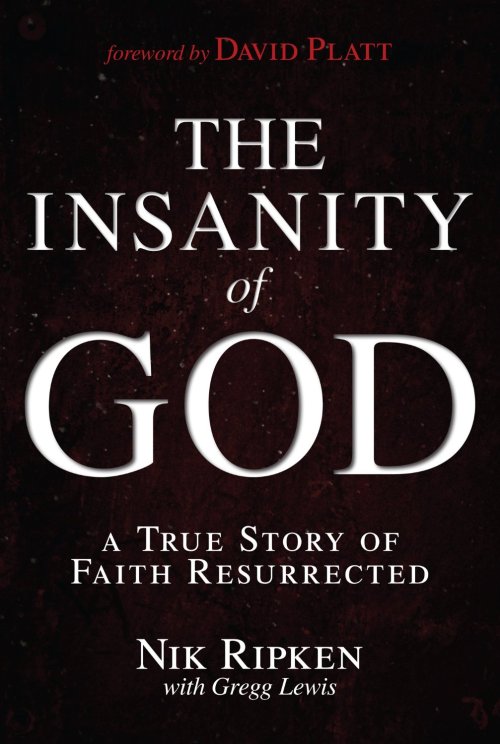
Our pastor had us read The Insanity of God by Nik Ripken (pseudonym) as a church, and this Sunday (the day of this posting), we will come together as a church and view the movie by the same title.

In the book, Nik Ripken tells of how he and his family served as missionaries in war-torn Somalia during the time of that country’s civil war from which it has yet to recover. Nik and his wife spent about twenty years serving in that place, and due to the oppressive Muslim influence, and the death of their 16-year-old son, they returned to the United States defeated with nothing to show for the effort they poured into that place. Sharing Christ openly invited the death penalty, and the Muslims would immediately kill anyone who converted to Christianity. The small minority of Christians that managed to survive fled the country because remaining there meant sure death.

One wonders why anyone would risk his life and the wellbeing of his family to serve in a God-forsaken place like Somalia. In that place, those that assume power are unconcerned about the welfare of their own people. They have no regard for the sanctity of life. They have no compassion for their own people. When help comes from outside their borders, they view the relief workers with suspicion, often taking the help meant for suffering people for themselves. Why would anyone put himself or herself in that position knowing that they cannot share their faith with the people and knowing that the “help” they provide might only extend someone’s life for maybe just another week or so? It seems a hopeless and pointless enterprise.

Nik took Matthew 28:19 as a personal calling from God to “Go!” “Go ye therefore, and teach all nations, baptizing them in the name of the Father, and of the Son, and of the Holy Ghost” (Matthew 28:19, emphasis mine). This verse known as the “Great Commission,” was given by the Lord Jesus Christ to His disciples—not just the twelve apostles, but to ALL of His disciples. It applies equally to every individual that names the Name of Christ. Albert Barns in his commentary on this verse says:

“Because” all power is mine [referring to v. 18], go! I [Jesus] can defend you. The world is placed under my control. It is redeemed. It is given me in promise by my Father, as the purchase of my death. Though you are weak, yet I am strong! Though you will encounter many troubles and dangers, yet I can defend you! Though you die, yet I live, and the work shall be accomplished!”

Nik and his wife took this commission to heart, and gave up all their worldly goods to go minister to people who showed little appreciation for their sacrifice and would just as soon kill them except for the fact that they were meeting real needs. I deeply admire their courage and their willingness to obey what I believe, at least for them, was a real call of God. However, in reading their story, one might mistakenly conclude that Jesus’ Great Commission means that we are all to pull up stakes and “go” to all nations. In other words, we are all obligated to be foreign missionaries. That is not at all what Jesus said.

The imperative in Jesus’ command is to “make disciples” not to “go.” Poreuthétes (go) is an aorist, passive, participle, masculine, plural, nominative verb. (I apologize for the Greek parsing, but this is important.) The fact that it is an aorist verb is not too special; it only means that it is a definite action. However, the fact that the verb is in the passive voice indicates that it is a consequence of something else. That it is participle indicates a continuing action (“going”). The verb is a plural nominative meaning that Jesus addressed all disciples, not just certain individuals. If Jesus spoke Texan, He might have said, “all y’all.” Therefore, the intended meaning here is, “As you (plural) are going, make disciples…” The command, i.e. the imperative, is to “make disciples,” and it applies to all followers of Jesus, not just missionaries.

The Ripkens felt God’s call to “go” to Somalia based on this verse, but the verse is not a call to all Christians to “go” somewhere to make disciples. All Christians are called to make disciples “as you are going”—at school, at work, at the supermarket, in your neighborhood. In your everyday walk of life, you are to “make disciples.”

If you claim Jesus as your Lord and Savior, you have no choice in the matter, unless you choose to rebel against Christ. Before He ascending unto heaven, Jesus said, “…ye shall be witnesses unto me both in Jerusalem, and in all Judaea, and in Samaria, and unto the uttermost part of the earth” (Acts 1:8, emphasis mine). That is a declarative statement; it is not a matter of choice. If we say we are followers of Jesus, we are witnesses, for better or worse. Our lives testify to Christ. Do our actions match our words? Perhaps we withhold our words because we know our actions betray them.

No doubt, one of the tactics Satan uses to silence us is to make us feel unworthy. Let’s face it, no one of us has lived or lives a perfectly sinless life, although, that is certainly a worthy goal for which to strive (and it can be achieved by relying daily on the Holy Spirit). The point is that we are witnesses for Christ. Satan is a conquered adversary, and besides, “Ye are of God, little children, and have overcome them: because greater is he that is in you, than he that is in the world” (1 John 4:4, emphasis mine). Satan has no power over us, unless we let him.

In the last half of The Insanity of God, Nik Ripken interviews hundreds of persecuted Christians in Russia, Ukraine, China and the Middle East. These Christians suffer horrific persecution—beatings, imprisonment, economic deprivation, etc. Through it all, they only ask of us that we pray for them, not that they should be kept from persecution, but that they remain faithful witnesses in persecution. What persecution do we, here in America, suffer because of our faith? Is being laughed at too horrible? Would losing a relationship be too much to take? What about being fired for sharing your faith with a coworker? Is that too great a risk? Nik noted that perhaps the reason we do not see persecution here in America is that Satan does not need to silence us. We do a good job of that on our own.

“As you are going, make disciples.” We are witnesses for Christ. We are either good witnesses, or we are poor witnesses; but we are witnesses nonetheless. “But sanctify the Lord God in your hearts: and be ready always to give an answer to every man that asketh you a reason of the hope that is in you with meekness and fear” (1 Peter 3:15, emphasis mine).


2 Comments

Filed under Apologetics, Book Reviews, Christianity, Evangelism, Religion

The Eternality of God

Blessed be the LORD God of Israel from everlasting, and to everlasting. Amen, and Amen. (Psalm 41:13)

I received an email just this week from a man trying to understand how God stepped out of eternity in order to create the universe. He said in part:

What research do you recommend, which helps one understand how God came out of eternity and made Genesis 1:1 come to pass? In other words, how does an endless succession arrive in the present? I understand that God is timeless and that He came out of eternity to create the universe about 10,000 years ago. But what was the Trinity doing prior to 10,000 years ago?

Reader, if you have struggled with this question, you are not alone in your bewilderment in understanding eternality of God. All of us “finite” human beings have a hard time wrapping our minds around eternity. It is less difficult for us to understand time having a beginning and going on infinitely, but eternity past is something difficult for us to grasp. God declares Himself to “Be”—He just “Is”—He “Exists.” When Moses asked God to identify Himself so he could report back to the people, “And God said unto Moses, I AM THAT I AM: and he said, Thus shalt thou say unto the children of Israel, I AM hath sent me unto you” (Exodus 3:14). By the way, Jesus made the same claim: “Jesus said unto them, Verily, verily, I say unto you, Before Abraham was, I am” (John 8:58). The Pharisees that heard Jesus’ proclamation clearly understood what Jesus was saying. “Then took they up stones to cast at him: but Jesus hid himself, and went out of the temple, going through the midst of them, and so passed by” (John 8:59, emphasis mine), because to them, His words were blasphemy.

Well, that does not really answer the question, but it does confirm that God has always existed, even before time. Perhaps what we need to understand is that God created time. Time is part of the created universe. Without time, there is no universe. We understand the universe to be triune in nature composed of time, space and matter/energy. The first verse of the Bible establishes this: “In the beginning God created the heaven and the earth” (Genesis 1:1, emphasis mine). God made time (beginning), space (heaven), and the earth (matter/energy). Since He is the Creator, He has access to time at any point in time, and since He is eternal, He is also present in all points in time. He is present in the past, present, and future. God is “omnipresent.”  God says, “Remember the former things of old: for I am God, and there is none else; I am God, and there is none like me, Declaring the end from the beginning, and from ancient times the things that are not yet done, saying, My counsel shall stand, and I will do all my pleasure” (Isaiah 46:9-10, emphasis mine), The psalmist declares, “Whither shall I go from thy spirit? or whither shall I flee from thy presence?” (Psalms 139:7). There is no escaping God, although many attempt to deny His existence. God calls such people “fools” (Psalm 14:1).

No research can demonstrate how God accomplishes this. There are some things we simply cannot know. There are some things that God intended for us not to know; our brains just cannot handle them. “The secret things belong unto the LORD our God: but those things which are revealed belong unto us and to our children for ever, that we may do all the words of this law” (Deuteronomy 29:29, emphasis mine).

“Those things which are revealed” are written down in God’s Word, the Bible. Reader, if you do not know God, you can know Him—He can be known. Knowing Him is as easy as ABC. Borrowing from Pastor J.D, Farag of Calvary Chapel, Kaneohe, Hawaii:

Here is an article from the Institute for Creation Research (ICR) that talks a little more about the eternality of God: http://www.icr.org/article/time-eternity/.

1 Comment

Filed under Apologetics, Christianity, Creation, Evangelism, Gospel, Origins, Religion, Salvation, Theology

Thank You, Lord Jesus!

Thank You, Lord Jesus!

You have preserved my life for 67 years and You have blessed me with a good, strong body and excellent health. And even though I have not escaped “the curse,” I still do pretty well, for an “old man.”

A couple of months ago I thought I was fit enough to run, and, while You kept whispering to me not to do it, I thought I could, and did. The next day, my right knee loudly complained that I should have listened to You.

Thank You for a good physical trainer that understands the anatomy that You designed and assembled enough to take it easy on my whining knee, and who encouraged me to have a doctor take a closer look. This time I listened, and I went to see my familiar orthopedist, Dr. Medlock. Thank You for the knowledge You have revealed to men and women in the medical field. Thank You for the desire You have instilled in them to devote their lives to the care of others.

Dr. Medlock started with conservative means – a cortisone shot to the knee. That did not help, so he ordered an MRI. Thank You for such wonderful technology You have allowed humans to develop that see inside the human body to help doctors pinpoint physical injuries. Dr. Medlock saw that I had, for the second time in one year, torn the medial meniscus in my right knee, and it would require surgery to repair.

Last Friday, May 26, 2017, I went to the Ambulatory Surgery Center at Medical City, Dallas to get the work done. Thank You, Jesus that You have allowed me to live in the United States of America where we have an abundance of good public and private hospitals staffed with talented and well-trained medical personnel that are efficiently run without oppressive government meddling. Dr. Medlock is an excellent doctor.  With the use of an arthroscope (again, thank You for technology) and the skill of an excellent surgeon (thank You for Dr. Medlock), I was out of the operating room in less than an hour.

Thank You for my wonderful wife, June, who drove me home in the car You gave us. Thank You for an abundance of food at every corner. June bought me a double-double Whataburger for my first meal with money You have provided through the ability You have given us and by the good employment You have provided. You have even provided the insurance to cover most of the medical expenses through the employment You have provided.

Lord Jesus, Thank You for a church family, and a choir and Sunday school family and all the many Christian brothers and sisters You have blessed us with that care for us, and pray for us, and encourage us as we go through the down parts of life. You have not left us alone!

Today, I am four days out of surgery. So far, You have given me the strength to walk eight blocks around the neighborhood, and I plan to walk at least four more before the day is done. Tomorrow, I will drive the pickup You gave me to the place of service You have provided for me.

Thank You, my Lord Jesus, most of all because I am Yours.

Lord, I feel sorry for all those who are so richly blessed by You, and they do not even realize from Whom their blessings flow. Open their eyes, Lord. All things come from Your hand, dear Lord Jesus. Thank You.

5 Comments

Filed under Random Musings, Thanksgiving, Worship

Pentecost

And they were all filled with the Holy Ghost, and began to speak with other tongues, as the Spirit gave them utterance. (Acts 2:4)

God gave the Feast of Weeks, a.k.a. Shavu’ot, (Leviticus 23:15-22) as the fourth of the Feasts of the Lord and the last of the spring feasts. God gave seven feasts to be observed as holy (i.e., set apart, consecrated, dedicated) convocations where all males over the age of 20 were required to attend. Later in their history, the Jews added Purim to celebrate their divine preservation in Babylon/Persia (Esther 9:20-32) and Chanukah, the Festival of Lights, to celebrate the rededication of the Temple after Antiochus IV Epiphanes desecrated it in 165 B.C. These last two are rabbinical festivals and do not bear the same significance as the Feasts of the Lord. The Lord’s feasts not only have religious significance, but they are prophetic of the coming Messiah. Jesus fulfilled the four spring feasts (Passover, Unleavened Bread, First Fruits, and Pentecost) at His first coming; the fall feasts (Feast of Trumpets, Day of Atonement, and Feast of Tabernacles) He will fulfill at His second coming.

Pentecost, a.k.a. Feast of Weeks, a.k.a. Shavu’ot, came 50 days after the Feast of First Fruits (Leviticus 23:16). At First Fruits, the devotee would bring some of the sprouts of the barley crop to the priest as a thank (wave) offering to God for the promise of bountiful harvest. Jesus fulfilled this feast when He rose from the dead (1 Corinthians 15:20). Forty days later (Acts 1:3), Jesus ascended to heaven, but before He did, He instructed His disciples (not just the apostles), “that they should not depart from Jerusalem, but wait for the promise of the Father, which, saith he, ye have heard of me.  For John [the Baptist] truly baptized with water; but ye shall be baptized with the Holy Ghost not many days hence” (Acts 1:4-5, emphasis mine). Pentecost came ten days later. This was the barley harvest celebration. Prophetically, this feast looked forward to the birth of the Church.

On Pentecost, Luke records that the disciples, about 120 in number (Acts 1:15), were gathered together “with one accord” (Acts 2:1), “And suddenly there came a sound from heaven as of a rushing mighty wind, and it filled all the house where they were sitting. And there appeared unto them cloven tongues like as of fire, and it sat upon each of them” (Acts 2:2-3, emphasis mine). This occasion reminds us of a similar manifestation in the Old Testament. When the children of Israel erected the tabernacle in the wilderness, “Then a cloud covered the tent of the congregation, and the glory of the LORD filled the tabernacle” (Exodus 40:34, emphasis mine). Similarly, at the dedication of Solomon’s Temple, “Now when Solomon had made an end of praying, the fire came down from heaven, and consumed the burnt offering and the sacrifices; and the glory of the LORD filled the house. And the priests could not enter into the house of the LORD, because the glory of the LORD had filled the LORD’S house. (2 Chronicles 7:1-2, emphasis mine).

The tongues of fire resting upon each of the disciples at Pentecost proclaimed that no longer would the Spirit of God be confined to a manmade structure, but in a temple created by God. “Know ye not that ye are the temple of God, and that the Spirit of God dwelleth in you?” (1 Corinthians 3:16, emphasis mine). At Pentecost, the Holy Spirit took up residence in the heart of every believer, and thus the Church of God (not the denomination that takes that name) was born.

This year, Pentecost falls on May 31, 2017. The year 2017 is significant to many who study end-times prophecy for a number of reasons, which I cannot go into detail at this time. One of these is that 2017 is a Year of Jubilee (Leviticus 25:8-13). Briefly, in 1917, the Balfour Declaration returned the land of Israel back to the Jews. Fifty years later, 1967, the Israelis recaptured their ancient capitol of Jerusalem. Since Jubilee is the time when all property reverts to its original owner, perhaps this year the Temple Mount will be returned to its rightful owners, the Jews.  This is the hope among many faithful Jews. All the instruments for the Temple are ready and even the priests are ready to take up their duties. The only thing missing is the Temple and the land on which the Temple is to be built. Perhaps this Jubilee will be the year that takes place.

There is also much talk about the Revelation 12 sign. Supposedly, on September 23, 2017 the constellation Virgo will appear “clothed with the sun, and the moon under her feet, and upon her head a crown of twelve stars” (Revelation 12:1). That Virgo appears clothed with the sun and the moon at its feet is an annual occurrence.  However, this year the constellation Leo will be accompanied by a conjunction of three planets, Mercury, Mars and Venus. Together with the nine major stars in Leo’s constellation, this grouping will form a crown of 12 stars above Virgo’s head. Supposedly, this particular configuration of heavenly objects has never before been observed, and it would only come about once every 7,000 years. In addition, Jupiter, the King Planet, entered Virgo’s “womb” on December 16, 2016, and will remain there 40 weeks, the normal length of human gestation. Then on September 23, 2017 (Feast of Trumpets), it is due to exit Virgo from between her feet (Revelation 12:5). Many prophecy teachers, while maintaining that they are not “date setting,” see this as a “possible” time for the Rapture of the Church. Other prophecy teachers see the Revelation 12 sign as merely analogous to Israel (the woman) giving birth to Jesus and His being taken up unto heaven.  Those that argue for the Rapture sign rightly point out that prophecies in the Bible often carry more than one meaning. Therefore, they suggest that the birth of this “man child” is the “body” of Christ, i.e. the Church, which is “caught up” (Greek: harpazō) or raptured up to heaven.

However, some suggest that Pentecost 2017 is also a good candidate for the Rapture. They conclude that since Jesus ascended ten days before Pentecost, He did not truly fulfill that feast, and that the “harvest” is yet ahead. Maybe so. Whether the Rapture takes place this year on May 31 (Pentecost), September 23 (Feast of Trumpets), or some other time, Jesus admonished us, “Occupy till I come” (Luke 19:14). The Apostle Paul informs us of a special reward that awaits those who anxiously look for Jesus’ return. “Henceforth there is laid up for me a crown of righteousness, which the Lord, the righteous judge, shall give me at that day: and not to me only, but unto all them also that love his appearing” (2 Timothy 4:8, emphasis mine). “Even so, come, Lord Jesus” (Revelation 22:20).

6 Comments

Filed under Christianity, End Times, Religion, Second Coming of Christ