Tag Archives: Christianity

Like As We

For we have not an high priest which cannot be touched with the feeling of our infirmities; but was in all points tempted like as we are, yet without sin. (Hebrews 4:15)

Our starting verse assures us that in Christ, we (who belong to Him) have a high priest – an advocate, an intercessor, or a “go-between” – that can relate to “the feeling of our infirmities,” i.e., our weaknesses or frailties both physical and emotional. He understands because He “… made himself of no reputation, and took upon him the form of a servant, and was made in the likeness of men” (Philippians 2:7). He knows our struggles because He experienced our struggles Himself.

We may find ourselves on trial some day in a court of law for some alleged infraction of the law. In our defense, a lawyer – an advocate – will plead our case, but that lawyer goes only by what evidence we can offer. He cannot plead our case from personal experience. Jesus can.

Satan, our prosecutor/accuser, started his practice from the very beginning of creation. He not only brings the accusation, but he initiates the offense to begin with. His first victim was Eve in the Garden of Eden[1] and his tactics have not changed from the beginning. He introduces doubt in God’s Word – “Yea, hath God said?” Then he asserts that God’s Word is a lie – “Ye shall not surely die!” Next he accuses God of withholding something good and implies that he can offer something better – “God doth know that in the day ye eat thereof, then your eyes shall be opened, and ye shall be as gods, knowing good and evil.”

Of course, Satan cannot take all of the blame. God gave humans free will to choose whether to obey or disobey and a nature capable of enjoying all the pleasures God created for us to enjoy. John the Beloved warned, “Love not the world, neither the things that are in the world. If any man love the world, the love of the Father is not in him” (1 John 2:15). The Greek word translated “world” – kosmos – has a broad range of meanings. However, in this context, John is referring to “the whole circle of earthly goods, endowments riches, advantages, pleasures, etc, which although hollow and frail and fleeting, stir desire, seduce from God and are obstacles to the cause of Christ.”[2]

John sums up “the world” three ways. “For all that is in the world, the lust of the flesh, and the lust of the eyes, and the pride of life, is not of the Father, but is of the world” (1 John 2:16, emphasis mine). Eve demonstrated all three of these frailties. “And when the woman saw that the tree was good for food [lust of the flesh], and that it was pleasant to the eyes [lust of the flesh], and a tree to be desired to make one wise [pride of life], she took of the fruit thereof, and did eat, and gave also unto her husband with her; and he did eat” (Genesis 3:6). We are no different today. Satan employs the same tactics and we still have the same weaknesses.

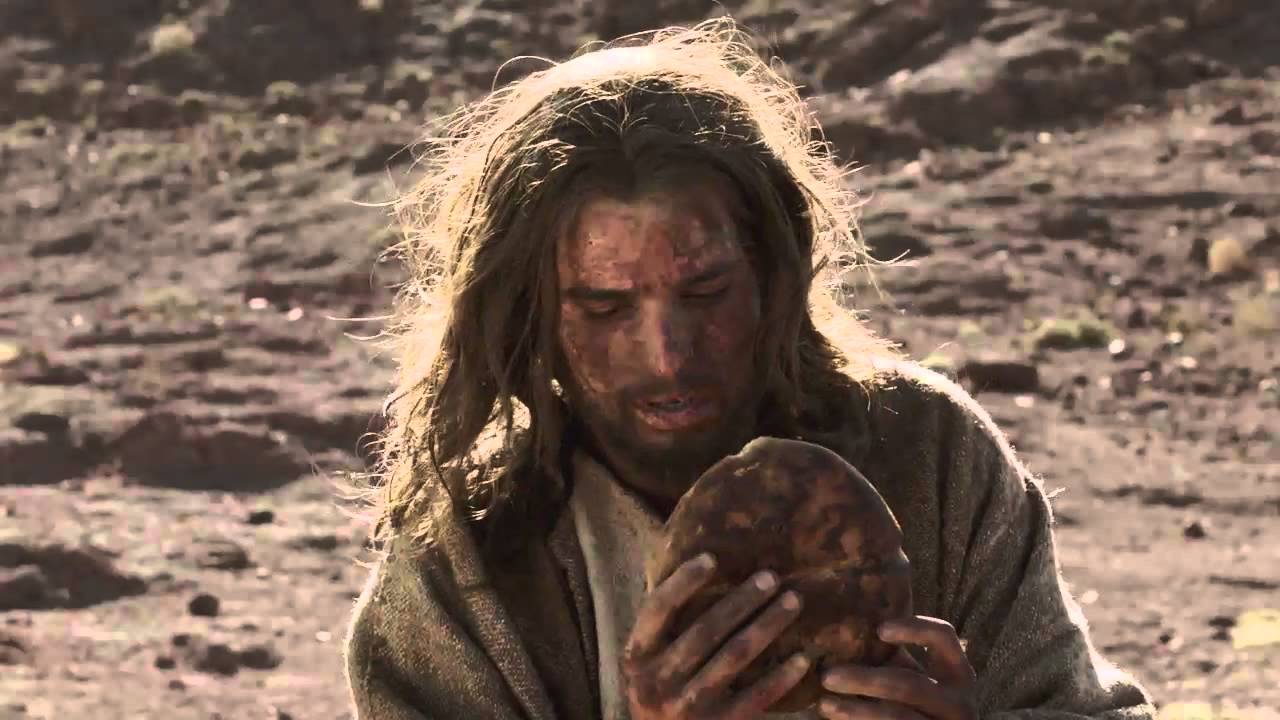
The Gospels of Matthew and Luke both record Satan’s attempt to cause Jesus to sin.[3] At the beginning of His ministry, John the Baptist baptized Jesus in the Jordan River. Guided by the Holy Spirit, Jesus went into the wilderness, and for forty days and nights he fasted in preparation for His ministry. At the end of the forty days, he was physically exhausted, malnourished, and hungry. He was at His weakest point both physically and emotionally.

Satan assessed his victim’s weakened condition and availed himself of a prime opportunity to attack. Knowing with whom he was dealing, Satan dispensed with his usual tactics. He knew that he could not cause doubt in God’s Word. He was facing the Word Himself.[4] He could not slander the Word of God because he was in the presence of the Truth.[5] He could not tempt Him with “ye shall be as gods”[6] because he was in the company of God. Rather, Satan attacked Jesus’ human nature through human weaknesses. “And the devil said unto him, If thou be the Son of God, command this stone that it be made bread” (Luke 4:3). Here, the lust of the flesh, was especially challenging to a starving man. Who could fault Him for succumbing to that temptation? Yet Jesus answered Satan’s challenge with the Word of God. “And Jesus answered him, saying, It is written, That man shall not live by bread alone, but by every word of God.” (Luke 4:4, emphasis mine).

Failing at his first attempt, Satan tried again. “And the devil, taking him up into an high mountain, shewed unto him all the kingdoms of the world in a moment of time [the lust of the eyes]. And the devil said unto him, All this power will I give thee, and the glory of them: for that is delivered unto me; and to whomsoever I will I give it. If thou therefore wilt worship me, all shall be thine” (Luke 4:5-7). Again, Jesus responded with Scripture. “And Jesus answered and said unto him, Get thee behind me, Satan: for it is written, Thou shalt worship the Lord thy God, and him only shalt thou serve” (Luke 4:8).

Satan knows Scripture too, and he knows how to twist it to suit his purpose. “And he brought [Jesus] to Jerusalem, and set him on a pinnacle of the temple, and said unto him, If thou be the Son of God, cast thyself down from hence: For it is written, He shall give his angels charge over thee, to keep thee: And in their hands they shall bear thee up, lest at any time thou dash thy foot against a stone [the pride of life]” (Luke 4:9-11, emphasis mine). The final fail – Jesus sent Satan packing with His final Word making clear to Satan with whom he was dealing. “And Jesus answering said unto him, It is said, Thou shalt not tempt the Lord thy God” (Luke 4:12, emphasis mine). Satan knew he met his match, so, “he departed from him for a season” (Luke 4:13, emphasis mine). Satan is a highly intelligent being, but he is stupid. Knowing full well that he is out matched by God, he still thinks he can somehow pull off a win.

We continue to struggle with our frailties, the lust of the flesh, the lust of the eyes, and the pride of life. Jesus faced those challenges also, just as we do, “yet without sin” (Hebrews 4:15). Because we, who belong to Him, have His Holy Spirit in us, we can conquer our temptations the same way Jesus did, by standing on the Word of God. However, the Holy Spirit in us can only use the amount of ammunition that we provide, so it is vitally important that we maintain a well-stocked arsenal of God’s Word by reading and studying it daily. And when we fail, and we do fail, we can be sure that “we have not an high priest which cannot be touched with the feeling of our infirmities; but was in all points tempted like as we are” (Hebrews 4:15) that intercedes on our behalf.

Reader, if you do not have this assurance, please read my page on “Securing Eternal Life.”

Notes:


[1]  Genesis 3:1-5

[2] Joseph Henry Thayer, D.D., The New Thayer’s Greek-English Lexicon of the New Testament, (Hendrickson Publishing, Peabody, MA, 1981), Strong’s Number G2889, p.357.


[3]  Matthew 4:1-11Luke 4:1-13

[4]  John 1:1

[5]  John 14:6

[6]  Genesis 3:5

Comments Off on Like As We

Filed under Apologetics, Bible, Christianity, Gospel, Holy Spirit, Salvation, Satan, Theology

Crazy!

And they were filled with madness; and communed one with another what they might do to Jesus. (Luke 6:11)

These days I find it difficult to find topics about which to write. I want to write about encouraging topics, but politics and the social condition of our times occupy much of my thinking, and the only encouraging thing that comes to mind is the proximity of our Lord’s return to call His Bride home. As I look forward and look up, I am excited with anticipation, and I am encouraged. However, when I, like Peter,[1] look at the raging storm around me, my mood changes to desperation.

So, like Peter, I cried out “Lord, save me!” I took my Bible, and without looking, opened it at random, zigzagged my finger down the page and stopped at the verse above (Luke 6:11). This is not my usual method of Bible study, nor do I recommend it as an acceptable practice for searching the Scriptures, but on this occasion the Lord was merciful and gave me a thought.

It is never good to take one verse out of context and build a lesson on it, so I went to the top of the chapter and read the full context of the verse. At the beginning of Chapter 6, we find Jesus and His disciples walking through a grain field (barely or wheat, we are not told). Luke points out that it was “on the second sabbath after the first” (Luke 6:1). One commentator suggests that it is “an obscure expression, occurring here only, generally understood to mean, the first sabbath after the second day of unleavened bread. The reasons cannot be stated here, nor is the opinion itself quite free from difficulty.”[2]

Whatever Luke meant by including this detail, the issue remains that the act took place on a Sabbath. As usual, the Pharisees hovered around Jesus like vultures to see what infractions they could find for which to accuse Him. As Jesus and His disciples walked through the grain field, they plucked off heads of grain, rubbed them together between their hands to remove the chaff, and ate the grain. Ah ha! They were harvesting and winnowing on the Sabbath. That was work, and a clear violation of the fourth commandment![3] The Pharisees wasted no time in accusing Jesus of breaking the Sabbath law. Jesus responded by citing Scripture of the time when David ate the “show bread” from the Tabernacle that was reserved for the priests alone.[4] Then He made the audacious statement “That the Son of man is Lord also of the sabbath” (Luke 6:5). Well, it may have been an audacious statement to the Pharisees but Jesus made a truth claim, and it did not go unnoticed by the Pharisees.

Luke then goes on to recount another Sabbath in which Jesus was teaching in a local synagogue. Again, the Pharisees were present taking notes. In attendance was a man with a withered right hand.[5] He may have been there as a “plant” by the Pharisees as the verse seems to suggest. “And the scribes and Pharisees watched him, whether he would heal on the sabbath day; that they might find an accusation against him” (Luke 6:7). A well respected Bible teacher suggested that the man’s condition may have been a birth defect where the right arm never developed properly. Therefore, the miracle Jesus performed in healing the man gave evidence of Jesus’ divine power of creation.

However, that detail escaped the Pharisees who were more concerned about their legalities than in the welfare of the disabled man. Luke records that “they were filled with madness” (Luke 6:11). The Greek word translated “madness” is anoia. It sounds like it may be the root of our English word “annoy,” but it means more than that. It means to be “without understanding,” i.e. “foolish.” It is a “madness expressing itself in rage.” These men were so outraged at Jesus’ supposed infraction of their standards on top of Jesus’ claim to be “Lord of the Sabbath” that they failed to comprehend the significance of the miracle before their eyes. Crazy!

As I considered this, my mind drifted back to our current condition. Without getting into specifics, we see a mounting intolerance toward Bible-believing Christians. Regardless of the good acts performed by Christian organizations, just the fact that Christians believe that there is only one way to salvation makes Christians akin to “haters” and “terrorists.” Well, we can take courage knowing that the trend only brings us closer to the soon return of Christ. As for “crazy,” you ain’t seen nothing yet!

Reader, if you are not sure of your eternal destiny, please read my page on “Securing Eternal Life.” There really is only One Way.

Notes:


[1]  Matthew 14:22-33

[2]  Jamieson, Fausset and Brown Commentary, A Commentary on the Old and New Testaments by Robert Jamieson, A. R. Fausset and David Brown, Note on Luke 6:1.

[3]  Exodus 20:8-11

[4]  1 Samuel 21:1-6

[5]  Luke 6:6

Comments Off on Crazy!

Filed under Apologetics, Bible, Christianity, Current Events, End Times, Gospel, Religion, Second Coming of Christ, Theology

Animals Do It

Yea, the stork in the heaven knoweth her appointed times; and the turtle and the crane and the swallow observe the time of their coming; but my people know not the judgment of the LORD. (Jeremiah 8:7)

A couple of weeks ago, I enjoyed an outing to the Henry Doorly Zoo and Aquarium in Omaha, Nebraska. Like all zoos, they have a wide variety of animals from all over the world – birds, reptiles, mammals, and marine creatures. The “Desert Dome” houses all kinds of animals that make the desert their habitat. The dark catacombs beneath the dome feature an assortment of nocturnal creatures like bats and other mammals and reptiles that prefer dark places. The aquarium exhibits penguins, sharks, sea turtles, and a multiplicity of exotic fish. There is also a jungle enclosure set up to resemble a rain forest with all the creatures that would inhabit such a place. A butterfly enclosure offered an array of beautifully colored insects that flitted about from flower to flower displaying God’s artistry in design. Even butterflies of the same species varied in design; no two were alike. Outside, in open enclosures, we enjoyed large animals like giraffes, elephants, rhinos, zebras, etc.

All the animals did exactly what God created them to do. There were no surprises. The elephants did not behave like giraffes, and the giraffes did not behave like the rhinos. Monkeys swung from tree limbs and picked fleas off one another. Whatever they were created to do they did, and in keeping with their design purpose, they glorified their Creator.

Walking around a crowded zoo offers opportunity to observe the behavior of humans that come to observe the animals. Without going into specifics, it is interesting to note how so many humans fail to fulfill the purpose for which they were designed. One way is in the way they distort their appearance by markings, piercings, artificial coloration (hair color and makeup), or immodest dress. Another way is in their speech, conduct, or behavior. Having been created in the image of God, they do not glorify God in their actions.

Animals glorify God by doing what God created them to do; however, God says, “my people know not the judgment of the LORD” (Jeremiah 8:7). Humans designed and built the habitats for the animals in the zoo, and as humans, we can appreciate the beauty in the work of human minds and hands. The animals miss the aesthetics of the creation and only react in the way they were designed to act. Humans enjoy the aesthetics of the place and find entertainment in seeing all the animals, but they attribute it all to time and chance, rather than give glory to God who created humans with the ability to create and appreciate beauty, and who created all the animals for our enjoyment and His glory.

“Ye that fear the LORD, praise him; all ye the seed of Jacob, glorify him; and fear him, all ye the seed of Israel” (Psalm 22:23).

“If ye will not hear, and if ye will not lay it to heart, to give glory unto my name, saith the LORD of hosts, I will even send a curse upon you, and I will curse your blessings: yea, I have cursed them already, because ye do not lay it to heart” (Malachi 2:2).

“What? know ye not that your body is the temple of the Holy Ghost which is in you, which ye have of God, and ye are not your own? For ye are bought with a price: therefore glorify God in your body, and in your spirit, which are God’s” (1 Corinthians 6:19-20).

“Having your [conduct] honest among the Gentiles: that, whereas they speak against you as evildoers, they may by your good works, which they shall behold, glorify God in the day of visitation” (1 Peter 2:12).

Glorify God with your life. Be what God created you to be. Do what God created you to do. Animals do it!

Comments Off on Animals Do It

Filed under Christianity, Creation, Random Musings, Theology

No Fear of Death

Yea, though I walk through the valley of the shadow of death, I will fear no evil: for thou art with me; thy rod and thy staff they comfort me. (Psalm 23:4)

Fear paralyzes the fearful, rendering them ineffective in that thing which they fear. Dictionary.com defines fear as “a distressing emotion aroused by impending danger, evil, pain, etc., whether the threat is real or imagined;”[1] (emphasis mine). The fact remains that 10% of most things feared or the things over which we worry never come to pass.

A long list of phobias exists which we could examine: fear of height, fear of flying, fear of germs, fear of needles, etc. However, the most ubiquitous fear held by the majority of people is the fear of dying. One can understand the nature of this fear; it is basically the fear of the unknown. What happens when one dies? Is this life all there is? Is there life after death? Do the dead come back in a different form – reincarnation? Are heaven and hell real? If heaven and hell are real, how does one arrive at one place and not the other? Does dying hurt?

For one who believes the Bible and the God of the Bible, death terminates physical life, but the spiritual essence that energizes the soul (the complete person) transitions on to eternity. The eternal destination depends on the spiritual condition of the soul at the time of death, one is either “saved”[2] or “lost.”[3]

Jesus spoke of two men who met death and ended up in different destinations.[4] Prior to Jesus’ death and resurrection, Jews believed that those who died went to the “abode of the dead” known as Sheol. Sheol had two compartments, one for the unrighteous known as “torments” and one for the righteous known as “Abraham’s bosom” or “paradise.” So the two men died, one was rich and the other a beggar. The rich man ended up in the place of torments not because he was rich, but because he was unrighteous, i.e., “lost.” The poor beggar ended up in Abraham’s bosom not because he suffered poverty, but because he was righteous, i.e. “saved.” After Jesus’ resurrection and ascension, the destination for the “saved” changed to “the presence of the Lord.” The Apostle Paul makes this clear, “We are confident, I say, and willing rather to be absent from the body, and to be present with the Lord” (2 Corinthians 5:8, emphasis mine). The lost still end up in “torments” (“hell”) to await their final destiny in the “lake of fire” that burns forever and ever.[5]

For those who do not have a personal, saving faith in Jesus Christ as their Lord and Savior, death is a legitimate fear indeed. Some may salve their fear by ignoring, or by choosing to believe that death is the end, or by hoping in reincarnation, or by imagining that they will somehow meld into the vast universe, i.e., “become one with the universe.” However, all of these notions only produce doubt, and the fear remains.

The Christian, on the other hand, should not harbor the fear of death. Death, as Paul reminded us, means that we are absent from the body, but we are present with the Lord in the same place where He resides. For the Christian, there should be no fear of death. In another place, Paul reminds us that, for Christians, our “citizenship” (“our conversation”) is not in this world, but in heaven. “For our conversation is in heaven; from whence also we look for the Saviour, the Lord Jesus Christ: Who shall change our vile body, that it may be fashioned like unto his glorious body, according to the working whereby he is able even to subdue all things unto himself” (Philippians 3:20-21, emphasis mine). For the Christian, the “afterlife” promises the possession of a physical body like that of the resurrected Christ in His presence.

I look forward to passing from this rapidly decaying world to be forever in the presence of the One who died in my place to save me from my sin for eternity. I have no fear of death. I realize that while He has me here in this world, I need to serve Him in every task that He lays before me. Then when that day comes, whether by physical death or by translation from this world into His presence in the Rapture, I will enter His courts with joy.

If you fear death or you are insecure about your eternal destiny, please read my page on “Securing Eternal Life.”

Notes:


[1]  “fear” — https://www.dictionary.com/browse/fear

[2]  Matthew 10:22

[3]  2 Corinthians 4:3

[4]  Luke 16:19-31

[5]  Revelation 20:10, 15

1 Comment

Filed under Apologetics, Christianity, Death, End Times, Heaven, Hell, Rapture, Resurrection, Salvation, Second Coming of Christ, Theology

How Long, O Lord?

And they cried with a loud voice, saying, How long, O Lord, holy and true, dost thou not judge and avenge our blood on them that dwell on the earth?  (Revelation 6:10)

This scene in heaven takes place shortly after Jesus opens the fifth seal of the seven-sealed scroll.[1] The Tribulation is just beginning. The first seal releases the white horse rider[2] that carries a bow but no arrows. He has a crown and he goes “forth conquering, and to conquer.” Most end-times prophecy teachers believe this one is Antichrist that appears at the beginning of the Tribulation. That he has no arrows for his bow suggests that he conquers through diplomacy. Further confirmation of this comes from the statement that “a crown was given unto him;” he does not take it by force. The Prophet Daniel describes him as the “fourth beast/kingdom”[3] whose kingdom will be unlike any before, and it “shall devour the whole earth.” Daniel’s “beast” – the “little horn” – a.k.a. Antichrist, will “speak great words against the Most High.” Daniel says that he will “wear out the saints,” i.e., the Jews for three and one half years. This will take place at the final three and one half years of the seven-year Tribulation.

In a later vision, Daniel predicts the appearance of Antichrist. “And he [Antichrist] shall confirm the covenant with many for one week [seven years]: and in the midst of the week [after 3 ½ years] he shall cause the sacrifice and the oblation to cease, and for the overspreading of abominations he shall make it desolate, even until the consummation [when Christ returns], and that determined shall be poured upon the desolate” (Daniel 9:27, emphasis mine). Of him the Apostle Paul says, “Let no man deceive you by any means: for that day shall not come, except there come a falling away first, and that man of sin be revealed, the son of perdition [i.e., Antichrist]; Who opposeth and exalteth himself above all that is called God, or that is worshipped; so that he as God sitteth in the temple of God, shewing himself that he is God.” (2 Thessalonians 2:3-4, emphasis mine). Jesus also warned, “When ye therefore shall see the abomination of desolation, spoken of by Daniel the prophet, stand in the holy place, (whoso readeth, let him understand:) Then let them which be in Judaea flee into the mountains” (Matthew 24:15-16).

So, to recapitulate, Antichrist, the rider on the white horse, comes on the scene and obtains world renown and power by diplomatic means (“speaking great words”). He confirms a peace agreement with Israel (and “with many”), which probably allows for the construction of the third temple (which needs to exist since he is going to desecrate it).[4] This act will begin the seven-year Tribulation. After 3 ½ years, he breaks the covenant, he enters the Temple declaring himself to be god, and initiates what will be the worst persecution of Jews the world has ever known. By the way, this persecution will also include Gentiles that come to faith in Christ during the Tribulation.

The next riders also show up at the beginning of the Tribulation, the first 3 ½ years. The rider on the red horse[5] removes peace from the earth. The rider on the black horse[6] brings global economic collapse. The rider on the pale (green) horse brings famine, plague, and death. The four horse riders represent the first four seals of the seven-seal scroll.

“And when he had opened the fifth seal, I saw under the altar the souls of them that were slain for the word of God, and for the testimony which they held: And they cried with a loud voice, saying, How long, O Lord, holy and true, dost thou not judge and avenge our blood on them that dwell on the earth?” (Revelation 6:9-10, emphasis mine). These are the “Tribulation Saints” that come to faith Christ after the Rapture (the “snatching away”) of the Church. Being a follower of Christ during the Tribulation will come at a high cost and many will pay with their lives. Now their souls are with the Savior, but they also see their brothers and sisters in Christ suffering the horrors of the Tribulation on earth. So, they cry, “How long, O Lord, holy and true, dost thou not judge and avenge our blood on them that dwell on the earth?” And, the Tribulation has only just begun.

We are beginning to see the “signs” of the end-times. Israel, the focal point of end-times prophecy, is ready to institute an unstable government. The players in the Gog and Magog[7] war are staging for battle. Through vaccine and mask mandates for the Wuhan Bug, the world population is being conditioned to blindly obey all orders that come from “above.” The US Government spends money that does not exist in the treasury and justify their foolishness by simply printing more. The “woke cancel culture” systematically undermines or destroys all social norms. Even language has lost all meaning. Violence among people groups is increasing all over the world. The downward spiral of our moral decay removes any trace of hope for a rational thinking person.

It seems that I find myself on a daily basis crying out, “How long, O Lord will You allow things to continue as they are?” Anyone who places their faith and trust in Jesus sees the light at the end of this dark tunnel. That light is the hope of Jesus’ soon coming for His Bride. “For the Lord himself shall descend from heaven with a shout, with the voice of the archangel, and with the trump of God: and the dead in Christ shall rise first: Then we which are alive and remain shall be caught up together with them in the clouds, to meet the Lord in the air: and so shall we ever be with the Lord.” (1 Thessalonians 4:16-17, emphasis mine). After that comes the seven-year Tribulation, which culminates with the return of Christ to set up His 1000-year reign on earth.[8]

I feel bad for those that will not come to Christ until after the Rapture. Life will be unimaginably difficult for Christians (Jews and Gentiles) living in the Tribulation, if they are not martyred early on. However, Jesus’ reign on earth is the only fix for this sick and broken world. I can only plead to anyone reading this if you do not know Jesus as your Lord and Savior, you need to settle that right now. Please read my page on “Securing Eternal Life” and meet Jesus at the Rapture rather than at His Second Coming.

Notes:


[1]  Revelation 5:1

[2]  Revelation 6:2

[3]  Daniel 7:23-25

[4]  Israeli religious leaders claim they have everything they need to build the Third Temple. All they need is the “go ahead” in order to start construction. They claim they can have it built in a matter of months.

[5]  Revelation 6:4

[6]  Revelation 6:5-6

[7]  Ezekiel 38-39

[8]  Revelation 19:11-20:10

Comments Off on How Long, O Lord?

Filed under Bible, Christianity, Current Events, End Times, Eschatology, Gospel, Prayer, Rapture, Salvation, Second Coming of Christ, Theology