Tag Archives: Christianity

What’s Special About Sunday?

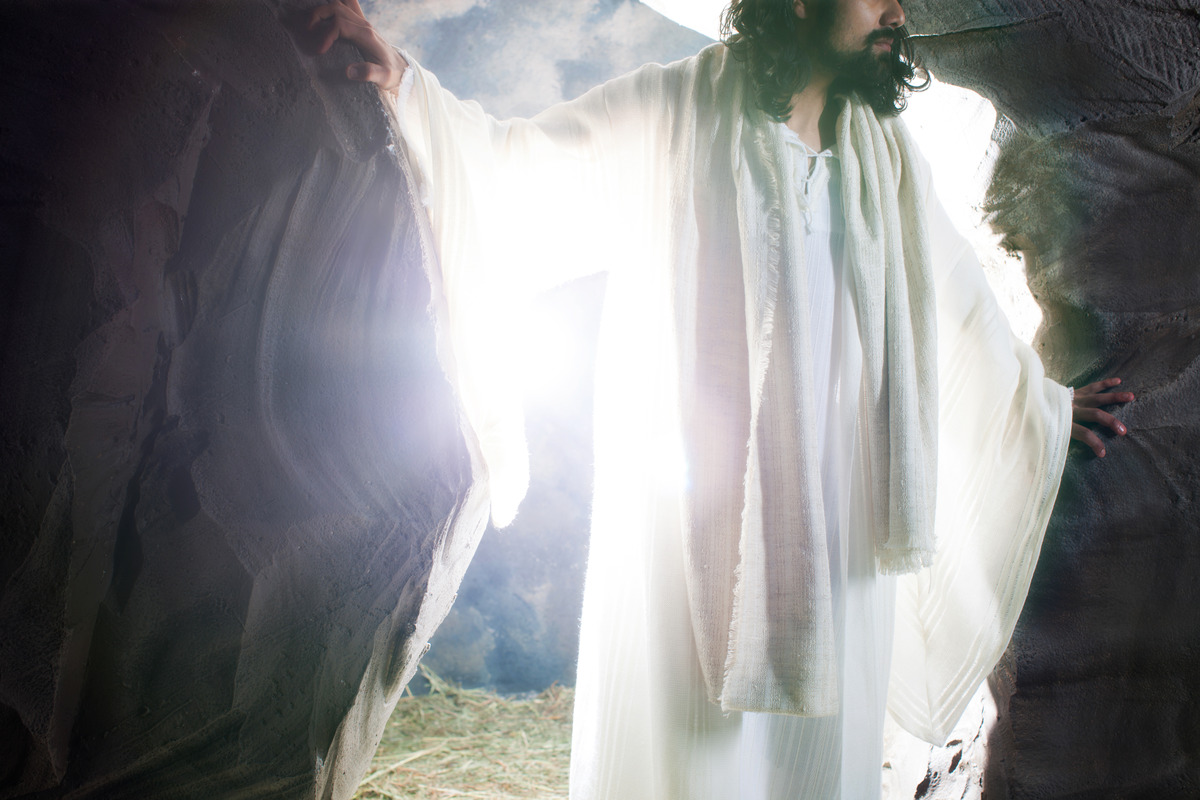
In the end of the sabbath, as it began to dawn toward the first day of the week ... (Matthew 28:1)

In the end of the sabbath, as it began to dawn toward the first day of the week … (Matthew 28:1)

And very early in the morning the first day of the week, they came unto the sepulchre at the rising of the sun. (Mark 16:2)

Why should Christians worship on Sunday instead of Saturday as do the Jews and certain other “Christian” denominations? After all, in fourth of the Ten Commandments, God specifically says, “Remember the sabbath day, to keep it holy. Six days shalt thou labour, and do all thy work: But the seventh day is the sabbath of the LORD thy God: in it thou shalt not do any work, thou, nor thy son, nor thy daughter, thy manservant, nor thy maidservant, nor thy cattle, nor thy stranger that is within thy gates: For in six days the LORD made heaven and earth, the sea, and all that in them is, and rested the seventh day: wherefore the LORD blessed the sabbath day, and hallowed it” (Exodus 20:8-11). So, are we in violation of God’s commandment by worshiping on Sunday?

First of all, let me say that setting aside one day of the week for rest and worship is right and proper whether that day be Friday, Saturday, or Sunday or any day of the week for that matter.  “One man esteemeth one day above another: another esteemeth every day alike. Let every man be fully persuaded in his own mind” (Romans 14:5).

Much of the confusion comes with the interpretation of the word “Sabbath” in the Bible.  The word in the Hebrew does not mean “seventh” (shebəiʽi), but rather “rest” or “to rest” (shebbot).  Genesis 2:2 tells us that “on the shebəiʽi day God ended his work which he had made; and he shebbot on the shebəiʽi day from all his work which he had made.”  Translating that seventh day to mean Saturday “assumes” that God began His creative acts on Sunday, and we really have no textual basis for that conclusion other than what has been handed down to us by Jewish tradition – that, however, is not to say that this tradition is in error.  Furthermore, as you study the “Feasts of the Lord” given in Exodus and Leviticus, you find that each of those days is considered a shebbot (Sabbath) regardless of what day of the week it falls on.  So, we need to be careful not to become dogmatic over things on which the Bible is unclear.  However, it is clear that we need to “sanctify” – set aside – one day a week for the Lord.

Today, on Resurrection Day, we celebrate our Lord’s victory over death. (See “Risen Indeed,” where I cover the facts of the Resurrection.) The Resurrection is significant for us who believe because we have the promise that because Christ conquered death, we too can be assured of a resurrection to eternal life. “But if there be no resurrection of the dead, then is Christ not risen: And if Christ be not risen, then is our preaching vain, and your faith is also vain … But now is Christ risen from the dead, and become the firstfruits of them that slept.” (1 Corinthians 15:13-14, 20). Today we rejoice in Christ’s resurrection and look forward to our own resurrection to be with Him eternally.

In the New Testament, the first Jewish Christians went to the temple or synagogue on the Sabbath (Acts 13:14; 17:2; 18:4) for the sake of the Jews, but they also met on the First Day of the week (Acts 20:7; 1 Corinthians 16:2) because this was “the Lord’s Day” and also for the sake of the Gentiles which were not obligated to follow Jewish custom (Colossians 2:16). The reason for this change is because this is when Christ was raised from the dead (Matthew 28:1, Mark 16:2; Luke 24:1; John 20:1).

The First Day of the week was also the day that the Holy Spirit descended upon the disciples gathered in the upper room (Acts 2:1). Scripture does not specify the day of the week, but when you consider that Jesus arose on the first day of the week and count forward 50 days (the Day of Pentecost) you will find that day to be Sunday also. The day that Jesus arose was the “First Omer” (Nisan 16) and the Day of Pentecost was the “50th Omer (Sivan 6). Not only were these days important on the Jewish calendar, but they have even greater significance in the Christian calendar. For this reason, it is proper that Christians should meet on the First Day of the week to celebrate the Risen Lord and the coming of the Holy Spirit.

 So, as you celebrate this Resurrection Lord’s Day, remember why it is so special. He is risen indeed!

Comments Off on What’s Special About Sunday?

Filed under Apologetics, Christianity, Death, Evangelism, Gospel, Heaven, Hell, Religion, Salvation, Theology

A King On A Donkey


Hosanna!

Hosanna!

Rejoice greatly, O daughter of Zion; shout, O daughter of Jerusalem: behold, thy King cometh unto thee: he is just, and having salvation; lowly, and riding upon an ass, and upon a colt the foal of an ass. (Zechariah 9:9)

Passover was just a few days away. Jerusalem buzzed with activity. Jews from all parts of the Roman world made the pilgrimage to the Judean capitol to celebrate the first of three Feasts of the Lord that required mandatory attendance by every Jewish male (Deuteronomy 16:16). In spite of Roman oppression, this was a time of celebration as everyone anticipated the promised king that would deliver them and restore Israel’s former greatness. “Perhaps this year,” they thought.

To this cacophony of festivities entered the unassuming King of Kings. Daniel had prophesied this event more than 483 years before. “Know therefore and understand, that from the going forth of the commandment to restore and to build Jerusalem unto the Messiah the Prince shall be seven weeks, and threescore and two weeks: the street shall be built again, and the wall, even in troublous times. And after threescore and two weeks shall Messiah be cut off, but not for himself: and the people of the prince that shall come shall destroy the city and the sanctuary; and the end thereof shall be with a flood, and unto the end of the war desolations are determined” (Daniel 9:25-26). Today the prophecy appeared – lowly, and riding upon a donkey’s foal as prophesied by Zechariah. Even this unnoticed act was miraculous. A foal is a donkey (or horse) that is not yet a year old. This one, a colt (male), had never been ridden (Mark 11:2; Luke 19:30). Surely anyone reading this knows what happens when a donkey, horse or mule is mounted for the first time, but not so here. “And they brought him [the colt] to Jesus: and they cast their garments upon the colt, and they set Jesus thereon. And as he went, they spread their clothes in the way” (Luke 19:35-36). Somehow, that little animal understood the significance of the rider. He was carrying the Creator, the One who said, “Take my yoke upon you … For my yoke is easy, and my burden is light” (Matthew 11:29-30).

Thus Jesus entered His city to present Himself as the “Prince of Peace” (Isaiah 9:6). A conqueror would have entered upon a white charger parading his conquests before him, but a king who comes in peace enters in on a mule or a donkey (1 Kings 1:30-40). As Jesus made His way into the city, the crowd thronged Him singing the words of the psalm “Hosanna!” meaning “Save now!” “Blessed be he that cometh in the name of the LORD” (Psalm 118:25-26). Who knows if the mob understood the significance of the psalm or of the Man to whom they sang? When the religious leaders compelled Jesus to silence the crowd (for they understood very well the significance of the words), “he answered and said unto them, I tell you that, if these should hold their peace, the stones would immediately cry out” (Luke 19:40).

Interesting that at the first Passover, when the children of Israel were in Egypt, Moses required each family to take an unblemished lamb into their home at the first of the month. This lamb would become endeared to the family, and then on the fourteenth of the month, the lamb would be slain and its blood painted on the door posts of the house (Exodus 12:1-12). Now the Lamb of God entered the house of Israel to be sacrificed for the sins of the world. All things foreordained “from the foundation of the world” (Revelation 13:8). Thus Messiah, the King on a donkey, presented Himself only to be “despised and rejected of men” (Isaiah 53:3). Soon the Passover Lamb would be “cut off” (Daniel 9:26).

The King will return. When He returns, His mount will not be a lowly donkey, but a mighty, white steed. “And I saw heaven opened, and behold a white horse; and he that sat upon him was called Faithful and True, and in righteousness he doth judge and make war … And he hath on his vesture and on his thigh a name written, KING OF KINGS, AND LORD OF LORDS. (Revelation 19:11, 16) – no longer a King on a donkey.

Hallelujah! “Even so, come, Lord Jesus!” (Revelation 22:20)

2 Comments

Filed under Apologetics, Christianity, End Times, Gospel, Religion, Salvation, Second Coming of Christ, Theology

Praying In Jesus’ Name

Prayer

And whatsoever ye shall ask in my name, that will I do, that the Father may be glorified in the Son. (John 14:13)

Recently a “new born” Christian expressed concern that “everyone” in his church, beginning with the pastor, concluded public prayer with the innocuous phrase “in His name. Amen” instead of “in Jesus’ name.” In his young Christian walk, he had been taught we should always pray in the name of Jesus, but this was not what he was witnessing in his church, and he was offended. I encouraged him to try not to judge because we cannot know the true motives of the person voicing the prayer; that judgment belongs to God, but I also encouraged him to follow through on his conviction, and when he has opportunity to voice a public prayer, to boldly pray in Jesus’ name.

Following my counsel to this young Christian, I thought about what he had said, and I recalled observing the same thing in my own Christian circles. I often hear those who I believe are strong Christians pray publicly – even among other Christians – and close their prayer with the generic “in His name we pray.” Why is that? In whose name are we praying? “His name” could be George, or perhaps Francis of Assisi. Now, I have heard many people pray that way when they are in a “mixed” crowd. Perhaps they do it to be politically correct and not offend someone who does not recognize Jesus as God, but why do it in church or among other Christians?

I am not one who adheres to or promotes special formulas for prayer. The prayer of Jabez (1 Chronicles 4:9-10) is no magic formula – although it was for Bruce Wilkerson. Neither is the so called Lord’s Prayer (Matthew 6:9-13) – more aptly named “the Model Prayer” – something that need not be oft recited. Nor does prayer have to need to be uttered in King James English; God understands modern English perfectly, even coming from a teenager. 🙂

To me, prayer is simply carrying on a conversation with the Creator of the universe. What an awesome privilege we have to do that! Paul encourages us to “Pray without ceasing” (1 Thessalonians 5:17). How does one do that? Well, how do you carry on a conversation with a close friend or relative? How do you talk with your spouse? A conversation with God should be no different, albeit more reverent and respectful – after all, you are speaking to God. I speak to God all day long, and it does not require that I bow my head and close my eyes, or that I voice my prayer audibly. God knows our thoughts (Psalm 139:4), and He cares about every detail of our lives. No one else may care about the terrible traffic you face on your daily commute, but God does, and He doesn’t mind hearing about it. So, prayer isn’t something mystical that need be approached with some magical manipulative formula. Just talk to God!

But there are those occasions when we need to have more than a casual conversation with God. There are needs that come into our lives or the lives of those for whom we care. Perhaps we have a friend or a loved one that is lost and in need of the Savior. Prayer may be needed for some ministry effort. Naturally, God knows about and cares about all of these needs, but He wants us to care about these needs just as He does, and He wants us to talk to Him about those needs. Perhaps He wants us to join Him in the effort to meet those needs, and He will not impose those things on us unless we care about them too. When we talk to Him, He speaks to our hearts as well. But when we pray about these things, Jesus says that we should ask all these things in His name. “Ye have not chosen me, but I have chosen you, and ordained you, that ye should go and bring forth fruit, and that your fruit should remain: that whatsoever ye shall ask of the Father in my name, he may give it you” (John 15:16, emphasis added). It should be obvious that this is not meant for frivolous requests like: “my house needs a new roof,” or “I need new tires for my truck” or “Lord, won’t you buy me a Mercedes Benz?” (I threw in that last one for those who might remember Janis Joplin. 🙂 ) Notice that Jesus called us for a purpose “that ye should go and bring forth fruit.” “And whatsoever we ask, we receive of him, because we keep his commandments, and do those things that are pleasing in his sight” (1 John 3:22, emphasis added). “And this is the confidence that we have in him, that, if we ask any thing according to his will, he heareth us” (1 John 5:14, emphasis added). Part of that will is that we pray in Jesus’ name.

The name of Jesus is powerful when invoked. Following Jesus’ ascension into heaven, the first miracle performed by the Apostles was when Peter healed the lame man at the Temple by praying in the name of Jesus: “Then Peter said, Silver and gold have I none; but such as I have give I thee: In the name of Jesus Christ of Nazareth rise up and walk” (Acts 3:6, emphasis added). Paul cast a demon out of a young woman by calling on the name of Jesus: “Paul, being grieved, turned and said to the [demonic] spirit, I command thee in the name of Jesus Christ to come out of her. And he came out the same hour” (Acts 16:18, emphasis added). “And whatsoever ye do in word or deed, do all in the name of the Lord Jesus, giving thanks to God and the Father by him” (Colossians 3:17, emphasis added). “Is any sick among you? let him call for the elders of the church; and let them pray over him, anointing him with oil in the name of the Lord [Jesus]” (James 5:14). So powerful is that name of Jesus, that it should not be uttered carelessly. Paul called the Corinthian church on account of an incestuous marriage between a man and his father’s wife – probably his stepmother. Paul instructed the church to withdraw fellowship from the couple if they would not repent and further, “In the name of our Lord Jesus Christ, when ye are gathered together, and my spirit, with the power of our Lord Jesus Christ, To deliver such an one unto Satan for the destruction of the flesh, that the spirit may be saved in the day of the Lord Jesus” (1 Corinthians 5:4-5, emphasis added). Without doubt, these people were saved, but were living in sin that damaged the testimony of Jesus Christ; therefore Paul called for prayer that God would punish them harshly, perhaps even by premature death, rather than have such sin infect the rest of the church (1 Corinthians 5:6). But notice that the power is in the name of Jesus.

So, there is no magic formula for prayer, but if the prayer is of a serious nature, something that requires Divine intervention and something that is in accordance with God’s will, it should be asked in the name of Jesus and not just “in His name,” but “in the name of Jesus Christ our Lord.” This is true for all of our petitions to God, but more importantly, when praying publicly where others can hear. You cannot know who is listening to your prayer. “His name” informs the hearer of nothing. They may not know who “He” is. I would further exhort all believers when called on to pray in public in the hearing of a mixed audience, do not be ashamed to invoke the name of Jesus loudly, and boldly.  Recall Jesus’ words: “Whosoever therefore shall be ashamed of me and of my words in this adulterous and sinful generation; of him also shall the Son of man be ashamed, when he cometh in the glory of his Father with the holy angels” (Mark 8:38). Pray in Jesus’ name.

3 Comments

Filed under Apologetics, Christianity, Gospel, Prayer, Religion, Theology

A Nation Lost

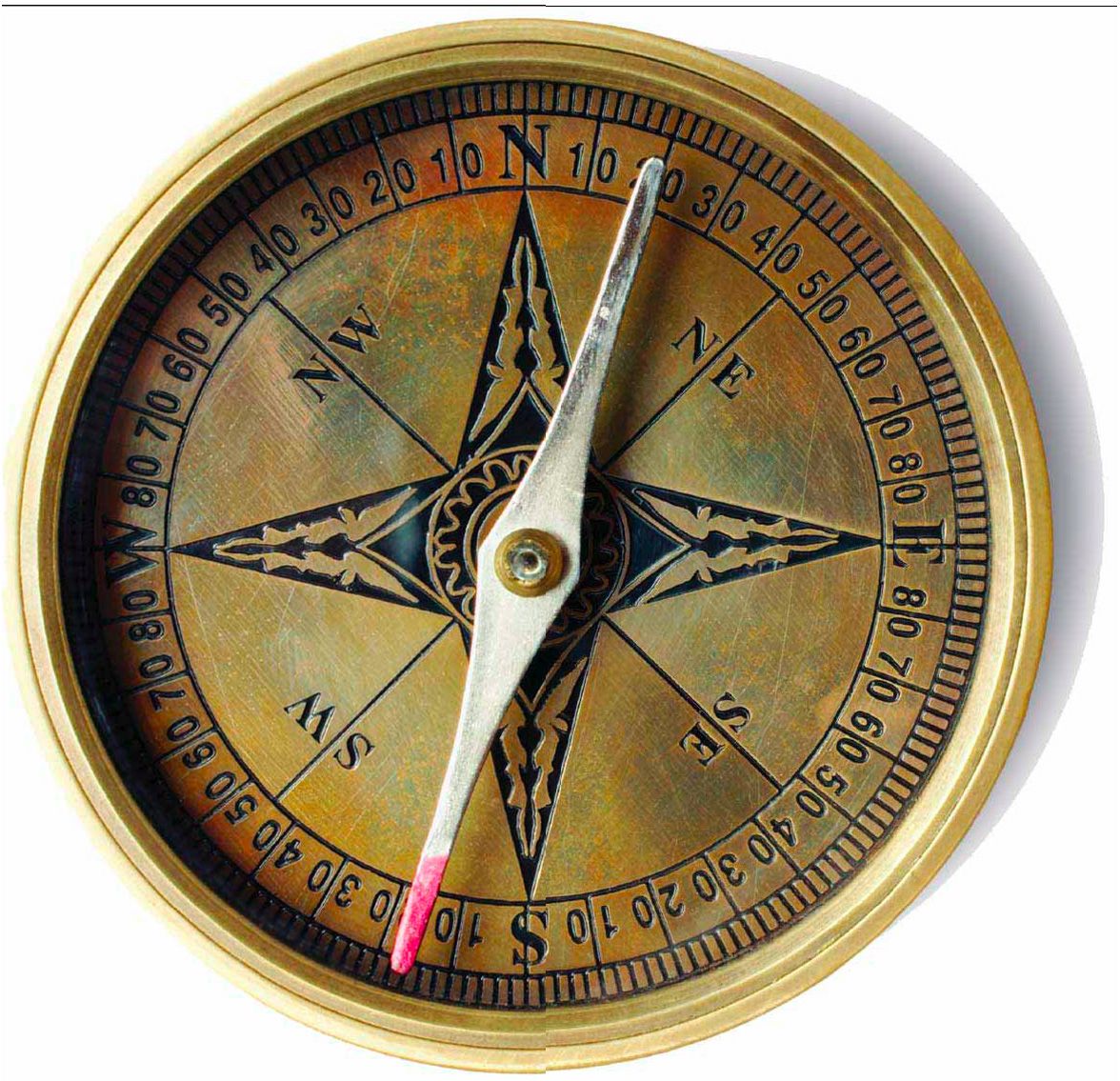
compass-wrong way


Blessed is the nation whose God is the LORD; and the people whom he hath chosen for his own inheritance. (Psalm 33:12)

I have watched with alarm the rapid decline of our nation, these United States of America, especially since the ascendance of the current administration. I have lived long enough to have witnessed the assassination of John F. Kennedy, the Civil Rights marches lead by Martin Luther King, Jr. and his subsequent assassination. I watched in detached amusement the antics of the “flower children” with their message of “make love, not war” as they incoherently protested the war in Viet Nam while “spaced out” on mind altering drugs. “Weirdoes,” I thought as I ignored their protests and enlisted in the Navy to serve my country; it was the right thing to do. Many of those weirdoes are now in positions of power in our national government. Lord, help us!

Because that, when they knew God, they glorified him not as God, neither were thankful; but became vain in their imaginations, and their foolish heart was darkened. Professing themselves to be wise, they became fools (Romans 1:21-22).

As a young child in elementary school, I remember standing to pledge allegiance to the flag followed by a reading of a Psalm or Proverb, followed by a time of prayer. That ended in 1963. I was thirteen. Not long after, I witnessed the rise of the hippie movement. They must have been a minority because all the people I grew up around were relatively “normal” (as in “not hippies”). Did I mention that these people are now in positions of power in our national government?

Wherefore God also gave them up to uncleanness through the lusts of their own hearts, to dishonour their own bodies between themselves: Who changed the truth of God into a lie, and worshipped and served the creature more than the Creator, who is blessed for ever. Amen. (Romans 1:24-25)

Just ten years later, in 1973 the Supreme Court ruled on Roe v. Wade and the American holocaust began. The hippies introduced “free love,” free love generated unwanted babies, and Roe v. Wade “fixed” the problem. Since that time, over 56 million babies have been murdered – all in the name of women’s rights.

For this cause God gave them up unto vile affections: for even their women did change the natural use into that which is against nature: And likewise also the men, leaving the natural use of the woman, burned in their lust one toward another; men with men working that which is unseemly, and receiving in themselves that recompence of their error which was meet (Romans 1:26-27).

During my time of service in the US Navy, a gay (we called them something else back then) sailor kept his “persuasion” to himself otherwise he might find himself lost at sea or dishonorably discharged, if he was lucky. In the 1990s, several studies were done by Simon LeVay and others to determine a physiological cause for homosexual behavior. The effort was spurred on by the desire to “normalize” the behavior by suggesting that these individuals could not alter their predisposition to homosexuality; therefore, they argued, they must be legally protected against such things as being thrown overboard in dark seas or being dishonorably discharged from military service. This lead to the “Don’t ask, don’t tell” (DADT) policy adopted by the military in 1993. The current Commander-in-Chief now encourages military personnel to openly reveal their sodomitic tendencies without fear of repercussion. On the other side, “straights” who harass sodomites in any way are subject to disciplinary action. Of course, this deviant behavior has been around since the beginning of time, but it has always been recognized by the majority of society as “deviant behavior.” Now we are all expected to embrace it as normal.

And even as they did not like to retain God in their knowledge, God gave them over to a reprobate mind, to do those things which are not convenient … Without understanding, covenantbreakers, without natural affection, implacable, unmerciful: Who knowing the judgment of God, that they which commit such things are worthy of death, not only do the same, but have pleasure in them that do them. (Romans 1:28, 31, 32)

Following the “scientific” studies performed in the 1990s the rise of the “gay pride” movement really took off, and these people became ever more aggressive, demanding that their “rights” be asserted, and even more, that they be affirmed as “normal.” Moreover, anyone not in full support of their agenda was labeled as a “hater” and intolerant. Intolerant “homophobes” were not to be tolerated. Now in the 21st Century, they demand that their same-sex unions be legitimized in the same way as heterosexual marriages, with all the same rights and privileges. Just this week (February 26, 2014), US Federal Judge Orlando Garcia declared Texas’ ban against same-sex marriage unconstitutional, which he alleges is in violation of the 14th Amendment of the United States Constitution. The decision is not yet final, but the gay community wasted no time showing up in force to celebrate a victory. That remains to be seen. However, the efforts of this group have made considerable inroads in other states. The strategy of the gay agenda is for gay “couples” to marry in states where it is legal and then move into states where it is not legal and force those states through litigation to recognize their unions as legitimate marriage. Their plan seems to be working.

This century is only 14 years old and I see the rapid demise of our nation as it spins ever faster in a vortex to a dark abyss. Our national debt increased over 7 Trillion (that is 7 followed by 12 zeroes) just during the reign of this current administration. With a massive debt well over 17 Trillion dollars one would think that wisdom would prevail, but our leaders go right on spending. The rhetoric of austerity gushes from “conservative” mouths in feigned antipathy to the looming economic disaster, but when the cameras are off, they return to business as usual and nothing is done. Our economy is on the verge of collapse, and all we get from the politicians is talking points.

Our nation has lost its standing in the world. No longer do we pose a threat to hostile nations. Our President issues meaningless ultimatums that go unheeded. No longer can our allies depend on our support. The nation of Israel may as well face her enemies on her own. Fortunately for Israel, she has the promise of God’s protection whether she realizes it or not. The bottom line is that the United States of America is no longer the country I was born to. It has devolved into something less. The glory days are over.

I hear well-meaning preachers and other Christians call us to pray for our nation. They remind us of the Word of God that says, “If my people, which are called by my name, shall humble themselves, and pray, and seek my face, and turn from their wicked ways; then will I hear from heaven, and will forgive their sin, and will heal their land” (2 Chronicles 7:14). However, I have come to the conclusion that this prayer, when applied to our nation, is contrary to the will of God. In the first place, God was addressing the nation of Israel at the dedication of Solomon’s Temple. God knew that Israel would be unfaithful to Him, and that unfaithfulness would bring God’s judgment on the land. But He promised them that if they repented, He would restore and heal their land. The promise applies specifically to Israel, and does not have broad application to all nations.

More broadly applicable is our leading verse: “Blessed is the nation whose God is the LORD; and the people whom he hath chosen for his own inheritance” (Psalm 33:12). However, as I attempted to demonstrate, our nation has long abandoned the Lord. Our sick, politically correct society bristles at any public display of Christianity, or any reference to God. We have gone beyond the point of no return and as described in Romans 1:28 says, “And even as they did not like to retain God in their knowledge, God gave them over to a reprobate mind, to do those things which are not convenient” (emphasis added). A “reprobate mind” is a mind that is unapproved, rejected, worthless, i.e., a mind that is unable to think correctly. “Woe unto them that call evil good, and good evil; that put darkness for light, and light for darkness; that put bitter for sweet, and sweet for bitter!” (Isaiah 5:20, emphasis added). What an apt description of our current state! Are we, as Christians, called to ask God to bless that which He has cast off?

As I considered this, it occurred to me that the United States of America is not my country. “For our conversation is in heaven; from whence also we look for the Saviour, the Lord Jesus Christ” (Philippians 3:20). That King James word “conversation” is the Greek politeuma from which we get our English word “politic.” It could better be translated “community” or “citizenship.” Paul says that for the Christian, our citizenship resides in heaven, not here on earth. Before the cross, Jesus prayed for His disciples and for us saying, “I pray not that thou shouldest take them out of the world, but that thou shouldest keep them from the evil. They are not of the world, even as I am not of the world” (John 17:15-16, emphasis added).

Romans 13 admonishes us to be law abiding under whatever government we are subject. As long as the law of the land does not violate the law of God, we are to obey. We are also to pray for our leaders. Paul exhorts Timothy (and us):

I exhort therefore, that, first of all, supplications, prayers, intercessions, and giving of thanks, be made for all men; For kings, and for all that are in authority; that we may lead a quiet and peaceable life in all godliness and honesty. For this is good and acceptable in the sight of God our Saviour; Who will have all men to be saved, and to come unto the knowledge of the truth. (1 Timothy 2:1-4, emphasis added)

This seems straightforward and unconditional. Since only God can judge the heart, only He can determine when a person is permanently lost. His desire is the salvation of all men, therefore to that end we must pray for our leaders. The nation may be lost, but individuals can still be saved.

I have concluded that our nation is lost. God’s judgment is on our nation. As a nation, we have gone beyond the point of no return. As our Lord’s return approaches ever nearer, our prayer should not be for the restoration of our nation, but for the coming of His Kingdom – “Thy kingdom come. Thy will be done in earth, as it is in heaven … For thine is the kingdom, and the power, and the glory, for ever. Amen” (Matthew 6:10, 13).  This world, this nation, is not our home.

Related Articles:

Sad Old Flag

Infanticide

Fear the Lord

3 Comments

Filed under Apologetics, Christianity, Current Events, End Times, Politics, Religion, Salvation, Second Coming of Christ, Theology

The Exceptions

Fallen Angels

“… and they that dwell on the earth shall wonder, whose names were not written in the book of life from the foundation of the world …” (Revelation 17:8)

In my last post, “The Book of Life” I talked about the Book of Life that will be opened at the Great White Throne Judgment. Anyone whose name is not found written in the Book of Life is sentenced to an eternity in hell. I also expressed my understanding that everyone who has ever been born has their names written in the Book of Life initially, but whether they remain there depends on how they respond to God’s offer of salvation.

I said this was true with some exceptions, but I did not want to go into the details at that time. The reason I did not elaborate on the “exceptions” is because it might sound a little strange or even weird to some people, and trying to explain it in one or two paragraphs would be next to impossible. In fact, books have been written on the subject, so it would be difficult to explain in just a few words.

Just by way of disclaimer: what I am suggesting in the following paragraphs should not be taken as “gospel.” These are simply my thoughts based on studies that I have done, and are not meant to represent any kind of ecclesiastical dogma. There are many things in God’s Word that are not made clear to us, and to attempt to build a case on a shaky foundation is simply foolish. So, I recommend a healthy dose of skepticism before continuing. You may think I am full of bologna, and that is fine. This is something I “think” is true, but I wouldn’t bet my next paycheck on it. So, read on.

You remember in Genesis 3 that Satan came to Eve in the form of a serpent and tempted her to eat of the fruit of the Tree of the Knowledge of Good and Evil. She then shared the fruit with Adam who also ate of the fruit so that both sinned by disobeying God’s only commandment – that they should not to eat of that tree. God punished them, as He had warned them, by causing them to die in two ways: (1) they would no longer live forever (when God created man, He intended them to live forever), and (2) they were separated from their Creator. This is what we know as original sin, and all generations since Adam and Eve have inherited original sin. We all have a “sin nature.” That is why the Bible says that “all have sinned and come short of the glory of God” (Romans 3:23, emphasis added). God also cursed the ground from which man was taken so that all of God’s creation suffers because of man’s sin. “For we know that the whole creation groaneth and travaileth in pain together until now” (Romans 8:22, emphasis added). Adam’s punishment was that work would be hard for him, and Eve’s punishment was that she would have pain in bearing children.

Following that (about 1600 years later), we are told that violence increased in the world. “And GOD saw that the wickedness of man was great in the earth, and that every imagination of the thoughts of his heart was only evil continually. And it repented the LORD that he had made man on the earth, and it grieved him at his heart” (Genesis 6:5-6). That was bad enough, but the first verses of Genesis 6 talks about something that is very strange, and has puzzled biblical scholars for ages . It says:

1 And it came to pass, when men began to multiply on the face of the earth, and daughters were born unto them,
2 That the sons of God saw the daughters of men that they were fair; and they took them wives of all which they chose …
4 There were giants in the earth in those days; and also after that, when the sons of God came in unto the daughters of men, and they bare children to them, the same became mighty men which were of old, men of renown. (Genesis 6:1-2, 4, emphasis added)
 

The “sons of God” in the Hebrew is bene elohim. This term always refers to angels in the Old Testament. (See Job 1:6; Job 2:1; and Job 38:7.) There are two kinds of angels: Satan’s angels (demons) and God’s angels. (Something to keep in mind is that even the devil is God’s devil. God created him, and he rebelled against God. But the devil (Satan) cannot do anything without God’s permission. This is demonstrated in the first three chapters of Job.) So, these demons “mated” with human females to create a mighty race of men. Now, angels cannot procreate directly, so what probably happened is that these demons possessed human males in order to mate with the human females. This somehow altered the DNA of the children born from these demonic unions so that they created “giants.” The Hebrew word used for “giants” is nephalim, and it literally means “fallen ones.”

Imagine just how bad things got that God felt He had to destroy them all. “But Noah found grace in the eyes of the LORD” (Genesis 6:8) and “Noah was a just man and perfect in all his generations, and Noah walked with God” (Genesis 6:9, emphasis added). The phrase that Noah was “perfect in all his generations” does not mean that he was sinless. Remember, “all have sinned.” What this means, then, is that his blood line was not contaminated by the satanic unions of the others.

When I say that there are “some exceptions,” this is to what I’m referring. Revelation 17 discusses the apostate church during the Tribulation who the Antichrist will eventually destroy. About those who follow that apostate church it says, “The beast that thou sawest was, and is not; and shall ascend out of the bottomless pit, and go into perdition: and they that dwell on the earth shall wonder, whose names were not written in the book of life from the foundation of the world, when they behold the beast that was, and is not, and yet is” (Revelation 17:8, emphasis added). It is very clear that these were never written in the Book of Life – “from the foundation of the world.” It is as if these were never meant to be born.

One would think that the Global Flood should have taken care of all of the “bad seed.” Well, perhaps not all of them. As we continue the narrative in Genesis 6, God sent the Flood that covered the entire earth for almost a whole year. The Bible tells us that Noah and his wife and his three sons and their wives were in the Ark for 371 days, before the earth was once again livable.

Then follows an incident where Noah got drunk, and his son Ham saw him naked (Genesis 9:20-29). Ham, instead of covering his father went and told his brothers, Japheth and Shem. So they went into Noah’s tent backward so as not to see the nakedness of their father and they covered him up. When Noah awoke from his drunk and discovered what Ham had done, he cursed Canaan, Ham’s youngest son. So the question is, why did Noah curse Canaan and not Ham or Ham’s other sons? The answer may be that Ham’s wife may have carried some of the “bad seed” of the Nephalim in her, and it showed up in Canaan. One of the characteristics of Nephalim is that they had six fingers. (Goliath’s father had six fingers on each hand and six toes on each foot (2 Samuel 21:20).) Canaan was probably born with six fingers and when Noah saw it, he cursed him. So, some of these probably still exist in our world today with or without six fingers, but God knows who they are. These would not qualify to be written in the Book of Life.

Canaan’s descendants settled in the “Land of Canaan” which was given to Abraham and his descendants (Genesis 13:14-18; 15:18-21). Genesis 10:15-20 describes who these people were and where they settled. “And the border of the Canaanites was from Sidon, as thou comest to Gerar, unto Gaza; as thou goest, unto Sodom, and Gomorrah, and Admah, and Zeboim, even unto Lasha” (Genesis 10:19). These are the people that the children of Israel had to face when they entered the Promise Land. As they prepared to enter into the land, 12 spies were sent in to spy out the land and report back what they encountered. The book of Numbers records the bad report returned by 10 out of the 12 spies. “And there we saw the giants, the sons of Anak, which come of the giants: and we were in our own sight as grasshoppers, and so we were in their sight” (Numbers 13:33). Again, here the Hebrew word for “giants” is nephalim – the “fallen ones.” In The Henry Morris Study Bible, Dr. Morris makes this note about this verse:

There were also other tribes of giants in the land. “That was also accounted a land of giants: giants dwelt therein in old time; and the Ammonites call them Zamzummims; A people great, and many, and tall, as the Anakims” [i.e., sons of Anak] (Deuteronomy 2:20, 21). Here, and in a number of other passages, the word for “giants” is Rephaim, evidently a tribe descended from the “Rephaims” associated with the “Zuzims” and the “Emims” of Genesis 14:5. The Emims also were called “a people great, and many, and tall, as the Anakims” (Deuteronomy 2:10).

All of these references indicate that there had been another irruption of the fallen “sons of God” just as in the days before the Flood. This time the irruption was probably in connection with the events surrounding the rebellion at Babel and the subsequent worldwide dispersion of the occult religious system introduced there. These demon-possessed men and women became the progenitors of tribes characterized by giantism, just as in the antediluvian days. (http://www.icr.org/bible/numbers/13:33/)

So, it is apparent that these nephalim somehow managed to survive the Flood. These who survived were descendants of Canaan, which explains why Noah cursed Canaan and not Ham. Oh, and by the way, Ham begat other sons before Canaan: Cush, Mizraim (Egypt), and Phut. Canaan was the youngest, but evidently, he carried the “bad seed.”

Now, to further complicate things, I am sure you have heard of UFOs and of aliens abducting humans. I believe (and I am not alone in this) that these are demons that are doing the same thing today as they were doing back in Genesis 6. (See my article “Aliens?”) These creatures, that may look very human, were never meant to be born, so their names are not written in the Book of Life.

Unless you are one of the nephalim (and you probably are not, if you are reading this), your name is written in the Book of Life. My question to you would be, is your name permanently written in the Book of Life, or is there a possibility that it could be blotted out? That choice is up to you.

Watch “On the Trail of the Nephalim” on YouTube with L.A. Marzulli.

Comments Off on The Exceptions

Filed under Apologetics, Christianity, Creation, Current Events, End Times, Evangelism, Evolution, Gospel, Heaven, Hell, Origins, Religion, Salvation, Second Coming of Christ, Theology, UFOs