Tag Archives: Creation

What You Don’t Know

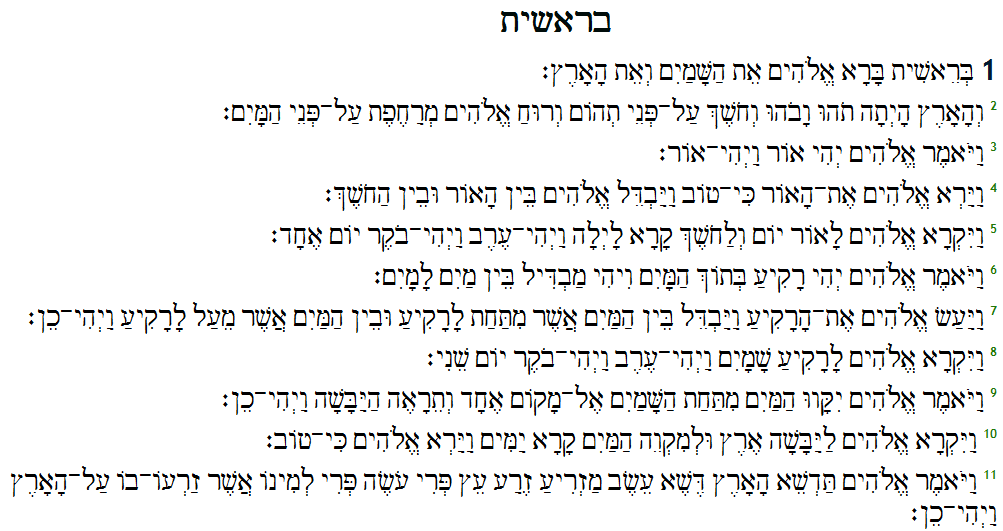
Genesis1

And Jesus answering said unto them, Do ye not therefore err, because ye know not the scriptures, neither the power of God? (Mark 12:24)

Jesus faced His crucifixion just days away. Jerusalem was already in full Passover mode as Jews descended on the capital city from all over the Roman world. This was one of three holy convocations where Jews were to gather to celebrate the Feasts of the Lord (Leviticus 23). The Jewish religious leaders were already plotting to have Jesus killed, but because of His popularity, they couldn’t just kill Him. They had to bring up charges against Him that would warrant execution, so they tried to trip Him up with questions regarding their Jewish laws and traditions.

So it was in this case. First they approached Him with a question on paying taxes to Rome. They first tried to butter Him up with false flattery: “Master, we know that thou art true, and carest for no man: for thou regardest not the person of men, but teachest the way of God in truth” (Mark 12:14). They addressed Him as “Master,” i.e., “teacher,” yet they disregarded His teaching even though they stated that He “taught the way of God.” Their question failed to challenge Jesus. The answer was easy: “Render to Caesar the things that are Caesar’s, and to God the things that are God’s” (Mark 12:17).

The Sadducees, who “say there is no resurrection” (Mark 12:18), followed up with a question concerning the resurrection. Their question was well thought out – they thought. Seven brothers had the same wife, and they all died including the wife. In the resurrection, whose wife shall she be? Aha! Answer that one, Jesus! Jesus replied that there is no marriage in heaven, but before giving His answer, He chided them for their ignorance of Scripture and consequently the power of God (our verse above).

We do often err because we “do not know the Scriptures.” It’s no great challenge to find this ignorance working in a non-believing world, but it’s sad to find the same ignorance, albeit perhaps not as pronounced, among “believers.” One common example is the controversy over creation. Did God cause the Big Bang and then use millions of years of death and suffering to create life by means of evolution? Or did God create in six 24-hour days as clearly recorded in Genesis 1?

Those believers that support the Big Bang and evolution come in different varieties, but they all prefer “science falsely so called” (1 Timothy 6:20) over the clear teaching of Scripture. They hold the word of man in higher regard than the Word of God. They do err because they “know not the scriptures, neither the power of God.” The power of God! God says, “My counsel shall stand, and I will do all my pleasure” (Isaiah 46:10). “I the LORD have spoken it, and I will do it” (Ezekiel 36:36). “And Jesus looking upon them saith, With men it is impossible, but not with God: for with God all things are possible” (Mark 10:27). If God cannot do what He clearly said He did in Genesis 1, then neither can He part the waters of the Red Sea, cause the Sun to stop, or turn back ten degrees, make an ax head float, cleans a leper’s spots, turn water into wine, walk on water or calm the raging sea. If God cannot create as He said He did in Genesis 1, neither can He raise the dead, much less raise Himself from the dead. You do err because you do not know the Scriptures, and because you do not know the Scriptures, you do not know the power of God. What you don’t know can lead you astray. Jesus said, “Search the scriptures; for in them ye think ye have eternal life: and they are they which testify of me” (John 5:39).

Comments Off on What You Don’t Know

Filed under Apologetics, Christianity, Creation, Easter, Evolution, Gospel, Origins, Religion, Resurrection, Science, Theology

No Time Like the Present

timeflies

… behold, now is the accepted time; behold, now is the day of salvation. (2 Corinthians 6:2)

We understand time in three phases: past, present, and future. We receive wise counsel not to live in the past while at the same time we are advised to plan for the future. Indeed, even the Apostle Paul exhorts, “Brethren, I count not myself to have apprehended: but this one thing I do, forgetting those things which are behind, and reaching forth unto those things which are before, I press toward the mark for the prize of the high calling of God in Christ Jesus” (Philippians 3:13-14). Our minds help us in regard to the past by minimizing bad memories and enhancing the good ones. This is healthy for when we latch on to bitter memories, the effects degrade both our physical and mental health. If we focus too much on the future, we can set ourselves up for disappointment, if we fail to accomplish unrealistic goals.

Either dwelling too much on the past or focusing too much on the future can both have negative effects on our lives, so we are encouraged to live in the present. “Take time to smell the roses,” we are told. Recently, this has given me cause to ponder. Just how long is the present that we should dwell therein? A minute? A second? A millisecond? A nanosecond? Time constantly moves forward with no stops. In the blink of an eye, the present becomes the past, while in the same instant we arrive in the future and then that is gone. The question is really an existential one since it deals with our existence and experience. We experience life through our senses: touch, sight, taste, hearing, and smell. These all employ our nervous system with the brain and all of its complex network of nerves. So I thought perhaps the present has to do with the speed of nerve impulses. “Scientists have an idea how fast nerves send signals. It varies among different animals and humans, but in general, one can say it is very fast, on the order of 115197 ft/sec (3560 m/sec).”[1] That is amazingly fast, but even at that the nerve impulse itself has a start and stop time, so it too moves from the past into the future with no hesitation.

So, how long is the present? Apparently, the present cannot be measured by time, so this must be a philosophical question. I asked a coworker, whose opinion I value highly, how long he thought the present could be. He said the present does not exist. Similarly, I asked an astrophysicist friend, and he said suggested that it was zero. Both of these answers make sense to me because time is constantly moving forward. I envision standing on the zero point on a line graph that continually moves beneath me from positive to negative-positive being the future and negative being the past. I operate from the zero point as time whizzes by me, but what I do at the zero point – the present – influences the future that comes at me.

I posed the same question to my oldest son. He’s pretty smart in his own right, and he gave me the most provocative response of all. He said, “The present is eternal.” I do not know if he fully understood the ramifications of such a profound statement. For starters, God is eternal, and He identifies Himself to Moses as “I AM THAT I AM” (Exodus 3:14). He is ever-present. We understand that God is unfettered by time, so He is present at every point in time. He is present in the past and in the future simultaneously. That is why He could say to the Prophet Jeremiah, “Before I formed thee in the belly I knew thee; and before thou camest forth out of the womb I sanctified thee, and I ordained thee a prophet unto the nations” (Jeremiah 1:5). God can accurately foretell the future because He exists in the future. He is eternally present.

Unlike God, we are confined by time. We can only experience time at point zero, and that only for the briefest of moments. We experience the future as it passes us by, but our actions in that brief moment affect the unseen consequences that lie ahead. God created us in His image (Genesis 1:26), and as such we are eternal beings. Unlike God, we have a beginning and no end, and again, we exist at point zero. Our actions, therefore, incur eternal consequences. When Adam and Eve disobeyed God in the Garden of Eden (Genesis 3), they caused an eternal rift between God and mankind (Genesis 3:22) that affected all of their posterity – you and me. Their offense and our subsequent sins offend an eternal and holy God, and the offense is eternal. Since the offense is eternal, the consequence is also eternal, and therefore must be atoned for eternally. Hell is eternal because the offense is eternal, therefore the punishment must be eternal.

The good news is that God granted a way of escape from the eternal punishment that we all deserve. I AM is present in all of time from creation to re-creation; so that

Forasmuch as ye know that ye were not redeemed with corruptible things, as silver and gold, from your vain conversation received by tradition from your fathers; But with the precious blood of Christ, as of a lamb without blemish and without spot: Who verily was foreordained before the foundation of the world, but was manifest in these last times for you, Who by him do believe in God, that raised him up from the dead, and gave him glory; that your faith and hope might be in God. (1 Peter 1:18-21, emphasis mine)

At the perfect time (Galatians 4:4), God stepped out of eternity into our present time in the form of the first, sinless Adam, to offer up Himself as the perfect atoning sacrifice for all of mankind. That sacrifice had the eternal effect of mending the eternal rift between God and mankind.

But the remedy is not universal, and it is not automatic. Each individual must make the choice for himself. Making the right or wrong decision in the present will settle your fate for all eternity. “But as many as received him, to them gave he power to become the sons of God, even to them that believe on his name: Which were born, not of blood, nor of the will of the flesh, nor of the will of man, but of God” (John 1:12-13).

And as Moses lifted up the serpent in the wilderness, even so must the Son of man be lifted up: That whosoever believeth in him should not perish, but have eternal life. For God so loved the world, that he gave his only begotten Son, that whosoever believeth in him should not perish, but have everlasting life. (John 3:14-16, emphasis mine)

The present is eternal after all. There is no time like the present to change the course of your eternity.

 Notes:


[1] From http://scienceline.ucsb.edu/getkey.php?key=1950, accessed January 16, 2015.

Comments Off on No Time Like the Present

Filed under Apologetics, Christianity, Creation, Evangelism, Gospel, Hell, Philosophy, Religion, Salvation, Theology

Did God Create Evil?

And, having made peace through the blood of his cross, by him to reconcile all things unto himself; by him, I say, whether they be things in earth, or things in heaven. (Colossians 1:20)

Question: Because the Lord is the Creator of all, He brought also evil in the universe. Did He do penance, when He died on the cross?

Answer: To accuse God of creating evil is a misunderstanding of God’s nature. The Bible says:

Let no man say when he is tempted, I am tempted of God: for God cannot be tempted with evil, neither tempteth he any man: But every man is tempted, when he is drawn away of his own lust, and enticed. (James 1:13-14, emphasis mine)

God did not create evil or sin, but in His wisdom “allowed” for it. Having created man in His own image (Genesis 1:26), He gave man the option to obey or disobey, to accept God or reject Him, to love Him or not to love Him. Without that option, we would be no more than androids that only function according to the programming of the designer. Without the option, it would be impossible for us to have a “personal” relationship with our Creator.

Therefore, it is not for His sin that Jesus died on the cross, but for ours. When you think about it, that is pretty incredible that God, should take upon Himself the penalty for our sin in order to restore the broken relationship between man and his Creator (Philippians 2:5-11) .

7 Comments

Filed under Apologetics, Atheism, Christianity, Creation, Evangelism, Gospel, Origins, Religion, Salvation, Theology

Proof of God

Big Bang or God?

Big Bang or God?

And God said unto Moses, I AM THAT I AM: and he said, Thus shalt thou say unto the children of Israel, I AM hath sent me unto you. (Exodus 3:14)

When someone asks, “What solid proof exists that there is a God who created everything?” that really is a foolish question. In order to “Answer a fool according to his folly, lest he be wise in his own conceit” (Proverbs 26:5), one must respond with a similar question: “What solid evidence is there that everything resulted from the Big Bang?” The God denier will attempt to make a case for the Big Bang by citing scientific consensus, but if pressed hard enough, he will have to concede that there is no “solid evidence” for the Big Bang. Hopefully, that should level the playing field.

Neither divine creation, nor the Big Bang can be proven with “solid” evidence because there was no one around to witness either one. So, we have to start with what we can observe. That is what true science is all about anyway – making observations, predictions and experiments. We cannot observe what is in the past, therefore we cannot make predictions about it because we are living the results of the past, and we cannot perform experiments to produce similar results. So, neither creation nor the Big Bang can be proven scientifically.

We are left with only what we can see today. The science that we use today is empirical science, and it is responsible for our advances in technology and medicine, but it does not tell us anything about the past. What one believes about origins has absolutely nothing to do with how one conducts empirical science. A medical doctor can be an excellent neurosurgeon regardless of whether he is an evolutionist or a creationist. Take Dr. Benjamin Carson, for example. He is a creationist, but that has not prevented him from being one of the foremost pediatric neurosurgeons in the world. (See article by ICR: http://www.icr.org/article/benjamin-carson-pediatric-neurosurgeon-with-gifted/)

The discussion of origins, then, falls into the realm of philosophy (from the Greek meaning “the love of wisdom” or “knowledge”) or theology (i.e., the study of God). Dealing in that realm involves looking at the available evidence, like the human genome, the fossil record, archeological records, ancient historical records, the Bible, etc. The investigator must then interpret the evidence and make a determination about what it reveals. This is called forensic science, and it is very subjective depending on the investigator’s presuppositions. If the investigator is an evolutionist and believes the earth is 4.5 Billion years old, he will interpret the evidence one way. If the investigator is a creationist, he will interpret the evidence another way.

So, what does this say about God? Well, the Institute for Creation Research (ICR) does a lot of scientific research on matters touching the Bible. ICR has highly qualified Ph.Ds. in micro-biology, physics, nuclear physics, astrophysics, and geology. ICR’s research has disproven evolution in the fields of biology, geology and cosmology. All their findings are published on their website and can be searched at http://www.icr.org/home/search/.

So, if we have disproven the Big Bang and evolution – order out of chaos – then what is left? Everything we observe in our universe shows signs of “design.” Everything that exists is designed with a purpose. So what does design require? It requires a designer. And what does a designer require? A designer requires intelligence! Scientists have only probed the surface of the intelligence contained in DNA. DNA in a human being is the specific instructions that make you unique to every other human being in the world or that has ever lived. But writing the programming code that makes you YOU, requires intelligence.

When someone writes an email to me, I naturally assume that it was thought out and written by an intelligent human being. It never occurs to me that some disturbance in the cosmos – a solar flare or a super nova – assembled thousands of ones and zeroes in the internet cloud in the correct order to produce intelligent communication directed specifically to me in the form of an email. That is just as ridiculous as believing that all the design and order we observe in our universe was some random, mindless accident caused by an inexplicable Big Bang.

There is intelligence – super intelligence – behind all that we see and experience. For those who reject the idea of a supreme being – i.e. God – they have to attribute the design to some other intelligence, i.e., ancient aliens, or the seed of life arriving to this planet on an asteroid, or something like that. But then, if you follow that line of reasoning, where did they get their intelligence, and on and on ad infinitum? There is no satisfactory answer in that! So, now what?

The Bible says, “In the beginning, God …” (Genesis 1:1). When Moses asked God for His name, He said “I AM THAT I AM” (Exodus 3:14). In other words, what God was saying is that He is the “Ever-Existent-One.” He has always existed, even before time began. He has no beginning and no end. When you think of it logically, that is the only thing that really makes sense. You understand by experience that any created thing is always subordinate to its creator. Just think about that for a moment. Can you name anything created by man that is greater than man? Even the world’s greatest super computer is not greater than man, and it is subject to its designer and programmer. It cannot even begin to compare to its creator.

So, whatever or whoever got the cosmos going of necessity must be greater than all that exists. God says, “That is Me.” You can reject that, if you wish, but you would be hard pressed to prove it false because His creation is hard to refute. The Bible says that, “that which may be known of God is manifest in them; for God hath shewed it unto them. For the invisible things of him from the creation of the world are clearly seen, being understood by the things that are made, even his eternal power and Godhead” (Romans 1:19-20, emphasis added). God’s creation proves that God exists. Furthermore, the Bible says that every human being has this knowledge deep within the core of their very being. Perhaps that is why the question of God comes up in the first place. Something inside every person tells them that God really does exist, but there exists another part that wants to suppress that knowledge, therefore they want “proof.” Everyone already has all the proof they need, and “they are without excuse” (Romans 1:20). One just needs to move forward with the little knowledge of God that He has given. No one really needs “proof” of God.

8 Comments

Filed under Apologetics, Atheism, Christianity, Creation, Evangelism, Evolution, Gospel, Origins, Religion, Science, Theology

How Art Thou Fallen!

Angel of Light

How art thou fallen from heaven, O Lucifer, son of the morning! how art thou cut down to the ground, which didst weaken the nations! (Isaiah 14:12)

God deniers often challenge believers with the question of evil in the world. “If God is so good, why is there so much evil in the world?” Another closely linked question is “Why did God create Satan?” and “When did God create Satan?” My attempt to answer these questions follows.

God created Satan (his name is Lucifer) when He created the other angels. Angels were created early on during the week of creation (Genesis 1) – probably Day One or Day Two of creation. We get this from God’s response to Job’s questioning concerning the calamity that had befallen him. God asks Job:

Where wast thou when I laid the foundations of the earth? … When the morning stars sang together, and all the sons of God shouted for joy? (Job 38:4, 7, emphasis added)

“The morning stars” is used synonymously with “the sons of God” – Hebrew bene Elohim, which is used only in regard to angels in the Old Testament. From this we gather that the angels witnessed creation. Satan is included with “the sons of God.”

Now there was a day when the sons of God came to present themselves before the LORD, and Satan came also among them. (Job 1:6, emphasis added)

Again there was a day when the sons of God came to present themselves before the LORD, and Satan came also among them to present himself before the LORD. (Job 2:1, emphasis added)

Apparently by this time Satan, which means “accuser,” had already fallen, and he was actively attacking man. However, notice Who still has the final say – Satan still needed to get permission from God to attack Job. But when did Satan Fall? The Bible does not provide specific answers to this question, but we can at least conclude that it happened after creation was completed because we have God’s assessment of His finished product:

And God saw every thing that he had made, and, behold, it was very good. (Genesis 1:31, emphasis added).

God’s creation would not have been “very good,” if there were rebellion in the camp, and to suppose that perhaps God was unaware of a rebellion would be to deny God’s omniscience. So, sometime between God’s conclusion of creation and the Fall of man (Genesis 3), Satan rebelled against God. That brings up the question: Why would Satan rebel against God? We are given some hints in the books of Isaiah and Ezekiel.

How art thou fallen from heaven, O Lucifer, son of the morning! how art thou cut down to the ground, which didst weaken the nations! For thou hast said in thine heart, I will ascend into heaven, I will exalt my throne above the stars of God: I will sit also upon the mount of the congregation, in the sides of the north: I will ascend above the heights of the clouds; I will be like the most High. (Isaiah 14:12-14, emphasis added)

Thou [“king of Tyrus,” i.e., Satan] hast been in Eden the garden of God; every precious stone was thy covering, the sardius, topaz, and the diamond, the beryl, the onyx, and the jasper, the sapphire, the emerald, and the carbuncle, and gold: the workmanship of thy tabrets and of thy pipes was prepared in thee in the day that thou wast created. Thou art the anointed cherub that covereth; and I have set thee so: thou wast upon the holy mountain of God; thou hast walked up and down in the midst of the stones of fire. Thou wast perfect in thy ways from the day that thou wast created, till iniquity was found in thee. By the multitude of thy merchandise they have filled the midst of thee with violence, and thou hast sinned: therefore I will cast thee as profane out of the mountain of God: and I will destroy thee, O covering cherub, from the midst of the stones of fire. Thine heart was lifted up because of thy beauty, thou hast corrupted thy wisdom by reason of thy brightness: I will cast thee to the ground, I will lay thee before kings, that they may behold thee. (Ezekiel 28:13-17, emphasis added)

From this, especially from the Ezekiel passage, we can infer that Lucifer (“the king of Tyrus” i.e., Satan) was a high ranking angel – very likely an archangel. He was obviously very beautiful as his “covering” is described as beautiful gem stones. His name, Lucifer, means “shining one” or “day star,” therefore he must have been quite dazzling – very unlike the images of Satan we see depicted today. Notice also that his “sin” was the same sin with which he tempted Eve in the Garden: “ye shall be as gods, knowing good and evil” (Genesis 3:5).

Only three angels are named in the Bible: Lucifer, Michael, and Gabriel. Since these are the only three named, it is quite possible that these are the only archangels that God created. I arrive at this conclusion from what we read of the fall of Satan (the “old dragon”) found in Revelation 12:

And there appeared another wonder in heaven; and behold a great red dragon, having seven heads and ten horns, and seven crowns upon his heads. And his tail drew the third part of the stars of heaven, and did cast them to the earth: and the dragon stood before the woman which was ready to be delivered, for to devour her child as soon as it was born. (Revelation 12:3-4, emphasis added)

As noted in the Job passages above, angels are sometimes referred to as “stars.” That Satan drew “the third part of the stars of heaven” along with him indicates to me that these were the angels that were under his command, leaving the remaining two-thirds under the command of Michael and Gabriel.

It is conjecture on my part, but I believe the reason Satan rebelled was because he became jealous of man who was created in the image of God and given dominion over God’s creation.

And God said, Let us make man in our image, after our likeness: and let them have dominion over the fish of the sea, and over the fowl of the air, and over the cattle, and over all the earth, and over every creeping thing that creepeth upon the earth. So God created man in his own image, in the image of God created he him; male and female created he them. And God blessed them, and God said unto them, Be fruitful, and multiply, and replenish the earth, and subdue it: and have dominion over the fish of the sea, and over the fowl of the air, and over every living thing that moveth upon the earth. (Genesis 1:26-28, emphasis added)

Angels were not created in the image of God, nor were they given charge over God’s creation. That distinction was given to man; therefore Satan became jealous and plotted to cause man to fall. He thought “of himself more highly than he ought to think” (Romans 12:3) as described in the Isaiah and Ezekiel passages above. His sin was not in his thought, but in acting upon his thought and carrying out his plan to cause man to sin. This is probably where Satan fell.

There is evil in the world because of sin – rebellion – which was first birthed in the mind of Satan and brought to full fruition through man’s disobedience. Some may object that God should not have given man occasion to disobey by placing the tree of the knowledge good and evil in the garden, but love is a choice. God also provided another tree on a hill called Calvary. From that tree we are free to partake, “For God so loved the world, that he gave his only begotten Son, that whosoever believeth in him should not perish, but have everlasting life” (John 3:16). Love is a choice.

Comments Off on How Art Thou Fallen!

Filed under Apologetics, Atheism, Christianity, Creation, Evangelism, Gospel, Heaven, Hell, Origins, Religion, Salvation, Satan, Theology