Tag Archives: God

Priests and Wine

And the LORD spake unto Aaron, saying, Do not drink wine nor strong drink, thou, nor thy sons with thee, when ye go into the tabernacle of the congregation, lest ye die: it shall be a statute for ever throughout your generations: (Leviticus 10:8-9)

As a young adult being away from the watchful eye of my preacher father, I developed a problem with alcohol. No, I did not become an alcoholic, nor did I develop a habit of getting drunk – very often. I joined the Navy just before my 20th birthday, and I easily passed for 21, so I never encountered problems gaining admittance into bars. As a sailor, I felt encouraged to behave like a sailor and hit the bars with my Navy buddies. I tried hard not to allow myself to get drunk because I had seen how foolish drunks looked returning from “liberty” on a Friday night. I did not want to look like those guys!

The Holy Spirit strongly objects to His temples engaging in acts that do not pertain to them. As a result, I always experienced a twinge of guilt when I was out barhopping with my buddies. I could hear the Holy Spirit whisper in my ear, “My son, this is no place for you.” I attempted to atone for my sin by going to chapel on Sunday morning, but there I felt like a real hypocrite. As a result, I never felt comfortable in the bars or in church. I tried to rationalize my behavior by Scripture. The Bible does not say drinking is wrong. Even Jesus turned water into really good wine. The Bible only discourages getting drunk, and I was not doing that (except one or two times when a few got by me). However, the guilt never left me.

Finally, I yielded to the Holy Spirit. No more would I ride the fence. No longer would I “halt between two opinions.”[1] I determined never to touch any form of alcohol again, and so far, I have been faithful to that commitment. However, I still maintain that there is nothing “sinful” about having a glass of beer or wine with dinner as long as one practices moderation. Drunkenness is another matter altogether. Drunkenness is sin and is strongly discouraged in the Bible.[2] I have good Baptist friends who drink wine or beer occasionally, and I have no problem with that. If the Holy Spirit has not dealt with them as He did with me, what they do is between them and God. I love them and refuse to pass judgment on them. We are God’s children, and I think, as any parent, God deals with each one on an individual basis. “But why dost thou judge thy brother? or why dost thou set at nought thy brother? for we shall all stand before the judgment seat of Christ … I know, and am persuaded by the Lord Jesus, that there is nothing unclean of itself: but to him that esteemeth any thing to be unclean, to him it is unclean” (Romans 14:10, 14).

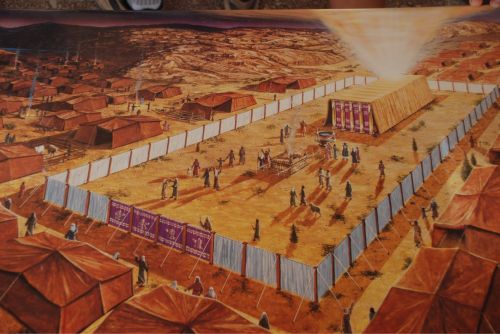
With that said, I would like to offer some food for thought and let the Holy Spirit use it as He sees fit. As I read the 10th chapter of Leviticus this week, I came across the instructions God gave to Aaron, Moses’ brother and newly installed High Priest. The instruction had to do with the priests that entered the Tabernacle to minister before the Lord. “And the LORD spake unto Aaron, saying, Do not drink wine nor strong drink, thou, nor thy sons with thee, when ye go into the tabernacle of the congregation, lest ye die: it shall be a statute for ever throughout your generations” (Leviticus 10:8-9, emphasis mine). The Hebrew word translated “wine” is yayin. It is “from an unused root meaning to effervesce; wine (as fermented); by implication intoxication,”[3] The Hebrew word translated “strong drink” is shêkâr, which is “an intoxicant, that is, intensely alcoholic liquor.”[4] Clearly, this is not talking about grape juice. It is worth noting that the prohibition was against drinking wine or strong drink, period. It is also worth noting that the prohibition specified serving in the Tabernacle. (Later the same would apply to the service in the Temple.) The prohibition did not apply to them when they were “off duty.”

I found that interesting, but how does that apply to us? Some will rightly point out that this was Old Testament Law which no longer applies to Christians of the New Testament era. Is that so? To those who reject the application of the Old Testament to our lives, allow me to remind you of what Jesus said, “For verily I say unto you, Till heaven and earth pass, one jot or one tittle shall in no wise pass from the law, till all be fulfilled” (Matthew 5:18). The New Testament did not exist when Jesus spoke these words; He referred to the only Scripture (Law) that existed in His time, the Old Testament. The Apostle Paul, who wrote 13 (arguably 14) of the New Testament books made countless references to the Old Testament. Every word of Scripture applies to us. We may be “under grace,” but that does not mean that the Law has become irrelevant. “What shall we say then? Is the law sin? God forbid. Nay, I had not known sin, but by the law: for I had not known lust, except the law had said, Thou shalt not covet” (Romans 7:7).

Well then, how does this prohibition given to Aaron and his sons, the priests of Israel, apply to us, who are “under grace”?

John, the beloved apostle, in his salutation to the seven churches of the Revelation said, “And from Jesus Christ, who is the faithful witness, and the first begotten of the dead, and the prince of the kings of the earth. Unto him that loved us, and washed us from our sins in his own blood, And hath made us kings and priests unto God and his Father; to him be glory and dominion for ever and ever. Amen” (Revelation 1:5-6, emphasis mine).

Later John observed the saints around the throne of God singing, “Thou art worthy, O Lord, to receive glory and honour and power: for thou hast created all things, and for thy pleasure they are and were created” (Revelation 4:11). “And they sung a new song, saying, Thou art worthy to take the book, and to open the seals thereof: for thou wast slain, and hast redeemed us to God by thy blood out of every kindred, and tongue, and people, and nation; And hast made us unto our God kings and priests: and we shall reign on the earth” (Revelation 5:9-10, emphasis mine).

Clearly, we who are born again (twice-born) and call ourselves “children of God” are “priests.” The job of a priest is to intercede between God and man (humans). A priest carries the petitions of man before God and takes the Word of God before men. Is that not what we do when we pray on behalf of others and share the Gospel with others? We are priests.

Now, as long as the priest is not ministering in the Tabernacle/Temple, he is free to drink wine or strong drink. So, we might assume that as long as we abstain on Sunday, when we go to church (the building), we are not in violation. Let us look at that a little closer.

In the Old Testament, God’s dwelling place was in the Temple. Even Jesus said as much. “And whoso shall swear by the temple, sweareth by it, and by him [God] that dwelleth therein” (Matthew 23:21). At the same time, Scripture is clear that God cannot be confined to a physical building.[5] “Howbeit the most High dwelleth not in temples made with hands; as saith the prophet” (Acts 7:48, emphasis mine). “God that made the world and all things therein, seeing that he is Lord of heaven and earth, dwelleth not in temples made with hands” (Acts 17:24, emphasis mine). In the Old Testament, God’s presence manifested in the Tabernacle and later in the Temple even though He is not confined to any one particular place. This has to do with God’s attribute of omnipresence.

The Temple in Jerusalem was destroyed in the year 70 A.D., so, where does God reside now? “Know ye not that ye are the temple of God, and that the Spirit of God dwelleth in you? If any man defile the temple of God, him shall God destroy; for the temple of God is holy, which temple ye are” (1 Corinthians 3:16-17, emphasis mine). “What? know ye not that your body is the temple of the Holy Ghost which is in you, which ye have of God, and ye are not your own? For ye are bought with a price: therefore glorify God in your body, and in your spirit, which are God’s” (1 Corinthians 6:19-20). As Christians, we confess Jesus as our Lord (Boss) and Savior and that His Spirit dwells/resides within us. If that is true, then we are the dwelling place, i.e., the Temple, of the Holy Spirit, and we are living temples not “made with hands.” We also acknowledge that the Holy Spirit is fully God. Therefore, because God dwells in us, we are living temples of God. Does God only dwell in His temples sometimes or always? Always, of course. God promises, “I will never leave thee, nor forsake thee” (Hebrews 13:5); therefore we are always His temples. At the same time, we are priests of God. We are priests occupying God’s temples continually. Since God prohibits His priests from drinking wine or strong drink while ministering in His temple, then it follows that we should abstain from wine and strong drink at all times. God has not abrogated this command simply because we are now living under the New Testament. Rather, the command has taken on greater significance. That is something to think about.

Notes:


[1]  1 Kings 18:21

[2]  1 Corinthians 5:11; Ephesians 5:18

[3] Definition from Strong’s Complete Dictionary of Bible Words

[4]  Ibid.
[5]  1 Kings 8:27; 2 Chronicles 2:6

5 Comments

Filed under Apologetics, Bible, Christianity, Religion, Theology

Stiffnecked

And the LORD said unto Moses, I have seen this people, and, behold, it is a stiffnecked people: (Exodus 32:9)

Stiffnecked—now there’s a word seldom heard today outside of careful Bible study. The English word, which should be hyphenated in modern English, appears only eight times in the Old Testament of the King James Bible and is really a translation of two Hebrew words: qâsheh and ‛ôreph (the nape of the neck). The first word, qâsheh, means “churlish, cruel, severe, obstinate, or stubborn.” This goes beyond simple hard-headedness. It characterizes an incorrigible, rebellious person, and it is not an attribute one would desire. Yet, in God’s evaluation of His Chosen People, He defined them as “stiffnecked.”

This assessment was not a rush to judgment on God’s part. These people earned the moniker. Consider how God acted on their behalf to free them from Egyptian bondage. God sent ten plagues against the Egyptians that effected only the Egyptians and spared the Israelites.[1] The final plague brought death upon every firstborn of every Egyptian household including their livestock. At the end of that plague, the Egyptians were only too happy to get rid of the Israelites and even sent them off with rich booty.[2] “And the Egyptians were urgent upon the people, that they might send them out of the land in haste; for they said, We be all dead men” (Exodus 12:33). Not long after they departed, Pharaoh changed his mind and followed in pursuit to bring them back to Egypt. Penned between mountains on one side and the Red Sea on the other, the Israelites witnessed God part the waters so they could cross over on dry ground. Then He closed the waters behind them and drowned the pursuing Egyptian chariots.[3] “And Israel saw that great work which the LORD did upon the Egyptians: and the people feared the LORD, and believed the LORD, and his servant Moses” (Exodus 14:31).

Not long after this miraculous deliverance, the Israelites arrived at a watering hole with bitter water and immediately started complaining.[4] God had Moses cast a tree into the watering hole and the waters became sweet. Then God made a conditional promise. “If thou wilt diligently hearken to the voice of the LORD thy God, and wilt do that which is right in his sight, and wilt give ear to his commandments, and keep all his statutes, I will put none of these diseases upon thee, which I have brought upon the Egyptians: for I am the LORD that healeth thee” (Exodus 15:26, emphasis mine).

Further down the road, they came to Elim and began complaining about their perceived lack of food. So God sent them manna (what is it? bread from heaven) and quail to eat.[5] Further along the way, they once again complained about the lack of water, so God provided water out of a rock.[6] God then defeated Amalek, the first enemy they encountered.

Then they arrived at Sinai, the Mountain of God. There, in the hearing of all the people, God gave them the Ten Commandments. They all heard the voice of God and were terrified. “And they said unto Moses, Speak thou with us, and we will hear: but let not God speak with us, lest we die” (Exodus 20:19). Moses ascended the mountain and wrote down the rest of the Law.[7] (At this point one should note that this occurred prior to Moses’ first 40-day stent on the mountain.) “And Moses wrote all the words of the LORD, and rose up early in the morning, and builded an altar under the hill, and twelve pillars, according to the twelve tribes of Israel … And he took the book of the covenant, and read in the audience of the people: and they said, All that the LORD hath said will we do, and be obedient” (Exodus 24:4,7 emphasis mine).

Hollywood movies have a way of distorting biblical accounts in ways that make them so memorable to the viewers that the Hollywood version supersedes the biblical narrative. In the movie, The Ten Commandments, Charlton Heston goes up the mountain to receive the Ten Commandments for the first time and returns to find the Children of Israel worshipping the golden calf. The movie plot kind of takes them off the hook a bit, because they did not know better; they did not have the Law. However, the biblical record shows that they were given the Law, written down by Moses, long before the golden calf incident, and they all agreed, “All that the LORD hath said will we do, and be obedient” (Exodus 24:7).

After all of Israel affirmed that they would abide by God’s Law, Moses ascended the mountain once more and received the Law written on stone tablets and was there 40 days and 40 nights.[8] “And he gave unto Moses, when he had made an end of communing with him upon mount Sinai, two tables of testimony, tables of stone, written with the finger of God” (Exodus 31:18, emphasis mine). These tables not only contained the Ten Commandments. They contained all the Law that the Children of Israel heard directly from God to which they agreed to obey. In addition, God gave Moses instructions for the construction of the Tabernacle and all of its furnishings. Great detail was given for consecrating the priests and the apparel they would wear, especially that of the high priest.

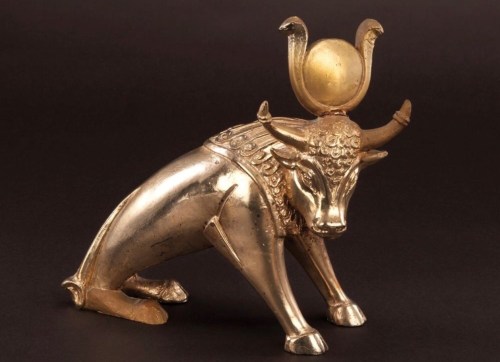
While Moses delayed, the people got antsy and went to Aaron, Moses’ brother and second in command, and asked Aaron, “make us gods, which shall go before us; for as for this Moses, the man that brought us up out of the land of Egypt, we wot [know] not what is become of him” (Exodus 32:1). As one reads the account, it becomes apparent that Aaron felt no coercion to comply with the request, nor did he hesitate. “And Aaron said unto them, Break off the golden earrings, which are in the ears of your wives, of your sons, and of your daughters, and bring them unto me” (Exodus 32:2). Aaron, who was intimately involved in the liberation of the Children of Israel, and heard the Ten Commandments directly from the voice of God, soon forgot the first two. “Thou shalt have no other gods before me. Thou shalt not make unto thee any graven image, or any likeness of any thing that is in heaven above, or that is in the earth beneath, or that is in the water under the earth” (Exodus 20:3-4).

Before Moses learned of the idolatrous act, God already knew. “And the LORD said unto Moses, I have seen this people, and, behold, it is a stiffnecked people” (Exodus 32:9). God threatened to destroy them all and start over with Moses, but Moses interceded on their behalf and the Lord relented from His anger.[9]

Moses descended the mountain and found a wild party going on around the golden calf. When Moses confronted Aaron about the idol, his answer was hilarious. “And I said unto them [the Israelites], Whosoever hath any gold, let them break it off. So they gave it me: then I cast it into the fire, and there came out this calf” (Exodus 32:24, emphasis mine). Imagine that!

This would not be the first exhibition of Israel’s stiffnecked behavior. Throughout their history, Israel chased after false gods. God would punish, Israel would repent, God would forgive, and Israel would sin again. This happened over and over. Once God banished them from the land for 70 years, and for a time, they appeared to learn their lesson. Then God sent their promised Messiah, and they rejected Him and nailed Him to a cross. Again, God banished them from the land for over 2000 years now. However, as God promised, He has restored them to the land; but the saga is not over. God is not finished with Israel.

The lesson we can learn from God’s dealings with Israel is that God is faithful. We can count on Him to do exactly what He says He will do. He keeps His promises. Before entering the Promised Land, Moses reminded the people, “The LORD did not set his love upon you, nor choose you, because ye were more in number than any people; for ye were the fewest of all people: But because the LORD loved you, and because he would keep the oath which he had sworn unto your fathers, hath the LORD brought you out with a mighty hand, and redeemed you out of the house of bondmen, from the hand of Pharaoh king of Egypt. Know therefore that the LORD thy God, he is God, the faithful God, which keepeth covenant and mercy with them that love him and keep his commandments to a thousand generations” (Deuteronomy 7:7-9, emphasis mine). Regardless of their stiffnecked character, God has kept and will keep His covenant with Israel. Knowing that gives us the assurance that God will be faithful in keeping His promise to us, “that whosoever believeth in him should not perish, but have everlasting life” (John 3:16). “For I am persuaded, that neither death, nor life, nor angels, nor principalities, nor powers, nor things present, nor things to come, Nor height, nor depth, nor any other creature, shall be able to separate us from the love of God, which is in Christ Jesus our Lord” (Romans 8:38-39). God is faithful even to the stiffnecked.

Notes:


[1]  Exodus 7-12

[2]  Exodus 12:36

[3]  Exodus 14:10-31

[4]  Exodus 15:22-27

[5]  Exodus 16

[6]  Exodus 17:1-7

[7]  Exodus 20:22-23:33

[8]  Exodus 24:12-18

[9]  Exodus 32:10-14

1 Comment

Filed under Bible, Gospel, Religion, Salvation, Theology

Old Testament Holy Spirit

And the LORD went before them by day in a pillar of a cloud, to lead them the way; and by night in a pillar of fire, to give them light; to go by day and night: He took not away the pillar of the cloud by day, nor the pillar of fire by night, from before the people. (Exodus 13:21-22)

We often think of the Holy Spirit, the Third Person of the Trinity, in New Testament terms. However, we have an abundance of evidence of His work in the Old Testament beginning with the first chapter of Genesis where He energizes Creation.[1] Pharaoh recognized the Spirit of God in Joseph,[2] and He filled certain men to endow them with wisdom, understanding, knowledge, and skill in all manner of workmanship.[3] The Spirit of God showed up at the completion of the Tabernacle in the wilderness,[4] and later in the dedication of Solomon’s Temple.[5] Other examples could be cited, but these should suffice to make the point.

Before the Wilderness Tabernacle was completed, the Spirit of God manifested in the pillar of cloud by day and a pillar of fire by night to lead the way for the children of Israel as they wandered in the wilderness. The pillar of cloud reminds us of the cloud that filled the Tabernacle, and the later Temple. The cloud represented the presence of God with His people. Jesus said that God is a spirit.[6] Therefore, God cannot be seen; however, He manifests through His Son. “No man hath seen God at any time; the only begotten Son, which is in the bosom of the Father, he hath declared him” (John 1:18). In like manner He manifests through His Holy Spirit.

In the Old Testament, God made His presence visible by a pillar of cloud by day and by a pillar of fire at night. The Holy Spirit filled the Tabernacle (mishkân, a residence; dwelling place) and later the Temple. This same manifestation was repeated in the New Testament; only the temples were of flesh, not stone.

A week after Jesus’ ascension, the disciples, about 120 of them, were gathered in the Upper Room. Jesus had promised that “ye shall receive power, after that the Holy Ghost is come upon you” (Acts 1:8), and they waited and “were all with one accord in one place” (Acts 2:1). This time the Holy Spirit came, not as a cloud, but as “a sound from heaven as of a rushing mighty wind, and it filled all the house where they were sitting” (Acts 2:2). And the pillar of fire came and “appeared unto them cloven tongues like as of fire, and it sat upon each of them. And they were all filled with the Holy Ghost, and began to speak with other tongues, as the Spirit gave them utterance” (Acts 2:3-4). The Spirit of God was no longer restricted to one individual or to a tent or stone edifice, but He filled 120 temples of flesh and bone equipped to carry His message to all the world in a way that a stationary building cannot.

Paul reminds us, “Know ye not that ye are the temple of God, and that the Spirit of God dwelleth in you?” (1 Corinthians 3:16). The same Spirit that accompanied the children of Israel in the wilderness and filled the Tabernacle and the Temple in the Old Testament, is the same Spirit that fills the heart of every true believer. Therefore, Paul warns, “If any man defile the temple of God, him shall God destroy; for the temple of God is holy, which temple ye are” (1 Corinthians 3:17). There is something to consider!

Notes:


[1]  Genesis 1:2

[2]  Genesis 41:38

[3]  Exodus 31:3-4

[4]  Exodus 40:34-35

[5]  1 Kings 8:10-11; 2 Chronicles 5:13-14

[6]  John 4:24

Comments Off on Old Testament Holy Spirit

Filed under Apologetics, Christianity, Religion, Theology

Give Thanks

In every thing give thanks: for this is the will of God in Christ Jesus concerning you. (1 Thessalonians 5:18)

Without question, we live in the richest nation in the world. In terms of material possessions, even our poor own more stuff than many of the “well-off” in the world. Poverty, in the rest of the world, means that people have only one meal a day if that. They have no clean water to drink, no shoes to wear, and perhaps only one change of clothes. Their children are diseased and dying with little or no hope for medical care. That is real poverty.

America knows no such poverty. During my time as a bilingual elementary school teacher in Dallas and Garland, I visited in the homes of some of my students. All of them, as far as I know (it was not my place to ask), were children of illegal immigrant parents. All of them were considered “poor” and usually received assistance for their normal school supplies. I do not recall a single home I visited that did not have large flat-screen TVs, usually more than one, and the children had some kind of electronic devices including video games. The parents drove late-model cars often decked out with expensive custom wheels (“rims”). I do not say this to criticize, but only to point out that our “poor” are not really poor compared to the poor in the rest of the world. This explains why millions attempt to breach our borders to leave the poverty of their countries for the “poverty” in ours.

America has been richly blessed by God, yet the voices from the left grow louder by the day denigrating America as evil, intolerant, and bigoted. What God has blessed, they curse. Paul warned that these days would come (2 Timothy 3:1-7), so we should not be surprised by this. Rather than succumb to the venomous rhetoric of the loud left by retreating into a shell of depression, we should cast our light on the darkness though our proclamation of thanksgiving.

Thanksgiving Day comes once a year, but our attitude of thanksgiving should be voiced daily. We have much for which to be thankful, and the Bible says much about giving thanks to God. “Surely the righteous shall give thanks unto thy name: the upright shall dwell in thy presence” (Psalm 140:13). The “righteous” are those who have been made righteous by the blood of Christ forever; therefore our thanksgiving should be forever. “By him therefore let us offer the sacrifice of praise to God continually, that is, the fruit of our lips giving thanks to his name” (Hebrews 13:15).

“I will praise the name of God with a song, and will magnify him with thanksgiving” (Psalm 69:30). I have much for which to be thankful. Every breath I take and every beat of my heart is a gift from God. I thank God for all those He orchestrated in my lineage, going all the way back to Adam so that I might have life. God has blessed me with good health for which I am thankful. I thank God for Jesus Christ who shed His blood on the cross so that I might receive His righteousness. I thank God for Jesus rising from the dead so that I might also have eternal life with Him. I thank God for my first wife through whom God gave me my two sons, their wives, and my four grandchildren. I thank God for June my wife of almost 32 years, with whom I have shared the best years of my life, and I thank God for her family who in every way has become my family. I thank God for my siblings and their families and the double bond we share in Christ. I thank God for my church family and the fellowship we share that will last throughout eternity. I thank God for my work and the talents and abilities God has given me with which I can make a living. I thank God for my job at the Institute for Creation Research and the privilege I have to work among fellow believers; they too are my brothers and sisters in Christ. Through my work – all the skills and talents God has given me – God has provided a home, “stuff” to fill our home, food, clothing, vehicles for going to work, church, and anywhere we want to go. God provides more than just our basic needs so that we are able to bless others from the overflow.

My list is short. If I were to provide an itemized list of everything with which God has blessed me, it would fill a book. I am sure my readers could say the same. The hypocrites on the left want to stir up envy against the “rich” one percent by making the rest of us feel deprived because we do not have what they have. Such envy stirs up hate and is divisive for our nation. Nowhere does the Bible promote the kind of egalitarianism promoted by the left. It is a lie of the devil and the only way to combat that perverse philosophy is by adopting an attitude of gratitude. “In everything, give thanks.”

2 Comments

Filed under Christianity, Holidays, Religion, Thanksgiving

Believe the Bible

For the word of the LORD is right; and all his works are done in truth … By the word of the LORD were the heavens made; and all the host of them by the breath of his mouth. (Psalm 33:4, 6)

My father only completed the third grade in Mexico. He learned to read, write and do simple arithmetic. Education was not greatly valued in his youth. More highly prized were his skills at handling horses and cattle on the family ranch, so his education was good enough to get by. Later in life, he felt called of God to enter the ministry and become a pastor/church planter of Spanish-speaking churches. His third-grade education allowed him to enter the Mexican Bible Institute in San Antonio, TX where, after five years of difficult study, he left without earning his diploma. However, he gained valuable skills in sermon preparation, preaching and pastoring churches. His lack of education did not diminish his love for God’s Word nor discourage him from the constant study of it.

My father taught me many things, but the lesson I treasure most was his love for and trust in God’s Word. He taught me that God’s Word is true in all things and applicable in every situation. Even in those areas of Scripture that are difficult to understand, Dad taught me to trust the Bible simply because it is God’s Word. Dad provided no other apologetic than that.

I grew up with that firmly implanted in my mind, and when confronted with skeptics, my defense defaulted to, “the Bible says.” That answer satisfied me, but it did not impress my challengers. They were convinced that everything started with a Big Bang, that earth formed by itself more than 4.54 billion years ago, and that life sprang up from some mysterious chemical reaction 3.6 – 4.0 billion years ago. That story might make logical sense to some, but it does not line up with the biblical account very well especially when it comes to the topic of the evolution of life. Some “Christian” skeptics suggest that God used evolution to create life over millions of years. My response simply stated that God can do whatever He wants. He could have created slowly over millions or billions of years or He could have created instantly. However, the Bible says He did it in just six 24-hour days.

The arguments have not changed much over the years although the skeptics have gotten more hostile. Even “Christians” come against young-earth creationists charging that a young-earth stance is controversial and divisive. However, today I can offer a better defense besides “the Bible says so,” albeit, that really should be the only defense needed against a “Christian.”

A “mature” gentleman confronted me this week with the “old earth” challenge. He claimed to believe the Bible but he believed the earth was billions of years old, not 6000 years old as young-earth creationists believe. He pointed out that light from distant stars takes billions of years to get to earth and that radiometric dating proves that the earth is old. He excused his disbelief in a literal six 24-hour day creation by stating that we really do not know what the Bible means by “day.”

Given that I was not in an appropriate place to properly respond to his challenge, I gave him some simple answers. A light-year measures distance, not time. Just because a galaxy is 14 billion light-years from earth does not necessarily mean that the light from that galaxy took 14 billion years to arrive at earth. Science has yet to measure the one-way speed of light. For all we know, it could be instantaneous. The Bible also hints that God “gave” the light in place when He created the stars. “And God set [the stars] in the firmament of the heaven to give light upon the earth” (Genesis 1:17, emphasis mine). The Hebrew word translated “set” is nâthan and it means “to give.” Also, the phrase “to give light” is only one word in Hebrew – ‘ôr, i.e., “light.” The verse could be translated, “And God gave them [the stars] in the firmament of the heaven to light upon the earth.” This seems to say that light from distant stars took no time to arrive on earth; it was here from the start.

Then there is the matter of radiometric dating. Besides radiocarbon dating, there are several other methods of radiometric dating none of which are reliable. Dr. Vernon Cupps, a nuclear physicist at the Institute for Creation Research (ICR), recently wrote a book[1] that goes into great detail explaining the fallacies of radiometric dating. Indeed, all radiometric dating methods fail to prove that the earth is billions of years old.

The argument from Scripture that we do not have a clear understanding of what a “day” is in the creation account only betrays a lack of understanding of what Scripture really says. In this, the gentleman alluded to Peter’s statement that to God a day is as a 1000 years and 1000 years is as a day. Peter draws his comparison from the psalm of Moses. [2] In his statement, Peter does not make an equivalence between a day and a year but rather draws a simile. The use of the word “as” makes this clear. Peter’s point is that God is not fettered by time; He is timeless. God created time. He created in six 24-hour days and rested on the seventh for our benefit.[3] Furthermore, the word for day used in the creation account is defined by “evening and morning” and confirmed with the assignment of ordinal numbers to distinguish the days.[4]

I left the man with this final thought. We place too much confidence in scientists who are no more than fallen, fallible human beings rather than trusting God’s Word and believing that God did exactly what He told us He did. God is all-knowing and all-powerful and He can do whatever He chooses to do. He could have created the universe, the earth, and all life on earth over billions of years if He chose to do that, but that is not what He told us in His Word. He could have created everything in an instant if He chose to do that, but that is not what He recorded in His Word. What God tells us is that He created everything in six 24-hour days. It is clearly spelled out in His Word. Believe the Bible!

Notes:


[1]  Vernon R. Cupps, Rethinking Radio Metric Dating: Evidence for a Young Earth from a Nuclear Physicist, (Institute for Creation Research, Dallas, TX, 2019). Available from the ICR online bookstore at http://store.icr.org/.

[2]  2 Peter 3:8; Psalm 90:4

[3]  Exodus 20:10-11

[4]  “A Day Is A Day” – https://erniecarrasco.com/2015/10/25/a-day-is-a-day/

Comments Off on Believe the Bible

Filed under Apologetics, Bible, Christianity, Creation, Evolution, Science, Theology