Tag Archives: God

Jesus’ Seven ‘I AM’ Statements in John (4)

psalm23

I am the good shepherd: the good shepherd giveth his life for the sheep. (John 10:11)

In the last “I AM” statement, Jesus said He was “the door” – the only way into the sheepfold. We also learned that a porter guarded the door by physically placing himself across the entrance (John 10:3). In essence, the porter became “the door.” In the absence of a porter, the shepherd himself would perform this task making himself the door (John 10:9).

Now Jesus identifies Himself as the “Good Shepherd.” Previously, Jesus pointed out some general characteristics of a shepherd. The shepherd has rightful access to the sheep (John 10:2) because they belong to him. The shepherd knows each of his sheep by name, and the sheep know the voice of the shepherd, and they follow him as he leads them (John 10:3-4).

As the Good Shepherd, Jesus is also the Door of the sheepfold. The word picture presented here provides greater insight into His task as the Good Shepherd. As a shepherd cares for his sheep, he defends them with his very life. Any predator seeking to harm the sheep will do so only over the shepherd’s dead body. Jesus’ hearers may have recalled the account of King David:

And David said unto Saul, Thy servant kept his father’s sheep, and there came a lion, and a bear, and took a lamb out of the flock: And I went out after him, and smote him, and delivered it out of his mouth: and when he arose against me, I caught him by his beard, and smote him, and slew him. Thy servant slew both the lion and the bear: and this uncircumcised Philistine shall be as one of them, seeing he hath defied the armies of the living God. (1 Samuel 17:34-36)

Likewise, Jesus says, “the good shepherd giveth his life for the sheep” (John 10:11).

On the contrary, a hired hand has nothing invested in the sheep. When danger arises, he runs for his life caring nothing for the sheep (John 10:12-13). The Good Shepherd defends the sheep with His life because He cares for His sheep, knowing each one by name (John 10:14). As in verse 3, this assertion emphasizes the relationship between the Good Shepherd and His sheep. Indeed, it is likened to the relationship between the Father and the Son. “As the Father knoweth me, even so know I the Father: and I lay down my life for the sheep” (John 10:15).

By now the reader should recognize that “sheep” are analogous to God’s people. “For thus saith the Lord GOD; Behold, I, even I, will both search my sheep, and seek them out. As a shepherd seeketh out his flock in the day that he is among his sheep that are scattered; so will I seek out my sheep, and will deliver them out of all places where they have been scattered in the cloudy and dark day” (Ezekiel 34:11-12, emphasis mine). On another occasion, Jesus said:

What man of you, having an hundred sheep, if he lose one of them, doth not leave the ninety and nine in the wilderness, and go after that which is lost, until he find it? And when he hath found it, he layeth it on his shoulders, rejoicing. And when he cometh home, he calleth together his friends and neighbours, saying unto them, Rejoice with me; for I have found my sheep which was lost. I say unto you, that likewise joy shall be in heaven over one sinner that repenteth, more than over ninety and nine just persons, which need no repentance. (Luke 15:4-7, emphasis mine)

The Good Shepherd gives up His life for His sheep.

Jesus addressed a Jewish audience who readily identified themselves with the Good Shepherd’s sheep, but then Jesus added another twist. “And other sheep I have, which are not of this fold: them also I must bring, and they shall hear my voice; and there shall be one fold, and one shepherd” (John 10:16, emphasis mine). This must have confused Jesus’ hearers, but in retrospect, we understand that Jesus referred to the Gentile Christians that would be included later, after His resurrection and ascension. “They” would hear His voice through the work of the Holy Spirit and the preaching of the Apostles (John 15:26; 17:20-21).

For all of these the Good Shepherd gave up His life. All those within His fold can confidently say:

The LORD is my shepherd; I shall not want.

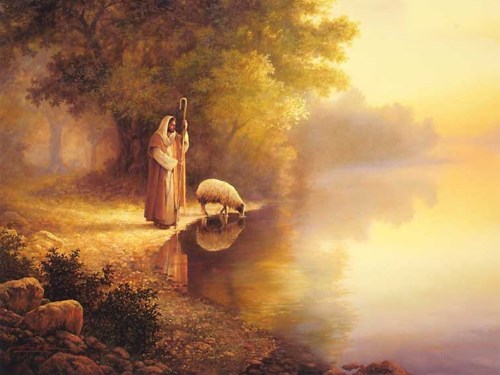
He maketh me to lie down in green pastures: he leadeth me beside the still waters.

He restoreth my soul: he leadeth me in the paths of righteousness for his name’s sake.

Yea, though I walk through the valley of the shadow of death, I will fear no evil: for thou art with me; thy rod and thy staff they comfort me.

Thou preparest a table before me in the presence of mine enemies: thou anointest my head with oil; my cup runneth over.

Surely goodness and mercy shall follow me all the days of my life: and I will dwell in the house of the LORD for ever. (Psalm 23:1-6)

There is security in the Good Shepherd’s fold.

My sheep hear my voice, and I know them, and they follow me: And I give unto them eternal life; and they shall never perish, neither shall any man pluck them out of my hand. My Father, which gave them me, is greater than all; and no man is able to pluck them out of my Father’s hand. (John 10:27-29, emphasis mine)

Then, just in case the “I AM” statement was not clear enough, Jesus said, “I and my Father are one” (John 10:30). Jesus declared Himself equal to God. Indeed, He is God (John 1:1) To the Pharisees (and to many modern ears) such a claim was blasphemous. “Then the Jews took up stones again to stone him” (John 10:31). “This parable spake Jesus unto them: but they understood not what things they were which he spake unto them” (John 10:6). Not included in the Good Shepherd’s fold, they remained in their blindness (John 9:39-41), and failed to recognized that they were in the presence of the Great I AM, the Good Shepherd.

If you want entrance into the fold, you need to get to know the Good Shepherd.
Comments Off on Jesus’ Seven ‘I AM’ Statements in John (4)

Filed under Apologetics, Christianity, Evangelism, Gospel, Religion, Salvation, Theology

The Garden of Eden

Garden of Eden

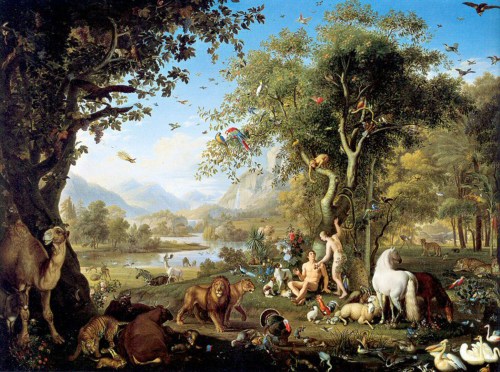
And the LORD God planted a garden eastward in Eden; and there he put the man whom he had formed. (Genesis 2:8)

The location of the biblical Garden of Eden remains a mystery that intrigues many. Recently I received an email from someone who thought he had it figured out. He writes:

I’ve been looking around the area of Iraq in the area where the Tigris and Euphrates river are and I found an area I wonder if it was maybe where the Garden of Eden was or where the Tree of life was. If you think of a garden it would be relatively small and it says that an Angel stood guard at the entrance. If it was here in this picture there is water surrounding the area except for one spot to go in and out of. Please tell me me what you think either way.

 The Euphrates and Pison (possibly the Tigris) are only two of four rivers named whose source was the Garden of Eden (Genesis 2:11-14). This is reminiscent of the two rivers described by Ezekiel as flowing from the Millennial Temple (Ezekiel 47:1-10 ff.), or the river that flows from the throne of God described in Revelation 22:1.

The Garden of Eden was the place where God met and enjoyed fellowship with man. Throughout Scripture, we see images of similar places, e.g. Mt. Moriah where Abraham offered up Isaac (Genesis 22), which later became the site of Solomon’s Temple, Mt. Sinai where God met with Moses and later gave the Law, Mt. Zion where the Temple was built and where the final Temple will be built, i.e. the Temple Mount in Jerusalem.

Keeping this in mind, it is very possible that the Garden of Eden was actually in the area of Jerusalem. Throughout Scripture, God names Jerusalem as His special place (1 Kings 11:36; 2 Chronicles 6:6; Nehemiah 1:9). It is also noteworthy that Jerusalem is near the geographical center of all the land mass of earth.[1] Prior to the Global Flood (Genesis 6-9), it is thought that only one super continent (Pangea) existed, and it seems reasonable to think that the Garden of Eden was at the center of the land mass – again, keeping it in the general location of where Jerusalem now stands.

We must also keep in mind that the Global Flood radically changed the topography of the pre-Flood world. Therefore, what existed before, no longer exists. In other words, the rivers mentioned in Genesis 2 are not the same rivers that exist now. The current Tigris and Euphrates rivers were named from the memories that the Ark passengers carried from the previous world. The bottom line is that we cannot know with certainty the location of the Garden of Eden. I suspect that the Garden of Eden was where Jerusalem now is, but I would not bet my next paycheck on it.

Notes:


[1]  Henry M. Morris, Ph.D., “The Center of the Earth” http://www.icr.org/article/50.

3 Comments

Filed under Apologetics, Christianity, Creation, Origins, Religion, Theology

Jesus’ Seven ‘I AM’ Statements in John (2)

Light of the World

Then spake Jesus again unto them, saying, I am the light of the world: he that followeth me shall not walk in darkness, but shall have the light of life. (John 8:12)

This second “I AM” statement directly follows Jesus’ encounter with the woman caught in adultery (John 8:1-12). Jesus came to Jerusalem to celebrate the Feast of Tabernacles (John 7:1-13), and was soon confronted the “Jews” who constantly sought to catch Him in a fault.

On this day, they brought a woman “taken in adultery, in the very act” (John 8:4) on the pretext that they sought His counsel on how to deal with the matter. The Mosaic Law gave clear direction for dealing with such matters: “the adulterer and the adulteress shall surely be put to death” (Leviticus 20:10). Little did the Pharisees realize that they stood in the presence of the One who wrote the law. Their arrogance blinded them to their oversight of a major detail in their accusation. Where was the adulterer? They had no desire for justice. “This they said, tempting him, that they might have to accuse him” (John 8:6).

Jesus seemingly ignored their request and proceeded to write something on the ground. Many have speculated about the content of His writing, but we really do not know what He wrote on the ground. Perhaps He was writing the names of all those present that had consorted with this very woman in the past. Maybe He wrote down each man’s name and listed each man’s sins – He would certainly know. In any case, they became impatient and pressed Him for a verdict. “So when they continued asking him, he lifted up himself, and said unto them, He that is without sin among you, let him first cast a stone at her. And again he stooped down, and wrote on the ground” (John 8:7-8). John notes that each was convicted by his own conscience and left one by one beginning with the oldest to the youngest. Apparently, the longevity of the oldest allowed for the accumulation of greater sins.

They all left Jesus alone with the woman. “Woman, where are those thine accusers? hath no man condemned thee?” (John 8:10). Not one remained. “Neither do I condemn thee: go, and sin no more” (John 8:11, emphasis mine). Often overlooked is the fact that Jesus did not excuse the woman’s sin of adultery. Perhaps selling sexual favors was her only means of support. We do not know, but Jesus did not excuse or accept her behavior. He forgave her – as only God can do – but He identified what she did as “sin” and charged her to stop sinning – “go, and sin no more.”

Evidently a crowd had gathered and witnessed the event. “Then spake Jesus again unto them, saying, I am the light of the world: he that followeth me shall not walk in darkness, but shall have the light of life” (John 8:12, emphasis mine). Again John uses the Greek phrase, egō eimi, which literally means “I, I am.” Eime suffices to get the point across. For example Matthew records Jesus’ words: “Take my yoke upon you, and learn of me; for I am meek and lowly in heart: and ye shall find rest unto your souls” (Matthew 11:29, emphasis mine). In this case, a simple eimi makes the point. John also uses the simple eimi when appropriate. For example, in the previous chapter he records: “Then cried Jesus in the temple as he taught, saying, Ye both know me, and ye know whence I am: and I am not come of myself, but he that sent me is true, whom ye know not. But I know him: for I am from him, and he hath sent me” (John 7:28-29, emphasis mine). Twice in these two verses, John simply uses eimi. (By the way, the “I am not” that I did not emphasize is the single Greek word ou, which simply means “no” or “not.”)

When John uses egō eimi, he emphasizes the deity of Christ. (See last week’s post.)[1] “The Light of the World” identifies Himself with the Creator. “And God said, Let there be light: and there was light” (Genesis 1:3, emphasis mine).  Our Lord Jesus Christ “Who only hath immortality, dwelling in the light which no man can approach unto; whom no man hath seen, nor can see: to whom be honour and power everlasting. Amen” (1 Timothy 6:16, emphasis mine). “The Light of the World” was not created as might be inferred by a strict reading of Genesis 1:3.

“Light,” the most basic form of energy, is mentioned specifically, but its existence necessarily implies the activation of all forms of electro-magnetic energies. Light was not created, since God Himself dwells in light. On the other hand, He created darkness (Isaiah 45:7).

The existence of visible light prior to the establishment of the sun, moon and stars (Genesis 1:16) emphasizes the fact that light (energy) is more fundamental than light givers. God could just as easily (perhaps more easily) have created waves of light energy as He could construct material bodies in which processes function which generate light energy. The first is direct (since God is light!), the second indirect. For the creation of such light generators, see note on Genesis 1:14.[2] (Emphasis mine)

“The Word of God (John 1:1) speaks in Genesis 1:3. The result is light …”[3] Jesus is the light. “In him was life; and the life was the light of men. And the light shineth in darkness; and the darkness comprehended it not” (John 1:4-5). Light displaces darkness, hence Jesus says, “he that followeth me shall not walk in darkness, but shall have the light of life” (John 8:12).

I know a young man who was once exposed to The Light, but he turned his back to “The Light of the World” preferring rather to follow the “enlightened one,” Buddha , the dead and darkened one. His state now is worse than had he never known The Light. “For it is impossible for those who were once enlightened, and have tasted of the heavenly gift, and were made partakers of the Holy Ghost, And have tasted the good word of God, and the powers of the world to come, If they shall fall away, to renew them again unto repentance; seeing they crucify to themselves the Son of God afresh, and put him to an open shame” (Hebrews 6:4-6, emphasis mine). “And this is the condemnation, that light is come into the world, and men loved darkness rather than light, because their deeds were evil” (John 3:19, emphasis mine).

Jesus, the Word of God, the “I AM,” said, “I am the light of the world: he that followeth me shall not walk in darkness, but shall have the light of life” (John 8:12, emphasis mine). “But as many as received [the light of the world], to them gave he power to become the sons of God, even to them that believe on his name” (John 1:12, emphasis mine). If that is so, “Ye are all the children of light, and the children of the day: we are not of the night, nor of darkness” (1 Thessalonians 5:5). If that is not the case, “Wherefore (as the Holy Ghost saith, Today if ye will hear his voice, Harden not your hearts … (Hebrews 3:7-8). Come to “The Light of the World,” and be truly enlightened.

Notes:


[1]  https://erniecarrasco.com/2016/08/28/jesus-seven-i-am-statements-in-john-1/

[2]  Henry M. Morris, Ph.D., The Henry Morris Study Bible, (Green Forest, AR, Master Books, 2012), 8. Accessible online at http://www.icr.org/bible/genesis/1:3/.

[3]  Ibid.

Comments Off on Jesus’ Seven ‘I AM’ Statements in John (2)

Filed under Apologetics, Christianity, Evangelism, Gospel, Religion, Salvation, Theology

Jesus’ Seven ‘I AM’ Statements in John (1)

Bread

In the beginning was the Word, and the Word was with God, and the Word was God. (John 1:1)

Like the other Gospel writers, John purposed to present Jesus from a unique perspective with the goal “that ye might believe that Jesus is the Christ, the Son of God; and that believing ye might have life through his name” (John 20:31). Matthew presented Jesus as the promised King of the Jews. Mark presented Jesus as the suffering Servant. Luke emphasized the perfect humanity of the Son of Man, but John stressed the divinity of Christ as evidenced by his opening sentence: “the Logos was God.” “And the Logos was made flesh, and dwelt among us” (John 1:14).

To solidify his point, John employs a trinity of sevens that demonstrate the divinity of Christ: (1) seven “I Am” statements, (2) seven miraculous signs, and (3) seven truth-revealing discourses. In the next few weeks, I plan to look at the 21 affirmations individually beginning with the seven “I Am” statements.

“I am” in the Greek is ego eime. At face value, the phrase seems rather innocuous. We use it a couple of hundred times a day without giving it a second thought, but in the Gospel of John, the phrase takes on greater significance. As employed by John, it harkens back to Moses’ first encounter with Yahweh at the burning bush (Exodus 3). “And Moses said unto God, Behold, when I come unto the children of Israel, and shall say unto them, The God of your fathers hath sent me unto you; and they shall say to me, What is his name? what shall I say unto them? And God said unto Moses, I AM THAT I AM: and he said, Thus shalt thou say unto the children of Israel, I AM hath sent me unto you” (Exodus 3:13-14, emphasis mine). “I AM” is one word in the Hebrew, hâyâh, and it means simply “to exist.” Similarly, the Greek eime means “I exist” or “I am.” We can tie the two together looking at how the Septuagint (LXX, the Greek translation of the Hebrew text) renders the Hebrew hâyâh in Exodus 3:14. Not surprisingly, we find that the LXX translates hâyâh as ego eime. God identifies Himself as “the self-existing One.”

Some of the strongest “I Am” affirmations by Jesus are not included in the list of seven I Am statements. For example, in a discussion with the Pharisees, “Jesus said unto them, Verily, verily, I say unto you, Before Abraham was, I am” (John 8:58, emphasis mine). The Pharisees understood precisely what Jesus said, “Then took they up stones to cast at him” (John 8:59) because, as far as they were concerned, Jesus spoke blasphemy by applying the name of God to Himself. In another discussion with the Pharisees, Jesus plainly stated, “I and my Father are one” (John 10:30). “Then the Jews took up stones again to stone him” (v. 31). In His final conversation with His disciples the night before the cross, “Philip saith unto him, Lord, shew us the Father, and it sufficeth us” (John 14:8). Jesus’ reply was clear, “he that hath seen me hath seen the Father” (v. 9). After seeing the risen Lord, “Thomas answered and said unto him, My Lord and my God” (John 20:28, emphasis mine), and Jesus approved the attribution without correction. With that, we will examine the first of the seven “I Am” statements.

In the first of the “I Am” statements recorded by John, “Jesus said unto them, I am the bread of life: he that cometh to me shall never hunger; and he that believeth on me shall never thirst” (John 6:35, emphasis mine). Bread is a staple food meaning that it “is eaten routinely and in such quantities that it constitutes a dominant portion of a standard diet in a given people, supplying a large fraction of the needs for energy-rich materials and generally a significant proportion of the intake of other nutrients as well.”[1] Bread is one of the oldest prepared foods; it has been around since the beginning of time. “Bread is known as an ample source for the grains category of nutrition … [and] is considered a good source of carbohydrates through the whole grains, nutrients such as magnesium, iron, selenium, B vitamins, and dietary fiber … bread is often used as a synecdoche for food in general in some languages and dialects.”[2] Indeed, along with water, bread is sufficient to sustain life. Many a prisoner has been kept alive on a diet of bread and water. “Obadiah took an hundred prophets, and hid them by fifty in a cave, and fed them with bread and water” (1 Kings 18:4). Bread is food. Bread sustains life. It provides nourishment and gives strength. How is Jesus bread?

The day before making this statement, Jesus fed 5000 men (not counting women and children) by multiplying five barley loaves and two fish (John 6:1-14). Now they came looking for more. “Jesus answered them and said, Verily, verily, I say unto you, Ye seek me, not because ye saw the miracles, but because ye did eat of the loaves, and were filled” (John 6:26, emphasis mine). Apparently the miracles they witnessed, including the feeding of a multitude from one boy’s lunch made little impression on this crowd, and they were hungry for more. Jesus advised, “Labour not for the meat which perisheth, but for that meat which endureth unto everlasting life, which the Son of man shall give unto you: for him hath God the Father sealed” (John 6:27, emphasis mine). “Meat” could also be translated as “bread,” or “food.” Jesus presented an interesting option. Even with preservatives, food has a limited shelf life. Once consumed, it burns up quickly in our body, and we are soon hungry again. Jesus offered nourishment that would endure forever.

What a great option! Never to experience hunger again! Sign us up, Jesus! “Then said they unto him, What shall we do, that we might work the works of God?” (John 6:28) The “work,” Jesus said, is “that ye believe on him whom [God] hath sent” (John 6:29).

“They said therefore unto him, What sign shewest thou then, that we may see, and believe thee? what dost thou work? Our fathers did eat manna in the desert; as it is written, He gave them bread from heaven to eat” (John 6:30-31, emphasis mine). Less than 24 hours had elapsed since Jesus fed them, and they wanted to see a sign – “bread from heaven.” They forgot, or overlooked, the fact that “their fathers” quickly tired of the heavenly bread God provided in the desert (Numbers 11:4-6). Not even that bread promised to satisfy their real need.

Their real need and our real need is not physical, but spiritual. “For the bread of God is he [Jesus] which cometh down from heaven, and giveth life unto the worldI am the bread of life: he that cometh to me shall never hunger; and he that believeth on me shall never thirst.” (John 6:33, 35, emphasis mine). One must consume food – bread – in order to receive any benefit from it. One must take it in internally otherwise it is of no use. Jesus gave a graphic illustration of this fact. “I am the living bread which came down from heaven: if any man eat of this bread, he shall live for ever: and the bread that I will give is my flesh, which I will give for the life of the world” (John 6:51, emphasis mine).

When we ingest bread, it becomes a part of us. When we take in Jesus, He becomes part of us, only the effect is eternal. “Whoso eateth my flesh, and drinketh my blood, hath eternal life; and I will raise him up at the last day … He that eateth my flesh, and drinketh my blood, dwelleth in me, and I in him” (John 6:54, 56).

The great I AM is the Bread that gives eternal Life.

Notes:


[1]  https://en.wikipedia.org/wiki/Staple_food

[2]  https://en.wikipedia.org/wiki/Bread

3 Comments

Filed under Apologetics, Christianity, Evangelism, Gospel, Religion, Salvation, Theology

If My People

solomons-temple

If my people, which are called by my name, shall humble themselves, and pray, and seek my face, and turn from their wicked ways; then will I hear from heaven, and will forgive their sin, and will heal their land. (2 Chronicles 7:14)

Fear hangs like a dark, menacing storm cloud over our nation. Insecurity saps the courage of our people to venture into the unknown. Anger and hostility ignite flames of anarchy in our streets and everyone yearns for a savior. Our nation is deeply troubled. Anyone with any sense of awareness can see it. Many feel helpless to stem the tide, while many others tenaciously cling to the hope that the downward spiral can be arrested and reversed through a spiritual awakening and revival. The latter frequently quote, “If my people, which are called by my name, shall humble themselves, and pray, and seek my face, and turn from their wicked ways; then will I hear from heaven, and will forgive their sin, and will heal their land” (2 Chronicles 7:14, emphasis mine).

The passage quoted intends for “God’s people” to collectively storm the gates of heaven petitioning God on behalf of our wicked and sinful nation. The petition is conditional and incumbent upon “God’s people,” not the general populous, but who are God’s people and where are they?

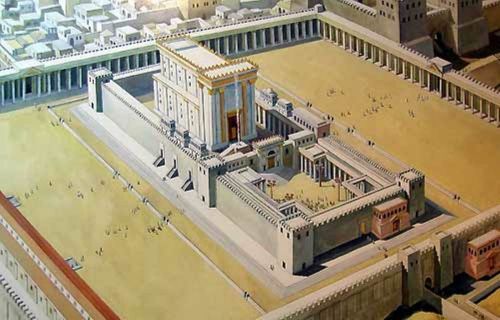
Before I respond to that question, I need to restate what have emphasized in the past concerning this particular verse in Second Chronicles that is so often quoted. Regarding the United States of America, the verse is taken out of context and misapplied. The Second Chronicles begins with Solomon’s ascension to the throne of Israel and the building of the first temple in Jerusalem. At the completion of Temple, the priests placed the Ark of the Covenant in its place in the Holy of Holies (2 Chronicles 5:1-12) and “the glory of God” in the form of a cloud that filled the temple in such a way that the priests could not minister in the place (vv. 13-14). As the dedication service continued, Solomon prayed and asked God to “Hearken therefore unto the supplications of thy servant, and of thy people Israel, which they shall make toward this place: hear thou from thy dwelling place, even from heaven; and when thou hearest, forgive” (2 Chronicles 6:21, emphasis mine). Solomon’s plea for God’s forgiveness goes beyond individual sins and extends to the sins of nation collectively.

And if thy people Israel be put to the worse before the enemy, because they have sinned against thee; and shall return and confess thy name, and pray and make supplication before thee in this house; Then hear thou from the heavens, and forgive the sin of thy people Israel, and bring them again unto the land which thou gavest to them and to their fathers. When the heaven is shut up, and there is no rain, because they have sinned against thee; yet if they pray toward this place, and confess thy name, and turn from their sin, when thou dost afflict them; Then hear thou from heaven, and forgive the sin of thy servants, and of thy people Israel, when thou hast taught them the good way, wherein they should walk; and send rain upon thy land, which thou hast given unto thy people for an inheritance … If they return to thee with all their heart and with all their soul in the land of their captivity, whither they have carried them captives, and pray toward their land, which thou gavest unto their fathers, and toward the city which thou hast chosen, and toward the house which I have built for thy name: Then hear thou from the heavens, even from thy dwelling place, their prayer and their supplications, and maintain their cause, and forgive thy people which have sinned against thee. (2 Chronicles 6:24-27, 38-39, emphasis mine)

Notice that Solomon’s request specifies God’s people (Israel), the Temple (this house), Jerusalem (the city), and the nation (their land). “Now when Solomon had made an end of praying, the fire came down from heaven, and consumed the burnt offering and the sacrifices; and the glory of the LORD filled the house. And the priests could not enter into the house of the LORD, because the glory of the LORD had filled the LORD’S house. And when all the children of Israel saw how the fire came down, and the glory of the LORD upon the house, they bowed themselves with their faces to the ground upon the pavement, and worshipped, and praised the LORD, saying, For he is good; for his mercy endureth for ever” (2 Chronicles 7:1-3, emphasis mine).

Obviously, God approved of the Temple and the offerings presented there. The dedication of the Temple took place in the midst of the Fall Feasts. Scripture tells us that it was “in the seventh month” (2 Chronicles 5:3). The Feast of Trumpets (Rosh Ha Shanna) was celebrated on the first day of the seventh month (Leviticus 23:24). Then on the tenth day of the month, they observed the Day of Atonement (Yom Kippur – Leviticus 23:27). That was followed by the Feast of Tabernacles (Succoth) fifteen days later (Leviticus 23:34), which was celebrated for seven days. Solomon dedicated the Temple on the eighth day (2 Chronicles 7:9), and the celebration lasted through the Day of Atonement for seven days. The dedication ended in time to celebrate the Feast of Tabernacles, which lasted an additional seven days (1 Kings 8:65-66). “And on the three and twentieth day of the seventh month he sent the people away into their tents, glad and merry in heart for the goodness that the LORD had shewed unto David, and to Solomon, and to Israel his people.” (2 Chronicles 7:10).

It is in this context that God responds.

And the LORD appeared to Solomon by night, and said unto him, I have heard thy prayer, and have chosen this place to myself for an house of sacrifice. If I shut up heaven that there be no rain, or if I command the locusts to devour the land, or if I send pestilence among my people; If my people, which are called by my name, shall humble themselves, and pray, and seek my face, and turn from their wicked ways; then will I hear from heaven, and will forgive their sin, and will heal their land. Now mine eyes shall be open, and mine ears attent unto the prayer that is made in this place. For now have I chosen and sanctified this house, that my name may be there for ever: and mine eyes and mine heart shall be there perpetually.  (2 Chronicles 7:12-16, emphasis mine)

As specific as Solomon’s prayer was, so was God’s response. Note that God is responding to Solomon’s prayer: “I have heard thy prayer.” Solomon’s prayer request focused on the Temple, Jerusalem, and the “nation” of Israel as noted above. In response, God says that He has “chosen this place to myself.” His people which are called by His name is the nation of Israel collectively. If they sin, which they did and which resulted in expatriation for the northern  kingdom and Babylonian captivity for Judah, and they humble themselves, repent and seek God, then He will heal their land. Note also that the prayer must either originate in that place or be directed toward that place. We see this exact scenario when Daniel recognizes that the 70-year captivity had been met (Daniel 9:1-19).

Christians these days have adopted 2 Chronicles 7:14 as their own and applied it to what is currently going on in the United States of America. They rightly claim we are “God’s people.” You will not arouse an argument from me on that point. The New Testament repeatedly teaches that we are the children of God. “But as many as received him, to them gave he power to become the sons of God, even to them that believe on his name” (John 1:12). However, the claim ends right there. Where is God’s Temple right now? “Know ye not that ye are the temple of God, and that the Spirit of God dwelleth in you?” (1 Corinthians 3:16, emphasis mine). What borders mark the land of God’s people? Americans claim the United States. Are there no Christians in Australia, Canada, China, France, Great Britain, etc.? What of all the Christians being martyred in the Middle East and Africa, are thy not God’s people, and do they not have the right to intercede on behalf of their land?  God’s “grafted in” people have no land here on earth. “For our conversation [i.e. citizenship] is in heaven; from whence also we look for the Saviour, the Lord Jesus Christ” (Philippians 3:20).

It seems somewhat hypocritical that many Christians today want to reject the Old Testament Law claiming that we are “under grace” – those things no longer apply – and yet will take this verse, completely out of context and force it apply to 21st Century America. Sorry, folks, it will not work. There is still a nation of Israel with whom God is dealing. To date, the majority of Israelis are secular. Many are agnostics or atheists. There exists a small minority of “completed Jews” in the land, but with laws against proselytizing, their numbers remain small. Israel exists to show God’s faithfulness to His promises, and in the end, those who survive the Great Tribulation that is coming, “they shall look upon me whom they have pierced, and they shall mourn for him, as one mourneth for his only son, and shall be in bitterness for him, as one that is in bitterness for his firstborn” (Zechariah 12:10), and they will be saved.

So, what can the Christian get out of 2 Chronicles 7:14? Taken in context, we can rest in the assurance that God does hear the prayers of His people, and He does answer according to His will.

2 Comments

Filed under Apologetics, Bible, Christianity, Current Events, End Times, Prayer, Second Coming of Christ, Theology