Tag Archives: God

Are We There Yet?

10800577 - second coming of jesus over a summer park

And, behold, I come quickly; and my reward is with me, to give every man according as his work shall be.   (Revelation 22:12)

More than ever it seems that Christians are “Looking for that blessed hope, and the glorious appearing of the great God and our Saviour Jesus Christ” (Titus 2:13). Given all that is taking place in the all over the world today, I am not surprised when I get questions like the following:

I was wondering if it is possible, according to the information we have in the Bible, to calculate how many years have elapsed since the very beginning of the world, so that we know approximately how close we are to the end of this present age of man’s self-rule of 6,000 years, and the return of Jesus Christ?

Also, are we the last generation, and how many years is a Biblical generation?

Generally speaking, the 6000 years people try to associate with Christ’s return is based more on inference and speculation rather than clear Bible teaching. The Bible does not teach that Jesus will return 6000 years after creation. Jesus said, “Watch therefore, for ye know neither the day nor the hour wherein the Son of man cometh” (Matthew 25:13, emphasis mine).

God created in six 24-hour days, not in six 1000-year periods. The Apostle Peter says, “But, beloved, be not ignorant of this one thing, that one day is with the Lord as a thousand years, and a thousand years as one day” (2 Peter 3:8, emphasis mine). Notice that Peter says “as a thousand years.” Grammatically, that phrase is a simile, i.e. comparing two different but “similar” things to each other. For example, a cat is “like” (or “as”) a dog. They are different animals, but they do have similarities: fur, four legs, a tail, etc. What Peter really says is that time makes no difference to God; He is ageless/timeless. God is not constrained by time.

Many who study eschatology (the study of end times) take what Peter says in 2 Peter 3:8 and associate it with the Creation Week, i.e. one day of creation compares to 1000 years of history. They infer that God has determined 7000 years to complete history: 6000 years of “work” plus 1000 years of “rest” during the millennial reign of Christ. That is a logical assumption, and it makes sense; however, it takes a lot of liberty with Scripture to make that jump. That said, I personally agree with that view, but we should not be dogmatic about it. We certainly should not try to predict the return of Christ based on such skimpy evidence. Remember what Jesus said, “ye know neither the day nor the hour.”

The problem with trying to determine when we arrive at the 6000-year mark is that we have lost track of time. God has not lost track of time, but man has. From Scripture, we can measure time from Creation fairly accurately. However, following Israel’s entry into Egypt, the biblical chronology becomes a little hazy. Reconciling biblical chronology with our modern chronology becomes pretty much a guessing game, especially when secular historians attempt to justify 100,000 years of human history based on evolutionary thinking.

According to Chinese chronology, 2016 is the Chinese year 4713. When we consider the biblical chronology given in Genesis 5, the Flood took place around 1656 years after Creation. If we take that time and add the Chinese account of 4713 years, we come up with 6369 years. If we expect Jesus to return 6000 years after Creation, He is 369 years late by that account, either that or Chinese civilization started some 300 years before the Flood, which makes no sense considering that all of earth’s population was destroyed except for the eight on the Ark. It is interesting to note that the Chinese account places the beginning of their history near the time of the Tower of Babel – 100-150 years after the Flood.[1]

For the Jews, 2016 is year 5776. (It will be 5777 this coming September.)  Supposedly, the Jewish calendar begins at Creation. If we expect Jesus to return 6000 years after Creation, we have to wait another 224 years.

I hope you can see why trying to determine Christ’s return by calculating the number of years from Creation is a fruitless endeavor. I believe He will return exactly 6000 years from Creation, but we do not know exactly when Creation took place. We can say it has been “about” 6000 years, but we cannot tell with certainty. However, we can trust that God knows exactly how much time has passed, and Jesus will return precisely when that time is accomplished.

Rather than counting days and years, Jesus said to “Watch therefore: for ye know not what hour your Lord doth come” (Matthew 24:42). It has been “about” 6000 years since Creation, and it is about time for history to take a shâbath (rest). God gave us some signs to watch for. Israel is back in the land, and we are the generation[2] that witnessed it happen (Matthew 24:32-34). Wars and rumors of wars abound around the nation of Israel (Matthew 24:6). There is rampant persecution of Christians in the world, particularly in the Middle East and in all Muslim nations. The world is on the verge of economic collapse. World leaders cry out for a one-world government. Wickedness increases rapidly (2 Timothy 3:1-7). The “signs,” rather than chronology, tell us that the Lord’s return is very near. So, look up! We are almost there!

Notes:


[1] Genesis 10:25 informs us that the earth was “divided” in the days of Peleg. Some think this refers to the dividing of the continents, but the dividing of the continents more likely resulted from the catastrophic Global Flood. The division of Peleg’s day makes better sense if understood as the division of languages, and, by implication, nations described in Genesis 11:1-9. Peleg was born to Eber about 100 years after the Flood (Genesis 11:16). His son, Reu was born 30 years later (Genesis 11:18). Peleg lived a total of 239 years (Genesis 11:19) – 209 years after the birth of Reu. The division of “people groups” could have happened anytime within his lifespan; 100-150 years for the Tower of Babel seems like a reasonable timeframe.

[2]  Determining the length of a generation is irrelevant at this point; anyone living now is part of “that generation.” Generally speaking, a generation is from father to son. From Adam to Seth was 130 years (Genesis 5:3); from Abraham to Isaac was 100 years (Genesis 21:5). Some of the O.T. kings begat sons in their twenties; so, a generation can be anywhere from 20 to perhaps 140 years.  The nation of Israel was reborn on May 14, 1948. That was almost 70 years ago. Surely, anyone born since that time is in that generation that will see the Lord’s return.

Comments Off on Are We There Yet?

Filed under Apologetics, Christianity, Creation, End Times, Evolution, Religion, Second Coming of Christ, Theology

Alpha And Omega

Alpha Omega Bible

I am Alpha and Omega, the beginning and the ending, saith the Lord, which is, and which was, and which is to come, the Almighty.  (Revelation 1:8)

These words recorded by the Apostle John, the one “whom Jesus loved” (John 13:23; 20:2; 21:7, 20), introduce the One who would “reveal” the details of the final events of world history. At this time, John was an old man probably in his nineties, exiled on the island of Patmos “for the word of God, and for the testimony of Jesus Christ” (Revelation 1:9). It was Sunday, “the Lord’s Day,” and John was “in the Spirit” (Revelation 1:10).  John does not say, but I imagine that he was reading and meditating on Daniel’s prophecy and praying. John earned the nickname “Camel Knees” (so I am told) for the calluses he developed from hours on his knees in prayer. While in that posture, “a great voice, as of a trumpet” interrupted his meditation, and the resurrected Lord introduced Himself as “Alpha and Omega, the first and the last” (Revelation 1:10-11).

John recognized Him, although he had never seen Him like this before – “clothed with a garment down to the foot, and girt about the paps with a golden girdle. His head and his hairs were white like wool, as white as snow; and his eyes were as a flame of fire; And his feet like unto fine brass, as if they burned in a furnace; and his voice as the sound of many waters” (Revelation 1:13-15). John, in the company of Peter and James, witnessed Jesus transfigured on the mountain (Luke 9:28-36) in the days of Jesus’ short ministry on earth. That experience left the disciples awestruck, but it was nothing compared to this appearance.

Alpha, the first letter in the Greek alphabet, represents the beginning of the Word. In his Gospel, John wrote, “In the beginning was the Word, and the Word was with God, and the Word was God. The same was in the beginning with God. All things were made by him; and without him was not any thing made that was made” (John 1:1-3, emphasis mine). The Word of God, the Holy Bible, opens with the same phrase: “In the beginning God created the heaven and the earth” (Genesis 1:1, emphasis mine). God, the “uni-plural” Elohim, created the universe – all things – through His spoken Word: “And God said, Let there be light: and there was light. And God saw the light, that it was good: and God divided the light from the darkness” (Genesis 1:3-4, emphasis mine). John says, “In him [the Word] was life; and the life was the light of men. And the light shineth in darkness; and the darkness comprehended it not” (John 1:4-5, emphasis mine).

The Alpha of the Bible goes on to describe the six-day creation acts of God. On the sixth day, the Elohim created all the land-dwelling animals, and at last, He created man. “And God said, Let us make man in our image, after our likeness: and let them have dominion over the fish of the sea, and over the fowl of the air, and over the cattle, and over all the earth, and over every creeping thing that creepeth upon the earth. So God created man in his own image, in the image of God created he him; male and female created he them” (Genesis 1:26-27, emphasis mine). The switch between the plural (us/our) and the singular (his/he) provides the first insight (in English) to the triune nature of God, which is developed later in Scripture. However, in the original language of Hebrew, that insight appears in the very first verse. God (Elohim) is the plural form of the noun for god (el); however, the verb “created” (bara) appears in the singular form, which under other circumstances would be a grammatical booboo in Hebrew.

So, God creates man in His own image, which among other things, implies that man too is triune in nature. One aspect of that triune nature involves the physical form that animates and transports “the soul” of man. “And the LORD God formed man of the dust of the ground, and breathed into his nostrils the breath of life; and man became a living soul” (Genesis 2:7, emphasis mine). What physical shape would reflect “the image of God”? The Hebrew word translated “formed,” yâtsar, describes the work of a potter molding and shaping a lump of clay into a useful vessel. The Word, by whom “all things were made,” molded and shaped the kind of body He would one day inhabit. “And the Word was made flesh, and dwelt among us, (and we beheld his glory, the glory as of the only begotten of the Father,) full of grace and truth” (John 1:14, emphasis mine).

God took His image bearer “And the LORD God planted a garden eastward in Eden; and there he put the man whom he had formed” (Genesis 2:8). There God provided for man’s every need. The Garden of Eden provided an abundance of food and water (Genesis 2:9-10) with a perfect climate (Genesis 2:5-6). Best of all, sickness and death did not exist. God gave His stamp of approval on His perfect creation. “And God saw every thing that he had made, and, behold, it was very good. And the evening and the morning were the sixth day” (Genesis 1:31, emphasis mine). Death could not exist in a “very good” creation because the Bible says that death is “the last enemy” (1 Corinthians 15:26).

God and His image enjoyed intimate fellowship as God walked “in the garden in the cool of the day” (Genesis 3:8). However, love coerced is not love. Love must be a willful choice, and God allowed for the choice. “And the LORD God commanded the man, saying, Of every tree of the garden thou mayest freely eat: But of the tree of the knowledge of good and evil, thou shalt not eat of it: for in the day that thou eatest thereof [dying] thou shalt surely die” (Genesis 2:16-17, emphasis mine). Death did not exist in the Garden of Eden, but the potential did exist. Man had the choice, and man made the wrong choice. “And when the woman saw that the tree was good for food, and that it was pleasant to the eyes, and a tree to be desired to make one wise, she took of the fruit thereof, and did eat, and gave also unto her husband with her; and he did eat” (Genesis 3:6, emphasis mine). Man made the choice, and death entered God’s perfect creation.

The remainder of the Bible tells the story of God’s work in restoring fellowship with His fallen and dying creation. Only the blood of a perfect and innocent victim could make amends or reparation for the perpetual infraction. “For the life of the flesh is in the blood: and I have given it to you upon the altar to make an atonement for your souls: for it is the blood that maketh an atonement for the soul” (Leviticus 17:11, emphasis mine). The blood of animals fell short of the requirement because it was man, not animals, that sinned. “For it is not possible that the blood of bulls and of goats should take away sins” (Hebrews 10:4). The atoning blood-sacrifice must be that of a perfect, innocent man; nothing less would do. However, no man fit the bill, for “As it is written, There is none righteous, no, not one” (Romans 3:10). No human solution could be found. Therefore, “the Word was made flesh, and dwelt among us” (John 1:14, emphasis mine). “But [the Word] made himself of no reputation, and took upon him the form of a servant, and was made in the likeness of men: And being found in fashion as a man, he humbled himself, and became obedient unto death, even the death of the cross” (Philippians 2:7-8, emphasis mine). “But this man [the Word], after he had offered one sacrifice for sins for ever, sat down on the right hand of God” (Hebrews 10:12, emphasis mine). The debt is paid in full, and God offers the pardon as a gift to whoever will accept it. A choice must still be made – accept the gift or reject it. Love is not coerced.

Omega is the final letter in the Greek alphabet. Just as Alpha opens the book with God’s perfect image bearers in the pristine Garden of Eden, Omega closes the final book in a new heaven and new earth (Revelation 21:1) – Eden restored. There, the fellowship between Creator and creature is renewed (Revelation 21:3). Death and the grave no longer exist (Revelation 20:14), neither do tears, sorrow or pain (Revelation 21:4). The Tree of Life is there (Revelation 22:2), but not the Tree of the Knowledge of Good and Evil. The residents of the new heaven and new earth chose God’s free pardon during their time on earth. They chose to love God of their own volition; therefore there is no longer any curse, nor the option to choose evil (Revelation 22:3), “and they shall see His face” (Revelation 22 4) – the One who started it all. “I am Alpha and Omega, the beginning and the end, the first and the last” (Revelation 22:13).

2 Comments

Filed under Bible, Christianity, Creation, End Times, Evangelism, Gospel, Heaven, Origins, Religion, Salvation, Theology

Burden of a Prophet

Prophet

Before I formed thee in the belly I knew thee; and before thou camest forth out of the womb I sanctified thee, and I ordained thee a prophet unto the nations. (Jeremiah 1:5)

As I look back on my recent posts, I think, “Man! Some of that is pretty depressing stuff! I should write something more uplifting, and fun.” I titled my blog, “Ernie’s Musings” because I write about things that engage my thoughts. Lately, the things happening around our nation and the world, and the upcoming presidential election weigh heavily on my mind. Honestly, I find it difficult, if not altogether impossible, to look on the bright side. This stems from the fact that I have a phlegmatic personality with leanings to melancholic and choleric. No sanguine bone exists in my body, and I find those with that personality to be rather annoying. However, God has a sense of humor, and He surrounds me with sanguine friends in order to keep me on an even keel.

Along with my serious nature, God gave me the gift of prophecy (Romans 12:5-8; 1 Corinthians 12:8-11; Ephesians 4:8-11). I say that with all humility, not that I “think more highly of myself than I ought to think” (Romans 12:3). This is not something that I dreamed up on my own. Many churches that strive to get members involved in the ministries of the church – and do it right – give a “spiritual gifts assessment” in order to properly “fit” the member in an area for which he/she is spiritually gifted. I have taken at least three such assessments, and I consistently score highly in prophecy, teaching, discernment, and encouragement. The confirmation for my statement comes from external and independent sources, so this is not my own fabrication.

I am a prophet, not a “seer” or fortuneteller. As with prophets of old, I can only say what God reveals. The prophets of old heard directly from God and repeated the message, “Thus saith the Lord,” and they recorded that message in Scripture. Nothing has been, or can be, added to the written Word of God. Thus saith the Lord, “Ye shall not add unto the word which I command you, neither shall ye diminish ought from it, that ye may keep the commandments of the LORD your God which I command you” (Deuteronomy 4:2). The New Testament repeats, “For I testify unto every man that heareth the words of the prophecy of this book, If any man shall add unto these things, God shall add unto him the plagues that are written in this book” (Revelation 22:18).

God’s revelation to us is complete and permanent. Jesus affirmed this fact when He said, “For verily I say unto you, Till heaven and earth pass, one jot or one tittle shall in no wise pass from the law, till all be fulfilled. (Matthew 5:18). Therefore, when I speak or write, I only say what God has already revealed in His Word. I have no new material. You will not hear me say, “I heard a new word from the Lord,” and then present something that does not already appear in Scripture. I take seriously James’ admonition, “My brethren, be not many masters, knowing that we shall receive the greater condemnation” (James 3:1). The Greek word translated “masters” is didaskalos, and it means “instructor” or “teacher.” God does not take kindly to those who misuse or abuse His Word and claim to speak for Him. God instructed the people to stone false prophets (Deuteronomy 13:1-5).

As a prophet, I must speak God’s Word. I am compelled to do so. In the words of Jeremiah the prophet, “But his word was in mine heart as a burning fire shut up in my bones, and I was weary with forbearing, and I could not stay” (Jeremiah 20:9). The Hebrew word translated “forbearing” is kûl, and it means to “hold in.” The prophet is saying that withholding (holding in) the Word of God is tiring, and he cannot hold it in. He must let it out. In a note on this verse, Henry M. Morris says:

The Word of God simply cannot be quenched for one who truly loves God and understands what God’s Word has done for him and what it means for the world. Even though that man is the object of reproach and derision because of it (20:8), he must proclaim it to others in whatever way he can.[1]

I kind of feel like that. David, the psalmist, expressed a similar sentiment. “My heart was hot within me, while I was musing the fire burned: then spake I with my tongue” (Psalm 39:3). The problem with speaking what God has put in my heart is that people will often not like what I have to say. I have learned to expect this. In Jeremiah’s case, he said, “O LORD, thou hast deceived me, and I was deceived: thou art stronger than I, and hast prevailed: I am in derision daily, every one mocketh me. For since I spake, I cried out, I cried violence and spoil; because the word of the LORD was made a reproach unto me, and a derision, daily” (Jeremiah 20:7-8, emphasis mine). The word “deceived” is an unfortunate translation in the KJV.[2] God deceives no one. It is Satan who is the “father of lies” (John 8:44). The Hebrew word used there is pâthâh, and it means rather “to entice.” God places a burden on the heart of a prophet and entices him, or calls him to deliver that message.

For a modern prophet like myself, God lets me see the condition of the world around me through the lens of His Holy Word; that goes with the gift of discernment that He gave me along with prophecy. The message is not new. This same message has been proclaimed through the ages. God does not change. God’s Word does not change. When I look at the world around me, I do not like what I see. When I see the condition of our nation, I do not like what I see. Then I read God’s Word, and I see the problem. Others may see the same problems I see and shake their heads and go on about their business, but I cannot do that. God, the Holy Spirit that resides in me (and all of God’s children), compels me to speak out, and I must. God has not given me a pulpit from which to preach, but He has given me a blog, and so I write. It is the burden of a prophet that God has given me.

I admit that my message may not be popular, and it may even be offensive at times. Sometimes, even I do not like what I have to say, and I would rather keep it to myself. However, the burden weighs on my heart and mind, and I am compelled to express it. When I consider the message, I look for ways to soften it, but given the conditions, I find that difficult. In those same spiritual gift assessments, I consistently score poorly in the “gift of mercy,” so it is difficult for me to make the message “kinder.”

God also made me an “encourager.” As bleak as my messages may be sometimes, I find hope in God’s sovereignty, in His faithfulness, and in His promise. I know our Lord’s return is very near, and although the world around us grows darker by the day, we have the promise of His coming. No matter what the political climate or social morass, our God reigns, and He cares for the welfare of His children. Until He comes, He will provide for us, pilot us, and protect us. So if my message seems gloomy at times, remember that is just the burden of this prophet, but along with the message, there is hope.

Notes:


[1]  Henry M. Morris, The Henry Morris Study Bible, (Green Forest, AR: Master Books, 2012), 1114.

[2]  Many other modern translations also mistranslate this word. However it is correctly translated in others like the Young’s Literal Translation (YLT) translates as “enticed”, New Living Translation (NLT) translates as “misled,” New English Translation (NET) translates as “coerced,” New American Bible-Revised (NABRE) translates as “seduced,” and the Common English Bible (CEB) translates as “enticed.”

Comments Off on Burden of a Prophet

Filed under Apologetics, Christianity, Current Events, End Times, Gospel, Random Musings, Religion, Second Coming of Christ, Theology

When God Won’t Hear

man-alone-with-god

Then shall they cry unto the LORD, but he will not hear them: he will even hide his face from them at that time, as they have behaved themselves ill in their doings. (Micah 3:4)

I get weary by the overwhelming onslaught of depressing news that assails me from all directions. It assaults me from the radio, TV, social media, internet, emails and even from normal conversations with friends. Let us face it, the world is a mess and nothing seems to make it better; it just seems to keep getting worse. Perhaps that is why we see so many people with their faces buried in their personal communications devices (PCDs) playing Candy Crush Saga, Angry Birds, or the latest craze, Pokémon GO, or whatever – anything to escape the “real” world – but the news refuses to go away.

Without detailing every account, anyone not fixated on their smart phones knows that the whole world is in serious trouble – economies are failing, ISIS grows like a cancer, rogue nations threaten the peace with nuclear arms, etc. The United States once served as a stabilizing force in the world, but America has her own problems now. Since Barack Obama became President, America’s economy has faltered, her military strength has declined, her influence for good in the world has diminished, and the heart of her people has weakened. President Obama mocks Christians for clinging to their guns and Bibles while he praises the virtues of Islam. He criticizes police use of lethal force against blacks without knowing all of the facts, and excuses the perpetrators as victims of racism. Obama lashes out at Christians who denounce the sin of homosexuality and celebrates the “bravery” of those that “come out of the closet.” When the Supreme Court legalized same-sex “marriage,” Obama gave assent and showed approval by bathing the White House in the rainbow colors of “gay pride.”

Recently a man, claiming allegiance to ISIS, entered a gay bar in Florida and slaughtered several people in the name of Allah and Obama refused to acknowledge him as an Islamic terrorist. Just two weeks ago, another man, Micah Johnson, targeted white police officers assigned to protect peaceful protestors of the Black Lives Matter movement. Five police officers were murdered in cold blood and several others were wounded. In honoring the fallen officers, President Obama began his speech in praise of the heroic officers who ran toward the danger and did all they could to protect the marchers, but his speech quickly degenerated into his typical race-baiting rhetoric. When our leader has no concept of unity, it is no wonder that our country is so fractured. However, the problem is greater than just one man’s inability to lead. The problem began some sixty years ago when the nation slowly chipped away at our Christian foundation and ousted God from the public square. “In God We Trust” are just words on our currency. Our beloved country is very, very sick.

Christians are encouraged to pray for our nation and to pray for our leaders. Albeit out of context, 2 Chronicles 7:14 frequently serves as a call for Christians pray for the nation. God promises, “If my people, which are called by my name, shall humble themselves, and pray, and seek my face, and turn from their wicked ways; then will I hear from heaven, and will forgive their sin, and will heal their land” (emphasis mine). God’s promise was made to the united nation of Israel, but Christians have (erroneously, I think) claimed it as their own forgetting that “our conversation is in heaven; from whence also we look for the Saviour, the Lord Jesus Christ” (Philippians 3:20, emphasis mine). The Greek word translated “conversation” in the King James Bible (KJV) is politeuma, from which we get our word “politic,” means “a community” or “citizenship.” Not that we should be “so heavenly minded that we are no earthly good,” but the United States of America is not where our primary allegiance should be. As the Apostle Paul asserts, “our citizenship is in heaven,” not the United States of America. Ours is the Kingdom of God, not the kingdom of Barack.

Like the United States of America, Israel, first the northern kingdom and then Judah, rejected God and turned to false gods – not every individual, but the nation as a whole. Even so, there are many faithful Christians in America who “have not bowed unto Baal” (1 Kings 19:18), but there exists only a remnant. I am certain that the faithful in Israel prayed for their nation, but that was not enough to dissuade God from punishing the entire nation – including the faithful ones.

Micah prophesied in Judah. By this time, Israel, the northern kingdom, no longer existed as a nation, having succumbed to the Assyrian Empire. From the time the ten northern tribes broke with Judah, the nation fell into idolatry. Now Judah followed suit. Micah voices the words of God who charges Judah’s leaders, for lack of judgment (Micah 3:1).  God points out that they “hate good and love evil” and they abuse the people with unjust taxes. The graphic words paint the picture: “who pluck off their skin from off them, and their flesh from off their bones; Who also eat the flesh of my people, and flay their skin from off them; and they break their bones, and chop them in pieces, as for the pot, and as flesh within the caldron” (Micah 3:2-3). There comes a point when, “Then shall they cry unto the LORD, but he will not hear them: he will even hide his face from them at that time, as they have behaved themselves ill in their doings” (Micah 3:4, emphasis mine).

Isaiah brought a similar charge to the nation as a whole, not only the leaders, but also those who willingly followed.  “The ox knoweth his owner, and the ass his master’s crib: but Israel doth not know, my people doth not consider” (Isaiah 1:3). Sad! Dumb animals recognize their source of provision better than “intelligent” people do. “Ah sinful nation, a people laden with iniquity, a seed of evildoers, children that are corrupters: they have forsaken the LORD, they have provoked the Holy One of Israel unto anger, they are gone away backward” (Isaiah 1:4). Can we not say the same of America? As the passage continues, God laments that the more He punishes the nation, the more rebellious they become. God assesses their condition as sick of head and weak of heart. Out of rote, they bring insincere offerings to God, but their hearts belong to other gods. So, God says, “when ye spread forth your hands, I will hide mine eyes from you: yea, when ye make many prayers, I will not hear: your hands are full of blood” (Isaiah 1:15, emphasis mine). God is infinitely patient, but He does set limits. When those limits are breached, His response is predictably sure. I say “predictably” because He gives an abundance of warning for those who are willing to listen.

Well, that seems just and deserved for those who rebel and reject God; but what about the faithful remnant who cry out for their nation? Just before the conquest and expatriation of Judah to Babylon, Jeremiah pleaded for his nation, but three times God charged him to stop. “Therefore pray not thou for this people, neither lift up cry nor prayer for them, neither make intercession to me: for I will not hear thee” (Jeremiah 7:16, emphasis mine). Then again, “Therefore pray not thou for this people, neither lift up a cry or prayer for them: for I will not hear them in the time that they cry unto me for their trouble” (Jeremiah 11:14, emphasis mine). Finally, “Then said the LORD unto me, Pray not for this people for their good” (Jeremiah 14:11, emphasis mine). Jeremiah certainly qualifies as one of God’s people. There comes a time when God will not hear the pleas even when they come from His people.

For Judah, God kept His 2 Chronicles 7:14 promise and returned them to the land, but only after they had served their full time in Babylonian captivity. Even today, we see God’s promise fulfilled as Jews from all over the world continue to migrate back to their land. However, America is not Israel, and this promise does not have universal application.  I realize that many disagree with that statement, but I suggest that such sentiment stems from deep-seated patriotism and love of country. I understand that. I too am a patriot. I willingly and gladly gave 12 years of my life in the service to this nation. These words I write tear at my heart as I see the inevitable demise of the country I love. Yet, our directive calls for us to hold the things of this earth loosely and cling to that yet unrealized country.  Jesus said, “Lay not up for yourselves treasures upon earth, where moth and rust doth corrupt, and where thieves break through and steal: But lay up for yourselves treasures in heaven, where neither moth nor rust doth corrupt, and where thieves do not break through nor steal: For where your treasure is, there will your heart be also” (Matthew 6:19-21, emphasis mine). Is your treasure in America or in heaven above?

Praying for our nation is a noble thought, but I believe our country is too far-gone for that now. I believe God is saying, at least to me, “Pray thou not for this people.” What about Paul’s exhortation to pray for our leaders (1 Timothy 2:1-2)? Consider where Paul had been – imprisoned in Rome – and where Timothy was – pastoring the church at Ephesus. Rome hardly qualified as a bastion of republican democracy. In Paul’s exhortation, he does not call for prayer for the preservation of the empire. He says to pray for “the leaders” – individuals. Why? In order “that we may lead a quiet and peaceable life in all godliness and honesty” (1 Timothy 2:2).  In his letter to the church at Rome, Paul says that God appoints leaders. “For there is no power but of God: the powers that be are ordained of God” (Romans 13:1, emphasis mine). The Roman rulers under which Paul and Timothy lived were despicable despots to whom they were to submit in order “to lead a quiet and peaceable life” regardless of who was in charge.

Christianity flourishes in China under an oppressive communist regime. Should Christians in China pray that their form of government continue? My point is that no matter what form of earthly government we live under, we owe a higher allegiance to the Kingdom of God. We should pray for our leaders that they might come to a saving knowledge of Christ through whom they will gain godly wisdom to rule. Even so, salvation is a personal matter between God and each individual. On that same note, rather than praying for the survival of our nation, we should not only pray, but labor for the salvation of individuals. For our nation to return to its foundation, the hearts of individuals must change. A wholesale repentance of a majority of individuals must take place before God will hear the pleas of His people for their nation.

Remember Abraham’s intercessory prayer for Sodom and Gomorrah? (Genesis 18:23-33) If there are 50 righteous, if there are 40 righteous, if there are 30, 20, 10, will you destroy the city? In the end, there were not even 10 righteous, and God destroyed the cities. Depending on what poll one reads, the number of “genuine” born-again, Evangelical Christians in the US hovers around 20% and declining. Should God spare the nation for 20 righteous? Did God spare Israel for the 7000 that did not bowed unto Baal? (1 Kings 19:18).

When a nation exceeds the limits of God’s patience, God stops His ears to the intercessory petitions of His people for the nation. Indeed, He says, “Pray thou not for this people.” Has America reached that limit? I think it has. We see a rise in depravity, perversion, and unrestrained violence, not to mention natural disasters. This is why the best response we can offer to a Hillary Clinton presidency is Donald Trump. It is sad to watch, but take heart Christians. We have a heavenly citizenship, and we pledge our allegiance to the King of Kings and Lord of Lords. Our duty is to work for and expand His Kingdom until He returns. I pray that is soon!

Comments Off on When God Won’t Hear

Filed under Christianity, Current Events, End Times, Evangelism, Heaven, Politics, Prayer, Religion, Salvation, Second Coming of Christ, Theology

The Curse of Blessings

Hosea

According to their pasture, so were they filled; they were filled, and their heart was exalted; therefore have they forgotten me. (Hosea 13:6)

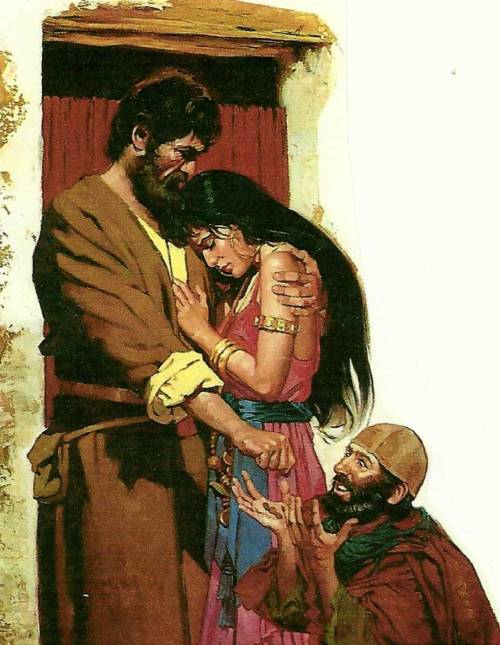
Hosea, whose name means “deliverer,” is an interesting character. God instructed Hosea to marry a prostitute (Hosea 1:2). He married Gomer (v. 3) who bore three children to him. Soon after that, Gomer left Hosea and returned to her whoring ways. After that God instructed Hosea to go after her and buy her back (Hosea 3:1-3).

The image presented depicts God, the Deliverer, who brought Abraham out of idolatry (Joshua 24:2), i.e. “whoredom,” gave him the promise of progeny, and the promise of the Land of Canaan. Abraham’s grandson, Jacob (renamed Israel), had 12 sons who became the 12 tribes of Israel. These ended up in Egypt for over 400 years where they picked up the idolatrous ways of the Egyptians. God delivered them from Egyptian captivity and returned them to the Promised Land.

Within a generation, as recorded in the book of Judges, Israel fell back into idolatry – they went whoring after the gods of the Canaanites. Without rehearsing every detail of their history, Israel was continually unfaithful to God. In their history, God blessed them as a nation, but they soon forgot the source of the blessings.

Our passage above begins with God addressing Ephraim. Ephraim, probably the strongest of the northern ten tribes of Israel (the northern kingdom), symbolizes all of Israel. “[T]hey sin more and more, and have made them molten images of their silver, and idols according to their own understanding, all of it the work of the craftsmen: they say of them, Let the men that sacrifice kiss the calves” (Hosea 13: 2). Like Gomer, after God rescued them out of idolatry, they fell right back into it.

While Gomer was with Hosea, he cared for her and provided for her. She did not need to prostitute herself to meet her needs, but the source of her (unmerited) privileged status never entered her mind, and she fell back into her old habits. Through Hosea’s experience with Gomer, God strikes the parallel with Israel: “I did know thee [intimately] in the wilderness, in the land of great drought” (v. 5), i.e. in the land of false gods. Then God brought them into a good “land flowing with milk and honey” (Exodus 3:8).  In this new land, they lived well and enjoyed God’s blessings. “According to their pasture, so were they filled; they were filled, and their heart was exalted; therefore have they forgotten me” (Hosea 13:6, emphasis mine). In that blessed condition, they forgot God.

The very thing about which God warned them, they did. “When thou hast eaten and art full, then thou shalt bless the LORD thy God for the good land which he hath given thee. Beware that thou forget not the LORD thy God, in not keeping his commandments, and his judgments, and his statutes, which I command thee this day: Lest when thou hast eaten and art full, and hast built goodly houses, and dwelt therein; And when thy herds and thy flocks multiply, and thy silver and thy gold is multiplied, and all that thou hast is multiplied; Then thine heart be lifted up, and thou forget the LORD thy God, which brought thee forth out of the land of Egypt, from the house of bondage” (Deuteronomy 8:10-14, emphasis mine).

We risk falling into the same trap as Israel when God blesses us with good things: home, family, good health, steady income, etc. God warned Israel before they entered the Promised Land not to get too full of themselves “And thou say in thine heart, My power and the might of mine hand hath gotten me this wealth” (Deuteronomy 8:17, emphasis mine). We tend to do the same when life favors us. We assume the credit when things go well, but when trouble comes we blame God. That second assessment may not be too far from the mark. “And it shall be, if thou do at all forget the LORD thy God, and walk after other gods, and serve them, and worship them, I testify against you this day that ye shall surely perish” (Deuteronomy 8:19, emphasis mine). Israel failed to heed God’s warning: “Therefore I will be unto them as a lion: as a leopard by the way will I observe them: I will meet them as a bear that is bereaved of her whelps, and will rend the caul of their heart, and there will I devour them like a lion: the wild beast shall tear them” (Hosea 13:7-8). Not long after, the Assyrian Empire devoured Israel and expatriated the population to other parts of Assyria. In a sense, God ripped Israel to pieces. We should take notice!

The psalmist says, “Bless the LORD, O my soul, and forget not all his benefits” (Psalm 103:2). One of President Obama’s most infamous sayings is, “You didn’t build that.” In some respects, he is correct (but not in the context of his ideology). When we become too confident in our own abilities, God says, “Yet I am the LORD thy God from the land of Egypt, and thou shalt know no god but me: for there is no saviour beside me” (Hosea 13:4, emphasis mine). David reminds us that “Both riches and honour come of thee, and thou reignest over all; and in thine hand is power and might; and in thine hand it is to make great, and to give strength unto all” (1 Chronicles 29:12, emphasis mine). The Book of Psalms repeats the refrain reminding us to “give thanks unto the Lord.” All that we have comes from God. When we forget, our blessings become a curse – perhaps not in a perceivable sense, but in the real sense that we become self-focused. We take our blessings for granted, and we drift away from the source of our blessings. That in itself is a curse. Paul reminds us: “In every thing give thanks: for this is the will of God in Christ Jesus concerning you” (1 Thessalonians 5:18).  “And we know that all things work together for good to them that love God, to them who are the called according to his purpose” (Romans 8:28). With the right mindset, we recognize that our blessings come in all forms so that we can rejoice in “all things,” and our blessings remain blessings and not curses.

2 Comments

Filed under Christianity, Gospel, Religion, Theology