And I will bless them that bless thee, and curse him that curseth thee: and in thee shall all families of the earth be blessed. (Genesis 12:3)
There is a notion going around and gaining strength that the promises God made to Israel have been taken away from Israel and given to the Church. There is also the idea that the Jews occupying the modern nation of Israel are not the same people to whom God made the promise, therefore God’s promises made to Israel are null and void since the original Israelites no longer exist. Both notions are false.
God’s promise to Abraham (Abram) came with no conditions.[1] God promised the land of Israel’s current borders and beyond as an “everlasting” possession. God’s unconditional promise, detailed in Genesis 15, was a “covenant” – a contract – guaranteed by God alone. “For when God made promise to Abraham, because he could swear by no greater, he sware by himself” (Hebrews 6:13). God would be going against His own nature if He broke the covenant He made with Abraham and guaranteed by His own name. “God is not a man, that he should lie; neither the son of man, that he should repent: hath he said, and shall he not do it? or hath he spoken, and shall he not make it good?” (Numbers 23:19).
Some will argue that God annulled that covenant and made a “new covenant” that applies to the Church and which was fulfilled at Pentecost.[2] They come to this conclusion from a prophecy given by the Prophet Jeremiah. “Behold, the days come, saith the LORD, that I will make a new covenant with the house of Israel, and with the house of Judah” (Jeremiah 31:31). However, the plain reading of the text clearly specifies that the promise is to “the house of Israel” and “the house of Judah.” One really has to stretch to make it apply to the Church. These will quickly point to Peter’s words at Pentecost when he said, “this is that which was spoken by the prophet Joel” (Acts 2:16). That being the case, we need to see exactly what Joel said. “And it shall come to pass afterward, that I will pour out my spirit upon all flesh; and your sons and your daughters shall prophesy, your old men shall dream dreams, your young men shall see visions: And also upon the servants and upon the handmaids in those days will I pour out my spirit” (Joel 2:28-29, emphasis mine). That certainly came true in part on the Day of Pentecost. However, it was not the complete fulfillment of the prophecy. In the verses that follow, the prophet continues: “And I will shew wonders in the heavens and in the earth, blood, and fire, and pillars of smoke. The sun shall be turned into darkness, and the moon into blood, before the great and the terrible day of the LORD come” (Joel 2:30-31, emphasis mine). That certainly did not take place at Pentecost, but it is meant for a future time.
In the second chapter of Joel, the prophet is talking about the coming of “the day of the Lord.” That phrase must be understood in its context. Here, the prophet was speaking of the coming of the Lord (i.e., Jesus) to set up His earthly kingdom. The prophets of the O.T. did not foresee the “Church.” The Apostle Paul declares that the Church was a “mystery” to the prophets of old. “Even the mystery which hath been hid from ages and from generations, but now is made manifest to his saints: To whom God would make known what is the riches of the glory of this mystery among the Gentiles; which is Christ in you, the hope of glory” (Colossians 1:26-27, emphasis mine). John the Revelator amplifies to whom it was made a mystery. “But in the days of the voice of the seventh angel, when he shall begin to sound, the mystery of God should be finished, as he hath declared to his servants the prophets” (Revelation 10:7, emphasis mine). In other words, what was a mystery to the prophets will finally be revealed during and after the time of the Tribulation.
When one reads the prophecies in the O.T., it is clear that they all pertain to Israel. Even those who speak of the coming Messiah, they make clear that the Messiah is coming to save His people. Those prophecies that speak of His suffering and dying, the Jews of Jesus’ time treated as anathema. They believed then, and do even now, that the Messiah would be a human that would be a king in the line of David and would make their nation great among all the nations of the earth. As we study the prophecies, we cannot argue with that line of thinking, apart from Christ. Knowing this, we can understand their rejection of Jesus as the Messiah. Jesus Himself said, “I am not sent but unto the lost sheep of the house of Israel” (Matthew 15:24). However, He was not exactly what they expected, and so, He was “despised and rejected of men” (Isaiah 53:3) and nailed to a Roman cross.
However, the prophets were not erred about Jesus coming as king. That is yet to come, and all the promises made to Israel will be finally and ultimately be fulfilled according to the covenant God made with Abraham – an “everlasting covenant.” Jesus will indeed return and rule the nations with a rod of iron.[3]
However, before all of that happens, the Jews have to be back in the land that God promised Abraham as an everlasting possession. The migration began in the late 19th Century and into the 20th Century. Then on May 14, 1948, Israel took its place among the free nations of the world. That event became the harbinger of the “last days,” because for the last days’ prophecies to be fulfilled, there must be a national Israel – and it is NOT the Church. Today, the population of Israel is over 9.55 million and growing. With the increase of worldwide antisemitism, that number grows daily. Yet some discount that saying those populating Israel are not genetically pure Jews. That is a ridiculous claim! Have those making that claim done serious genetic research to verify that claim? I dare say not! It is only their way to deny what is evident before their eyes. Besides, who believes that God, who knows the number of hairs on every head, can lose track of His chosen people? Besides, can anyone make the claim that Jesus was a “pure” Jew? Jesus’ lineage came from the line of Judah through Tamar (a Canaanite), followed by Rehab (a Canaanite prostitute), and later by Ruth (a Moabite), and who knows how many others who were not named. Does that disqualify Jesus’ Messiahship?
So, God is keeping and will keep His promise to Abraham and to his descendants. But along with those promises, did you catch what was also included in that promise? “I will bless them that bless thee, and curse him that curseth thee” (Genesis 12:3). God does not renege on His promises. He promises to bless those who bless Israel and curse those who curse Israel. That is a lesson that our elected officials do not seem to understand. Our current President in his recent State of the Union address boasted that the United States stands with Israel. That “sounds” good to American Jews and Evangelicals; but behind the scenes, the United States is giving money to Iran, which hates America and is intent on the annihilation of Israel. Iran uses that money to fund its terrorist proxies, Hamas, Hezbollah, ISIS, the Houthis, the Muslim Brotherhood, etc. At the same time, the U.S. is pressuring Israel to cease fire against the demonic Hamas and is actively supplying Israel’s enemy in Gaza. By her actions, the United States is cursing Israel and for this, God will curse America, if He hasn’t already. If America does not repent of its wrongheaded action, America will incur God’s curse upon us. God keeps His promises. If God has reneged on His promise to Abraham, how can we trust Him to keep His promise to us? God is faithful. He keeps His promises.
And the LORD opened the mouth of the ass, and she said unto Balaam, What have I done unto thee, that thou hast smitten me these three times? (Numbers 22:28)
My daily Bible reading brings me to the Book of Numbers, and as the name suggests, there are many long, detailed lists of names and numbers, which make for very dry reading. The minutiae serve as an important resource for deep study, but for casual reading, it can be a little boring. It is easy to forget that it is, after all, God’s Word, and God included everything in it for a reason. That said, Numbers does include some interesting accounts that play out later in Scripture.
There is the account in Chapter 11 where the children of Israel complained because all they had to eat was the manna that God sent from heaven every morning. They were tired of the heavenly bread and wanted meat to eat. (Someone rightly questioned, “With all the herds of sheep, goats, and cattle they had with them, how is it they had no meat to eat?” Good question. I do not know the answer.) Their complaining angered God and He sent them quail to eat for a whole month until it was coming out of their nostrils![1] The lesson – don’t complain about what you don’t have, but be thankful for what you do have.
In Chapter 12, Moses’ siblings, Aaron and Miriam, speak against Moses for his marriage to an Ethiopian woman.
Presumably this woman was Zipporah (Ex. 2:21; 4:25), the daughter of Jethro, since there is no other indication that Moses had more than one wife. However she is also called a Midianite (Ex 2:16), and this leaves her identity somewhat uncertain. Ethiopia is Cush in Hebrew, and the Cushites originally settled on the western shores of Arabia before moving across the Red Sea to Ethiopia, being gradually replaced by the Midianites. Thus, the Cushites and the Midianites probably experienced considerable intermingling and intermarriage in the process. Habakkuk 3:7 indicates that Cushan and Midian were sometimes considered equivalent.[2]
Evidently, they felt they were not getting their share of the limelight. “And they said, Hath the LORD indeed spoken only by Moses? hath he not spoken also by us? And the LORD heard it” (Numbers 12:2). The LORD called a meeting of the three. “And he said, Hear now my words: If there be a prophet among you, I the LORD will make myself known unto him in a vision, and will speak unto him in a dream. My servant Moses is not so, who is faithful in all mine house. With him will I speak mouth to mouth, even apparently, and not in dark speeches; and the similitude of the LORD shall he behold: wherefore then were ye not afraid to speak against my servant Moses?” (Numbers 12:6-8, emphasis mine). God struck Miriam with leprosy for only seven days because Moses interceded on her behalf. Aaron, being the high priest, was not stricken, but the sight of his sister’s punishment was lesson enough for him. The lesson – do not speak out against the Lord’s anointed.
In Chapters 13 and 14, we have the account of the 12 spies sent out to spy out the Promised Land. Ten returned with a good news/bad news report. Yes, the land was rich and fruitful as God had promised, but it was also full of giants against whom they felt powerless. Their negative report caused the people to become fearful. Only two, Caleb and Joshua encouraged the people saying that God would fight for them to give them the land. However, the people listened to the ten negative reports rather than the two positive ones. They were ready to choose a new leader and return to their life of slavery in Egypt. This too angered the LORD, and He was ready to smite them all with plague and start all over with just Moses. But Moses interceded for the people and assuaged God’s wrath, but not without consequences for the people. For forty years they would wander in the desert until the last of the fearful died out in the desert, except for Caleb and Joshua. Hearing the LORD’s decree, the people repented and took it upon themselves to go fight against the Amalekites on their own. That did not work out well for them and the Amalekites whooped up on them! The lesson – when you trust in your own strength and abilities, you will certainly fail. It always works out better when you trust God to fight your battles.
There is also the account of the sons of Korah, Levites, who rebelled against Moses and Aaron, Chapter 16. These were swallowed up by the ground. Again, don’t mess with God’s anointed. The fate of Korah’s sons failed to penetrate the brains of those that remained, so they continued to “murmur,” and they came against Moses and Aaron. Once more, God was ready to wipe them all out, but Moses and Aaron interceded for the people.
Even so, God sent a plague that killed 14,700 of them.[3]Chapter 17 records another strange event. Following the rebellion, God had Moses gather the heads of the 12 tribes with their staffs (walking sticks) to lay before the Testimony (i.e., the Ark of the Covenant). Each staff bore the name of its respective tribe. Aaron’s staff was also placed among them. To settle who God selected as leader, that man’s staff would blossom. Keep in mind, these staffs were made of hard, dead wood completely devoid of life and completely incapable of producing fruit. All staffs were laid before the Ark that resided in the Holy of Holies. The following morning, Aaron’s staff blossomed and produced almonds.[4] “And the LORD said unto Moses, Bring Aaron’s rod again before the testimony, to be kept for a token against the rebels; and thou shalt quite take away their murmurings from me, that they die not” (Numbers 17:10).
God made it perfectly clear who He had selected to lead the congregation. Yet with all of his qualities, Moses was not perfect. Chapter 20 records what was arguably Moses’ greatest failure. Their wanderings in the desert brought the children of Israel to Kadesh where they found themselves without water once again. As was their pattern, they started whining to Moses about their lack of water and accusing him of having brought them out to the desert to die. Understandably, Moses was more than a little angry with the people, but he took their complaint before the LORD. God told Moses to gather the people around a large rock that was there. He told Moses to “speak” to the rock and that it would bring forth water. “And Moses took the rod from before the LORD, as he commanded him. And Moses and Aaron gathered the congregation together before the rock, and he said unto them, Hear now, ye rebels; must we fetch you water out of this rock? And Moses lifted up his hand, and with his rod he smote the rock twice: and the water came out abundantly, and the congregation drank, and their beasts also. And the LORD spake unto Moses and Aaron, Because ye believed me not, to sanctify me in the eyes of the children of Israel, therefore ye shall not bring this congregation into the land which I have given them” (Numbers 20:9-12, emphasis mine). Moses’ failure was not that he struck the rock, but that he did not speak to it as instructed. His failure was that he took the credit for bringing water out of the rock rather than attributing the credit to God. His punishment was that he would not lead the people into the Promised Land. The lesson – when God tells you to do something, do it the way He says to do it and not like you think it ought to be done.
The next chapter records an account repeated in the New Testament making the previous lesson clear. In Chapter 21, the Canaanite king, Arad, made an unprovoked attack on the Israelite camp and took some captive. Israel made a vow to God to utterly destroy all the cities of the Canaanites if He would deliver them into their hands. God granted their request, but along the way, they started complaining “because of the way.”[5] God must have thought, “You think this is tough, I’ll show you tough,” so He sent fiery serpents to bite them and many were dying. It did not take long for them to repent and cry out to Moses to save them. So, God instructed Moses to make a brass serpent and put it atop a pole. Then, when anyone was bitten, all they needed to do was look up at the serpent on the pole and they would not die from the snake bite. Jesus referred to this event when He spoke to Nicodemus. “And as Moses lifted up the serpent in the wilderness, even so must the Son of man be lifted up: That whosoever believeth in him should not perish, but have eternal life” (John 3:14-15). There is no other cure for the sting of sin. “Jesus saith unto him, I am the way, the truth, and the life: no man cometh unto the Father, but by me” (John 14:6, emphasis mine). The lesson – God has provided only one way to survive the sting of death; there is no other way.
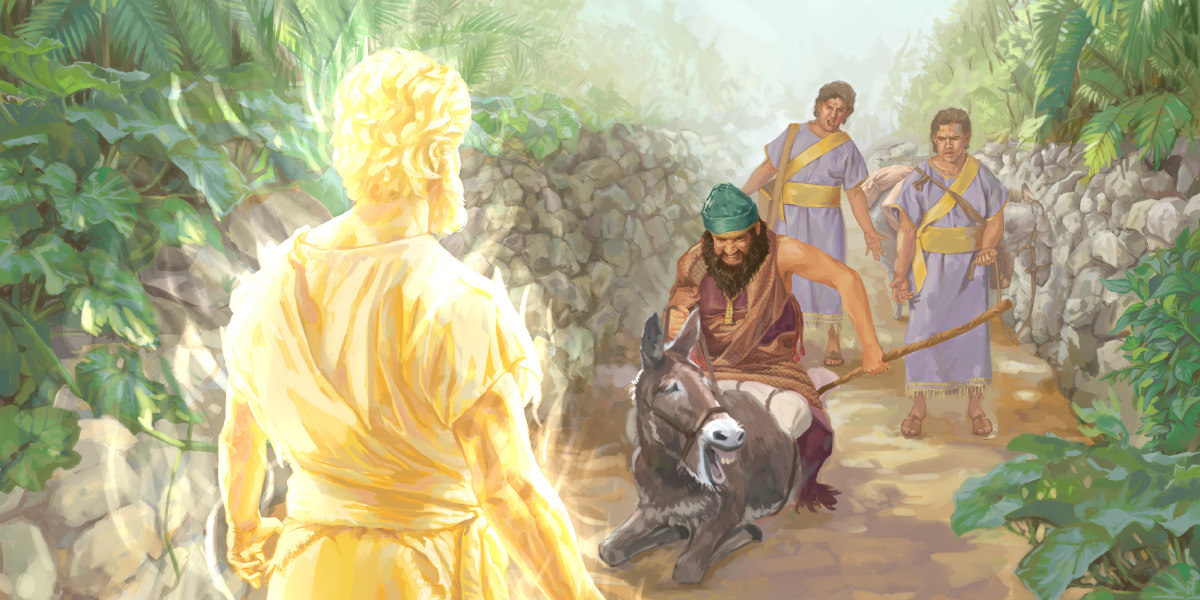
I now arrive at the subject of my provocative title. The children of Israel were nearing the end of their wanderings in the wilderness. They were approaching the borders of Moab. The Moabites were the descendants of one of Lot’s daughters.[6]Numbers 22-24 records the encounter between Moab and Israel. Balak, the king of Moab, heard about the approach of the Israelites, and God’s reputation preceded them. “And Moab was sore afraid of the people, because they were many: and Moab was distressed because of the children of Israel” (Numbers 22:3). Balak got the great idea to hire Balaam to curse Israel, “for,” he said, “I [know] that he whom thou blessest is blessed, and he whom thou cursest is cursed” (Numbers 22:6). However, Balaam assured him that he could only speak as the LORD directed him, so he turned down the job. Balak would not be deterred. He sent a second delegation with a greater offer. When Balaam consulted with God about the matter, God instructed him to return with the delegation, but that he should only speak the words He gave him. So, the next day, Balaam saddled his donkey (ass) and went to see Balak. Along the way, “the Angel of the Lord with sword drawn” confronted him. Balaam did not see Him, but the donkey did, and she veered off the main road. That angered Balaam and he beat the donkey and tried to force her back on the main road. There was a stone wall along one side of the road, and when the donkey saw the Angel of the Lord, she went up against the wall and knocked Balaam off her back. That really made Balaam angry, and he beat her again. The Angel of the Lord moved further down the road again to a place where the donkey could not get around, so she just dropped down. Balaam got off and started beating her again. Then the most remarkable thing happened. “And the LORD opened the mouth of the ass, and she said unto Balaam, What have I done unto thee, that thou hast smitten me these three times?” (Numbers 22:28). What is even more remarkable is that Balaam was not taken aback because the donkey talked. Instead, he engaged her in conversation. “And Balaam said unto the ass, Because thou hast mocked me: I would there were a sword in mine hand, for now would I kill thee” (Numbers 22:29). The donkey then laid a guilt trip on Balaam. “And the ass said unto Balaam, Am not I thine ass, upon which thou hast ridden ever since I was thine unto this day? was I ever wont to do so unto thee? And he said, Nay” (Numbers 22:30).
At that point, God opened Balaam’s eyes so that he could see what the donkey saw. Balaam saw the pre-incarnate Christ with a sword drawn. “And the angel of the LORD said unto him, Wherefore hast thou smitten thine ass these three times? behold, I went out to withstand thee, because thy way is perverse before me: And the ass saw me, and turned from me these three times: unless she had turned from me, surely now also I had slain thee, and saved her alive. And Balaam said unto the angel of the LORD, I have sinned; for I knew not that thou stoodest in the way against me: now therefore, if it displease thee, I will get me back again. And the angel of the LORD said unto Balaam, Go with the men: but only the word that I shall speak unto thee, that thou shalt speak. So Balaam went with the princes of Balak” (Numbers 22:32-35, emphasis mine).
Balaam did go to Balak, and three different times, instead of cursing Israel, to Balak’s chagrin, all Balaam could utter was a blessing upon the children of Israel. In one of those blessings, he foretold the coming of the Messiah. “I shall see him, but not now: I shall behold him, but not nigh: there shall come a Star out of Jacob, and a Sceptre shall rise out of Israel, and shall smite the corners of Moab, and destroy all the children of Sheth” (Numbers 24:17, emphasis mine).
At the end of the chapter, it appears that Balak and Balaam part ways in defeat. In the following chapter, we learn that the children of Israel started fornicating with the Moabite women. The fornication involved more than just illicit sex. The act was part of Baal worship in violation of the first two of the Ten Commandments. God had all the violators hanged or killed by the non-participants.
When we read further, we learn that Balaam had something to do with Israel’s sin. “And the LORD spake unto Moses, saying, Avenge the children of Israel of the Midianites: afterward shalt thou be gathered unto thy people” (Numbers 31:1-2). This event took place just prior to Israel entering the Promised Land. “And they warred against the Midianites, as the LORD commanded Moses; and they slew all the males. And they slew the kings of Midian, beside the rest of them that were slain; namely, Evi, and Rekem, and Zur, and Hur, and Reba, five kings of Midian: Balaam also the son of Beor they slew with the sword” (Numbers 31:7-8, emphasis mine). The Midianite women they took captive for which Moses reprimanded them. “And Moses said unto them, Have ye saved all the women alive? Behold, these caused the children of Israel, through the counsel of Balaam, to commit trespass against the LORD in the matter of Peor, and there was a plague among the congregation of the LORD” (Numbers 31:15-16, emphasis mine). So, Balaam did not just give up in defeat. He counseled Balak to seduce the men of Israel to fornicate in worship to Baal.
Evidently, Balaam was paid for his advice to Balak. The Apostle Peter writes, “… cursed children Which have forsaken the right way, and are gone astray, following the way of Balaam the son of Bosor, who loved the wages of unrighteousness” (2 Peter 2:14-15, emphasis mine). Jude adds, “Woe unto them! for they have gone in the way of Cain, and ran greedily after the error of Balaam for reward, and perished in the gainsaying of Core” (Jude 1:11, emphasis mine). Jesus Himself affirmed as much. “But I have a few things against thee, because thou hast there them that hold the doctrine of Balaam, who taught Balac to cast a stumblingblock before the children of Israel, to eat things sacrificed unto idols, and to commit fornication” (Revelation 2:14, emphasis mine). At least Balaam’s donkey was smart enough not to try to circumvent the Lord’s will. The lesson – you need to be at least as smart as Balaam’s donkey and not try to find a way around God’s will. In the end, you lose.
However, the greater lesson I learned through my reading in Numbers is that even though Israel is constantly obstinate against God (even today – their majority is secular), God is consistently faithful to His promise to Abraham, and He will bless those who bless Israel and curse those who curse Israel. Would that our government would learn that lesson. Our puppet president is making all the wrong decisions in opposition to Israel – cursing Israel. That will only result in God cursing our country. And, if you are paying attention, God has already removed His hand of blessing from our nation. Do not be fooled. Israel will survive without the US, but the US will fade from its former place of greatness. “Be not deceived; God is not mocked: for whatsoever a man soweth, that shall he also reap” (Galatians 6:7).
(For the LORD thy God is a jealous God among you) lest the anger of the LORD thy God be kindled against thee, and destroy thee from off the face of the earth. (Deuteronomy 6:15)
This year I have been following a chronological reading plan for reading the Bible through in the year, and currently, I am trudging through the book of Leviticus. Beginning with Exodus 20 when God speaks the Ten Commandments in the hearing of the children of Israel, Scripture goes into tedious detail for the proper worship of God by the Israelites.
Not only do the Scriptures detail the “thou shalt not” commandments, but every minute detail of the construction of the Tabernacle with all of its implements, and the garments of the priests, especially that of the high priest. The methods and occasions for the offering of sacrifices follows that in great detail. Reading the monotonous minutia might make the reader skip over all of those pages to get to more interesting reading, like Numbers. One is tempted to wonder why God would put all of that boring stuff in the Bible and actually expect readers to take it seriously.
For Christians, who are under grace and not under the Law, the reading may seem non-applicable, and to some degree, that is true. We who are born-again, Spirit-filled, children of God ARE the Temple of God[1] and priests unto God.[2] That being the case, where is the value in reading monotonous tedium? Much indeed.
The sacrificial system prescribed by God to Moses made clear God’s view of sin. To God, ALL sin is repulsive. That was true then and it is true today. When one considers the amount of blood shed for every manner of sin, one wonders how their herds were never depleted. To our animal-loving Western minds, the slaughter of innocent animals and the method (the throat was slit to drain blood while the heart continues to pump) for the holocaust is grotesque – it had to be. The revolting procedure dramatically illustrated how abhorrent sin is to God.
God specifies in great detail exactly how the priests were to handle the sacrifice. God gives precise descriptions on how to make the oil for the lampstand, the bread for the showbread, the incense for the altar of incense, and how to maintain all these things on a perpetual basis. Even if one scans quickly through these pages, it becomes readily apparent that God is very particular about how He is to be worshiped. However, this is not a new revelation.
From the beginning, God shed the blood of innocent animals to cover the nakedness of Adam and Eve after the Fall.[3] Apparently, the practice of sacrificing animals for sin in worship to God continued because later we find Cain and Abel sacrificing to God. However, Cain did not offer his sacrifice in the prescribed manner, so his offering was rejected by God.[4] The practice continued until the time of Noah and afterward with Abraham, Isaac, and Jacob (Israel). However, the practice was not codified until God gave the Law to Moses. Not long after the Tabernacle was dedicated and the form of worship was implemented, the first infraction took place. Two of Aaron’s sons, Nadab and Abihu (priests), took fire for the incense altar from somewhere other than from the altar of sacrifice (outside the tent) as prescribed. For their disobedience, God rained fire from heaven and incinerated them instantly.[5] God made His point clear. He is particular about the way He is worshipped.
The modern-day Christian might ask, “What does this have to do with us?” I asked myself the same question. However, as I browsed the minutia, which is not minutia to God, the broad understanding I gleaned is that God is particular about how His people approach Him in worship. We, Christians, are far removed from the sacrificial system and are not bound by the Levitical laws. Jesus is our once-and-for-all sacrifice. “But Christ being come an high priest of good things to come, by a greater and more perfect tabernacle, not made with hands, that is to say, not of this building; Neither by the blood of goats and calves, but by his own blood he entered in once into the holy place, having obtained eternal redemption for us” (Hebrews 9:11-12, emphasis mine).
For the law having a shadow of good things to come, and not the very image of the things, can never with those sacrifices which they offered year by year continually make the comers thereunto perfect. For then would they not have ceased to be offered? because that the worshippers once purged should have had no more conscience of sins. But in those sacrifices there is a remembrance again made of sins every year. For it is not possible that the blood of bulls and of goats should take away sins. Wherefore when he [the Lord Jesus Christ] cometh into the world, he saith, Sacrifice and offering thou wouldest not, but a body hast thou prepared me: In burnt offerings and sacrifices for sin thou hast had no pleasure. Then said I [Jesus speaking], Lo, I come (in the volume of the book it is written of me,) to do thy will, O God. Above when he said, Sacrifice and offering and burnt offerings and offering for sin thou wouldest not, neither hadst pleasure therein; which are offered by the law; Then said he, Lo, I come to do thy will, O God. He taketh away the first, that he may establish the second. By the which will we are sanctified through the offering of the body of Jesus Christ once for all. And every priest standeth daily ministering and offering oftentimes the same sacrifices, which can never take away sins: But this man [Jesus], after he had offered one sacrifice for sins for ever, sat down on the right hand of God; From henceforth expecting till his enemies be made his footstool. (Hebrews 10:1-13, emphasis mine)
So, Jesus, by His sacrifice on the cross, ended the sacrificial system prescribed by the Law. As He breathed out His final breath, He proclaimed, “It is finished”[6] – paid in full. For those who are “born again,” who have placed their faith and trust in Christ, the rigors of the Levitical system of worship have been done away. Does that mean that God no longer cares about how we approach Him in worship? Is He less worthy of awe and reverence now than when He struck down Aaron’s sons for bringing “strange fire” before Him? I think not.
How one comes before God is a matter of one’s personal attitude, so I cannot judge the condition of an individual’s heart. However, as I observe many public gatherings called “worship services,” the focus of the activities seems designed to stir the emotions of the “worshipers,” and even though Christian lingo is randomly repeated, the direction of the “worship” is horizontal (i.e., human to human) rather than vertical.
I follow several well-known pastors who I consider to be very biblically sound and who preach the Gospel without reservation, yet, before they stand to preach, their “band” comes out to warm up the congregation in preparation for the sermon. As the cameras scan the crowd, some stand there unmoved while others raise their hands and sway to the music as if they are at a rock concert. I wonder how God, Who was so particular in the OT about how He was to be worshipped, feels about the “worship” offered up these days. Indeed, far too often that worship is man-centered, not God-centered; it is not even directed to God. It is all about us and how we feel. Again, I cannot judge the heart of individual worshipers; only God can see into the heart, but what I observe on the surface comes across more as entertainment than worship.
So, regardless of the “atmosphere” of the “worship service” in which we participate, we need to remove all distractions from our minds and focus our thoughts, our minds, and our hearts on the greatness and majesty of our awesome, all-mighty, Creator God. Let Him be the object of our worship, not the performers on the stage.
“I beseech you therefore, brethren, by the mercies of God, that ye present your bodies a living sacrifice, holy, acceptable unto God, which is your reasonable [act of worship]. And be not conformed to this world: but be ye transformed by the renewing of your mind, that ye may prove what is that good, and acceptable, and perfect, will of God” (Romans 12:1-2).
In him was life; and the life was the light of men. And the light shineth in darkness; and the darkness comprehended it not. (John 1:4-5)
It is Christmas Eve as write this. June and I enjoyed a time of fellowship with our church. Our sermon today was based on Isaiah 9:6-7, which speaks of the child that was to be born whose name was “Wonderful Counselor, The Mighty God, The Everlasting Father, The Prince of Peace.” He is the One upon whose shoulder the government should rest and whose reign would have no end. It is one of those promises whose fulfillment is now and not yet. Truly He reigns within the heart of every believer, but He is yet to come to rule over all the earth.
After church, June and I came home to settle into our Sunday routine which includes “second breakfast” and listening to more Bible teachings and sermons on YouTube. One of those was Dr. Robert Jeffress of the First Baptist Church of Dallas. In his sermon, he spoke of Jesus coming to earth as “the Light of the World,” a term Jesus applied to Himself (John 8:12; 9:5).
As I listened to Jeffress’ exposition, my mind carried me back to Genesis 1:14-19 when God created all of the celestial bodies. “And God set them in the firmament of the heaven to give light upon the earth, And to rule over the day and over the night, and to divide the light from the darkness: and God saw that it was good” (Genesis 1:17-18, emphasis mine). Was that not also Jesus’ purpose for coming to the earth? – “to give light upon the earth” and “to divide the light from the darkness”? It seems that the Apostle John made the same point – “In him was life; and the life was the light of men. And the light shineth in darkness; and the darkness comprehended it not” (John 1:4-5, emphasis mine).
As I mused on this, I remembered that God created the celestial luminaries on the fourth day of creation. That brought to mind what the Apostle Peter wrote about the way God reckons time. “But, beloved, be not ignorant of this one thing, that one day is with the Lord as a thousand years, and a thousand years as one day” (2 Peter 3:8). Of course, Peter was using simile to express the timeless nature of God, but as we consider biblical chronology, the comparison does seem to fit. It has been about 6000 years since creation, which is comparable to six days, and creation was accomplished in six literal days. God ceased from creation on the seventh day, and we yet await our seventh day of rest when Jesus rules on earth for 1000 years (1 day) – Revelation 20:1-8. So, it appears that the days of creation and the years of Earth’s history have a 1:1000 correspondence.
Taking this a step further, Jesus was born around 4000 years after creation which corresponds with the fourth day of creation when God created all the heavenly bodies. I wonder if God did that on purpose?
“But when the fulness of the time was come, God sent forth his Son, made of a woman, made under the law, To redeem them that were under the law, that we might receive the adoption of sons” (Galatians 4:4-5).
… that I may open my mouth boldly, to make known the mystery of the gospel, (Ephesians 6:19)
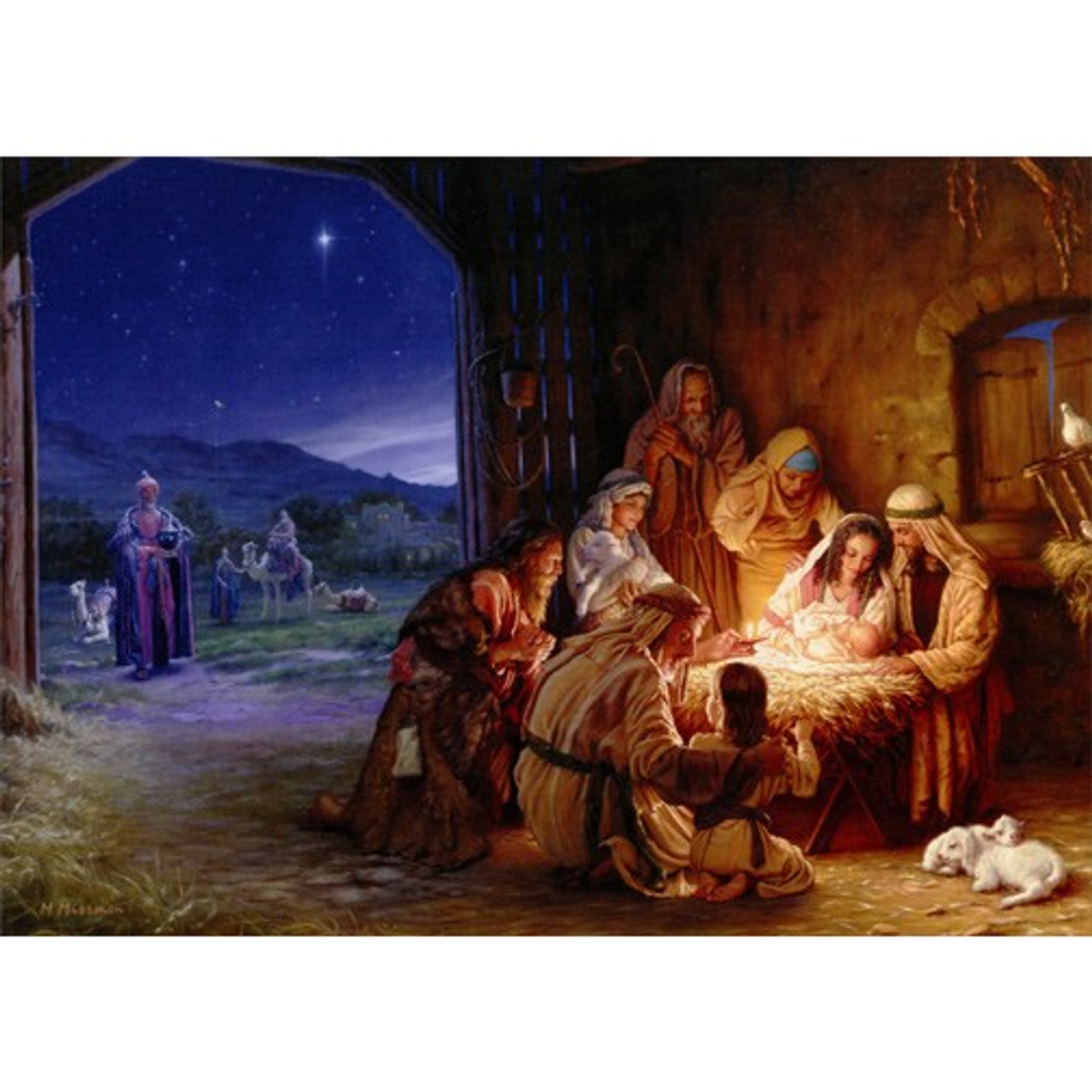
The Gospel is a mystery. The Gospel (Greek: euaggelion) means “good tidings” or “good news.” The angel brought the euaggelion to the shepherds who watched their flocks by night.[1] It was the euaggelion that the Savior was born in Bethlehem. But what did this euaggelion mean? When the angels departed, the shepherds hurried to Bethlehem to see the euaggelion for themselves. Once they had seen the baby, they spread the news to all who would hear. “And all they that heard it wondered at those things which were told them by the shepherds” (Luke 2:18, emphasis mine). It was a mystery!
At Christmastime, we sing the mournful carol, “Oh Come, Oh Come Emanuel.” The lyrics describe a deep yearning for the advent of Messiah. “Oh come, oh come Emanuel, and rescue captive Israel, that mourns in lonely exile here, until the Son of God appear.” However, Israel was not expecting the Son of God to appear. That was the mystery.
Indeed, the prophets foretold of the coming Messiah. When the magi later came searching for “he that is born King of the Jews,”[2] the religious leaders, who knew the Scriptures, directed them to Bethlehem. They quoted the Prophet Micah: “And thou Bethlehem, in the land of Juda, art not the least among the princes of Juda: for out of thee shall come a Governor, that shall rule my people Israel” (Matthew 2:6, emphasis mine). However, they omitted the last phrase of Micah’s prophecy: “whose goings forth have been from of old, from everlasting” (Micah 5:9). That last part was a mystery to them. How could an earthly ruler/king exist “from of old, from everlasting”? That would mean this king existed from eternity past. That could only mean this coming king would be God. To them, that was impossible. It was a mystery.
Four hundred years prior, the last prophet spoke of the coming Messiah. “And he shall sit as a refiner and purifier of silver: and he shall purify the sons of Levi, and purge them as gold and silver, that they may offer unto the LORD an offering in righteousness” (Malachi 3:3). This certainly speaks of authority, but the general tone of the prophecy expressed God’s displeasure with His people obscuring any hint of the Messiah’s divinity. After that, God stopped talking for four hundred years. A lot can be forgotten in four hundred years or blurred beyond recognition.
Previous prophets had spoken of a coming king who would sit on David’s throne. A favorite Christmas passage from Isaiah says, “For unto us a child is born, unto us a son is given: and the government shall be upon his shoulder: and his name shall be called Wonderful, Counsellor, The mighty God, The everlasting Father, The Prince of Peace. Of the increase of his government and peace there shall be no end, upon the throne of David, and upon his kingdom, to order it, and to establish it with judgment and with justice from henceforth even for ever. The zeal of the LORD of hosts will perform this” (Isaiah 9:6-7, emphasis mine). While Isaiah clearly stated that His name would be “The mighty God” and “The everlasting Father,” the promise of His reign on David’s throne overshadowed (in their minds) the fact of His divinity. Since the fifth century before Christ, Israel had been ruled by outside forces; first Babylon, then Persia, then Greece, and now the Romans. The Jews wanted a king to make them a superpower. God coming to reign on earth in human flesh was unthinkable. It was a mystery!
Other prophecies held an even more unimaginable mystery – Messiah would suffer and die. Psalm 22 describes His crucifixion when such execution methods did not exist. Isaiah 53 also details the suffering of Messiah. The prophet Daniel precisely foretold the number of years when Messiah would be “cut off.”[3] The Messiah that was to be king and rule the world would have to die. That makes no sense! It was a mystery!
Even today, the idea that the Almighty, Creator God took on human flesh, in a virgin’s womb, was born by natural means in the lowliest of estates, grew up among “his own, and his own received him not” (John 1:11). “He is despised and rejected of men; a man of sorrows, and acquainted with grief: and we hid as it were our faces from him; he was despised, and we esteemed him not” (Isaiah 53:3). He was nailed to a cross for our sins and rose on the third day so “that whosoever believeth in him should not perish, but have everlasting life” (John 3:16). “But as many as received him, to them gave he power to become the sons of God, even to them that believe on his name” (John 1:12). That is the mystery of the Gospel.
All religions of the world, including many so-called “Christian” religions, demand some kind of sacrifice from their adherents. The adherents of these false religions must do something to appease their gods in order to gain entry into eternal life. It is no wonder then that the idea that all one needs to do is believe in Jesus and trust in the sufficiency of His sacrifice for our sins. It’s too easy. It’s a mystery! Paul describes how Jesus left His first estate as God, and took on human flesh for the purpose of making Himself the perfect sacrifice for our sins.[4] Our God performed the work of salvation for us so that all we need to do is believe. “For by grace are ye saved through faith; and that not of yourselves: it is the gift of God: Not of works, lest any man should boast” (Ephesians 2:8-9, emphasis mine). It is a mystery! “But the natural man receiveth not the things of the Spirit of God: for they are foolishness unto him: neither can he know them, because they are spiritually discerned” (1 Corinthians 2:14). That is the mystery of the Gospel.
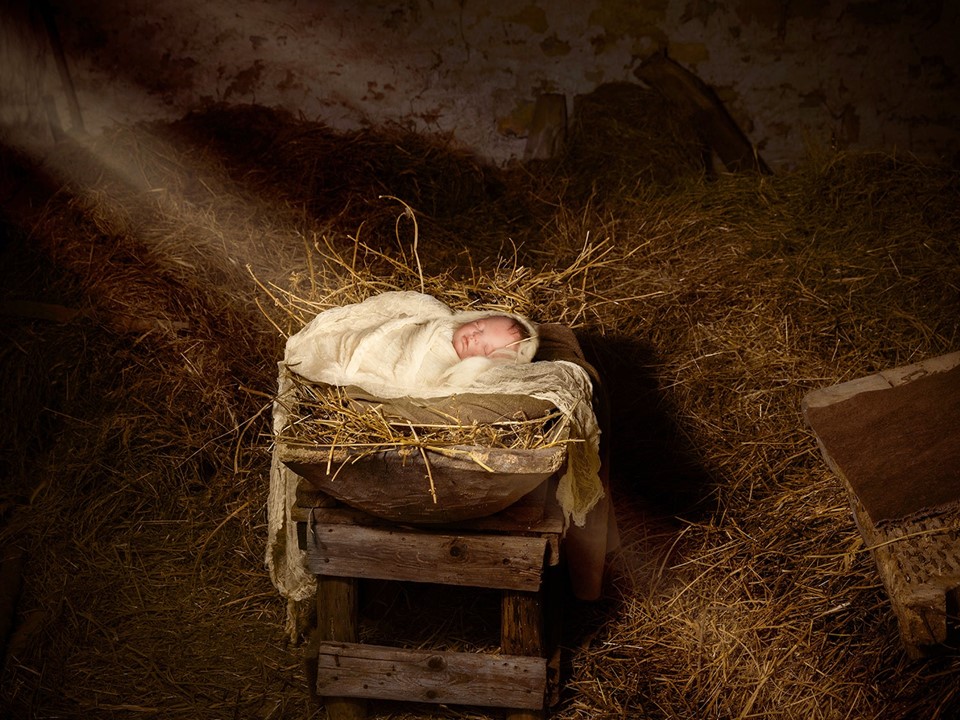
As we ponder the mystery of the Gospel, especially during this Christmas season, the thought of God coming to us in the form of a helpless baby should captivate us in awestruck wonder. How could such a thing be! The only thing that remains is praise and thanksgiving for the incalculable gift that He offers. “For God so loved the world, that he gave his only begotten Son, that whosoever believeth in him should not perish, but have everlasting life” (John 3:16).
Reader, if you have not accepted God’s free gift of salvation, there is nothing you have to do but believe. Please read my page on “Securing Eternal Life.”



 Ernie's Musings