Tag Archives: Jesus

Remember?

Loaves and Fishes

Do ye not yet understand, neither remember the five loaves of the five thousand, and how many baskets ye took up? Neither the seven loaves of the four thousand, and how many baskets ye took up? (Matthew 16:9-10)

Jesus and His disciples left the village of Magdala and crossed the Sea of Galilee. Mark tells us that they landed at Bethsaida (Mark 8:22), but before they arrived, Jesus thought aloud about an encounter they had in Magdala with a group Pharisees and Sadducees (Matthew 16:1-4). This bunch demanded “a sign from heaven” to validate His teachings. Obviously, the miracles Jesus performed were insufficient for these religious experts. So as Jesus thought on this, He offered His disciples an object lesson. “Then Jesus said unto them, Take heed and beware of the leaven of the Pharisees and of the Sadducees” (Matthew 16:6). However, the disciples were preoccupied with the fact that they forgot to pack a lunch (v. 5), “And they reasoned among themselves, saying, It is because we have taken no bread” (Matthew 16:7).

In their preoccupation with their stomachs, they missed the spiritual meal their Master had prepared for them. So, to refocus their minds to receive the real meal, Jesus reminded them of the miracle where He fed the 5000 (Matthew 14:13-21), and more recently, the feeding of the 4000 (Matthew 15:32-38). They need not concern themselves about what they were going to eat. Indeed, Jesus spoke on this very thing in His Sermon on the Mount. “Therefore take no thought, saying, What shall we eat? or, What shall we drink? or, Wherewithal shall we be clothed?” (Matthew 6:31). They were not about to go hungry with Jesus in their company.

We often behave just like the disciples. We get caught up with the worries and troubles of this world, and we forget all the times that God carried us through those troubled times. Remember when you were abandoned, and God brought that special person into your life to mend your brokenness? Remember when you lost your job and somehow God provided for you until He had a better job for you? Remember when you sacrificially gave to a cause God placed on your heart, and somehow you never missed that sacrificial gift? Remember?

When you are in the company of Jesus, all your needs (not wants) will be met, “for your heavenly Father knoweth that ye have need of all these things” (Matthew 6:32). Remember how God provided for you in the past, and “seek ye first the kingdom of God, and his righteousness; and all these things shall be added unto you” (Matthew 6:33). Remember.

Comments Off on Remember?

Filed under Christianity, Religion, Theology

Almighty Creator in Infant Form

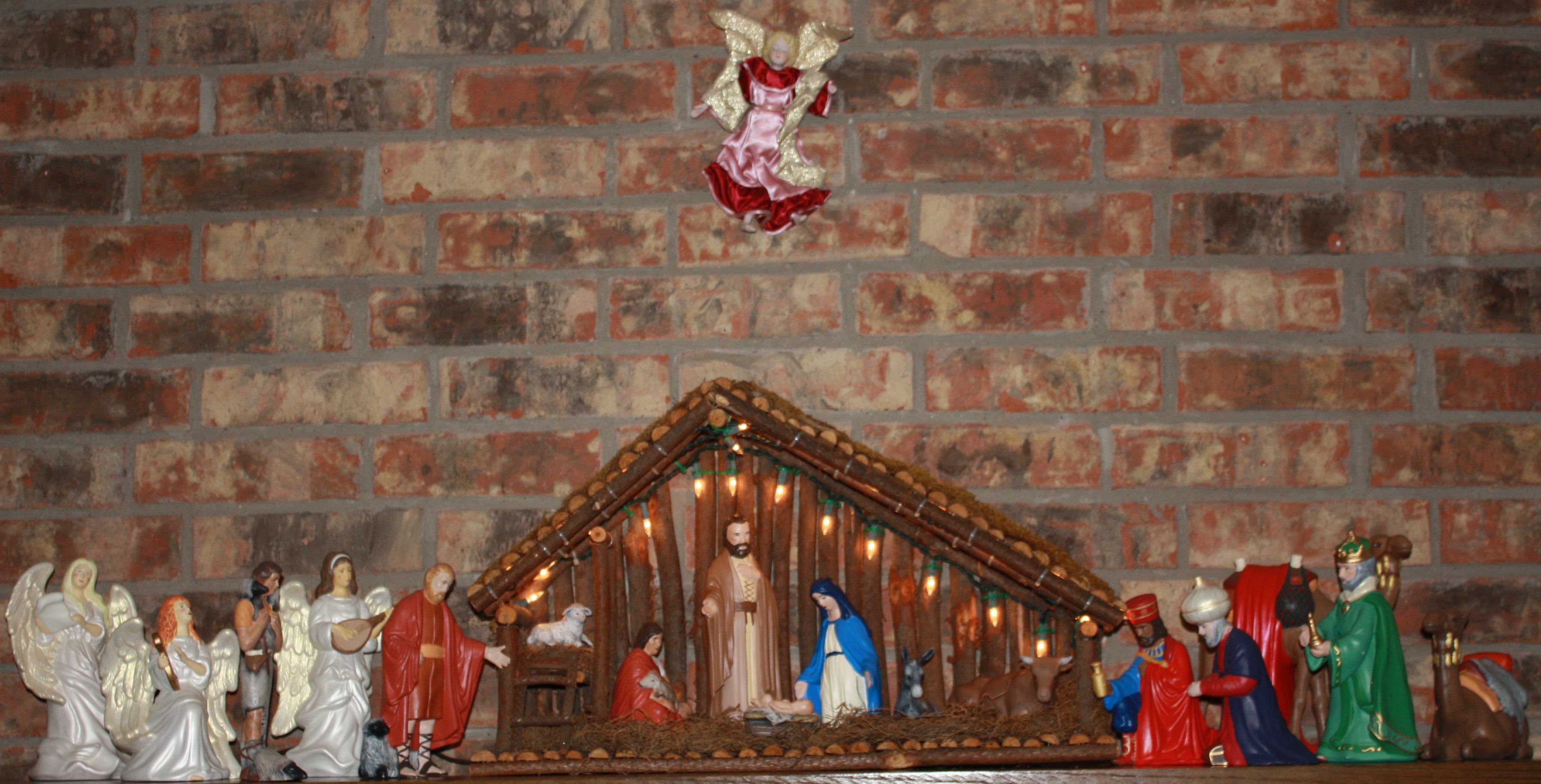
This ceramic Nativity was hand-painted by the author and has been the main feature for household decor for over 30 years.

This ceramic Nativity set was hand-painted by the author and has been the main feature for our household decor for over 30 years.

In the beginning was the Word, and the Word was with God, and the Word was God. (John 1:1)

This time of year we expect to see the story of the birth of Christ played out in humble means by children in small churches, or by freezing “actors” in “living” nativity scenes, or in glitzy performances by mega church choirs.  Even the Radio City Rockettes present the Christmas story at the end of every performance.  All of these presentations begin with the typical scene of Mary, Joseph, and the baby Jesus in a stable surrounded by farm animals, and conclude with an unbiblical menagerie of shepherds, wise men and angels all worshiping the Christ child.

While this serves as a sweet reminder to get one focused on the true meaning of Christmas, it somehow misses the awesome significance of this event.  The Word, the Logos, the revealed Wisdom of God, was manifested in a tiny, helpless infant.  This now revealed Word, our verse tells us, existed with God at the beginning of time (John 1:2), and He was, in fact, very God.  “All things were made by him; and without him was not any thing made that was made” (John 1:3).  “Who, being in the form of God, thought it not robbery to be equal with God:  But made himself of no reputation, and took upon him the form of a servant, and was made in the likeness of men” (Philippians 2:6-7).  And so, “the Word was made flesh” (John 1:14) in the form of a helpless baby – a baby that, though He existed in eternity past, entered and grew in His mother’s womb from a zygote to a fetus that had to fight His way through the birth canal.  God came as a baby that had to be nursed at His mother’s breast.  A baby that had to be carried everywhere He went.  A baby that had to have His diapers changed.  This was God in human form – the Creator of heaven and earth cloaked in human flesh as a tiny babe. Is that not incredible!

The idea of it all is inconceivable!  Yet, this was His plan from the beginning, so that “as many as received him, to them gave he power to become the sons of God, even to them that believe on his name” (John 1:12).  “And being found in fashion as a man, he humbled himself, and became obedient unto death, even the death of the cross” (Philippians 2:8).  That is the message that is often overshadowed in the scenes and sounds of the season.

The lyrics to Mark Lowry’s song, “Mary Did You Know” so poignantly express the significance of this blessed event:

Mary did you know that your baby boy is Lord of all creation?
Mary did you know that your baby boy will one day rule the nations?
Did you know that your baby boy is heaven’s perfect Lamb?
This sleeping child you’re holding is the great I am.
 

This Christmas, try to think beyond the nativity scene. See the babe for the God He truly is, and be awed that He did this for you.

1 Comment

Filed under Apologetics, Christianity, Christmas, Creation, Gospel, Origins, Religion, Salvation, Theology

Who Were the Magi?

There came wise men from the east to Jerusalem

There came wise men from the east to Jerusalem

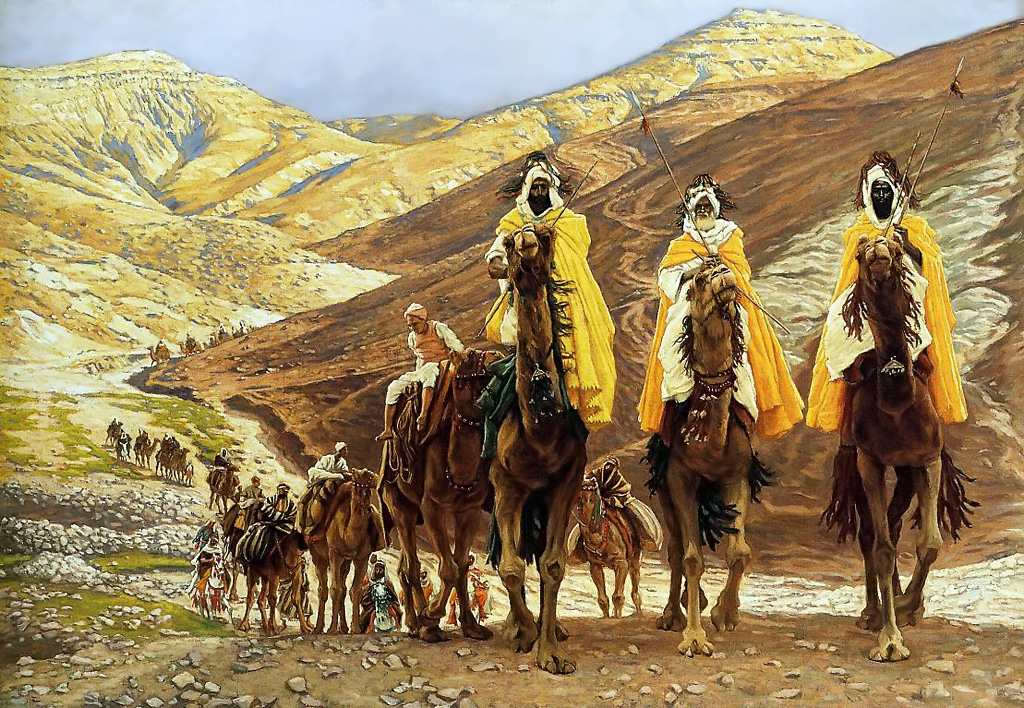
Now when Jesus was born in Bethlehem of Judaea in the days of Herod the king, behold, there came wise men from the east to Jerusalem, Saying, Where is he that is born King of the Jews? for we have seen his star in the east, and are come to worship him. (Matthew 2:1-2)

No Nativity scene is complete without three wise men and their entourage. Of course, any student of Scripture understands that their number is unknown but rather inferred from the three gifts that were presented to the Christ child – gold, frankincense, and myrrh (Matthew 2:11). Nor did they arrive at the moment of His birth, but rather some two years later. We know this because the family was living in a “house” (v. 11) rather than a stable (Luke 2:7). The wise men also found a “young child” (Greek: paidion – a toddler) rather than a “babe” (Greek: brephos – an infant). Regardless, the shepherds, wise men, singing angels and the whole menagerie make for a sweet tableau at Christmastime.

But who were these “wise men” and from where did they come? First of all, the Greek word translated as “wise men” is magoi meaning an “oriental scientist,” or by implication, a “magician” or “sorcerer.” The Latin translation of the Greek is magi, which is also commonly used in English. Secular sources say that the magi were the Zoroastrian priests of the ancient Medes and Persians. John Wesley suggests that “Probably they were Gentile philosophers, who, through the Divine assistance, had improved their knowledge of nature, as a means of leading to the knowledge of the one true God.” Other commentators suggest that they had Balaam’s prophecy (Numbers 24:17), and perhaps Daniel’s (Daniel 9:24, etc.), handed down to them by tradition. Adam Clarke offers this: “It is very probable that the persons mentioned by the evangelist were a sort of astrologers, probably of Jewish extraction, that they lived in Arabia-Felix, and … came to worship their new-born sovereign.”

The Bible has little to say about these men. They came from the “east,” which most agree is from the area of Persia. Since no one really seems to know for certain, I feel free to offer my suggestion. I reject the secular view that these men were Zoroastrian priests. While a pagan priest might be familiar with Hebrew Scriptures (because as educated men, they would probably study a wide variety of sources), they would not necessarily be compelled to take them seriously. After all, they adhered to their own religion. I agree with Clarke who suggests that they were “probably of Jewish extraction.” My guess is that they were of the remnant that remained in Babylon after Cyrus allowed the Jewish exiles to return to Jerusalem. Daniel remained in Babylon and maintained a high position as advisor to the king. Daniel was a “wise man.” Undoubtedly he established a school for wise men where he taught from the Hebrew Scriptures. There were many Jews that served in high positions in the Persian court: Mordecai (Esther 2:19), Nehemiah (Nehemiah 1:11); so it is reasonable to conclude that others followed suit. As Jewish “wise men,” they would have a greater reason to study the Scriptures as they yearned for their Messiah, the King of the Jews. I conclude that these magi were Jews coming from Babylon in search of their Messiah, and “When they saw the star, they rejoiced with exceeding great joy” (Matthew 2:10). And when they found the child, they “fell down, and worshipped him” (Matthew 2:11).

5 Comments

Filed under Apologetics, Christmas, Religion

Why Satan?

And he said unto them, I beheld Satan as lightning fall from heaven.  (Luke 10:18)

Since God is omniscient and knows all things including the future, why would He create Satan knowing full well that he would rebel against Him and bring about the Fall of man? That question does not have a simple answer. I covered much of this in my article “How Thou Hast Fallen,” but perhaps this will answer some questions I did not address there.

To begin with, we cannot fully understand the ways of God or His thoughts. God says:

For my thoughts are not your thoughts, neither are your ways my ways, saith the LORD. For as the heavens are higher than the earth, so are my ways higher than your ways, and my thoughts than your thoughts” (Isaiah 55:8-9).

Remember the former things of old: for I am God, and there is none else; I am God, and there is none like me, Declaring the end from the beginning, and from ancient times the things that are not yet done, saying, My counsel shall stand, and I will do all my pleasure: (Isaiah 46:9-10)

One of the first things we need to understand about God is that He is omniscient; that is, His knowledge is absolute. God does not “learn;” He innately knows all that there is to know. That’s why evolution is such a stupid idea. First of all it attempts to explain all that there is as having come about by natural causes without God. Even many Christians try to compromise by suggesting that God used evolution to create. Why would God have to use evolution to create, as if He is some kind of mad scientist experimenting in order to get everything to work just right? No, God did not have to “think” about His creation; He knew exactly how to make all things perfectly without needing a blueprint. Not only that, but as expressed in Isaiah 46:10 above, He knows “the end from the beginning” and everything will be accomplished according to His pleasure. Everything God does is for His pleasure and for His glory.

I am the LORD: that is my name: and my glory will I not give to another, neither my praise to graven images. (Isaiah 42:8)

Even every one that is called by my name: for I have created him for my glory, I have formed him; yea, I have made him. (Isaiah 43:7)

In context, in Isaiah 43:7, God is referring to His bringing back all the Israelites that have been scattered all over the earth to the land of Israel; but notice why He is doing it. It is because He has created them all for His “glory.” In a larger sense, that is true for all of God’s creation; it is all to bring Him glory.

Now, if you have a good handle on that, we can talk about why God created Satan. When God created angels and humans, He gave them a free will so that they are able to choose for themselves whether they want to obey or disobey God. Humans, unlike the angels, were created in the “image of God,” and God gave humans dominion over all of His creation (Genesis 1:26). He did not give angels that kind of authority. In fact, of the angels, the Bible says, “Are they not all ministering spirits, sent forth to minister for them who shall be heirs of salvation?” (Hebrews 1:14). So God created humans superior to the angels even though, for now, angels have supernatural powers which humans do not possess.

What is man, that thou art mindful of him? and the son of man, that thou visitest him? For thou hast made him a little lower than the angels, and hast crowned him with glory and honour. (Psalm 8:4-5)

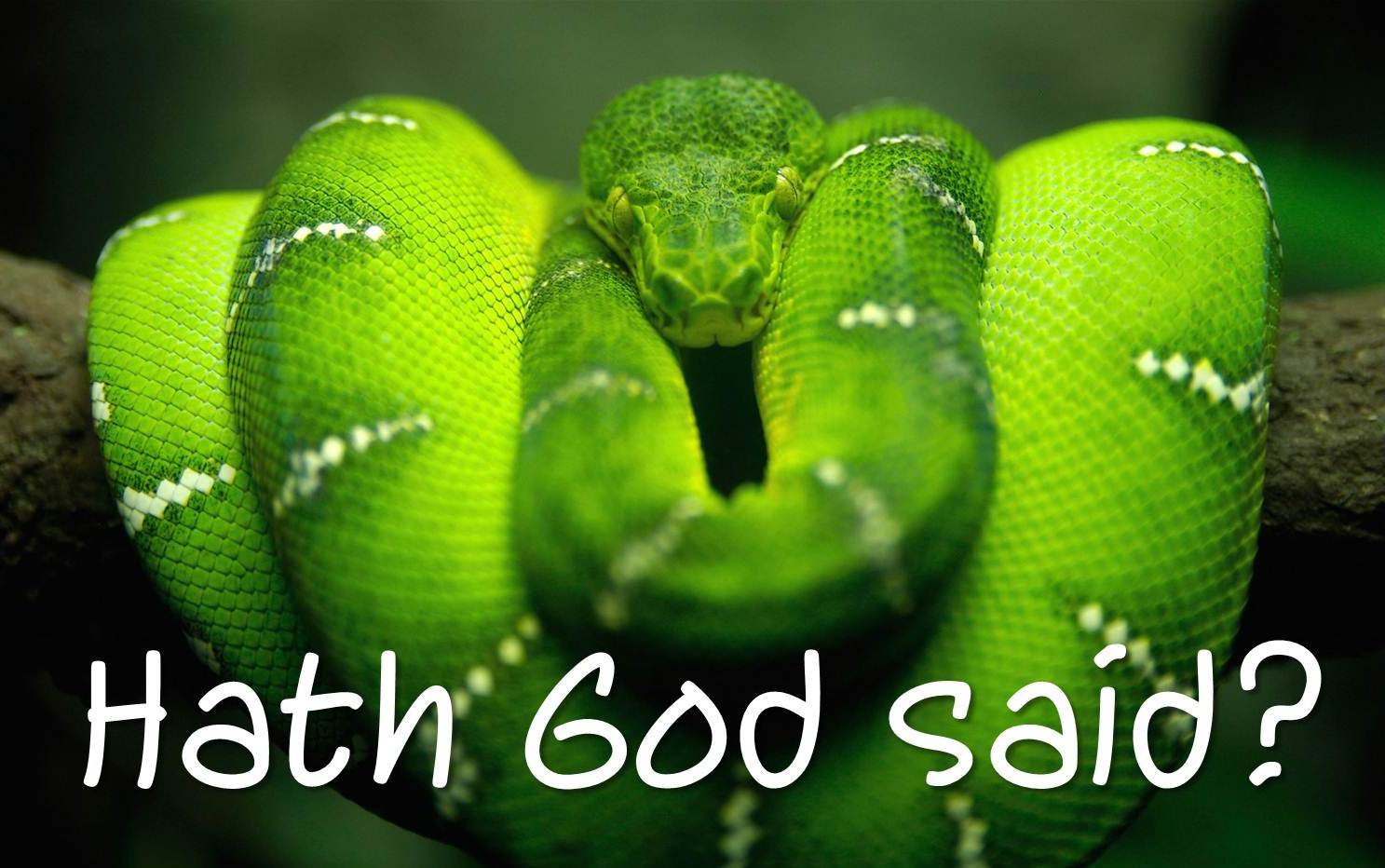
Back to Satan: God did not create Satan as “the evil one” in the beginning. How do we know this? We know this because at the end of creation, God declared everything – all of His creation including all the angels and Satan – as “very good” (Genesis 1:31). We cannot have a “very good” creation, if evil exists. So, at this point, Satan – his name is actually Lucifer (Isaiah 14:12) – had not yet sinned. By sin I mean that he had not yet rebelled against God. Sin is rebellion against God, and it manifests in many different forms, but the root is rebellion against God’s authority. When Satan tempted Eve in the Garden, he told her “ye shall be as gods, knowing good and evil” (Genesis 3:5). We still deal with that same temptation. We want to be gods. We want to decide for ourselves what is good and what is evil, rather than let God be God.

I believe that this is the point where Satan sinned. It started with his pride:

How art thou fallen from heaven, O Lucifer, son of the morning! how art thou cut down to the ground, which didst weaken the nations! For thou hast said in thine heart, I will ascend into heaven, I will exalt my throne above the stars of God: I will sit also upon the mount of the congregation, in the sides of the north: I will ascend above the heights of the clouds; I will be like the most High. (Isaiah 14:12-14)

You can see that he had an “I” problem. All of this he “said in his heart,” but it was not sin until he actually acted upon it:

But every man is tempted, when he is drawn away of his own lust, and enticed. Then when lust hath conceived, it bringeth forth sin: and sin, when it is finished, bringeth forth death. (James 1:14-15)

The Greek word translated as “lust” is epithumia and it means “a longing” or “desire” especially for something that is forbidden. “Conceived” is the Greek word sullambanō which means “to grasp” or “to seize.” So, it begins in the mind with a strong desire for something that is forbidden and once that desire is seized upon or acted upon, then there is sin, and then sin brings death. Death, in this case is speaking of “spiritual” death, i.e., separation from God. It happens this way for humans just as it happens for angels.

You can see the same pattern in Satan (Lucifer). He started with the desire in his mind to ascend above God. The way he planned to do it was to take God’s most prized creation, man, and cause them to disobey God. Knowing that God would “disown” them, he could then become their god. In many ways, he has accomplished that. When you think of all those pagan gods that people worship, Muslims worship Allah who is none other than Satan himself, and if they don’t worship idols, they worship themselves. Think about the attitude that people are encouraged to have today – “It’s all about ME!”

So, what have we learned? Satan was good in the beginning. Shortly after the creation was complete, he rebelled and was sentenced to “death,” but the sentence has not been carried out yet. Satan still has access to the throne of God (Read Job 1-2). So, since God knows the end from the beginning, why did He allow this? As stated earlier, humans and angels have a free will to obey or disobey God. If God removed that option from us, if He removed our will to love Him or reject Him, there would be no love in that. The Bible says that “God is Love” (1 John 4:8). For love to be love, it cannot be coerced for forced. It must be given willingly of our own volition and choice. Without giving us that option, God could not enjoy the love returned from His creation. He had to allow for, not create, evil.

Knowing “the end from the beginning,” God provided the “tree of Life” – the Lamb of God, “slain from the foundation of the world” (Revelation 13:8) “that whosoever believeth in him should not perish, but have everlasting life” (John 3:16). The option remains, choose the Advocate (Jesus Christ), or choose the Accuser (Satan). Why Satan? Without Satan, there would be no choice. Without a choice, there would be no love. Without love, God could not be glorified


2 Comments

Filed under Apologetics, Christianity, Creation, Death, Evangelism, Evolution, Gospel, Origins, Resurrection, Salvation, Satan, Theology

Did God Create Evil?

And, having made peace through the blood of his cross, by him to reconcile all things unto himself; by him, I say, whether they be things in earth, or things in heaven. (Colossians 1:20)

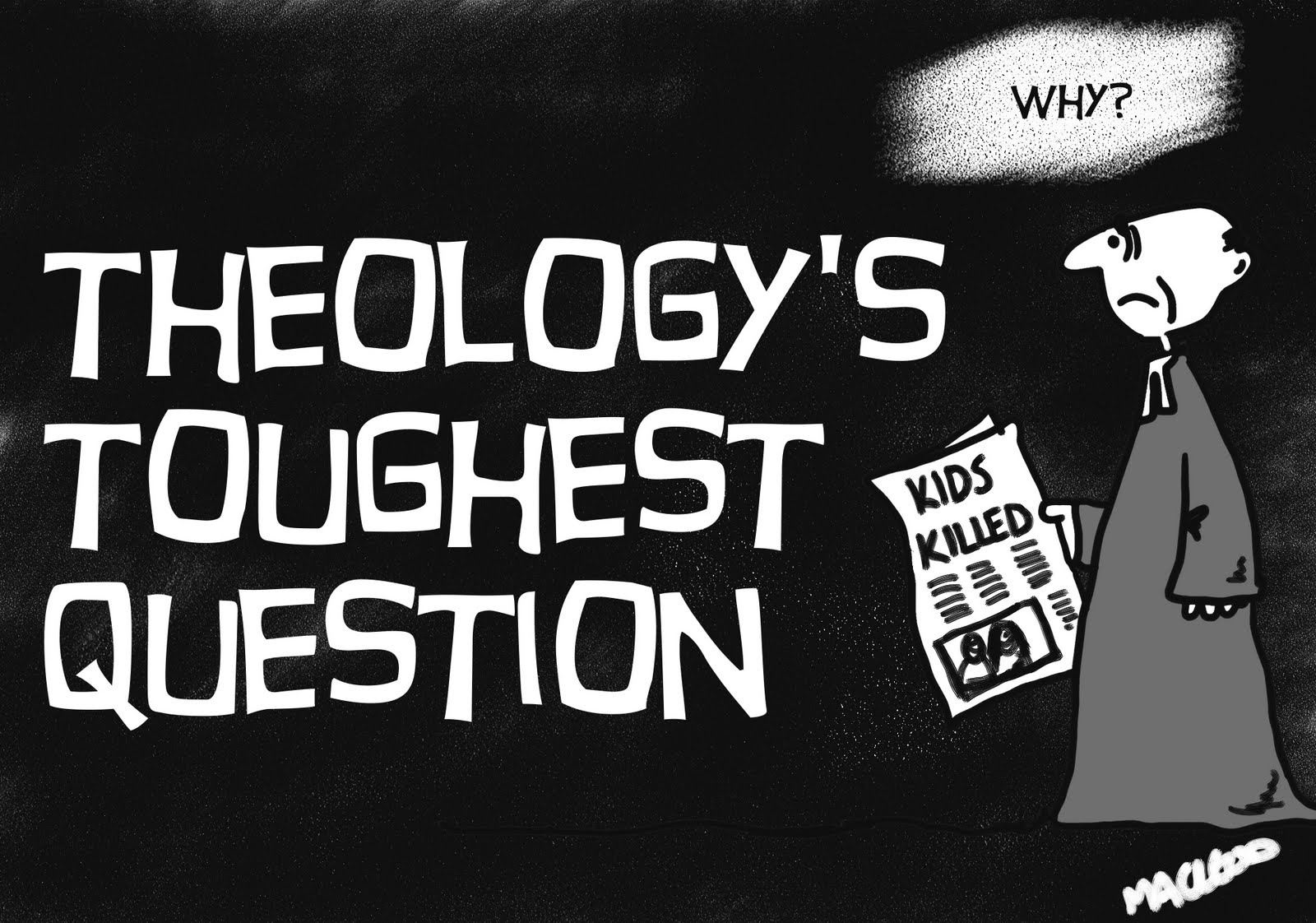
Question: Because the Lord is the Creator of all, He brought also evil in the universe. Did He do penance, when He died on the cross?

Answer: To accuse God of creating evil is a misunderstanding of God’s nature. The Bible says:

Let no man say when he is tempted, I am tempted of God: for God cannot be tempted with evil, neither tempteth he any man: But every man is tempted, when he is drawn away of his own lust, and enticed. (James 1:13-14, emphasis mine)

God did not create evil or sin, but in His wisdom “allowed” for it. Having created man in His own image (Genesis 1:26), He gave man the option to obey or disobey, to accept God or reject Him, to love Him or not to love Him. Without that option, we would be no more than androids that only function according to the programming of the designer. Without the option, it would be impossible for us to have a “personal” relationship with our Creator.

Therefore, it is not for His sin that Jesus died on the cross, but for ours. When you think about it, that is pretty incredible that God, should take upon Himself the penalty for our sin in order to restore the broken relationship between man and his Creator (Philippians 2:5-11) .

7 Comments

Filed under Apologetics, Atheism, Christianity, Creation, Evangelism, Gospel, Origins, Religion, Salvation, Theology