Tag Archives: Religion and Spirituality

Jesus’ Seven Signs in John (2)

Then enquired he of them the hour when he began to amend. And they said unto him, Yesterday at the seventh hour the fever left him. (John 4:52)

Then enquired he of them the hour when he began to amend. And they said unto him, Yesterday at the seventh hour the fever left him. (John 4:52)

This is again the second miracle that Jesus did, when he was come out of Judaea into Galilee.  (John 4:54)

Men often boast about their abilities, but when it comes time to show what they can do, they fall far short of even their own expectations. Jesus not only demonstrated His deity by His claims, but He performed inexplicable acts attributable only to supernatural power. In the previous post, we looked at Jesus’ first sign – that of turning simple drinking water into a highly complex solution i.e. wine.[1] The low-key act called no attention to Himself, and He accomplished it by the will of His divine mind. He simply thought it, and it was done.

Jesus performed His second sign in much the same way. His first sign demonstrated His power over matter. The second sign demonstrated His power over life itself.

After the wedding in Cana where Jesus turned water into wine, Jesus went down to Jerusalem to celebrate the Passover (John 2:13). This was the first Passover celebrated during His three-year ministry. John, unlike the Synoptic Gospels, records the first time that Jesus “cleansed” the Temple by chasing out the merchants and money changers (John 2:14-17). While there, Jesus intrigued a Pharisee named Nicodemus. Knowing that Jesus was sent from God, “for no man can do these miracles that thou doest, except God be with him” (John 3:2), Nicodemus met with Jesus in secret to learn what He had to say. Jesus gave him the greatest lesson that anyone has ever heard, “Verily, verily, I say unto thee, Except a man be born again, he cannot see the kingdom of God” (John 3:3, emphasis mine).

When the Passover concluded, Jesus returned to the region of Galilee by way of Samaria. There He met with a Samaritan woman by Jacob’s well (John 4:12), and He gave her “living water” (John 4:10) that became in her “a well of water springing up into everlasting life” (John 4:14). She was “born again” and became an instant evangelist taking the “good news” to her village (John 4:28-30). “And many of the Samaritans of that city believed on him for the saying of the woman, which testified, He told me all that ever I did” (John 4:39).

Jesus remained with the Samaritans two days before returning to Cana of Galilee (John 4:43). There a “certain nobleman” met Him with an urgent request (John 4:46). That he was a “nobleman” indicates that he probably served as a “courtier” or officer in the king’s court. The Greek word translated “nobleman” is basilikos, which means, “belonging to, or befitting the sovereign.” At any rate, he was not of the “common” folk.

His son was deathly ill, and “When he heard that Jesus was come out of Judaea into Galilee, he went unto him, and besought him that he would come down, and heal his son: for he was at the point of death” (John 4:47). At first glance, Jesus seems somewhat annoyed with the request. “Then said Jesus unto him, Except ye see signs and wonders, ye will not believe” (John 4:48). Although Jesus addressed the nobleman’s request, His response was not directed at the man. After all, the he came a long way from Capernaum down to Cana only because “he heard Jesus was come out of Judaea into Galilee,” and he believed only Jesus could save his son from certain death.

One of the reasons I appreciate the “old” King James Bible is for the distinction it makes between the singular and plural second person personal pronouns – thee, thou, thine and you, ye, your – as expressed in the original languages (Hebrew and Greek). All the latest modern translations simply use “you” which can be either singular or plural, which adds ambiguity to the text. The distinction is important here, because in responding to the nobleman’s request, Jesus does not address him directly otherwise the text would read, “Except thou seest signs and wonders, thou wilt not believe.” However, that is not what Jesus said. He said, “Except ye see signs and wonders, ye will not believe.” “Ye” – in Texas we would say “y’all.” Jesus addressed the crowd around Him.

John reported this as Jesus’ second miracle, but actually, Jesus had already performed many miraculous acts as recorded by the other Gospel writers. The curious crowd followed Jesus because He gave sight to the blind, opened deaf ears, healed the lame, cleansed the leprous, cast out demons, etc. It was in this same region that He entered the synagogue in Nazareth and announced, “The Spirit of the Lord is upon me, because he hath anointed me to preach the gospel to the poor; he hath sent me to heal the brokenhearted, to preach deliverance to the captives, and recovering of sight to the blind, to set at liberty them that are bruised, To preach the acceptable year of the Lord” (Luke 4:18-19). Applying the prophecy of Isaiah 61:1-2 to Himself, the incensed crowd attempted to throw him over a cliff (Luke 4:28-30). “You claim to be Messiah,” they probably thought, “show us what you can do!”

In spite of all He had done, they would not believe. Jesus knew this, but He was not there for their entertainment. The nobleman was not a curiosity seeker nor did he come to be entertained. He had a serious need that only Jesus could meet. He believed this. “The nobleman saith unto him, Sir, come down ere my child die” (John 4:49). Only Jesus could save his son’s life. “Jesus [desiring not to perform for the crowd] saith unto him, Go thy way; thy son liveth. And the man believed the word that Jesus had spoken unto him, and he went his way.” (John 4:50, emphasis mine). Unlike the crowd who need to “see signs and wonders” in order to believe, the unnamed nobleman took Jesus at His word, by faith, and returned to his home believing that his son would live.

Capernaum was a day’s journey north of Cana on foot. As the man neared his home, his servants ran out to meet him with the news that his son had recovered and was well. “Then enquired he of them the hour when he began to amend. And they said unto him, Yesterday at the seventh hour the fever left him. So the father knew that it was at the same hour, in the which Jesus said unto him, Thy son liveth: and himself believed, and his whole house” (John 4:52-53, emphasis mine). The “seventh hour” would have been around one o’clock in the afternoon.

Interestingly, John remarks that the nobleman “himself believed, and his whole house.” Is it that he was unbelieving until he witnessed firsthand his son’s recovery? Perhaps that was true for “his whole house,” but certainly not for him. In the first place, consider that he believed enough to seek Jesus out in the first place. In the second place, he took Jesus’ word that his son was healed, and he returned home without question. He did not need to “see” to believe. What I believe John is saying is that his faith was confirmed when he realized that his son was healed the very instant that Jesus said, “Thy son liveth.” His “whole house” believed due to his testimony.

John records this as “the second miracle that Jesus did, when he was come out of Judaea into Galilee” (John 4:54, emphasis added), but as noted above, that is not exactly true. What prompted John to make that statement? Dr. Henry M. Morris, founder of the Institute for Creation Research, offers an excellent explanation:

Jesus actually had done many miracles in or near Jerusalem (John 2:23; 3:2) since the miracle of turning the water into wine. This is called the second miracle, either because it was the second done in Galilee or else because John was specifically counting only the seven great signs (all of these being miracles of creation) described in detail in order to win men to Christ (John 20:30,31). [2] (Emphasis mine)

I believe the latter to be the case. John’s purpose in writing his Gospel was to testify that Jesus was God in the flesh. He opens his Gospel with, “In the beginning was the Word, and the Word was with God, and the Word was God … And the Word was made flesh, and dwelt among us, (and we beheld his glory, the glory as of the only begotten of the Father,) full of grace and truth” (John 1:1, 14).

As in the miracle of turning water into wine, Jesus performed this miraculous act telepathically, i.e. by the mere power of His mind He made it happen. All it took was for Him to say, “Thy son liveth,” and it was so, even though He was miles away from where the sick lad lay. However, this was a small thing compared to when He called Creation into being by the mere power of His Word, “Let there be … and it was so.” This second miracle was nothing less than an act of God – Jesus.

NOTES:


[1]  Jesus’ Seven Signs in John (1)

[2]  Henry M. Morris, Ph.D., The Henry Morris Study Bible, (Master Books, Green Forest, AR, 2012), 1577.
3 Comments

Filed under Apologetics, Christianity, Creation, Evangelism, Gospel, Religion, Salvation, Theology

Jesus’ Seven Signs in John (1)

jesus-turns-water-into-wine

This beginning of miracles did Jesus in Cana of Galilee, and manifested forth his glory; and his disciples believed on him.  (John 2:11)

In the past few weeks, I highlighted the seven I AM statements spoken by Jesus as recorded in the Gospel of According to John.  These statements are significant because through them Jesus declared His divine nature. The reason John recorded seven (there may have been more, see John 20:30-31) was perhaps to show the completeness, or perfection of His deity. Seven is the biblical number for perfection or completeness.

Jesus not only proclaimed His deity verbally, He also demonstrated His deity by His “works.” “If I do not the works of my Father, believe me not. But if I do, though ye believe not me, believe the works: that ye may know, and believe, that the Father is in me, and I in him” (John 10:37-38). As in the seven I AM statements, John records seven major “signs” demonstrating Jesus’ deity. In truth, Jesus performed many miracles, so many, in fact, that John says, “And there are also many other things which Jesus did, the which, if they should be written every one, I suppose that even the world itself could not contain the books that should be written. Amen” (John 21:25, emphasis mine). These “works” or “signs” defy natural explanation and are “creative” in nature.

Dictionary.com defines a miracle as “an effect or extraordinary event in the physical world that surpasses all known human or natural powers and is ascribed to a supernatural cause” (emphasis mine). Those who choose to reject God attempt to explain away miraculous events by natural means. When natural means fail to explain the miracle, they simply relegate it to myth. “Pretend it is not real, and maybe it will go away,” they think. Creation is a miracle. John tells us that “All things were made [created] by him [Jesus, the Word]; and without him was not any thing made that was made” (John 1:3). Arguably, this was the greatest of all miracles, but it is not included in the Seven Signs. Most likely this is due to the fact that no one witnessed this event. The Seven Signs recorded by John specifically testified to Jesus’ deity to those who witnessed Him during His earthly ministry. “Every one of the miracles shows how the created order submitted itself to Jesus’ authority.”[1]

According to John, the first sign Jesus performed was to turn ordinary drinking water into very fine wine (John 2:11). By this time in His ministry, Jesus had overcome Satan’s temptation in the wilderness recorded in the Synoptic Gospels and chosen His twelve apostles. He traveled up to Galilee to begin His mission. There in Cana of Galilee (distinct from Cana of Ephraim), Jesus attended a wedding probably by invitation of His mother who helped host the party (John 2:1-5). Jewish wedding feasts lasted seven days, and this one was now into its third day (John 2:1). Either due to poor planning or over indulgence of the wine, a terrible faux pas took place; the wine ran out. “The lack of wine involved another embarrassment, in that it rendered the bridegroom’s family liable to a lawsuit. They were legally required to provide a feast of a certain standard.”[2]

Jesus’ mother jumped into action. She knew Jesus could take care of the situation, “And when they wanted wine, the mother of Jesus saith unto him, They have no wine” (John 2:3). Jesus’ response at first seems terse and somewhat lacking in the normal affection between a mother and son. “Jesus saith unto her, Woman, what have I to do with thee? mine hour is not yet come” (John 2:4, emphasis mine). While He did not call her “Mom,” the term “woman” was one of respect in the same way that we might say “Madam” or “Ma’am.” Jesus used same term when addressing other women like Mary Magdalene, the Samaritan woman, the woman caught in adultery, and others. However, it is noteworthy that He did not address her as “Mētēr” (Mother). As Son of God and Son of Man, and as her Creator and Savior, her place was now subordinate to Him.

Recognizing her proper place, “His mother saith unto the servants, Whatsoever he saith unto you, do it” (John 2:5). Jesus instructed the servants to fill six stone water pots with water. Each water pot held two or three firkins apiece (John 2:6).  A firkin equals to about seven and a half gallons, therefore, each water pot contained between 15 and 22 ½ gallons each. If we assume three of each size (two and three firkins), the total capacity would be around 113 gallons. That’s a lot of hooch!

“Jesus saith unto them, Fill the waterpots with water. And they filled them up to the brim. And he saith unto them, Draw out now, and bear unto the governor of the feast. And they bare it” (John 2:7-8). One must note that Jesus said no “magic words.” He did not get up and walk over to the water pots or come anywhere near their vicinity. He made no special gestures. Once the pots were full, He merely instructed the servants to draw some out and take it to the host. Only by His thought was the water transformed into wine. For God, this is no feat. On the first day of creation, He called all things into existence only by speaking the words, “Let there be,” and it was so.

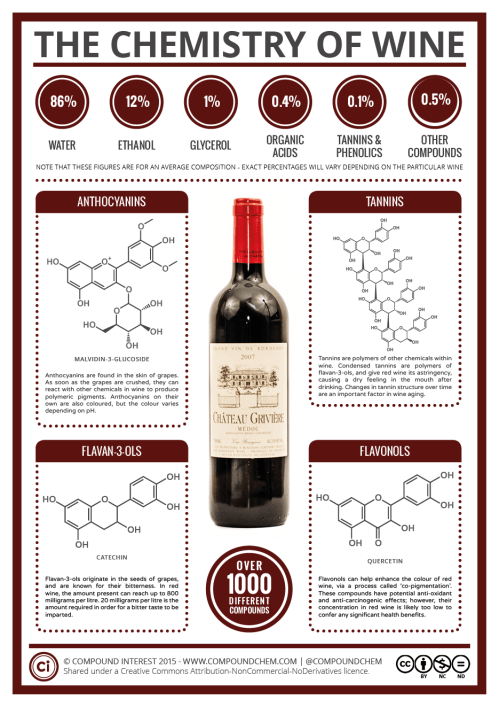
Jesus demonstrates His deity by creating something new. Water is a simple compound composed of two Hydrogen atoms and one Oxygen atom. Wine, on the other hand, contains over 1000 different compounds as demonstrated in the image below.[3] the-chemistry-of-wine-2015 Where did all those different compounds come from? They do not occur naturally in fresh water. Even if that water had a high mineral content, those minerals would not exist in the proper proportions to combine into wine. No, this was an entirely new creation by the One who created it all in the first place (John 1:3).

The skeptic cannot explain this away. He might say that after three days of celebration, the host and guests were too drunk to tell the difference. If that is so, how can he explain the host’s reaction? “… the governor of the feast called the bridegroom, And saith unto him, Every man at the beginning doth set forth good wine; and when men have well drunk, then that which is worse: but thou hast kept the good wine until now” (John 2:9-10). No, this wine was better than the “good wine” served at the beginning of the festivities. Whatever God does always exceeds what man can do.

John reports, “This beginning of miracles did Jesus in Cana of Galilee, and manifested forth his glory; and his disciples believed on him” (John 2:11).  This first of Seven Signs recorded by John exclude some of Jesus’ greatest miracles: Creation, His incarnation, His own resurrection, but perhaps the greatest of all, He creates a new life in the heart of every believer. “But as many as received him, to them gave he power to become the sons of God, even to them that believe on his name: Which were born, not of blood, nor of the will of the flesh, nor of the will of man, but of God” (John 1:12-13).

Notes:


[1]  Eli Lizorkin-Eyzenberg, The Jewish Gospel of John: Discovering Jesus, King of Israel, (Jewish Studies for Christians, Tel Aviv, Israel, 2015), 25.

[2]  Leon Morris, The Gospel According to John, Revised, (Wm. B. Eerdmans Publishing Company, Grand Rapids, MI, 1995), 158.

[3]  A common distraction arises around this miracle over the alcohol content of the wine. Was the wine simple grape juice, did it contain a low level of alcohol, or was it fully fermented with heavy alcohol content? The question is irrelevant for two reasons. First, the host – the “governor of the feast” – proclaimed that it was better than what had been served at the beginning of the feast. Second, regardless of the inclusion or exclusion of alcohol, the end product was a thousand times more complex than the initial water, and that is precisely the point that should not be overlooked.

Comments Off on Jesus’ Seven Signs in John (1)

Filed under Apologetics, Christianity, Creation, Evangelism, Gospel, Religion, Salvation, Theology

Jesus’ Seven ‘I AM’ Statements in John (7)

I am the vine, ye are the branches: He that abideth in me, and I in him, the same bringeth forth much fruit: for without me ye can do nothing.  (John 15:5)

A large sycamore tree grows in my front yard. Its large palmate leaves provide ample shade from the hot Texas sun, but that same Texas heat stresses the tree so that it drops many of its leaves in mid-summer, long before autumn when trees normally defoliate. It also drops limbs constantly making it a self-pruning tree that creates a lot of extra work for me. One thing I have noticed is that the leaves and branches that detach from the tree die. Even though they fall on fertile ground, they do not rejuvenate. Even if I “plant” them in the ground, feed, and water them, they will not take root. They remain dead. They only remain alive while attached to the tree.

Jesus had this image in mind in this seventh and final I AM statement recorded by John. He said, “I AM the vine.” When we think of a vine, we picture the entire plant: trunk or main stalk, limbs, branches, leaves, and (eventually) fruit. However, here Jesus refers to Himself as the trunk or main stalk of the plant. We do not need an advanced horticultural degree to know that the main stalk supports and provides nourishment for the entire plant. Part of the trunk is the taproot that reaches deep into the earth to draw nourishment for distribution to other parts of the plant. Jesus compares Himself to this vital part of the plant.

Next, He says, “ye are the branches.” I like the KJV use of “ye” that distinguishes the second person pronoun as plural as it appears in the Greek. Therefore, in speaking to His disciples, Jesus includes all believers. “You ALL are the branches.” He establishes a vital relationship here. The branches receive their sustenance from the trunk, i.e., “the vine.” The branches cannot live apart from the vine; detached from the vine, they die. Furthermore, the branch attached to the vine has the vine attached to it: “He that abideth in me, and I in him, the same bringeth forth much fruit” (emphasis mine). In a plant, it is easy to see a branch abiding on a vine, but a vine abiding in the branch is not so obvious. Vein-like vessels made up of xylem cells in the vine grow into the branch from the vine carrying the essential nutrients to maintain the branch alive, so in effect, the vine abides in the branches. Through this mutual attachment, the branches produce “much fruit.” I might be wrong, but only branches produced fruit, never the trunk of the plant; but without the trunk, the branches cannot live to produce fruit: “for without me ye can do nothing.”

Thus, Jesus invites us, the branches, to attach ourselves to Him, The Vine. “Abide in me, and I in you. As the branch cannot bear fruit of itself, except it abide in the vine; no more can ye, except ye abide in me” (John 15:4, emphasis mine). What kind of fruit should a branch of The Vine produce? The Apostle Paul lists several. “But the fruit of the Spirit is love, joy, peace, longsuffering, gentleness, goodness, faith, Meekness, temperance …” (Galatians 5:22-23), and add to that “righteousness and truth” (Ephesians 5:9, emphasis mine). “Against such there is no law” (Galatians 5:23). We cannot produce such fruit unless we are firmly abiding in and drawing nourishment from The Vine.

As I walk around my front yard picking up dead branches from my living sycamore tree, I gather those branches up and throw into the trash. If I lived outside of the city, I would throw them into the fire. In the same way, Jesus said, “If a man abide not in me, he is cast forth as a branch, and is withered; and men gather them, and cast them into the fire, and they are burned” (John 15:6, emphasis mine). Here Jesus refers to the final judgment where those who reject Him will be cast into hell for eternity (Revelation 20:14-15). In His sixth I AM statement, Jesus said He was The Life. By this, He meant “eternal life.” Apart from The Vine, there is no life, and Jesus said, “I AM The Vine.”

1 Comment

Filed under Apologetics, Christianity, Death, Evangelism, Gospel, Hell, Salvation, Theology

Jesus’ Seven ‘I AM’ Statements in John (4)

psalm23

I am the good shepherd: the good shepherd giveth his life for the sheep. (John 10:11)

In the last “I AM” statement, Jesus said He was “the door” – the only way into the sheepfold. We also learned that a porter guarded the door by physically placing himself across the entrance (John 10:3). In essence, the porter became “the door.” In the absence of a porter, the shepherd himself would perform this task making himself the door (John 10:9).

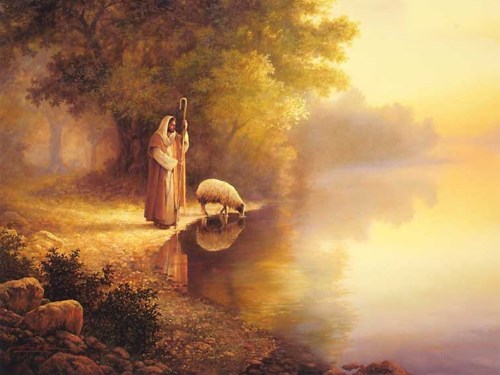
Now Jesus identifies Himself as the “Good Shepherd.” Previously, Jesus pointed out some general characteristics of a shepherd. The shepherd has rightful access to the sheep (John 10:2) because they belong to him. The shepherd knows each of his sheep by name, and the sheep know the voice of the shepherd, and they follow him as he leads them (John 10:3-4).

As the Good Shepherd, Jesus is also the Door of the sheepfold. The word picture presented here provides greater insight into His task as the Good Shepherd. As a shepherd cares for his sheep, he defends them with his very life. Any predator seeking to harm the sheep will do so only over the shepherd’s dead body. Jesus’ hearers may have recalled the account of King David:

And David said unto Saul, Thy servant kept his father’s sheep, and there came a lion, and a bear, and took a lamb out of the flock: And I went out after him, and smote him, and delivered it out of his mouth: and when he arose against me, I caught him by his beard, and smote him, and slew him. Thy servant slew both the lion and the bear: and this uncircumcised Philistine shall be as one of them, seeing he hath defied the armies of the living God. (1 Samuel 17:34-36)

Likewise, Jesus says, “the good shepherd giveth his life for the sheep” (John 10:11).

On the contrary, a hired hand has nothing invested in the sheep. When danger arises, he runs for his life caring nothing for the sheep (John 10:12-13). The Good Shepherd defends the sheep with His life because He cares for His sheep, knowing each one by name (John 10:14). As in verse 3, this assertion emphasizes the relationship between the Good Shepherd and His sheep. Indeed, it is likened to the relationship between the Father and the Son. “As the Father knoweth me, even so know I the Father: and I lay down my life for the sheep” (John 10:15).

By now the reader should recognize that “sheep” are analogous to God’s people. “For thus saith the Lord GOD; Behold, I, even I, will both search my sheep, and seek them out. As a shepherd seeketh out his flock in the day that he is among his sheep that are scattered; so will I seek out my sheep, and will deliver them out of all places where they have been scattered in the cloudy and dark day” (Ezekiel 34:11-12, emphasis mine). On another occasion, Jesus said:

What man of you, having an hundred sheep, if he lose one of them, doth not leave the ninety and nine in the wilderness, and go after that which is lost, until he find it? And when he hath found it, he layeth it on his shoulders, rejoicing. And when he cometh home, he calleth together his friends and neighbours, saying unto them, Rejoice with me; for I have found my sheep which was lost. I say unto you, that likewise joy shall be in heaven over one sinner that repenteth, more than over ninety and nine just persons, which need no repentance. (Luke 15:4-7, emphasis mine)

The Good Shepherd gives up His life for His sheep.

Jesus addressed a Jewish audience who readily identified themselves with the Good Shepherd’s sheep, but then Jesus added another twist. “And other sheep I have, which are not of this fold: them also I must bring, and they shall hear my voice; and there shall be one fold, and one shepherd” (John 10:16, emphasis mine). This must have confused Jesus’ hearers, but in retrospect, we understand that Jesus referred to the Gentile Christians that would be included later, after His resurrection and ascension. “They” would hear His voice through the work of the Holy Spirit and the preaching of the Apostles (John 15:26; 17:20-21).

For all of these the Good Shepherd gave up His life. All those within His fold can confidently say:

The LORD is my shepherd; I shall not want.

He maketh me to lie down in green pastures: he leadeth me beside the still waters.

He restoreth my soul: he leadeth me in the paths of righteousness for his name’s sake.

Yea, though I walk through the valley of the shadow of death, I will fear no evil: for thou art with me; thy rod and thy staff they comfort me.

Thou preparest a table before me in the presence of mine enemies: thou anointest my head with oil; my cup runneth over.

Surely goodness and mercy shall follow me all the days of my life: and I will dwell in the house of the LORD for ever. (Psalm 23:1-6)

There is security in the Good Shepherd’s fold.

My sheep hear my voice, and I know them, and they follow me: And I give unto them eternal life; and they shall never perish, neither shall any man pluck them out of my hand. My Father, which gave them me, is greater than all; and no man is able to pluck them out of my Father’s hand. (John 10:27-29, emphasis mine)

Then, just in case the “I AM” statement was not clear enough, Jesus said, “I and my Father are one” (John 10:30). Jesus declared Himself equal to God. Indeed, He is God (John 1:1) To the Pharisees (and to many modern ears) such a claim was blasphemous. “Then the Jews took up stones again to stone him” (John 10:31). “This parable spake Jesus unto them: but they understood not what things they were which he spake unto them” (John 10:6). Not included in the Good Shepherd’s fold, they remained in their blindness (John 9:39-41), and failed to recognized that they were in the presence of the Great I AM, the Good Shepherd.

If you want entrance into the fold, you need to get to know the Good Shepherd.

Comments Off on Jesus’ Seven ‘I AM’ Statements in John (4)

Filed under Apologetics, Christianity, Evangelism, Gospel, Religion, Salvation, Theology

Jesus’ Seven ‘I AM’ Statements in John (3)

sheepfold

I am the door: by me if any man enter in, he shall be saved, and shall go in and out, and find pasture. (John 10:9)

This third “I AM” statement directly follows Jesus’ healing of the man who was blind from birth (John 9). That event was the sixth of seven signs highlighted in John’s gospel, which I will cover later. Jesus charges the religious leaders with incurable blindness because, in their blindness, they do not recognize their own blind condition. “Jesus said unto them, If ye were blind, ye should have no sin: but now ye say, We see; therefore your sin remaineth” (John 9:41, emphasis mine). It is true that before it is resolved, a problem must first be acknowledged. The alcoholic must acknowledge his alcoholism before he can work on the cure. The drug addict must recognize her addiction before she will submit to rehabilitation. A couple must admit their marriage is in trouble before they seek counselling. The blind must “see” their darkened condition before they will seek the light. The sinner must admit he is a sinner before he will seek the Savior.

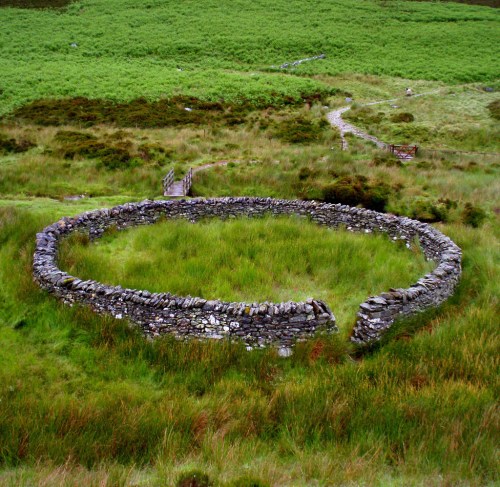
To make His point, Jesus offers these spiritually self-blinded Pharisees a simple illustration obvious only to a spiritually sighted person. He draws a word picture of a sheepfold. This was a low-wall stone enclosure with only one entrance constructed for the protection of the flock from predators. After a long day of grazing in the pasture, the shepherd led the sheep to the sheepfold for the night. There, a gatekeeper or, “porter” (John 10:3), guarded the entrance where only the shepherd could gain access to the sheep. Jesus points out that a thief jumps the wall (John 10:1), but the shepherd enters by way of the door. The sheep recognize the shepherd’s voice and follow him, and he knows his sheep by name (John 10:3); but a stranger they will not follow (John 10:5).

As we read the account of Jesus healing the blind man in Chapter Nine, we find that the religious leaders, i.e. the false shepherds, aka “thieves,” harassed the healed blind man and the blind man’s parents to discover the source of his healing – on the Sabbath, no less! In the end, when the healed blind man identifies Jesus as the source of his healing, they excommunicated him for becoming a “sheep” of Jesus. (More on this on the next installment.)

Authorized entry into the sheepfold – the place of safety – comes by way of the only door. “Then said Jesus unto them again, Verily, verily, I say unto you, I am the door of the sheep” (John 10:7). “Verily” translates the Greek word amēn, meaning “truly” or “certainly.” The fact that Jesus said it twice makes it doubly and emphatically true. Then, unlike a common teacher, Jesus stresses His authority when He says, I say unto you, rather than “Thus saith the Lord.” He is Lord and speaks by His own authority. He then affirms His Lordship with His claim εγω ειμι (ego eimi – I, I AM) – the name of God. He is the door, the only authorized entry. No other way is permissible.

The porter guarded the sheepfold by placing his body across the entrance. Sometimes the shepherd himself was the “porter,” and he slept across the entrance. In effect, he was “the door.” Anyone wanting to get in would have to step over “the door.” Jesus says, “I am the door: by me if any man enter in, he shall be saved, and shall go in and out, and find pasture” (John 10:9, emphasis mine).

The sheepfold, an allegory of heaven, provides safety and refuge. Jesus places Himself at the entrance where no one can enter without going through Him. Today, many false shepherds – thieves and robbers – steal the sheep by deceiving them into believing that there are other entrances into the sheepfold. “They be blind leaders of the blind. And if the blind lead the blind, both shall fall into the ditch” (Matthew 15:14). In warning young Timothy, the Apostle Paul says, “This know also, that in the last days perilous times shall come … evil men and seducers shall wax worse and worse, deceiving, and being deceived” (2 Timothy 3:1, 13). Do not be deceived, little sheep. There is only one entrance into the sheepfold – heaven, and Jesus said, “I AM the door.” There is no other option.

Comments Off on Jesus’ Seven ‘I AM’ Statements in John (3)

Filed under Christianity, Evangelism, Gospel, Religion, Salvation, Theology