Tag Archives: Salvation

Top Priority

treasure

For where your treasure is, there will your heart be also. (Matthew 6:21)

But seek ye first the kingdom of God, and his righteousness; and all these things shall be added unto you. (Matthew 6:33)

A “Christian” young man once lamented the exhortation to holy living by exclaiming, “Do you expect me to become a monk!” Sadly, that is not an uncommon sentiment. Such a sentiment coming from an unbeliever is understandable, but too many Christians these days harbor the same sentiments. The call to holiness[1] is prevalent throughout Scripture, yet many Christians try to hide behind “grace” claiming that we are no longer under the Law.[2] Somehow the world has taught Christians that living a life dedicated, in all things, to the service of Christ denies them of the benefits that only the world can give. But is that true?

Our verse above is taken from Jesus’ Sermon on the Mount (Matthew 5-7). In this portion of the sermon, Jesus begins by calling attention to worldly “treasures”: “Lay not up for yourselves treasures upon earth, where moth and rust doth corrupt, and where thieves break through and steal” (Matthew 6:19). Here Jesus points out an undeniable fact that everyone understands: “things” do not last. There exists an unrelenting physical law which dictates that everything degenerates, wears out, or slows down. It is the inescapable Second Law of Thermodynamics.

65 T-Bird_SM

1965 Ford Thunderbird

My brother recently tempted me with the opportunity to purchase of a 1965 Ford Thunderbird – a beautiful automobile. For an antique of that type, the price was reasonable, and not outside my ability to purchase it. My brother mentioned that it had “some rust,” a couple of the electric widows were not operating properly, and the paint job was poorly done, but still, it was worth the money. As I battled the temptation, I considered the “little rust” that has the potential to spread like cancer. It would have to be cut out and replaced with “healthy” metal. Then it would need to be repainted. It needs some upholstery work. The windows need new motors. Many “minor” things are needed to make the car “right.” Then, after all that expense, I would end up with an old car that is still wearing out as parts for it become rarer. “Things” just do not last. Jesus says, “Don’t invest in things that will just wear out in the end.” Instead He says, “But lay up for yourselves treasures in heaven, where neither moth nor rust doth corrupt, and where thieves do not break through nor steal: For where your treasure is, there will your heart be also” (Matthew 6:20-21). What do you treasure?

Jesus goes on to talk about real needs: food, clothing, shelter (Matthew 6:25-30), and He emphasizes that “your heavenly Father” knows that you need all these things (v. 32). Just as the Father feeds the birds of the air and clothes the fields with flamboyant colors, He will provide for all your needs. After all, “Are ye not much better than they?” (Matthew 6:26). The birds of the air, and the lilies of the fields were not created in the image of God, but you were (Genesis 1:26). “Therefore take no thought, saying, What shall we eat? or, What shall we drink? or, Wherewithal shall we be clothed? (For after all these things do the Gentiles seek:) for your heavenly Father knoweth that ye have need of all these things” (Matthew 6:31-32). The Greek word translated as “thought” is merimnaō and it means to be “anxious,” and it carries the idea of being overly concerned about these things which are under God’s divine control.

An old hymn that my mother used to sing to us comes to mind. The third verse of that hymn says:

All you may need He will provide,
God will take care of you;
Nothing you ask will be denied,
God will take care of you.[3]

God will take care of you. He has promised to provide for all your needs (not necessarily your desire for a 1965 T-Bird). With your needs met, what should be your priority? “But seek ye first the kingdom of God, and his righteousness; and all these things shall be added unto you” (Matthew 6:33). Top priority is the kingdom of God.

This is the first place this phrase appears in Scripture. If the search for the kingdom of God is to be foremost, we should have an idea of what that is. The next occurrence of this phrase takes place after Jesus has been accused by the Pharisees of casting out demons by the power of Satan. Jesus asserts that He casts out demons by the “Spirit of God” testifying to the presence of the kingdom of God (Matthew 12:28). The “Spirit of God” indwells every believer (Romans 8:9-11; 1 Corinthians 3:16) so that we should strive to “walk not after the flesh [i.e., the desires of this world], but after the Spirit” (Romans 8:1, 4). “So then they that are in the flesh cannot please God” (Romans 8:8). But Christians can suppress the Holy Spirit (the Spirit of God) in their lives (1 Thessalonians 5:19). So, in seeking the kingdom of God, we need to continually turn over control to the Holy Spirit in our lives (Ephesians 5:18) so that through His power we can cast out the demons in our own lives.

The “kingdom of God” is synonymous with the “kingdom of heaven” and both terms seem to be used interchangeably in the New Testament. The kingdom of heaven seems more often to refer to the realm of the elect, i.e., the children of God (Luke 20:34-36, John 1:12), the saved (John 3:17), the church (Acts 2:47), etc. To that end our top priority is to expand the kingdom of God. “For whosoever shall call upon the name of the Lord shall be saved. How then shall they call on him in whom they have not believed? and how shall they believe in him of whom they have not heard? and how shall they hear without a preacher? And how shall they preach, except they be sent? as it is written, How beautiful are the feet of them that preach the gospel of peace, and bring glad tidings of good things!” (Romans 10:13-15). As we draw upon the power of the Holy Spirit, we each in our own way and as the Spirit leads can share the good news of God’s love. “For I am not ashamed of the gospel of Christ: for it is the power of God unto salvation to every one that believeth; to the Jew first, and also to the Greek” (Romans 1:16). The message is simple:

  1. We are all sinners (Romans 3:10, 23)
  2. We are all condemned to “eternal” death (Romans 6:23)
  3. God offers eternal life which we cannot earn (Romans 6:23, Ephesians 2:8-9)
  4. God’s offer is in spite of our sinfulness (Romans 5:8)
  5. Our only requirement is to believe and accept (Romans 10:9-10; John 1:12)

The other priority we should seek, according to our verse, is “His righteousness.” Note that it’s His righteousness, not our own. Because of our sin nature, our righteousness could never measure up to God’s standard of righteousness (Romans 3:23; Isaiah 64:6). It is Jesus’ righteousness we seek, “Whom God hath set forth to be a propitiation through faith in his blood, to declare his righteousness for the remission of sins that are past, through the forbearance of God; To declare, I say, at this time his righteousness: that he might be just, and the justifier of him which believeth in Jesus” (Romans 3:25-26, emphasis mine). The Greek word translated “propitiation” is hilastērion, and it is “an expiatory (place or thing), that is, (concretely) an atoning victim.”[4] In other words, Jesus, the sinless Son of God, offered Himself and His righteousness as the one and only atoning sacrifice worthy of acceptance by God and sufficient to cover (the meaning of “atone”) our sin and make us acceptable to Holy God. Notice that it comes by or “through faith in His blood.” When we receive Jesus as our Savior “through faith in His blood,” i.e. His sacrifice, we are “dressed in His righteousness.” The heavenly scene in Revelation says, “And white robes were given unto every one of them” (Revelation 6:11). Later the source of their whiteness is described: “And he said to me, These are they which came out of great tribulation, and have washed their robes, and made them white in the blood of the Lamb” (Revelation 7:14, emphasis mine). So, our entry into heaven is not gained through our own righteousness, but through His righteousness.

Our top priority then should be to “seek first the kingdom of God and His righteousness,” then all “these things” will be added. In fact, when your first priority is right, the stuff the world offers will seem worthless. It will no longer have same appeal to you. Top priority: God’s Kingdom and His righteousness.

NOTES:


[1] Be Ye Holy

[2] Is the Law Sin?

[3] “God Will Take Care of You” – Civilla D. Martin: http://library.timelesstruths.org/music/God_Will_Take_Care_of_You/

[4] Strong’s G2435
Comments Off on Top Priority

Filed under Christianity, Evangelism, Gospel, Religion, Salvation

When I Disappear

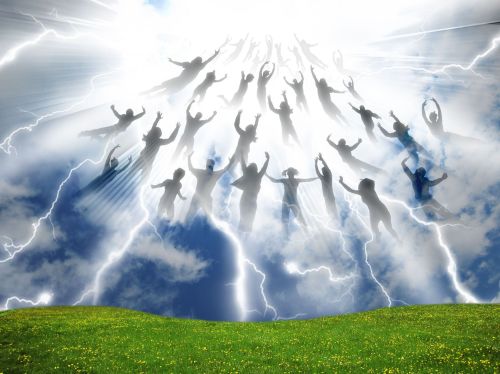
Rapture 123RF

Image Credit: Benjamin Haas, http://www.123rf.com

Then we which are alive and remain shall be caught up together with them in the clouds, to meet the Lord in the air: and so shall we ever be with the Lord. (1 Thessalonians 4:17)

As I study God’s Word concerning the “Last Days,” and I observe everything taking place around the world, I am more convinced than ever that the return of Christ is imminent. Every day that I wake up, I realize that I am one day closer to His return; whether I meet Him in death or I meet Him in the air, I know I will see Him soon. While this is great news for me, my heart breaks to know that many of my loved ones, and particularly my two sons and their families, will suffer seven years of global calamity such as the world has never known at best, or they will spend eternity in hell[1] at worst. I know that the distasteful topic of hell offends many, but since Jesus spoke more about hell than He did about heaven, serious consideration needs to be given the topic. I want to know that all those whom I love are written in the “Lamb’s Book of Life”[2] (Revelation 20:12), and that they will go with me when I disappear rather than wait for a second chance.

If you are not with me when I disappear, you need to look for certain “signs” to take place in the world. Keep your eye on the Middle East, particularly on the nation of Israel. The cauldron is boiling there. Tensions continue to escalate. The Islamic State (aka ISIS, aka ISIL) continues to acquire territory in Iraq and Syria. As I write this, the United States started airstrikes against ISIS targets which will only serve to strengthen the resolve of the radical Islamists. Meanwhile, Iran moves ahead with its intent to develop nuclear weapon capabilities aided by an emboldened Russia who fearlessly taunts the US with practice bombing runs approaching our airspace.[3] China feverishly works on developing ICBM delivery systems from their submarines.[4] At the same time, Israel fends off non-stop rocket barrages from HAMAS in the Gaza Strip. The world is in turmoil crying, “Peace, peace; when there is no peace” (Jeremiah 6:14; 8:11). Of these times God addresses Russia and those nations with whom it is allied:

And say, Thus saith the Lord GOD; Behold, I am against thee, O Gog, the chief prince of Meshech and Tubal: And I will turn thee back, and put hooks into thy jaws, and I will bring thee forth … Persia, Ethiopia, and Libya with them … Gomer, and all his bands; the house of Togarmah of the north quarters, and all his bands: and many people with thee. Be thou prepared, and prepare for thyself, thou, and all thy company that are assembled unto thee, and be thou a guard unto them. After many days thou shalt be visited: in the latter years thou shalt come into the land that is brought back from the sword, and is gathered out of many people, against the mountains of Israel, which have been always waste: but it is brought forth out of the nations, and they shall dwell safely all of them. Thou shalt ascend and come like a storm, thou shalt be like a cloud to cover the land, thou, and all thy bands, and many people with thee. (Ezekiel 38:3-9, emphasis mine).

Therefore, son of man, prophesy and say unto Gog, Thus saith the Lord GOD; In that day when my people of Israel dwelleth safely, shalt thou not know it? And thou shalt come from thy place out of the north parts, thou, and many people with thee, all of them riding upon horses, a great company, and a mighty army: And thou shalt come up against my people of Israel, as a cloud to cover the land; it shall be in the latter days, and I will bring thee against my land, that the heathen may know me, when I shall be sanctified in thee, O Gog, before their eyes. (Ezekiel 38:14-16, emphasis mine)

The names of the nations mentioned above may be unfamiliar to you, but without going into a great deal of detail, Gog is Russia and the others are basically all the current Islamic nations surrounding Israel. God is in control of this and He will draw them in to attack Israel, but His ultimate goal is to show the “heathen” who God is. My guess is that it will not go well for them. In any case, things seem to be moving in that direction.

I may or may not be around to witness this event. Whether I disappear before this or just after, there will be millions of Christians that will disappear along with me from all over the world. This will have devastating effects on the global economy, especially here in the US where most of the world Christian population resides. Since most Christians have conservative values, they work and contribute to GNP of the US, and they pay most of the taxes. Consequently, that loss of “producers” will cripple the US economy, which is already teetering from unsustainable debt, and that will create a domino effect throughout the world. With the world reeling from war and economic chaos, fear, hitherto unknown, will grip the hearts of people, and they will cry out for someone to take charge and restore sanity to an upside down world. At that time a little known political leader will emerge to reinstate order. “And he shall confirm the covenant with many for one week: and in the midst of the week he shall cause the sacrifice and the oblation to cease, and for the overspreading of abominations he shall make it desolate, even until the consummation, and that determined shall be poured upon the desolate” (Daniel 9:27, emphasis mine). “One week” is seven years. This “One-World” leader will finally bring peace to the Middle East. Israel will finally have peace with its Muslim neighbors. This new world leader will also calm the hearts of the people who are wondering about all the disappearances. He will remind the people that all those who disappeared were all those intolerant Christians who were obstacles to world peace and harmony. He may suggest that all these were taken away by our alien[5] friends who wish to teach us a better way to live, or some such cockamamie story that will be well received by the masses.

When I disappear, that great world leader will restore peace to a chaotic world. In order to restore economic stability to the world, he will set up an economic system that eliminates the need for currency.

And he causeth all, both small and great, rich and poor, free and bond, to receive a mark in their right hand, or in their foreheads: And that no man might buy or sell, save he that had the mark, or the name of the beast, or the number of his name. Here is wisdom. Let him that hath understanding count the number of the beast: for it is the number of a man; and his number is Six hundred threescore and six. (Revelation 13:16-18, emphasis mine)

Current thought from those who study end-time prophecy suggests that “the mark”[6] could be a barcode tattoo or perhaps an RFID (Radio Frequency Identification Device) chip containing all of your personal information (SSN, bank accounts, address, and possibly your current location) that can be easily implanted under the skin in the hand or forehead.[7] I strongly encourage you not to take the mark even though not doing so will cause severe financial difficulty for you because:

If any man worship the beast and his image, and receive his mark in his forehead, or in his hand, The same shall drink of the wine of the wrath of God, which is poured out without mixture into the cup of his indignation; and he shall be tormented with fire and brimstone in the presence of the holy angels, and in the presence of the Lamb: And the smoke of their torment ascendeth up for ever and ever: and they have no rest day nor night, who worship the beast and his image, and whosoever receiveth the mark of his name. (Revelation 14:9-11, emphasis mine)

In other words, if you accept the mark, you automatically condemn yourself to an eternity in hell. (I know. You don’t like to think or talk about hell, but there it is!)

When I disappear, the One-World leader will restore peace to the world, but only for a short season. This will be the beginning of the Great Tribulation described in Revelation 6-19. When I disappear, if you are not with me, you will need to study these passages closely to prepare for what comes next. It won’t be pretty, but if you are wise, this may be that last chance you have to “call upon the name of the Lord [and] be saved” (Romans 10:13). I write this because I love you and I do not want you suffer the horrors that await those who continue to reject Christ or who foolishly afford Him little importance. I want to scare the “hell” out of you, but only so you can be with me when I disappear. Don’t wait to see if the things I say come true (they will); it may be too late by then. Read my article “You Don’t Go to Hell Because You’re a Sinner.” Come with me when I disappear!

NOTES:


[1]You Don’t Go to Hell Because You’re A Sinner

[2]The Book of Life

[3] http://rt.com/usa/186084-russian-bombers-labrador-gertz/

[4] http://www.inquisitr.com/1488574/china-and-russias-nuclear-submarines-capable-of-striking-american-bases-says-u-s-navy/

[5] https://erniecarrasco.com/2013/06/16/aliens/

[6] https://www.raptureready.com/abc/666.html

[7] http://www.raptureready.com/nm/132.html

2 Comments

Filed under Apologetics, Christianity, Current Events, End Times, Evangelism, Gospel, Heaven, Hell, Politics, Religion, Resurrection, Salvation, Theology, UFOs

False Religion: Roman Catholicism

st-peters-basilica-night

So hast thou also them that hold the doctrine of the Nicolaitans, which thing I hate. (Revelation 2:15)

I took a brutal browbeating over my last article “False Religion: Protestantism” – not from unbelievers, but from Christian brothers and sisters. Granted, the title, on a cursory view, appears to be all-inclusive, but I wanted it to be provocative. The fact is that my focus was on “liberal” Protestantism and not Protestantism in general. But more than that, Jesus said, “And why beholdest thou the mote that is in thy brother’s eye, but considerest not the beam that is in thine own eye? Or how wilt thou say to thy brother, Let me pull out the mote out of thine eye; and, behold, a beam is in thine own eye? Thou hypocrite, first cast out the beam out of thine own eye; and then shalt thou see clearly to cast out the mote out of thy brother’s eye” (Matthew 7:3-5). How can we honestly critique or criticize what others believe without first taking a hard look at the beam that is in our own eye?

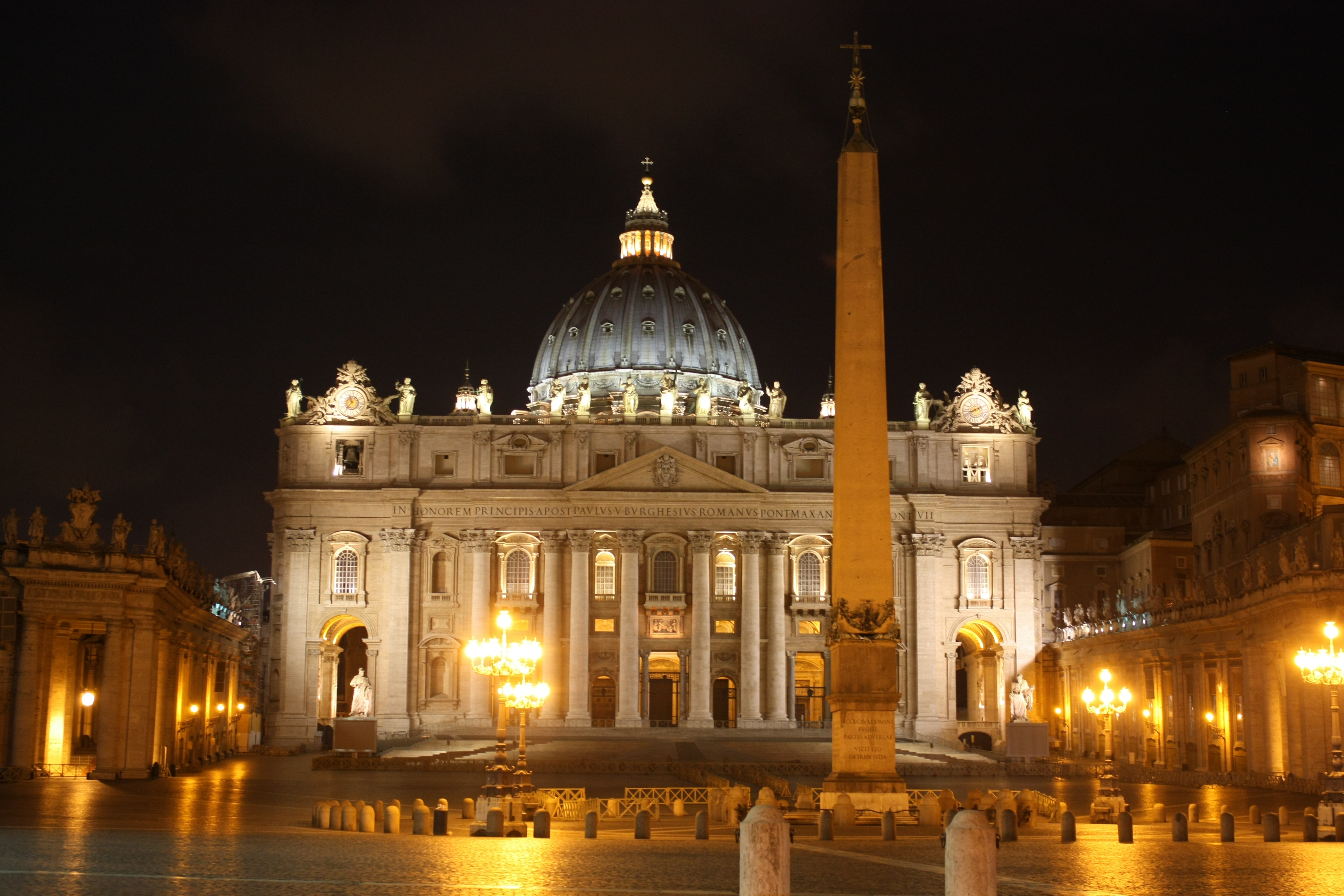
I believe I did that with my last post, so now let us examine the false religion of Roman Catholicism from an objective perspective. If the reader has been following my previous articles on false religions, the reader will recall I am evaluating false religions based on four characteristics: (1) the denial of the God of the Bible, (2) the denial or rejection of the deity of Christ, (3) the rejection of the Bible as the inerrant, infallible Word of God and (4) the teaching of salvation through the works or efforts of the individual believer.

Superficially, one might say that the Roman Catholic Church does not deny the God of the Bible or the deity of Christ. As I pointed out in my last post, “False Religion: Protestantism,” it is not necessarily what a religion professes to believe that matters, but rather what their practice demonstrates that is the true indicator of what they believe. So it is with the Roman Catholic Church; therefore, I need to begin with the last two characteristics to demonstrate that in practice, the Roman Catholic Church denies the God of the Bible and the deity of Christ.

The Roman Catholic Church (RCC) rejects the authority of the Bible as the inerrant and infallible Word of God. The RCC discourages parishioners from studying the Scripture for themselves claiming that it is too difficult for them to understand. Parishioners are taught that only a priest can give Scripture its proper interpretation, when in fact, priests are generally trained in church dogma only and not in the study of Scripture. The end result is that the RCC has an army of “blind leaders of the blind. And if the blind lead the blind, both shall fall into the ditch” (Matthew 15:14). The RCC teaches that Scripture along with tradition must be accepted and honored with equal reverence. In other words, the traditions of men are just as valid as God’s Word. In doing so, they supplant the authority of God with an authority of their own.[1] Up until the 16th century, the “Catholic” Bible contained only 66 books, but in the 16th century the Apocrypha was added to justify the doctrine of Purgatory.[2] In adding to Scripture, the RCC ignores God’s warnings against adding to or taking away from Scripture (Deuteronomy 4:2, Proverbs 30:6, Revelation 22:18).

Having stripped the Bible of its authority, the RCC has elevated the word of the Pope above the Word of God so that “by reason of his office as Vicar of Christ, [he] has full supreme and universal power over the whole church, a power he can exercise unhindered.”[3] As such, the RCC teaches a different gospel of salvation. Since the RCC has assumed supreme authority over Scripture, it now dictates the requirements for salvation. Salvation can only be found in the Catholic Church. The Catholic believer is obligated to comply with the requirements or “sacraments” of the Church. There are seven: (1)Baptism (typically as an infant), (2) Confirmation, (3) Eucharist, (4) Confession and Penance, (5) Holy Unction (anointing of the sick and last rites), (6) Holy Orders, and (7) Matrimony. In addition, the good Catholic must practice church membership, obey the commandments, and do good works. The good Catholic lives with the constant threat of failing at any point and dying in that condition, at which point the poor soul ends up in purgatory and special masses must be held (at a price to surviving family members, of course) until the full atonement is satisfied and the soul can enter into heaven. How many masses will be required is anybody’s guess. “The pope [sic] claims to have the power to transfer the merits of one sinner to another to reduce their punishment for sin.”[4] The Bible teaches that “For by grace are ye saved through faith; and that not of yourselves: it is the gift of God: Not of works, lest any man should boast” (Ephesians 2:8-9, emphasis mine). But the RCC says, “If anyone says the sinner is justified by faith alone, meaning that nothing else is required to cooperate in order to obtain the grace of justification, let him be anathema.”[5] Furthermore, the RCC “condemns with anathema those who say that indulgences are useless or that the Church does not have the power to grant them.”[6] “Rome also condemns anyone who believes they are assured of eternal life.”[7] The Bible says, “But though we, or an angel from heaven, preach any other gospel unto you than that which we have preached unto you, let him be accursed” (Galatians 1:8). That word “accursed” is the same Greek word, anathema that the RCC uses.

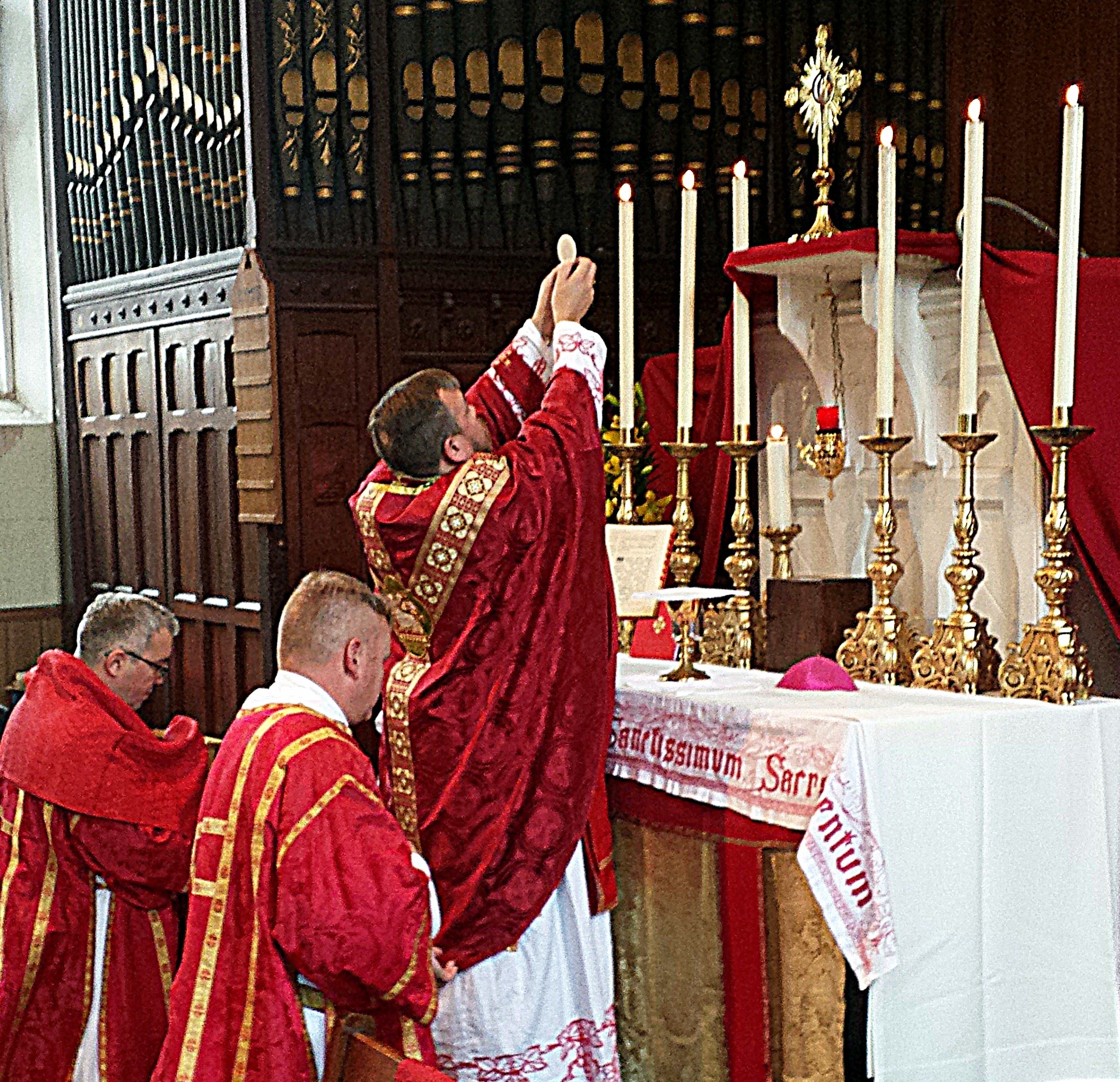
The Mass brings Christ down from heaven and sacrifices Him anew.

The Mass brings Christ down from heaven and sacrifices Him anew.

When the word of man is made superior to the Word of God, and the Gospel of Grace is replaced with the gospel of works, the RCC has effectively set itself in the place of God to decide what is right and what is wrong at the whim of a mere mortal man – the Pope. In effect, then, the RCC has denied the God of the Bible, and by their continuing practice of the mass (which brings Christ down from heaven and sacrifices Him anew), they have denied the deity of Christ “By the which will we are sanctified through the offering of the body of Jesus Christ once for all” (Hebrews 10:10, emphasis mine). By offering prayers to the saints and confessing sins to a priest, the RCC has replaced Christ as the sole mediator between God and man. “For there is one God, and one mediator between God and men, the man Christ Jesus” (1 Timothy 2:5). So, by the criteria I formerly laid out, Roman Catholicism is a false religion.

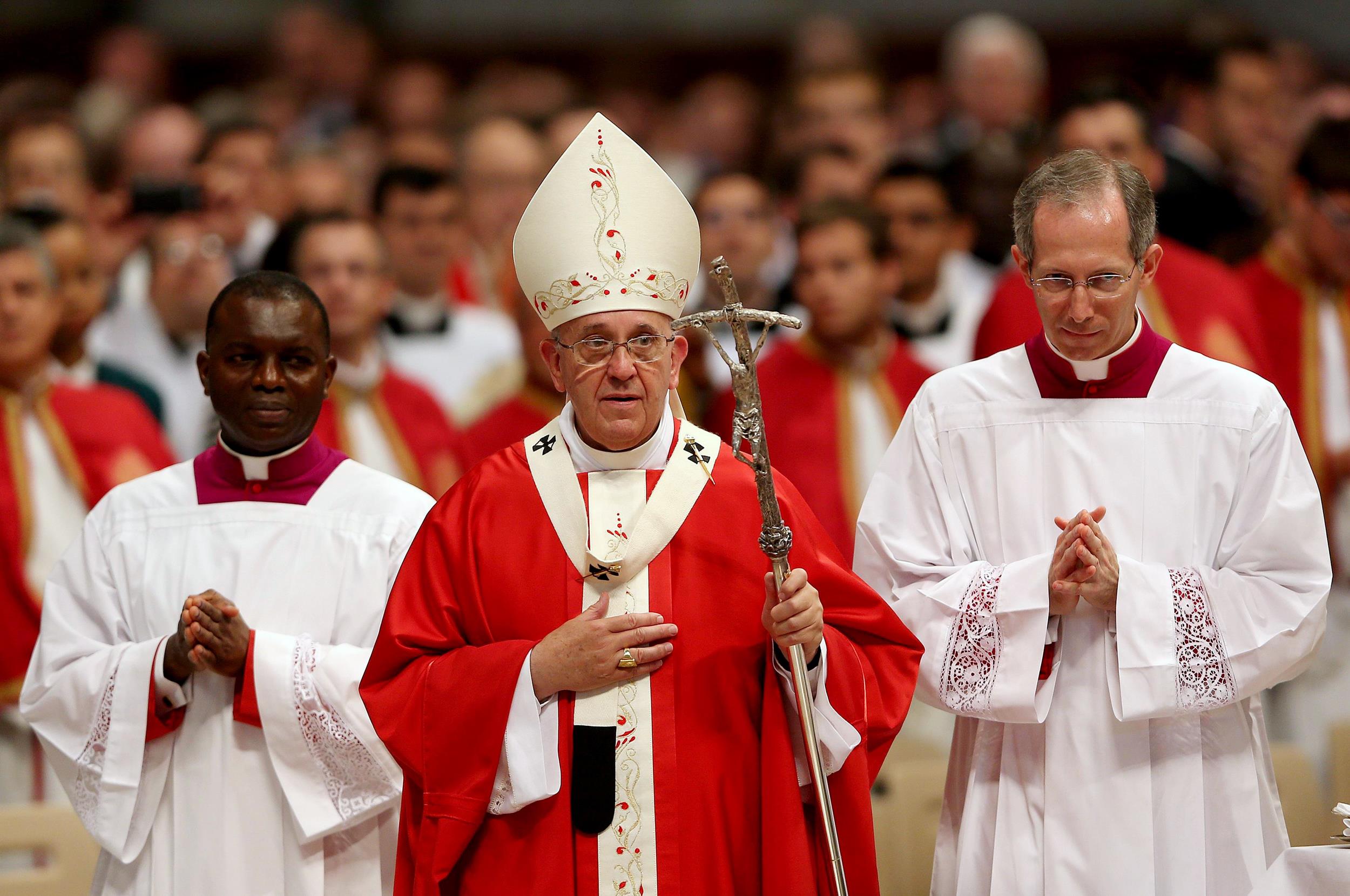
The highest ranking member is the Pope who sets himself up in the position of Christ and rules the people by fiat.

The highest ranking member is the Pope who sets himself up in the position of Christ and rules the people by fiat.

One final indictment that may not exactly fit the four characteristics of a false religion is the charge leveled by Jesus Himself in our beginning verse: “So hast thou also them that hold the doctrine of the Nicolaitans, which thing I hate” (Revelation 2:15). The word “Nicolaitans” is a transliteration of the Greek compound word Nikolaitēs. The first part comes from the Greek word nikaō meaning to subdue or to conquer, overcome, prevail, get the victory over. The second part comes from the Greek word laos from which we get our word “laity” meaning people. So, the Nicolaitans are those who subdue, overcome or conquer the people, and in this case, Jesus was referring to His Church. This is exactly what the RCC has done. They have set up a hierarchal system where the highest ranking member is the Pope who sets himself up in the position of Christ and rules the people by fiat. Such rule goes against Scripture and defies Christ, Who emphatically states that it is a thing He hates. That is a strong indictment from the One Whom the Pope claims to represent.

Is it possible for a Catholic to be saved? Yes, of course it is. Salvation, according to the Bible, is an individual matter that has nothing to do with religion, as I have stated in previous articles. My question is, why would someone who is saved by grace (Ephesians 2:8-9) want to continue in bondage to the Church of Rome? Instead, the Word of God urges, “Come out of her, my people, that ye be not partakers of her sins, and that ye receive not of her plagues” (Revelation 18:4).

Notes:


[1] Mike Gendron, “Roman Catholicism-Apostolic or Apostate?” http://www.worldviewweekend.com/news/article/roman-catholicism-apostolic-or-apostate/, accessed September 12, 2014.

[2] Ibid.

[3] The New Catholic Catechism of the Catholic Church, paragraph 882.

[4] Mike Gendron, “Roman Catholicism-Apostolic or Apostate?”

[5] Ibid.

[6] Ibid.

[7] Ibid.

1 Comment

Filed under Apologetics, Christianity, Gospel, Religion, Salvation, Theology

False Religion: Protestantism

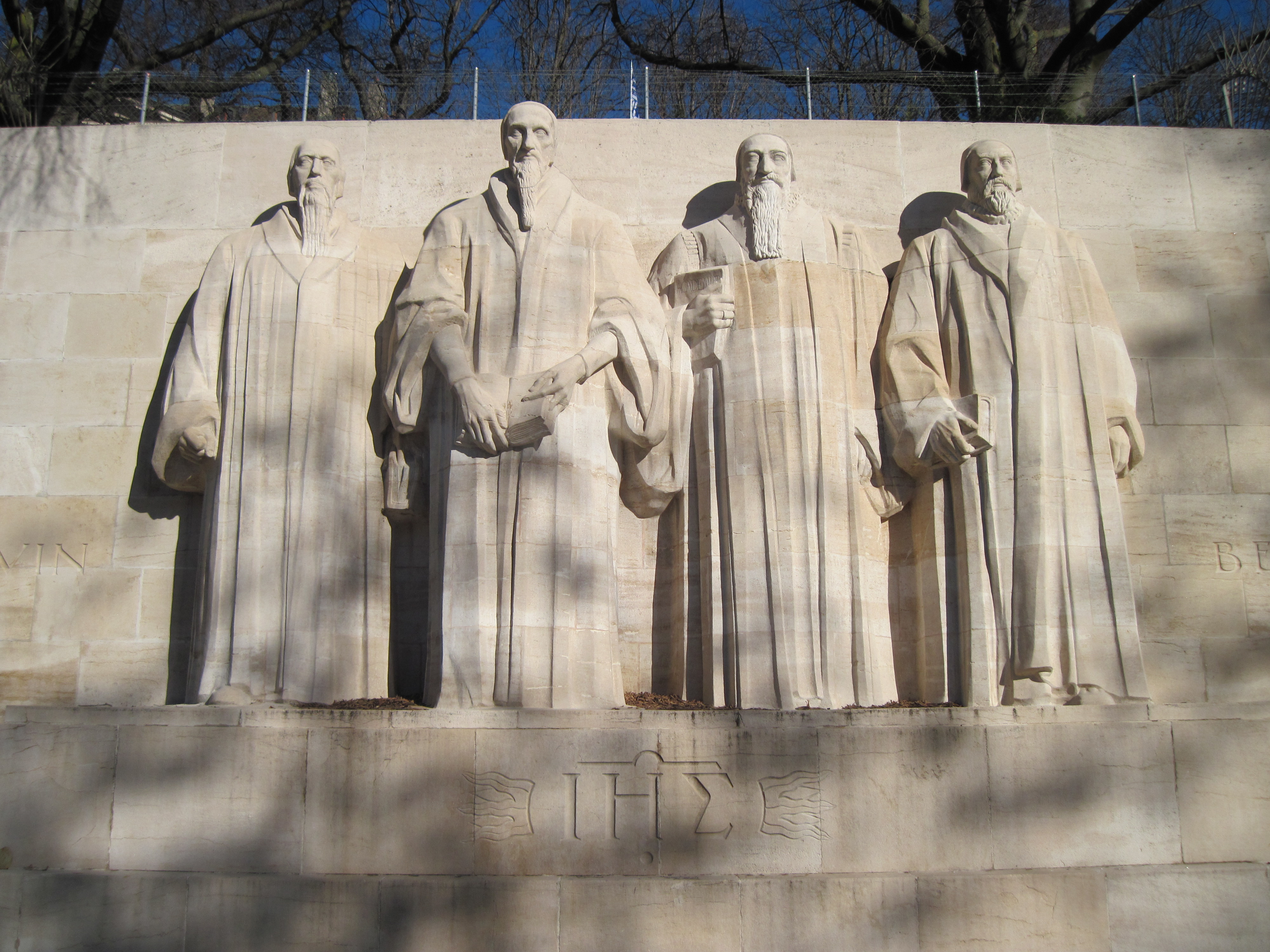
The Reformers

Knowing this first, that no prophecy of the scripture is of any private interpretation. For the prophecy came not in old time by the will of man: but holy men of God spake as they were moved by the Holy Ghost. (2 Peter 1:20-21)

How do I broach this topic delicately and objectively without coming off as if I am way out there in far, far left field? After all, I claim that “I Am A Christian.” “I Am A Baptist,” so I can rightfully disclaim Protestantism. In my articles “True Religion” and “False Religion” I offer four common characteristics of false religion namely: (1) Rejection or denial of the God of the Bible, (2) Rejection or denial of the deity of Christ, (3) Rejection or denial of the Bible as the inerrant, infallible Word of God, and (4) Rejection or denial of salvation by means of Grace alone totally apart from any works of man.

The obvious question is: how does Protestantism fit any of these four characteristics? After all, Protestantism gave us the “Five Solae”: Sola Scriptura, Sola Fide, Solius Chirstus, Sola Gratia, Soli Deo Gloria. Furthermore, all Protestant denominations accept some form of the Apostle’s Creed which states:

I believe in God, the Father Almighty, Maker of heaven and earth.

And in Jesus Christ, His only Son, our Lord, who was conceived by the Holy Spirit, born of the virgin Mary, suffered under Pontius Pilate, was crucified, died and was buried. He descended into hell. On the third day He rose again from the dead. He ascended into heaven and sits at the right hand of God the Father Almighty. From thence He will come to judge the living and the dead.

I believe in the Holy Spirit, the holy Christian Church, the communion of saints, the forgiveness of sins, the resurrection of the body, and the life everlasting. Amen.

That pretty well establishes that Protestantism affirms the triune Godhead and the deity of Jesus Christ. However, there is nothing there affirming the Word of God, and although it affirms “the forgiveness of sins,” it does not specify how that happens. Well, alright, these are not specifically stated in the creed, but generally speaking, Protestantism holds “The belief in the Bible as the supreme source of authority for the church”[1] and “The belief that believers are justified, or pardoned for sin, solely on condition of faith on Christ rather than a combination of faith and good works.”[2]

So, all seems well. But is it? If we look only on the stated beliefs of Protestantism,[3] my charge is baseless. I concede that, at least for the conservative variants of these denominations, these charges are unjustifiable, so I need to narrow my allegation to “liberal” Protestantism, and not “throw out the baby with the bath water.”

Liberal Protestantism has fallen away into an apostasy that, while it professes its creedal beliefs, in practice it denies the authority of Scripture, emphasizes salvation though works (mainly through baptism), and “spiritualizes” and/or minimizes the resurrection of Jesus Christ thereby denying His deity.

The fall of Protestantism (and from here forward, I am referring to liberal Protestantism) into apostasy began around the 19th century AD with the rise of “higher criticism” of the Scriptures.

[Higher criticism] generally takes a secular approach asking questions regarding the origin and composition of the text [of Scripture]…The principles of higher criticism are based on reason rather than revelation (emphasis mine) and are also speculative by nature…The higher critical methods…grew out of a German [Lutheran] school of Biblical studies in the late eighteenth and early nineteenth centuries…the origins of higher criticism are deeply intertwined with rationalism and naturalism (emphasis mine)…In later times, higher critical methods were deployed in conjunction with the contemporary philosophical trends to de-historicize Scripture (emphasis mine).[4]

Just a casual reading of the above statement leaves the impression that higher criticism elevates man’s reason above God’s Word, and this is the downfall of Protestantism. Strangely, in his autobiography, John Shelby Spong, Episcopal Bishop of Newark, Retired, talks about his love for the Bible from the time he received his first as a Christmas gift at the age of twelve. He recalls:

That Bible went on my bed stand and on that day a lifetime love affair with that book was first born in me. It has never yet departed. I began on that Christmas Day the habit of daily Bible reading. I have missed very few days from that one to this in which I did not spend some part of that day reading and studying the Scriptures. I suspect I have read the Bible through twenty-five time by now.[5]

Spong’s “love affair” with the Bible defies the normal understanding of that phrase. After becoming and ordained Episcopal priest he talks about holding Bible studies at his first church. Of his adult class he said:

A tradition of adult education had never been part of the life of this congregation. Their biblical knowledge was on a Sunday-school level. Christianity was, for the most of them, simply part of their culture and was exhibited by showing decency, good manners, and good citizenship.[6]

He describes his plan for “discipleship” as follows:

I would duck no issues, compromise no truth, and avoid no frontier to which my thought and study (emphasis mine) led me. I would resist no new insight out of some need to be defensive for God. I would adopt as my motto the words of my theology professor… “Any God who can be killed ought to be killed” (emphasis mine). I would allow every part of my faith system, its creeds, its Bible (emphasis mine), its sacred traditions, to be examined and questioned openly and honestly. If I discovered that any traditional belief could not stand the test of this challenge, I would abandon it publically. No protective barriers, no claim for inerrancy, infallibility, or divine revelation (emphasis mine) would be placed around any symbol of Christianity, including core doctrines like the Incarnation, the Trinity, the Resurrection (emphasis mine)…I would test in a parish church arena whether or not the total education a priest receives in the academy, including the questions it raises, can be made available to a congregation of pew sitters even if it reveals that the Christianity to which they are attached is not intellectually credible (emphasis mine)[7]

Besides Spong’s blatant arrogance, note how he elevates himself, his thoughts, and his intellect over and above Scripture so that he is willing to challenge the veracity of the Incarnation, the Trinity, and the Resurrection. Eventually, Spong abandons all those things to the point where he advocates for the ordination of the first homosexual Episcopal priest and later for female priests. What the Bible has to say on these matters becomes irrelevant, and the reason of man becomes supreme.

Spong is just a small sample, but he is indicative of what has happened to Protestantism. Granted, there has been a lot of pushback from conservative Protestant groups, which is commendable; but by and large, Protestantism has jettisoned the Word of God, and fallen into a great apostasy where theism has been replaced by humanism so that only the empty hulk of the Reformation remains. Protestantism has become, in the words of Jesus, “whited sepulchres, which indeed appear beautiful outward, but are within full of dead men’s bones, and of all uncleanness” (Matthew 23:27).

“Salvation” in these denominations is typically through baptism (usually as an infant) followed by some sort of catechism, confirmation and church membership. In other words, it is a “works-based” salvation. Although their confession affirms justification by Grace alone, through Faith alone, the definition of those terms degenerates into “works.” The shell is there, but the essence is gone.

Protestantism, the liberal kind, is a false religion. It gives lip service to God as a “figurehead” and elevates man above God in the form of humanism. It rejects the deity of Christ by questioning His bodily resurrection. It rejects the infallibility and inerrancy of Scripture, when it elevates man’s reason above the Word of God. It rejects the clear teachings of the Bible against such matters as homosexuality, or the ordination of female clergy, and it rejects the miracles of the Bible including creation and the resurrection of Christ. Finally, it teaches a works-based salvation.

 Notes:


[1] http://en.wikipedia.org/wiki/Protestantism (accessed August 18, 2014).

[2] Ibid.

[3] FYI: There are many “flavors” of Protestantism. Protestant Denominations include, but are not limited to: Lutheran, Presbyterian, Methodist, Episcopal (Anglican), and perhaps some others. All of these, with the exception of Methodist, are direct breakaways from the Roman Catholic Church. The Anglican Church (the Church of England) broke away from the Roman Catholic Church so that Henry VIII could divorce Catherine, but it basically maintained Catholic practices. Methodists then broke away from the Anglican Church. Many Protestant Denominations maintain the liturgical form of the Roman Catholic Church without the Roman Catholic distinctive of the veneration of Saints.

[4] http://www.theopedia.com/Biblical_criticism (accessed August 19, 2014)

[5] John Shelby Spong, Here I Stand, (San Francisco, Harper Collins Publishers, 2000), 30.

[6] Ibid, 134.

[7] Ibid, 134-135.

6 Comments

Filed under Apologetics, Christianity, Evangelism, Gospel, Religion, Resurrection, Salvation, Theology

False Religion: Islam

Muslim Eyes

Image Credit: Aleksandar Mijatovic http://www.123rf.com/.

Thus saith the LORD the King of Israel, and his redeemer the LORD of hosts; I am the first, and I am the last; and beside me there is no God. (Isaiah 44:6)

Hijab shrouded women are no longer an uncommon sight in the United States, especially in heavily populated urban areas like here in the Dallas-Fort Worth Metroplex. What is really surprising, at least to me, is the number of white American women who have “submitted” (the meaning of “Islam”) to wearing Muslim garb. What is it about this oppressive eastern religion that would attract “independent,” freedom-loving American women to subject themselves to such humiliation? I know; they probably don’t see it that way.

Ever since the attacks on the Twin Towers in New York City and the Pentagon in Washington, D.C. on September 11, 2001, there has been a lot of propaganda going around trying to convince us that the Muslim god and the Christian God are the same – we all worship the same God. I deal with this in some detail in my article “God Is Not Allah.” In recent articles dealing with false religions, I contend that false religions share some common characteristics: (1) They deny or reject the God of the Bible, (2) They deny or reject the deity of Christ, (3) They reject the Bible as the inerrant, infallible Word of God, and (4) they teach salvation through the works or efforts of the believer. Since I covered the first characteristic in “God Is Not Allah,” and for the sake of brevity, I will dispense with that discussion here. Instead, I will begin with the second characteristic.

Islam, which means “submission,” was founded around 610 A.D. when Muhammad supposedly received the first series of revelations of the Qur’an (Koran). Muhammad, the founder of Islam is of highly questionable character. His foster mother suspected that he received these revelations under satanic influence. “At twenty-five, Muhammad married a wealthy forty-year-old widow, Khadija, after she proposed to him. After Khadija died…Muhammad married a widow of a disciple and a six-year-old (who moved in with him when she was nine), Ayisha [his favorite]. His seventh wife was his ex-daughter-in-law; by the time of his death he had twelve wives and two concubines … Interestingly, Sura 4:3 limits the number of wives to four, and in Sura 4:31, marriage to one’s daughter-in-law was prohibited. But in Sura 33:36-40 Muhammad was conveniently given a new revelation from God that ordered Zaid, Muhammad’s adopted son, to divorce his wife so Muhammad could marry her by God’s command. This is called abrogation, to be discussed later”[1] (emphasis and insertion mine).[2] Muslims get very defensive when Muhammad’s character is called into question, although honest Muslims will concede the historical accuracy while at the same time justifying his actions.

Muslims reject the deity of Christ. To the Muslim, Jesus is just another one of Allah’s prophets (Sura 4:171). While Islam (and the Qur’an) concedes that Jesus was virgin-born, it rejects the notion that He was the Son of God or part of the Trinity (Sura 5:17; 5:116; 19:35).[3] “We are told that He was nothing but a slave on whom God showed favor (Sura 43:59); yet elsewhere we are told that the Messiah is not a slave (Sura 4:172).[4] While Jesus did not atone for anyone’s sins, according to Islam, He Himself was sinless (Sura 3:46). Interestingly, “Muhammad sinned and needed forgiveness (Sura 40:55),”[5] and yet he supersedes Jesus as Allah’s prophet. The Qur’an attributes miracles to Jesus (Sura 3:49; 5:110), but none to Muhammad. Islam is a false religion because it rejects the deity of Christ.

Islam rejects the Bible as the inerrant, infallible Word of God. While it accepts the Bible as “a holy book,” and even encourages infidels to heed its words, Muslims charge that the Bible has been corrupted. “The Muslim may charge that Jews and Christians have mistranslated the Bible, but the Qur’an says that they only misinterpret and disbelieve it (Sura 3:70-71)”[6] For all of their claims against the Bible, it is really the Qur’an that should be called into question. “One of the prerogatives of the Qur’an is abrogation… This is taught in three separate places in the Qur’an. Sura 2:100/106 says, ‘And for whatever verse we abrogate or cast into oblivion, we bring one better or like it’; Sura 13:39 has, ‘Every term has a Book. God blots out, and he establishes whatsoever he will; and with him is the Mother of all Books’; and Sura 16:101 (A.J. Arberry’s translation) says, ‘And when we exchange a verse in the place of another verse—and God knows very well what He is sending down—they say, “Thou art a mere forger!” Nay, but the most of them have no knowledge. Say, “The Holy Spirit [in Islam the angel Gabriel is the Holy Spirit] sent it down from the Lord in truth, and to confirm those who believe, and to be a guidance and good tidings to those who surrender.’”[7] The obvious question is, “If Allah is ‘all-knowing,’ why can’t he get it right the first time?” Walter Martin presents six theological problems resulting from this inconsistency:

  1. The Qur’an cannot be trusted because it contains “divinely inspired” contradictions. If God has a history of abrogating his own revelation, the “eternal speech of God,” how can one be certain that he will not abrogate it again in the future?
  2. It may be argued that it cannot be abrogated again in the future, since Muhammad was “the last prophet.” But how do we know that God will not abrogate that and send us more prophets?
  3. If God can abrogate his eternal speech, how can we trust him with our eternal soul?
  4. If God has done any abrogating…it does not indicate progressive revelation, which is additive. It indicates a contradiction and annulment, which subtracts from revelation, since at least some portion of past revelation has been cancelled. This would mean that God either did not know how future contingent events would turn out, or that he did but purposefully changed his mind. So the God of Islam is either not All-knowing or is a liar…
  5. If God can abrogate past divine revelation, it seems to indicate intellectual weakness at the very least. It not only causes problems for omniscience, since he did not have sufficient foreknowledge to avoid the need for abrogation, but also for omnipotence (because if he did have sufficient foreknowledge he apparently did not have the power to carry out effective preventative measures), as well as other attributes.
  6. If the Muslim God is not consistent, then his creatures have no foundation for morality and ethics…If God is not invariant, then the moral/ethical system derived from him would necessarily be inconsistent, and we would essentially be on our own…If each person had their own moral standard, there could be no legal basis for a society of any kind. This would seem to conflict with the Muslim concept of sharia.[8]

Unlike the Qur’an, the Bible has no abrogation, and it can be shown to be wholly consistent from Genesis to Revelation. Indeed, Jesus proclaimed, “For verily I say unto you, Till heaven and earth pass, one jot or one tittle shall in no wise pass from the law, till all be fulfilled” (Matthew 5:18). Such a statement allows no room for abrogation, but Islam rejects the Bible and prefers the Qur’an, which admits that it abrogates. That makes Islam a false religion.

Islam teaches salvation through the efforts of the individual. “Every Muslim who hopes to escape the judgment of Allah must fulfill the works of the Five Pillars of the Faith (Sura 10:109):”[9]

  1. Recitation of the Shahada (“There is no God but Allah, and Muhammad is the prophet of Allah”);
  2. Five daily prescribed prayers (Salat or Namaz) in Arabic. These prayers include genuflection and prostration in the direction of the holy city, Mecca;
  3. Almsgiving (Zakat), which involves the duty to give a certain percentage of one’s total income to help others. This is not considered charity but an obligation arising out of the realities of a world where there is poverty, inequality, injustice, and suffering. Generally, performing zakat is to be done privately, unless there is a pressing reason for the giving to be made known publicly.
  4. Fasting (Saum or Ruzeh) during the entire month of Ramadan, when Muslims are supposed to fast from all food and drink from sunrise to sunset in atonement for their own sins over the previous year. Muslims are allowed to eat and drink after sunset and some get up before sunrise to eat before the fast begins again.
  5. A pilgrimage (Hajj) to Mecca, the holy city, at least once in a Muslim’s lifetime. The hajj takes place after Ramadan.

~Jihad is sometimes referred to as a sixth pillar of Islam. Since September 11, 2001, there has been constant debate about the meaning of the term. Many Muslims and some secular experts on Islam, have tried to say that jihad only refers to personal spiritual struggle. Jihad can and often does mean one’s individual efforts to be righteous, but it is often used by Muslims both past and present to refer to actual military struggle or “holy war.” Saying that jihad is simply spiritual struggle ignores Islamic history and the actions of contemporary Muslims, including militants like Osama bin Laden, who use it to refer to acts of killing in the name of Allah.~[10]

The Qur’an, like the Bible, teaches that all men are sinners (Sura 16:61; Sura 42:5), and all men are weak (Sura 4:28). As shown above, even Muhammad sinned (Sura 40:55; Sura 47:19; Sura 48:1-2), but Jesus was sinless (Sura 3:45-46). No one escapes Allah’s judgment, and even the most faithful Muslim cannot have the assurance of eternal life. While the Qur’an and the Bible agree on man’s sinful and lost condition, only the Bible offers the “free gift” of salvation apart from action on the part of man. “For by grace are ye saved through faith; and that not of yourselves: it is the gift of God: Not of works, lest any man should boast” (Ephesians 2:8-9). It is all the work of God and not at all on the part of man except for the act of receiving the free gift: “But as many as received him, to them gave he power to become the sons of God, even to them that believe on his name…For God so loved the world, that he gave his only begotten Son, that whosoever believeth in him should not perish, but have everlasting life” (John 1:12; 3:16). A works-based salvation makes Islam a false religion.

Islam is a false religion in that it rejects the triune nature of the God of the Bible, it rejects the deity of Christ, it rejects the Bible as inerrant and infallible, and it bases salvation on the efforts of the individual. The Qur’an, while it is not the word of God by any stretch of the imagination, does contain some particles of truth that, if used wisely, can be used as a witness to Mulims.


NOTES:

[1] Martin, Walter, The Kingdom of the Cults, (Minneapolis: Bethany House Publishers, 2003), 440.

[2] FYI: Unlike the Bible, the Qur’an does not have “books,” rather it is divided into long “chapters” called Suras. Passages in the Qur’an are identified by the Sura number followed by the number of the verse or passage, e.g., Sura 4:3 would be the fourth Sura, the third verse.

[3] FYI: these passages from the Qur’an are NOT taken out of context, because the Qur’an has no “context” to speak of. It is a collection of disjointed sayings that rarely have anything to do with one another, which explains why it can so easily be abrogated.

[4] Martin, 447.

[5] Ibid.

[6] Ibid, 448.

[7] Ibid, 445.

[8] Ibid, 445-446.

[9] Ibid, 447.

[10] Ibid, 447-448

3 Comments

Filed under Apologetics, Religion, Resurrection, Salvation, Theology