Tag Archives: Second Coming of Christ

Jesus’ Seven Discourses in John (3)

john5_19-40-authority-of-jesus

Verily, verily, I say unto you, He that heareth my word, and believeth on him that sent me, hath everlasting life, and shall not come into condemnation; but is passed from death unto life. (John 5:24)

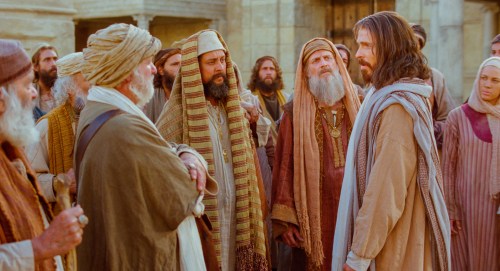
As Jesus returned to Jerusalem for the celebration of Purim,[1] Chapter Five opens with the account of the invalid by the Pool of Bethesda who Jesus healed. The healing once again stirred up the “Jews” who concerned themselves more with His breaking of the of the Sabbath than with the man’s welfare. The miraculous healing of the lifelong invalid demonstrated Jesus’ divine nature, and “Therefore the Son of man is Lord also of the Sabbath” (Mark 2:28; Luke 6:5). “And therefore did the Jews persecute Jesus, and sought to slay him, because he had done these things on the sabbath day” (John 5:16). Unwilling to let an opportunity slip away, Jesus took time to instruct them on the source of His authority.

“Then answered Jesus and said unto them, Verily, verily, I say unto you, The Son can do nothing of himself, but what he seeth the Father do: for what things soever he doeth, these also doeth the Son likewise” (John 5:19, emphasis mine).Christians often get accused of believing in three gods because we hold a Trinitarian view of God stating that we believe in One God manifested in three persons, Father, Son and Holy Spirit. God’s triune nature challenges the limits of our finite minds, and no definition devised by man can fully describe that nature. A weak comparison might be made from the nature of man considering that man was created in the image of God (Genesis 1:27). Like God, man possesses a triune nature composed of mind, body, spirit. The mind controls man’s activities. The body carries out the mind’s commands, and the spirit energizes and motivates man’s activities. Although often thought of as separate entities, the mind, body, and spirit must exist in unison for man to exist.

Knowing that Jesus, the Son, is fully God in every way, His statement sounds strange to our ears. He seems to say that the Father is a different person, separate and apart from Him. After all, when describing our own actions, we would not say something like, “the body can do nothing of itself but what it sees the mind do,” even though, in a certain sense, that is an accurate description of all our actions (unless we have some sort of neurological disorder that causes our body to act contrary to the mind’s control).

However, Jesus’ explanation required a third person description because to the Jews, God was wholly spirit and transcendent. They could not conceive of God in human form or that God could have a human “son” – a confusion that continues on to this day. “Therefore the Jews sought the more to kill him, because he not only had broken the sabbath, but said also that God was his Father, making himself equal with God” (John 5:18, emphasis mine). The Father, like our mind, determines what actions He wants to carry out, and the Son, like our body, carries out the will of the Father.“I can of mine own self do nothing: as I hear, I judge: and my judgment is just; because I seek not mine own will, but the will of the Father which hath sent me” (John 5:30, emphasis mine).“The conclusion from our Lord’s argument is: If I have broken the Sabbath, so has God also; for I can do nothing but what I see him doing. He is ever governing and preserving; I am ever employed in saving.”[2]

Additionally, life comes from God. “For as the Father raiseth up the dead, and quickeneth them; even so the Son quickeneth whom he will” (John 5:21). The word “quicken” is an archaic English word meaning, “to make alive.” The O.T. records at least two instances in which the Father raised the dead: the widow’s son through Elijah (1 Kings 22:17) and the Shunamite’s son through Elisha (2 Kings 4:32-35). The Son also raised the dead: the ruler’s daughter (Mark 5:35-42), the widow’s son at Nain (Luke 7:11-15), and Lazarus, at Bethany (John 11:14-44).“Here our Lord points out his sovereign power and independence; he gives life according to his own will – not being obliged to supplicate for the power by which it was done, as the prophets did; his own will being absolute and sufficient in every case.”[3] Jesus maintains this authority for all time. “Marvel not at this: for the hour is coming, in the which all that are in the graves shall hear his voice, And shall come forth; they that have done good, unto the resurrection of life; and they that have done evil, unto the resurrection of damnation” (John 5:28-29, emphasis mine). Jesus’ promise was meant for the near and distant future. “And the graves were opened; and many bodies of the saints which slept arose, And came out of the graves after his resurrection, and went into the holy city, and appeared unto many” (Matthew 27:52-53, emphasis mine). There is still a time yet to come. “For the Lord himself shall descend from heaven with a shout, with the voice of the archangel, and with the trump of God: and the dead in Christ shall rise first: Then we which are alive and remain shall be caught up together with them in the clouds, to meet the Lord in the air: and so shall we ever be with the Lord” (1 Thessalonians 4:16-17, emphasis mine).

There is yet one final resurrection. You do not want to be part of that resurrection. “And I saw the dead, small and great, stand before God; and the books were opened: and another book was opened, which is the book of life: and the dead were judged out of those things which were written in the books, according to their works. And the sea gave up the dead which were in it; and death and hell [i.e. the grave] delivered up the dead which were in them: and they were judged every man according to their works” (Revelation 20:12-13, emphasis mine). Jesus, as God, has the power to give eternal life, but you obtain it in this life.

Jesus judges based on how man treats Him. “For the Father judgeth no man, but hath committed all judgment unto the Son: That all men should honour the Son, even as they honour the Father. He that honoureth not the Son honoureth not the Father which hath sent him” (John 5:22-23, emphasis mine). What we do with Jesus in this life determines the outcome of our eternal life. “For as the Father hath life in himself; so hath he given to the Son to have life in himself; And hath given him authority to execute judgment also, because he is the Son of man” (John 5:26-27, emphasis mine). God put on human flesh (John 1:14) so that man could relate to Him. “He is the Son of man.” “No man hath seen God at any time; the only begotten Son, which is in the bosom of the Father, he hath declared [i.e. explained, demonstrated, exegeted]him” to us (John 1:18, emphasis mine). We cannot know God the Father better than how we know God the Son. Therefore, when we reject the Son, we reject the Father; consequently, we reject eternal life.

Jesus now gets to the heart of the matter. “Verily, verily, I say unto you, He that heareth my word, and believeth on him that sent me, hath everlasting life, and shall not come into condemnation; but is passed from death unto life. Verily, verily, I say unto you, The hour is coming, and now is, when the dead shall hear the voice of the Son of God: and they that hear shall live”  (John 5:24-25, emphasis mine). The “dead” Jesus refers to here are those who are “dead in their sins.” “Even when we were dead in sins, hath quickened [i.e. made alive] us together with Christ, (by grace ye are saved;)” (Ephesians 2:5)

The Jews needed proof.“By what authority doest thou these things?and who gave thee this authority?” (Matthew 21:23).  They may not have verbalized those sentiments at this time, but they must have been thinking them. “If I bear witness of myself, my witness is not true. There is another that beareth witness of me; and I know that the witness which he witnesseth of me is true” (John 5:31-32,). The law required the testimony of at least two witnesses to prove a matter (Deuteronomy 17:6; 19:15).  Jesus offered up John the Baptist as a witness, but the Jews rejected John’s message (John 5:33-35). Even so, Jesus offered a greater witness – His own works. “But I have greater witness than that of John: for the works which the Father hath given me to finish, the same works that I do, bear witness of me, that the Father hath sent me” (John 5:36, emphasis mine). In addition, the Father bore witness of Him through the works that He performed (John 5:37-38). Nicodemus attested to this: “Rabbi, we know that thou art a teacher come from God: for no man can do these miracles that thou doest, except God be with him” (John 3:2, emphasis mine). Furthermore, the Scriptures testified concerning Him. “Search the scriptures; for in them ye think ye have eternal life: and they are they which testify of me” (John 5:39, emphasis mine).

What more proof is needed? Jesus is Lord over the Sabbath. Jesus is Lord over Creation. He is the Lord and giver of life. “For the wrath of God is revealed from heaven against all ungodliness and unrighteousness of men, who hold the truth in unrighteousness; Because that which may be known of God is manifest in them; for God hath shewed it unto them. For the invisible things of him from the creation of the world are clearly seen, being understood by the things that are made, even his eternal power and Godhead; so that they are without excuse” (Romans 1:18-20, emphasis mine). Creation itself gives sufficient testimony to remove any excuse not to believe; but God provided a greater witness through the Son of God, Son of Man Who, if rejected,will judge the unbeliever guilty without excuse.

Notes:


[1]  “Jesus Seven Signs in John (3)” https://erniecarrasco.com/2016/11/06/jesus-seven-signs-in-john-3/

[2]Adam Clark’s Commentary on the Bible Note on John 5:19.

[3]Ibid, on John 5:21.
Comments Off on Jesus’ Seven Discourses in John (3)

Filed under Christianity, Death, Evangelism, Gospel, Religion, Resurrection, Salvation, Second Coming of Christ, Theology

Rosh HaShanah

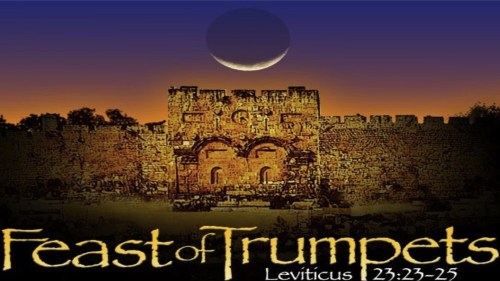
feast-of-trumpets

Speak unto the children of Israel, saying, In the seventh month, in the first day of the month, shall ye have a sabbath, a memorial of blowing of trumpets, an holy convocation.  (Leviticus 23:24)

Today, October 3, 2016, is Rosh HaShanah, the first month and day of the Jewish civil year. It is the seventh month (Tishri) of the ecclesiastical year which begins on Nissan 1, sometime in early spring.

Rosh HaShanah is also known as the Feast of Trumpets, and it is celebrated by the daily sounding of trumpets leading up to Yom Kippur, the Day of Atonement, ten days later. This year, that day begins on the evening of October 11, 2016.

Most Christians are unfamiliar with the Jewish feast days that are observed in keeping with the Law given to Moses on Mt. Sinai. These are not your run-of-the-mill festivals. They were ordained by God and are collectively known as the “Feasts of the Lord;” therefore, they are solemn observations. The first four feasts occur in the spring beginning with Passover, and the last three take place in the fall ending with Sukkot, the Feast of Tabernacles (or “Booths”).

For the Christian, these feasts offer a picture of Christ. Jesus “fleshed out” the first four feasts at His first advent. Arguably, He has yet to fulfill the final three. Consider the following and how these feasts represent the ministry of Christ:

  1. Passover – Jesus is crucified as the Lamb of God taking away the sins of the world.
  2. Unleavened Bread – Leaven represents sin. Jesus, with the sins of the world on Him, is removed from the “house” (Jerusalem) and buried outside the city walls in a tomb.
  3. First Fruits – This feast celebrated the “promise” of the coming harvest. It was observed by waving the first sprouts of the fields before the Lord. Jesus rose from the dead on this day with the promise of a great harvest to follow.
  4. Feast of Shavuot (Pentecost) – Fifty days after First Fruits celebrated the barley harvest. Jesus ascended into heaven 40 days after First Fruits, and 10 days later the Holy Spirit fell upon “the Church” – the disciples – and 3000 souls were saved that day (Acts 2:41) – truly a great “harvest.”
  5. Rosh HaShanah – The Feasts of Trumpets was a “Holy Convocation” and a gathering in of all of God’s people. Christians may see this as the “Rapture” where “the trumpet shall sound, and the dead shall be raised incorruptible, and we shall be changed” (1 Corinthians 15:52; 1 Thessalonians 4:16-17).
  6. Yom Kippur – The Day of Atonement was the day when the people of God repented of past sins and the High Priest entered the Most Holy Place, the Holy of Holies, into the very presence of God to pour the blood of the sacrifice for the whole nation on the Mercy Seat of the Ark of the Covenant. The Ark contained the tablets of God’s Law that was violated, and the blood covered the infraction. Each Christian, being a “priest” (Revelation 1:6; 5:10; 20:6), now enters into the very presence of God offering the blood that was shed for them by Christ. Through His blood, our sins are covered, i.e. atoned for.
  7. Sukkot – The Feast of Tabernacles was a seven-day celebration remembering the time when God’s people were wandering in the wilderness dwelling in tents. Now they have come into the Promised Land and live in permanent dwellings. For the Christian, who are in the world but not of the world (John 17:14-16), this represents Christ’s reign on earth as King of Kings and Lord of Lords beginning with His millennial kingdom on earth and beyond into eternity.

I’ve said this before. Each year around time, I start looking up and listening for the trumpet to sound. Yes, I know that the Rapture can occur at any time, but to me it seems logical that it would be consistent with God’s calendar. Of course, God is not obligated to follow my line of reasoning. At any rate, this time of year causes me to pray ever more earnestly that God would call us home and fix this really messed up world once and for all.

However, at the same time, it causes me even greater concern because I know that those who are left behind will literally experience hell on earth for the next seven years, not to mention for eternity. I have two sons with their wives that are lost and hell bound. My youngest son has two daughters, my granddaughters, that by now have reached the age of accountability. My heart aches for them knowing what is ahead unless they repent and turn to Christ as their personal Savior. I have nieces and nephews and other relatives who are lost. I have friends and acquaintances who are doomed to an eternity in hell. That is not a pleasant thought. So, on the one hand I long to go and be with the Lord right now, but on the other hand, I am deeply concerned for those that will be left behind. The longer the Lord delays His return, the more time and opportunity they have to alter their course.

The Lord is not slack concerning his promise, as some men count slackness; but is longsuffering to us-ward, not willing that any should perish, but that all should come to repentance. But the day of the Lord will come as a thief in the night; in the which the heavens shall pass away with a great noise, and the elements shall melt with fervent heat, the earth also and the works that are therein shall be burned up. (2 Peter 3:9-10, emphasis mine)

On the other hand, the longer He delays the more time for unbelievers to scoff: “And saying, Where is the promise of his coming? for since the fathers fell asleep, all things continue as they were from the beginning of the creation” (2 Peter 3:4).

Even so, come Lord Jesus! (Revelation 22:20)

Shanah Tovah!

3 Comments

Filed under Christianity, Current Events, End Times, Evangelism, Gospel, Hell, Holidays, Salvation, Second Coming of Christ

If My People

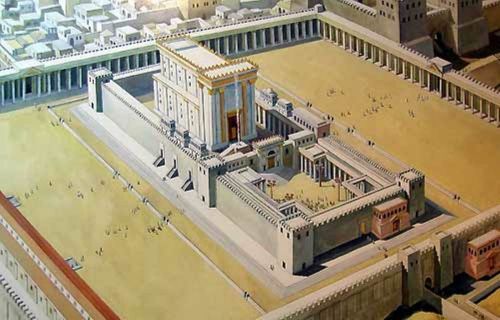
solomons-temple

If my people, which are called by my name, shall humble themselves, and pray, and seek my face, and turn from their wicked ways; then will I hear from heaven, and will forgive their sin, and will heal their land. (2 Chronicles 7:14)

Fear hangs like a dark, menacing storm cloud over our nation. Insecurity saps the courage of our people to venture into the unknown. Anger and hostility ignite flames of anarchy in our streets and everyone yearns for a savior. Our nation is deeply troubled. Anyone with any sense of awareness can see it. Many feel helpless to stem the tide, while many others tenaciously cling to the hope that the downward spiral can be arrested and reversed through a spiritual awakening and revival. The latter frequently quote, “If my people, which are called by my name, shall humble themselves, and pray, and seek my face, and turn from their wicked ways; then will I hear from heaven, and will forgive their sin, and will heal their land” (2 Chronicles 7:14, emphasis mine).

The passage quoted intends for “God’s people” to collectively storm the gates of heaven petitioning God on behalf of our wicked and sinful nation. The petition is conditional and incumbent upon “God’s people,” not the general populous, but who are God’s people and where are they?

Before I respond to that question, I need to restate what have emphasized in the past concerning this particular verse in Second Chronicles that is so often quoted. Regarding the United States of America, the verse is taken out of context and misapplied. The Second Chronicles begins with Solomon’s ascension to the throne of Israel and the building of the first temple in Jerusalem. At the completion of Temple, the priests placed the Ark of the Covenant in its place in the Holy of Holies (2 Chronicles 5:1-12) and “the glory of God” in the form of a cloud that filled the temple in such a way that the priests could not minister in the place (vv. 13-14). As the dedication service continued, Solomon prayed and asked God to “Hearken therefore unto the supplications of thy servant, and of thy people Israel, which they shall make toward this place: hear thou from thy dwelling place, even from heaven; and when thou hearest, forgive” (2 Chronicles 6:21, emphasis mine). Solomon’s plea for God’s forgiveness goes beyond individual sins and extends to the sins of nation collectively.

And if thy people Israel be put to the worse before the enemy, because they have sinned against thee; and shall return and confess thy name, and pray and make supplication before thee in this house; Then hear thou from the heavens, and forgive the sin of thy people Israel, and bring them again unto the land which thou gavest to them and to their fathers. When the heaven is shut up, and there is no rain, because they have sinned against thee; yet if they pray toward this place, and confess thy name, and turn from their sin, when thou dost afflict them; Then hear thou from heaven, and forgive the sin of thy servants, and of thy people Israel, when thou hast taught them the good way, wherein they should walk; and send rain upon thy land, which thou hast given unto thy people for an inheritance … If they return to thee with all their heart and with all their soul in the land of their captivity, whither they have carried them captives, and pray toward their land, which thou gavest unto their fathers, and toward the city which thou hast chosen, and toward the house which I have built for thy name: Then hear thou from the heavens, even from thy dwelling place, their prayer and their supplications, and maintain their cause, and forgive thy people which have sinned against thee. (2 Chronicles 6:24-27, 38-39, emphasis mine)

Notice that Solomon’s request specifies God’s people (Israel), the Temple (this house), Jerusalem (the city), and the nation (their land). “Now when Solomon had made an end of praying, the fire came down from heaven, and consumed the burnt offering and the sacrifices; and the glory of the LORD filled the house. And the priests could not enter into the house of the LORD, because the glory of the LORD had filled the LORD’S house. And when all the children of Israel saw how the fire came down, and the glory of the LORD upon the house, they bowed themselves with their faces to the ground upon the pavement, and worshipped, and praised the LORD, saying, For he is good; for his mercy endureth for ever” (2 Chronicles 7:1-3, emphasis mine).

Obviously, God approved of the Temple and the offerings presented there. The dedication of the Temple took place in the midst of the Fall Feasts. Scripture tells us that it was “in the seventh month” (2 Chronicles 5:3). The Feast of Trumpets (Rosh Ha Shanna) was celebrated on the first day of the seventh month (Leviticus 23:24). Then on the tenth day of the month, they observed the Day of Atonement (Yom Kippur – Leviticus 23:27). That was followed by the Feast of Tabernacles (Succoth) fifteen days later (Leviticus 23:34), which was celebrated for seven days. Solomon dedicated the Temple on the eighth day (2 Chronicles 7:9), and the celebration lasted through the Day of Atonement for seven days. The dedication ended in time to celebrate the Feast of Tabernacles, which lasted an additional seven days (1 Kings 8:65-66). “And on the three and twentieth day of the seventh month he sent the people away into their tents, glad and merry in heart for the goodness that the LORD had shewed unto David, and to Solomon, and to Israel his people.” (2 Chronicles 7:10).

It is in this context that God responds.

And the LORD appeared to Solomon by night, and said unto him, I have heard thy prayer, and have chosen this place to myself for an house of sacrifice. If I shut up heaven that there be no rain, or if I command the locusts to devour the land, or if I send pestilence among my people; If my people, which are called by my name, shall humble themselves, and pray, and seek my face, and turn from their wicked ways; then will I hear from heaven, and will forgive their sin, and will heal their land. Now mine eyes shall be open, and mine ears attent unto the prayer that is made in this place. For now have I chosen and sanctified this house, that my name may be there for ever: and mine eyes and mine heart shall be there perpetually.  (2 Chronicles 7:12-16, emphasis mine)

As specific as Solomon’s prayer was, so was God’s response. Note that God is responding to Solomon’s prayer: “I have heard thy prayer.” Solomon’s prayer request focused on the Temple, Jerusalem, and the “nation” of Israel as noted above. In response, God says that He has “chosen this place to myself.” His people which are called by His name is the nation of Israel collectively. If they sin, which they did and which resulted in expatriation for the northern  kingdom and Babylonian captivity for Judah, and they humble themselves, repent and seek God, then He will heal their land. Note also that the prayer must either originate in that place or be directed toward that place. We see this exact scenario when Daniel recognizes that the 70-year captivity had been met (Daniel 9:1-19).

Christians these days have adopted 2 Chronicles 7:14 as their own and applied it to what is currently going on in the United States of America. They rightly claim we are “God’s people.” You will not arouse an argument from me on that point. The New Testament repeatedly teaches that we are the children of God. “But as many as received him, to them gave he power to become the sons of God, even to them that believe on his name” (John 1:12). However, the claim ends right there. Where is God’s Temple right now? “Know ye not that ye are the temple of God, and that the Spirit of God dwelleth in you?” (1 Corinthians 3:16, emphasis mine). What borders mark the land of God’s people? Americans claim the United States. Are there no Christians in Australia, Canada, China, France, Great Britain, etc.? What of all the Christians being martyred in the Middle East and Africa, are thy not God’s people, and do they not have the right to intercede on behalf of their land?  God’s “grafted in” people have no land here on earth. “For our conversation [i.e. citizenship] is in heaven; from whence also we look for the Saviour, the Lord Jesus Christ” (Philippians 3:20).

It seems somewhat hypocritical that many Christians today want to reject the Old Testament Law claiming that we are “under grace” – those things no longer apply – and yet will take this verse, completely out of context and force it apply to 21st Century America. Sorry, folks, it will not work. There is still a nation of Israel with whom God is dealing. To date, the majority of Israelis are secular. Many are agnostics or atheists. There exists a small minority of “completed Jews” in the land, but with laws against proselytizing, their numbers remain small. Israel exists to show God’s faithfulness to His promises, and in the end, those who survive the Great Tribulation that is coming, “they shall look upon me whom they have pierced, and they shall mourn for him, as one mourneth for his only son, and shall be in bitterness for him, as one that is in bitterness for his firstborn” (Zechariah 12:10), and they will be saved.

So, what can the Christian get out of 2 Chronicles 7:14? Taken in context, we can rest in the assurance that God does hear the prayers of His people, and He does answer according to His will.

2 Comments

Filed under Apologetics, Bible, Christianity, Current Events, End Times, Prayer, Second Coming of Christ, Theology

Are We There Yet?

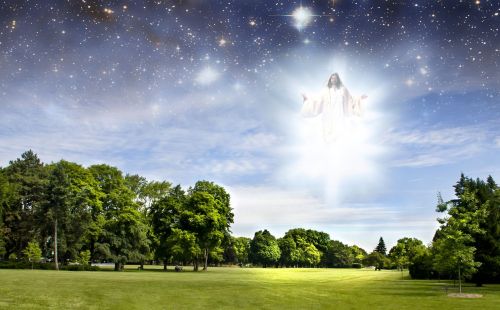
10800577 - second coming of jesus over a summer park

And, behold, I come quickly; and my reward is with me, to give every man according as his work shall be.   (Revelation 22:12)

More than ever it seems that Christians are “Looking for that blessed hope, and the glorious appearing of the great God and our Saviour Jesus Christ” (Titus 2:13). Given all that is taking place in the all over the world today, I am not surprised when I get questions like the following:

I was wondering if it is possible, according to the information we have in the Bible, to calculate how many years have elapsed since the very beginning of the world, so that we know approximately how close we are to the end of this present age of man’s self-rule of 6,000 years, and the return of Jesus Christ?

Also, are we the last generation, and how many years is a Biblical generation?

Generally speaking, the 6000 years people try to associate with Christ’s return is based more on inference and speculation rather than clear Bible teaching. The Bible does not teach that Jesus will return 6000 years after creation. Jesus said, “Watch therefore, for ye know neither the day nor the hour wherein the Son of man cometh” (Matthew 25:13, emphasis mine).

God created in six 24-hour days, not in six 1000-year periods. The Apostle Peter says, “But, beloved, be not ignorant of this one thing, that one day is with the Lord as a thousand years, and a thousand years as one day” (2 Peter 3:8, emphasis mine). Notice that Peter says “as a thousand years.” Grammatically, that phrase is a simile, i.e. comparing two different but “similar” things to each other. For example, a cat is “like” (or “as”) a dog. They are different animals, but they do have similarities: fur, four legs, a tail, etc. What Peter really says is that time makes no difference to God; He is ageless/timeless. God is not constrained by time.

Many who study eschatology (the study of end times) take what Peter says in 2 Peter 3:8 and associate it with the Creation Week, i.e. one day of creation compares to 1000 years of history. They infer that God has determined 7000 years to complete history: 6000 years of “work” plus 1000 years of “rest” during the millennial reign of Christ. That is a logical assumption, and it makes sense; however, it takes a lot of liberty with Scripture to make that jump. That said, I personally agree with that view, but we should not be dogmatic about it. We certainly should not try to predict the return of Christ based on such skimpy evidence. Remember what Jesus said, “ye know neither the day nor the hour.”

The problem with trying to determine when we arrive at the 6000-year mark is that we have lost track of time. God has not lost track of time, but man has. From Scripture, we can measure time from Creation fairly accurately. However, following Israel’s entry into Egypt, the biblical chronology becomes a little hazy. Reconciling biblical chronology with our modern chronology becomes pretty much a guessing game, especially when secular historians attempt to justify 100,000 years of human history based on evolutionary thinking.

According to Chinese chronology, 2016 is the Chinese year 4713. When we consider the biblical chronology given in Genesis 5, the Flood took place around 1656 years after Creation. If we take that time and add the Chinese account of 4713 years, we come up with 6369 years. If we expect Jesus to return 6000 years after Creation, He is 369 years late by that account, either that or Chinese civilization started some 300 years before the Flood, which makes no sense considering that all of earth’s population was destroyed except for the eight on the Ark. It is interesting to note that the Chinese account places the beginning of their history near the time of the Tower of Babel – 100-150 years after the Flood.[1]

For the Jews, 2016 is year 5776. (It will be 5777 this coming September.)  Supposedly, the Jewish calendar begins at Creation. If we expect Jesus to return 6000 years after Creation, we have to wait another 224 years.

I hope you can see why trying to determine Christ’s return by calculating the number of years from Creation is a fruitless endeavor. I believe He will return exactly 6000 years from Creation, but we do not know exactly when Creation took place. We can say it has been “about” 6000 years, but we cannot tell with certainty. However, we can trust that God knows exactly how much time has passed, and Jesus will return precisely when that time is accomplished.

Rather than counting days and years, Jesus said to “Watch therefore: for ye know not what hour your Lord doth come” (Matthew 24:42). It has been “about” 6000 years since Creation, and it is about time for history to take a shâbath (rest). God gave us some signs to watch for. Israel is back in the land, and we are the generation[2] that witnessed it happen (Matthew 24:32-34). Wars and rumors of wars abound around the nation of Israel (Matthew 24:6). There is rampant persecution of Christians in the world, particularly in the Middle East and in all Muslim nations. The world is on the verge of economic collapse. World leaders cry out for a one-world government. Wickedness increases rapidly (2 Timothy 3:1-7). The “signs,” rather than chronology, tell us that the Lord’s return is very near. So, look up! We are almost there!

Notes:


[1] Genesis 10:25 informs us that the earth was “divided” in the days of Peleg. Some think this refers to the dividing of the continents, but the dividing of the continents more likely resulted from the catastrophic Global Flood. The division of Peleg’s day makes better sense if understood as the division of languages, and, by implication, nations described in Genesis 11:1-9. Peleg was born to Eber about 100 years after the Flood (Genesis 11:16). His son, Reu was born 30 years later (Genesis 11:18). Peleg lived a total of 239 years (Genesis 11:19) – 209 years after the birth of Reu. The division of “people groups” could have happened anytime within his lifespan; 100-150 years for the Tower of Babel seems like a reasonable timeframe.

[2]  Determining the length of a generation is irrelevant at this point; anyone living now is part of “that generation.” Generally speaking, a generation is from father to son. From Adam to Seth was 130 years (Genesis 5:3); from Abraham to Isaac was 100 years (Genesis 21:5). Some of the O.T. kings begat sons in their twenties; so, a generation can be anywhere from 20 to perhaps 140 years.  The nation of Israel was reborn on May 14, 1948. That was almost 70 years ago. Surely, anyone born since that time is in that generation that will see the Lord’s return.

Comments Off on Are We There Yet?

Filed under Apologetics, Christianity, Creation, End Times, Evolution, Religion, Second Coming of Christ, Theology

Alpha And Omega

Alpha Omega Bible

I am Alpha and Omega, the beginning and the ending, saith the Lord, which is, and which was, and which is to come, the Almighty.  (Revelation 1:8)

These words recorded by the Apostle John, the one “whom Jesus loved” (John 13:23; 20:2; 21:7, 20), introduce the One who would “reveal” the details of the final events of world history. At this time, John was an old man probably in his nineties, exiled on the island of Patmos “for the word of God, and for the testimony of Jesus Christ” (Revelation 1:9). It was Sunday, “the Lord’s Day,” and John was “in the Spirit” (Revelation 1:10).  John does not say, but I imagine that he was reading and meditating on Daniel’s prophecy and praying. John earned the nickname “Camel Knees” (so I am told) for the calluses he developed from hours on his knees in prayer. While in that posture, “a great voice, as of a trumpet” interrupted his meditation, and the resurrected Lord introduced Himself as “Alpha and Omega, the first and the last” (Revelation 1:10-11).

John recognized Him, although he had never seen Him like this before – “clothed with a garment down to the foot, and girt about the paps with a golden girdle. His head and his hairs were white like wool, as white as snow; and his eyes were as a flame of fire; And his feet like unto fine brass, as if they burned in a furnace; and his voice as the sound of many waters” (Revelation 1:13-15). John, in the company of Peter and James, witnessed Jesus transfigured on the mountain (Luke 9:28-36) in the days of Jesus’ short ministry on earth. That experience left the disciples awestruck, but it was nothing compared to this appearance.

Alpha, the first letter in the Greek alphabet, represents the beginning of the Word. In his Gospel, John wrote, “In the beginning was the Word, and the Word was with God, and the Word was God. The same was in the beginning with God. All things were made by him; and without him was not any thing made that was made” (John 1:1-3, emphasis mine). The Word of God, the Holy Bible, opens with the same phrase: “In the beginning God created the heaven and the earth” (Genesis 1:1, emphasis mine). God, the “uni-plural” Elohim, created the universe – all things – through His spoken Word: “And God said, Let there be light: and there was light. And God saw the light, that it was good: and God divided the light from the darkness” (Genesis 1:3-4, emphasis mine). John says, “In him [the Word] was life; and the life was the light of men. And the light shineth in darkness; and the darkness comprehended it not” (John 1:4-5, emphasis mine).

The Alpha of the Bible goes on to describe the six-day creation acts of God. On the sixth day, the Elohim created all the land-dwelling animals, and at last, He created man. “And God said, Let us make man in our image, after our likeness: and let them have dominion over the fish of the sea, and over the fowl of the air, and over the cattle, and over all the earth, and over every creeping thing that creepeth upon the earth. So God created man in his own image, in the image of God created he him; male and female created he them” (Genesis 1:26-27, emphasis mine). The switch between the plural (us/our) and the singular (his/he) provides the first insight (in English) to the triune nature of God, which is developed later in Scripture. However, in the original language of Hebrew, that insight appears in the very first verse. God (Elohim) is the plural form of the noun for god (el); however, the verb “created” (bara) appears in the singular form, which under other circumstances would be a grammatical booboo in Hebrew.

So, God creates man in His own image, which among other things, implies that man too is triune in nature. One aspect of that triune nature involves the physical form that animates and transports “the soul” of man. “And the LORD God formed man of the dust of the ground, and breathed into his nostrils the breath of life; and man became a living soul” (Genesis 2:7, emphasis mine). What physical shape would reflect “the image of God”? The Hebrew word translated “formed,” yâtsar, describes the work of a potter molding and shaping a lump of clay into a useful vessel. The Word, by whom “all things were made,” molded and shaped the kind of body He would one day inhabit. “And the Word was made flesh, and dwelt among us, (and we beheld his glory, the glory as of the only begotten of the Father,) full of grace and truth” (John 1:14, emphasis mine).

God took His image bearer “And the LORD God planted a garden eastward in Eden; and there he put the man whom he had formed” (Genesis 2:8). There God provided for man’s every need. The Garden of Eden provided an abundance of food and water (Genesis 2:9-10) with a perfect climate (Genesis 2:5-6). Best of all, sickness and death did not exist. God gave His stamp of approval on His perfect creation. “And God saw every thing that he had made, and, behold, it was very good. And the evening and the morning were the sixth day” (Genesis 1:31, emphasis mine). Death could not exist in a “very good” creation because the Bible says that death is “the last enemy” (1 Corinthians 15:26).

God and His image enjoyed intimate fellowship as God walked “in the garden in the cool of the day” (Genesis 3:8). However, love coerced is not love. Love must be a willful choice, and God allowed for the choice. “And the LORD God commanded the man, saying, Of every tree of the garden thou mayest freely eat: But of the tree of the knowledge of good and evil, thou shalt not eat of it: for in the day that thou eatest thereof [dying] thou shalt surely die” (Genesis 2:16-17, emphasis mine). Death did not exist in the Garden of Eden, but the potential did exist. Man had the choice, and man made the wrong choice. “And when the woman saw that the tree was good for food, and that it was pleasant to the eyes, and a tree to be desired to make one wise, she took of the fruit thereof, and did eat, and gave also unto her husband with her; and he did eat” (Genesis 3:6, emphasis mine). Man made the choice, and death entered God’s perfect creation.

The remainder of the Bible tells the story of God’s work in restoring fellowship with His fallen and dying creation. Only the blood of a perfect and innocent victim could make amends or reparation for the perpetual infraction. “For the life of the flesh is in the blood: and I have given it to you upon the altar to make an atonement for your souls: for it is the blood that maketh an atonement for the soul” (Leviticus 17:11, emphasis mine). The blood of animals fell short of the requirement because it was man, not animals, that sinned. “For it is not possible that the blood of bulls and of goats should take away sins” (Hebrews 10:4). The atoning blood-sacrifice must be that of a perfect, innocent man; nothing less would do. However, no man fit the bill, for “As it is written, There is none righteous, no, not one” (Romans 3:10). No human solution could be found. Therefore, “the Word was made flesh, and dwelt among us” (John 1:14, emphasis mine). “But [the Word] made himself of no reputation, and took upon him the form of a servant, and was made in the likeness of men: And being found in fashion as a man, he humbled himself, and became obedient unto death, even the death of the cross” (Philippians 2:7-8, emphasis mine). “But this man [the Word], after he had offered one sacrifice for sins for ever, sat down on the right hand of God” (Hebrews 10:12, emphasis mine). The debt is paid in full, and God offers the pardon as a gift to whoever will accept it. A choice must still be made – accept the gift or reject it. Love is not coerced.

Omega is the final letter in the Greek alphabet. Just as Alpha opens the book with God’s perfect image bearers in the pristine Garden of Eden, Omega closes the final book in a new heaven and new earth (Revelation 21:1) – Eden restored. There, the fellowship between Creator and creature is renewed (Revelation 21:3). Death and the grave no longer exist (Revelation 20:14), neither do tears, sorrow or pain (Revelation 21:4). The Tree of Life is there (Revelation 22:2), but not the Tree of the Knowledge of Good and Evil. The residents of the new heaven and new earth chose God’s free pardon during their time on earth. They chose to love God of their own volition; therefore there is no longer any curse, nor the option to choose evil (Revelation 22:3), “and they shall see His face” (Revelation 22 4) – the One who started it all. “I am Alpha and Omega, the beginning and the end, the first and the last” (Revelation 22:13).

2 Comments

Filed under Bible, Christianity, Creation, End Times, Evangelism, Gospel, Heaven, Origins, Religion, Salvation, Theology