
Tag Archives: Second Coming of Christ

When the Sky Really Is Falling: Repent, And Be The Church

Source: When the Sky Really Is Falling: Repent, And Be The Church

Re-blogged from Prophecy News Watch

repentaug012016

My musings:

I appreciate Rod Dreher’s (I believe) optimism, but consider Jeremiah 15:4. After Manasseh, king of Judah, followed Amon who was equally wicked. Then came Josiah who brought in “revival,” That lasted about 30 years. Subsequent kings reversed direction, but note that God had already judged the nation from the time of Manasseh, even though he repented in the end (2 Chronicles 33:11-13). Josiah’s revival did not deter God from following through with His plans to punish Judah.

Compare that with the recent history of our nation. During WWII, there was revival, but not long after, the nation started going downhill. Then we had Reagan and there seemed to be a “new revival,” but after him, things started going south again.

Nationally, we started turning our back on God by banning prayer and Bible reading in public schools in the 60’s. Then we legalized the murder of unborn babies in the 70’s. Finally, sodomy was “accepted” and then legalized at the turn of the new century. Knowing how God has dealt with “His people” in the past, can we really expect Him to overlook our national sin?

I agree that we Christians, as “His people,” need to repent and renew our commitment to Christ our Lord, but I don’t think that will have any effect on the course of our nation. While this may sound pessimistic, I am not. I am hopeful that our Lord’s return is very near. Good news for us, but bad news for those who will be left behind. Hopefully, we can leave behind clear enough testimony that those “who have ears to hear” will recognize what has happened and take advantage of their second chance.

2 Comments

Filed under Christianity, Current Events, End Times, Evangelism, Religion, Second Coming of Christ

Burden of a Prophet

Prophet

Before I formed thee in the belly I knew thee; and before thou camest forth out of the womb I sanctified thee, and I ordained thee a prophet unto the nations. (Jeremiah 1:5)

As I look back on my recent posts, I think, “Man! Some of that is pretty depressing stuff! I should write something more uplifting, and fun.” I titled my blog, “Ernie’s Musings” because I write about things that engage my thoughts. Lately, the things happening around our nation and the world, and the upcoming presidential election weigh heavily on my mind. Honestly, I find it difficult, if not altogether impossible, to look on the bright side. This stems from the fact that I have a phlegmatic personality with leanings to melancholic and choleric. No sanguine bone exists in my body, and I find those with that personality to be rather annoying. However, God has a sense of humor, and He surrounds me with sanguine friends in order to keep me on an even keel.

Along with my serious nature, God gave me the gift of prophecy (Romans 12:5-8; 1 Corinthians 12:8-11; Ephesians 4:8-11). I say that with all humility, not that I “think more highly of myself than I ought to think” (Romans 12:3). This is not something that I dreamed up on my own. Many churches that strive to get members involved in the ministries of the church – and do it right – give a “spiritual gifts assessment” in order to properly “fit” the member in an area for which he/she is spiritually gifted. I have taken at least three such assessments, and I consistently score highly in prophecy, teaching, discernment, and encouragement. The confirmation for my statement comes from external and independent sources, so this is not my own fabrication.

I am a prophet, not a “seer” or fortuneteller. As with prophets of old, I can only say what God reveals. The prophets of old heard directly from God and repeated the message, “Thus saith the Lord,” and they recorded that message in Scripture. Nothing has been, or can be, added to the written Word of God. Thus saith the Lord, “Ye shall not add unto the word which I command you, neither shall ye diminish ought from it, that ye may keep the commandments of the LORD your God which I command you” (Deuteronomy 4:2). The New Testament repeats, “For I testify unto every man that heareth the words of the prophecy of this book, If any man shall add unto these things, God shall add unto him the plagues that are written in this book” (Revelation 22:18).

God’s revelation to us is complete and permanent. Jesus affirmed this fact when He said, “For verily I say unto you, Till heaven and earth pass, one jot or one tittle shall in no wise pass from the law, till all be fulfilled. (Matthew 5:18). Therefore, when I speak or write, I only say what God has already revealed in His Word. I have no new material. You will not hear me say, “I heard a new word from the Lord,” and then present something that does not already appear in Scripture. I take seriously James’ admonition, “My brethren, be not many masters, knowing that we shall receive the greater condemnation” (James 3:1). The Greek word translated “masters” is didaskalos, and it means “instructor” or “teacher.” God does not take kindly to those who misuse or abuse His Word and claim to speak for Him. God instructed the people to stone false prophets (Deuteronomy 13:1-5).

As a prophet, I must speak God’s Word. I am compelled to do so. In the words of Jeremiah the prophet, “But his word was in mine heart as a burning fire shut up in my bones, and I was weary with forbearing, and I could not stay” (Jeremiah 20:9). The Hebrew word translated “forbearing” is kûl, and it means to “hold in.” The prophet is saying that withholding (holding in) the Word of God is tiring, and he cannot hold it in. He must let it out. In a note on this verse, Henry M. Morris says:

The Word of God simply cannot be quenched for one who truly loves God and understands what God’s Word has done for him and what it means for the world. Even though that man is the object of reproach and derision because of it (20:8), he must proclaim it to others in whatever way he can.[1]

I kind of feel like that. David, the psalmist, expressed a similar sentiment. “My heart was hot within me, while I was musing the fire burned: then spake I with my tongue” (Psalm 39:3). The problem with speaking what God has put in my heart is that people will often not like what I have to say. I have learned to expect this. In Jeremiah’s case, he said, “O LORD, thou hast deceived me, and I was deceived: thou art stronger than I, and hast prevailed: I am in derision daily, every one mocketh me. For since I spake, I cried out, I cried violence and spoil; because the word of the LORD was made a reproach unto me, and a derision, daily” (Jeremiah 20:7-8, emphasis mine). The word “deceived” is an unfortunate translation in the KJV.[2] God deceives no one. It is Satan who is the “father of lies” (John 8:44). The Hebrew word used there is pâthâh, and it means rather “to entice.” God places a burden on the heart of a prophet and entices him, or calls him to deliver that message.

For a modern prophet like myself, God lets me see the condition of the world around me through the lens of His Holy Word; that goes with the gift of discernment that He gave me along with prophecy. The message is not new. This same message has been proclaimed through the ages. God does not change. God’s Word does not change. When I look at the world around me, I do not like what I see. When I see the condition of our nation, I do not like what I see. Then I read God’s Word, and I see the problem. Others may see the same problems I see and shake their heads and go on about their business, but I cannot do that. God, the Holy Spirit that resides in me (and all of God’s children), compels me to speak out, and I must. God has not given me a pulpit from which to preach, but He has given me a blog, and so I write. It is the burden of a prophet that God has given me.

I admit that my message may not be popular, and it may even be offensive at times. Sometimes, even I do not like what I have to say, and I would rather keep it to myself. However, the burden weighs on my heart and mind, and I am compelled to express it. When I consider the message, I look for ways to soften it, but given the conditions, I find that difficult. In those same spiritual gift assessments, I consistently score poorly in the “gift of mercy,” so it is difficult for me to make the message “kinder.”

God also made me an “encourager.” As bleak as my messages may be sometimes, I find hope in God’s sovereignty, in His faithfulness, and in His promise. I know our Lord’s return is very near, and although the world around us grows darker by the day, we have the promise of His coming. No matter what the political climate or social morass, our God reigns, and He cares for the welfare of His children. Until He comes, He will provide for us, pilot us, and protect us. So if my message seems gloomy at times, remember that is just the burden of this prophet, but along with the message, there is hope.

Notes:


[1]  Henry M. Morris, The Henry Morris Study Bible, (Green Forest, AR: Master Books, 2012), 1114.

[2]  Many other modern translations also mistranslate this word. However it is correctly translated in others like the Young’s Literal Translation (YLT) translates as “enticed”, New Living Translation (NLT) translates as “misled,” New English Translation (NET) translates as “coerced,” New American Bible-Revised (NABRE) translates as “seduced,” and the Common English Bible (CEB) translates as “enticed.”

Comments Off on Burden of a Prophet

Filed under Apologetics, Christianity, Current Events, End Times, Gospel, Random Musings, Religion, Second Coming of Christ, Theology

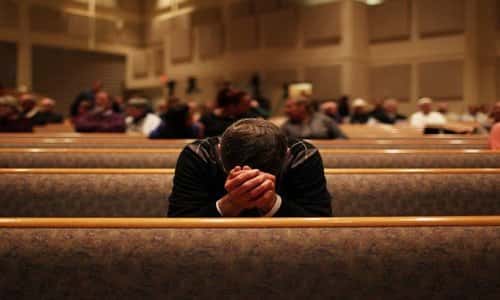
When God Won’t Hear

man-alone-with-god

Then shall they cry unto the LORD, but he will not hear them: he will even hide his face from them at that time, as they have behaved themselves ill in their doings. (Micah 3:4)

I get weary by the overwhelming onslaught of depressing news that assails me from all directions. It assaults me from the radio, TV, social media, internet, emails and even from normal conversations with friends. Let us face it, the world is a mess and nothing seems to make it better; it just seems to keep getting worse. Perhaps that is why we see so many people with their faces buried in their personal communications devices (PCDs) playing Candy Crush Saga, Angry Birds, or the latest craze, Pokémon GO, or whatever – anything to escape the “real” world – but the news refuses to go away.

Without detailing every account, anyone not fixated on their smart phones knows that the whole world is in serious trouble – economies are failing, ISIS grows like a cancer, rogue nations threaten the peace with nuclear arms, etc. The United States once served as a stabilizing force in the world, but America has her own problems now. Since Barack Obama became President, America’s economy has faltered, her military strength has declined, her influence for good in the world has diminished, and the heart of her people has weakened. President Obama mocks Christians for clinging to their guns and Bibles while he praises the virtues of Islam. He criticizes police use of lethal force against blacks without knowing all of the facts, and excuses the perpetrators as victims of racism. Obama lashes out at Christians who denounce the sin of homosexuality and celebrates the “bravery” of those that “come out of the closet.” When the Supreme Court legalized same-sex “marriage,” Obama gave assent and showed approval by bathing the White House in the rainbow colors of “gay pride.”

Recently a man, claiming allegiance to ISIS, entered a gay bar in Florida and slaughtered several people in the name of Allah and Obama refused to acknowledge him as an Islamic terrorist. Just two weeks ago, another man, Micah Johnson, targeted white police officers assigned to protect peaceful protestors of the Black Lives Matter movement. Five police officers were murdered in cold blood and several others were wounded. In honoring the fallen officers, President Obama began his speech in praise of the heroic officers who ran toward the danger and did all they could to protect the marchers, but his speech quickly degenerated into his typical race-baiting rhetoric. When our leader has no concept of unity, it is no wonder that our country is so fractured. However, the problem is greater than just one man’s inability to lead. The problem began some sixty years ago when the nation slowly chipped away at our Christian foundation and ousted God from the public square. “In God We Trust” are just words on our currency. Our beloved country is very, very sick.

Christians are encouraged to pray for our nation and to pray for our leaders. Albeit out of context, 2 Chronicles 7:14 frequently serves as a call for Christians pray for the nation. God promises, “If my people, which are called by my name, shall humble themselves, and pray, and seek my face, and turn from their wicked ways; then will I hear from heaven, and will forgive their sin, and will heal their land” (emphasis mine). God’s promise was made to the united nation of Israel, but Christians have (erroneously, I think) claimed it as their own forgetting that “our conversation is in heaven; from whence also we look for the Saviour, the Lord Jesus Christ” (Philippians 3:20, emphasis mine). The Greek word translated “conversation” in the King James Bible (KJV) is politeuma, from which we get our word “politic,” means “a community” or “citizenship.” Not that we should be “so heavenly minded that we are no earthly good,” but the United States of America is not where our primary allegiance should be. As the Apostle Paul asserts, “our citizenship is in heaven,” not the United States of America. Ours is the Kingdom of God, not the kingdom of Barack.

Like the United States of America, Israel, first the northern kingdom and then Judah, rejected God and turned to false gods – not every individual, but the nation as a whole. Even so, there are many faithful Christians in America who “have not bowed unto Baal” (1 Kings 19:18), but there exists only a remnant. I am certain that the faithful in Israel prayed for their nation, but that was not enough to dissuade God from punishing the entire nation – including the faithful ones.

Micah prophesied in Judah. By this time, Israel, the northern kingdom, no longer existed as a nation, having succumbed to the Assyrian Empire. From the time the ten northern tribes broke with Judah, the nation fell into idolatry. Now Judah followed suit. Micah voices the words of God who charges Judah’s leaders, for lack of judgment (Micah 3:1).  God points out that they “hate good and love evil” and they abuse the people with unjust taxes. The graphic words paint the picture: “who pluck off their skin from off them, and their flesh from off their bones; Who also eat the flesh of my people, and flay their skin from off them; and they break their bones, and chop them in pieces, as for the pot, and as flesh within the caldron” (Micah 3:2-3). There comes a point when, “Then shall they cry unto the LORD, but he will not hear them: he will even hide his face from them at that time, as they have behaved themselves ill in their doings” (Micah 3:4, emphasis mine).

Isaiah brought a similar charge to the nation as a whole, not only the leaders, but also those who willingly followed.  “The ox knoweth his owner, and the ass his master’s crib: but Israel doth not know, my people doth not consider” (Isaiah 1:3). Sad! Dumb animals recognize their source of provision better than “intelligent” people do. “Ah sinful nation, a people laden with iniquity, a seed of evildoers, children that are corrupters: they have forsaken the LORD, they have provoked the Holy One of Israel unto anger, they are gone away backward” (Isaiah 1:4). Can we not say the same of America? As the passage continues, God laments that the more He punishes the nation, the more rebellious they become. God assesses their condition as sick of head and weak of heart. Out of rote, they bring insincere offerings to God, but their hearts belong to other gods. So, God says, “when ye spread forth your hands, I will hide mine eyes from you: yea, when ye make many prayers, I will not hear: your hands are full of blood” (Isaiah 1:15, emphasis mine). God is infinitely patient, but He does set limits. When those limits are breached, His response is predictably sure. I say “predictably” because He gives an abundance of warning for those who are willing to listen.

Well, that seems just and deserved for those who rebel and reject God; but what about the faithful remnant who cry out for their nation? Just before the conquest and expatriation of Judah to Babylon, Jeremiah pleaded for his nation, but three times God charged him to stop. “Therefore pray not thou for this people, neither lift up cry nor prayer for them, neither make intercession to me: for I will not hear thee” (Jeremiah 7:16, emphasis mine). Then again, “Therefore pray not thou for this people, neither lift up a cry or prayer for them: for I will not hear them in the time that they cry unto me for their trouble” (Jeremiah 11:14, emphasis mine). Finally, “Then said the LORD unto me, Pray not for this people for their good” (Jeremiah 14:11, emphasis mine). Jeremiah certainly qualifies as one of God’s people. There comes a time when God will not hear the pleas even when they come from His people.

For Judah, God kept His 2 Chronicles 7:14 promise and returned them to the land, but only after they had served their full time in Babylonian captivity. Even today, we see God’s promise fulfilled as Jews from all over the world continue to migrate back to their land. However, America is not Israel, and this promise does not have universal application.  I realize that many disagree with that statement, but I suggest that such sentiment stems from deep-seated patriotism and love of country. I understand that. I too am a patriot. I willingly and gladly gave 12 years of my life in the service to this nation. These words I write tear at my heart as I see the inevitable demise of the country I love. Yet, our directive calls for us to hold the things of this earth loosely and cling to that yet unrealized country.  Jesus said, “Lay not up for yourselves treasures upon earth, where moth and rust doth corrupt, and where thieves break through and steal: But lay up for yourselves treasures in heaven, where neither moth nor rust doth corrupt, and where thieves do not break through nor steal: For where your treasure is, there will your heart be also” (Matthew 6:19-21, emphasis mine). Is your treasure in America or in heaven above?

Praying for our nation is a noble thought, but I believe our country is too far-gone for that now. I believe God is saying, at least to me, “Pray thou not for this people.” What about Paul’s exhortation to pray for our leaders (1 Timothy 2:1-2)? Consider where Paul had been – imprisoned in Rome – and where Timothy was – pastoring the church at Ephesus. Rome hardly qualified as a bastion of republican democracy. In Paul’s exhortation, he does not call for prayer for the preservation of the empire. He says to pray for “the leaders” – individuals. Why? In order “that we may lead a quiet and peaceable life in all godliness and honesty” (1 Timothy 2:2).  In his letter to the church at Rome, Paul says that God appoints leaders. “For there is no power but of God: the powers that be are ordained of God” (Romans 13:1, emphasis mine). The Roman rulers under which Paul and Timothy lived were despicable despots to whom they were to submit in order “to lead a quiet and peaceable life” regardless of who was in charge.

Christianity flourishes in China under an oppressive communist regime. Should Christians in China pray that their form of government continue? My point is that no matter what form of earthly government we live under, we owe a higher allegiance to the Kingdom of God. We should pray for our leaders that they might come to a saving knowledge of Christ through whom they will gain godly wisdom to rule. Even so, salvation is a personal matter between God and each individual. On that same note, rather than praying for the survival of our nation, we should not only pray, but labor for the salvation of individuals. For our nation to return to its foundation, the hearts of individuals must change. A wholesale repentance of a majority of individuals must take place before God will hear the pleas of His people for their nation.

Remember Abraham’s intercessory prayer for Sodom and Gomorrah? (Genesis 18:23-33) If there are 50 righteous, if there are 40 righteous, if there are 30, 20, 10, will you destroy the city? In the end, there were not even 10 righteous, and God destroyed the cities. Depending on what poll one reads, the number of “genuine” born-again, Evangelical Christians in the US hovers around 20% and declining. Should God spare the nation for 20 righteous? Did God spare Israel for the 7000 that did not bowed unto Baal? (1 Kings 19:18).

When a nation exceeds the limits of God’s patience, God stops His ears to the intercessory petitions of His people for the nation. Indeed, He says, “Pray thou not for this people.” Has America reached that limit? I think it has. We see a rise in depravity, perversion, and unrestrained violence, not to mention natural disasters. This is why the best response we can offer to a Hillary Clinton presidency is Donald Trump. It is sad to watch, but take heart Christians. We have a heavenly citizenship, and we pledge our allegiance to the King of Kings and Lord of Lords. Our duty is to work for and expand His Kingdom until He returns. I pray that is soon!

Comments Off on When God Won’t Hear

Filed under Christianity, Current Events, End Times, Evangelism, Heaven, Politics, Prayer, Religion, Salvation, Second Coming of Christ, Theology

Dad

Left to right: Dad, Me, Ednoi, Eli and Esther

Left to right: Dad, Me, Ednoi, Eli and Esther

Behold, I have taught you statutes and judgments, even as the LORD my God commanded me…  (Deuteronomy 4:5)

He came to the United States from Mexico in 1943 with false papers under an assumed name and started working for the railroad. Not long after, his work brought him to the West Texas town of Monahans where his eye fell upon the lovely Elena, and his life changed forever. Elena was one of five children of store owner and Baptist lay preacher, Porfírio Enriquez. Elena was hard to get, especially since her father wanted her to have nothing to do with the “mojado” (“wetback”), especially since he was not a Christian. But, eventually Elena fell prey to his boyish charm and the couple soon married – he was 20, she was 18.

The “unequally yoked” couple (2 Corinthians 6:14) soon experienced struggle over religious differences. Chale (Chah-leh), as he was known to his friends, was a non-practicing Catholic, so “church” mattered little to him. In fact, he found the practice of praying to inanimate images silly and pointless, so church to him was a waste of time. Chale also loved to party, and he loved to dance, much to the chagrin of the good Southern Baptist girl he had married. But Elena was not without recourse. On Saturday nights when Chale wanted to go dancing, Elena promised to go with him, if he would come to church with her on Sunday. Chale would dance all night with all the other ladies while Elena sat patiently by and watched. She would later say that he looked like a little demon dancing around through the haze of cigarette smoke. That arrangement worked well. Chale honored his promise to attend church with her on Sunday, and before long Chale surrendered his life to the Lord, gave up his partying ways, and took after his father-in-law as a lay preacher.

Shortly after Chale surrendered his life to the Lord, Elena became pregnant with me. At that time, Chale still resided in the US under an assumed name and false documentation. His new “tenderized” conscience started to bother him not only because of his illegal status, but also because he did not want his son given some stranger’s name. Determined to set the record straight, he returned to Mexico to earn the right to return to the United States legally. Wenceslao Carrasco de Cortez (his legal name) was required to spend two years in the Mexican Army Reserves to fulfill his military obligation to that nation, while at the same time working with a Mexican lawyer to legally come to America. While in Juarez, Chihuahua, Mexico, he served as assistant pastor in a Baptist church in that city.

I was born in Monahans in 1950, and when I was about one year old, Elena, Mom, took me with her to be with Dad in Juarez. We lived there a year until Dad got all his legal matters resolved and fulfilled his military obligation to Mexico. We returned in 1952, and the following year I was blessed with a baby brother, Ednoi.

Dad continued to work on the railroad, and soon his work carried us to Odessa, Texas where, in 1955, another baby brother came along – Eliseo (Eli). Around this time Dad felt called of God to go into full-time ministry, and soon we moved to San Antonio, Texas for Dad to train for the ministry. W.C., as English speakers referred to him, was not well educated. He got as far as the third grade in Mexico where he learned reading, writing, and arithmetic, but the needs of his father’s ranch were of higher priority than education, and school fell by the wayside. Study at the Instituto Biblico Mexicano proved difficult for Dad, not to mention the burden of a family that needed provision. There were times when we had no food and no money for food. Mom told me of a time when she sent me to school with the last bit of beans folded in a flour tortilla (a bean taco), and after that no food was left for the rest of the family. That day, Dad was in the school chapel crying out to God; Mom was at home on her knees in prayer, when a knock came at the door, and some ladies from an Anglo church showed up, completely unaware of our need, with a month’s worth of groceries. In the meantime, the president of the school overheard Dad crying out to God and came to see what was troubling him. When he discovered the need, he reprimanded Dad for failing to make his need known, and promptly wrote him out a check for $100. In 1957, that was a lot of money! Dad couldn’t wait to come home to give Mom the news, and when he arrived, he found her in tears of joy for how God had provided.

I could relate many more stories just like that, but what I experienced in my young life taught me that God is real. His love is real, and He really does care about our every need, and He will provide exactly what we need, exactly when we need it.

W.C. spent five years in school preparing for the ministry. In the end, he left the school without having completed his training. Our family moved to Cotton Center, Texas in 1960 where Dad was ordained as a Baptist minister, and where he pastored his first mission church in that capacity. Many mission churches followed. In 1963 we moved to Raton, New Mexico where Dad served as pastor of his first non-mission church. In 1965, God blessed us with our baby sister, Esther. I only got to know her the first five years of her life, and then I was off to the Navy and a life of my own.

Dad taught me many things. He taught me to read and write in Spanish. He taught me how to play baseball and throw a curve ball. He taught me how to drive; in fact, at 10 years old, when we were living in Cotton Center, he would send me, by my 10-year-old self, in our 1956 Ford Victoria to pick up kids for Sunday school. By the time I was old enough for my driver’s permit, I was already the most experienced driver in my Driver’s Ed class! Dad taught me the value of hard work. And even though he was not yet a naturalized citizen of the United States, he taught me patriotism, love of my country, love of my flag, and respect for authority. Dad taught me to take responsibility for myself and to never shy away from a challenge. He would always say, “Si está hecho por hombres, yo también lo puedo hacer.” (If it’s done by man, I can do it too!). But the greatest thing Dad ever taught me was the love of God and the love of God’s Word. The lessons learned from that have kept me from drifting to the left or to the right knowing that God does not change, and God’s Word never changes. Some have thought me insensitive, or unmoving, but although Dad taught me to love, and God’s Word teaches me to love, I also know that some things, from God’s perspective, are non-negotiable, so I do not easily yield to compromise even when “love” comes into play. The love of God must always supersede all others.

Dad was always strong – a trait I greatly admired in him, and one that I tried to emulate. He almost always had a cheerful disposition. He loved life, and he loved people – something else I admired in him. And he sang (or hummed) incessantly – to the point of annoyance – oblivious to anyone around him. But even that I admired in him – there was always a song – usually a hymn – in his heart. The world could be falling apart all around us, but one would never know it around Dad.

After Mom went to be with Jesus in December 2001, he, now 75, continued on with life as before, only without his lifelong partner. Shortly after we buried Mom, he took the pastorate of a small dwindling church in Brady, Texas, and served and ministered to them the remaining years of his life. His knees gave him trouble since his late 60’s, but the fear of knee replacement surgery kept him from taking care of the problem. It finally got to the point where he could hardly get around, and that interfered with his ministry, which to him was a high priority. So he finally conceded to replace his knees, first the right one followed by the left the next year. Dad got a new lease on life with his new knees, and it was hard to slow him down at age 85. I found out through the grapevine that he helped a family put a new roof on their house. He was climbing ladders with bundles of shingles on his shoulder, and down on his new knees nailing shingles to the roof. He even outworked two much younger men that were helping him. I had to give him a good scolding for that, but that was just Dad. He would make the four and a half hour drive from Brady to Dallas and mix it up in Dallas traffic to make his doctors’ appointments.

He was an incredible man, my dad. As I watched him live his life – full-bore, filled with joy, loving the Lord with all of his heart and soul – I dreaded the thought of his decline into helplessness in later life. That would not have suited Dad at all, and I prayed and asked God not to allow my dad to decline physically or mentally, but rather that when his time came, that God would just take him. God answered my prayer on August 26, 2014. Dad got up that morning with respiratory issues (he had developed asthma late in life) and collapsed in the kitchen of his Brady home. My brother Ednoi, who was living with him, called emergency services, but by the time they arrived, Dad’s brain had been deprived of oxygen too long. The EMTs worked on him, got him to the Brady hospital, and then on a Care Flight to San Angelo. Dad lingered on a ventilator long enough for all of us kids, grandkids and some of his siblings to come and say goodbye. His body was functioning with the help of the ventilator, but he was not there. On August 28, 2014, we had the ventilator removed, and in a short seventeen minutes all life-functions stopped. Dad went to be with Jesus and to celebrate his 64th wedding anniversary with Mom the following day. Dad was exactly one month shy of his 88th birthday when he went to be with our Lord, but because of the greatest thing he taught me, I KNOW I will see him again, and maybe some time very soon.

This year (2015) marks the first year that I celebrate Father’s Day without my dad, but it will not be a time for sorrow. Rather it will be a time to thank God for the father He gave me, and for the instrument that he was in my life to instruct and guide me in the ways of God. It will be a time of joy knowing that soon I will be together with him again forever because God is faithful, and His Word is true. That is not hope. That is assurance! Happy Father’s Day, Dad! Thank you for all you meant to me, to our family, and to everyone whose life you touched. See you soon!

11 Comments

Filed under Bible, Christianity, Current Events, Death, End Times, Holidays, Prayer, Religion, Salvation

Resurrection

colorful sunset

Jesus answered and said unto them, Destroy this temple, and in three days I will raise it up … When therefore he was risen from the dead, his disciples remembered that he had said this unto them; and they believed the scripture, and the word which Jesus had said. (John 2:20, 22)

Christians today, especially in the Middle East, suffer martyrdom by the hundreds at the hands of brutal ISIS executioners. These undergo a gruesome and horrific death by beheadings or being burned alive. Yet, as ghastly as we may perceive such brutality, the pain and suffering of these victims is short-lived, unlike that experienced by our Lord Jesus Christ on the cross.[1]

On the Lord’s Feast of Passover,[2] Jesus, already physically drained from lack of sleep[3] and subjected to a sham of a trial by the Jewish religious leaders, was brutally beaten and scourged at hands of Roman soldiers, experts at inflicting pain without killing the victim. Then in that depleted condition, He was forced to carry His own cross to the place of execution, and whether it was a fully assembled cross or just the cross beam, for a man in Jesus’ condition at that time was next to impossible – but He did it. Under the weight of that burden, determined to complete His mission, He faced the horror of the cross. God, wrapped up in human flesh, with His host of angelic armies standing at the ready awaiting the command to rain down vengeance upon His tormentors. At the time of His arrest, Peter pulled his sword in His defense, but Jesus stopped him. “Thinkest thou that I cannot now pray to my Father, and he shall presently give me more than twelve legions of angels?” (Matthew 26:53).  Nothing would deter Him from His mission. “[He] made himself of no reputation, and took upon him the form of a servant, and was made in the likeness of men: And being found in fashion as a man, he humbled himself, and became obedient unto death, even the death of the cross” (Philippians 2:7-8).

Determined to give to the very last, He carried Himself up Calvary’s hill, laid Himself down upon the timbers and spread His arms out to receive the nails – our pain, our guilt, our sins. “For [God the Father] hath made him [Jesus] to be sin for us, who knew no sin; that we might be made the righteousness of God in him” (2 Corinthians 5:21). At the last, He gave His life. He did not die. Jesus said, “… I lay down my life, that I might take it again. No man taketh it from me, but I lay it down of myself. I have power to lay it down, and I have power to take it again. This commandment have I received of my Father” (John 10:17-18, emphasis mine). He was not killed. “Jesus, when he had cried again with a loud voice, yielded up the ghost” (Matthew 27:50, emphasis mine). He was not the victim. He was in full control until the very last. John, the beloved disciple, and the only one of the twelve to witness the event said, “When Jesus therefore had received the vinegar, he said, It is finished: and he bowed his head, and gave up the ghost” (John 19:30, emphasis mine). Finished! Paid in full!

That was not the end. On the first day of the week, on that spring Sunday morning, He broke the chains of death and brought sheol’s captives with Him. Matthew records, “And the graves were opened; and many bodies of the saints which slept arose, And came out of the graves after his resurrection, and went into the holy city, and appeared unto many” (Matthew 27:52-53).[4]

His resurrection is key! Had Jesus died and remained in the tomb, we would venerate a martyr, nothing more. His bones would be marked by an ornate shrine. Perhaps followers would make faithful pilgrimages to the site to stand in awe and wonder. If that was the case, our faith’s reward would be death and eternal separation from our Creator with no hope of redemption. “And if Christ be not risen, then is our preaching vain, and your faith is also vain” (1 Corinthians 15:14). “But thanks be to God, which giveth us the victory through our Lord Jesus Christ” (1 Corinthians 15:57).  Because of His resurrection, “Death is swallowed up in victory” (1 Corinthians 15:54). “For if we have been planted together in the likeness of his death, we shall be also in the likeness of his resurrection” (Romans 6:5). So now we can say, “O death, where is thy sting? O grave, where is thy victory?” (1 Corinthians 15:55).

Before going to the cross, Jesus left us with this promise: “Let not your heart be troubled: ye believe in God, believe also in me. In my Father’s house are many mansions: if it were not so, I would have told you. I go to prepare a place for you. And if I go and prepare a place for you, I will come again, and receive you unto myself; that where I am, there ye may be also” (John 14:1-3). His resurrection guarantees the promise. On that day, “the Lord himself shall descend from heaven with a shout, with the voice of the archangel, and with the trump of God: and the dead in Christ shall rise first: Then we which are alive and remain shall be caught up together with them in the clouds, to meet the Lord in the air: and so shall we ever be with the Lord” (1 Thessalonians 4:16-17).

Our Christian brothers and sisters in the Middle East and elsewhere in the world are brutally killed daily by the enemy of God. We can thank God that for many, death is swift; it is nothing like what their Lord and our Lord endured for our sakes. But the guaranteed promise of the resurrection assures us that one day soon, we will be together with Him in His house.

Notes:


[1]  It is said that victims could linger on the cross up to three days until succumbing to dehydration and asphyxia.

[2]  Despite conventional tradition, this even could not have taken place on Friday. Jesus said He would rise in “three days,” not three partial days. Jesus specified “three days and three nights” (Matthew 12:39-40). No matter how one may try to convolute the time to fit a “Good Friday” scenario, one cannot get “three days and three nights” from Friday evening to Sunday morning. Jesus said, “three days and three nights” – 72 hours, nothing less will do!

[3]  Jesus had spent the night in prayer while His disciples slept (Matthew 26:36-46; Mark 14:32-42; Luke 22:39-46) before being betrayed by Judas, arrested and tried.

[4]  Matthew’s recording of this event that seems to coincide with Jesus’ death and the renting of the veil to the Holy of Holies, but a close inspection of the text reveals that this event occurred after the resurrection. See again Matthew 27:52-53.

2 Comments

Filed under Apologetics, Christianity, Easter, Evangelism, Gospel, Religion, Resurrection, Salvation, Theology